Poultry Farm Hens: Housing, Health, and Egg Care
By Dr. Zubair Khalid, DVM, MS, PhD ·
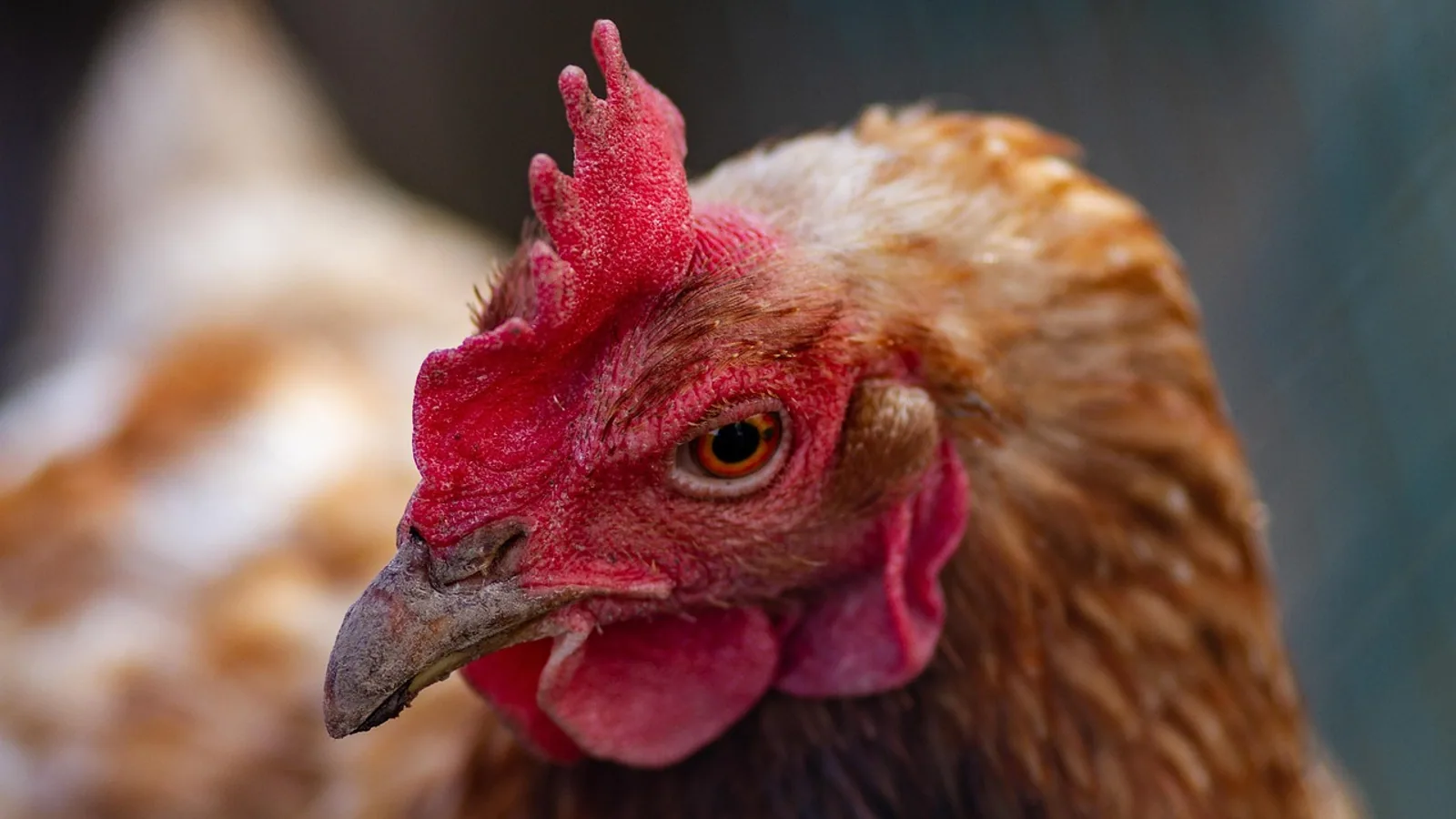
A poultry farm hen is managed as one unit of a production flock, not as an individual pet. That single idea drives every decision on a commercial layer operation. You set space allowances by the square centimeter or square meter, you run the lights on a fixed schedule, you track water against feed, and you walk the house every morning to pull dead birds and read the flock. When something goes wrong, the flock tells you first through egg numbers, water intake, and noise.
This guide covers the daily mechanics of layer housing, health, and egg care for flocks kept in cages, enriched cages, floor systems, aviaries, and mobile houses. It focuses on what a farm manager or flock veterinarian actually does between placement and depopulation. It does not cover pet chicken keeping or human nutrition from eggs.
This article is educational and is not a substitute for veterinary diagnosis or treatment.
At a Glance: Daily Layer Management Checklist
| Task | Target or Action | Why It Matters |
|---|---|---|
| Walk the house at the same time daily | Observe birds, listen, smell ammonia | Early detection of disease and ventilation failure |
| Remove dead birds | Twice daily, log each removal | Mortality trends are the first production signal |
| Check water meters | Intake roughly twice feed intake by weight | Water drop precedes egg drop |
| Check feed delivery | Confirm even distribution along the line | Feeder space competition causes uneven flocks |
| Verify light program | 16 hours light at 20 to 30 lux for lay | Drives persistency of lay |
| Check egg belt and collection | Run belts on schedule, cool eggs fast | Dirty or cracked eggs are a food-safety issue |
| Inspect manure belts | Run at least daily | Moisture and flies build fast in warm houses |
| Monitor red mite traps | Weekly tube traps and visual checks | Early detection prevents explosive infestation |
| Confirm footbath and entry log | Fresh disinfectant, visitor records | Biosecurity fails at the doorway first |
| Record temperature and ammonia | Keep house within target range | Cold stress and ammonia both suppress production |
Housing Systems for the Poultry Farm Hen


Layer housing has moved steadily away from conventional cages toward furnished cages and non-cage systems. A Canadian survey of 65 laying hen flocks across 26 furnished cage, 17 single-tier, and 22 multi-tier systems described how these systems are actually managed on commercial farms [1]. Flocks averaged 45.1 weeks of age, with a range from 19 to 69 weeks [1]. That range matters because management priorities shift across the cycle: pullets need adaptation, peak-lay flocks need stable environment, and late-lay flocks need shell quality and skeletal monitoring.
A key finding from that survey was that most flocks were reared in the same housing system they would later lay in, with one exception. Furnished cage layers were typically reared in conventional cage systems [1]. This rearing-to-lay mismatch is a known stress point. A pullet that has never navigated a multi-tier aviary will spend her first weeks learning vertical space instead of eating and laying.
The survey also reported that a large proportion of non-cage systems were either fully slatted or used manure as a litter substrate [1]. That detail has direct implications for foot health, ammonia, and parasite pressure. Fully slatted floors reduce litter contact and dust but concentrate manure handling into belts or pits. Litter-based floors give hens foraging substrate but demand more frequent litter management.
Enriched Cages
Enriched cages provide a defined footprint per hen plus a nest area, perch, and scratch pad. The commonly cited stocking target for enriched cage systems is 750 cm² per hen, which is the usable area allowance that supports nesting and perching behavior within the cage envelope. Cage systems generally deliver more consistent air quality and easier manure handling than floor systems, and they simplify individual bird inspection.
Floor and Aviary Systems
Floor systems are typically stocked at approximately 9 birds per square meter of usable floor area. Aviary systems add vertical tiers, which increases total usable space but also increases complexity. Hens must learn to move between tiers, and the distribution of birds across height affects local air quality.
An Internet of Things monitoring study in a multi-tier aviary tracked environmental gradients at floor, middle, and upper tiers in two pens of 225 Novogen hens between 32 and 52 weeks of age [2]. Air quality stayed within recommended values for laying hens throughout [2]. The middle tier, where nests were located, showed higher humidity, carbon dioxide, and particulate matter than the upper tier and floor, which the authors attributed to reduced airflow in that zone [2]. Hen distribution shifted through the day, with the highest floor presence, 58 percent of hens, occurring at midday, and that floor presence correlated with increased particulate matter [2].
The practical takeaway is that air does not move uniformly in a tiered house. Nest tiers can be the most humid and most loaded with dust. Ventilation design and daily inspection should target the middle tier specifically, not just the house average.
Mobile Housing
Mobile houses are an emerging category with distinct welfare profiles. An observational study across 42 farms and 48 mobile houses, ranging from 200 to 2,059 hens per house, compared welfare indicators against stationary systems [3]. Plumage damage and injuries were significantly less prevalent in mobile housing, while keel bone damage was similarly prevalent across all systems [3]. Footpad dermatitis did not differ between mobile and stationary systems [3]. Comb and wattle injuries were more common in mobile houses, which the authors flagged as needing further investigation into agonistic pecking [3].
The study also noted a practical constraint: adequate feeding space per hen must be guaranteed inside the mobile house even when that requires additional manual labor [3]. Mobile housing trades some automation for welfare gains, and feeding space is the pressure point.
Strain Selection Within a System
Strain differences are real and measurable inside a single housing system. A study of four commercial hybrids, two brown and two white egg strains, in aviary housing under common management found that all four strains achieved at least 91 percent hen-day egg production [4]. One white strain reached 8 percentage points higher production than the others through most of lay [4]. Brown strains were consistently heavier with larger tibia volume, surface area, and mineral content [4].
Welfare outcomes diverged by strain as well. Feather coverage deteriorated with age in all hens, but white strains, especially that high-producing white strain, had more frequent feather damage [4]. Brown strains had more keel damage on manual palpation, though visual inspection of excised keel bones showed one brown strain had fewer fractures than the others. Across all strains, 90 percent of keel bones had fractures, frequently at the tip [4].
That 90 percent figure is not a reason to avoid aviaries. It is a reason to monitor keel integrity as a routine welfare metric in any non-cage system and to understand that strain choice shifts the risk profile between feather damage and keel damage.
Stocking Density, Space, and Equipment
Space allowances are the foundation of flock performance. Understocking wastes building capacity. Overstocking degrades air quality, increases competition at the feeder and drinker, and raises the risk of smothering events.
| System | Typical Stocking Target | Notes |
|---|---|---|
| Enriched cage | 750 cm² per hen | Includes nest, perch, and scratch area |
| Floor system | Approximately 9 birds per m² | Usable floor area, excludes equipment footprint |
| Aviary | Tiered, higher total density | Vertical space must be navigable |
| Mobile house | 200 to 2,059 hens per house in studied units | Feeding space is the limiting factor |
Feeder and drinker space deserve as much attention as floor area. The mobile housing study singled out feeding space as a requirement that must be met even at the cost of extra labor [3]. A behavioral study of 64 free-range flocks in Australia found that feeder space interacted with housing system and strain in shaping hen fearfulness and exploration responses [5]. Space allocation is not only a production input. It shapes how birds behave toward each other and toward people.
Perches and Enrichment
Adding perches sounds straightforward, but the evidence is nuanced. A study that enriched aviary pens with additional perches beyond those built into the system found that the extra perches actually decreased use of the aviary's own perches, while the rate of successful landings and take-offs was unaffected [6]. Genotype mattered more than enrichment for some behaviors. White hens used the third tier and additional perches more than brown hens during the day, and at night only 0.15 percent of white hens were on the floor compared with 6.63 percent of brown hens [6]. White hens also performed far more landings, 80.7 versus 21.9 [6].
The management implication is that perch provision should be matched to the strain. A flock of white hens will exploit vertical space aggressively. A flock of brown hens may concentrate at lower levels, which changes where manure accumulates and where inspection attention should go.
Lighting Programs for Lay
Light is the single most powerful tool for controlling when a flock comes into lay and how long it sustains production. The standard target for the laying phase is 16 hours of light at 20 to 30 lux. Below that intensity, hens may not receive a strong enough photostimulatory signal. Above it, you waste electricity and risk behavioral problems from overstimulation.
Light programs interact with molt management. A pilot on-farm study of induced molting in two mobile-housed end-of-lay flocks used feed and light restriction to trigger molt [7]. Laying performance fell during molt in both flocks and partially recovered afterward. One flock went from 54 percent to 30 percent to 39 percent. The other went from 89 percent to 0 percent to 65 percent [7]. Egg quality parameters improved after molt in both flocks, suggesting recovery of reproductive tract function, and body weight dropped during molt then rose significantly afterward [7].
That study also found keel bone fracture prevalence increased significantly from before to after molt in both flocks, even though bone mineral density stayed stable or improved [7]. Comb injuries increased significantly in one flock after molt, likely related to the abruptness of the protocol [7]. If you use molt as a management tool, plan for skeletal and behavioral monitoring, not just egg numbers.
Water and Feed Management
Water intake is the fastest readout of flock health you have. As a working rule, laying hens drink roughly twice their feed intake by weight. A flock eating 110 grams per hen per day will drink around 220 milliliters per hen per day under thermoneutral conditions. That ratio shifts with temperature, diet composition, and disease status.
Track water daily at the meter. A sudden drop in water intake, before any drop in egg production, is one of the earliest signs of a health problem or a water line failure. A sudden rise can indicate heat stress or a leaking drinker line.
Feed management centers on even distribution and consistent formulation. Precision glycan supplementation at 900 grams per tonne of feed was evaluated in a free-range commercial flock of 40,000 pullets from 17 weeks to 72 weeks of age [8]. The supplemented group showed reduced cumulative mortality, including during a major smothering event, along with increased hen-housed egg production and improved intestinal health markers [8]. This is one example of how feed additives are evaluated in commercial conditions, and it illustrates that gut health interventions can affect mortality outcomes, not just production numbers.
Environmental Control
Two environmental stressors dominate winter management in layer houses: cold and ammonia. A controlled study housed 576 eighteen-week-old Hy-Line Brown hens across six treatments combining 8 °C or 20 °C with ammonia at 5 ppm or below, 20 ppm, or 45 ppm, for 20 weeks [9]. Both cold and ammonia stress reduced production and altered physiological stress biomarkers, immune measures, and reproductive hormone profiles [9].
The practical thresholds to work with are straightforward. Keep the house within the thermoneutral zone for the flock's age and feather cover. Keep ammonia low enough that you cannot smell it at bird level and your eyes do not sting when you crouch down. Ammonia at 20 ppm is already a measurable stressor in the research setting [9], so treat that as a ceiling, not a target.
Air quality in tiered systems requires zone-specific attention. The aviary monitoring study found the nest tier carried the highest humidity, carbon dioxide, and particulate load [2]. Check that tier directly rather than relying on a single house-level sensor.
Biosecurity on a Layer Farm
Biosecurity is the set of routines that keeps pathogens out and, when they get in, keeps them from spreading between houses and farms. A Swedish study conducted during 2020 and 2021 HPAI outbreaks assessed biosecurity on 15 case farms and 33 matched non-case farms using interviews, on-farm observation, and the Biocheck.UGent scoring tool [10]. Biosecurity levels were generally high, but variation between farms was significant, with category-specific strengths and weaknesses [10].
The recurring weaknesses identified were specific and fixable. Inadequate infrastructure such as anteroom layout, limited training of farm workers, suboptimal hand hygiene, and difficulty maintaining good practices over time were the common gaps [10]. Notice that these are mostly human-factor problems, not knowledge problems. The farm knows what to do. The building and the routine make it hard to do consistently.
All-In/All-Out and Downtime
All-in/all-out placement means one flock enters a cleaned house and leaves before the next flock enters. Between flocks, the house gets dry-cleaned, wet-cleaned, and disinfected, then allowed to dry fully. A red mite case report describes exactly this sequence, followed by application of a synthetic amorphous silica product as a preventive measure before restocking with pullets [11]. The house was then monitored for more than two years across two housing periods of 58 and 52 weeks, with no red mite detected on two-week interval monitoring [11].
Downtime between flocks is when you break disease cycles. It is also when you address the physical environment: seal cracks, repair belts, service fans, and verify that the next flock's equipment is calibrated.
Footbaths and Entry Control
Footbaths only work when the disinfectant is fresh, the boot actually contacts the liquid, and the bath is not sitting in mud. A footbath that has not been changed is a decorative object. Pair footbaths with a Danish-style entry system: outside clothes and boots stay outside, inside clothes and boots stay inside, and hands get washed or sanitized at the threshold.
Visitor logs serve two functions. They create a record for traceback if a disease event occurs, and they force a conscious decision about who enters the house and why. Every entry is a risk event. The log should capture name, date, time, purpose, and last poultry contact.
Rodent Control
Rodents carry Salmonella and other pathogens, consume feed, and damage insulation and wiring. Control requires three layers working together: exclusion through sealed openings and intact perimeter, population reduction through baiting or trapping, and monitoring through regular inspection of bait stations and droppings. A rodent program that only baits without sealing is a permanent subscription, not a solution.
Wild Bird Interface
The Swedish HPAI study focused specifically on the wild bird to poultry interface [10]. Practical measures include netting or screening that prevents wild birds from entering the house, keeping feed stored in closed containers, managing standing water, and avoiding practices that attract waterfowl near the barn. For outdoor-access systems, range management becomes part of biosecurity.
Housing System and Pathogen Exposure
Housing type influences what pathogens the flock encounters. A cross-sectional study of eight layer flocks, four indoor and four outdoor, from five commercial farms found that housing type, rearing farm, farm, and poultry house within farm all significantly contributed to cloacal microbiota composition [12]. Poultry house explained the most variation at 20.9 percent, while housing type explained only 0.2 percent [12]. Bacterial diversity was higher in indoor layers than outdoor layers [12].
That result is counterintuitive. It suggests that the specific house environment, its management, and its history shape the gut community more than whether birds go outside. Two houses on the same farm can have meaningfully different microbial environments.
A separate study of Campylobacter prevalence across five commercial housing systems found prevalence ranging from 11.1 percent in enrichable cages to 19.7 percent in conventional systems, with higher prevalence in fecal swabs from free-range birds compared with more intensive systems [13]. Over 90 percent of isolates were Campylobacter jejuni [13]. Campylobacter is a food-safety organism, and its presence in the flock has implications for egg handling and worker hygiene.
A study in low-biosecurity tropical housing found that prelaying flocks had higher Campylobacter prevalence than laying flocks, and broiler flocks tested negative until an average of 21 days [14]. Age and production stage shape colonization dynamics, which is one reason pullet and layer phases need separate biosecurity planning.
Daily Management in Practice
The daily routine is the backbone of flock performance. It should be identical every day so that any deviation is immediately visible.
- Enter the house and stop. Listen for abnormal respiratory sounds, sneezing, or silence. Smell for ammonia.
- Walk the length of the house in a fixed pattern. Look at bird distribution, posture, and activity.
- Remove dead birds and record the count and location. Multiple deaths in one spot suggests a localized problem such as a water leak, draft, or smothering.
- Check water meters and compare against the previous day and against feed intake.
- Check feed lines for even distribution and feed depth.
- Verify light intensity and hours against the program.
- Run manure belts and check manure consistency. Wet manure points to diet, water, or enteric disease.
- Run egg belts and inspect eggs for shell quality, dirt, and cracks.
- Check environmental controls and record temperature, humidity, and ammonia.
- Inspect red mite traps and note any mite activity.
- Confirm footbath condition and complete the visitor log.
- Record everything. Trends matter more than single readings.
Mortality Removal and Why It Matters
Daily mortality removal is not just sanitation. It is data collection. The number, timing, and location of deaths form a curve. A flat baseline of a few birds per thousand per day is normal in a mature flock. A step change upward is a signal. A cluster in one corner is a signal. A rise in deaths alongside a rise in water intake is a signal.
Remove dead birds promptly because carcasses attract flies, contaminate litter, and can be a source of pathogen spread to pen mates. Record before you dispose. A carcass that disappears without a number is a lost data point.
Egg Care
Egg care starts at the nest and ends at the cooler. The chain has four links.
Collection timing. Run egg belts frequently enough that eggs do not sit in the house. In warm weather, internal egg temperature rises quickly, and every hour of delay reduces shelf life.
Handling and inspection. Sort out cracked, dirty, and abnormal eggs at the collection point. Do not let a dirty egg enter the clean stream. Shell quality parameters are relatively stable across housing systems, though production rate differs [15], so shell defects usually point to nutrition, age, or disease rather than housing type.
Cooling and storage. Get eggs into the cooler promptly and hold them at a stable temperature. Temperature fluctuation causes condensation on the shell, which promotes microbial growth.
Housing system authentication. There is commercial pressure to mislabel eggs by housing system because outdoor and organic eggs sell at higher prices. A machine learning study using 33,216 eggs from 76 Belgian commercial farms built classification models from egg quality parameters [16]. The best full-feature model reached 76.6 percent accuracy, while a yolk-color-only model reached 74.1 percent accuracy with a lower false positive rate for outdoor eggs at 7 percent versus 13 percent [16]. This is a fraud-detection tool, not a farm management tool, but it shows that housing system leaves measurable traces in egg quality.
Common Laying-Hen Diseases
| Disease | Causative Agent | Key Sign | Control |
|---|---|---|---|
| Marek's disease | Herpesvirus | Progressive paralysis, enlarged nerves, tumors in viscera | Vaccinate day-old chicks, breed for resistance, strict hatchery hygiene |
| Infectious bronchitis | Coronavirus | Respiratory signs, drop in egg production, misshapen or thin-shelled eggs | Live and inactivated vaccination, biosecurity, all-in/all-out |
| Avian influenza | Influenza A virus, including HPAI strains | Sudden high mortality, respiratory and nervous signs, drop in egg production | Notifiable. Report immediately. Biosecurity, wild bird exclusion, movement control |
| Coccidiosis | Eimeria species | Diarrhea, bloody droppings, poor growth, drop in production | Coccidiostats or vaccines, litter management, avoid wet litter |
| Red mite infestation | Dermanyssus gallinae | Restless birds, anemia, drop in production, mites in traps and crevices | Integrated pest management: acaricide treatment, cleaning and disinfection, preventive silica application, frequent monitoring |
Marek's Disease
Marek's disease is caused by a herpesvirus and produces progressive paralysis and visceral tumors. Vaccination of day-old chicks is the cornerstone of control. Because the virus spreads readily in poultry house dust, hatchery hygiene and chick placement practices determine whether vaccination holds. There is no treatment for affected birds.
Infectious Bronchitis
Infectious bronchitis is caused by a coronavirus and produces respiratory signs along with a characteristic drop in egg production and misshapen or thin-shelled eggs. Control relies on vaccination with live and inactivated products matched to circulating serotypes, combined with biosecurity and all-in/all-out management. Once the virus is in a house, it spreads rapidly through the flock.
Avian Influenza
Avian influenza is caused by influenza A viruses, including highly pathogenic strains. It presents with sudden high mortality, respiratory and nervous signs, and a sharp drop in egg production. Avian influenza is a notifiable disease in the United States. Suspected cases must be reported immediately to state or federal animal health authorities. Do not move birds, eggs, or equipment off the premises while awaiting guidance. The Swedish HPAI study found that while biosecurity levels were generally high, weaknesses in anteroom layout, worker training, and hand hygiene were common [10], and those are exactly the gaps that matter during an outbreak.
Coccidiosis
Coccidiosis is caused by Eimeria species and produces diarrhea, sometimes with blood, along with poor growth and a drop in production. Control combines anticoccidial products or vaccination with litter management. Wet litter is the single biggest risk factor, so ventilation and drinker maintenance are part of coccidiosis control.
Red Mite Infestation
The poultry red mite, Dermanyssus gallinae, feeds on blood and causes restlessness, anemia, and production loss. A case report describes a successful integrated pest management program in a floor-kept laying house [11]. The initial infestation was reduced by 99.8 percent using fluralaner administered via drinking water at 0.5 mg per kg body weight twice, 7 days apart [11]. After the hens were removed, the house was dry-cleaned, wet-cleaned, and disinfected, then treated with a synthetic amorphous silica product before restocking [11]. Over two subsequent housing periods of 58 and 52 weeks, no mites were detected on two-week interval monitoring [11].
Early detection is the hard part. A study characterizing the odor of red mite identified five volatile organic compounds specific to infested samples across multiple commercial farms and housing types: 1-vinyl-aziridine, 1H-pyrrole, 1-octen-3-one, heptanal, and octanal [17]. Several of these compounds match the odor character that poultry experts associate with infestation [17]. Odor-based detection methods may eventually offer faster identification than current labor-intensive methods [17]. For now, use tube traps and visual inspection of crevices, belt housings, and perch ends on a fixed schedule.
Notifiable Disease Reporting
Avian influenza is the notifiable disease that layer farms encounter most often. The reporting obligation is immediate and applies to suspicion, not confirmation. If you see sudden high mortality, a sharp production drop with respiratory or nervous signs, or any pattern that fits avian influenza, contact your state animal health official or the USDA toll-free line for sick bird reporting. Do not wait for a laboratory result before calling.
Reporting is not optional and it is not a judgment on your farm. Early reporting is what allows authorities to contain an outbreak before it spreads to neighboring operations. The same principle applies to any disease on your state's notifiable list.
Welfare Monitoring
Welfare indicators are production indicators viewed from a different angle. Feather coverage, keel integrity, footpad condition, and comb and wattle injuries all track with management quality.
Feather damage increases with age across strains and systems [4]. Keel bone fractures are common in non-cage systems, with one aviary study finding fractures in 90 percent of excised keel bones, frequently at the tip [4]. Keel fracture prevalence also rose significantly across induced molt in both flocks studied [7]. Footpad dermatitis prevalence was unaffected by mobile versus stationary housing in one comparison [3]. Comb and wattle injuries were higher in mobile houses [3] and rose after molt in one flock [7].
Behavioral welfare measures add another layer. A study of 64 free-range flocks found that Hyline brown flocks showed less fear of humans and less fear of a novel object in the range compared with ISA brown flocks, and hens in aviary systems showed less avoidance of an unfamiliar human than hens in flat deck systems [5]. Strain and housing both shape the human-animal relationship, which affects handling ease and injury risk during routine tasks.
Common Mistakes in Layer Management
Chasing egg production without watching water. Water intake is the leading indicator. Egg production is the lagging indicator. By the time eggs drop, the problem is established.
Changing the light program mid-cycle. Hens respond to light as a signal. Abrupt changes disrupt lay persistency and can trigger molt-like responses.
Treating biosecurity as a document rather than a routine. The Swedish study found that infrastructure, training, and hand hygiene were the recurring weak points, not knowledge of what should be done [10].
Ignoring the middle tier. In aviary systems, the nest tier carries the highest humidity, carbon dioxide, and particulate load [2]. If your sensors are only at floor level, you are missing the worst air in the house.
Delaying red mite intervention. Infestations grow exponentially. The case report that achieved 99.8 percent reduction combined chemical treatment with thorough cleaning and a preventive physical barrier [11]. Chemical treatment alone leaves refuges.
Skipping mortality records. A dead bird without a number is a missed signal.
Assuming housing type determines pathogen exposure. Poultry house within farm explained far more variation in cloacal microbiota than housing type did [12]. Your own house management matters more than the label on the system.
Troubleshooting Production Drops
When egg production falls, work through the causes in order of likelihood and speed of onset.
Sudden drop with mortality. Suspect avian influenza or another acute infectious disease. Report immediately and isolate.
Sudden drop without mortality. Check water first, then feed delivery, then light program, then environmental control failure. A water line that stopped flowing will drop production within a day.
Gradual decline over weeks. Consider red mite infestation, coccidiosis, chronic ammonia exposure, or nutritional drift. Check mite traps, manure consistency, ammonia at bird level, and feed formulation.
Drop with shell quality changes. Infectious bronchitis is a classic cause of misshapen and thin-shelled eggs alongside production loss. Consider vaccination status and recent respiratory signs.
Drop with behavioral changes. Increased aggression, feather pecking, or smothering events point to space, feeder access, or environmental stress. Review stocking density, feeder space, and light intensity.
Limitations and When to Contact a Veterinarian
This article describes general management principles for commercial layer flocks. Individual flocks vary by strain, age, housing, climate, and disease history, and a veterinarian who examines your birds and reviews your records can give advice that fits your operation.
Contact a veterinarian promptly when you see any of the following:
- Sudden high mortality or a rapid rise in daily deaths
- Respiratory signs combined with a sharp production drop
- Nervous signs such as tremors, twisted necks, or paralysis
- Bloody diarrhea or a sustained change in manure consistency
- A production drop that does not respond to water, feed, light, and environmental correction within 48 hours
- Evidence of red mite in traps or on birds that persists after initial treatment
- Any suspicion of a notifiable disease, which requires immediate reporting to animal health authorities in addition to veterinary contact
- Keel fractures, footpad lesions, or comb injuries appearing at a rate that suggests a systemic welfare problem
Your flock veterinarian can also help design vaccination programs, interpret laboratory results, and build a monitoring schedule matched to your housing system and strain.
Frequently Asked Questions
What stocking density should I use for laying hens?
Enriched cage systems target 750 cm² per hen. Floor systems run at approximately 9 birds per square meter of usable area. Aviary systems use tiered vertical space, and mobile houses in one study housed 200 to 2,059 hens per unit.
How many hours of light do laying hens need?
The laying-phase target is 16 hours of light at 20 to 30 lux. Light drives when a flock comes into lay and how long it sustains production, so the schedule should stay consistent.
How much water does a laying hen drink per day?
As a working rule, hens drink roughly twice their feed intake by weight. A hen eating 110 grams of feed per day will drink around 220 milliliters. Track water at the meter daily because changes appear before production changes.
Why is daily mortality removal important?
Daily removal prevents carcass contamination and fly pressure, and it generates the mortality curve that serves as your earliest production signal. Record the count and location before disposing of each bird.
What does all-in/all-out mean on a layer farm?
All-in/all-out means one flock enters a cleaned and disinfected house and leaves before the next flock enters. The downtime between flocks is when you break disease cycles and complete repairs and calibration.
Which laying-hen diseases are notifiable in the United States?
Avian influenza is notifiable. Suspected cases must be reported immediately to state or federal animal health authorities. Do not move birds, eggs, or equipment off the premises while awaiting guidance.
How do I control poultry red mite?
Use integrated pest management. Combine acaricide treatment, thorough dry and wet cleaning with disinfection between flocks, a preventive physical barrier such as synthetic amorphous silica, and frequent monitoring with tube traps and visual inspection.
Can I extend a flock's laying cycle with molt?
Induced molt can partially restore laying performance and improve egg quality parameters, but it also increases keel bone fracture prevalence and can raise comb injuries. Discuss molt protocols with your veterinarian before committing a flock.
flowchart TD
    A[Walk the house] --> B{Birds normal}
    B -->|Yes| C[Check water and feed]
    B -->|No| D[Identify abnormal sign]
    D --> E{Mortality rising}
    E -->|Yes| F[Isolate and call veterinarian]
    E -->|No| G[Check environment and light]
    G --> H[Check mite traps and manure]
    H --> I[Review records for trend]
    C --> J[Run belts and collect eggs]
    J --> K[Cool eggs promptly]
    K --> L[Log all findings]
    F --> L
    I --> L
Related Articles
- Egg Binding in Hens: Signs and What to Do
- Do You Need a Rooster for Hens to Lay Eggs?
- Cage-Free Chicken Farm Management: Housing, Welfare, and Egg Production
- Dove Bird Care: From Housing to Health
- Poultry Housing Design for Flock Health and Productivity
- Lighting Programs for Laying Hens: Optimizing Egg Production
- Coturnix Quail Care Guide: Housing, Diet and Egg Laying
- Black Copper Maran: Eggs and Breed Guide
- Araucana Hen Eggs: Blue Egg Genetics and Care
Sources
- A Description of Laying Hen Husbandry and Management Practices in Canada.
- Environmental Gradients and Hen Spatial Distribution in a Cage-Free Aviary System: Internet of Things-Based Real-Time Monitoring for Proactive Management.
- Opportunities and challenges of modern mobile housing systems for laying hen welfare - an observational study.
- Performance, Skeletal traits, and welfare indicators of four laying hen strains in aviary housing under common management.
- Hen fearfulness and exploration is associated with strain/breed, housing system and feeder space in Australian free-range commercial egg farms.
- Space use and navigation ability of hens at housing in the aviary for the laying phase: effect of enrichment with additional perches and genotype.
- Extending laying hens' productive lifespan by molting: a pilot on-farm study and test of assessment methods with focus on functional traits and keel bone health.
- Precision glycan supplementation: A strategy to improve performance and intestinal health of laying hens in high-stress commercial environments.
- Physiological Responses of Laying Hens to Chronic Cold Stress and Ammonia Exposure: Implications for Environmental Management and Poultry Welfare.
- Strengths, challenges, and variations - insights into biosecurity practices in Swedish poultry production following HPAI outbreaks.
- Successful long-term control of poultry red mite (Dermanyssus gallinae) infestations in floor-kept laying hens via integrated pest management-a case report.
- An observational field study of the cloacal microbiota in adult laying hens with and without access to an outdoor range.
- Prevalence, Persistence, and Antimicrobial Resistance of Campylobacter spp. from Eggs and Laying Hens Housed in Five Commercial Housing Systems.
- Colonization of Campylobacter spp. in broiler chickens and laying hens reared in tropical climates with low-biosecurity housing.
- Evaluation of physiological functions and production performance in laying hens in three different housing systems.
- Research note: A machine learning approach for authentication of laying hen housing systems based on egg quality parameters.
- Odor characterization of the poultry red mite (Dermanyssus gallinae) for identification of volatile biomarkers of infestation across multiple commercial laying hen systems.