Araucana Hen Eggs: Blue Egg Genetics and Care
By Dr. Zubair Khalid, DVM, MS, PhD ·
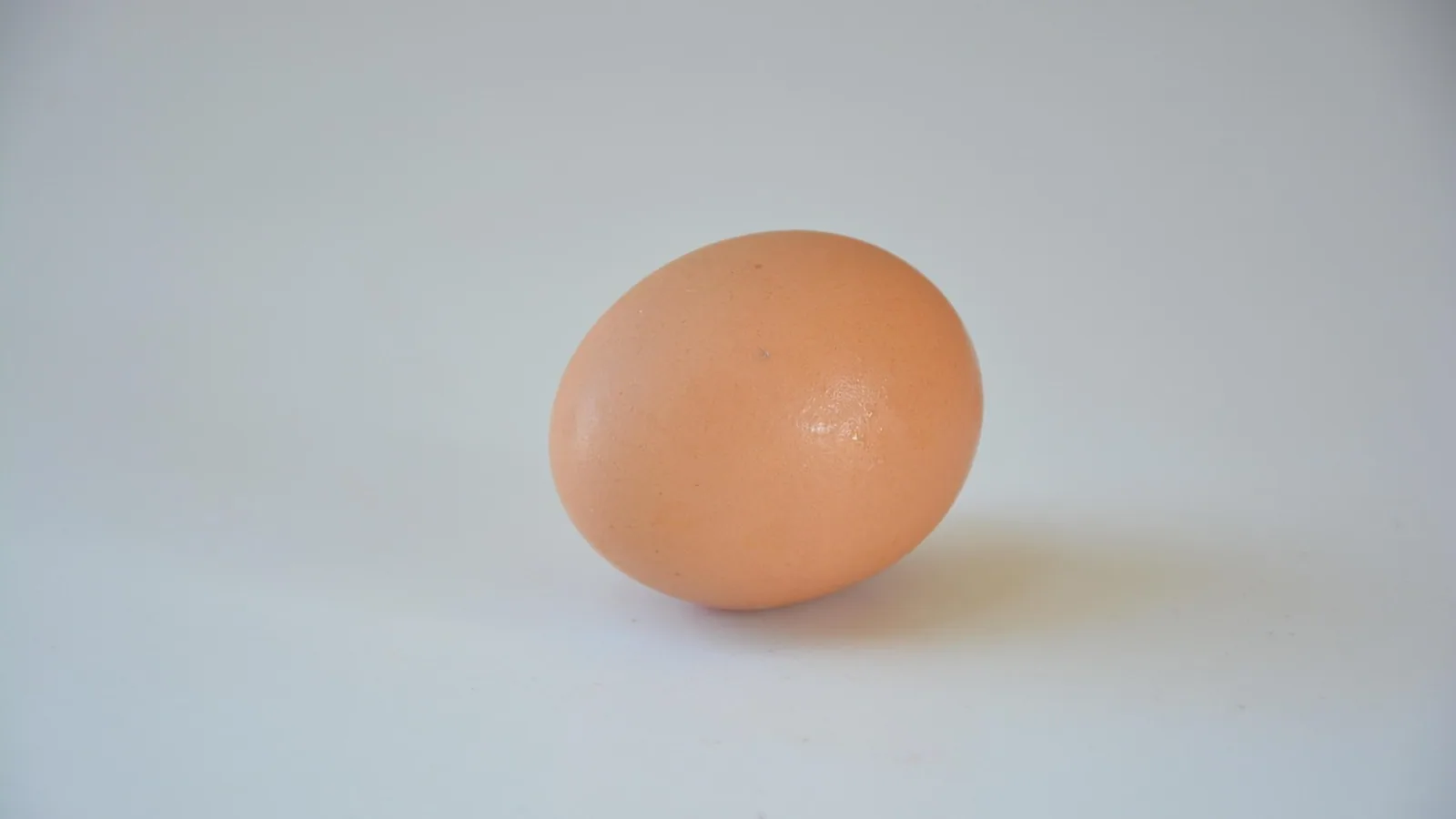
The Araucana is a South American chicken breed kept for one defining trait: it lays eggs with blue shells. The color comes from a single autosomal dominant gene, often called oocyan, that arose when an avian retrovirus inserted itself near a pigment transporter gene in the domestic chicken genome [1][2]. That insertion causes the shell gland to move biliverdin, a blue-green bile pigment, into the shell as it forms [3][1]. The pigment is distributed through the shell material rather than painted on the surface, so a blue Araucana egg stays blue inside and out.
True Araucanas are rumpless, often tufted at the ears, and lay blue eggs. They are a small-to-medium breed with a calm but active temperament. They suit keepers who want a small flock of colorful layers and who are prepared for lower hatch rates than most breeds deliver, because the tuft and rumpless traits are lethal in some embryos. This article covers the genetics behind Araucana hen eggs, how the breed differs from Easter Eggers and Ameraucanas, what the birds need in a backyard flock, and when to call a veterinarian.
This article is educational and is not a substitute for veterinary diagnosis or treatment.
At a Glance
| Trait | Detail |
|---|---|
| Primary purpose | Blue-shelled egg production, small flock |
| Eggshell color | Blue, from biliverdin deposited through the shell [3][1] |
| Comb type | Pea comb |
| Ear tufts | Present in many birds, lethal in homozygotes |
| Rumplessness | Present, lethal in homozygotes |
| Temperament | Calm, active, good forager |
| Housing | Free-range or yarded with predator protection |
| Laying rate | Moderate, lower than commercial hybrid layers [4] |
| Egg nutrition | Same as any chicken egg, shell color does not change nutrition |
| Lifespan | Long-lived for a layer, often 8 years or more with good care |
History and Origin of the Blue Egg Trait
Blue and green eggshells appear in native chickens in several parts of the world, and the trait is old enough to have spread with people before modern breed registries existed. Mapuche fowl in Chile carry the same retroviral insertion found in European and North American blue-egg breeds, and the insertion sequences are identical between the two groups [2]. That pattern points to a post-domestication event, meaning the mutation appeared in domestic chickens rather than in wild jungle fowl, and then traveled with flocks [2].
The insertion is an endogenous avian retrovirus element called EAV-HP. It sits in the 5' flanking region of the SLCO1B3 gene on chromosome 1 [5][1]. SLCO1B3 codes for an organic anion transporting polypeptide, a membrane transporter that moves bile salts and similar molecules across cell membranes [1]. In birds that carry the insertion, the gene is switched on in the uterus, which is the shell gland of the oviduct, and the transporter moves biliverdin into the forming eggshell [1][2].
The trait behaves as a simple Mendelian dominant. A hen needs only one copy of the blue allele to lay blue eggs, and the allele segregates cleanly with the phenotype in breeding studies [1]. The same retroviral mechanism is not the only way birds make blue eggs. Lueyang black-boned chickens in China lay blue-green eggs without the EAV-HP insertion, and a regulatory region upstream of SLCO1B3 explains their color instead [6]. Ducks use a different gene entirely, ABCG2, to make blue-green shells [7]. The Araucana story is the chicken version, and it is the best understood.
The Genetics of Blue Eggshell Color
One Dominant Gene, Two Copies Maximum
The oocyan gene is autosomal dominant, which means it is not carried on the sex chromosomes and a single copy is enough to produce blue eggs [1][2]. A hen has two copies of the SLCO1B3 locus. She can carry two blue alleles, one blue and one non-blue, or two non-blue alleles. Hens with at least one blue allele lay blue eggs. Hens with two non-blue alleles lay white or brown eggs depending on their other pigment genes.
Because the allele is dominant, a blue-laying hen may pass the trait to roughly half her chicks if she carries one copy, or to all her chicks if she carries two. A rooster can carry the allele without laying eggs at all, which is why breeders test males or track pedigrees when they want to fix the trait in a line.
Why the Whole Shell Is Blue
Biliverdin is not a surface dye. It is deposited into the shell as the shell is mineralized in the shell gland, so the color runs through the full thickness of the shell [3][1]. This is why blue Araucana eggs do not fade the way brown eggs can when the outer bloom is rubbed off. Brown eggs get their color from protoporphyrin laid down in the outer layers of the shell, so a brown egg can look patchy or lighter after handling. A blue egg holds its color because the pigment is part of the shell structure.
The shell gland is the site of synthesis. A study comparing blue-shelled and brown-shelled hens from the same genetic background found no difference in biliverdin levels in blood, bile, or excreta, but a large difference in the shell gland itself [3]. Blue-shelled hens had roughly six times more biliverdin in the shell gland tissue than brown-shelled hens [3]. Blood is not the source. The pigment is made locally in the gland and then moved into the shell.
Heme oxygenase 1, the enzyme encoded by HMOX1, breaks heme down into biliverdin. Blue-shelled Dongxiang hens expressed HMOX1 at higher levels in the shell gland and showed higher enzyme activity than brown-shelled hens from the same breed [8]. That gives a second piece of the puzzle: the blue allele raises transporter activity, and the shell gland also runs the pigment-making enzyme harder.
What the Allele Does Not Do
The blue allele changes shell color. It does not change the nutritional content of the egg. A study of 23 traditional chicken breeds looked at two antimicrobial proteins in egg white, lysozyme and ovotransferrin, and found that breed identity and shell pigmentation explained most of the variation in those proteins [9]. The relationship between shell color and those proteins was not consistent across color classes, and the authors noted a positive correlation only in tinted and dark brown eggs, not in blue eggs [9]. Shell color is a genetic marker for breed background, not a nutritional label.
True Araucana, Ameraucana, and Easter Egger
These three names get used loosely in the poultry trade, and the confusion causes real problems for buyers. The table below separates them by the traits that matter.
| Trait | Araucana | Ameraucana | Easter Egger |
|---|---|---|---|
| Egg color | Blue | Blue | Blue, green, or other, varies by bird |
| Comb | Pea comb | Pea comb | Variable |
| Ear tufts | Often present | Absent | Absent |
| Rumplessness | Present | Absent, full tail | Absent, full tail |
| Tail | Absent or reduced | Full tail | Full tail |
| Breed status | Recognized breed with a standard | Recognized breed with a standard | Not a breed, a crossbred group |
| Hatch rate | Reduced by lethal tuft and rumpless genes | Normal | Normal |
The Araucana is the original blue-egg chicken from Chile. It is rumpless, meaning it has no tail feathers, and many birds carry ear tufts, which are small feather clusters near the ear opening. The Ameraucana was developed from blue-egg stock in North America and has a full tail and a beard and muffs instead of tufts. Easter Egger is a catch-all term for any crossbred chicken that inherited a blue or green egg allele, and those birds vary widely in body type, comb, and egg color.
If you want a bird that reliably lays blue eggs and matches the Araucana description, buy from a breeder who can show you the parent stock and the eggs. Hatchery birds sold as Araucana are often Easter Eggers, and their eggs may be green, olive, or blue depending on what else is in their background.
Tuft and Rumpless Genes Reduce Hatch Rates
Two traits define the Araucana look, and both come with a genetic cost.
Ear tufts are inherited as a dominant trait, but embryos that carry two copies of the tuft gene do not survive to hatch. The same is true of rumplessness. A chick that inherits one copy from each parent dies in the shell, so a mating between two tufted birds or two rumpless birds loses roughly a quarter of the fertile eggs before hatch. This is why Araucana hatch rates run lower than those of most breeds, and why breeders often pair a tufted bird with a clean-faced bird to avoid the double dose.
The practical effect for a backyard keeper is simple. If you hatch your own Araucana eggs, expect fewer chicks than the number of fertile eggs suggests. If you buy hatching eggs, ask the seller how the parent birds are paired. A breeder who understands the lethal genes will not be surprised by a lower hatch rate, and will not sell you eggs from a pairing that guarantees losses.
Appearance and Body Type
Araucanas are small-to-medium chickens with a compact, muscular body. The breed is rumpless, so the rear of the bird is rounded and the tail feathers are absent or reduced to a small tuft. The pea comb is low and rounded, which helps in cold weather because a large single comb is prone to frostbite. Many birds have ear tufts, and tuft size varies from a small puff to a prominent cluster.
Plumage color varies widely. The breed standard recognizes several color varieties, and backyard flocks often include birds that do not match a show standard but still lay blue eggs. Because the blue egg gene is independent of plumage genes, you cannot judge egg color by feather color. A black Araucana and a wheaten Araucana can both lay blue eggs.
Body size matters for management. Araucanas are light enough to fly over a low fence, and they are good foragers. That combination means a yard with a three-foot fence will not hold them. Plan for a covered run or a taller fence if you want to keep them in a specific area.
Temperament and Behavior
Araucanas are calm and handleable but not sedentary. They forage actively, scratch for insects and seeds, and use vertical space if they can reach it. They are not aggressive toward people in most flocks, and hens often go broody, which means they will sit on eggs and raise chicks if you let them.
The breed does well in a mixed flock as long as the pecking order is stable. Because they are rumpless and lighter than heavy breeds, they can be bullied by larger birds in a crowded coop. Give them enough space and more than one feeder and waterer so a dominant hen cannot guard all the resources.
Broodiness is a useful trait if you want to hatch chicks naturally. It is a nuisance if you want maximum egg numbers, because a broody hen stops laying while she sits. If you do not want chicks, collect eggs daily and break up broody behavior early by moving the hen off the nest.
Housing, Free-Range, and Predator Protection
Araucanas are well suited to free-range management, and the breed's foraging ability means they can get a meaningful part of their diet from pasture. Free-range does not mean unprotected. Hawks, raccoons, foxes, coyotes, dogs, and snakes all take chickens, and a flock that ranges without a secure coop at night will not last.
The basic housing requirements are the same as for any backyard flock. Provide a coop that is dry, ventilated, and free of drafts, with roosts and nest boxes. Close the coop at dusk and open it after sunrise. Use hardware cloth rather than chicken wire on vents and run walls, because chicken wire keeps chickens in but does not keep predators out. Bury the bottom edge of the run fence or add an apron of wire on the ground to stop digging predators.
A study of blue-shelled layers compared outdoor housing with cage housing and found that the outdoor hens laid at a lower rate, 39.3 percent versus 54.7 percent from 20 to 60 weeks of age [4]. The outdoor eggs also had lower yolk cholesterol, 8.64 mg per gram versus 10.32 mg per gram, and lower whole-egg cholesterol, 125.23 mg versus 158.01 mg per egg [4]. The trade-off is real. Free-range management gives you a more natural flock and a slightly different egg profile, and it costs you some production.
Eggshell color was the only egg quality trait affected by housing system in that study, and the effect interacted with hen age [4]. Do not read that as a reason to cage your birds. Read it as a reminder that management choices show up in the eggs, and that a free-range flock is a production choice as much as a welfare choice.
Feeding and Nutrition
Araucanas are not a high-output hybrid layer, so they do not need the most concentrated layer ration on the market. A complete layer feed with appropriate calcium for laying hens covers the basics. The blue eggshell does not require special supplements. Biliverdin is made from heme, which the hen derives from her normal metabolism, and the pigment pathway does not consume calcium or protein in a way that changes feed requirements [8].
Offer free-choice calcium in the form of oyster shell for hens in lay. Provide grit for birds on pasture so they can grind the plant material and insects they eat. Keep fresh water available at all times, and clean waterers often because algae and biofilm build up quickly in warm weather.
Do not feed scraps that are high in salt, and do not feed moldy or spoiled food. If you want to reduce yolk cholesterol, note that the outdoor housing study found lower yolk cholesterol in ranged hens, but that is a management effect, not a feed additive [4]. There is no supplement that changes shell color or egg nutrition in a way that matters.
Health and Common Problems
Araucanas are a landrace-derived breed, and they are generally hardy. The health problems that matter most in a backyard flock are the ones that affect all chickens: external and internal parasites, respiratory disease, reproductive tract problems, and predator injuries.
Parasites
Mites, lice, and scaly leg mites are common in backyard flocks. Inspect birds monthly, especially around the vent and under the wings. Internal parasites, including roundworms and coccidia, are more likely in birds on damp pasture or in crowded runs. A veterinarian can run a fecal flotation to identify what is present before you treat.
Respiratory Disease
Mycoplasma and other respiratory pathogens spread quickly in a flock. Signs include sneezing, nasal discharge, swollen eyes, and rattling breath. Isolate affected birds and contact a veterinarian. Do not add new birds to the flock without a quarantine period, because a healthy-looking carrier can introduce disease.
Reproductive Problems
Hens that lay large eggs or lay for many years can develop egg binding, prolapse, or internal laying. A hen that is straining, sitting in the nest box for long periods, or showing a swollen abdomen needs veterinary attention. These problems are not unique to Araucanas, but any hen that lays a colored egg is still a hen, and the reproductive risks are the same.
Marek's Disease and Vaccination
Marek's disease is a common viral disease of chickens that causes tumors and nerve damage. Many hatcheries vaccinate day-old chicks, and backyard breeders may or may not. Ask the seller whether chicks were vaccinated and keep records. There is no treatment for Marek's disease once a bird is infected.
Biosecurity
Keep a closed flock where possible. If you show birds or buy from auctions, quarantine new arrivals away from the main flock for at least a month. Wash your hands and change footwear before entering the coop, especially if you have visited another poultry flock. These steps reduce the chance of introducing disease.
Egg Production and Laying Traits
Araucana hens are moderate layers. They do not match commercial hybrid layers, and they are not meant to. A well-managed hen in a backyard flock will produce a steady supply of blue eggs during her laying season, with reduced output in winter and during molt.
The laying rate depends on management. In the blue-shelled layer study, caged hens laid at 54.7 percent and outdoor hens at 39.3 percent from 20 to 60 weeks [4]. Those numbers come from a specific line and a specific management system, so treat them as a comparison rather than a prediction for your flock. Your birds will lay more if they get good nutrition, adequate daylight, low stress, and protection from predators.
Egg size increases with hen age. Pullet eggs are small, and the eggs get larger through the first laying cycle. Shell color can shift slightly with age and diet, and the blue tone may lighten as the hen gets older. That is normal and does not mean the egg is less nutritious.
Egg color is not a quality grade. A blue egg and a brown egg from hens on the same feed have the same basic nutrition. The difference is pigment genetics, not food value.
Breeding Araucanas
If you want to breed Araucanas, plan around the lethal genes. Pair a tufted bird with a clean-faced bird to avoid the double-tuft genotype, and pair a rumpless bird with a bird that has a small tail if you want to reduce embryo losses. Keep records of which hens lay the bluest eggs and which roosters carry the blue allele.
Blue egg color is easy to select for because the phenotype is visible in the egg. Select hens that lay consistently blue eggs rather than green or olive eggs if blue is your goal. In a breeding program that selected for blue eggshell, three cycles of selection reduced the phenotypic variance of shell color and shifted the population toward the target [10]. Selection works, but it takes generations.
Hatch rates will be lower than you expect if you breed tufted to tufted or rumpless to rumpless. Track hatch rate by pairing so you can identify which combinations are costing you chicks.
Finding a Responsible Breeder or Rescue
Buy from a breeder who will show you the parent flock, the eggs, and the chicks. Ask whether the birds are rumpless and tufted, whether the eggs are blue, and whether the chicks were vaccinated for Marek's disease. A breeder who cannot answer those questions is not a reliable source for true Araucanas.
Rescue is an option for any chicken breed. Backyard flocks get surrendered when owners move, lose interest, or face zoning complaints. Contact local poultry rescues and farm animal sanctuaries. A rescued hen may be an Easter Egger rather than a true Araucana, and that is fine if you want a pet layer rather than a breeding bird.
Avoid buying birds at auction without a quarantine plan. Auction birds often come from unknown backgrounds and can carry disease into your flock.
Who Should Not Get Araucanas
Araucanas are not the right choice for every keeper. Skip this breed if you need maximum egg numbers, because they do not match commercial layers [4]. Skip them if you cannot provide predator-proof housing, because free-range birds are vulnerable. Skip them if you want a bird that stays inside a low fence, because they fly well. Skip them if you are not prepared for lower hatch rates when breeding, because the tuft and rumpless genes cost embryos.
They are a good choice if you want a small flock of calm, active birds that lay blue eggs, if you enjoy foraging behavior, and if you are willing to manage the breed's genetic quirks honestly.
Limitations and When to Contact a Veterinarian
This article is educational and does not replace an examination by a veterinarian who can see your birds.
Contact a veterinarian if a hen stops eating, loses weight, or shows a drop in egg production that lasts more than a few days. Seek care if you see labored breathing, nasal discharge, swollen eyes, or a rattling sound when the bird breathes. A hen that is straining to lay, sitting in the nest box for hours, or showing a swollen, firm abdomen may have a reproductive emergency and needs prompt attention. Bloody droppings, sudden deaths in the flock, or a bird that cannot stand are all reasons to call.
For flock-level problems, a veterinarian can perform necropsies on dead birds, run fecal tests, and advise on treatment and biosecurity. Do not treat a sick bird with antibiotics or other medications without veterinary guidance, because the wrong drug wastes time and can leave residues in eggs.
Frequently Asked Questions
Why are Araucana eggs blue?
Araucana eggs are blue because a retroviral insertion near the SLCO1B3 gene switches that gene on in the shell gland, and the resulting transporter moves biliverdin into the shell [1][2]. The pigment is deposited through the shell, not painted on the surface.
Are Araucana eggs more nutritious than brown eggs?
No. Shell color is a genetic trait and does not change the basic nutrition of the egg. Breed identity and management affect some egg components, but blue shell color by itself is not a nutritional advantage [9][4].
What is the difference between an Araucana and an Easter Egger?
An Araucana is a true breed that is rumpless, often tufted, and lays blue eggs. An Easter Egger is a crossbred chicken that carries a blue or green egg allele and can vary widely in body type, comb, and egg color.
Do Araucanas lay blue eggs every day?
No. Araucanas are moderate layers, not high-production hybrids. Their output depends on age, daylight, nutrition, and management, and ranged hens lay at a lower rate than confined hens in controlled comparisons [4].
Why do so few Araucana eggs hatch?
The tuft and rumpless traits are lethal when a chick inherits two copies of either gene. Pairing two tufted birds or two rumpless birds causes embryo losses, which lowers hatch rate below what the number of fertile eggs suggests.
Can a rooster carry the blue egg gene?
Yes. The blue egg allele is autosomal, so a rooster can carry one or two copies and pass them to his daughters. He does not lay eggs, so breeders use pedigrees or genetic testing to identify carriers.
Do Araucanas need special feed for blue eggs?
No. A complete layer ration with free-choice calcium and grit covers their needs. The biliverdin pathway uses heme from normal metabolism, not a special nutrient you have to add to the feed [8].
Are Araucanas good for free-range flocks?
Yes, if you provide predator protection. They forage well and handle pasture, but free-ranging hens lay at a lower rate than confined hens, so plan for lower production [4].
Related Articles
- Coccidiosis in Laying Hens and Egg Production: Impact and Management
- Egg Binding in Hens: Signs and What to Do
- Do You Need a Rooster for Hens to Lay Eggs?
- Raising Chickens for Eggs: Breed Selection, Care, and Egg Production
- Lighting Programs for Laying Hens: Optimizing Egg Production
- Blue-Tongue Skink Care Guide
- Black Copper Maran: Eggs and Breed Guide
- Cuckoo Maran Chicken: Eggs, Temperament, Care
- Poultry Farm Hens: Housing, Health, and Egg Care
Sources
- An EAV-HP insertion in 5' Flanking region of SLCO1B3 causes blue eggshell in the chicken.
- Endogenous retrovirus EAV-HP linked to blue egg phenotype in Mapuche fowl.
- A study on eggshell pigmentation: biliverdin in blue-shelled chickens.
- Laying performance and egg quality of blue-shelled layers as affected by different housing systems.
- Quantitative analysis of CRISPR/Cas9-mediated provirus deletion in blue egg layer chicken PGCs by digital PCR.
- A new molecular mechanism supports that blue-greenish egg color evolved independently across chicken breeds.
- Two cis-regulatory SNPs upstream of ABCG2 synergistically cause the blue eggshell phenotype in the duck.
- Expression and activity analysis reveal that heme oxygenase (decycling) 1 is associated with blue egg formation.
- Concentration of egg white antimicrobial and immunomodulatory proteins is related to eggshell pigmentation across traditional chicken breeds.
- Genetics and breeding of a black-bone and blue eggshell chicken line. 4. Responses to 3 cycles of selection for blue or green eggshell.