Feeding Ducklings: Starter Feed and Schedule
By Dr. Zubair Khalid, DVM, MS, PhD ·
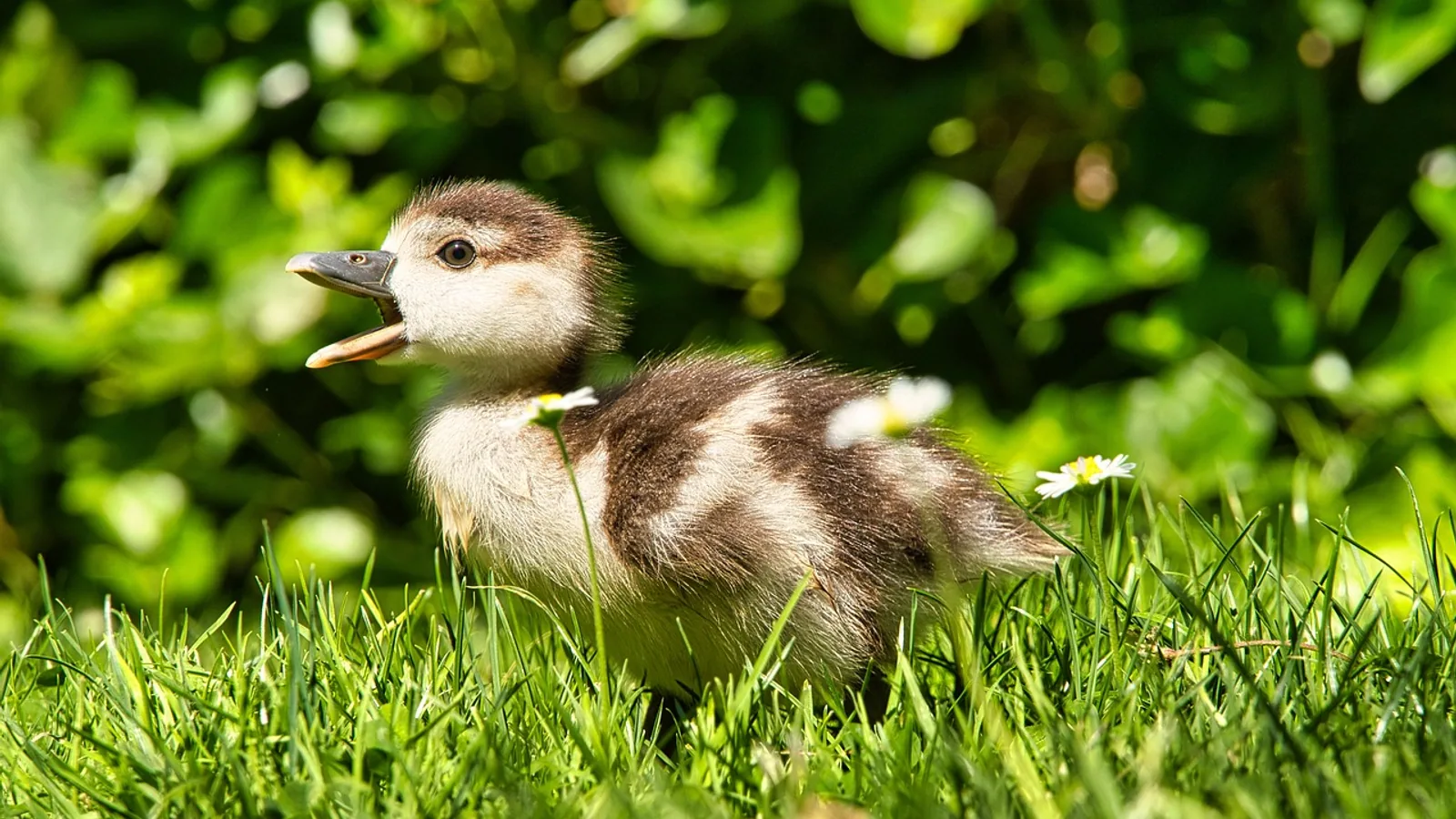
Feeding ducklings is not the same as feeding baby chicks. Ducklings grow faster, eat more, drink far more, and have a specific requirement for the B vitamin niacin that a plain chick starter does not meet. If you feed a duckling the same unmodified chick crumble you would give a chick, you risk a preventable leg deformity within the first two to three weeks.
The short answer: start ducklings on an unmedicated starter crumble with roughly 20 to 22 percent crude protein, add niacin so the total is about 30 to 50 mg per kg of feed, provide water deep enough to submerge the bill but shallow enough that the bird cannot soak itself, and hold off on grit until you introduce treats. Feed free-choice for the first two weeks, then move to scheduled meals. Switch to a grower ration around week 3 to 4 and a maintenance or layer ration later depending on whether the birds are for meat or eggs.
This article gives you the full week-by-week schedule, the reasoning behind each step, and the mistakes that send ducklings to the veterinarian.
At a Glance: The Duckling Feeding Checklist
- Unmedicated starter crumble, 20 to 22 percent crude protein, from day 1.
- Niacin added to reach roughly 30 to 50 mg per kg of total feed, every day, for at least the first 8 weeks.
- Water in a shallow dish deep enough to cover the bill and nostrils, refreshed at least twice daily.
- Feed free-choice (always available) for weeks 1 and 2.
- Introduce grit only when you start offering treats, never mixed into starter crumble.
- Move to grower feed around week 3 to 4, then to a maintenance or layer ration after week 8.
- Never use medicated chick starter. Never feed moldy or damp feed.
- Weigh or handle the birds weekly so you catch slow growth early.
Why Ducklings Cannot Simply Eat Chick Starter
Chick starter is formulated for the nutritional profile of a chicken. Ducks and chickens are different species with different growth rates and different vitamin requirements. The most consequential difference for a backyard owner is niacin.
Niacin is a water-soluble B vitamin that supports energy metabolism and normal development. In poultry, niacin deficiency produces a well-recognized set of leg and skeletal problems, and young, fast-growing birds are the most vulnerable. Work in poultry species has shown that niacin status matters most during the early growth window. A study on Single Comb White Leghorn pullets found that when the basal diet already supplied about 25.1 mg of niacin per kg, adding supplemental niacin from zero to six weeks of age produced no measurable difference in feed consumption, body weight, or feed efficiency, and none of the birds showed signs of deficiency [1]. That is the key point for duck owners: the requirement is real, but it is a threshold requirement. Once the diet meets the bird's need, extra niacin does not make the bird grow faster. Below the threshold, deficiency signs appear.
Ducks have a higher niacin requirement than chickens, which is why a chick starter that is perfectly adequate for a chick can be inadequate for a duckling. The practical fix is straightforward: supplement the starter feed so the total niacin content lands in the range of roughly 30 to 50 mg per kg of feed. This is the single most important modification you will make to a chick starter for ducklings.
Niacin supplementation has been studied across species for its role in supporting animals under nutritional stress. In long-distance transported steer calves, feed and water deprivation caused a temporary drop in serum glucose and body weight gain, and supplementation with rumen-protected niacin at 100 g per day per head suppressed the drop in serum glucose and total cholesterol [2]. That study is about cattle, not ducks, and the dose is not transferable. It does, however, illustrate a general principle that applies to your ducklings: niacin is involved in energy metabolism, and when intake is disrupted, niacin status becomes relevant to how the animal copes.
The Niacin Rule: 30 to 50 mg per kg of Feed
Niacin is the nutrient that separates a healthy duckling from a duckling with splayed legs.
What Deficiency Looks Like
A duckling that is not getting enough niacin typically develops leg weakness in the first two to three weeks. The legs may splay outward, the bird may sit rather than stand, and it may struggle to reach feed and water. Because the problem is nutritional and not infectious, it affects multiple birds in the same brooder at roughly the same time. If you see several ducklings going down on their legs within a few days of each other, niacin is the first thing to check.
How to Supplement
You have three practical options.
- Buy a waterfowl-specific starter that is already formulated with adequate niacin. This is the simplest route and requires no math.
- Buy an unmedicated chick starter and add a niacin supplement. Brewer's yeast is a traditional source. A dedicated poultry niacin product dosed to the label is more reliable because the concentration is known.
- Use a chick starter that is labeled for waterfowl. Read the guaranteed analysis and confirm the niacin level.
Whichever route you take, the target is a total of roughly 30 to 50 mg of niacin per kg of finished feed. If you are adding a supplement to a base feed, you need to know the niacin content of the base feed and the concentration of your supplement so you can calculate the addition. If the label math is unclear, ask your feed supplier or your veterinarian to confirm the total.
Do not rely on "a pinch" or "a sprinkle." Niacin is cheap and the margin between adequate and inadequate is meaningful during the first three weeks of life.
Why More Is Not Better
The pullet study is worth repeating in plain terms: when the basal diet already met the requirement, supplemental niacin up to 36 mg per kg produced no improvement in body weight, feed efficiency, or egg production later in life [1]. Niacin is a nutrient with a requirement, not a growth promoter. Hitting the target range is the goal. Overshooting it does not buy you faster growth.
Water: The Most Underrated Part of Feeding Ducklings
Ducklings drink more water per unit of feed than chicks, and they use water in a way chicks do not. A duckling needs to be able to dip its bill into water deep enough to submerge the nostrils and the eyes. This is how a duck clears its nostrils and keeps its eyes moist and clean. A chick waterer with a narrow lip does not allow this.
The same water that keeps the bill and eyes clean can also kill a duckling if the container is too deep. A duckling that climbs into a deep water dish becomes soaked, loses body heat rapidly, and can chill and die. The balance is a container deep enough for bill submersion but shallow enough that the bird cannot get its whole body wet.
Practical Water Setup
- Use a shallow, heavy-based dish or a purpose-made waterfowl waterer.
- Depth of roughly 2 to 3 inches at the start is enough for bill submersion without allowing full-body soaking.
- Refresh the water at least twice daily. Ducklings foul water quickly by dabbling and defecating.
- Place water on a surface that stays dry. Wet bedding plus a wet duckling equals a chilled duckling.
- Never leave a duckling without water. Ducklings that eat dry crumble without access to water can become impacted.
Water intake rises with feed intake and with ambient temperature. As a rough guide, expect ducklings to drink roughly two to three times their feed weight in water per day, but treat that as a starting estimate and let the birds tell you. If the water dish is empty before the next scheduled refresh, you need a bigger dish or more frequent refills.
Water quality matters too. A study on supplementing drinking water with a combination of herbal extracts and probiotics in two-week-old Bali ducklings found that inclusion at 2 to 6 percent in drinking water significantly improved body weight gain, feed consumption, and feed efficiency, and reduced intestinal coliform and E. coli counts [3]. That study is about a specific commercial product, not about plain water, and it does not mean you should add anything to your ducklings' water. The takeaway is narrower: the drinking water line is a real route for supporting duckling gut health, and clean water is the baseline.
The Week-by-Week Feeding and Water Schedule
The table below is the core of this article. It runs from hatch through week 8. Crude protein percentages are targets for the ration you are feeding. Daily intake figures are approximate and scale with breed, body size, and ambient temperature, so use them as a planning guide rather than a prescription.
| Age | Feed type | Crude protein | Approximate daily intake per duckling | Water needs | Niacin |
|---|---|---|---|---|---|
| Week 1 (day 1 to 7) | Unmedicated starter crumble, waterfowl-formulated or chick starter plus niacin | 20 to 22 percent | 15 to 25 g, free-choice | Shallow dish, bill-deep, refreshed 2 to 3 times daily | 30 to 50 mg per kg feed |
| Week 2 | Same starter crumble | 20 to 22 percent | 30 to 50 g, free-choice | Same, increase dish size as birds grow | 30 to 50 mg per kg feed |
| Week 3 | Starter transitioning to grower | 18 to 20 percent | 50 to 75 g, begin scheduled meals | Bill-deep, refreshed at least twice daily | 30 to 50 mg per kg feed |
| Week 4 | Grower crumble or pellet | 16 to 18 percent | 75 to 100 g | Bill-deep, refreshed at least twice daily | 30 to 50 mg per kg feed |
| Week 5 | Grower | 16 to 18 percent | 100 to 125 g | Bill-deep, larger container | Continue if feed is not waterfowl-formulated |
| Week 6 | Grower | 16 to 18 percent | 125 to 150 g | Bill-deep, larger container | Continue as above |
| Week 7 | Grower or maintenance | 15 to 16 percent | 150 to 175 g | Bill-deep, larger container | Continue as above |
| Week 8 | Maintenance or layer ration depending on purpose | 15 to 18 percent | 150 to 200 g | Bill-deep, larger container | Continue as above |
Two notes on this table. First, the protein percentage declines as the birds age because ducklings need the highest protein during the rapid growth phase of the first two weeks, and the requirement eases afterward. Second, the intake figures climb steeply because ducklings roughly double their body weight every week during the early phase. A duckling that eats 20 g on day 3 may eat 150 g by week 6. Plan your feed purchases accordingly.
Week 1: The First Seven Days
The first week is about getting the duckling to eat and drink reliably. Use an unmedicated starter crumble. Keep feed available at all times. Keep water bill-deep and refreshed often. Watch for any duckling that is not moving to the feed and water, because a duckling that does not eat in the first 24 to 48 hours is at risk.
Niacin supplementation starts on day 1. Do not wait to see a problem.
Week 2: Peak Growth Begins
By week 2 the ducklings are noticeably larger and eating more. Keep the same starter crumble and the same niacin target. This is the week when niacin deficiency most often becomes visible, so if you are going to see splayed legs, this is when it happens. Check the legs daily.
Week 3: Transition to Grower
Around week 3 you can begin blending starter and grower, then move fully to grower by the end of the week. Protein drops to about 18 to 20 percent. This is also a reasonable time to move from free-choice feeding to scheduled meals, offered two to three times daily. Scheduled feeding has been shown to influence growth and digestive performance in other species. In pangasiid catfish and silver carp polyculture, feeding three times a day produced significantly higher average weight gain and net production than feeding once or twice daily [4]. In tilapia and common carp in an integrated rice-fish system, feeding five days per week at two set times produced the highest specific growth rate and weight gain [5]. These are fish, not ducks, so the numbers do not transfer. The principle does: consistent, repeated feeding opportunities support better growth than infrequent feeding.
Week 4: Full Grower Ration
By week 4 the birds should be on a full grower ration at 16 to 18 percent crude protein. Water volume needs have increased substantially. If you are still using a small chick waterer, upgrade.
Weeks 5 to 8: Growing Out
From week 5 onward the birds are on grower, then maintenance or layer ration depending on whether you are raising them for meat or eggs. Keep niacin supplementation going if the base feed is not a waterfowl-specific formula. Keep water bill-deep. Keep watching legs, weight gain, and feed intake.
Grit: When to Introduce It and When Not To
Grit is small insoluble stone or sand that sits in the gizzard and helps grind food. Ducklings on a commercial crumble or pellet do not need grit because the feed is already processed and highly digestible. Adding grit to starter crumble is unnecessary and can cause problems if the particles are too large for a small bird.
Introduce grit only when you begin offering treats. Treats include things like chopped greens, kitchen scraps, or any food that is not the commercial ration. When the duckling eats something that needs mechanical grinding, grit becomes useful.
The rules for grit are simple.
- Offer grit in a separate small dish, not mixed into the feed.
- Use a chick-size grit, not a full-size poultry grit.
- Offer it free-choice and let the birds take what they need.
- Do not offer grit at all if the birds are only eating commercial crumble or pellet.
If you never offer treats, you never need grit.
Feed Storage and the Mold Warning
Moldy feed is dangerous. Damp feed grows mold, and mold produces mycotoxins that can sicken or kill poultry. The rules are the same for ducklings as for any bird.
- Store feed in a dry, cool place in a sealed container.
- Do not buy more feed than you can use within a few weeks.
- Discard any feed that is clumped, damp, discolored, or smells musty.
- Do not feed scraps that have been sitting out.
- Keep the feed dish clean and empty it of wet or soiled feed daily.
A duckling that eats moldy feed may show reduced intake, lethargy, or digestive upset. If you suspect mold exposure, remove the feed immediately and contact your veterinarian.
Why Medicated Chick Starter Is the Wrong Choice
Medicated chick starter contains an anticoccidial drug added to prevent coccidiosis in chickens. Ducklings have different drug sensitivities and different coccidiosis risks than chicks. The standard advice is to use unmedicated starter for ducklings. Read the feed tag before you buy. If the label says "medicated," put it back and choose an unmedicated product.
This is not a subtle point. Medicated feed is formulated for a different species with a different tolerance profile, and the medication is not there to benefit the duckling. Choose unmedicated starter and manage coccidiosis risk through clean bedding and clean water instead.
Feeding Schedule: Free-Choice Versus Meals
There is a real question about whether ducklings should be fed free-choice or on a schedule. The evidence from other species suggests that feeding frequency and timing affect growth and digestive function, and that consistency matters.
In Macrobrachium tenellum prawn juveniles, diets at 40 percent crude protein produced the highest general protease, trypsin, and lipase activity, and feeding schedules at 14:00 and 20:00 produced the highest digestive enzyme activity [6]. In European sea bass held under natural conditions, a time-restricted feeding schedule caused the fish to synchronize their demand-feeding rhythm to the three periods of food availability, and food anticipatory activity developed in relation to the feeding times [7]. In goldfish, shifting the feeding time by 12 hours acted as a stressor and altered circadian oscillators in the hypothalamus, liver, and head kidney [8].
The consistent theme across these studies is that feeding time is a signal the animal's body uses. A predictable schedule supports normal physiology. An erratic schedule is a stressor.
For ducklings, the practical translation is this. Free-choice feeding in weeks 1 and 2 is appropriate because the birds are small, growing fast, and need constant access. From week 3 onward, scheduled meals offered at consistent times two to three times daily are reasonable and support a predictable routine. What you should avoid is feeding at random times on random days. The horse study is instructive here: when feeding times were shifted earlier or later than usual, horses spent less time eating hay, rested more, and showed more pawing, kicking, and looking toward the door [9]. The authors concluded that deviations from the regular feeding schedule compromised temporal predictability. Ducks are not horses, but the underlying biology of anticipating a meal is broadly shared across animals.
A Decision Path for the First Eight Weeks
The flowchart below summarizes the main feeding decisions from hatch to week 8.
flowchart TD
    A[Duckling hatches] --> B{Starter feed type}
    B -->|Waterfowl starter| C[Check niacin on label]
    B -->|Chick starter| D[Add niacin to 30 to 50 mg per kg]
    C --> E[Provide bill deep water]
    D --> E
    E --> F[Feed free choice weeks 1 and 2]
    F --> G{Legs normal at week 3}
    G -->|Yes| H[Transition to grower]
    G -->|No| I[Contact veterinarian]
    H --> J{Offering treats}
    J -->|Yes| K[Offer chick grit separately]
    J -->|No| L[No grit needed]
    K --> M[Continue grower to week 8]
    L --> M
Common Mistakes Owners Make
Using medicated chick starter. Covered above. Read the tag.
Skipping niacin because the feed "looks complete." A chick starter can be complete for a chick and still be short for a duckling. Supplement to the 30 to 50 mg per kg range.
Water too shallow for bill submersion. A chick waterer with a narrow lip does not let the duckling clear its nostrils and eyes. Use a dish deep enough for the bill.
Water too deep. A deep bucket or pan lets the duckling climb in, soak its down, and chill. Match depth to the bird's size.
Adding grit to the starter. Not needed with commercial crumble, and large grit particles can cause problems in a small bird.
Feeding moldy or damp feed. Discard it. Do not try to salvage it.
Feeding at random times. Pick a schedule and keep it. Consistency supports normal physiology.
Ignoring slow growth. Weigh or handle your birds weekly. A duckling that is falling behind its hatchmates needs a look.
Troubleshooting: What to Do When Something Goes Wrong
Ducklings are not eating. Check water first. A duckling that cannot drink will not eat. Check the feed for freshness. Check that the crumble is small enough for the bird to pick up. If a duckling has not eaten in 24 hours, contact your veterinarian.
Legs are splaying. This is the classic niacin deficiency sign. Confirm your niacin supplementation is actually reaching 30 to 50 mg per kg of feed. If it is and the problem continues, contact your veterinarian, because other causes of leg weakness exist.
Water is constantly dirty. Ducklings dabble and defecate in water. Refresh more often, use a smaller dish, or raise the water dish slightly so the birds cannot walk through it.
Feed is being wasted. Ducklings bill feed out of dishes. Use a shallow, heavy dish and do not overfill. Some waste is normal.
One bird is much smaller. Separate it at feeding time or provide an extra feeder so it can eat without competition. If it continues to fall behind, contact your veterinarian.
Welfare and Safety Points
Ducklings are prey animals and they hide illness well. The feeding and watering routine is your best daily health check because it forces you to look at every bird.
- Count your birds at every feeding.
- Watch for any bird that hangs back from the feed.
- Check legs daily during weeks 1 to 3.
- Keep bedding dry. Wet bedding plus wet ducklings equals chilled ducklings.
- Provide a heat source appropriate for the age of the birds and let them choose their distance from it.
- Keep feed and water away from the heat source so the area stays dry.
A study on wood duck ducklings found that incubation temperature affected food consumption and growth. Ducklings incubated at 36 degrees Celsius consumed more food during one-hour feeding trials and grew faster in body mass and structural size than those incubated at 35 degrees Celsius, even though feeding behaviors did not differ [10]. The lesson for a backyard owner is that early developmental conditions shape how much a duckling eats and how fast it grows. You cannot control incubation temperature after hatch, but you can control the brooder environment, and a duckling that is too cold or too hot will eat less.
Limitations and When to Contact a Veterinarian
This article is educational and is not a substitute for veterinary diagnosis or treatment. Individual ducklings vary, and a feeding plan that works for one flock may need adjustment for another.
Contact a veterinarian if any of the following occur.
- A duckling has not eaten or drunk in 24 hours.
- Legs are splayed, bowed, or the bird cannot stand.
- Multiple birds in the brooder develop the same problem within a few days.
- There is diarrhea, blood in the droppings, or a sudden drop in feed intake.
- A duckling is losing weight or falling far behind its hatchmates.
- You suspect moldy feed exposure.
- Any bird dies suddenly and the cause is unclear.
Your veterinarian can examine the birds, review your feed and supplementation, and determine whether the problem is nutritional, infectious, or environmental.
Frequently Asked Questions
Can I feed ducklings regular chick starter?
You can use unmedicated chick starter as a base, but you must add niacin to reach roughly 30 to 50 mg per kg of feed. Plain chick starter is formulated for chickens and does not meet the duckling's niacin requirement.
How much niacin do ducklings need?
Target roughly 30 to 50 mg of niacin per kg of total feed. This applies from day 1 through at least the first 8 weeks.
Do ducklings need grit with starter feed?
No. Commercial crumble and pellet are already processed and digestible. Offer chick-size grit only when you begin giving treats, and offer it in a separate dish.
How deep should duckling water be?
Deep enough for the duckling to submerge its bill and nostrils, but shallow enough that it cannot climb in and soak its whole body. Roughly 2 to 3 inches at the start works for most ducklings.
Can I use medicated chick starter for ducklings?
No. Use unmedicated starter. Medicated chick starter contains an anticoccidial drug formulated for chickens, and ducklings have different sensitivities.
When do I switch from starter to grower feed?
Around week 3 to 4. Blend the two feeds for a few days, then move fully to grower at 16 to 18 percent crude protein.
Should I feed ducklings free-choice or on a schedule?
Free-choice for weeks 1 and 2, then scheduled meals two to three times daily from week 3 onward. Keep the times consistent.
What happens if ducklings do not get enough niacin?
They develop leg weakness and splayed legs, usually within the first two to three weeks. If you see it, confirm your niacin supplementation and contact your veterinarian.
Related Articles
- Feeding Chicks: Starter Diets and Nutrition for Healthy Growth
- Calf Starter Feed Formulation: Protein, Energy, and Additives
- Calf Starter Rations: Formulating for Growth and Health
- Calf Rumen Development: Grain Feeding and Starter Intake
- Broiler Feeding Program: Starter, Grower, and Finisher Phases
- Creep Feeding Piglets and Feed Access
- Ducklings Eating: What and How Much to Feed
- What Does a Goose Eat? Daily Diet and Feeding Schedule
Sources
- Research note: performance of single comb White Leghorn pullets as influenced by niacin supplementation from zero to six weeks of age and subsequent layer performance.
- Effect of niacin supplementation in long-distance transported steer calves.
- Herbal-pro supplementation in drinking water to promote the growth and suppress Coliform and Escherichia coli in the Intestines of ducklings
- Effects of feeding schedule on growth, production and economics of pangasiid catfish (Pangasius hypophthalmus) and silver carp (Hypophthalmichthys molitrix) polyculture
- Impact of Feeding Schedule on the Growth Performances of Tilapia, Common Carp, and Rice Yield in an Integrated Rice-Fish Farming System
- Effect of protein level in diet and feeding schedule on the digestive enzymatic activity of Macrobrachium tenellum juveniles
- Effect of Restricted Feeding Schedule on Seasonal Shifting of Daily Demand-Feeding Pattern and Food Anticipatory Activity in European Sea Bass (Dicentrarchus labrax L.)
- Time-Lag in Feeding Schedule Acts as a Stressor That Alters Circadian Oscillators in Goldfish
- The Effect of an Irregular Feeding Schedule on Equine Behavior
- Incubation Temperature Affects Duckling Body Size and Food Consumption Despite No Effect on Associated Feeding Behaviors