Ducklings Eating: What and How Much to Feed
By Dr. Zubair Khalid, DVM, MS, PhD ·
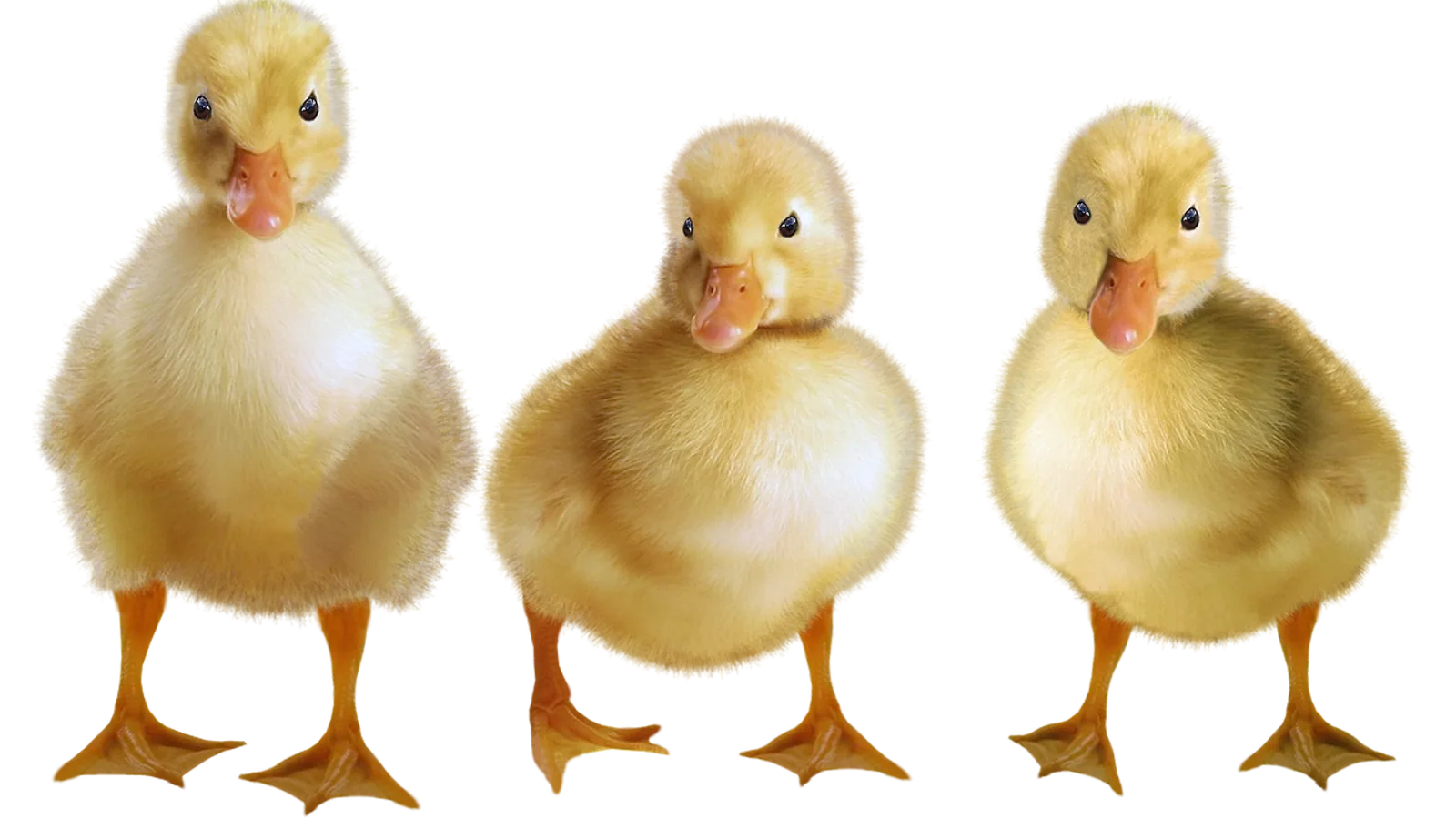
Ducklings eating well is the single best sign that you are getting the basics right. A healthy duckling starts on a crumble starter feed with roughly 18 to 20 percent crude protein from hatch to about 3 weeks of age, moves to a grower ration, and later to a layer ration if the bird is a female kept for eggs. Feed must always be paired with open water, because ducklings bolt dry food and can choke without it. Niacin is the nutrient that separates duckling feeding from chick feeding. Ducklings need far more niacin than chicks, and a shortfall causes leg weakness and bowed legs. This guide gives you an age-based feeding table, the niacin numbers that matter, and the practical signs that a duckling is eating too much, too little, or the wrong thing.
This article is educational and is not a substitute for veterinary diagnosis or treatment.
At a Glance: The Duckling Feeding Plan
| Age | Feed type | Crude protein target | Niacin target | Water | Grit |
|---|---|---|---|---|---|
| Day 0 to week 3 | Starter crumble | 18 to 20 percent | 30 to 50 mg per kg of feed | Always available, shallow dish | Not needed for crumble |
| Week 3 to week 8 | Grower crumble or pellet | Lower than starter, matched to growth | Continue niacin support | Always available | Offer chick grit if feeding anything beyond crumble |
| Week 8 to point of lay | Grower or developer ration | Moderate | Continue niacin support | Always available | Offer grit |
| Point of lay onward (females kept for eggs) | Layer ration | Layer-level protein with calcium | Continue niacin support | Always available | Offer grit |
Key rules to act on today:
- Buy a duckling or waterfowl starter, not a chick starter, whenever you can find one.
- If you must use a chick starter, check the label for a coccidiostat and read the warning below before you feed it.
- Add a niacin source to the feed or water, because most chick starters are formulated for chick niacin needs, not duckling needs.
- Keep water within reach at all times. Never leave ducklings with dry feed and no water.
- Do not feed bread. It is a choking hazard and it dilutes the nutrition the duckling needs.
- Weigh or scoop feed so you know how much the flock is actually eating.
Why Duckling Feeding Is Different From Chick Feeding
Ducklings are not small chickens. They grow faster, they eat more per bird, and they have specific nutrient requirements that chick feed does not always meet. The published nutrition work on ducklings shows a bird with real, measurable requirements for amino acids, minerals, and vitamins, and those requirements do not line up neatly with chick formulations.
Take amino acids as one example. Research on mule ducklings found that the minimum arginine requirement for maximum growth and feed efficiency was 1.08 percent of the diet, or 6.0 percent of dietary crude protein [1]. The same work found total lysine and available lysine requirements of 1.06 percent and 0.97 percent of the diet, respectively [1]. These are precise numbers that feed formulators use. For an owner, the takeaway is simpler: ducklings have a defined protein and amino acid profile they need to hit, and a random scratch mix will not hit it.
Minerals matter just as much. A study on calcium and phosphorus requirements of mule ducklings found minimum calcium requirements of 0.48 percent for maximum growth and 0.58 percent for optimum tibia ash content [2]. Minimum available phosphorus requirements were 0.26 percent for maximum body weight gain and 0.34 percent for optimum tibia ash [2]. Tibia ash is a measure of bone mineralization, so these numbers are about building a skeleton that holds up. A duckling that never gets the right mineral balance can grow on weak legs.
Newer work keeps refining the picture. A 2025 study on white Pekin ducks from hatch to 21 days estimated the optimal standardized ileal digestible methionine requirement at 0.51 percent for body weight improvement, 0.51 percent for average daily gain, and 0.50 percent for feed conversion efficiency [3]. A separate study on growing ducks from 21 to 49 days found the optimal methionine requirement for maximum weight gain and breast meat yield at 0.377 and 0.379 percent, respectively [4]. These are formulator-level details, but they explain why a quality starter feed outperforms a homemade mix.
Vitamins follow the same pattern. Pantothenic acid is a B vitamin, and a study on starter white Pekin ducks from 1 to 21 days found that ducks fed a pantothenic acid-deficient diet had growth depression, poor pantothenic acid status, fasting hypoglycemia, and elevated plasma uric acid [5]. Supplementation reversed those effects, and the parameters responded in a linear or quadratic way as dietary pantothenic acid increased [5]. In plain terms, B vitamin gaps show up as poor growth, not just a vague "off" bird.
The practical conclusion is that ducklings eating a purpose-made waterfowl starter are getting a diet built around these requirements. Ducklings eating a chick starter are getting something close, but usually not identical, and the gap is largest for niacin.
The Age-Based Feeding Table in Detail
Weeks 0 to 3: Starter Feed
This is the most important window. Feed a starter crumble at roughly 18 to 20 percent crude protein. Crumble beats mash for ducklings because mash spills and ducklings waste it. One study comparing feed forms found that medicated commercial crumble turkey and chick starter feeds produced significantly better feed conversion than mash feeds, and the authors attributed the difference to greater feed spillage with mash [6]. Spilled feed is money on the floor and nutrition the duckling never eats.
Offer feed free choice in a shallow, sturdy dish. Ducklings are messy eaters and they will walk through feed and water. A dish they can step into will be emptied onto the bedding within an hour. Choose a feeder with a lip they can reach over but not stand in.
During this window, keep water available at all times. Ducklings eating dry crumble need water to swallow comfortably. A duckling that fills its mouth with dry feed and cannot reach water is at risk of choking.
Weeks 3 to 8: Grower Feed
Around 3 weeks, move the flock to a grower ration. The protein level steps down from starter, which matches the duckling's slowing growth rate. Continue the same free-choice approach and the same water rules. Watch the feed label for the protein percentage and compare it to the starter you used so you know what changed.
If you are raising a dual-purpose or meat breed, growth in this window is fast and feed intake climbs quickly. Track how much the flock eats per day so you notice a sudden drop, which is often the first sign of illness.
Weeks 8 to Point of Lay: Developer Ration
Between roughly 8 weeks and the point where a female duck starts laying, keep the birds on a grower or developer ration. Do not push a high-calcium layer ration on a bird that is not laying yet. The calcium demand changes once eggs start forming.
Point of Lay Onward: Layer Ration
Once a female duck is laying, switch to a layer ration. This is the ration formulated for the calcium demand of egg production. Male ducks and non-laying females do not need a layer ration. If you keep a mixed flock, feed the group a grower ration and offer a separate calcium source for the laying females, or separate the birds at feeding time.
Niacin: The Nutrient Ducklings Need More Of
Niacin is where duckling feeding most often goes wrong. Ducklings need more niacin than chicks, and the working target for feed is roughly 30 to 50 mg per kg of feed. A chick starter is formulated around chick niacin needs, which are lower. A duckling raised on unsupplemented chick starter can develop leg weakness and bowed legs.
The research backs the higher number. A study on mule ducklings fed a corn and soy-based diet found the minimum niacin requirement was 45 mg per kg of the diet [7]. That study also found that excess tryptophan could spare the duckling's need for niacin, while excess niacin could not compensate for a tryptophan deficiency [7]. Maximum growth was obtained and bowed-leg disorder was prevented by adding enough niacin or tryptophan to the basal diet [7]. The bowed-leg finding is the one owners notice first, because it is visible.
How to Supply Niacin
The practical options are:
- A waterfowl-specific starter that already includes duckling-level niacin.
- Brewer's yeast added to the feed, which is a traditional niacin source.
- A niacin product sold for poultry, added at the rate on its label.
Follow the label on any niacin product. Do not guess at a dose. If you are supplementing a chick starter to feed ducklings, the supplement is doing real work, not cosmetic work. Keep supplementing through the growth period, because the deficiency shows up as the duckling grows and puts weight on its legs.
What Niacin Deficiency Looks Like
Watch for:
- Unsteady gait
- Shaky legs
- Reluctance to walk to feed or water
- Bowed legs in a growing duckling
One older study noted that some ducklings in all treatment groups showed unsteadiness of gait and shaky legs, and those signs disappeared when the ducklings were moved from the battery brooder to an outside pen [6]. That is a useful reminder that leg signs have more than one cause. Housing, bedding, and exercise space can all contribute. If leg weakness appears, review the niacin content of the feed first, then look at the environment, and involve a veterinarian if the signs persist or worsen.
Medicated Chick Starter: Read the Label First
This is the warning that saves ducklings. Many chick starters are medicated with a coccidiostat, and some coccidiostats are not appropriate for ducklings. The long-standing advice in waterfowl publications has been that medicated feeds should not be fed to ducklings and goslings, and that advice created a real problem for small producers who could only buy medicated chick, turkey, or gamebird starter [6].
The research on this is more nuanced than the old blanket warning. A study fed the anticoccidial drugs zoalene, sulfaquinoxaline, and amprolium to Khaki Campbell male ducklings to 4 weeks of age and found no significant differences in mean body weight, mortality, or anatomical development among treatments [6]. Zoalene, sulfaquinoxaline, and amprolium at the recommended levels for chickens and turkeys did not cause leg or anatomical problems in ducklings [6].
So what should an owner do? Two things.
First, know that not all coccidiostats are the same, and the study above covers three specific drugs, not every drug on the market. A chick starter medicated with a different coccidiostat has not been covered by that work.
Second, the safest path is a feed labeled for ducklings or waterfowl. If you cannot find one and must use a medicated chick starter, read the active ingredient on the label and confirm with your feed supplier or veterinarian that it is appropriate for ducklings before you open the bag. Do not assume that "medicated" means the same thing across every product.
There is a second, separate reason to prefer a non-medicated or duckling-specific feed. Amprolium, one of the drugs studied, works by interfering with thiamine, and ducklings have their own thiamine and niacin considerations. The cleanest answer for a backyard flock is a feed made for the species you are raising.
Water: The Non-Negotiable Partner to Dry Feed
Ducklings eating dry feed without water is a choking risk. This is not a minor point. Ducklings eat fast, they take large mouthfuls, and dry crumble needs moisture to move down the throat comfortably. A duckling that has feed but no water can choke.
Rules for water:
- Water must be available at all times, day and night.
- Use a shallow dish that a duckling can drink from without climbing into.
- Refresh water often, because ducklings foul it within hours.
- Place water close to feed so a duckling does not have to travel far between bites.
- Never withhold water to "dry out" a duckling or to manage messy bedding.
Ducklings are waterfowl. They will splash, and the bedding will get wet. Plan for it. A wet brooder is a management problem to solve with better bedding and a better waterer, not by removing water.
Choking Risk: Dry Feed and Bread
Two choking hazards deserve their own section.
Dry Feed Without Water
Covered above, but it belongs on this list. The fix is simple and absolute: water within reach whenever feed is available.
Bread
Bread is a common mistake because ducklings eat it eagerly and it seems harmless. It is not a good duckling food. Bread is a choking risk, and it has little nutritional value for a growing duckling. A duckling that fills up on bread eats less starter feed and misses the protein, amino acids, minerals, and vitamins it needs. The published requirements for arginine, lysine, calcium, phosphorus, methionine, pantothenic acid, and niacin are the diet a duckling needs [1][2][5][3][4]. Bread does not deliver any of that.
Do not feed bread to ducklings. If you want to offer a treat to older ducks, keep it small and occasional, and never let it replace the ration.
Grit Timing
Grit is small insoluble stone that sits in the gizzard and helps grind food. Ducklings on a crumble or pelleted ration do not need grit, because the feed is already broken down and digestible. Grit becomes relevant when the bird eats anything that needs grinding, such as whole grains, seeds, or forage.
Offer chick grit, which is the small size, when:
- You start offering anything beyond crumble or pellets.
- The birds have access to grass, dirt, or forage.
- You offer whole grains or seeds as a supplement.
Offer it in a small separate dish, free choice. Do not mix grit into the main feed, because a bird that does not need grit may eat it anyway and a bird that needs it may not get enough. A separate dish lets each bird take what it needs.
How Much to Feed: Reading the Flock, Not Just the Scoop
There is no single universal gram-per-duckling number that fits every breed, age, and climate. Feed intake depends on body size, growth rate, temperature, and feed form. What you can do is manage by observation and by tracking the flock's daily intake.
A practical method:
- Fill the feeder at the same time each day.
- Weigh or scoop the same amount.
- Note how much is left at the next feeding.
- Adjust so that feed is available but not piled up and wasted.
Ducklings should have feed available during waking hours and should clean up most of what you put out. A feeder that is constantly overflowing means you are overfeeding or the feeder design is wrong. A feeder that is empty hours before the next feeding means the birds are hungry.
Signs of Overfeeding
Overfeeding in ducklings usually shows up as:
- Feed constantly spilled and wasted
- Very rapid weight gain with difficulty walking
- Legs that cannot comfortably support the body
- A duckling that sits instead of moving to feed and water
Rapid growth on legs that are still developing is a real problem. The leg weakness from niacin deficiency and the leg strain from too-rapid growth can look similar. If a duckling is reluctant to walk, review both the niacin content of the feed and the amount being fed.
Signs of Underfeeding
- Feed dishes empty well before the next feeding
- A duckling that is thin or has a prominent keel
- A duckling that is listless or cold
- A duckling that is pushed away from the feeder by flockmates
Underfeeding is often a competition problem. Add feeder space so every duckling can eat at once. A single small dish for a large brood means the smallest ducklings eat last and eat least.
Step-by-Step: Setting Up Duckling Feeding
- Choose the feed. Buy a duckling or waterfowl starter crumble with 18 to 20 percent crude protein for weeks 0 to 3. If you cannot find one, use a chick starter and address niacin separately.
- Check the label for a coccidiostat. If the feed is medicated, confirm the active ingredient is appropriate for ducklings before feeding.
- Add niacin support. Target roughly 30 to 50 mg per kg of feed using a waterfowl feed, brewer's yeast, or a labeled niacin product.
- Set up water. Shallow dish, refreshed often, always available.
- Set up the feeder. Shallow, sturdy, not something ducklings can stand in.
- Feed free choice during the day.
- Track intake daily.
- Step down to grower at about 3 weeks.
- Introduce grit when you introduce anything beyond crumble or pellets.
- Switch laying females to layer ration at point of lay.
Common Mistakes
- Using a chick starter without adding niacin.
- Using a medicated chick starter without checking the coccidiostat.
- Feeding bread.
- Leaving dry feed out with no water.
- Using a deep dish that ducklings climb into and foul.
- Feeding a layer ration to birds that are not laying.
- Assuming all ducklings in a brood get equal access to feed.
- Ignoring leg weakness and hoping it resolves on its own.
Troubleshooting: When Ducklings Are Not Eating
Ducklings Are Eating Very Little
Check water first. A duckling that is dehydrated will not eat well. Check temperature next, because a cold or overheated duckling eats poorly. Check for competition at the feeder. Check the feed itself for spoilage or mold. If the whole brood is off feed, treat it as a sick-flock problem and contact a veterinarian.
Ducklings Are Eating but Not Growing
Review the protein level of the feed and the niacin content. A feed below the starter protein target, or a feed without duckling-level niacin, can produce poor growth and leg problems. Also confirm the birds are actually getting the feed and not just scattering it.
Ducklings Have Leg Problems
Leg weakness and bowed legs point to niacin first. Review the niacin content of the diet and the supplement you are using. Also consider housing, bedding, and exercise space, because the older study noted that gait problems in some ducklings resolved after a move from a battery brooder to an outside pen [6]. If the legs do not improve after correcting the diet and environment, involve a veterinarian.
Ducklings Are Choking or Gagging
Check that water is available and reachable. Remove bread and any large food items. If a duckling is in distress, contact a veterinarian immediately.
Welfare and Safety Points
Ducklings are prey animals and they hide illness well. A duckling that is quiet, fluffed, and off by itself is often sicker than it looks. Daily observation at feeding time is your best screening tool, because feeding is when a duckling shows you how it feels.
Clean water and clean feed are welfare issues, not just management issues. Foul water spreads disease. Moldy feed can make a whole brood sick. Dump and refresh water often, and store feed dry.
Give ducklings space to move. Exercise builds the leg strength that supports rapid growth. A cramped brooder produces weak legs even when the feed is correct.
Handle the birds gently and often enough that they are used to you. A duckling that is comfortable being handled is easier to examine when something is wrong.
When to Contact a Veterinarian
Contact a veterinarian if:
- Leg weakness or bowed legs do not improve after you correct the diet.
- A duckling stops eating for more than a day.
- A duckling is choking, gasping, or in respiratory distress.
- Multiple ducklings in the brood are sick at the same time.
- A duckling is losing weight or failing to grow.
- You see bloody diarrhea or a sudden increase in deaths.
- You are unsure whether a medicated feed is safe for your ducklings.
Limitations and When to Contact a Veterinarian
This article covers general feeding principles for backyard ducklings. Individual ducklings can have individual problems, and a veterinarian who examines your bird can give you advice that fits your situation. Feeding charts and nutrient targets are starting points, not a diagnosis. If your duckling is not thriving, get a professional opinion rather than adjusting the diet repeatedly on your own.
Frequently Asked Questions
What should ducklings eat?
Ducklings should eat a starter crumble with about 18 to 20 percent crude protein from hatch to roughly 3 weeks, then a grower ration, then a layer ration once females begin laying. Feed must always be paired with available water.
How much should I feed my ducklings?
Feed free choice during the day and track how much the flock eats. There is no single universal amount, so adjust based on whether feed is being wasted or the dishes are empty hours before the next feeding.
Do ducklings need niacin?
Yes. Ducklings need more niacin than chicks, roughly 30 to 50 mg per kg of feed. A shortfall causes leg weakness and bowed legs, so supplement with brewer's yeast or a labeled niacin product if the feed does not already include duckling-level niacin.
Can ducklings eat medicated chick starter?
It depends on the coccidiostat. Some anticoccidial drugs have been studied in ducklings without causing leg or anatomical problems, but not every drug has been tested. Use a feed labeled for ducklings when possible, and confirm the active ingredient with your supplier or veterinarian before feeding a medicated chick starter.
Can ducklings eat bread?
No. Bread is a choking risk and provides little nutrition for a growing duckling. A duckling that fills up on bread eats less of the ration it needs.
Do ducklings need grit?
Ducklings on crumble or pellets do not need grit. Offer chick grit in a separate dish when you start feeding whole grains, seeds, or forage, or when the birds have access to grass and dirt.
Why do my ducklings have bowed legs?
Bowed legs usually point to a niacin deficiency. Review the niacin content of the feed and your supplement. Housing and exercise space can also contribute to leg problems, so check both the diet and the environment.
What are the signs of overfeeding ducklings?
Signs include constant feed spillage, very rapid weight gain, difficulty walking, and a duckling that sits instead of moving to feed and water. Adjust the amount you offer and review the niacin content of the feed.
Related Articles
- Dog Not Eating: What the Vet Will Check and How Much It Costs
- Duck Brooding Setup: Heat, Space, and Safety for Ducklings
- Why Is Cat Sneezing So Much
- Why Is My Dog Panting So Much?
- Why Is My Dog Peeing So Much?
- Why Is My Cat Grooming So Much?
- Goldfish Food Guide: What to Feed and How Much
- Feeding Ducklings: Starter Feed and Schedule
Sources
- Studies on duck nutrition. III. Arginine and lysine requirements of mule ducklings.
- Studies on duck nutrition. II. Calcium and phosphorus requirements of mule ducklings.
- Optimizing Standardized Ileal Digestible Methionine Requirements of White Pekin Ducks in the First 21 Days Post-Hatch.
- Methionine requirements of male white Peking ducks from twenty-one to forty-nine days of age.
- Effects of Pantothenic Acid Supplementation on Growth Performance, Carcass Traits, Plasma Parameters of Starter White Pekin Ducks Fed a Corn-Soybean Meal Diet.
- Anticoccidial drugs and duckling performance to four weeks of age.
- Niacin and tryptophan requirements of mule ducklings fed corn and soy-based diets.