Goldfish Food Guide: What to Feed and How Much
By Dr. Zubair Khalid, DVM, MS, PhD ·
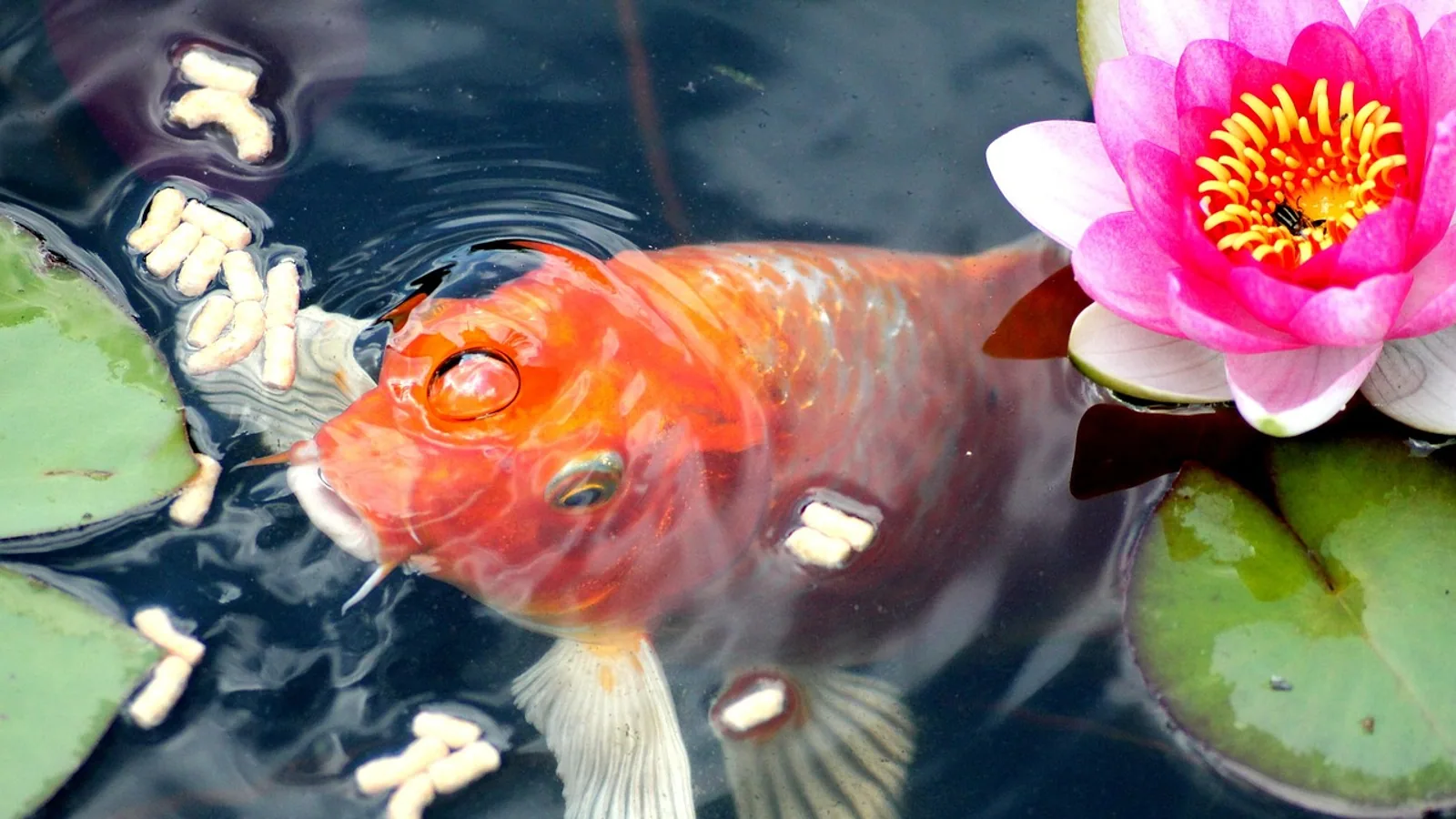
Feed your goldfish a sinking pellet or gel food that it can finish in two to three minutes, two or three times a day, and offer a portion that adds up to roughly one to two percent of the fish's body weight per day. Goldfish are omnivorous cyprinids with no true stomach, so they digest food continuously and do best on small, frequent meals rather than one large feeding. Sinking food is preferred over floating flakes because it reduces the amount of air the fish swallows at the surface, and it keeps water-soluble vitamins from leaching into the tank before the fish eats them.
This guide explains what a complete goldfish diet looks like, how to portion it by fish size and season, how to use vegetables for fiber, and how to avoid the single most common mistake in goldfish keeping: overfeeding.
This article is educational and is not a substitute for veterinary diagnosis or treatment.
At a Glance: The Goldfish Feeding Checklist
- Food type: Sinking pellets or gel food formulated for goldfish, not generic tropical flakes.
- Portion: An amount consumed within two to three minutes, or about one to two percent of body weight per day.
- Frequency: Two to three small meals daily for adults, three to four for growing juveniles.
- Vegetables: Blanched peas or zucchini once or twice a week for fiber.
- Season: Reduce or stop feeding when water is below roughly 10 to 12 degrees C (50 to 54 degrees F).
- Water quality: Remove uneaten food within a few minutes. Test ammonia after any feeding change.
- Warning signs: Floating at the surface, bloating, or cloudy water after meals means the portion is too large.
Why Goldfish Feeding Is Different From Other Fish
Goldfish are not like most tropical aquarium fish, and the differences matter for how you feed them.
No stomach means continuous digestion
Goldfish are cyprinids, a family of fish that lack a true stomach. Food moves quickly through the intestinal tract, and the fish cannot store a large meal for later digestion. This is the biological reason small, frequent feedings outperform one big daily meal. A goldfish that eats a large volume at once simply passes much of it undigested, which wastes food and loads the tank with waste.
Research on goldfish feeding behavior shows that their appetite is tightly regulated by internal signals and by how much energy they have stored. Fish kept on a restricted diet show a different feeding response to stress hormones than well-fed fish, and the glycogen reserves in their liver drop sharply when food is limited [1]. In practical terms, a goldfish that has been underfed will eat aggressively and unpredictably when food appears, which makes portion control harder.
Appetite hormones drive meal timing
Goldfish appetite is controlled by a network of hormones and brain signals. Ghrelin acts as a meal initiator in goldfish, and circulating levels rise before a scheduled feeding time [2]. Other regulators, including visfatin, leptin, and oleoylethanolamide, fine-tune how much the fish eats and how it uses energy [3][4][5]. This is why goldfish learn your feeding schedule and become active at the same time each day. It also means a consistent routine supports normal appetite regulation, while random feeding can disrupt it.
A study on feeding and light cycles found that goldfish fed at random times had higher metabolic rates and higher feed intake than fish on a fixed schedule [6]. Keeping meals at consistent times is not just convenient for you. It supports the fish's natural rhythms.
Goldfish are omnivores, not herbivores
Goldfish eat plant and animal material in the wild. A complete diet needs protein, fat, carbohydrate, vitamins, and minerals in the right balance. Research on goldfish nutrition shows that growth and feed efficiency improve with adequate dietary protein and lipid. In one feeding trial, goldfish fed a diet with about 42 percent crude protein showed significantly better growth and feed conversion than fish on lower-protein or commercial diets [7]. Whole-body amino acid analysis of adult fancy goldfish confirms they need a full complement of essential amino acids, similar to juvenile common goldfish [8].
This does not mean you need to calculate protein percentages at home. It means you should choose a food labeled as complete for goldfish, not a generic flake or a single-ingredient treat.
Pellet vs Flake: Which Goldfish Food Is Better
Both pellets and flakes can work, but they behave very differently in the tank.
Why sinking pellets are preferred
Sinking pellets are the better default choice for most goldfish. They drop below the surface, so the fish does not gulp air while eating. This matters because goldfish that habitually swallow air at the surface are more prone to buoyancy problems and swim bladder issues. Fancy goldfish with rounded bodies are especially vulnerable because their internal anatomy leaves less room for gas accumulation.
Sinking pellets also hold their shape longer, so fewer water-soluble nutrients dissolve into the tank before the fish eats them.
The problem with flakes
Flakes are popular because they are cheap and easy. They have two real drawbacks.
First, flakes float, which encourages surface feeding and air swallowing. Second, flakes leach water-soluble nutrients, including certain vitamins, into the water within seconds of hitting the surface. The fish eats a less nutritious meal while the tank absorbs the rest. That dissolved organic material feeds bacteria and contributes to ammonia production.
If you already use flakes, you do not need to throw them away. Feed them in small amounts and consider soaking them briefly so they sink. But for daily staple feeding, a sinking pellet or gel food is the better tool.
What to look for on a goldfish food label
- A statement that the food is complete for goldfish or ornamental cyprinids.
- Protein and fat levels appropriate for the fish's life stage, with higher protein for juveniles.
- A recognizable ingredient list with both plant and animal sources.
- A sinking form, or a pellet you can pre-soak.
- A size matched to the fish's mouth. A pellet that is too large will be spat out and lost.
Avoid foods sold as treats or color enhancers as the main diet. They are not formulated to be complete.
How Much to Feed a Goldfish
Portion control is where most goldfish health problems begin. There are two reliable methods, and you can use both together.
Method 1: The two-to-three-minute rule
Drop in a small amount of food. Watch the fish eat. When they stop actively searching and eating, stop feeding. The entire portion should be gone within two to three minutes. If food is still on the bottom after three minutes, you fed too much. Remove what remains with a siphon or net.
This method is practical because it accounts for the fish's actual appetite on that day, which changes with temperature, health, and activity.
Method 2: Percentage of body weight
A useful daily target for adult goldfish is roughly one to two percent of body weight per day, split across two or three meals. This is a planning figure, not a precise prescription, because most owners do not weigh their fish. The two-to-three-minute rule is the practical version of the same idea.
For reference, a typical adult fancy goldfish in a home aquarium weighs somewhere in the range of 30 to 100 grams depending on size and variety. One percent of a 50-gram fish is half a gram of food per day, which is a very small amount. This is why overfeeding happens so easily. A pinch that looks tiny to a human can be a full day's ration for a goldfish.
Method 3: The body condition check
Look at your fish from above and from the side. A healthy goldfish has a smooth, rounded body without a sunken belly or a bloated appearance. A fish that looks distended after meals, or that has a persistently swollen abdomen, is likely being overfed. A fish with a hollow belly and a pinched look is underfed.
Why overfeeding is dangerous
Overfeeding causes two problems at once. The fish eats more than it can use, and the excess food breaks down in the water. Both outcomes raise ammonia. Uneaten food and fish waste are the primary sources of ammonia in a goldfish tank, and ammonia is toxic to fish at even low concentrations.
A goldfish tank that was stable can crash within a day after a single heavy feeding. Cloudy water, a sudden ammonia reading, and fish gasping at the surface are the classic signs. If this happens, do a partial water change, remove uneaten food, and hold off feeding for 24 hours.
Building a Feeding Schedule by Size and Season
Goldfish needs change as they grow and as water temperature shifts. The table below gives a practical framework. Adjust based on what you observe.
| Fish Size | Typical Age | Meals Per Day | Portion Guide | Notes |
|---|---|---|---|---|
| Fry and small juveniles | Under 3 months | 3 to 4 | Tiny amounts, consumed in under 2 minutes | Feed finely crushed or gel food. Growth is rapid. |
| Growing juveniles | 3 to 12 months | 2 to 3 | About 2 percent of body weight per day | Higher protein supports growth. |
| Adult goldfish | Over 1 year | 2 | About 1 to 2 percent of body weight per day | Watch body condition closely. |
| Adult, cool water (below 10 to 12 C) | Any | 0 to 1, reduced | Very small, only if fish are active | Appetite and digestion slow sharply. |
| Adult, warm water (above 20 C) | Any | 2 to 3 | Normal portion | Metabolism is high. Do not overfeed. |
Seasonal feeding: the temperature rule
Goldfish are cold-blooded. Their metabolism, appetite, and digestive speed all track water temperature. Below roughly 10 to 12 degrees C (50 to 54 degrees F), goldfish appetite falls and digestion slows dramatically. At these temperatures, feeding should be reduced or stopped entirely, because food sitting in the gut can cause problems and the fish cannot process it efficiently.
This matters most for goldfish kept in outdoor ponds or unheated tanks. In spring and fall, watch water temperature and adjust. In summer, when water is warm, goldfish are active and hungry, but warm water also holds less oxygen and ammonia is more toxic, so portion control becomes more important, not less.
Feeding schedule consistency
Goldfish do best on a routine. Their appetite hormones follow a daily rhythm, and ghrelin levels rise before a scheduled meal [2]. Feeding at the same times each day supports this rhythm and makes it easier to spot a fish that is off its food, which is often the first sign of illness.
Vegetables and Fiber for Goldfish
Goldfish are omnivores and benefit from plant material in the diet. Fiber supports digestion and adds variety.
Safe vegetables
- Peas: Blanch a frozen pea, remove the skin, and drop the soft inner portion into the tank. Peas are a traditional remedy for mild buoyancy issues and constipation.
- Zucchini: Slice thin, blanch briefly to soften, and offer a piece. Remove what is not eaten within a few hours.
- Spinach and leafy greens: Blanch and offer in small amounts.
How often to feed vegetables
Offer vegetables once or twice a week in place of one regular meal, or as a supplement alongside a reduced pellet portion. Vegetables are not a complete diet on their own. They add fiber and enrichment, not full nutrition.
Why fiber matters
Goldfish with no stomach rely on steady passage of food through the gut. A diet that is entirely dry pellets can contribute to constipation and buoyancy problems. Fiber from vegetables helps keep the digestive tract moving. If your goldfish floats at the surface or has trouble swimming down after meals, a blanched pea and a day of reduced feeding is a common first step. If the problem persists, contact a veterinarian.
Step-by-Step: How to Set Up a Feeding Routine
- Choose a complete sinking food. Pick a pellet or gel formulated for goldfish and matched to your fish's size.
- Set fixed feeding times. Two meals a day for adults, at the same times daily.
- Measure a small portion. Start with less than you think you need.
- Watch the fish eat. The food should be gone in two to three minutes.
- Remove leftovers. Siphon or net any food still present after three minutes.
- Add vegetables once or twice a week. Blanch first, and remove uneaten pieces.
- Check water temperature weekly. Adjust portions down when water drops below 10 to 12 degrees C.
- Test ammonia after any change. A feeding change can shift water chemistry within a day.
- Assess body condition monthly. Look for a smooth, rounded shape.
- Fast one day a week if needed. A single fasting day is a safe way to reset if you have been overfeeding.
Common Feeding Mistakes
Feeding by volume instead of observation
The most common mistake is pouring in a fixed amount regardless of how much the fish actually eats. Goldfish will often keep eating past the point of need, especially if they have been underfed or if the food is palatable. The two-to-three-minute rule prevents this.
Using flakes as the staple diet
Flakes leach nutrients and encourage surface feeding. They are acceptable in a pinch but not ideal as the primary food.
Ignoring temperature
Feeding full portions in cold water is a direct route to digestive problems. Appetite falls below roughly 10 to 12 degrees C, and food should be reduced or withheld.
Feeding human food
Table scraps, bread, and processed human food are not formulated for goldfish and can foul water and provide poor nutrition. Stick to complete goldfish food and appropriate vegetables.
Feeding right before a water change or travel
If you are about to leave for a few days, do not compensate by overfeeding beforehand. A healthy adult goldfish can go several days without food. Overfeeding before a trip is a common cause of ammonia spikes in an unattended tank.
Not removing uneaten food
Food left in the tank breaks down and produces ammonia. Always remove what is not eaten.
Troubleshooting Feeding Problems
Fish floats at the surface after eating
This usually points to air swallowing from surface feeding or to a digestive issue. Switch to sinking food, reduce the portion, and offer a blanched pea. If the fish cannot swim down at all, or if the abdomen is visibly swollen, contact a veterinarian.
Water turns cloudy after feeding
Cloudy water after a meal means too much food is going in. Reduce the portion, remove leftovers, and test ammonia. A partial water change may be needed.
Fish ignores food
A goldfish that suddenly stops eating is often sick or stressed. Check water temperature, ammonia, nitrite, and pH. If water quality is normal and the fish still will not eat, contact a veterinarian.
Fish eats aggressively and still looks thin
This can indicate underfeeding, but it can also indicate a health problem. If a fish eats well but loses condition, have it evaluated.
Ammonia rises after feeding changes
Any increase in food increases waste. Test ammonia daily for several days after changing the diet, and perform water changes as needed.
Welfare and Safety Points
- Water quality comes first. No food is beneficial if ammonia and nitrite are not controlled.
- Do not use food as entertainment. Feeding for the fish's reaction leads to overfeeding.
- Keep a routine. Consistent meal times support normal appetite regulation [2].
- Match food to fish size. Pellets that are too large are spat out and wasted.
- Handle fasting carefully. Short fasts are safe for healthy adults. Prolonged fasting is not, and it changes the fish's physiology, including liver energy reserves [1].
- Watch for seasonal shifts. Appetite and metabolism track temperature, and cold water requires reduced feeding.
Limitations and When to Contact a Veterinarian
This article provides general guidance for feeding healthy goldfish. Individual fish have individual needs, and a veterinarian who examines your fish can give specific advice.
Contact an aquatic veterinarian or a fish-health professional if you see any of the following:
- A goldfish that stops eating for more than two or three days despite normal water quality.
- Persistent floating, listing, or inability to swim down.
- A visibly swollen abdomen that does not resolve after a fast and a pea.
- Red streaks, fin erosion, or open sores.
- Rapid breathing, gasping at the surface, or lethargy.
- Ammonia or nitrite readings that stay elevated despite water changes.
- Any sudden change in behavior or body condition.
Water quality problems and infectious disease can look similar to feeding problems. A veterinarian can help distinguish them.
Clinical Reasoning: Why Feeding Problems Present as Disease
When a goldfish arrives at a clinic or is described over the phone, the owner rarely says "I think I am overfeeding." They say the fish is floating, sitting on the bottom, has a swollen belly, or has stopped eating. The clinical task is to work backward from that presentation to a cause, and diet sits near the top of the differential list for a large share of goldfish complaints.
The reason is anatomical. Goldfish lack a true stomach, so there is no acid reservoir to buffer a large meal and no pyloric valve to meter its release into the intestine. Food passes through in a relatively continuous stream, and the gut is adapted for frequent, small inputs rather than episodic large ones. When an owner delivers a large volume at once, the intestine is asked to handle a load it is not built for. Undigested material ferments, gas accumulates, and the fish can develop the buoyancy and bloating signs that owners most often report.
Layered on top of that is water quality. Every gram of food that goes into the tank becomes ammonia, either through the fish's metabolism or through bacterial breakdown of uneaten material. In a goldfish tank, ammonia is the single most important water parameter to control, and feeding is the largest lever an owner has over it. A fish that presents with reddened gills, lethargy, or gasping at the surface may have an ammonia problem that traces directly back to portion size. The clinical history should always include how much is fed, how often, what type of food, and whether leftovers are removed.
There is also an endocrine dimension that is easy to overlook. Goldfish appetite is regulated by a network of hormones and central signals, including ghrelin as a meal initiator and other regulators such as visfatin, leptin, and oleoylethanolamide that modulate intake and energy use [3][2][4][5]. A fish on a chronically restricted diet shows altered feeding responses to stress hormones and depleted liver glycogen reserves [1]. This means that both underfeeding and overfeeding can push the fish outside its normal regulatory range, and the owner's report of "he eats like he is starving" may reflect a fish that has been underfed rather than one that is simply greedy.
The practical clinical takeaway is that diet history is not a minor detail. It is a core part of the diagnostic picture for nearly every goldfish presenting with a non infectious complaint.
Diagnostic Workflow: Sorting Diet From Disease
Feeding related problems and infectious or environmental disease overlap heavily in their outward signs. A structured workflow helps separate them before any treatment decision is made.
Step 1: Establish the water quality baseline
Before considering diet as the cause, confirm the environment. Ammonia, nitrite, nitrate, pH, temperature, and hardness should be measured with a reliable test kit, ideally liquid reagent rather than strips. If ammonia or nitrite is elevated, the immediate priority is water correction, not dietary fine tuning. A fish in poor water is a fish under stress, and stress alters appetite and immune function regardless of what it is fed.
Ask specifically about recent changes: a new fish, a tank cleaning that disturbed the filter, a medication course, or a feeding change. Any of these can shift the nitrogen cycle and produce signs that look dietary.
Step 2: Take a detailed feeding history
The feeding history should capture more than "I feed twice a day." Useful questions include:
- What exact food, and is it labeled complete for goldfish?
- How much per feeding, described in physical terms such as number of pellets or a pinch size?
- How long does the food last in the tank?
- Is uneaten food removed, and how soon?
- Have there been recent changes in brand, type, or amount?
- Is the fish fasted at all, and how often?
- What is the water temperature, and has it changed seasonally?
- Are vegetables offered, and which ones?
This history often reveals the problem on its own. An owner who reports that food sits on the bottom for ten minutes, that the tank clouds after meals, and that ammonia has been creeping up has described overfeeding with secondary water quality decline.
Step 3: Observe the fish directly
If the fish can be examined, note its body condition from above and from the side, its posture in the water column, its respiratory rate, and its response to food if a test feeding is appropriate. A fish that is rounded and active but floats after meals looks different from a fish with a distended abdomen, scale lifting, and lethargy. The first suggests a dietary or buoyancy issue. The second raises concern for a deeper problem such as internal infection, organ disease, or fluid accumulation.
Look at the fins, gills, and skin for redness, erosion, or spots. These point away from a pure diet problem and toward infection or parasitic disease.
Step 4: Consider the differential list
Diet related and diet influenced conditions to keep in mind include:
- Overfeeding with secondary ammonia toxicity
- Constipation and mild buoyancy disturbance
- Swim bladder dysfunction, which may be dietary, anatomical, or infectious in origin
- Obesity and fatty change in chronically overfed fish
- Nutritional deficiency from an incomplete staple diet
- Underfeeding with loss of condition and depleted energy reserves [1]
Non dietary conditions that mimic these include bacterial infections, parasitic infestations, viral disease, and primary water quality failure. Because the signs overlap, a veterinarian may need to combine history, water testing, and physical examination to reach a working diagnosis.
Step 5: Decide on a trial and a timeline
When diet is the leading suspicion and water quality is acceptable, a controlled dietary trial is reasonable. This typically means reducing the portion, switching to a sinking complete food, removing leftovers promptly, and adding a short fast if the fish is stable. The owner should record daily observations: does the fish float, does it eat, does the abdomen change, does the water stay clear. A defined review point, often within several days to a week, prevents an open ended trial that delays needed treatment.
If signs worsen, if new signs appear, or if the fish does not improve within the expected window, the case should move toward veterinary evaluation rather than continued home adjustment.
Evidence Limitations in Goldfish Nutrition
Owners often want a precise number: exactly how many pellets, exactly what protein percentage, exactly how many meals. The honest answer is that the evidence base does not support that level of precision for pet goldfish, and understanding why helps owners make better decisions.
Most published goldfish nutrition research has been conducted for aquaculture and ornamental production rather than for individual pet fish in home aquariums. Feeding trials typically measure growth rate, feed conversion ratio, and survival in groups of fish under controlled conditions. These endpoints are useful for commercial producers but do not translate directly into a daily ration for a single fancy goldfish in a living room tank.
For example, a trial showing that goldfish fed a diet with about 42 percent crude protein had significantly better growth and feed conversion than fish on lower protein or certain commercial diets [7] tells us that protein adequacy matters for growth. It does not tell an owner how many grams to feed a five year old oranda. Similarly, whole body amino acid analysis of adult fancy goldfish confirms a requirement for a full complement of essential amino acids comparable to juvenile common goldfish [8], which supports choosing a complete diet but does not yield a home dosing formula.
Research on appetite regulation adds another layer of complexity. Studies on ghrelin, visfatin, leptin, and oleoylethanolamide show that goldfish intake is governed by interacting signals that respond to energy status, stress, and environment [3][2][4][5]. A study on feeding and light cycles found that goldfish fed at random times had higher metabolic rates and higher feed intake than fish on a fixed schedule [6]. These findings support routine feeding and caution against erratic schedules, but they also show that intake is not a fixed quantity. It varies with the fish's internal state.
The practical implication is that the two to three minute rule and the body weight percentage are planning tools, not prescriptions. They are useful because they are observable and adjustable. Owners should treat them as starting points and let the fish's condition, behavior, and water quality guide refinement. Where the evidence is thin, careful observation fills the gap.
Owner Observation: What to Record and Why It Matters
Good records turn a vague complaint into a usable clinical history. Owners who track a few simple variables can give a veterinarian far more to work with than a description recalled under stress.
Daily observations worth noting
- Appetite: Did the fish eat eagerly, normally, or not at all?
- Post meal behavior: Any floating, listing, or difficulty swimming down?
- Body appearance: Any change in abdominal shape or overall fullness?
- Water clarity: Did the tank cloud after feeding?
- Leftover food: Was any food left after three minutes?
- Activity level: Normal swimming, or increased lethargy or gasping?
Weekly and monthly observations
- Water test results: Ammonia, nitrite, nitrate, pH, and temperature.
- Body condition: A brief visual check from above and the side.
- Weight or size estimate: Even a rough sense of growth over time.
- Feeding changes: Any new food, new portion, or schedule change.
Why this matters clinically
A veterinarian evaluating a goldfish relies heavily on history because direct examination is limited by the aquatic setting and by the fish's small size. An owner who can say "appetite dropped three days ago, ammonia has been zero, temperature is 22 degrees C, and he has floated after the last four meals" has provided a timeline that narrows the differential considerably. An owner who says "he seems off" has provided almost nothing to act on.
Records also reveal patterns that are invisible day to day. A slow upward drift in ammonia over two weeks, or a gradual change in body shape, is easy to miss in the moment but obvious in a written log.
Preparing for a Veterinary Visit
Aquatic veterinary care is a specialty, and not every clinic treats fish. Preparation makes the visit more productive whether it happens in person or by consultation.
Before the appointment
- Compile the feeding history. Food type, amount, frequency, recent changes, and whether leftovers are removed.
- Bring water test results. Include the values and the dates, and note what test kit was used.
- Record the timeline. When did signs start, and what changed around that time?
- Note the tank setup. Volume, filtration, tankmates, temperature, and how long the tank has been running.
- Photograph and video the fish. A short video showing swimming, posture, and breathing is often more useful than a still image.
- List any treatments already tried. Including fasting, peas, water changes, or medications, with dates and outcomes.
What to expect during evaluation
A veterinarian may review the history and water data, examine the fish if it can be safely handled, and consider whether further testing is warranted. In some cases, water chemistry review and a dietary adjustment are the main interventions. In others, the fish may need treatment for infection, parasites, or organ disease. The distinction matters because treating a dietary problem with medication, or an infection with fasting, can both make things worse.
Questions worth asking
- Is the current diet complete for this fish's life stage?
- Is the portion appropriate given the fish's size and water temperature?
- Are the observed signs consistent with a diet problem, or should other causes be investigated?
- What changes should be made, and over what timeline?
- What signs would mean the fish is not improving and needs re evaluation?
Prevention: Building a Feeding System That Prevents Problems
Most goldfish feeding problems are preventable, and prevention is less about willpower than about designing a routine that makes overfeeding difficult.
Portion control by design
Pre measure portions into small containers or use a dedicated measuring spoon that matches the correct amount. This removes the guesswork and the temptation to add "just a little more." Owners who feed by eye tend to drift upward over time.
Fixed schedule
Feed at the same times daily. This supports the fish's natural appetite rhythm, since ghrelin levels rise in anticipation of scheduled meals [2], and it makes deviations obvious. A fish that is normally waiting at the glass and is not, is a fish worth watching.
Sinking food as the default
Choosing a sinking complete food reduces surface air swallowing and nutrient leaching. It also keeps food in the water column longer where the fish can find it, rather than floating away to the filter.
Leftover removal as a habit
Make removing uneaten food part of the feeding routine, not an occasional cleanup. A siphon or net kept near the tank makes this easy. Food that stays in the tank is food that becomes ammonia.
Temperature aware portions
Track water temperature weekly, especially in ponds and unheated tanks. Reduce or stop feeding when water falls below roughly 10 to 12 degrees C (50 to 54 degrees F). In warm water, keep portions controlled because ammonia is more toxic and oxygen is less available.
Regular water testing
Test ammonia and nitrite at least weekly, and after any feeding change. Water quality is the foundation of goldfish health, and it is the first thing to check when something seems wrong.
Periodic fasting
A single fasting day per week is a safe practice for healthy adult goldfish and helps prevent the slow accumulation of overfeeding. It also gives the digestive tract a rest. Fasting should not be extended without veterinary guidance, because prolonged food restriction alters the fish's physiology, including liver energy reserves [1].
Body condition checks
Look at the fish monthly from above and the side. A smooth, rounded body without a sunken or bloated appearance is the goal. Catching a trend early is easier than correcting it later.
Prognosis: What to Expect After a Feeding Correction
The outlook for diet related goldfish problems is generally good when the cause is identified and corrected early, and when water quality has not been allowed to deteriorate for long.
Mild dietary issues
A fish with occasional floating after meals, mild constipation, or a slightly rounded abdomen often improves within days of switching to a sinking complete food, reducing the portion, and adding fiber from blanched vegetables. Owners typically see normal swimming and appetite return quickly. Continued attention to portion size and routine prevents recurrence.
Overfeeding with water quality decline
When overfeeding has caused an ammonia spike, the prognosis depends on how high the ammonia rose and how long the fish was exposed. A short exposure corrected promptly with water changes and feeding adjustment usually resolves without lasting harm. Prolonged exposure can cause gill damage and secondary infection, and recovery may be slower and less complete. This is why testing ammonia after any feeding change is not optional.
Chronic overfeeding
Fish that have been overfed for months may develop obesity and related internal changes. Correcting the diet can improve condition, but some changes may not fully reverse. These fish benefit from a structured feeding plan and periodic veterinary review.
Underfeeding
A chronically underfed goldfish may show loss of condition, a hollow belly, and altered feeding behavior. Restoring an appropriate diet usually improves body condition over weeks, but the fish may eat aggressively at first, which makes portion control harder. Gradual, measured increases are safer than large meals.
When the cause is not dietary
If the underlying problem is infectious, parasitic, or organ related, dietary correction alone will not resolve it. In these cases the prognosis depends on the specific condition and how early treatment begins. This is the main reason a fish that does not improve after a reasonable dietary trial should be evaluated rather than managed at home indefinitely.
Special Populations: Feeding Goldfish With Different Needs
Not every goldfish fits the standard adult profile. Several groups need modified feeding approaches.
Growing juveniles and fry
Young goldfish have high metabolic demands and need more frequent meals, typically three to four small feedings per day. Food should be appropriately sized, finely crushed or in gel form, so it can be eaten without being spat out. Protein needs are higher during growth, and a complete diet formulated for growth supports normal development. Growth rate is rapid, so portion adjustments should be reviewed often.
Fancy goldfish with altered body shape
Varieties such as orandas, ranchus, and bubble eyes have compressed or rounded bodies that leave less internal room and can affect buoyancy and digestion. These fish are more prone to floating and constipation, and they benefit from sinking food, smaller portions, and regular fiber from vegetables. Their anatomy makes them less tolerant of overfeeding than streamlined varieties.
Older goldfish
Aging goldfish may slow down, eat less, and be less active. Appetite changes in an older fish should not automatically be attributed to age. Water quality, temperature, and health status should still be checked. Portions may need to be reduced to match lower activity, but a sudden drop in appetite warrants evaluation.
Fish in cold water or ponds
Goldfish in outdoor ponds or unheated tanks experience seasonal temperature swings. Below roughly 10 to 12 degrees C, appetite and digestion slow sharply, and feeding should be reduced or stopped. In spring and fall, monitor temperature and adjust portions gradually. In summer, warm water increases metabolism but also reduces oxygen and increases ammonia toxicity, so portions should be controlled even when the fish seem hungry.
Fish recovering from illness
A goldfish recovering from infection, injury, or a period of poor water quality may have reduced appetite and altered nutritional needs. Reintroduce food gradually, starting with small amounts of a complete sinking diet, and monitor for tolerance. A fish that cannot tolerate normal portions may need veterinary guidance on a recovery feeding plan.
Newly acquired fish
A newly purchased goldfish may not eat for the first day or two as it adjusts to a new environment. This is common and not necessarily a sign of illness. Offer small amounts and observe. If the fish still refuses food after several days, or if other signs appear, evaluate water quality and consider veterinary advice.
Fish in community or mixed species tanks
Goldfish are often kept with other species, and feeding must account for competition. Faster fish may consume the goldfish's food before it reaches them, and slow sinking food can end up in the wrong mouths. Observe feeding directly to confirm the goldfish is getting its share, and adjust placement and timing as needed. Overfeeding to compensate for competition is a common and avoidable error.
Putting It Together: A Clinical Approach to Goldfish Feeding
Feeding a goldfish well is not complicated, but it does require attention to a few principles that run through this entire guide. Goldfish lack a stomach, so they need small, frequent meals rather than large ones. Their appetite is regulated by hormones and internal energy status, so routine and consistency matter [3][2][4][5]. Their metabolism tracks water temperature, so portions must change with the seasons. And every bit of food that enters the tank eventually becomes ammonia, so portion control is really water quality control.
The most useful tools an owner has are observation and record keeping. The two to three minute rule, the body condition check, and regular water testing together provide more reliable guidance than any fixed number of pellets. When something goes wrong, a clear history of feeding, water parameters, and behavior gives a veterinarian the information needed to separate a diet problem from a disease problem.
When in doubt, feed less, test the water, and watch the fish. If signs persist despite a reasonable dietary correction, or if the fish shows signs of infection, severe buoyancy failure, or prolonged refusal to eat, seek veterinary evaluation. This article is educational and is not a substitute for veterinary diagnosis or treatment.
Frequently Asked Questions
How much should I feed my goldfish?
Feed an amount the fish finishes in two to three minutes, two or three times a day. As a planning figure, aim for about one to two percent of body weight per day for adults.
Should I feed pellets or flakes?
Sinking pellets are the better staple. They reduce air swallowing at the surface and leach fewer nutrients into the water than flakes.
Can goldfish eat peas and vegetables?
Yes. Blanched peas and zucchini are safe in small amounts and add fiber. Offer them once or twice a week alongside a complete diet.
How do I know if I am overfeeding?
Uneaten food after three minutes, cloudy water, a bloated appearance, or rising ammonia all point to overfeeding. Reduce the portion and remove leftovers.
Do goldfish need to be fed every day?
Healthy adult goldfish can safely fast for a day, and a weekly fasting day can help prevent overfeeding. In cold water below roughly 10 to 12 degrees C, feeding should be reduced or stopped.
Why does my goldfish float at the surface after eating?
Surface feeding and air swallowing are common causes. Switch to sinking food, reduce the portion, and try a blanched pea. Persistent buoyancy problems need veterinary evaluation.
How does water temperature change feeding?
Goldfish appetite and digestion slow as water cools. Below roughly 10 to 12 degrees C, reduce or stop feeding because the fish cannot process food efficiently.
Can I feed my goldfish human food?
No. Table food is not formulated for goldfish and can foul the water and provide poor nutrition. Use complete goldfish food and appropriate vegetables.
Related Articles
- Aqua Fish Food: Choosing the Right Feed for Your Aquarium
- Pond Fish Feeding Strategies: How to Match Feed Type and Frequency to Your Fish
- How Much Food Should A Rabbit Eat
- Can You Feed Dogs Cat Food
- Goldfish Tank Size Guide
- Goldfish Types and Varieties Guide
- Ducklings Eating: What and How Much to Feed
- Do Fish Sleep? Fish Rest and Activity Cycles
- Water Conditioner for Fish Tank: How and When to Use
Sources
- [[Effect of food deprivation on quantitative and time characteristics of feeding of goldfish Carassius auratus in norm and under action of adrenaline].](https://pubmed.ncbi.nlm.nih.gov/21938911/)
- Periprandial changes and effects of short- and long-term fasting on ghrelin, GOAT, and ghrelin receptors in goldfish (Carassius auratus).
- The role of visfatin/ NAMPT in the regulation of feeding in goldfish (Carassius auratus).
- Leptins and leptin receptor expression in the goldfish (Carassius auratus). Regulation by food intake and fasting/overfeeding conditions.
- Role of oleoylethanolamide as a feeding regulator in goldfish.
- Feeding and light cycle disruptions have distinct effects on energy balance and neuroendocrine regulators in goldfish.
- Growth and dietary utilisation in goldfish (Carassius auratus Linn.) fed diets formulated with various local agro-produces.
- Whole-body amino acid composition of adult fancy ranchu goldfish (Carassius auratus).