Black Sex Link Chicken: Breed Profile and Care
By Dr. Zubair Khalid, DVM, MS, PhD ·
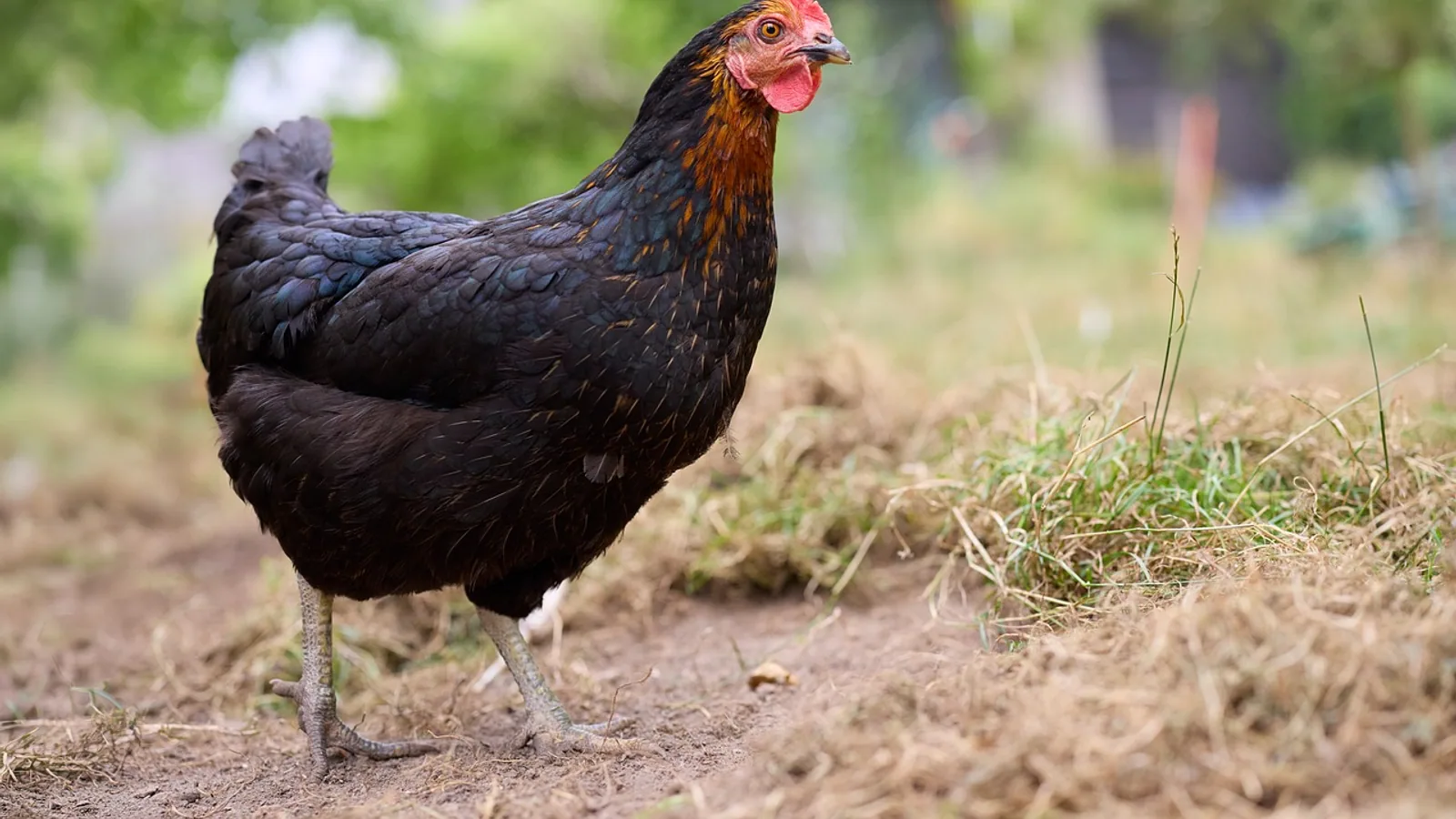
The Black Sex Link chicken is a hybrid layer, not a standardized breed. It is produced by crossing a barred Rock male with a non-barred female, usually a Rhode Island Red or a similar red or black breed. The result is a bird that lays roughly 250 to 300 large brown eggs per year, starts laying around 18 to 22 weeks of age, and carries a calm, hardy temperament that suits small backyard flocks. The defining feature is genetic. Because the barring gene sits on the Z sex chromosome, male and female chicks from this cross look different at hatch, which allows the hatchery or breeder to sort them by sex on day one. That single trait is why the Black Sex Link exists as a production bird.
This article covers the genetics behind the cross, egg production in detail, temperament, housing and feeding, common health problems in heavy layers, and how to decide whether this bird fits your flock. It is written for the backyard poultry owner who wants practical, source-grounded information rather than hatchery marketing copy.
This article is educational and is not a substitute for veterinary diagnosis or treatment.
At a Glance
| Attribute | Detail |
|---|---|
| Type | Hybrid layer (not a true breed) |
| Primary cross | Barred Rock male x non-barred female |
| Adult weight | Medium to heavy dual-purpose frame (hens typically 6 to 8 lb) |
| Plumage | Black with some red or brown feathering depending on the female line |
| Comb | Single, red |
| Sexing at hatch | Yes, by head spot and leg color |
| Egg color | Brown |
| Eggs per year | 250 to 300 |
| Point of lay | 18 to 22 weeks |
| Egg weight | Roughly 55 to 65 g (large) |
| Temperament | Calm, docile, hardy |
| Climate tolerance | Good general hardiness, but heat sensitive |
| Lifespan | 5 to 8 years with good care |
| Good with children | Often yes, given the calm disposition |
| Good with other chickens | Generally yes |
| Breeds true | No, offspring vary |
The table reflects the practical profile of the cross. Exact weight and egg size vary with the specific parent lines used, so treat the numbers as a working range rather than a fixed standard.
What the Black Sex Link Actually Is
A Black Sex Link is a first-generation cross, often written as an F1 hybrid. It is not recognized as a breed by poultry standards organizations because it does not breed true. When you cross a Black Sex Link hen with a Black Sex Link rooster, the chicks do not reliably reproduce the parent type. The sex-linked color pattern that makes the cross useful breaks down in the second generation. This is a fundamental point for anyone considering breeding. If you want consistent Black Sex Link chicks, you have to repeat the original cross, barred Rock male to non-barred female, every time.
The name "sex link" refers to the fact that sex is linked to a visible trait. It does not mean the bird is a distinct breed. Several different crosses produce birds sold under the sex link label, and the naming varies by who is producing them. A "Black Sex Link" from one source and a "Black Star" from another may be built from similar parent lines, or they may not. The only reliable way to know what you are getting is to ask the breeder or hatchery what the parent cross was. The label alone does not guarantee a specific genetic makeup.
This variability matters for owners. Two birds both sold as Black Sex Links can differ in adult size, egg output, and even temperament if the female parent line differs. The barred Rock side is usually consistent. The female side is where the variation enters, because producers use different non-barred breeds to introduce laying vigor, egg size, or hardiness.
Genetics: Why Chicks Can Be Sexed at Hatch
The sexing trait depends on the barring gene, which sits on the Z chromosome. In chickens, males are ZZ and females are ZW. A male passes one Z to every chick. A female passes her Z to her sons and her W to her daughters. This asymmetry is the whole basis of the cross.
The barring gene produces the black and white barred feather pattern seen in Barred Plymouth Rocks. The molecular basis is well characterized. Sex-linked barring is controlled by the CDKN2A/B locus, which encodes the INK4b and ARF transcripts, and researchers identified non-coding mutations and missense mutations at conserved sites that associate with the phenotype [1]. Later work showed the trait is genetically heterogeneous, with functionally different variant alleles. The B0 allele carries only the non-coding changes and gives the most dilute barring, while the B1 and B2 alleles carry the non-coding changes plus one each of the two missense mutations, producing the barring and dilution phenotypes respectively [2]. The white bands in a barred feather come from an absence of melanocytes in the feather follicle during that region's growth [1]. Mapping studies placed the causal region on the distal long arm of chromosome Z, within a narrow interval containing several candidate genes [3].
Here is how that biology produces sexable chicks. A barred Rock male is homozygous for barring on both of his Z chromosomes. He passes a barred Z to every chick. The non-barred female has no barring gene to pass on her Z. So:
- A female chick (ZW) receives her father's barred Z and her mother's W. She expresses barring. In practice, she shows a light head spot at hatch and lighter, barred or dark legs depending on the line.
- A male chick (ZZ) receives his father's barred Z and his mother's non-barred Z. He is heterozygous. He does not show the head spot in the same way, and his legs are typically dark.
The head spot is the classic sorting cue. Barring expression in down depends on the genetic background, and researchers have shown that the barring gene can be used effectively for sexing chicks on certain down-color backgrounds, with the extended black gene providing the even grayish down needed for the head spot to show clearly [4]. That is why the barred Rock over a dark or red female works so well. The chick down contrast makes the spot visible.
Barring is not the only sex-linked plumage gene in chickens, and understanding the broader system helps explain why crosses behave as they do. The silver locus on chromosome Z carries a series of alleles, S*S (silver), S*N (wild type or gold), and S*AL (sex-linked imperfect albinism), and these are caused by mutations in SLC45A2 [5]. The chocolate plumage mutation is a sex-linked recessive that dilutes eumelanin, traced to a missense mutation in TYRP1 [6]. Barring itself has been studied across many plumage backgrounds, including work on Spanish chickens with gold plumage [7]. All of these sit on the Z chromosome, which is why plumage color and sex travel together in chickens.
For the backyard owner, the practical takeaway is simple. If you buy chicks labeled as Black Sex Links, the females should be the ones with the head spot and the lighter legs. If you are hatching your own, you need a barred Rock rooster and a non-barred hen. Get the cross backward, with a non-barred rooster over a barred hen, and the sexing trick fails.
Why the Cross Does Not Breed True
The sexing system depends on the specific parent combination. Once you breed the offspring together, the clean Z-chromosome math disappears. A Black Sex Link rooster carries one barred Z and one non-barred Z. A Black Sex Link hen carries one barred Z and a W. Their chicks can inherit barring in combinations that no longer map neatly onto sex. Some daughters may lack the head spot. Some sons may show it. The color sorting becomes unreliable, and the production traits that made the cross valuable also segregate.
This is the definition of a hybrid. The vigor and uniformity come from the cross itself, not from the line. If you want to keep producing sexable chicks, you maintain the two parent lines and make the cross fresh each generation.
History and Purpose
Sex-linked crosses were developed as a practical answer to a real problem. Before molecular sexing, hatcheries needed a way to sort day-old chicks by sex without waiting weeks for physical differences to appear. Vent sexing requires trained personnel and carries some risk of injury to the chick. A genetic system that makes males and females visibly different at hatch solves the problem at almost no cost.
The barring gene was identified as a sex-linked trait in chickens in 1908, and it has been used in commercial and backyard breeding ever since [3]. The Black Sex Link is one application of that principle. By putting a barred male over a non-barred female, producers get daughters that show barring and sons that do not. The female chicks are the ones the egg-laying operation wants, and they can be identified and sorted on day one.
The cross also captures hybrid vigor, sometimes called heterosis. Crossing two different parent lines tends to produce offspring that grow well, lay well, and tolerate a range of conditions. This is the same principle behind commercial egg-laying hybrids across the poultry industry. The Black Sex Link is essentially a small-flock version of that production model, with the added benefit of color sexing.
The purpose of the bird is egg production. It is not a show breed, not a heritage breed, and not a meat-focused bird, though its dual-purpose frame gives it more body than a Leghorn-type layer. Owners who keep Black Sex Links are usually after a steady supply of large brown eggs from a bird that is easy to handle.
Appearance
The adult Black Sex Link hen is typically black with varying amounts of red, brown, or gold feathering, depending on the female parent line. Hens from a Rhode Island Red mother tend to show red or brown in the neck and breast. Hens from a black mother line tend to be more solidly black. The rooster, if you keep one, often shows more color and a larger, more upright comb.
The comb is single and red. The bird has a medium to heavy body, which is one reason it handles cold better than a lightweight Mediterranean breed but also one reason it is more prone to heat stress. Feathering is dense and provides good insulation in winter.
Chicks are the tell. Female chicks from the cross show a distinct light head spot on dark down and typically lighter legs. Male chicks lack the head spot and have darker legs. The contrast is the entire point of the cross, and it is usually clear enough for a careful observer to sort chicks within the first day or two.
Temperament
The Black Sex Link is generally described as calm, docile, and hardy. It is not an aggressive bird. Hens tolerate handling well, which makes them a reasonable choice for families with children who want to interact with the flock. They are not flighty in the way some lightweight layers are, and they tend to stay close to the coop and run rather than ranging widely.
Hardiness is a genuine strength. Hybrid vigor contributes to general robustness, and the heavy frame helps in cold weather. The same heavy body is a liability in heat, which is covered in the health section below.
Temperament varies with the individual bird and with the female parent line. Some Black Sex Links are more assertive at the feeder, and some are more skittish. The general pattern is calm and manageable, but you should not expect every bird to be identical. Handle chicks regularly if you want adults that are easy to catch and examine.
Roosters from this cross are less commonly kept because the whole point of the cross is the female layer. If you do keep a rooster, expect typical rooster behavior, which can include guarding and occasional aggression. A calm hen line does not guarantee a calm rooster.
Exercise and Space Needs
Chickens do not need structured exercise the way a dog does, but they need space to move, dust bathe, scratch, and establish a normal social order. Crowding is one of the most common causes of feather pecking, bullying, and stress-related illness in backyard flocks. A Black Sex Link is a medium to heavy bird, so it needs more room per bird than a lightweight layer.
Provide a secure coop with good ventilation and a predator-proof run. The run should allow scratching and dust bathing. If you allow free ranging, supervise it or provide overhead cover, because hawks and other predators take heavy-bodied birds readily. The calm temperament of the Black Sex Link makes it less alert to threats than some flightier breeds, which is a small disadvantage in a free-range setting.
Perches should be wide enough for the bird to rest its feet flat, which matters more for heavy birds. A narrow perch forces the toes to curl and can contribute to foot problems over time. Nest boxes should be low enough that a heavy hen can enter and exit without jumping down hard, because heavy layers are prone to reproductive and leg issues.
Feeding Considerations
A laying hen needs a balanced layer ration, clean water at all times, and access to calcium. The Black Sex Link lays large numbers of large eggs, which means significant calcium demand. Oyster shell offered free-choice allows the hen to regulate her own intake. A hen that is pulling calcium from her own bones to shell eggs will eventually pay for it with bone weakness and poor shell quality.
Protein matters too. A hen producing 250 to 300 eggs a year is under continuous metabolic load. A layer ration formulated for production provides the amino acids needed for egg protein. Do not dilute the ration with too many treats and scratch grains, because that reduces total nutrient intake even if the bird feels full.
Heat is the season to watch most closely. A heavy, densely feathered bird eating a high-energy ration generates internal heat. In hot weather, feed intake often drops, which reduces calcium and protein intake right when the hen still needs them. Offer feed during the cooler parts of the day and make sure water is always available and cool. Watch for panting and wing holding, which are early signs of heat stress.
Do not feed moldy or spoiled feed. Do not put out medicated feed for laying hens unless a veterinarian directs it. Any change in diet should be gradual to avoid digestive upset.
Egg Production
Egg production is the reason most people keep this bird. The numbers below are typical for a healthy Black Sex Link hen in her first laying year.
| Metric | Typical Range |
|---|---|
| Eggs per year | 250 to 300 |
| Age at first egg (point of lay) | 18 to 22 weeks |
| Egg color | Brown |
| Egg weight | Roughly 55 to 65 g (large) |
| Peak production | First laying year |
| Production after first year | Declines, often to 200 or fewer |
| Molt | Annual, production pauses during molt |
Production in the first year is the highest the hen will ever achieve. After the first molt, output typically drops, and the eggs may become slightly larger but less frequent. This is normal. A hen that suddenly stops laying outside of a molt, or that lays soft-shelled or shell-less eggs, needs a veterinary look rather than a wait-and-see approach.
Egg weight in the 55 to 65 g range corresponds to the "large" grade used in US egg sizing. Individual eggs vary with the hen's age, nutrition, and stress level. Young hens just starting to lay often produce smaller eggs for the first few weeks before settling into a consistent size.
Light affects laying. Hens need adequate day length to sustain production, and production naturally slows in short winter days. Artificial lighting is a management decision that affects the bird's reproductive cycle. Discuss any lighting program with a veterinarian or poultry specialist, because pushing a hen to lay through the winter without a rest can accelerate reproductive wear.
What to Do With Excess Eggs
A flock of Black Sex Links produces more eggs than most families can eat. Options include sharing with neighbors, selling under applicable state and local rules, or preserving eggs. If you sell eggs, check your state's requirements for egg handling and labeling. Requirements vary, and selling ungraded eggs across state lines is regulated.
Common Health Considerations
Heavy-laying hybrids have a characteristic set of health problems. The high production that makes them valuable also puts stress on the reproductive tract and the skeleton. Owners should know what to watch for and when to call a veterinarian.
Reproductive Tract Problems in Heavy Layers
A hen that lays 250 to 300 eggs a year is running her reproductive system near continuously. Common problems in this category include:
- Egg binding, where an egg cannot pass. A hen may strain, sit hunched, or show a swollen abdomen. This is an emergency if it persists.
- Peritonitis, where yolk material leaks into the abdominal cavity and causes inflammation. Signs include a distended, fluid-filled abdomen, lethargy, and labored breathing.
- Salpingitis, an infection of the oviduct, often with discharge and a swollen abdomen.
- Internal laying, where yolks are deposited in the abdomen instead of the oviduct.
- Oviduct prolapse, where tissue protrudes from the vent. This is a serious condition requiring prompt veterinary care.
These conditions are more common in high-production hybrids than in low-production heritage breeds. The reproductive tract is under constant demand, and small problems compound. A hen with a swollen abdomen, labored breathing, or a persistent change in egg quality should be examined. Do not attempt to manually manipulate a suspected egg-bound hen without veterinary guidance, because rough handling can rupture the oviduct or cause internal injury.
Prevention is limited because the production level is genetic. Good nutrition, adequate calcium, clean housing, and avoiding obesity reduce some risk. A hen that is too fat has more difficulty passing eggs, so body condition matters.
External Parasites
Mites and lice are common in backyard flocks. They live on the bird or in the coop and feed on blood or skin debris. Signs include:
- Restlessness and excessive preening
- Pale comb and wattles from blood loss
- Visible mites around the vent, under the wings, or in the coop crevices
- Drop in egg production
- Weight loss in heavy infestations
The red mite is the most damaging because it feeds at night and hides in coop cracks during the day. Inspect the coop at night with a flashlight, looking in perch ends, nest box corners, and any wooden joints. Treat the birds and the coop together, because treating only one leaves the other as a reservoir.
Follow the label directions exactly on any poultry-approved product. Do not use products labeled for other species on laying hens unless a veterinarian specifically directs it, because residues can enter eggs. The FDA regulates drug use in laying hens, and many products are prohibited or have withdrawal requirements. Your veterinarian can advise on legal, effective options.
Heat Stress
Heat stress is a genuine risk for this cross. A heavy, densely feathered bird with a high metabolic rate has trouble dumping heat. Signs include:
- Panting with open beak
- Holding wings away from the body
- Lethargy and reduced feed intake
- Pale comb
- In severe cases, collapse and death
Provide shade, ventilation, and cool water. Avoid handling birds during the hottest part of the day. Some owners add electrolytes to water during heat events, but confirm the product is appropriate for laying hens. If a bird is collapsed and hot, cool it gradually with cool (not ice-cold) water and contact a veterinarian.
Heat stress also reduces egg production and shell quality. A hen that is struggling with heat is not allocating resources to eggs. Managing the environment is the main tool.
Other Health Concerns
Respiratory disease, coccidiosis, and Marek's disease are concerns in any backyard flock. Biosecurity matters. New birds should be quarantined before introduction. Keep the coop dry, because damp litter promotes respiratory problems and parasite survival. Vaccination programs vary by region and by hatchery. Ask your veterinarian what is appropriate for your area and your flock.
Internal parasites are common in birds with access to soil. A fecal examination can identify worm burdens. Do not deworm routinely without a diagnosis, because inappropriate use contributes to resistance and may leave residues in eggs. Your veterinarian can recommend a deworming protocol and the required egg withdrawal period.
Lifespan and Longevity
A well-cared-for Black Sex Link can live 5 to 8 years. Production declines sharply after the first two years, and many owners keep hens as pets after they stop laying. If you keep a hen past her productive years, continue to provide a layer ration or a maintenance ration appropriate for a non-laying bird, and monitor body condition. A retired hen that becomes obese has a higher risk of reproductive and metabolic problems.
The decision about what to do with spent hens is personal. Some owners process them, some keep them, and some rehome them. Whatever you choose, plan for it before the hen stops laying rather than after.
Finding a Responsible Source
Because the Black Sex Link is a cross and not a breed, there is no breed standard and no registry. Your source is the hatchery or breeder who makes the cross. Ask directly:
- What are the parent lines? You want a barred Rock male over a named non-barred female.
- Are the chicks sexed by the barring trait, and how do you confirm it?
- What vaccinations were given?
- What is the flock's health history?
A responsible source answers these questions clearly. A source that cannot tell you the parent cross is not giving you a predictable bird. You may still get a good layer, but you cannot count on the sexing trait or the production profile.
Rescue is an option for adult birds. Many backyard flocks rehome hens, and some rescue organizations handle poultry. An adult hen from a known-good flock can be a good addition, though you should quarantine any new bird for at least two to four weeks before introducing it to your flock.
Who Should Not Get This Breed
Skip the Black Sex Link if:
- You want a bird that breeds true. This cross does not.
- You live in a hot climate without shade and ventilation. Heat stress is a real risk.
- You want a long-lived, low-maintenance pet rather than a production bird. The high laying rate brings reproductive health risks.
- You cannot provide enough space for a medium to heavy bird.
- You want a show bird. This is not a standardized breed.
If you want a heritage breed that breeds true, produces fewer eggs, and has a lower reproductive disease risk, look at a standard breed instead. If you want maximum brown egg production from a calm, easy-to-handle bird, the Black Sex Link is a strong choice.
Limitations and When to Contact a Veterinarian
This article is educational and is not a substitute for veterinary diagnosis or treatment. Individual birds vary, and a veterinarian who examines your hen can assess things this article cannot.
Contact a veterinarian promptly if you see:
- A hen straining to pass an egg for more than a short period, or a visible prolapse
- A swollen, fluid-filled, or painful abdomen
- Labored breathing, open-mouth breathing at rest, or a blue tinge to the comb
- Sudden drop in egg production with lethargy or loss of appetite
- Bloody or abnormal droppings
- Persistent weight loss despite normal eating
- Visible mites or lice that do not clear after treatment
- Collapse, inability to stand, or seizures
- Any bird that is isolated from the flock and unresponsive
For a suspected egg-binding emergency, call ahead so the clinic can prepare. Do not delay transport to try home remedies.
Find a veterinarian who sees poultry before you have an emergency. Not every small animal clinic treats chickens, and the time to identify your options is before you need them. The AVMA maintains resources on finding veterinary care, and state veterinary medical associations can help locate poultry-experienced practitioners.
Frequently Asked Questions
What is a Black Sex Link chicken?
A Black Sex Link is a first-generation hybrid layer produced by crossing a barred Rock male with a non-barred female. It is not a standardized breed, and it does not breed true.
How do you tell male from female Black Sex Link chicks?
Female chicks show a light head spot on dark down and typically lighter legs. Male chicks lack the head spot and have darker legs. The difference comes from the barring gene on the Z chromosome.
How many eggs does a Black Sex Link lay?
A healthy hen typically lays 250 to 300 brown eggs per year in her first laying cycle. Production declines after the first molt.
When do Black Sex Links start laying?
Most hens begin laying between 18 and 22 weeks of age. Egg size is usually smaller for the first few weeks before settling into a large grade.
Are Black Sex Links friendly?
They are generally calm, docile, and easy to handle. Temperament varies with the individual bird and the female parent line.
Can you breed Black Sex Links?
You can, but the offspring will not breed true. The sex-linked color pattern breaks down in the second generation, and production traits vary. To get more Black Sex Links, repeat the original cross.
Are Black Sex Links good in hot weather?
They are more heat sensitive than lightweight breeds because of their heavy body and dense feathering. Provide shade, ventilation, and cool water, and watch for panting and wing holding.
What health problems are common in Black Sex Links?
Heavy layers are prone to reproductive tract problems such as egg binding, peritonitis, and prolapse. Mites and lice are common external parasites, and heat stress is a seasonal risk.
Related Articles
- Netherland Dwarf Rabbit: Breed Profile and Care Essentials
- Raising Chickens for Eggs: Breed Selection, Care, and Egg Production
- Boer Goat Breed Profile: Characteristics and Management
- Argentine Black and White Tegu Care Guide
- Genome Link
- Chicken Neck Bacteria: Microbiological Profile and Food Safety Considerations
- Cochin Hen: Breed Profile and Care Needs
- Bourbon Red Turkey: Breed Profile and Care
Sources
- Sex-linked barring in chickens is controlled by the CDKN2A /B tumour suppressor locus.
- The evolution of Sex-linked barring alleles in chickens involves both regulatory and coding changes in CDKN2A.
- Genetic mapping of the sex-linked barring gene in the chicken.
- The use of blue-splashed white down in color sexing crosses.
- Mutations in SLC45A2 cause plumage color variation in chicken and Japanese quail.
- A missense mutation in TYRP1 causes the chocolate plumage color in chicken and alters melanosome structure.
- The action of the sex linked barring gene on Spanish chickens with gold plumage.