Cochin Hen: Breed Profile and Care Needs
By Dr. Zubair Khalid, DVM, MS, PhD ·
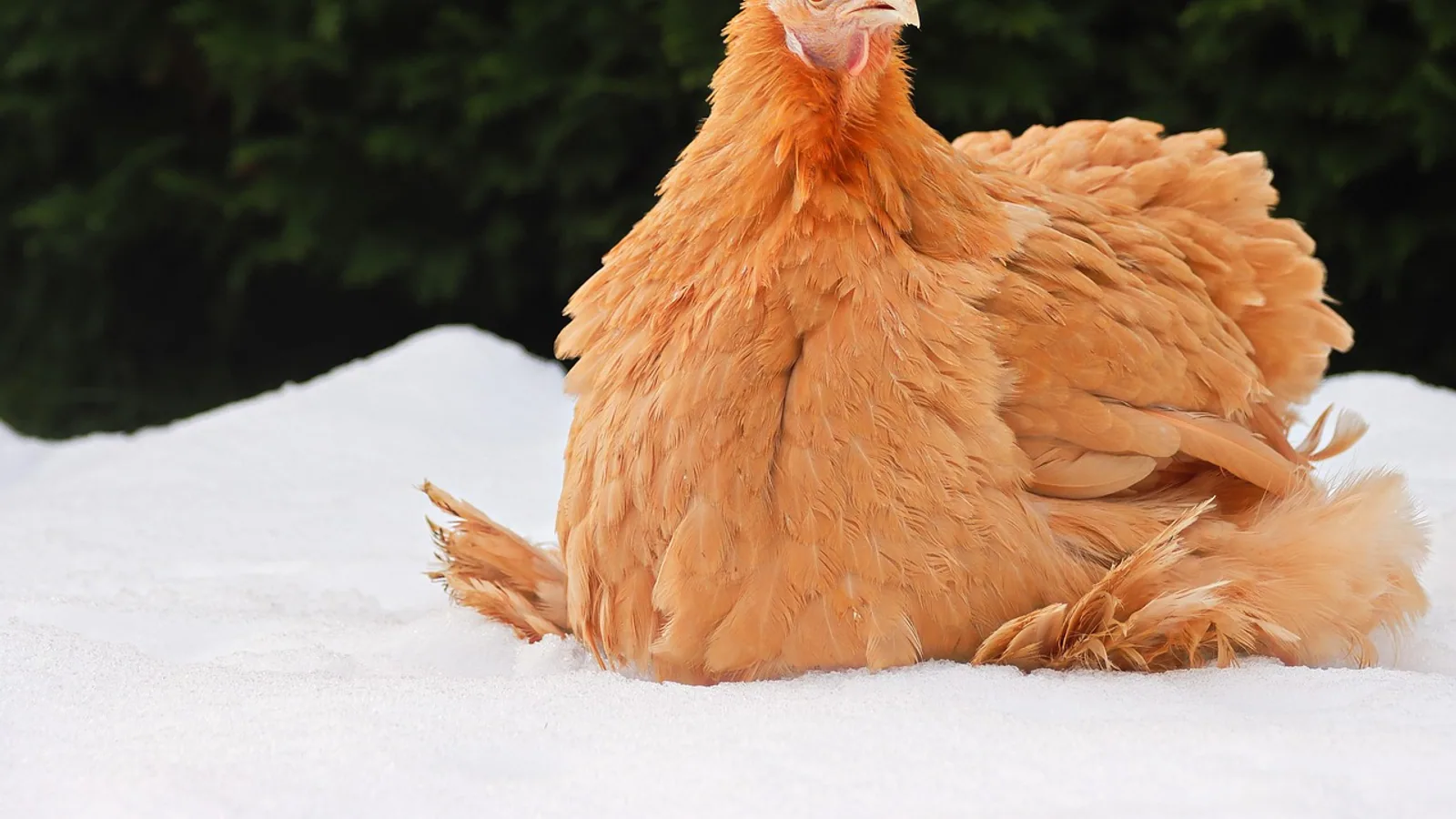
The Cochin hen is a large, heavily feathered Asiatic breed known for its feathered shanks and feet, calm disposition, and famously strong broodiness. Cochins are poor flyers, they rarely clear a fence, and they lay roughly 150 to 180 brown eggs a year. They suit keepers who want a docile, ornamental flock bird and who are willing to manage the two features that define the breed in daily care: dense foot feathering and a near-constant urge to sit on eggs. This article covers the breed profile, the Cochin versus standard breed comparison, and the practical care that keeps feathered feet healthy.
This article is educational and is not a substitute for veterinary diagnosis or treatment.
At a Glance
| Attribute | Cochin hen |
|---|---|
| Origin | Asiatic breed group, developed in China and refined in the West |
| Size | Large, heavily feathered |
| Weight | Heavy for a backyard breed, roughly in the 8 to 10 lb range for a mature hen, with cockerels heavier |
| Plumage | Abundant, soft, covering the body, shanks, and feet |
| Egg number | About 150 to 180 brown eggs per year |
| Egg color | Brown |
| Broodiness | Very high, among the most reliably broody backyard breeds |
| Temperament | Calm, docile, slow-moving |
| Flight | Poor, essentially non-flying |
| Lifespan | Commonly 6 to 8 years with good care, longer in some flocks |
| Grooming | Regular foot and feather checks, dry bedding, occasional feather trimming |
| Heat tolerance | Poor, needs shade and ventilation in summer |
| Cold tolerance | Good, dense plumage insulates well |
| Good with children | Generally yes, because of the calm temperament |
| Good with other pets | Usually tolerant, but supervision with dogs and cats is required |
History and Purpose of the Cochin Hen
Cochins entered Western poultry culture as a large, heavily feathered Asiatic breed. The breed name is associated with Cochin China, the historic trading region that gave Western fanciers their first view of birds with this body type. Breeders selected Cochins for extreme feather coverage, a broad body, and a placid nature rather than for high egg output.
The Cochin lineage also contributed to the genetics of other breeds and to the study of incubation behavior. Research on the genetic control of incubation behavior used reciprocal crosses between a nonbroody White Leghorn line and a broody Bantam line, and the study concluded that incubation behavior was not controlled by major genes on the Z chromosome. The authors hypothesized that at least two dominant autosomal genes are involved, one causing and one inhibiting the behavior with equal influence [1]. That finding matters to Cochin keepers because it explains why broodiness is a stable, inherited trait in this breed group rather than a habit that can simply be trained out of an individual hen.
Cochin genetics have also been studied outside the backyard context. A comparison of renal ornithine transcarbamylase activity across chicken breeds found that the Cochin Bantam breed and a White Leghorn B line had especially high activity, about 400 units per gram of kidney, while two Japanese native breeds and the California Gray breed showed very low activity. Crossing experiments indicated that Cochin Bantam ornithine transcarbamylase represents a simple autosomal incompletely dominant trait similar to the White Leghorn B line trait [2]. This is laboratory genetics rather than a care issue, but it confirms that the Cochin group has been a distinct and well-characterized genetic line for decades.
Cochin ancestry also appears in meat-quality research. A study of Maillard reaction products and browning intensity in raw and cooked chicken breast compared four Japanese jidori breeds, including Nagoya-Cochin, against commercial broilers. Breeds with high reducing sugar content in raw meat, including Nagoya-Cochin, showed significantly more intense browning and higher concentrations of Maillard reaction products after cooking, and reducing sugar content correlated strongly with Maillard reaction indicators independent of amino acid variation [3]. This is a food-science finding, not a husbandry instruction, but it illustrates how deeply Cochin-derived lines are embedded in poultry research.
For the backyard keeper, the practical takeaway from the breed history is simple. The Cochin hen was shaped to be a broody, heavy, slow bird with extraordinary feathering. Care should follow that design rather than fight it.
Appearance and Identification


A Cochin hen presents as a rounded, low-slung bird. The body is broad and deep, the plumage is soft and abundant, and the feathers extend down the shanks and over the feet. This foot feathering is the breed's signature and its main management burden.
Cochins come in many color varieties, and color does not change the core care requirements. What changes is visibility. A light-colored Cochin shows mud, droppings, and skin problems on the feet more readily than a dark bird, which is an advantage for early detection.
The comb is small relative to body size, and the overall silhouette is compact. Because the feathers cover so much of the leg, the shank and foot are partly hidden. Owners need to physically part the foot feathers during routine checks rather than relying on a glance from a distance.
Cochins are poor flyers. Their body weight and feather mass make sustained flight impractical, so they tend to stay where they are placed. This is convenient for containment, but it also means a Cochin will not escape a wet, muddy run by flying to a dry perch.
Temperament and Behavior
The Cochin hen is calm and docile. She moves slowly, tolerates handling well, and is often described as a good bird for families with children. She is not an aggressive forager and does not range as widely as lighter breeds.
Broodiness dominates Cochin behavior. A broody hen stops laying, spends most of her day on the nest, and reduces her intake of food and water. In a study of the Chabo hen, a dwarf bantam strain, plasma prolactin increased before incubation, stayed high during incubation, and dropped rapidly at the onset of hatching. Estradiol decreased before incubation and stayed low while prolactin was high. During incubation the hens spent more than 95 percent of the day on the nest, cut daily feed and water intake by 63 and 78 percent respectively, and lost 19 percent of body weight by the end of incubation [4]. The authors noted that this incubation pattern is similar to that reported in larger chickens, so the same physiology applies to a broody Cochin.
That physiology has a cost. A Cochin hen that stays broody for weeks loses condition, and repeated broodiness shortens her laying season. Understanding the hormonal basis helps owners respond appropriately. Broodiness is not stubbornness. It is a regulated reproductive state.
Nest deprivation changes that state. In turkey hens, nest deprivation disrupted broodiness and produced a sharp decline in plasma prolactin. Pituitary tissue from nest-deprived hens showed an increase in growth hormone immunoreactivity and a decrease in prolactin immunoreactivity after two or more days, with abundant apoptotic nuclei in the anterior pituitary, suggesting programmed cell death of lactotrophs [5]. The species differ, but the principle that removing a hen from the nest interrupts the broody cycle is consistent across poultry research. For a Cochin owner, this supports the common practice of physically moving a broody hen off the nest and out of the coop several times a day.
Ovarian and pituitary transcriptome studies in a strongly broody Chinese breed, the Changshun green-shell hen, add more detail. Comparing the laying period to the incubation period, researchers identified 1,650 differently expressed genes in the ovary, including 429 up-regulated and 1,221 down-regulated genes, with pathways related to follicle development, focal adhesion, MAPK signaling, and FoxO signaling involved [6]. In the pituitary, 2,089 differently expressed genes were identified, with the steroid biosynthesis pathway and neuroactive ligand-receptor interaction significantly enriched [7]. These findings confirm that the transition from laying to incubation is a whole-body regulatory event, not a simple behavior change.
Exercise and Space Needs
Cochins need less vertical space than flighty breeds and more dry ground. Because they cannot fly, they do not require high perches, and low roosts are easier for a heavy bird to reach. The priority is a run that stays dry.
A Cochin hen will spend much of her day sitting. That is normal for the breed, but a sedentary bird with wet feet is at higher risk of foot problems. Provide a run with good drainage, a covered area, and bedding that can be replaced often. Movement is beneficial, so scatter feed or place feeders and waterers at opposite ends of the run to encourage walking.
Do not rely on flight to move a Cochin out of a wet area. If the run floods, the hen will stand in the mud rather than escape it.
Housing and the Feathered-Foot Problem
Foot-feather hygiene is the central husbandry task for Cochin owners. The feathers on the shanks and feet trap moisture, mud, and droppings. Once wet, they stay wet longer than body feathers, and the skin underneath stays damp.
The first rule is dry bedding. Use bedding that absorbs moisture and replace it before it becomes saturated. In a wet climate, a covered run or a raised, roofed coop floor makes the difference between a healthy Cochin and a chronic foot problem.
The second rule is routine inspection. Part the foot feathers at least weekly and look at the shank skin and the sole of the foot. Check for:
- Mud balls packed against the skin
- Crusty or raised scales on the shank
- Swelling, heat, or a dark wound on the foot pad
- Discharge, odor, or matted feathers around the foot
Mud balls are common in Cochins. A ball of dried mud or bedding stuck to the foot feathers holds moisture against the skin and can hide an injury. Soak the foot in warm water to soften the ball, then remove it gently and dry the foot thoroughly.
Scaly leg mite and bumblefoot are the two foot conditions Cochin owners should watch for most closely. Scaly leg mite produces raised, crusty scales on the shank and is favored by the moist, protected environment under heavy foot feathers. Bumblefoot is an infection of the foot pad, often starting at a small wound or a pressure point, and it presents as swelling, lameness, and sometimes a dark scab. Both require veterinary assessment. Do not attempt to cut into a swollen foot at home.
Trimming foot feathers is an option, not a routine. Trim only if the feathers are chronically dragging in mud, trapping moisture, or obscuring a wound that needs to stay clean. Trim conservatively and never cut into the skin or the quick of a feather. Over-trimming removes the insulation that protects the foot in cold weather.
Grooming
Cochin grooming is mostly inspection. The dense plumage hides external parasites, skin injuries, and foot problems, so hands-on checks matter more than they do with a sparse-feathered breed.
A practical routine:
- Part the foot feathers and inspect the shanks and soles weekly.
- Feel along the keel and under the wings for lumps, wounds, or parasites.
- Check the vent area for matted feathers or droppings.
- Dry the feet thoroughly after any wet exposure.
- Replace wet bedding immediately rather than waiting for a scheduled cleanout.
Bathing is rarely necessary and adds moisture risk. Spot-clean soiled feathers and dry the bird completely if she does get wet.
Feeding Considerations
Cochins are heavy birds with a sedentary tendency, so body condition matters. A broody Cochin eats far less than a laying hen. The Chabo study documented a 63 percent reduction in feed intake and a 78 percent reduction in water intake during incubation, with a 19 percent body weight loss by the end of incubation [4]. A Cochin hen that cycles through broodiness repeatedly can lose condition quickly.
Offer a complete poultry ration appropriate to the bird's life stage and reproductive status, and monitor body condition rather than assuming a fixed amount. A broody hen should be encouraged to leave the nest to eat and drink. If she will not, that is a reason to intervene and, if she continues to decline, to contact a veterinarian.
Fresh, clean water is essential at all times, especially in summer. Do not restrict water to control weight in a broody hen.
Heat and Cold Tolerance
Cochins overheat in summer. The same dense plumage and heavy body that make them cold-tolerant make them poor at shedding heat. Provide shade, good ventilation, and cool water during hot weather. Watch for open-mouth breathing, wing holding away from the body, and lethargy, which are signs of heat stress.
In cold weather, Cochins generally do well because of their insulation. The exception is the feet. Wet foot feathers in freezing conditions can lead to frost injury and to ice balls forming on the feathers. Keep bedding dry in winter as strictly as in summer.
Common Health Problems and Screening
The Cochin's main health risks cluster around the feet, the reproductive tract, and body condition.
Foot problems. Scaly leg mite and bumblefoot are the two conditions to screen for at every foot check. Both are more likely when bedding stays wet. Early detection is the difference between a simple treatment and a chronic lameness.
Reproductive problems. A breed this broody spends long periods in the nest, and prolonged sitting is associated with reduced feed and water intake and weight loss [4]. Monitor body condition through each broody cycle.
External parasites. Dense plumage gives mites and lice more places to hide. Part the feathers during routine checks.
Body condition. A heavy, sedentary bird can become overconditioned, and a broody bird can become underconditioned. Both extremes are worth tracking.
Screening tests and treatments should be selected by a veterinarian. There is no breed-specific screening panel for Cochins, and no source in this article supports a specific medication, dose, or testing protocol. Discuss any suspected foot infection, lameness, or prolonged broodiness with a veterinarian who treats poultry.
Lifespan and Long-Term Care
A well-managed Cochin hen commonly lives 6 to 8 years, and some live longer. The factors that most affect lifespan are foot health, body condition through broody cycles, and heat management in summer.
Long-term care is largely preventive. Keep bedding dry, inspect feet weekly, manage broodiness so the hen does not lose excessive condition, and provide shade in hot weather. These four habits address most of the breed's predictable problems.
Cochin Versus Standard Breed Comparison
The table below compares a Cochin hen with a typical lightweight standard laying breed. The standard breed column describes the general type, not one specific breed.
| Trait | Cochin hen | Typical standard laying breed |
|---|---|---|
| Weight | Heavy, roughly 8 to 10 lb for a mature hen | Light to medium, often 4 to 6 lb |
| Annual egg number | About 150 to 180 | Often 250 or more |
| Egg color | Brown | Brown or white, depending on breed |
| Broodiness | Very high | Low to moderate |
| Temperament | Calm, docile, slow | Often more active and flighty |
| Flight ability | Poor, essentially non-flying | Good, frequently flies to perches and over fences |
| Foot feathering | Present on shanks and feet | Usually absent |
| Heat tolerance | Poor, needs shade | Generally better |
| Cold tolerance | Good | Variable |
| Main care burden | Foot-feather hygiene, broodiness | Egg output, activity, containment |
The comparison shows the trade-off clearly. A Cochin gives you a calm, broody, ornamental bird with feathered feet and a moderate egg count. A standard laying breed gives you more eggs and easier containment-free management, but less broodiness and no foot feathering to manage.
Finding a Responsible Breeder or Rescue
Look for a breeder who keeps birds on dry bedding and can show you the feet of the birds they sell. A responsible Cochin breeder will part the foot feathers without hesitation and will not hide a bird's shanks during a farm visit.
Ask about broodiness in the line. A breeder who tracks which hens go broody and how often is managing the breed's defining trait rather than ignoring it.
Rescue is a realistic option for Cochins. Because they are calm and easy to handle, they are sometimes surrendered when owners underestimate the foot-care workload or the broodiness. A rescue bird should have a veterinary foot check before joining a flock, since foot problems are common in neglected Cochins.
Who Should Not Get a Cochin
Do not choose a Cochin hen if you want maximum egg production. The breed lays roughly 150 to 180 brown eggs a year, which is well below a standard laying breed.
Do not choose a Cochin if your run stays wet or muddy. Foot-feather hygiene is not optional for this breed, and a chronically wet environment will produce foot problems.
Do not choose a Cochin if you expect a hen to stay out of the nest. Broodiness is a defining inherited trait, and a Cochin hen will go broody repeatedly.
Do not choose a Cochin if you live in a region with long, intense summers and cannot provide shade and ventilation. The breed overheats easily.
Limitations and When to Contact a Veterinarian
Individual birds vary, and this article cannot replace an examination. Contact a veterinarian who treats poultry if you see any of the following:
- Lameness that does not improve after removing mud balls and drying the feet
- Swelling, heat, or a dark wound on the foot pad
- Raised, crusty scales on the shanks
- A hen that stays on the nest and refuses to eat or drink for more than a day
- Visible weight loss or a sharp keel
- Open-mouth breathing or lethargy in hot weather
- Any wound, discharge, or foul odor around the feet or vent
Early veterinary assessment is especially important for foot problems in this breed, because the foot feathers hide the early stages of infection.
Frequently Asked Questions
How many eggs does a Cochin hen lay?
A Cochin hen lays roughly 150 to 180 brown eggs a year. That is lower than a standard laying breed, and broodiness further reduces annual output.
Are Cochin hens good mothers?
Cochin hens are among the most reliably broody backyard breeds, so they often make attentive mothers. Their strong incubation drive is an inherited trait rather than a learned habit.
Why does my Cochin hen stay on the nest all day?
She is broody. A broody hen spends more than 95 percent of the day on the nest and cuts her feed and water intake substantially, which is a normal hormonal state in this breed.
Can Cochins fly?
Cochins are poor flyers. Their heavy body and dense feathering make sustained flight impractical, so they rarely clear a fence.
How do I keep Cochin foot feathers clean?
Keep bedding dry, inspect the feet weekly, remove mud balls by soaking and drying the foot, and trim feathers only when they are chronically trapping moisture or hiding a wound.
Do Cochins handle heat well?
No. Cochins overheat in summer because of their dense plumage and heavy body. Provide shade, ventilation, and cool water during hot weather.
What foot problems should I watch for in Cochins?
Scaly leg mite and bumblefoot are the two main concerns. Both are more likely when bedding stays wet, and both need veterinary assessment.
How long do Cochin hens live?
With good care, a Cochin hen commonly lives 6 to 8 years. Foot health, body condition through broody cycles, and heat management are the main factors that affect lifespan.
Related Articles
- Netherland Dwarf Rabbit: Breed Profile and Care Essentials
- Cat Breeds: How to Choose a Cat by Care Needs, Health, and History
- Do You Need a Rooster for Hens to Lay Eggs?
- Boer Goat Breed Profile: Characteristics and Management
- Hairless Cat: Care, Health, and Breed Guide
- Tabby Cat: Everything You Need to Know About Patterns, Breeds & Temperament
- Dog Calorie Calculator: Daily kcal Needs by Weight
Sources
- Genetic control of incubation behavior in the domestic hen.
- Comparison of renal ornithine transcarbamylase activities within different chicken breeds.
- Relationships Between Maillard Reaction Products, Browning Intensity, Substrate Contents, and Physicochemical Characteristics in Raw and Cooked Broiler and Japanese jidori Chicken Breast Meat.
- Changes in plasma levels of prolactin and estradiol, nutrient intake, and time spent nesting during the incubation phase of broodiness in the Chabo hen (Japanese bantam).
- Increased proliferative activity and programmed cellular death in the turkey hen pituitary gland following interruption of incubation behavior.
- Ovarian Transcriptome Profile from Egg-Laying Period to Incubation Period of Changshun Green-Shell Laying Hens.
- Pituitary transcriptome profile from laying period to incubation period of Changshun green-shell laying hens.