Do Pond Goldfish Need to Be Fed? Feeding Guide
By Dr. Zubair Khalid, DVM, MS, PhD ·
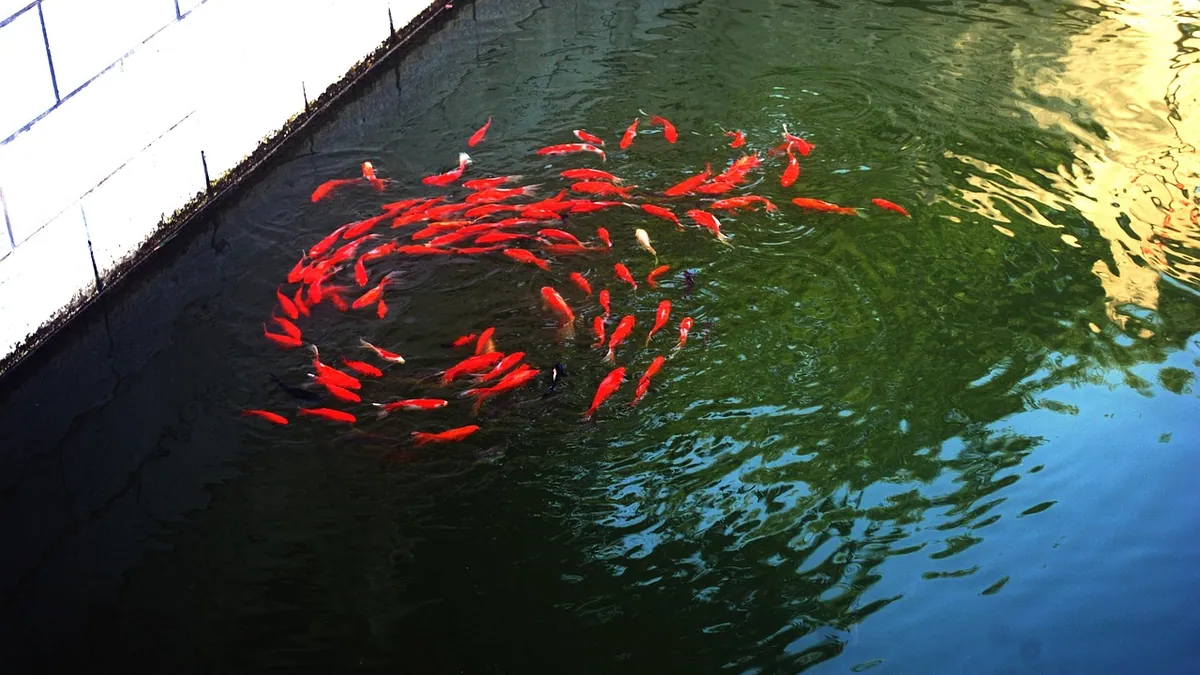
Do goldfish in a pond need to be fed? Sometimes yes, sometimes no. A well-established pond with plenty of algae, plants, and insects can feed goldfish on its own for much of the year, but supplemental feeding becomes necessary in cooler months, in crowded or bare ponds, and whenever your fish cannot find enough natural food. This article is educational and is not a substitute for veterinary diagnosis or treatment.
Quick Answer
- In a mature pond with algae, plants, and insect life, goldfish often get most of what they need from grazing, and you may only need to feed lightly.
- Once water drops below about 50°F (10°C), goldfish digestion slows sharply and most owners should stop feeding altogether until spring.
- In warm water (above 68°F / 20°C), active goldfish burn energy fast and usually need a quality staple food once or twice a day.
- Overfeeding is a bigger risk than underfeeding in most backyard ponds. Uneaten food rots and fouls the water.
- Watch your fish, not the calendar. If they are not actively searching for food at the surface, they probably do not need a meal.
Do Goldfish in a Pond Need to Be Fed? The Short Answer
Goldfish are opportunistic feeders. In the wild and in established ponds, they graze on algae, nibble soft plants, and snap up insects, larvae, and other small organisms all day long. That natural buffet covers a lot of their nutritional needs.
The catch is that a pond is not always a reliable buffet. A brand-new pond, a heavily stocked pond, or a pond with no plants and no algae growth gives your fish very little to eat. In those situations, you become the food source.
Temperature is the other big factor. Goldfish are cold-blooded, so their metabolism rises and falls with the water. A study of goldfish metabolic rate found that feeding to satiety raised oxygen consumption by about 35% compared with fasted fish, peaking around 3 hours after the meal and returning to baseline after about 7 hours [1]. That is a lot of internal work for one meal. When the water is cold, that work is hard on the fish and the food often passes undigested.
So the honest answer is this. Feed when your pond cannot feed your fish, and stop when the water tells you to stop.
How to Decide If Your Pond Fish Need Supplemental Food
Step 1: Assess the pond's natural food supply
Look closely at your pond in daylight. Do you see green algae on the walls and rocks? Are there submerged or floating plants? Do you see insects, tadpoles, or small crustaceans? If yes to most of these, your goldfish have a working pantry.
If your pond is bare, lined, and crystal clear with no algae and no plants, natural food is minimal. Plan on feeding.
Step 2: Check your stocking density
A few goldfish in a large planted pond can live largely on natural food. A crowded pond cannot support everyone from algae alone. Crowding also degrades water quality, which makes feeding mistakes more dangerous.
Step 3: Measure water temperature
This is the single most useful number you can track. Get a pond thermometer and check it at the same depth your fish spend most of their time.
- Below 50°F (10°C): stop feeding.
- 50 to 60°F (10 to 15°C): feed very lightly, only on mild days, only if fish are active.
- 60 to 68°F (15 to 20°C): light feeding, once daily at most.
- Above 68°F (20°C): normal feeding, once or twice daily.
Step 4: Watch feeding behavior before you commit
Fish signal hunger with their behavior. If they rise to the surface, patrol the edges, and investigate anything that lands on the water, they are ready to eat. If they hang near the bottom and ignore the surface, hold off. Feeding intensity is a measurable, observable behavior in fish, and it changes with conditions [2].
Step 5: Feed only what they finish
Drop in a small amount. If it is gone in a few minutes, you can add a little more. If food is still floating after five minutes, you fed too much. Scoop out what remains.
Seasonal and Temperature Feeding Schedule
| Season | Typical Water Temp | Feed? | Frequency | Notes |
|---|---|---|---|---|
| Late spring | 60 to 70°F | Yes, light | Once daily | Ramp up slowly as fish wake up |
| Summer | 70 to 85°F | Yes | Once or twice daily | Peak metabolism, watch water quality |
| Early fall | 60 to 70°F | Yes, light | Once daily | Switch to a wheat germ or easily digested food |
| Late fall | 50 to 60°F | Minimal | Every few days, mild days only | Skip cold snaps |
| Winter | Below 50°F | No | None | Fish slow down and rest near the bottom |
| Early spring | 45 to 55°F | Minimal | Only if fish are active | Do not rush the restart |
For a deeper look at cold-weather management, see Goldfish Pond Care: Water Quality, Feeding, and Winter Management.
What to Feed Pond Goldfish
A quality pond staple food should be the base. Look for a floating pellet or flake sized for your fish so they can swallow it easily. Floating food lets you see how much is being eaten, which helps you avoid waste.
Nutrition matters more than brand. Goldfish are omnivores and do best with a mix of plant and animal protein, plus vitamins. A dedicated pond food is formulated for outdoor fish and holds up better in water than tropical flakes. For more on what goes into a good diet, see Pond Fish Food: Nutritional Requirements and Feeding Strategies.
You can also supplement with blanched vegetables like shelled peas, zucchini, and spinach. These add fiber and give fish something to graze on. Remove anything uneaten after a day.
Avoid bread, crackers, and table scraps. They foul the water and provide poor nutrition.
Feeding Schedule and Daily Checklist
Use this as a simple routine.
- Check the thermometer before you feed anything.
- Watch the fish for 30 seconds. Are they active and searching?
- Drop in a small pinch. Wait and observe.
- Remove uneaten food after five minutes.
- Log the temperature and how much they ate. Patterns show up fast.
- Test water quality weekly during feeding season.
- Cut back immediately if you see cloudy water or algae blooms.
Consistency helps fish too. A study on goldfish found that random feeding times disrupted energy balance and neuroendocrine regulators compared with a fixed daily feeding schedule [3]. Feeding at roughly the same time each day supports normal metabolism.
Signs Something Is Wrong
Feeding problems often show up as behavior or water changes first.
- Fish ignore food for more than a day in warm water.
- Fish float at the surface gasping, which can point to low oxygen.
- Fish sit on the bottom with clamped fins.
- Food is left uneaten repeatedly.
- Water turns cloudy or green after feeding.
- Fish look bloated, or you see trailing stringy feces.
- Sudden die-offs, which usually mean a water quality crash.
Any of these can have several causes, and a veterinarian who treats fish can help sort out which one you are facing.
Common Mistakes Pond Owners Make
Feeding on a schedule instead of by temperature
The calendar does not know your pond. The thermometer does. Feeding warm-season amounts in cold water is one of the most common ways people make their fish sick.
Overfeeding
More food is not more health. Uneaten pellets decay, raise ammonia, and feed algae. Fish that overeat also produce more waste, which stresses the whole system.
Feeding when fish are not interested
If your goldfish are not coming up for food, they are telling you something. Respect it.
Ignoring water quality
Feeding and water quality are linked. Poor water makes fish stop eating, and uneaten food makes water worse. Break the cycle by testing and doing partial water changes.
Assuming natural food is always enough
A bare, clean, crowded pond may not support your fish on grazing alone. If your fish look thin or are losing weight, they need supplemental food or a pond upgrade.
Setup Details That Affect Feeding and Health
The pond itself shapes how well your fish eat.
- Volume and stocking: More water per fish means more natural food and more stable water quality.
- Plants: Provide cover, grazing surfaces, and oxygen. They also compete with algae for nutrients.
- Filtration: Mechanical and biological filtration keeps waste from building up after meals.
- Aeration: Warm water holds less oxygen. Aeration helps fish digest and stay active.
- Shade: Prevents overheating in summer, which can spike metabolism and stress.
- Thermometer: Non-negotiable for anyone feeding pond fish.
If you also keep goldfish indoors, the same principles apply in a different setting. See Goldfish Care Guide: Tank Size, Diet, and Lifespan for indoor specifics.
Limitations and When to Contact a Veterinarian
This guide covers general feeding principles. Your pond, your fish, and your climate are specific, and individual cases need a veterinarian.
Contact a veterinarian who treats fish the same day if you see:
- A fish that cannot right itself or is floating on its side.
- Rapid breathing at the surface that does not improve with aeration.
- Red streaks, open sores, or fuzzy patches on the body or fins.
- Several fish refusing food at the same time in warm water.
- Any sudden death in the pond.
Treat these as an emergency and act now:
- Multiple fish dying within hours.
- A fish trapped at the surface and unable to dive.
- A pond-wide die-off after a temperature swing or chemical exposure.
Schedule a routine visit if you notice:
- Gradual weight loss over weeks.
- Chronic fin clamping or lethargy.
- Repeated water quality problems you cannot fix.
A veterinarian can examine your fish, check water parameters, and calculate any treatment dose based on your fish's weight and health. Never guess at medication amounts.
Frequently Asked Questions
Can pond goldfish survive all winter without being fed?
Yes, in most climates. Once water drops below about 50°F, goldfish become largely inactive and live off stored energy and whatever they graze. Feeding them in cold water can cause undigested food to rot in the gut and foul the pond.
How do I know if my goldfish are getting enough natural food?
Look at body condition. Healthy goldfish have smooth, rounded bodies and steady activity. If fish look thin, sunken, or are losing weight, natural food is not enough and you should add a quality staple food.
What time of day is best to feed pond goldfish?
Feed during daylight, ideally at the same time each day. Goldfish show a daily rhythm in metabolic rate with higher oxygen consumption during the day [1], and consistent feeding times support normal energy balance [3].
Will goldfish eat insects that land on the pond?
Often yes. Goldfish and related species can capture prey at the water surface, and research on largemouth bass shows that fish use different, faster movements to grab prey above the water than below it [4]. Surface insects are a real part of a pond goldfish diet.
Should I stop feeding if the water turns green?
Not automatically, but you should cut back and test your water. Green water usually means excess nutrients, often from overfeeding. Reduce portions, remove uneaten food, and check ammonia and nitrite levels before resuming a normal schedule.
Related Articles
- Goldfish Pond Care: Water Quality, Feeding, and Winter Management
- Pond Fish Food: Nutritional Requirements and Feeding Strategies
- Goldfish Care Guide: Tank Size, Diet, and Lifespan
- Goldfish Tank Size Care
- Goldfish Tank Setup: Essential Equipment and Water Parameters for Healthy Goldfish
- Tetra Fish Care: Species Guide, Tank Setup, and Feeding
- How Often Should You Feed Betta Fish and Goldfish?
- Do Goldfish Need a Filter? Filtration Basics
- Do Goldfish Eat Algae? What They Clean Up and What They Do Not
- Pond Fish Feeding Strategies: How to Match Feed Type and Frequency to Your Fish
- Pond Feeding Station Design for Efficient Feed Management
References
- Metabolic Rate of Goldfish (Carassius auratus) in the Face of Common Aquaculture Challenges. Biology, 2024.
- A vision-based framework for quantifying fish feeding behavior in industrial recirculating aquaculture systems. Scientific reports, 2026.
- Feeding and light cycle disruptions have distinct effects on energy balance and neuroendocrine regulators in goldfish. Fish physiology and biochemistry, 2026.
- Fish alter locomotor and feeding kinematics to capture aerial prey. Proceedings. Biological sciences, 2025.