Do Betta Fish Interact With You? Bonding Explained
By Dr. Zubair Khalid, DVM, MS, PhD ·
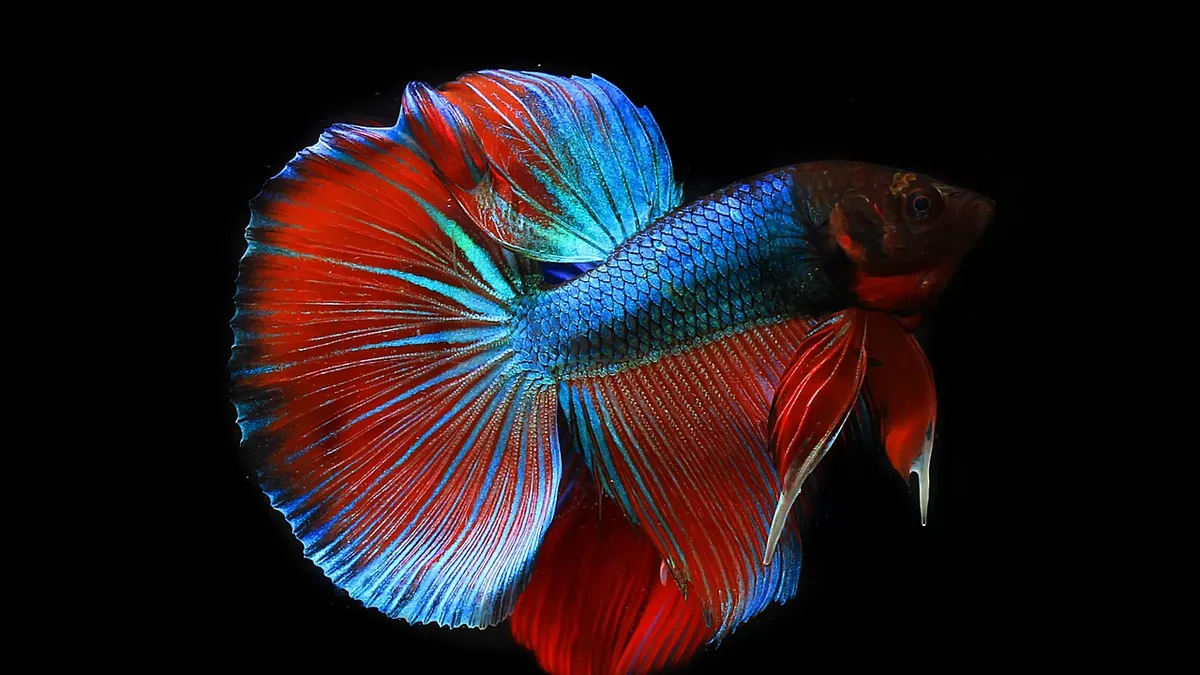
Yes, betta fish can interact with you. They are smart, curious fish that often learn to recognize the person who feeds them, and many will swim to the front of the tank, follow a finger, or beg for food. That said, not every betta wants close contact, and reading their body language matters more than forcing a bond.
This article is educational and is not a substitute for veterinary diagnosis or treatment.
Quick Answer
- Bettas commonly recognize their owner and will swim toward the glass when you approach, especially at feeding time.
- Following your finger or flaring at a mirror is normal betta behavior, not proof of affection or aggression toward you.
- Fish social behavior develops from basic learning and reward, so your betta is responding to patterns, not forming a human-style friendship [1].
- Interaction should stay short, calm, and food-based. Long sessions or tapping the glass can cause stress.
- Any change in appetite, color, swimming, or breathing needs a veterinary check, since illness can look like "shyness."
Why Your Betta Reacts to You
Bettas learn who feeds them
Your betta does not need to love you to notice you. Fish are capable of learning and memory, and they connect a specific person with food and routine. When you walk up and the fish darts to the front corner, that is a learned association, not a coincidence.
Research on fish social behavior shows that fish-like social responses, including preferences for familiar group members, can develop from general learning and reward systems [1]. Your betta is running the same basic machinery. You equal food. Food equals a good outcome. So your betta greets you.
Why bettas flare
Flaring is when a betta spreads its gill covers and fins to look bigger. Males do this at rivals, at their own reflection, and sometimes at movement near the tank. It is a display, not a greeting.
A short flare can be normal exercise. A long, repeated flare at a mirror is stressful. If your betta flares every time you walk by, check the lighting and reflections in the room. Bright light behind you can turn the glass into a mirror.
Why bettas follow fingers
Bettas track movement because movement can mean food. A finger sliding along the glass looks like prey or a rival. Most bettas follow it out of curiosity and food anticipation.
This is the easiest interaction to build. Move your finger slowly, stop, and offer a food reward. Keep sessions under a minute or two. The goal is calm attention, not a performance.
Why some bettas seem to ignore you
Some bettas are simply less interactive. Personality varies between individual fish, and a betta that hides may be stressed, sick, or in a tank that feels unsafe. A bare tank with bright light and no cover gives a betta nowhere to feel secure.
Water quality is the most common reason a betta goes quiet. Ammonia, nitrite, and temperature problems cause real discomfort. A betta that used to greet you and now hides needs a water test before you assume it is just shy.
Medical Causes to Rule Out First
Before you decide your betta is "bonding" or "mad at you," rule out illness. Several common conditions change behavior in ways owners misread as personality.
- Fin rot makes fins ragged and heavy, so the fish swims less and stops greeting you.
- Velvet and ich cause scratching, clamped fins, and hiding.
- Swim bladder problems make a betta float oddly or sink, which looks like laziness.
- Columnaris can cause pale patches and listlessness.
- Internal parasites cause weight loss, a sunken belly, or stringy waste.
Poor water quality, wrong temperature, and overcrowding drive most of these problems. A betta in a small, unfiltered bowl is under constant stress, and stress suppresses normal behavior and immune function [2]. Fish welfare research now treats cognitive and emotional states as central to how fish experience their environment, which means a stressed betta is not a happy one [2].
If your betta stops eating, check the Betta Fish Not Eating guide and test your water the same day. For a full setup review, see the Complete Betta Fish Care Guide.
When Interaction Becomes a Problem
Interaction is a problem when it costs the fish more than it gives. Watch for these signs.
Constant flaring. A betta that flares at reflections all day is burning energy and staying in a stress state. Cover the sides of the tank or adjust room lighting.
Glass surfing. Swimming up and down the glass for hours can mean the tank is too small, too bare, or placed in a busy walkway. It can also be a sign of poor water quality.
Food begging that never stops. If your betta races to the glass every time you move, you may be overfeeding. Obesity and constipation are common in bettas fed on demand.
Fear responses. Gills pumping fast, clamped fins, pale color, and hiding after you approach mean your betta is not enjoying the contact. Back off and let the fish come to you.
How to Build Interaction Without Stressing Your Fish
Use food as the bridge
Food is the cleanest way to build a routine. Feed at the same times and the same spot each day. Sit still nearby for a minute before you feed. Your betta will start linking your presence with a good outcome.
Do not hand-feed until your betta is calm at the glass. Then offer one pellet at a time and wait. If the fish bolts, end the session.
Train simple behaviors
Bettas can learn to swim through a hoop, touch a target, or follow a finger for a reward. Keep sessions short, once or twice a day. Reward with a single pellet or a small piece of a treat food.
Stop the moment your betta loses interest or shows stress. Training is enrichment, not obedience. A fish that is not hungry will not train well, so use sessions before feeding, not after.
Fix the environment first
No amount of training fixes a bad tank. Bettas need warm, clean water, a filter, a heater, and places to hide. A tank with plants, caves, and a dark background gives your betta confidence. A confident betta interacts more.
Keep the tank out of high-traffic areas if your fish startles easily. Give it a quiet corner with a consistent light schedule.
Add enrichment
Enrichment means giving your betta things to explore. Live or soft silk plants, a floating log, and occasional new decor all help. Some bettas enjoy a mirror for a few minutes a day, but keep it brief. A mirror session is exercise, not a playdate.
If you want tank mates, choose carefully. Bettas are territorial, and the wrong tank mate causes chronic stress. The Best Betta Fish Tank Mates guide covers safe options.
What Not to Do
Do not punish your betta. There is no effective or humane way to discipline a fish. Tapping the glass, chasing the fish with a net, or withholding food only creates fear.
Do not tap the glass. It is loud and jarring underwater. It teaches your betta that your approach means a fright, which is the opposite of bonding.
Do not assume flaring means your betta loves you. Flaring is a threat display. A betta that flares at you is reacting to movement, not greeting a friend.
Do not believe the "betta in a bowl" myth. Bettas need heated, filtered water and space to swim. Small bowls cause stress and disease, and a stressed fish will not interact.
Do not overfeed to get a reaction. Begging is not hunger. Follow a measured feeding plan and skip a day if your betta looks bloated.
Do not add a mirror as a permanent tank mate. Constant reflection means constant flaring, which is stressful.
When to Involve a Veterinarian or Fish Behavior Professional
Most betta behavior is normal fish behavior, and most "bonding" questions are answered by better tank care. Call a veterinarian when behavior changes are sudden or come with physical signs.
Aquatic veterinary care is limited in many areas, so start with an exotics or aquatic veterinarian if you have one. A certified behavior professional with fish experience can help with chronic glass surfing or aggression, but water quality and health come first.
Limitations and When to Contact a Veterinarian
Individual bettas vary, and no article can tell you what your specific fish is feeling. A veterinarian who examines your fish and your tank setup is the only way to sort normal behavior from disease.
Contact a veterinarian the same day if you see:
- A betta that stops eating for more than a day or two
- Rapid gill movement, gasping at the surface, or hanging near the filter
- Clamped fins, pale color, or a sudden change in swimming
- White spots, gold dust, fuzzy patches, or red streaks
- A swollen belly, pop-eye, or a curved spine
- New hiding that started after a water change or a new tank mate
Treat as an emergency now if:
- Your betta is lying on its side and cannot right itself
- The fish is bleeding or has open wounds
- You suspect ammonia or nitrite poisoning from a tank crash
- The fish is trapped against the filter intake or heater
Schedule a routine visit if:
- Your betta has been flaring at reflections for weeks
- Glass surfing or pacing has not improved after tank changes
- You cannot get water parameters stable
- You want help planning a tank upgrade or adding tank mates
For a full list of symptoms and treatments, see Common Betta Fish Diseases and How to Treat Them. If you are unsure how old your fish is or how long it should live, the How Long Do Betta Fish Live? Lifespan Guide can help you set expectations.
Frequently Asked Questions
Do betta fish interact with you on purpose?
Yes, bettas often interact with their owner on purpose, but the purpose is usually food and curiosity. They learn that your approach predicts feeding, so they swim over and wait. This is real learning, not affection in the human sense.
Can a betta fish recognize its owner?
Many bettas appear to recognize the person who feeds them and will respond differently to that person than to strangers. Fish can develop social preferences through learning and reward, which supports this idea [1]. Recognition is likely based on movement, routine, and appearance instead of a name.
Why does my betta flare at me?
Your betta likely flares because it sees you as a large moving object or a rival, not because it dislikes you personally. Flaring is a threat display used to look bigger. If it happens every time you approach, reduce reflections and approach more slowly.
Do bettas like being petted or touched?
No, bettas should not be touched. Their bodies are covered in a protective slime coat, and handling or rubbing removes it and invites infection. Interact through the glass and with food rewards instead.
Is it bad to tap the glass to get my betta's attention?
Yes, tapping the glass is bad for your betta. It creates a sharp vibration in the water and teaches fear instead of trust. Get attention by standing still near the tank at feeding time.
Related Articles
- Betta Fish Not Eating
- Complete Betta Fish Care Guide
- Best Betta Fish Tank Mates
- Common Betta Fish Diseases and How to Treat Them
- How Long Do Betta Fish Live? Lifespan Guide
- Does My Betta Fish Recognize Me? Fish Memory Explained
- Do Betta Fish Recognize Their Owners?
- How to Tell If Your Betta Fish Is Happy and Thriving
- Betta Fish Natural Habitat and Behavior: Beyond the Bowl
References
- Parallel development of social behavior in biological and artificial fish. Nature communications, 2024.
- Fish welfare in a changing world: New developments and current challenges. Journal of fish biology, 2026.