Aquarium Salt for Betta Fish: When to Use It, Dose, and Risks
By Dr. Zubair Khalid, DVM, MS, PhD ·
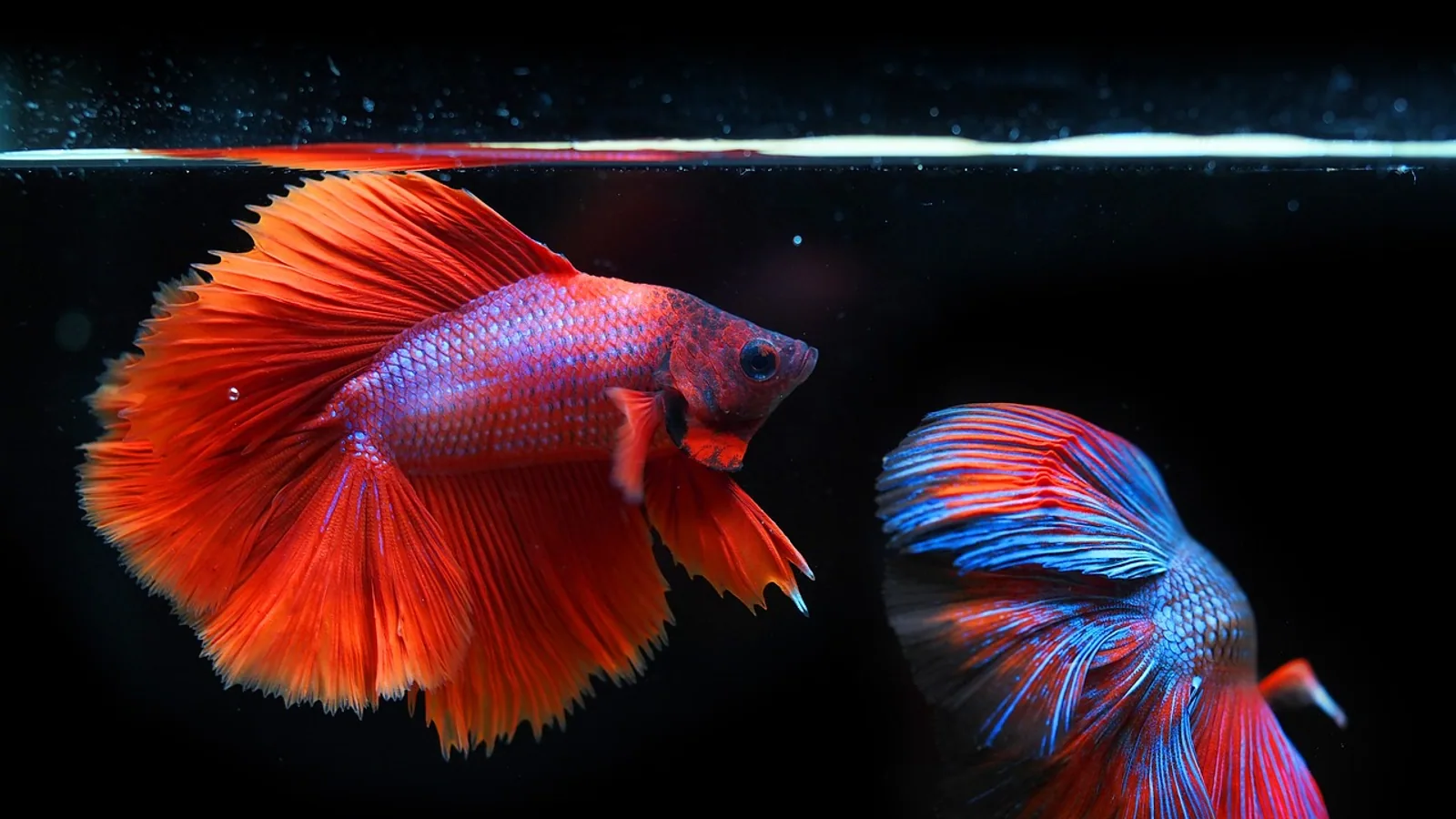
Aquarium salt for betta fish is a tool with a narrow job, not a daily supplement. Sodium chloride can help a betta cope with a mild external problem or a temporary nitrite spike, and it can reduce some stress responses during confinement, but it does not cure bacterial fin rot, it does not replace clean water, and it can harm plants, snails, and the fish itself if you guess at the dose. The single most useful rule for a betta keeper is this: use salt only when you have a specific, short-term reason, measure it, and remove it with water changes when the reason is gone.
This guide covers what aquarium salt actually is, what it can and cannot do for a betta, how hobbyists dose it in a tank versus in a short bath, why Epsom salt is a different chemical used for different problems, and where the real risks sit. It is written for the keeper with one betta in a five-gallon tank who wants a straight answer, not a chemistry lecture.
This article is educational and is not a substitute for veterinary diagnosis or treatment.
At a Glance: Aquarium Salt Decisions for Betta Keepers
| Question | Short answer |
|---|---|
| What is aquarium salt? | Sodium chloride (NaCl), the same basic compound as table salt but without anti-caking and iodine additives |
| What is Epsom salt? | Magnesium sulfate (MgSO4), a different chemical with different uses |
| Main legitimate uses | Mild external issues, short-term nitrite protection, short-term stress support |
| Typical in-tank hobby range | About 1 to 3 grams per gallon (roughly one sixth to one half of a level teaspoon per gallon), used short term |
| Typical bath range | Higher concentration for a short dip, minutes not days |
| Does salt evaporate? | No. Only water evaporates, so salt concentrates unless you remove it with water changes |
| Safe for plants and snails? | Often not. Salt can injure or kill live plants and invertebrates |
| Routine use? | No. Do not run salt continuously as a tonic |
| Table salt? | No. Additives and iodine make it unsuitable |
| When to call a vet | Worsening lesions, dropsy, lethargy, appetite loss, or no improvement in a few days |
What Aquarium Salt Actually Is
Aquarium salt is sodium chloride. That is the whole story chemically. The product sold in fish stores is NaCl with no iodine, no anti-caking agents, and no trace additives, which is why you should not substitute iodized table salt or a salt blend that contains yellow prussiate of soda or other flow agents. The distinction matters because additives designed for human food or for water softeners are not tested for fish and can introduce compounds a betta should not be breathing across its gills.
Aquarium salt is not the same as marine salt mix. Marine mixes contain sodium chloride plus magnesium, calcium, potassium, carbonate, and trace elements blended to mimic seawater. Dosing marine mix into a freshwater betta tank pushes hardness and pH in ways you did not intend. If you are reaching for a box labeled "aquarium salt," confirm it lists sodium chloride as the ingredient and nothing else.
Epsom salt is magnesium sulfate. It shares the word "salt" in everyday speech but has a completely different chemical identity and a different set of hobby uses. Keep the two boxes physically separate so you never grab the wrong one at 11 p.m. during a water change.
What Salt Can and Cannot Do for a Betta
Salt works on the outside of the fish and at the gill surface. It does not enter the bloodstream as a drug and it does not target bacteria the way an antibiotic does. That limits what you can reasonably expect.
What salt can plausibly help with
Mild external problems. Sodium chloride has been used as a parasiticide and external treatment in freshwater fish management for decades. In ornamental fish import, sodium chloride is one of the mandatory treatments applied for gill flukes before export [1]. In laboratory work, sodium chloride killed gill amoebae in vitro at 7.5 mg/mL [2]. These are not betta-specific cures, but they support the general principle that a salt exposure can knock back some external organisms. For a betta with a mild, early external issue, a salt bath is a reasonable hobby-level step while you correct water quality.
Short-term stress support during confinement. A controlled study in Siamese fighting fish found that 0.5% sodium chloride significantly reduced cortisol levels and the expression of several stress-related genes (HSP70, HSP90, GR, MR) during 14 days of individual confinement in small bottles [3]. That is a meaningful finding for a species that is often housed in small volumes, and it is one of the few betta-specific salt studies available. It does not mean every betta tank should run at 0.5% salt. It means salt has a documented calming effect under a specific stressor.
Nitrite toxicity protection. Chloride competes with nitrite at the gill uptake site, so adding chloride to the water reduces how much nitrite the fish absorbs. This has been shown across fish and amphibians, including work where low sodium chloride levels reduced nitrite toxicity in amphibian larvae [4]. Nitrite exposure in fish causes methemoglobin to rise and plasma chloride to fall, which is the mechanism behind "brown blood" poisoning [5][6]. In practice, a modest salt dose during a nitrite spike can buy you time while you fix the filter and do water changes.
What salt cannot do
Salt is not a treatment for bacterial fin rot in the sense of killing the bacteria causing it. Fin rot is usually a water quality and bacterial problem, and the fix is clean water, correct temperature, and in many cases an appropriate antibiotic or antibacterial from a veterinarian. Salt may help a mild frayed edge look less irritated, but if the fin margin is actively receding, white, red, or bloody, salt alone will not stop it.
Salt does not treat internal parasites, dropsy, swim bladder disease, or systemic bacterial infection. It does not raise immunity. It does not "detoxify" ammonia. It does not replace a cycled filter.
Aquarium Salt Dosage: In-Tank Use Versus Short Baths
There is no single official dose for betta fish. What follows are hobby practice ranges, not a prescription. The right number depends on why you are using salt, what else is in the tank, and how long you plan to keep it there.
In-tank dosing (general practice)
For a short-term in-tank treatment, a common hobby range is roughly 1 to 3 grams of sodium chloride per gallon, which is about one sixth to one half of a level teaspoon per gallon. Dissolve the salt fully in a cup of tank water first, then add it slowly across the tank over several minutes. Never dump dry salt crystals onto a fish or onto a plant.
For reference, the betta confinement study used 0.5% NaCl, which is a much higher concentration than most hobby in-tank doses and was applied in a controlled research setting with small fish in small volumes [3]. Do not translate that number directly into a home aquarium without understanding that 0.5% is a substantial salinity change for a freshwater fish.
If you are dosing salt specifically for nitrite protection, the goal is to raise chloride, and lower doses in the range above are generally enough to blunt uptake while you correct the underlying problem. Higher concentrations of sodium chloride are not benign. A study in juvenile matrinxã found that 14 g/L produced lower hemoglobin, hematocrit, and total protein, plus higher triglycerides, sodium, potassium, chloride, and cortisol, indicating reduced oxygen transport and electrolyte imbalance [7]. That is roughly 53 grams per gallon, far above any hobby betta dose, and it is a useful reminder that salt is dose-dependent in its harms.
Short baths (general practice)
A betta salt bath uses a separate container, not the main tank. The fish goes in for a defined short period, then returns to clean tank water. Bath concentrations in hobby practice are higher than in-tank doses, and bath duration is measured in minutes, not hours or days.
Practical bath protocol:
- Fill a clean container with tank water or dechlorinated water at the same temperature as the tank.
- Dissolve the measured salt completely before the fish goes in.
- Net the betta gently and place it in the bath.
- Watch continuously. If the fish rolls, gasps at the surface, stops swimming normally, or tries to jump, remove it immediately.
- Move the fish back to clean, salt-free tank water when the bath time is up.
- Discard the bath water. Do not pour it back into the tank.
The safest approach is to start lower and shorter than you think you need.
How to remove salt from the tank
Salt does not evaporate. When tank water evaporates, the sodium chloride stays behind and concentrates. If you top off with fresh water and never do a water change, salinity creeps upward.
To reduce salt, do serial water changes. A 50% water change removes roughly half the salt. Two 50% changes in a row leave roughly a quarter. Do not try to remove salt with a filter, carbon, or a chemical additive. Water changes are the only reliable method.
Aquarium Salt for Fin Rot: What to Expect
Aquarium salt for fin rot is one of the most searched uses, and it is also one of the most misunderstood. Mild fin edge fraying with no redness, no white fuzz, and no receding margin often responds to clean water alone. In that situation, salt is optional and may not add much.
If the fin margin is actively eroding, if there is a white or gray edge, if the base of the fin is red or swollen, or if the body shows lesions, that is beyond a salt-and-water-change situation. Those signs point to a bacterial infection that needs a proper diagnosis. A veterinarian familiar with aquatic animals can identify whether the problem is bacterial, fungal, parasitic, or environmental, and can recommend the right treatment.
Salt can be used as a supportive measure alongside water quality correction, but it should not be the only thing you do. If you use salt for fin rot and see no improvement in two to three days, or if the fin loss is progressing, stop guessing and get help.
Salt Baths Versus In-Tank Salt: Choosing the Right Approach
The choice comes down to how much control you want and how much collateral risk you are willing to accept.
Use a bath when: you want to treat one fish, you do not want salt in your main tank, you have live plants or snails in the display, or you want a short, controlled exposure.
Use in-tank salt when: you are protecting against a nitrite spike that affects the whole tank, you have no live plants or invertebrates, and you plan to remove the salt with water changes once the crisis passes.
Do not use in-tank salt when: you have live plants, snails, shrimp, or other invertebrates in the same water. Salt harms them. A betta tank with a planted scape and a nerite snail is a bad candidate for in-tank salt.
A bath keeps the salt out of your substrate, your filter media, and your plant roots. For most home betta keepers with a decorated tank, the bath is the lower-risk option.
Risks: Plants, Snails, Scaleless Fish, and the Betta Itself
Salt is not selective. It affects everything in the water.
Live plants
Most freshwater plants do not tolerate sustained sodium chloride. Even short in-tank exposures can cause leaf melt, browning, and stalled growth. If you value your plants, use a bath instead.
Snails and other invertebrates
Snails, shrimp, and other invertebrates are generally more sensitive to salinity changes than fish. In-tank salt can kill them. If you keep a cleanup crew, do not salt the display tank.
Scaleless fish and sensitive species
Scaleless or lightly scaled fish are often described as more sensitive to external treatments, including salt. Betta fish are scaled, but they have delicate fins and a labyrinth organ, and they are not a species to experiment on with high salinity. If you keep tank mates, remember that any salt you add affects all of them, not just the betta.
The betta itself
High salinity causes real physiological harm. The matrinxã study showed that 14 g/L reduced hemoglobin, hematocrit, and total protein and disrupted electrolytes [7]. Zebrafish behavior was significantly reduced at 5.78 g/L [8]. These are not betta numbers, but they demonstrate that salt has a ceiling. Exceeding a reasonable dose, leaving salt in long term, or topping off without water changes can push a betta into osmotic stress.
Signs of salt intolerance in a betta include gasping, listing, clamped fins, erratic swimming, and loss of appetite. If you see these during or after salt exposure, remove the salt with water changes immediately.
Table salt and additives
Do not use iodized table salt, salt with anti-caking agents, or water softener salt. These contain additives not intended for fish. Use only plain sodium chloride sold for aquarium use.
Aquarium Salt vs Epsom Salt: Different Chemicals, Different Jobs
Aquarium salt vs Epsom salt is a comparison that trips up many keepers because both are sold as white crystals in similar boxes.
| Aquarium salt | Epsom salt | |
|---|---|---|
| Chemical name | Sodium chloride (NaCl) | Magnesium sulfate (MgSO4) |
| Primary hobby use | External issues, nitrite protection, short-term stress support | Bloating, fluid retention support, some digestive concerns |
| Acts on | Gill surface, external organisms, chloride competition | Osmotic balance, magnesium and sulfate availability |
| Typical form | In-tank dose or short bath | In-tank dose or short bath, depending on goal |
| Safe for plants? | Generally harmful | Less directly harmful to plants, but still a water chemistry change |
When keepers reach for Epsom salt instead
Epsom salt is used in hobby practice for bloating and for fish that look swollen or retain fluid. In a betta with a distended belly, keepers sometimes use Epsom salt baths or in-tank Epsom salt to draw fluid and support osmotic balance. This is a hobby practice, not a proven cure, and it is important to be honest about what bloating can mean.
A betta with a swollen body may have constipation, a swallowed object, an internal tumor, organ failure, or dropsy. Dropsy is not a disease itself. It is a sign of fluid accumulation, usually from organ failure, and it carries a poor prognosis. Epsom salt may make the fish more comfortable or reduce visible fluid for a time, but it does not reverse organ failure. If your betta has raised scales that look like a pinecone, a swollen body, and lethargy, that is a serious situation and a veterinarian should be involved if one is available.
Epsom salt is not a substitute for aquarium salt and vice versa. Using the wrong one for the wrong problem wastes time and can delay real treatment.
Step-by-Step: Using Aquarium Salt Safely in a Betta Tank
- Identify the reason. Mild external issue, nitrite spike, or short-term stress support. If you cannot name the reason, do not add salt.
- Check your tank inhabitants. Live plants, snails, or shrimp mean you should use a bath, not in-tank salt.
- Test your water. Confirm ammonia, nitrite, nitrate, pH, and temperature. Salt does not fix ammonia, and it does not fix a crashed filter.
- Measure the salt. Use a gram scale if you have one. Kitchen teaspoons vary, so grams are more reliable.
- Dissolve fully. Add salt to a cup of tank water and stir until no crystals remain.
- Add slowly. Pour the solution into the tank over several minutes, ideally near the filter outflow.
- Observe the fish. Watch for gasping, listing, or distress. If any appear, do a water change.
- Set a stop date. Decide in advance how many days you will run salt. Do not leave it in indefinitely.
- Remove salt with water changes. Do a 50% change, then another 50% change a day or two later, to bring salinity back down.
- Fix the underlying cause. Salt is a bridge. The real fix is water quality, temperature, and appropriate treatment.
Common Mistakes
Using salt as a routine tonic. Salt is not a vitamin. Continuous low-level salt does not improve a healthy betta and adds an unnecessary osmotic load.
Topping off with fresh water and never changing water. Salt concentrates over time. This is one of the most common ways keepers accidentally over-salt a tank.
Using table salt. Iodine and anti-caking agents do not belong in a fish tank.
Confusing Epsom salt with aquarium salt. They are different chemicals with different uses.
Salting a planted tank. You will lose plants and possibly snails.
Dosing by eye. "A pinch" is not a dose. Measure.
Leaving salt in for weeks. Long exposures increase the risk of osmotic stress and do not add benefit once the original problem is resolved.
Skipping water changes during treatment. Salt does not clean water. Dirty water plus salt is still dirty water.
Troubleshooting
The betta looks worse after adding salt. Do a 50% water change immediately with temperature-matched, dechlorinated water. Remove the salt. Reassess whether the problem is actually bacterial or internal.
The plants are melting. Remove the salt with water changes. Trim dead leaves. Consider a bath approach next time.
The snail stopped moving. Salt is likely the cause. Move the snail to clean, salt-free water if it is still alive.
Nitrite is still high after salting. Salt protects the fish but does not remove nitrite. Do water changes, feed less, and check your filter. A nitrite spike means the biofilter is not keeping up.
The betta's fins are still receding. Salt is not enough. This is a signal to get a diagnosis.
You cannot remember how much salt you added. Do a large water change and start over with a measured dose, or stop salt entirely and focus on water quality.
Welfare and Safety Points
A betta is a living animal with a specific osmoregulatory system adapted to freshwater. Adding salt changes the osmotic gradient between the fish and its environment. Small, short exposures are generally tolerated. Large or prolonged exposures are not.
The betta confinement study showed that 0.5% NaCl reduced stress markers in a specific research context [3], but it also showed that confinement alone triggered gene expression changes in the fish. The lesson is not "salt is good." The lesson is that environment matters, and salt is one variable among many.
Welfare priorities for a betta keeper:
- Provide a heated, filtered tank of appropriate size.
- Keep ammonia and nitrite at zero.
- Do regular partial water changes.
- Feed appropriately and avoid overfeeding.
- Use salt only with a defined purpose and a defined end date.
- Never use a medication or chemical without knowing what it is and why you are using it.
Limitations and When to Contact a Veterinarian
This article gives general hobby guidance. It cannot diagnose your fish. Individual cases need a veterinarian, ideally one with aquatic animal experience, and the World Aquatic Veterinary Medical Association (WAVMA) and the Merck Veterinary Manual both maintain resources for fish health that can help you find appropriate care.
Contact a veterinarian or an aquatic animal health professional if:
- The betta has a swollen body, raised scales, or a pinecone appearance (possible dropsy).
- Fins are actively receding, bleeding, or have white or gray margins.
- The betta is lethargic, not eating, or sitting on the bottom.
- There are open sores, red patches, or fuzzy growths on the body.
- The fish is gasping at the surface despite normal water parameters.
- Symptoms worsen after two to three days of supportive care.
- You are unsure whether the problem is bacterial, fungal, parasitic, or environmental.
- Multiple fish in the same system are affected.
If you cannot access a fish veterinarian, contact a knowledgeable aquarium professional or your state's aquatic animal health resources. Do not keep adding treatments on top of each other without a diagnosis.
Frequently Asked Questions
Can I use aquarium salt for betta fish every time I do a water change?
No. Aquarium salt is not a routine additive. Use it only for a specific, short-term reason such as a mild external issue or a nitrite spike, then remove it with water changes.
What is a safe aquarium salt dosage for a betta tank?
A common hobby range for short-term in-tank use is about 1 to 3 grams per gallon, roughly one sixth to one half of a level teaspoon per gallon. Dissolve it fully first, add it slowly, and remove it with water changes when the reason for using it is gone.
How long should a betta salt bath last?
Bath duration is short, measured in minutes, not hours. Watch the fish the entire time and remove it immediately if it rolls, gasps, or stops swimming normally. Because hobby bath protocols vary, confirm the concentration and duration with an aquatic veterinarian.
Is aquarium salt the same as Epsom salt?
No. Aquarium salt is sodium chloride. Epsom salt is magnesium sulfate. They are different chemicals used for different problems, and they are not interchangeable.
Does aquarium salt evaporate out of the tank?
No. Only water evaporates. Salt stays behind and concentrates, so you must remove it with water changes rather than waiting for it to disappear.
Can I use table salt instead of aquarium salt?
No. Table salt may contain iodine and anti-caking agents that are not intended for fish. Use plain sodium chloride sold for aquarium use.
Will aquarium salt hurt my plants or snails?
Yes, often. Live plants and invertebrates such as snails and shrimp are generally more sensitive to salt than fish. If you keep them, use a separate bath for the betta instead of salting the display tank.
Can aquarium salt cure fin rot?
Salt alone will not cure active bacterial fin rot. It may support a mild frayed edge alongside clean water, but receding, red, or white margins need a proper diagnosis and appropriate treatment from a veterinarian.
Related Articles
- Betta Fish Fin Rot Treatment
- Betta Fish Care: Fin rot bacterial infection treatment protocol
- Aquarium Fish Fin Rot: Causes, Symptoms, and Treatment
- Mastering Betta Fish Care: Stress-Free Moving Tips for Your Aquarium
- Mastering Betta Fish Care: A Stress-Free Guide to Transitioning Aquarium Routines
- Complete Betta Fish Care Guide
- Saltwater Aquarium Water Changes: How Much, How Often, How To
- Fish Tank Leak: Emergency Steps, Finding It, and Resealing
- Do Fish Drink Water? Freshwater vs Saltwater Fish Explained
Sources
- Monogenean parasites infect ornamental fish imported to Australia.
- Gill amoebae from freshwater rainbow trout (Oncorhynchus mykiss): In vitro evaluation of antiparasitic compounds against Vannella sp.
- Effects of Confinement Rearing and Sodium Chloride Treatment on Stress Hormones and Gene Expression in Siamese Fighting Fish (Betta splendens).
- Influence of low levels of water salinity on toxicity of nitrite to anuran larvae.
- Haematological and ion regulatory effects of nitrite in the air-breathing snakehead fish Channa striata.
- Effects of nitrite exposure on functional haemoglobin levels, bimodal respiration, and swimming performance in the facultative air-breathing fish Pangasianodon hypophthalmus.
- Effect of sodium chloride on physiological parameters of juvenile Brycon amazonicus (matrinxã).
- Identifying Behavioral Response Profiles of Two Common Larval Fish Models to a Salinity Gradient.