55 Gallon Fish Tank: Stocking Ideas, Weight, and Setup
By Dr. Zubair Khalid, DVM, MS, PhD ·
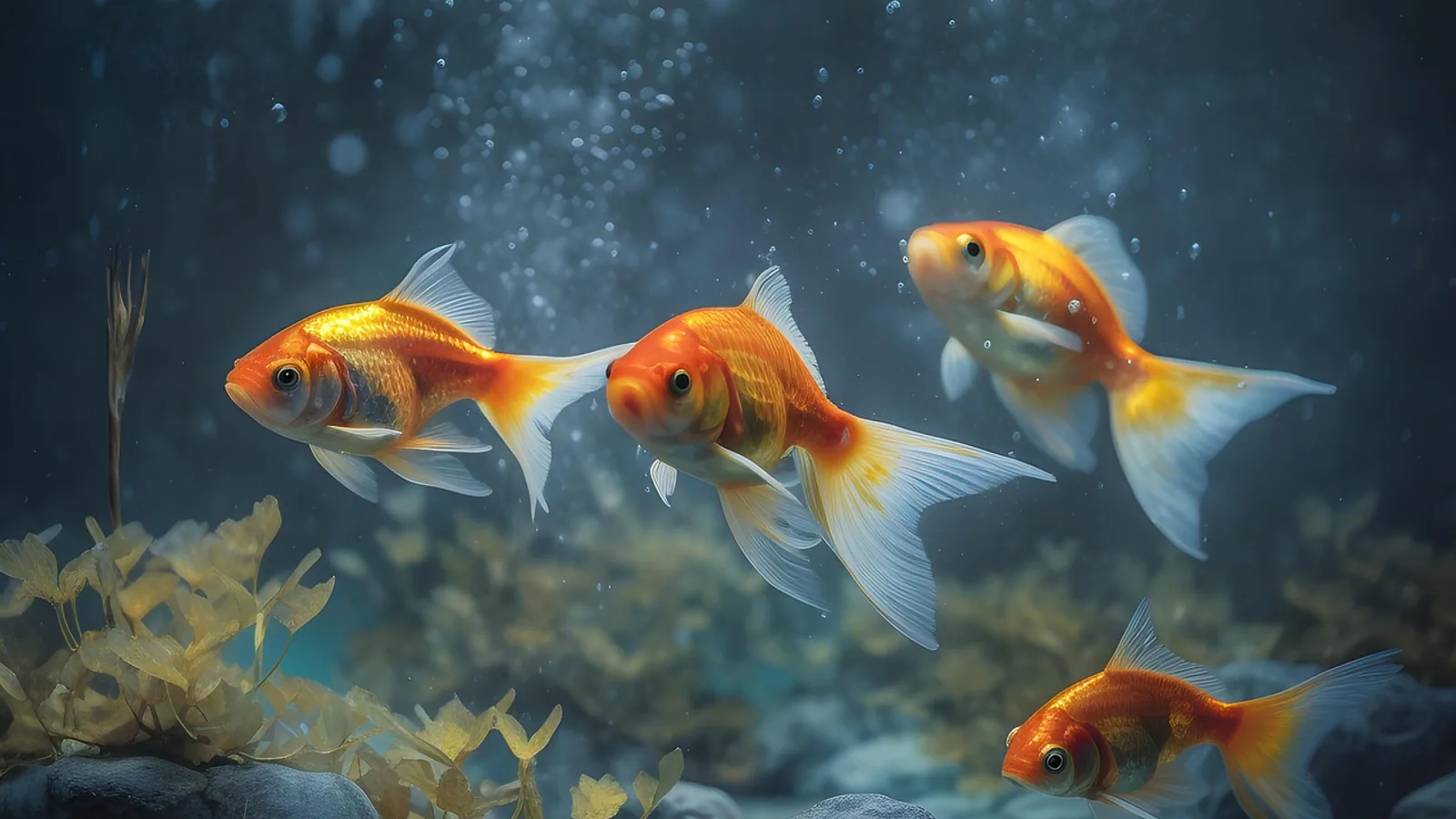
A 55 gallon fish tank is one of the most common mid-size aquariums sold in the United States, and it occupies an awkward but useful middle ground. It is large enough to hold a genuine community of fish, large enough for a small group of African cichlids, and large enough to be a serious commitment of floor space, water, and weekly labor. It is also narrow. The standard 55 gallon aquarium is about 4 feet long, roughly 13 inches deep front to back, and about 20 to 21 inches tall. That footprint is the single most important fact about this tank, because it shapes everything from which fish you can keep to where the tank can safely sit in your home.
The short answer for a new owner: a 55 gallon tank holds roughly 55 gallons of water, weighs over 600 lb when filled and aquascaped, needs a stand and floor that can carry that load continuously, and should be stocked with fish that use horizontal swimming space rather than fish that need depth or grow very large. A well-planned 55 gallon aquarium can run for years with modest maintenance. A poorly planned one becomes a weekly crisis of algae, ammonia, and dead fish.
This article covers the physical realities of the tank, the weight and floor question, three practical stocking plans (large community, African cichlid, and fancy goldfish), the fish that still outgrow a 55, filtration, and the water change routine that keeps fish healthy.
At a Glance: The 55 Gallon Tank in Numbers
| Item | Typical figure | Notes |
|---|---|---|
| Length | About 48 inches (4 ft) | Standard "55 gallon" footprint |
| Depth (front to back) | About 13 inches | The limiting dimension |
| Height | About 20 to 21 inches | Taller than it is deep |
| Empty tank weight | Roughly 60 to 80 lb | Glass, varies by manufacturer |
| Water weight | About 8.34 lb per gallon | 55 gallons is roughly 459 lb |
| Substrate, rock, equipment | Add 50 to 100 lb | Sand, gravel, filter, heater, decor |
| Realistic filled weight | Over 600 lb | Plan for 600 to 700 lb |
| Recommended water change | 25 to 50 percent weekly | Depends on stocking and nitrate |
| Minimum tank for a "large community" | 55 gallons works | Choose fish under 4 to 5 inches adult size |
| African cichlid setup | Workable for a small species group | Requires hard, alkaline water and heavy filtration |
| Fancy goldfish | 2 to 3 adults maximum | Goldfish are heavy waste producers |
Dimensions: Why the 55 Gallon Tank Is a Narrow Tank
The standard 55 gallon aquarium is 48 inches long, about 13 inches deep, and about 20 to 21 inches tall. This is a tall, narrow, long tank. It is not a cube and it is not a wide tank. That shape has real consequences.
Fish swim in three dimensions, but most freshwater community fish spend the majority of their time in the horizontal plane. A tank that is 4 feet long gives a school of small tetras or rasboras room to swim back and forth. A tank that is only 13 inches deep gives very little front-to-back room for a fish to turn, and very little room for a large-bodied fish to maneuver without scraping the glass or the decor.
The height also matters. A 20-inch tall tank is deep enough that light penetration to the bottom is reduced compared with a shallow tank, which affects plant choices. It is also deep enough that reaching the bottom for maintenance requires either long tools or getting your arm wet past the elbow. Tall tanks are harder to clean than long, shallow tanks of the same volume.
The narrow footprint limits aquascaping. You cannot build a deep, layered aquascape with foreground, midground, and background zones the way you can in a 75 gallon or 90 gallon tank with a 18-inch depth. You can build a long, linear aquascape, which suits the tank's proportions.
The narrow footprint also limits fish selection. Active, fast-swimming fish that need open water in all directions do poorly. Large, bulky fish do poorly. Fish that need to establish a territory with a wide radius do poorly. The 55 gallon rewards fish that swim in the long axis and stay in the upper or middle water column.
55 Gallon Tank Weight and Floor Placement
This is the section most new owners underestimate. A 55 gallon tank is heavy, and it is heavy in a way that is concentrated on a small footprint.
Water weighs about 8.34 lb per gallon. Fifty-five gallons of water is roughly 459 lb. Add the tank itself, which for a glass 55 gallon is commonly in the 60 to 80 lb range. Add substrate. A 55 gallon tank with a 2-inch sand or gravel bed can hold 50 to 75 lb of substrate. Add rock, driftwood, a filter, a heater, a light, and a lid. The realistic total is over 600 lb, and many setups land between 600 and 700 lb.
That weight is distributed across a footprint of about 48 inches by 13 inches, which is roughly 4.3 square feet. That is a load of well over 100 lb per square foot. For comparison, a residential floor is typically designed for live loads in the range of 40 lb per square foot for sleeping areas and higher for other rooms, but the relevant point for an owner is not the exact engineering number. The relevant point is that a 55 gallon tank is a heavy, permanent point load and it needs to sit on a stand designed for it, on a floor that can carry it, ideally spanning or sitting close to a load-bearing wall.
Practical rules for placement:
- Use a stand made for a 55 gallon tank. Do not use a dresser, a desk, a bookshelf, or a homemade table unless it was built specifically to carry that load.
- Place the tank perpendicular to the floor joists, not parallel to them, so the weight is spread across multiple joists.
- Place the tank near a load-bearing wall or over a beam when possible.
- Avoid upper floors in older homes unless you have confirmed the floor structure. A 55 gallon tank on a second floor is a real risk in many houses.
- Use a level. A tank that is not level puts uneven stress on the glass and the seams.
- Leave space behind and beside the tank for cords, a filter, and access for maintenance.
- Keep the tank out of direct sunlight, which drives algae and temperature swings.
- Keep the tank away from heating and cooling vents, doors, and windows that create drafts.
If you are unsure about your floor, consult a structural professional before filling the tank. The cost of that consultation is trivial compared with the cost of a floor failure.
Setting Up a 55 Gallon Aquarium: Step by Step
Setup order matters. Doing it in the right sequence avoids cloudy water, dead fish, and rework.
Step 1: Choose the location and confirm the floor
Pick a spot away from windows, vents, and foot traffic. Confirm the floor can carry the load. Confirm there is an electrical outlet within reach and that it is not going to be splashed. Use a ground fault circuit interrupter outlet or an adapter if the outlet is near water.
Step 2: Place the stand and level it
Assemble the stand per its instructions. Place it where it will live permanently. Level it front to back and side to side. A tank should never be shimmed under the glass itself. Shim under the stand.
Step 3: Rinse the tank and substrate
Rinse the tank with water. Do not use soap. Rinse sand or gravel thoroughly until the water runs clear. Cloudy substrate is the most common cause of a cloudy new tank.
Step 4: Add substrate and hardscape
Add 2 to 3 inches of substrate. Place rock and driftwood before filling. Leave open swimming space along the front glass and in the middle of the tank. In a narrow tank, open space is precious.
Step 5: Install the filter, heater, and light
Set up the filter according to its instructions. Place the heater where water flow will distribute heat evenly, not in a dead corner. Set the light on a timer. A 55 gallon tank benefits from a timer because consistent photoperiod reduces algae.
Step 6: Fill with dechlorinated water
Fill the tank with water treated to remove chlorine and chloramine. Place a plate or bowl on the substrate to break the force of the water and avoid disturbing the substrate. Fill to within an inch or two of the top.
Step 7: Start the filter and heater
Turn on the filter and heater. Let the tank run for at least 24 hours to confirm temperature stability and check for leaks. Check the stand for any signs of stress.
Step 8: Cycle the tank before adding fish
This is the step that separates successful tanks from failed ones. A new tank has no established biological filter. Ammonia from fish waste and uneaten food will accumulate and poison fish. The nitrogen cycle converts ammonia to nitrite and then to nitrate. This process takes weeks, not days. Do not add fish on day one.
According to the Merck Veterinary Manual, water quality is the foundation of aquarium fish health, and ammonia and nitrite are the primary acute toxins in a new or poorly maintained system [1][2]. The University of Florida IFAS Extension explains that ammonia exists in two forms in water, the toxic un-ionized form (NH3) and the less toxic ionized form (NH4+), and that the toxic fraction increases with higher pH and temperature [3]. This is why a tank with a high pH and warm water can kill fish at ammonia levels that would be tolerated in a cooler, lower-pH tank.
Cycle the tank by adding a small ammonia source (fish food, or a pure ammonia product) and testing ammonia, nitrite, and nitrate regularly until ammonia and nitrite read zero and nitrate is rising. Only then add fish, and add them slowly.
Step 9: Add fish in stages
Add a few fish at a time, spaced by one to two weeks, so the biological filter can adjust to the increased waste load. Adding a full stocking list at once crashes the filter and causes an ammonia spike.
Step 10: Establish a maintenance routine
Test water weekly. Change 25 to 50 percent of the water weekly. Clean the filter media in tank water, not tap water, to preserve the bacteria. Keep a log.
55 Gallon Tank Stocking: The Principles
Stocking a 55 gallon tank is not about a single number. It is about matching fish to the tank's shape, the filter's capacity, and your willingness to do water changes.
Three principles govern 55 gallon tank stocking:
- Match fish to the footprint. A 4-foot-long, 13-inch-deep tank suits fish that swim in the long axis. It does not suit fish that need depth or grow large.
- Match fish to the water. Fish from soft, acidic water and fish from hard, alkaline water do not belong in the same tank. Mixing them stresses both groups and shortens their lives.
- Match the stocking to the filtration and the water change routine. A heavily stocked tank needs more filtration and more frequent, larger water changes. There is no stocking list that works without maintenance.
The Merck Veterinary Manual notes that stocking density, water quality, and species compatibility are central to managing aquarium fish health, and that overcrowding and poor water quality are common causes of disease [1][2]. The ornamental fish welfare literature makes the same point from a welfare angle: high stocking densities and poor water quality are among the most consistent stressors identified in the trade and in home aquariums [4][5].
A note on the "one inch per gallon" rule
The old rule of one inch of adult fish length per gallon of water is a rough starting point at best and misleading at worst. It ignores body mass, waste output, swimming space, and the tank's shape. A 55 gallon tank does not hold 55 inches of any fish. It holds a carefully chosen community whose combined adult size, waste load, and space needs fit the tank. Use the rule as a very loose sanity check, not a plan.
Stocking Plan 1: The Large Community Tank
A 55 gallon community tank is the most common and most forgiving setup. The goal is a group of peaceful to semi-aggressive fish that occupy different parts of the water column and stay under about 4 to 5 inches as adults.
A workable community structure
- A mid-water schooling group. Small tetras, rasboras, or danios. Choose one species and keep a group of 8 to 12. A single large school looks better and behaves more naturally than several small groups.
- A bottom group. Corydoras catfish, small loaches, or a group of peaceful bottom dwellers. Keep 6 or more of a small species.
- A centerpiece fish or pair. A single larger peaceful fish, or a bonded pair, that occupies the middle or upper tank without bullying the school.
- A cleanup crew. Snails or small shrimp can help with algae and detritus, though they do not replace water changes.
What to avoid in a 55 gallon community
- Fish that grow over 5 to 6 inches as adults.
- Fish that need to be kept in large groups but grow large, such as silver dollars or large rainbowfish.
- Multiple centerpiece fish that will fight for territory in a narrow tank.
- Mixing soft-water and hard-water species.
Why the narrow footprint matters here
In a 13-inch-deep tank, a school of 12 small tetras will use the length of the tank well. A single 6-inch fish will look cramped. Two 6-inch fish will fight. The community plan works because the fish are small and the tank is long.
Stocking Plan 2: The 55 Gallon Cichlid Tank
A 55 gallon cichlid tank is a popular choice, but "cichlid" covers a huge range of fish with very different needs. The two realistic options for a 55 are a small group of African cichlids from the hard-water lakes, or a pair of smaller Central or South American cichlids.
African cichlid setup basics
African cichlids from Lake Malawi and Lake Tanganyika are the most common cichlids kept in 55 gallon tanks. They are colorful, active, and hardy, but they have specific requirements.
- Water chemistry. African cichlids from the Rift Lakes need hard, alkaline water. Typical targets are a pH around 7.8 to 8.6 and high carbonate hardness. Tap water in many parts of the United States is soft and acidic, so you may need to adjust it with cichlid-specific buffers or aragonite substrate. Test your tap water before choosing this setup.
- Substrate. Aragonite sand or crushed coral helps buffer the water toward the alkaline range. It also gives the fish a natural substrate to sift.
- Rockwork. African cichlids need rock piles and caves to establish territories and reduce aggression. In a narrow tank, build rockwork along the back wall and leave the front open for swimming.
- Stocking. The classic approach is to overstock slightly and keep a mix of species to spread aggression, backed by heavy filtration and large weekly water changes. This is a demanding routine. A more forgiving approach is a smaller group of a single species or a few compatible species, kept at a moderate density.
- Aggression. African cichlids are territorial. In a 13-inch-deep tank, territories are compressed, which increases conflict. Provide visual barriers and enough rockwork to break sight lines.
- Filtration. African cichlids are messy. A 55 gallon cichlid tank needs filtration rated well above the tank volume, plus a strong water change routine.
What "55 gallon cichlid tank" should not mean
It should not mean a tank full of large, aggressive Central American cichlids such as jaguar cichlids, wolf cichlids, or large vieja species. Those fish grow to 12 inches or more and need a tank several times the volume of a 55. It should not mean a tank with a single pair of large cichlids that will eventually need a 125 gallon or larger.
South American cichlids in a 55
Smaller South American cichlids, such as rams, apistogramma, and some of the smaller acara species, can work in a 55 gallon community or species tank. They generally prefer softer, more acidic water than African cichlids. Do not mix the two groups.
Stocking Plan 3: Fancy Goldfish in a 55 Gallon Tank
Fancy goldfish are popular, hardy, and long-lived, but they are not a good fit for a heavily stocked 55 gallon tank. They are large-bodied, they produce a lot of waste, and they prefer cooler water than most tropical community fish.
How many fancy goldfish in a 55 gallon tank?
A reasonable target is 2 to 3 adult fancy goldfish in a 55 gallon tank with strong filtration and a serious water change routine. Some experienced keepers run 3 to 4 with heavy filtration and large weekly water changes, but that is a demanding setup, not a beginner one.
The reason is waste output. Goldfish produce more ammonia per unit of body mass than most small tropical fish. In a 55 gallon tank, two or three adult fancy goldfish will already produce a substantial ammonia load. Adding more fish pushes the filter and the water change routine past their limits.
Goldfish-specific considerations
- Temperature. Fancy goldfish do best in cooler water, roughly 65 to 72°F. They can tolerate warmer water but are more prone to health problems at high temperatures.
- Tankmates. Do not keep fancy goldfish with tropical community fish that need warm water. Do not keep them with fast, nippy fish that will harass their fins.
- Substrate. Avoid sharp gravel that can be ingested and cause problems. Smooth sand or large, smooth stones are safer.
- Filtration. Goldfish need strong biological and mechanical filtration. A filter rated for a larger tank is appropriate.
- Water changes. Goldfish tanks need large, frequent water changes. A 50 percent weekly change is a reasonable starting point, adjusted based on nitrate readings.
A study on goldfish welfare found that substrate choice affected growth, color, and water quality, with planted substrate producing better outcomes than bare or zeolite-only setups [6]. This supports the general principle that environmental quality, not just feeding, drives goldfish health.
Fish That Still Outgrow a 55 Gallon Tank
The most common mistake in 55 gallon stocking is buying a fish that is small at the store and grows into a fish that needs a much larger tank. These are the species that most often outgrow a 55.
Oscars
Oscars are marginal in a 55 gallon tank. A single oscar can be kept in a 55 as a juvenile, but an adult oscar reaches 10 to 12 inches and is a heavy waste producer. A 55 gallon tank is generally considered the minimum for a single adult oscar, and many experienced keepers consider even that too small for long-term welfare. Two oscars in a 55 is not a workable plan. If you want oscars, plan for a 75 gallon or larger, ideally 125 gallons for a pair.
Common plecos
Common plecos (Hypostomus plecostomus and similar species) are sold as small algae eaters and grow to 12 to 24 inches. A common pleco will outgrow a 55 gallon tank. It also becomes less effective at eating algae as it matures and produces a large amount of waste. Do not buy a common pleco for a 55 gallon tank. If you want a pleco, choose a smaller species such as a bristlenose pleco, which stays under 6 inches.
Bala sharks
Bala sharks are sold as small, peaceful schooling fish and grow to 12 to 14 inches. They are active, fast swimmers that need a long tank with open water. A 55 gallon tank is too small for a group of adult bala sharks. They also need to be kept in groups, which multiplies the space requirement. A 6-foot tank or larger is appropriate for adults.
Other common mistakes
- Silver dollars, which grow to 6 inches and need to be kept in groups.
- Large rainbowfish, which are active and grow to 4 to 6 inches.
- Tinfoil barbs, which grow to 12 inches or more.
- Large catfish such as iridescent sharks, which grow to 3 feet or more.
- Red-tailed catfish, which grow to 4 feet or more.
The pattern is consistent. If a fish's adult size is over about 6 inches, or if it needs to be kept in a group and each fish grows over 4 inches, a 55 gallon tank is probably too small. Research adult size before you buy, not the size in the store tank.
Filtration for a 55 Gallon Tank
Filtration is the single most important piece of equipment after the tank itself. A 55 gallon tank needs a filter that can process the waste load of the fish you keep, not just the volume of water.
What filtration does
A filter provides three functions:
- Mechanical filtration. Removes particles from the water.
- Biological filtration. Provides surface area for nitrifying bacteria that convert ammonia to nitrite and nitrate.
- Chemical filtration. Removes dissolved compounds, often with activated carbon or similar media.
The biological function is the one that keeps fish alive. Mechanical and chemical filtration are useful but secondary.
Choosing a filter for a 55 gallon tank
For a 55 gallon tank, common options include:
- Hang-on-back (HOB) power filters. One or two large HOB filters can work well. Look for a filter rated for at least 55 gallons, ideally more.
- Canister filters. A canister filter rated for 75 to 100 gallons is a strong choice for a 55 gallon tank, especially a cichlid or goldfish tank. Canisters hold more media and provide better biological filtration.
- Sponge filters. Excellent biological filtration, often used in combination with other filters or in breeding setups. They are not ideal as the sole filter in a heavily stocked tank.
- Undergravel filters. Less common today. They can work but are harder to maintain.
A useful rule is to choose a filter rated for at least 1.5 to 2 times the tank volume, and more for messy fish. For a 55 gallon cichlid tank or a goldfish tank, a filter rated for 100 gallons or more is reasonable.
Filter maintenance
- Rinse filter media in tank water, not tap water. Tap water chlorine kills the bacteria.
- Do not replace all media at once. Replace a portion at a time to preserve the bacterial colony.
- Clean the impeller and intake regularly to maintain flow.
- Check flow rate. Reduced flow is a sign the filter needs cleaning.
Aeration and water movement
A 55 gallon tank benefits from additional water movement. A powerhead or airstone increases surface agitation, which improves gas exchange and helps keep oxygen levels up. In a tall, narrow tank, dead spots can form, so aim for flow that reaches all areas.
Water Quality and the Water Change Routine
Water quality is the foundation of fish health. The Merck Veterinary Manual identifies water quality as a primary determinant of aquarium fish health and notes that ammonia, nitrite, and nitrate are key parameters to manage [1][2]. The University of Florida IFAS Extension explains that ammonia toxicity depends on pH and temperature, with more toxic un-ionized ammonia at higher pH and temperature [3].
The nitrogen cycle in plain terms
- Fish produce ammonia through waste and respiration.
- Nitrifying bacteria convert ammonia to nitrite.
- Other bacteria convert nitrite to nitrate.
- Nitrate accumulates and is removed by water changes and, to a lesser extent, by plants.
Ammonia and nitrite are toxic at low levels. Nitrate is less toxic but accumulates over time and is linked to stress and disease. Water changes remove nitrate and replenish minerals.
The weekly water change routine
A 55 gallon tank should get a partial water change every week. The size of the change depends on stocking and nitrate readings.
- Lightly stocked community tank. 25 percent weekly.
- Moderately stocked community tank. 30 to 40 percent weekly.
- Heavily stocked tank, cichlid tank, or goldfish tank. 50 percent weekly, sometimes more.
Test nitrate before and after water changes to calibrate. If nitrate climbs above about 20 to 40 ppm between changes, increase the volume or frequency of changes.
How to do a water change
- Turn off the filter and heater.
- Siphon water from the tank into a bucket or drain. Vacuum the substrate as you go.
- Match the temperature of the replacement water to the tank.
- Treat the replacement water to remove chlorine and chloramine.
- Add the replacement water slowly.
- Turn the filter and heater back on.
- Test water parameters.
Other water quality parameters
- Temperature. Match the needs of your fish. Tropical community fish generally do well at 75 to 80°F. Goldfish prefer cooler water.
- pH. Match the needs of your fish. Stability matters more than a specific number for most species.
- Hardness. Match the needs of your fish. African cichlids need hard water. Many South American fish need soft water.
- Ammonia and nitrite. Should read zero in a cycled tank.
- Nitrate. Keep it as low as practical through water changes.
Testing
Test ammonia, nitrite, nitrate, pH, and temperature regularly. A liquid test kit is more accurate than test strips. Keep a log so you can spot trends.
Common Mistakes in 55 Gallon Tank Setup
- Filling the tank before confirming the floor can carry it.
- Using a stand that was not built for the tank.
- Adding fish before the tank is cycled.
- Stocking by the inch-per-gallon rule instead of by adult size and waste load.
- Buying fish that will outgrow the tank.
- Mixing fish with incompatible water chemistry.
- Overfeeding, which drives ammonia and algae.
- Skipping water changes because the water "looks clear."
- Replacing all filter media at once and crashing the biological filter.
- Placing the tank in direct sunlight.
- Ignoring the narrow footprint and buying fish that need depth.
Troubleshooting Common Problems
Cloudy water
New tank cloudiness is often a bacterial bloom, which resolves as the tank cycles. Persistent cloudiness can indicate overfeeding, inadequate filtration, or a substrate that was not rinsed. Increase water changes and review feeding.
Ammonia or nitrite spike
A spike means the biological filter is not keeping up. Causes include adding too many fish at once, overfeeding, a filter failure, or cleaning the filter too aggressively. Do immediate water changes, reduce feeding, and test daily until the spike resolves.
Algae
Algae is driven by light, nutrients, and imbalance. Reduce photoperiod, ensure the tank is not in direct sunlight, increase water changes, and avoid overfeeding. Live plants compete with algae for nutrients.
Fish gasping at the surface
This is a sign of low oxygen or poor water quality. Check ammonia and nitrite, increase surface agitation, and do a water change.
Aggression
Aggression in a narrow tank is common. Provide visual barriers, increase rockwork or plants, and review stocking. Sometimes the answer is removing a fish.
Disease
Disease in aquarium fish is often a consequence of stress from poor water quality, overcrowding, or temperature swings. The ornamental fish literature identifies handling, crowding, poor water quality, and transport as major stressors that compromise fish health [4][7]. If fish show signs of disease, test water first, correct any problems, and consider consulting a veterinarian with aquatic experience.
Welfare and Safety Points
Fish are sentient animals, and their welfare matters. The ornamental fish welfare literature consistently identifies water quality, stocking density, and environmental conditions as the primary determinants of welfare in home aquariums [4][5]. Poor welfare shows up as disease, abnormal behavior, and premature death.
Practical welfare points for a 55 gallon tank:
- Provide enough space for the fish you keep, based on adult size and behavior.
- Maintain stable, appropriate water quality.
- Provide environmental complexity, such as plants, rockwork, and hiding places.
- Keep compatible species together.
- Feed appropriately and avoid overfeeding.
- Observe your fish daily. Behavior changes are often the first sign of a problem.
The behavior of ornamental fish is a useful welfare indicator. A review of angelfish behavior noted that environmental enrichment and appropriate social conditions improve welfare, and that many common practices in the ornamental trade disturb natural behavior [8]. The same principle applies to any species in a home aquarium.
Limitations and When to Contact a Veterinarian
This article is educational and is not a substitute for veterinary diagnosis or treatment.
Aquarium fish medicine is a specialized field, and many general veterinary practices do not have aquatic experience. The ornamental fish ownership literature notes that fish owners often rely on non-veterinary sources because specialized fish veterinary care is limited, and that this gap affects fish welfare [9]. If you have a fish health problem that does not resolve with water quality correction, seek a veterinarian with aquatic experience. The World Aquatic Veterinary Medical Association (wavma.org) maintains resources for finding aquatic veterinary care.
Contact a veterinarian if:
- Fish show signs of disease that do not improve after correcting water quality.
- Multiple fish die in a short period.
- Fish show abnormal behavior such as gasping, lethargy, loss of appetite, or erratic swimming that persists.
- You see visible lesions, fin rot, white spots, or bloating.
- You are unsure about a treatment and want to avoid harming the fish or the biological filter.
Do not use medications without understanding their effects on the biological filter and on the fish. The ornamental fish literature notes that disease treatment practices vary widely and that some treatments have unintended consequences, including resistant pathogens [7]. A veterinarian can help you choose an appropriate approach.
Frequently Asked Questions
How much does a 55 gallon fish tank weigh when filled?
A filled 55 gallon tank typically weighs over 600 lb, and many setups land between 600 and 700 lb once you add substrate, rock, equipment, and the tank itself. Plan for that load before you place the tank.
What fish can live in a 55 gallon tank?
A 55 gallon tank suits a large community of small fish, a small group of African cichlids, or 2 to 3 fancy goldfish. Choose fish whose adult size stays under about 4 to 5 inches for community setups, and research adult size before buying.
How many fish can I put in a 55 gallon tank?
There is no single number. Stocking depends on the adult size, waste output, and behavior of the fish, plus your filtration and water change routine. A lightly stocked community tank might hold 20 to 30 small fish. A goldfish tank holds 2 to 3 adults.
Can I keep an oscar in a 55 gallon tank?
A single oscar is marginal in a 55 gallon tank. Adults reach 10 to 12 inches and produce a lot of waste. A 75 gallon or larger tank is a better long-term home, and a pair needs 125 gallons or more.
Can I keep a common pleco in a 55 gallon tank?
No. Common plecos grow to 12 to 24 inches and produce a large amount of waste. Choose a smaller pleco species such as a bristlenose pleco instead.
How often should I change the water in a 55 gallon tank?
Change 25 to 50 percent of the water weekly, depending on stocking and nitrate readings. Test nitrate to calibrate the volume and frequency.
What filter do I need for a 55 gallon tank?
Choose a filter rated for at least 1.5 to 2 times the tank volume, and more for cichlid or goldfish tanks. A canister filter rated for 75 to 100 gallons is a strong choice.
How long does it take to cycle a 55 gallon tank?
Cycling typically takes several weeks. Test ammonia, nitrite, and nitrate regularly, and add fish only when ammonia and nitrite read zero and nitrate is rising.
Related Articles
- Fish Tank Size & Stocking Calculator for Healthy Aquariums
- Choosing the Right Tank Size and Stocking Your Aquarium
- Fish Quarantine Tank Setup
- Oscar Fish Enrichment: How to Vet-Proof Your Aquarium Setup for Happy, Healthy Cichlids
- Betta Fish Tank Setup for Beginners
- Best Fish for a Small Aquarium
- 75 Gallon Fish Tank: Stocking Ideas, Weight, and Setup
- 5 Gallon Fish Tank: Best Fish, Stocking Ideas, and Setup
- 10 Gallon Fish Tank: Best Fish, Stocking Ideas, and Setup
Sources
- Management of Aquarium Fish (Merck Veterinary Manual)
- Overview of Aquarium Fish (Merck Veterinary Manual)
- Ammonia in Aquatic Systems (University of Florida IFAS Extension)
- Fish Welfare in the Ornamental Trade: Stress Factors, Legislation, and Emerging Initiatives
- The welfare of ornamental fish in the home aquarium
- Effect of Substrate Use on Fish Welfare Level of Goldfish (Carrasius auratus)
- Current disease treatments for the ornamental pet fish trade and their associated problems
- Understanding behaviour to improve the welfare of an ornamental fish.
- Ornamental fish ownership in New Zealand: Attitudes toward veterinary care and welfare considerations