10 Gallon Fish Tank: Best Fish, Stocking Ideas, and Setup
By Dr. Zubair Khalid, DVM, MS, PhD ·
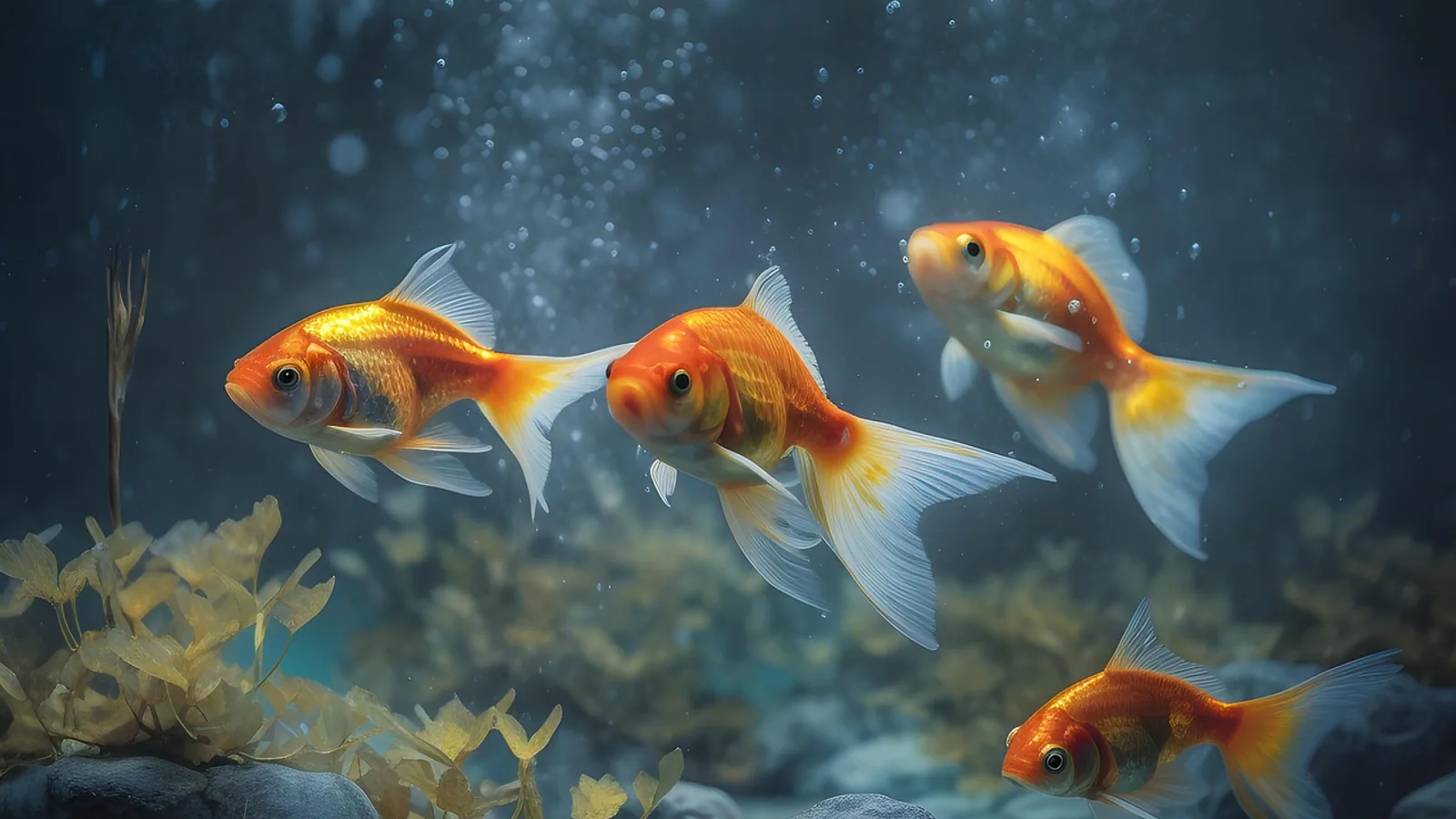
A 10 gallon fish tank holds roughly 10 gallons of water, measures about 20 inches long by 10 inches wide by 12 inches tall in the standard rectangular form, and weighs close to 110 to 120 pounds when filled, decorated, and placed on a stand. That weight and those dimensions shape almost every decision you make afterward. A 10 gallon aquarium is a real, workable freshwater system, but it is a small one. The margin for error is narrow, the water chemistry moves fast, and the list of fish that genuinely thrive in it is shorter than most pet store shelves suggest.
This guide answers the practical questions directly. What fish can go in a 10 gallon tank? How many fish in a 10 gallon tank actually makes sense? Which 10 gallon tank stocking ideas hold up over months rather than weeks? It also covers setup, equipment, the nitrogen cycle, and a maintenance schedule you can follow without guesswork.
The core principle behind everything below is water quality. Ammonia, nitrite, and nitrate are the three nitrogenous compounds that determine whether a small tank succeeds or fails. Ammonia and nitrite are toxic to fish even at low concentrations, and the toxicity of ammonia rises as pH and temperature rise because a larger fraction shifts to the un-ionized form that crosses gill membranes [1]. Nitrite damages red blood cells, reduces hemoglobin, and impairs oxygen transport [2][3]. In a 10 gallon tank, a single missed water change or one overfeeding event can push these compounds to harmful levels within days. Stocking lightly and maintaining diligently is not caution for its own sake. It is the mechanism that keeps the system stable.
This article is educational and is not a substitute for veterinary diagnosis or treatment.
At a Glance: The 10 Gallon Tank in Numbers
| Item | Typical Value |
|---|---|
| Standard dimensions | About 20 x 10 x 12 inches |
| Water volume | About 10 gallons (roughly 80 pounds of water) |
| Filled weight with gravel, decor, and stand | About 110 to 120 pounds |
| Footprint | About 1.4 square feet |
| Best substrate depth | 1 to 2 inches |
| Recommended heater | 50 watt adjustable |
| Recommended filter | Power filter or sponge filter rated for 10 to 20 gallons |
| Lighting | LED, 6 to 8 hours per day |
| Ideal temperature (tropical community) | 75 to 80 degrees F |
| Water change schedule | 25 to 30 percent weekly |
| Cycle time before fish | 3 to 8 weeks |
Why Tank Volume and Weight Matter More Than You Think
A 10 gallon tank is often sold as a beginner kit, and that framing creates a false impression. Small volume means small buffer. In a 55 gallon tank, a slight overfeed or a dead fish that goes unnoticed for a day is diluted across a large body of water. In a 10 gallon aquarium, the same event can raise total ammonia nitrogen measurably within 24 hours.
Weight is the second constraint. Water weighs about 8.34 pounds per gallon, so 10 gallons of water is roughly 80 pounds. Add 10 to 15 pounds of gravel, a few pounds of decor, and the tank itself, and you are near 110 to 120 pounds concentrated on a footprint of about 1.4 square feet. That load needs a level, purpose-built stand. A dresser or bookshelf that looks sturdy may not hold up to sustained moisture and constant load.
Substrate choice interacts with water quality in ways owners rarely consider. A controlled study of home-style freshwater tanks found that adding gravel or sand increased pH and raised concentrations of total ammonia nitrogen and nitrate compared with bare tanks, and substrate was associated with a greater presence of Pseudomonas bacteria [4]. That does not mean you should run a bare tank. It means substrate is a reservoir for waste and microbes, so it must be vacuumed rather than left undisturbed. A thin substrate layer of 1 to 2 inches is easier to keep clean than a deep bed.
What Fish Can Go in a 10 Gallon Tank
The honest answer is fewer species than the average store display implies. The fish that do well in a 10 gallon tank share three traits: small adult size, tolerance for a modest footprint, and a temperament that suits either solitude or a small group.
Best Fish for a 10 Gallon Tank
Betta fish (Betta splendens). One male betta in a planted, heated, filtered 10 gallon tank is one of the strongest setups available. The fish uses the space well, tolerates a range of community temperatures, and does not require a group. Keep one male per tank. Do not combine two males.
Honey gourami (Trichogaster chuna). A single honey gourami or a bonded pair fits comfortably. This is one of the few gouramis small enough for a 10 gallon aquarium.
Sparkling gourami (Trichopsis pumila). A small gourami that does well as a single fish or a small group in a heavily planted tank.
Celestial pearl danio (Danio margaritatus). A small, peaceful schooling fish. Keep a group of six to eight in a species-only setup.
Chili rasbora (Boraras brigittae) and other micro rasboras. These are among the smallest common aquarium fish and suit a 10 gallon tank better than most rasboras sold as "nano" fish.
Ember tetra (Hyphessobrycon amandae). A peaceful, small tetra that schools. A group of six to eight works in a planted tank.
Endler's livebearer (Poecilia wingei). Small, colorful, and active. Keep a small group, and be aware that livebearers reproduce readily.
Guppy (Poecilia reticulata). A classic beginner fish that fits a 10 gallon tank as a small group of males or a mixed group with a plan for offspring.
Pygmy corydoras (Corydoras pygmaeus) and other dwarf corydoras. Bottom-dwelling schooling fish. Keep a group of six or more on a soft, smooth substrate.
Otocinclus catfish (Otocinclus spp.). A small algae-grazing catfish. These are wild-caught in large numbers and often arrive in poor condition, so quarantine and observe carefully before adding them to a stocked tank.
Nerite snails and mystery snails. Snails add grazing activity and do not meaningfully add to the fish bioload.
Cherry shrimp and other dwarf shrimp. A 10 gallon tank is an excellent shrimp setup, particularly when planted.
Fish to Avoid in a 10 Gallon Tank
Goldfish. Comet and common goldfish grow to a foot or more and produce a heavy waste load. Fancy goldfish also outgrow a 10 gallon tank. This is a cold-water species with a high oxygen demand and a large body mass, and it does not belong in this volume.
Common pleco (Hypostomus plecostomus). Grows to well over a foot and produces a very large waste load. Even the smaller bristlenose pleco is a stretch in a 10 gallon tank.
Angelfish (Pterophyllum scalare). Tall-bodied, territorial, and reaches a size that makes a 10 gallon aquarium a holding box rather than a habitat.
Most cichlids. The vast majority of cichlids are too large, too territorial, or too aggressive for a 10 gallon tank. The exceptions are a few genuinely small species, and even those need careful research.
Bala sharks, tinfoil barbs, iridescent sharks, and other "tank buster" species. These are sold small and grow very large.
Oscar, jack dempsey, and other large Central and South American cichlids. These are aggressive, large, and produce heavy waste loads.
Chinese algae eaters. They grow large, become aggressive, and stop eating algae as adults.
Any fish sold as a "shark" or "eel" that reaches more than 4 inches. The adult size, not the juvenile size at the store, determines whether it fits.
Why the Inch-Per-Gallon Rule Fails
The inch-per-gallon rule says you can keep one inch of adult fish length per gallon of water. For a 10 gallon tank, that would suggest 10 inches of fish. The rule fails for several reasons.
First, it ignores body mass and waste output. A 10-inch goldfish and ten 1-inch neon tetras are not equivalent. The goldfish produces far more ammonia per unit of length, and its oxygen demand is much higher. Waste output scales with body mass, not length.
Second, it ignores activity level and territory. A 3-inch fish that patrols a large home range needs more linear swimming space than a 3-inch fish that hovers in one spot. A 10 gallon tank is 20 inches long, which limits how much horizontal swimming distance any active fish has.
Third, it ignores social needs. Many small fish are schooling species that need a group of six or more to feel secure. Six ember tetras at 0.8 inches each is about 5 inches of fish, but the group needs the whole tank, not one-tenth of it.
Fourth, it ignores filtration and maintenance. A well-filtered, heavily planted, diligently maintained 10 gallon tank can support more fish than a bare, poorly filtered one. The rule treats all tanks as identical.
Fifth, it ignores the stress response. Crowding raises cortisol in fish. In zebrafish, crowding produced 13 to 21 fold higher mean trunk cortisol concentrations compared with controls [5], and even low stocking densities carried a maintenance cost because of dominance hierarchies [5]. Stocking density also affects growth. In Nile tilapia fingerlings, densities of 20 fish or more per 96 liter aquarium reduced growth and altered biochemical parameters [6]. These findings do not translate directly to every species, but they establish that density itself is a stressor with measurable physiological consequences.
A better approach is to stock by adult size, temperament, social needs, and waste output, then let water testing tell you whether the tank is keeping up. If ammonia and nitrite stay at zero and nitrate rises predictably between water changes, the stocking level is workable. If nitrate climbs fast or ammonia appears, the tank is overstocked or under-maintained.
Three Stocking Plans for a 10 Gallon Tank
These plans assume a cycled, filtered, heated tank with a thin substrate, live or artificial plants, and weekly water changes. Each plan lists adult sizes, not purchase sizes.
Plan 1: Single Betta, Planted
- One male betta fish
- Optional: 3 to 5 nerite snails or a small colony of cherry shrimp
- Heavy planting, including floating plants
This is the lowest-risk stocking plan for a 10 gallon tank. A single betta has a small waste load, no social group requirement, and tolerates the modest footprint. The planted setup supports water quality and gives the fish cover. This plan leaves room for error, which matters in a small tank.
Plan 2: Micro Schooling Species
- 6 to 8 chili rasboras or ember tetras
- 6 pygmy corydoras
- Optional: 3 to 5 nerite snails
This plan uses the full water column. The rasboras or tetras occupy the midwater, and the pygmy corydoras work the bottom. Both groups are small and peaceful. The total adult biomass is modest. This is a good plan for an owner who wants activity and is willing to test water weekly and change 25 to 30 percent every week.
Plan 3: Single Gourami with Bottom Dwellers
- One honey gourami or one sparkling gourami
- 6 pygmy corydoras
- Optional: 3 to 5 nerite snails
This plan gives the tank a centerpiece fish without the aggression problems of larger gouramis or cichlids. The corydoras group handles the bottom. Keep the gourami single unless you have confirmed a bonded pair.
Plan 4: Shrimp and Snail Species Tank
- 10 to 20 cherry shrimp
- 3 to 5 nerite snails
- Heavy planting, including moss
This plan carries almost no fish bioload and is the most forgiving 10 gallon tank setup. It suits owners who want a planted display with active invertebrates and minimal risk.
How Many Fish in a 10 Gallon Tank?
For small schooling fish, six to eight individuals of one species is a reasonable target, sometimes with a small bottom-dwelling group added. For a single larger centerpiece fish such as a betta or honey gourami, one fish plus invertebrates is the sensible maximum. The number that matters is not a count. It is whether ammonia and nitrite stay at zero and nitrate stays manageable between weekly water changes.
Equipment for a 10 Gallon Aquarium
Tank and Stand
Choose a rimmed or rimless glass or acrylic tank with a footprint that matches your stand. Acrylic scratches more easily but weighs less. Glass is more scratch-resistant. The stand must be level and rated for at least 120 pounds.
Filter
A power filter or sponge filter rated for 10 to 20 gallons is appropriate. Sponge filters are gentle, provide biological filtration, and suit bettas and shrimp. Power filters move more water and offer mechanical and chemical media. Avoid oversized filters that create strong current in a small tank.
Heater
A 50 watt adjustable heater holds tropical temperatures in a 10 gallon tank. Choose one with a thermostat and a guard. Always use a separate thermometer to verify the setting rather than trusting the dial.
Lighting
An LED light sized for a 10 gallon tank supports plant growth and lets you see the fish. Run it 6 to 8 hours per day. Longer photoperiods encourage algae. Note that bright backgrounds and lighting are themselves stressors for some species. Zebrafish held against green and white backgrounds showed 3 to 8 fold higher mean trunk cortisol concentrations than fish held against black backgrounds or in transparent tanks [5]. A dark background and moderate lighting are reasonable defaults.
Substrate
Use 1 to 2 inches of gravel or sand. Both support biological activity, and both accumulate waste, so vacuum during water changes [4]. Sand suits corydoras and shrimp. Gravel suits plants with root systems.
Test Kit
A liquid test kit for ammonia, nitrite, nitrate, and pH is essential. Test strips are less precise. Testing is how you verify that the cycle has established and that stocking is sustainable.
Decor and Plants
Live plants, driftwood, and caves provide cover and reduce stress. Floating plants shade the tank and take up nitrogen. Avoid decor with sharp edges, particularly for bettas and corydoras.
Quarantine Container
A separate small tank or container for new arrivals reduces the chance of introducing disease. Transport and handling are significant stressors. Ornamental fish transport is associated with mortality rates that vary widely, and mechanical disturbance during transport increases parasite burden in guppies exposed to the monogenean Gyrodactylus turnbulli [7][8]. Observe new fish before adding them to a stocked tank.
Cycling a 10 Gallon Tank
Cycling is the process of establishing the nitrifying bacteria that convert toxic ammonia to nitrite and then to less toxic nitrate. In a new tank, this takes time. A study that monitored microbial succession in three home aquariums found that nitrification reduced ammonia and nitrite to undetectable levels by week 3 in two tanks and by week 8 in the third [9]. That range is a realistic expectation. Do not add fish on day one.
Step-by-Step Cycling
- Set up the tank with substrate, decor, filter, and heater. Fill with dechlorinated water.
- Bring the temperature to the target range for your planned fish.
- Add an ammonia source. This can be a small amount of fish food, a pinch of pure ammonia, or a commercial ammonium chloride product.
- Test daily or every other day for ammonia, nitrite, and nitrate. Record the results.
- Watch for ammonia to rise, then fall, followed by a nitrite rise and fall, with nitrate appearing at the end.
- When ammonia and nitrite both read zero within 24 hours of adding ammonia, the cycle is established.
- Do a large water change to reduce nitrate before adding fish.
- Add fish gradually. Do not stock the tank fully on the first day.
Why the Cycle Matters
Ammonia is toxic to fish. In tambaqui juveniles, a constant ammonia concentration of 5.0 mg/L NH3 caused no mortality at pH 6.0 and 7.0, 10 to 20 percent mortality at pH 8.0, and 100 percent mortality at pH 9.0 [1]. That study shows how strongly pH shifts ammonia toxicity. In a 10 gallon tank with a higher pH, the same total ammonia reading is more dangerous than it would be at a lower pH. Nitrite is also toxic. In walleye, nitrite exposure reduced hematocrit and promoted methemoglobin formation, which impairs oxygen transport [3]. In common carp, nitrite exposure increased methemoglobin and reduced hemoglobin, and oxygen consumption fell as toxicant concentration and exposure duration increased [2].
Nitrifying bacteria can be supported with commercial consortia. A study using zebrafish as a model found that commercial nitrifying bacterial consortia reduced ammonia accumulation in transport units and that both ammonia-oxidizing and nitrite-oxidizing bacteria were present in the treated systems [10]. These products can help, but they do not replace time, testing, and patience.
Maintenance Schedule for a 10 Gallon Tank
A 10 gallon tank needs more frequent maintenance than a large one, not less. The schedule below assumes a lightly to moderately stocked tank.
Weekly
- Change 25 to 30 percent of the water with dechlorinated, temperature-matched water.
- Vacuum the substrate during the water change to remove waste and reduce the bacterial reservoir [4].
- Test ammonia, nitrite, and nitrate.
- Rinse filter media in removed tank water, not tap water, to preserve the bacterial colony.
- Remove dead plant material and uneaten food.
- Check temperature with a separate thermometer.
Biweekly
- Clean the glass and remove algae from decor.
- Inspect the filter impeller and tubing for debris.
- Check the heater and filter for proper function.
Monthly
- Deep clean the filter housing and replace filter media only when it is falling apart, not on a fixed schedule.
- Inspect all fish for signs of disease, injury, or abnormal behavior.
- Review stocking. Remove fish if nitrate rises faster than the water change schedule can manage.
As Needed
- Quarantine and treat sick fish in a separate container.
- Adjust the heater if the season changes room temperature.
- Prune plants and remove excess growth.
Water Change Technique
Match the new water temperature to the tank within a degree or two. Use a water conditioner to remove chlorine and chloramine. Pour or siphon the new water gently to avoid disturbing the substrate and stressing the fish. Never replace all the water at once. A large water change can shift pH and temperature abruptly, which is itself a stressor.
Common Mistakes in 10 Gallon Tank Setup
Stocking on day one. A new tank is not cycled. Ammonia and nitrite will rise, and fish will suffer.
Trusting the inch-per-gallon rule. It ignores body mass, waste output, activity, and social needs.
Overfeeding. Uneaten food decays and produces ammonia. Feed only what the fish consume in two to three minutes, once or twice daily.
Skipping water changes. Nitrate accumulates. In a small tank, the rise is fast.
Using tap water without conditioner. Chlorine and chloramine harm fish and kill nitrifying bacteria.
Overcleaning the filter. Replacing all media at once removes the bacterial colony and restarts the cycle.
Ignoring temperature swings. A 10 gallon tank changes temperature faster than a large one. A reliable heater and a thermometer matter.
Adding incompatible fish. A betta with a male betta, or a gourami with another gourami, often ends badly.
Buying fish by juvenile size. Always stock by adult size.
Using medications without diagnosis. Ornamental aquaria are often treated empirically with antimicrobials, antiparasitics, and other biologically active compounds without veterinary diagnosis or standardized dosing, and whole-system treatments can affect the biofilter and non-target organisms [11]. Treat only with a clear reason and veterinary guidance when possible.
Troubleshooting Water Quality Problems
Ammonia Reads Above Zero
Stop feeding for 24 to 48 hours. Do a 50 percent water change with temperature-matched, dechlorinated water. Test again. If ammonia persists, the tank is overstocked, the filter is inadequate, or the cycle has crashed. Consider a nitrifying bacterial product to support recovery [10].
Nitrite Reads Above Zero
Treat nitrite as seriously as ammonia. Nitrite impairs oxygen transport [2][3]. Do a 50 percent water change, reduce feeding, and test daily until nitrite returns to zero.
Nitrate Rises Quickly
Increase water change volume or frequency, reduce stocking, add fast-growing plants, and check that you are not overfeeding. Nitrate is the end product of nitrification and accumulates unless removed by water changes or plants.
pH Is Unstable
Substrate, decor, and water source all affect pH [4]. Test your tap water after it sits for 24 hours. Avoid large swings. Stability matters more than a specific number for most community fish.
Fish Are Hiding or Gasping
Hiding can indicate stress from crowding, bright lighting, or a lack of cover [5]. Gasping at the surface can indicate low oxygen, high ammonia, or high nitrite. Test the water immediately and act on the result.
Algae Blooms
Reduce the photoperiod, reduce feeding, and check nitrate. Algae respond to light and nutrients. A 10 gallon tank with a long photoperiod and high nitrate will grow algae.
Welfare and Safety Points
Fish are animals with a stress response, and that response has measurable consequences. Cortisol rises within minutes of a stressor and returns to baseline within a couple of hours in zebrafish [5]. Chronic stressors such as crowding, poor water quality, and handling keep the stress axis activated. Elevated nitrate and nitrite in the environment are associated with a larger stress response in wild sticklebacks [12]. Mechanical disturbance during transport increases parasite burden [7]. These findings support a simple conclusion. Stable water quality, appropriate stocking, and minimal handling are welfare requirements, not optional refinements.
Ammonia and nitrite are the two compounds most likely to cause acute harm in a small tank. Ammonia damages gill tissue, causing epithelial detachment, hyperemia, and necrosis [13]. Nitrite causes methemoglobinemia and impairs oxygen transport [2][3]. Both are preventable with a functioning biofilter and a regular water change schedule.
Handle fish as little as possible. Use a net only when necessary. Keep the tank away from loud vibration sources. Zebrafish exposed to random mechanical tapping showed behavioral and physiological changes, and vibration from pumps and tapping is a recognized low-level chronic stressor in aquaria [14].
Limitations and When to Contact a Veterinarian
This article provides general guidance for a typical 10 gallon freshwater tank. Individual fish, species, and systems vary. A veterinarian with aquatic animal experience can assess your specific situation.
Contact a veterinarian or an aquatic animal health professional when:
- Fish show labored breathing, gasping at the surface, or hanging near the filter outlet despite normal water tests.
- Fish develop visible lesions, fin erosion, white spots, fuzzy growths, or red streaks.
- Multiple fish die within a short period.
- A fish stops eating for more than a few days.
- A fish shows swelling, buoyancy problems, or difficulty swimming.
- Water tests show persistent ammonia or nitrite despite water changes and reduced feeding.
- You are considering medication. Whole-system treatments can harm the biofilter and non-target animals, and empirical treatment without diagnosis is a recognized stewardship concern [11].
The World Aquatic Veterinary Medical Association (WAVMA) and the aquatic animal health resources from the AVMA and the Merck Veterinary Manual are useful starting points for finding qualified help. A veterinarian can confirm a diagnosis, recommend a treatment appropriate to the species, and advise on quarantine and recheck timing.
Frequently Asked Questions
How many fish can I put in a 10 gallon tank?
For small schooling fish, six to eight of one species is a reasonable target, sometimes with a small bottom-dwelling group. For a single centerpiece fish such as a betta or honey gourami, one fish plus invertebrates is the sensible maximum. The real limit is water quality. If ammonia and nitrite stay at zero and nitrate stays manageable with weekly water changes, the stocking level is workable.
What fish can go in a 10 gallon tank?
Good choices include a single betta, a single honey or sparkling gourami, six to eight chili rasboras, ember tetras, or celestial pearl danios, six pygmy corydoras, Endler's livebearers, guppies, otocinclus, and dwarf shrimp or snails. All of these stay small as adults and tolerate a modest footprint.
Can a goldfish live in a 10 gallon tank?
No. Goldfish grow large, produce a heavy waste load, and need more water volume and oxygen than a 10 gallon tank provides. A 10 gallon tank is not a suitable long-term home for any goldfish variety.
Why is the inch-per-gallon rule wrong?
The rule ignores body mass, waste output, activity level, territory, social needs, and filtration. A 10-inch goldfish and ten 1-inch tetras are not equivalent in waste production or oxygen demand. Stocking should be based on adult size, temperament, social needs, and water testing results.
How long does it take to cycle a 10 gallon tank?
Cycling typically takes three to eight weeks. In a study of three home aquariums, nitrification reduced ammonia and nitrite to undetectable levels by week 3 in two tanks and by week 8 in the third [9]. Test daily and wait until ammonia and nitrite both read zero before adding fish.
Do I need a heater in a 10 gallon tank?
Yes, if you keep tropical fish. A 50 watt adjustable heater holds a stable temperature in a 10 gallon tank. Small tanks change temperature quickly, so a heater plus a separate thermometer is the reliable setup.
How often should I change the water in a 10 gallon tank?
Change 25 to 30 percent weekly. Vacuum the substrate during the change. Test ammonia, nitrite, and nitrate weekly. If nitrate rises faster than the schedule can manage, increase the change volume or reduce stocking.
Can I keep a betta with other fish in a 10 gallon tank?
Sometimes. A single male betta can live with small, peaceful tankmates such as nerite snails, cherry shrimp, or a small group of pygmy corydoras in a well-planted tank. Avoid other bettas, fin-nipping species, and fast-swimming fish that may stress the betta. Watch for aggression and separate the fish if problems appear.
Related Articles
- Fish Tank Size & Stocking Calculator for Healthy Aquariums
- Choosing the Right Tank Size and Stocking Your Aquarium
- Fish Quarantine Tank Setup
- Betta Fish Tank Setup for Beginners
- Best Fish for a Small Aquarium
- Tetra Fish Care: Species Guide, Tank Setup, and Feeding
- 75 Gallon Fish Tank: Stocking Ideas, Weight, and Setup
- 55 Gallon Fish Tank: Stocking Ideas, Weight, and Setup
- 5 Gallon Fish Tank: Best Fish, Stocking Ideas, and Setup
Sources
- Lethal effects of elevated pH and ammonia on juveniles of neotropical fish Colosoma macropomum (Pisces, Caracidae).
- Effects of ammonia, nitrite and nitrate on hemoglobin content and oxygen consumption of freshwater fish, Cyprinus carpio (Linnaeus).
- Haematological responses of acute nitrite exposure in walleye (Sander vitreus).
- The Effect of Substrate on Water Quality in Ornamental Fish Tanks.
- Husbandry of zebrafish, Danio rerio, and the cortisol stress response.
- Multifaceted stress response in Nile tilapia (Oreochromis niloticus) fingerlings: integrative analysis of salinity, ammonia, and stocking density effects on growth, physiology, and gene expression.
- A neglected fish stressor: mechanical disturbance during transportation impacts susceptibility to disease in a globally important ornamental fish.
- Stress and welfare in ornamental fishes: what can be learned from aquaculture?
- Microbial community succession of home aquarium biofilters associated with early establishment of comammox Nitrospira.
- Novel application of nitrifying bacterial consortia to ease ammonia toxicity in ornamental fish transport units: trials with zebrafish.
- Informal Treatment Practices in Ornamental Aquaria: An Overlooked Interface Between Aquatic Animal Health, Antimicrobial Stewardship, and One Health.
- Modulation of the stress response in wild fish is associated with variation in dissolved nitrate and nitrite.
- Biological responses of Neotropical freshwater fish Lophiosilurus alexandri exposed to ammonia and nitrite.
- Effects of aquarium-related stressors on the zebrafish: a comparison of behavioral, physiological, and biochemical indicators.