5 Gallon Fish Tank: Best Fish, Stocking Ideas, and Setup
By Dr. Zubair Khalid, DVM, MS, PhD ·
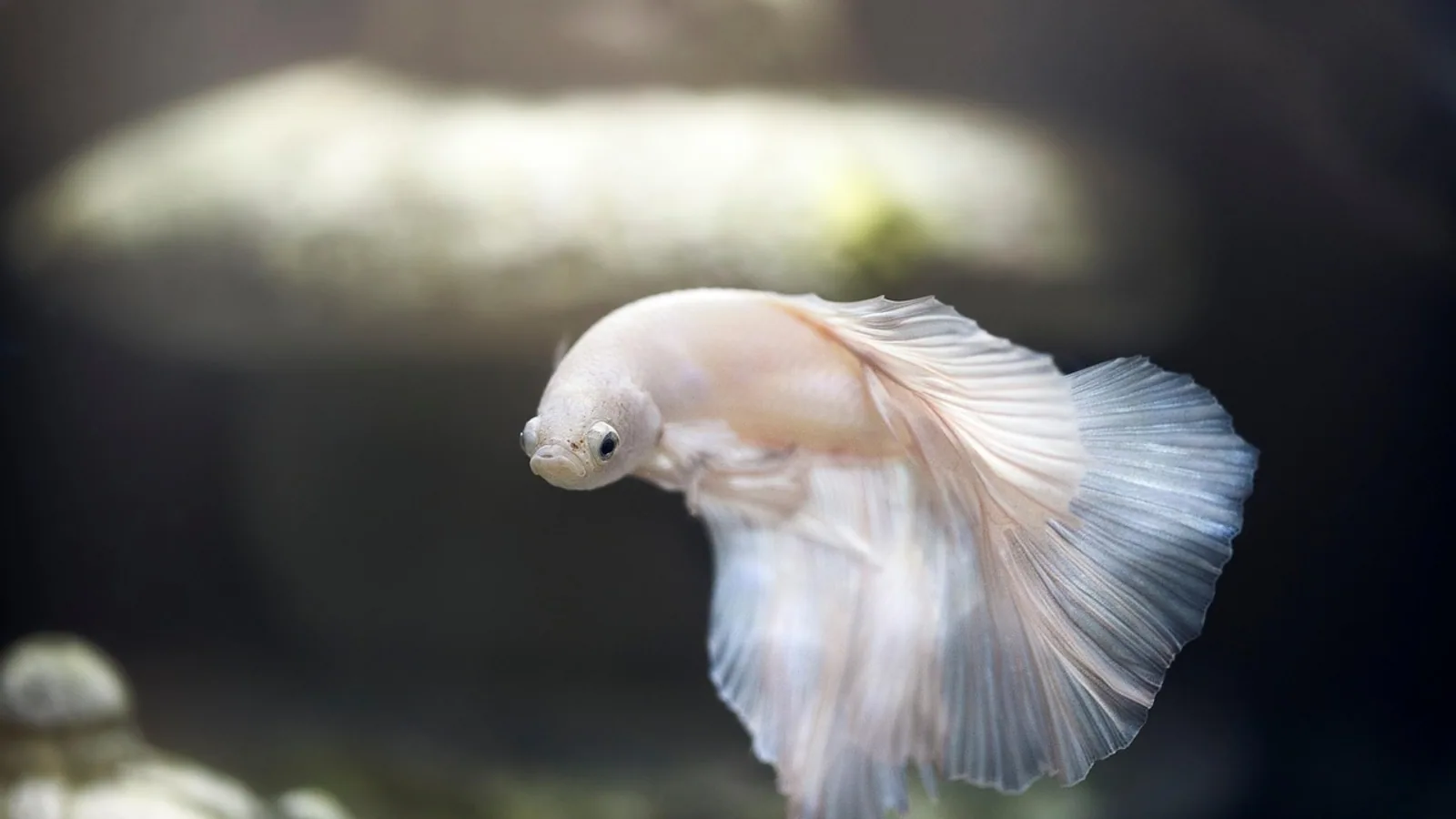
A 5 gallon fish tank holds roughly 19 liters of water, and that single number decides almost everything about how you stock and run it. The honest answer to "what fish can live in a 5 gallon tank" is short: one betta, or a small colony of shrimp and snails, or a very small group of true nano species such as a few male guppies or a trio of chili rasboras in an experienced keeper's hands. Goldfish do not belong here. Neither do most schooling tetras, most corydoras, or any fish that will grow past two inches.
The reason is not arbitrary gatekeeping. Small water volumes change chemistry and temperature fast. A 5 gallon aquarium has little thermal mass, so a cold room or a sunny window can shift the temperature several degrees in hours. The same small volume means a single missed feeding, a dead snail, or an overfed betta can push ammonia into a range that harms fish before you notice anything wrong [1]. Ammonia is toxic to fish and is one of the most common causes of emergency presentations in ornamental aquariums [1]. A 5 gallon tank is a real aquarium, not a toy, but it demands more attention per gallon than larger systems do.
This guide covers what actually fits, how to cycle the tank before any fish goes in, what equipment matters, and how to run weekly maintenance so the system stays stable. It also covers the welfare evidence on tank size and furnishings, because the difference between a bare jar and a furnished 5 gallon tank is measurable in fish behavior [2].
This article is educational and is not a substitute for veterinary diagnosis or treatment.
At a Glance: The 5 Gallon Tank Decision Table
| Decision | Honest recommendation |
|---|---|
| Best single fish | One male betta (Betta splendens) |
| Best invertebrate setup | 6 to 10 cherry or amano shrimp plus 1 to 2 nerite snails |
| True nano fish option | 3 chili rasboras or 3 male guppies, experienced keepers only |
| Do not stock | Goldfish, common plecos, most tetras, most corydoras, angelfish, any fish exceeding 2 inches adult length |
| Filtration | Gentle flow, adjustable, rated for 5 to 10 gallons |
| Heater | Adjustable, 25 to 50 watt, set to 78 to 80 F for tropical species |
| Cycling | Fishless cycle before any livestock, expect 3 to 8 weeks |
| Water changes | 25 to 50 percent weekly, every week, no exceptions |
| Test kit | Liquid ammonia, nitrite, nitrate, and pH tests |
| Substrate | Gravel or sand, both affect water chemistry and bacteria [3] |
Why a 5 Gallon Tank Is Harder Than a Bigger One
New keepers often assume a small tank is easier. The opposite is true. A larger volume dilutes waste and buffers temperature swings. A 5 gallon tank concentrates everything.
Small volume, fast ammonia rise
Fish excrete ammonia continuously through their gills and waste. In a cycled aquarium, nitrifying microorganisms in the filter convert toxic ammonia to nitrite and then to far less toxic nitrate [4]. That process depends on a living biofilm, and that biofilm takes weeks to establish. In a 5 gallon tank, the same ammonia output from one betta is diluted into one eighth the water of a 40 gallon tank. If the biofilter is immature or damaged, ammonia climbs quickly.
Ammonia toxicity is not theoretical. In Nile tilapia fingerlings, ammonia concentrations at or above 0.1 mg/L significantly impaired growth and increased mortality [5]. In Arapaima gigas, elevated environmental ammonia altered plasma ammonia, glucose, and ion regulation and reduced branchial enzyme activity, meaning the fish spent biological resources defending itself instead of growing [6]. Smaller, less hardy ornamental species have less reserve to spend on that defense.
Small volume, fast temperature swings
Water resists temperature change in proportion to its volume. Five gallons has very little thermal inertia. A tank near a drafty window, an exterior door, or an air conditioning vent can drift several degrees overnight. Fish are ectotherms, so their body temperature follows the water. Rapid swings are a stressor, and stress in fish suppresses immune function and increases susceptibility to disease [7]. A reliable adjustable heater is not optional in a 5 gallon tropical setup.
Small volume, fast oxygen and pH shifts
Dissolved oxygen and pH both move faster in small volumes. A dense plant load, a warm day, or a filter that stops running overnight can drop oxygen. Low dissolved oxygen is a recognized fish emergency [1]. Substrate choice also matters here. A study of simulated home aquaria found that adding gravel or sand increased pH and raised total ammonia nitrogen and nitrate concentrations compared with bare tanks, and substrate was associated with a greater Pseudomonas presence [3]. That does not mean you should skip substrate. It means substrate is part of the biological load and needs vacuuming.
Behavior and welfare evidence
Tank size and furnishings change fish behavior. In a controlled study, male Siamese fighting fish were rotated through five housing conditions ranging from a 1.5 L jar to a 19.3 L furnished tank. Fish in the large tank were significantly more active and spent significantly less time resting and performing abnormal behaviors such as hovering and stereotypic swimming than fish in the smaller tanks [2]. The same study found that furnishings mattered independently. Fish in a large but barren tank performed more abnormal behaviors than fish in a large furnished tank [2].
That finding is the core argument for a furnished 5 gallon betta tank over a bare jar. A 5 gallon tank is not the largest option studied, but it is a real improvement over a jar, and it gives you room for live plants and refuges that reduce abnormal behavior [2].
What Fish Can Live in a 5 Gallon Tank
Stocking a 5 gallon tank is a series of honest trade-offs. Here is what works and what does not.
One betta: the best single-fish choice
A single male betta is the most defensible fish for a 5 gallon aquarium. Betta splendens is a labyrinth fish native to slow, warm, shallow water, and it tolerates the gentle flow and warm temperature a small tank provides. The welfare study above supports furnished tanks over bare containers, and a 5 gallon tank with plants and a hide is a reasonable middle ground between the 3.3 L and 5.6 L conditions tested and the 19.3 L ideal [2].
One betta only. Male bettas fight, and two males in 5 gallons will injure each other. A male and female pair is also a bad idea, because the male will harass the female in a space she cannot leave. Keep it to one fish.
Shrimp and snails: the lowest-risk stocking
A 5 gallon tank with no fish and a shrimp colony is the most forgiving setup for a beginner. Cherry shrimp, amano shrimp, and nerite snails produce far less waste than a betta, tolerate a range of parameters, and graze algae and biofilm. A group of 6 to 10 shrimp plus 1 to 2 nerite snails is a comfortable load. Nerite snails are especially useful because they do not reproduce in freshwater, so the population stays controlled.
The trade-off is that shrimp are sensitive to copper and to sudden parameter shifts. Acclimate them slowly by drip or by floating and adding tank water over 30 to 60 minutes. Avoid aquarium medications that contain copper unless you have removed the shrimp.
True nano fish: only for experienced keepers
A small number of genuinely tiny species can work in 5 gallons, but the margin for error is thin.
- Chili rasboras (Boraras brigittae): adults reach roughly 0.8 inch. A group of 3 is the practical minimum, and they are shy, so plant cover matters.
- Male guppies (Poecilia reticulata): 3 males, no females, avoids breeding and population explosion. Guppies are hardy but are a known host for the monogenean parasite Gyrodactylus turnbulli, and transport stress increases parasite burden, so quarantine and source quality matter [8].
- Least killifish (Heterandria formosa): one of the smallest livebearers, but less commonly available.
Do not put a single schooling fish alone. Rasboras and other shoaling species are stressed when kept singly. If you cannot keep the minimum group, choose a betta or shrimp instead.
What does not belong in 5 gallons
- Goldfish. Comet and fancy goldfish grow large, produce heavy waste, and are coldwater fish. A 5 gallon tank cannot support even one.
- Most tetras. Neon tetras, cardinal tetras, and similar species are shoaling fish that need groups of 6 or more and horizontal swimming space. A 5 gallon tank cannot provide either.
- Most corydoras. Corydoras are social bottom-dwellers that need groups and floor area. A 5 gallon footprint is too small.
- Common plecos. These grow to over a foot and produce enormous waste.
- Angelfish, gouramis, and most cichlids. Too large, too territorial, or both.
- Any fish that exceeds 2 inches at adult size.
As a rough ceiling rather than a target, a 5 gallon tank should not be stocked beyond about 2 inches of adult fish length total, assuming excellent filtration and weekly water changes. It is a ceiling, not a target.
The 5 Gallon Betta Tank: A Realistic Setup
A 5 gallon betta tank done well looks like this.
- Tank: 5 gallon glass or acrylic, rectangular footprint preferred over tall, because surface area drives gas exchange.
- Lid: essential. Bettas jump.
- Heater: adjustable 25 to 50 watt, set to 78 to 80 F. Betta splendens is a tropical species.
- Filter: gentle flow, adjustable, rated for 5 to 10 gallons. A sponge filter driven by a small air pump is the safest choice because bettas are weak swimmers in strong current.
- Substrate: 1 to 2 inches of gravel or sand. Expect it to raise pH and ammonia nitrogen slightly compared with a bare tank, so vacuum it weekly [3].
- Plants: live plants such as anubias, java fern, or floating plants. Furnishings reduce abnormal behavior [2].
- Hide: a small cave, a betta log, or a terracotta pot on its side.
- Test kit: liquid ammonia, nitrite, nitrate, pH.
- Water conditioner: removes chlorine and chloramine from tap water.
The betta goes in only after the tank is fully cycled. See the cycling section below.
Setting Up a 5 Gallon Aquarium Step by Step
Step 1: Choose the location
Pick a spot away from direct sunlight, heating and air conditioning vents, and exterior doors. Direct sun drives algae and temperature swings. A stable room temperature in the low 70s F is a good baseline, with the heater doing the rest.
Step 2: Rinse the tank and equipment
Rinse the tank, substrate, filter media, and decorations in plain warm water. Do not use soap. Soap residue kills fish and damages the biofilter.
Step 3: Add substrate and hardscape
Add 1 to 2 inches of gravel or sand. Place hardscape and hides before filling so you are not rearranging a full tank. Remember that substrate increases pH and ammonia nitrogen compared with bare tanks, so plan to vacuum it [3].
Step 4: Fill and dechlorinate
Fill with tap water at roughly tank temperature and treat with a water conditioner that neutralizes chlorine and chloramine. Chlorine and chloramine are toxic to fish and to the nitrifying biofilm.
Step 5: Install the heater and filter
Set the heater to 78 to 80 F for tropical species. Run the filter continuously from this point forward. The filter is the life support system, and the biofilm inside it is what keeps ammonia under control [4].
Step 6: Add plants
Live plants consume some nitrogenous waste and provide cover. Floating plants are especially useful because they shade the tank and reduce algae.
Step 7: Cycle the tank before adding fish
This is the step beginners skip, and it is the step that kills fish. See the next section.
Cycling a 5 Gallon Tank Before Any Fish Goes In
Cycling is the process of growing a nitrifying biofilm that converts toxic ammonia to nitrite and then to nitrate. In a monitored study of three home aquariums, nitrification reduced ammonia and nitrite to undetectable levels by week 3 in two tanks and by week 8 in the third [4]. That range is your realistic timeline. Expect 3 to 8 weeks.
The microbial community that does this work is not a single organism. Freshwater aquarium biofilters host ammonia-oxidizing bacteria, ammonia-oxidizing archaea, and complete ammonia-oxidizing Nitrospira, and the community shifts as the tank matures [4]. Nitrifying taxa are useful indicators of system stability [9]. This is why a cycled tank is not the same as a clean tank.
How to fishless cycle
- Set up the tank with filter, heater, and substrate running.
- Add an ammonia source. Plain unscented ammonia or a pinch of fish food both work. Target roughly 1 to 2 ppm ammonia.
- Test daily or every other day. You will see ammonia rise, then nitrite rise, then both fall.
- When ammonia and nitrite both read zero within 24 hours of adding ammonia, and nitrate is present, the tank is cycled.
- Do a large water change, 50 to 75 percent, to bring nitrate down before adding livestock.
Why not cycle with a fish
Cycling with a fish exposes that fish to ammonia and nitrite spikes. Ammonia at 0.1 mg/L and above significantly impaired growth and increased mortality in a controlled study of Nile tilapia fingerlings [5]. The same principle applies to ornamental species, even if the exact threshold differs. Fishless cycling avoids the problem entirely.
Do bacterial starters help
Commercial nitrifying bacterial consortia have been shown to reduce ammonia accumulation in ornamental fish transport systems using zebrafish as a model [10]. They can speed up the establishment of nitrification, but they do not replace testing. Use them as an adjunct, not a shortcut.
Equipment for a 5 Gallon Aquarium: Selection Criteria
Filter
Choose a filter rated for 5 to 10 gallons with adjustable flow. The most important feature is that it holds biological media, such as sponge, ceramic rings, or bio-balls, where the nitrifying biofilm can grow [4]. A sponge filter driven by a small air pump is gentle, cheap to run, and safe for bettas and shrimp. A hang-on-back filter with a sponge prefilter also works, but baffle the outflow if it creates a strong current.
Heater
Choose an adjustable heater, not a preset one. Preset heaters often run at 78 F, which is fine for bettas but wrong for shrimp kept cooler. A 25 to 50 watt heater is appropriate for 5 gallons. Always use a separate thermometer to verify the actual temperature, because heater thermostats drift.
Test kit
Liquid reagent test kits for ammonia, nitrite, nitrate, and pH are the minimum. Test strips are less accurate and often miss low-level ammonia. During cycling, test daily. In a stocked tank, test weekly before your water change.
Water conditioner
Use a conditioner that neutralizes both chlorine and chloramine. Chloramine is increasingly common in US municipal water and does not evaporate out of standing water.
Lighting
A simple LED on a timer for 6 to 8 hours per day is enough for low-light plants. Longer photoperiods grow algae. If you keep only artificial plants, light is for your viewing pleasure and can be shorter.
Gravel vacuum and buckets
A gravel vacuum is how you remove waste from substrate and how you do water changes. Dedicate one bucket to the aquarium only. Soap residue from a shared bucket will harm fish.
5 Gallon Tank Stocking: Three Worked Examples
Example 1: Single betta
- 1 male betta
- 5 to 8 cherry shrimp as cleanup crew (optional, and the betta may eat them)
- Live plants and one hide
- Weekly 25 to 50 percent water change
- Feed 2 to 3 small meals per day, no more than the fish eats in 2 minutes
This is the most common 5 gallon setup and the one most likely to succeed for a beginner.
Example 2: Shrimp and snails only
- 6 to 10 cherry or amano shrimp
- 1 to 2 nerite snails
- Moss, java fern, and a piece of driftwood for grazing surfaces
- Weekly 25 percent water change
- Feed a shrimp-specific food 2 to 3 times per week, plus whatever biofilm they graze
This is the lowest-waste, lowest-risk stocking for a 5 gallon aquarium. It is also the best choice if you travel or cannot test water daily.
Example 3: Nano fish group
- 3 chili rasboras or 3 male guppies
- Live plants for cover
- Weekly 50 percent water change
- Test ammonia and nitrite twice weekly for the first month
This setup has the least margin for error. Do not attempt it as your first tank.
Common Mistakes in 5 Gallon Tank Keeping
Overstocking
The single most common mistake. One betta plus three tetras plus a pleco in 5 gallons is a guaranteed ammonia problem. Stock to the table above.
Skipping the cycle
Adding fish to an uncycled tank exposes them to ammonia and nitrite spikes [5]. Cycle first, every time.
Overfeeding
Uneaten food decays and produces ammonia. Feed small amounts, remove what is not eaten within a few minutes, and fast the fish one day per week if you like.
No heater or an unreliable heater
Temperature swings stress fish and suppress immunity [7]. Use an adjustable heater and a separate thermometer.
Too much flow
Bettas and shrimp struggle in strong current. Baffle the filter outflow or use a sponge filter.
Ignoring substrate
Substrate raises pH and ammonia nitrogen and harbors bacteria, including Pseudomonas [3]. Vacuum it during every water change.
Using medications without diagnosis
Ornamental aquarists frequently use antimicrobials, antiparasitics, and antiseptics without veterinary diagnosis, standardized dosing, or post-treatment monitoring. Whole-system treatments can harm non-target organisms, the biofilter, and water quality stability [11]. If a fish is sick, get a diagnosis before treating the whole tank. Note also that some treatments damage the biofilter directly. Methylene blue, for example, inhibited ammonia oxidation in a nitrifying archaeon at very low concentrations [12].
Adding fish without quarantine
Transport and handling stress fish, and stressed fish are more susceptible to disease. Mechanical disturbance during transport significantly increased parasite burden in guppies exposed to Gyrodactylus turnbulli [8]. Ornamental fish transport can produce mortality rates that vary widely, and stress is a major driver [13]. Quarantine new arrivals in a separate container for 2 to 4 weeks before adding them to a stocked tank.
Weekly Maintenance for a 5 Gallon Aquarium
Small tanks need weekly attention, not monthly.
- Test ammonia, nitrite, nitrate, and pH before the water change.
- Remove 25 to 50 percent of the water with a gravel vacuum, cleaning the substrate as you go.
- Replace with dechlorinated tap water at roughly tank temperature.
- Rinse filter media in removed tank water, never in tap water, to preserve the biofilm.
- Check the heater and thermometer.
- Trim plants and remove dead leaves.
- Observe each fish for behavior changes, appetite, and physical signs.
If ammonia or nitrite reads above zero in a stocked tank, do an immediate 50 percent water change and test again. Ammonia and nitrite toxicity are recognized fish emergencies, and the first response is to increase aeration, provide suitable water, and decrease stressors [1].
Troubleshooting Common 5 Gallon Problems
Cloudy water
New tank cloudiness is usually a bacterial bloom during cycling. It resolves on its own. Persistent green water is an algae bloom from excess light or nutrients. Reduce photoperiod and check nitrate.
Ammonia spike
Usually caused by overfeeding, a dead fish or snail, a filter that stopped running, or an overstocked tank. Do a 50 percent water change, increase aeration, and test daily until ammonia reads zero [1].
Fish gasping at the surface
This suggests low dissolved oxygen or ammonia toxicity. Increase surface agitation, do a water change, and test [1].
Betta not eating
Bettas fast for many reasons, including stress, cold water, and poor water quality. Check temperature and ammonia first. If the fish shows visible signs of illness such as clamped fins, white spots, or a swollen abdomen, contact a veterinarian.
Shrimp dying
Shrimp are sensitive to copper, sudden temperature shifts, and rapid parameter changes. Check your water conditioner and any medications for copper. Acclimate new shrimp slowly.
Welfare and Safety Points Specific to Small Tanks
- Furnish the tank. Barren tanks increase abnormal behavior in bettas, and furnished tanks reduce it [2].
- Size up when you can. A 5 gallon tank is better than a jar, but a 10 gallon or larger tank is better still for a betta [2].
- Keep the biofilter healthy. The nitrifying community is the life support system, and it is sensitive to disturbances [9][4].
- Avoid unnecessary whole-tank medications. They can harm the biofilter and non-target organisms [11].
- Handle fish gently. Transport and handling stress increase disease susceptibility [8][13].
- Maintain stable temperature. Temperature extremes are a recognized stressor in aquarium fish [7].
Limitations and When to Contact a Veterinarian
This article covers general husbandry for a 5 gallon tank. It cannot diagnose or treat a specific fish. Individual fish vary in temperament, disease resistance, and response to treatment, and the same symptom can have several causes.
Contact a veterinarian, ideally one with aquatic animal experience, if any of the following occur.
- Ammonia or nitrite remains elevated after two consecutive 50 percent water changes.
- A fish shows labored breathing, gasping, or hanging at the surface despite normal water parameters.
- A fish develops visible lesions, white spots, fin erosion, a swollen abdomen, or a curved spine.
- Multiple fish in the tank die within a short period.
- A fish stops eating for more than a few days.
- You are considering antibiotics or other medications and are unsure of the diagnosis or dose.
A veterinarian can examine the fish, review water chemistry, and recommend targeted treatment rather than whole-tank medication. The World Aquatic Veterinary Medical Association and the Merck Veterinary Manual both maintain resources on pet fish health for owners and clinicians.
Frequently Asked Questions
What fish can live in a 5 gallon tank?
One male betta is the best single-fish choice for a 5 gallon tank. A shrimp and snail colony is the lowest-risk option. A small group of true nano fish, such as three chili rasboras or three male guppies, can work for experienced keepers. Goldfish, most tetras, most corydoras, and any fish that grows past 2 inches do not belong in 5 gallons.
Is a 5 gallon tank big enough for a betta?
Yes, a 5 gallon tank is a reasonable minimum for a single betta, and it is a clear improvement over a jar. A controlled study found that bettas in larger furnished tanks were more active and showed fewer abnormal behaviors than bettas in smaller containers, and that furnishings reduced abnormal behavior independently of size [2]. A 10 gallon tank is better if you have the space.
How many fish can I put in a 5 gallon tank?
One betta, or three small nano fish, or a shrimp colony. The practical ceiling is roughly 2 inches of adult fish length total, and that assumes a cycled tank, a mature filter, and weekly water changes. More fish means more ammonia, and ammonia at 0.1 mg/L and above significantly impaired growth and increased mortality in a controlled fish study [5].
Can I keep a goldfish in a 5 gallon tank?
No. Goldfish grow large, produce heavy waste, and are coldwater fish. A 5 gallon tank cannot dilute their waste output or provide the space they need. Choose a betta or shrimp instead.
How long does it take to cycle a 5 gallon tank?
Expect 3 to 8 weeks. In a monitored study of three home aquariums, nitrification reduced ammonia and nitrite to undetectable levels by week 3 in two tanks and by week 8 in the third [4]. Test ammonia and nitrite until both read zero within 24 hours of adding an ammonia source.
Do I need a heater in a 5 gallon tank?
Yes, if you keep tropical species such as bettas. A 5 gallon tank has little thermal mass, so room temperature swings translate directly into water temperature swings. Temperature extremes are a recognized stressor in aquarium fish [7]. Use an adjustable 25 to 50 watt heater set to 78 to 80 F and verify with a separate thermometer.
How often should I change the water in a 5 gallon tank?
Weekly. Change 25 to 50 percent of the water every week with a gravel vacuum. Small volumes concentrate waste, and substrate itself raises ammonia nitrogen and harbors bacteria [3]. Weekly changes are the single most reliable way to keep a 5 gallon tank stable.
Can I keep shrimp in a 5 gallon tank with a betta?
Sometimes, but it is a gamble. Many bettas eat or harass shrimp, especially in a small tank where shrimp cannot escape. If you want shrimp, either keep them in a shrimp-only 5 gallon tank or accept that the betta may predate them. Provide dense moss and plants so shrimp have hiding places.
Related Articles
- Betta Fish Tank Setup for Beginners
- Fish Tank Size & Stocking Calculator for Healthy Aquariums
- Choosing the Right Tank Size and Stocking Your Aquarium
- How Long Do Betta Fish Live? Lifespan Guide
- Best Betta Fish Tank Mates
- Fish Quarantine Tank Setup
- 75 Gallon Fish Tank: Stocking Ideas, Weight, and Setup
- 55 Gallon Fish Tank: Stocking Ideas, Weight, and Setup
- 10 Gallon Fish Tank: Best Fish, Stocking Ideas, and Setup
Sources
- Emergency and critical care of fish.
- Life beyond a jar: Effects of tank size and furnishings on the behaviour and welfare of Siamese fighting fish (Betta splendens).
- The Effect of Substrate on Water Quality in Ornamental Fish Tanks.
- Microbial community succession of home aquarium biofilters associated with early establishment of comammox Nitrospira.
- Multifaceted stress response in Nile tilapia (Oreochromis niloticus) fingerlings: integrative analysis of salinity, ammonia, and stocking density effects on growth, physiology, and gene expression.
- Ammonia Increases the Stress of the Amazonian Giant Arapaima gigas in a Climate Change Scenario.
- Physiological responses of experimental fish to stressful conditions.
- A neglected fish stressor: mechanical disturbance during transportation impacts susceptibility to disease in a globally important ornamental fish.
- Microbiome as a Tool to Monitor Aquarium Systems.
- Novel application of nitrifying bacterial consortia to ease ammonia toxicity in ornamental fish transport units: trials with zebrafish.
- Informal Treatment Practices in Ornamental Aquaria: An Overlooked Interface Between Aquatic Animal Health, Antimicrobial Stewardship, and One Health.
- Differential responses of nitrifying archaea and bacteria to methylene blue toxicity.
- Stress and welfare in ornamental fishes: what can be learned from aquaculture?