Are Frogs Nocturnal? Activity Patterns and Enclosure Lighting
Key Takeaways
- Frog activity patterns are diverse, including nocturnal, diurnal, and crepuscular, influenced by evolutionary history, habitat, and predation pressure, necessitating species-specific husbandry.
- Enclosure lighting is a critical management tool that directly impacts frog physiology, influencing circadian rhythms, skin pigmentation via melatonin regulation, and overall health; improper lighting can induce chronic stress and immunosuppression.
- Nocturnal frogs, common in many species, possess adaptations for low-light vision and benefit from dim ambient lighting during the day and complete darkness at night, with hiding spots crucial for their comfort and security.
- Diurnal frogs require brighter, full-spectrum daylight cycles to regulate their circadian rhythms and support visual communication and predator avoidance, while crepuscular species thrive with moderate light during dawn and dusk.
- Adequate and strategically placed hiding spots are fundamental for reducing stress, promoting resting behavior, and allowing frogs to thermoregulate and escape perceived threats, regardless of their activity pattern.
- Feeding schedules must align with a frog's natural activity period to ensure successful nutrient intake; nocturnal species should be fed in the evening, diurnal species during the day, and crepuscular species at twilight.
Frogs do not share a single activity pattern. Some species are nocturnal, some are diurnal, and others are crepuscular, meaning they are most active at dawn and dusk. The activity pattern of a frog species depends on its evolutionary history, habitat, predation pressure, and sensory adaptations. For animal owners, veterinary students, veterinary technicians, and veterinary professionals, understanding these differences matters because enclosure lighting, hiding spot placement, feeding schedules, and health monitoring all depend on when a frog is naturally awake. This article explains the range of frog activity patterns, the visual and behavioral evidence behind them, and how to translate that knowledge into practical terrarium management decisions.
Why Activity Patterns Matter in Frog Husbandry
Activity patterns shape how a frog perceives its environment, when it feeds, how it avoids predators, and how it responds to light. A nocturnal frog kept under bright daytime lighting without adequate hiding spots will experience chronic stress, reduced feeding, and suppressed immune function. A diurnal frog kept in near darkness will not receive the light cues it needs to regulate its circadian rhythms, which can affect pigmentation, cell renewal, and behavior.
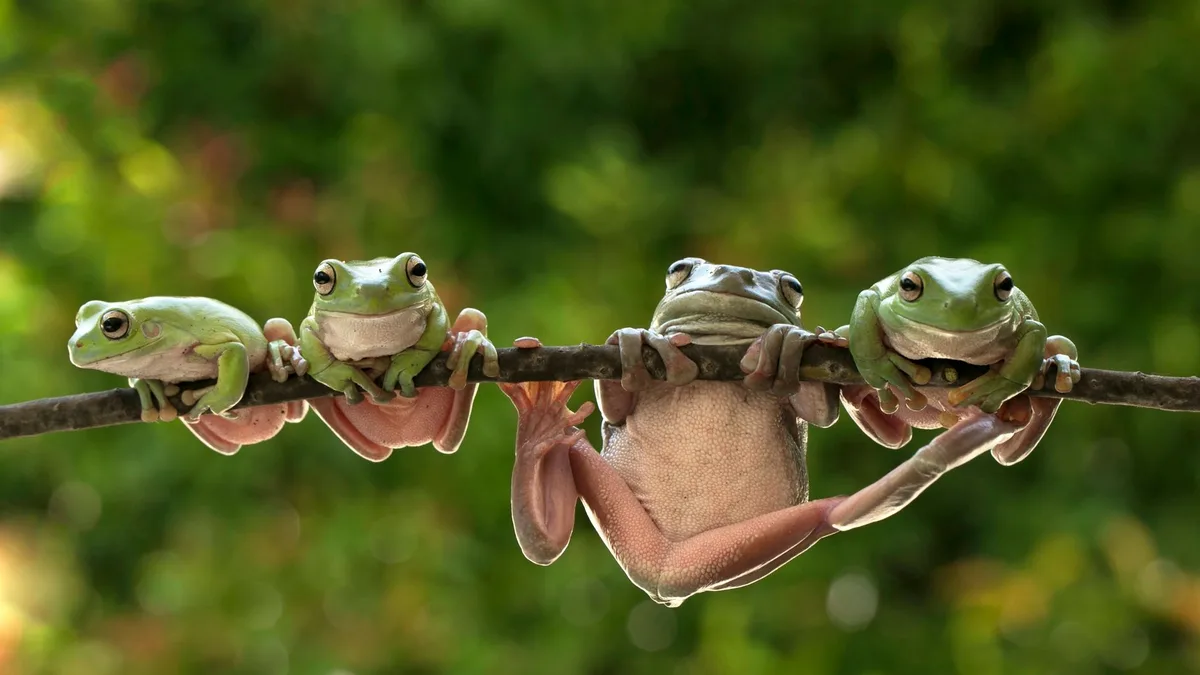 Amphibian skin is permeable, so water chemistry acts directly on the animal. Photo: Jeffry Surianto via Pexels.
The relationship between light and frog biology is well documented. Circadian regulation of skin pigmentation is essential for thermoregulation, ultraviolet protection, and synchronization of skin cell renewal, and this regulation involves both cell-autonomous photic responses and hormonal control through melatonin produced in a light-sensitive manner. Studies on Xenopus laevis melanophores show that melanophore proliferation is faster in the dark and slower with melatonin compared to a 12/12 light/dark cycle, and continuous light or dark conditions inhibit melanin synthesis. These findings demonstrate that light cycles directly affect frog physiology at the cellular level.
For the keeper, lighting functions as a management tool that influences feeding behavior, activity, color change, and long-term health. The first step in using that tool correctly is identifying the activity pattern of the species in your care.
The Range of Frog Activity Patterns
Frog activity patterns fall into three broad categories, with some species showing flexibility within those categories.
Nocturnal Frogs
Nocturnal frogs are active primarily after dark. This is the most common pattern among frogs, and it is associated with several adaptations. Nocturnal species often have large eyes with high sensitivity to low light levels. Research on the red-eyed tree frog Agalychnis callidryas has examined scotopic and photopic visual sensitivity, confirming that this nocturnal species has visual adaptations for both dim and bright light conditions. The African clawed frog Xenopus laevis is described as nocturnal and otherwise behaviorally and visually highly cryptic, which makes established populations difficult to detect in the wild.
Nocturnal activity offers frogs several advantages. It reduces exposure to diurnal predators, lowers the risk of desiccation from sun exposure, and allows frogs to hunt insects that are also active at night. Many tree frogs, including the Hainan frilled treefrog Kurixalus hainanus, are nocturnal and exhibit green-brown color patterns that support camouflage through background matching. This species changes brightness, saturation, and hue more rapidly in dark conditions than in light, and it is more active during the day than expected for a nocturnal species, suggesting that activity patterns can be more flexible than simple labels suggest.
Diurnal Frogs
Diurnal frogs are active during daylight hours. These species are less common than nocturnal frogs but include many poison dart frogs in the family Dendrobatidae and some tree frogs. Diurnal frogs typically have visual systems adapted for bright light, and they rely on color vision for communication and predator avoidance. Their activity during the day exposes them to higher predation risk, which is why many diurnal species have bright warning coloration or rely on toxicity for defense.
Crepuscular Frogs
Crepuscular frogs are most active during twilight periods at dawn and dusk. This pattern allows frogs to take advantage of moderate light levels, cooler temperatures than midday, and insect activity at transition times. Some species shift between patterns depending on season, temperature, or reproductive state.
Flexibility Within Species
Activity patterns are not fixed for all individuals or all seasons. Research on Dybowski's frog Rana dybowskii shows that hibernation induces clear changes in circadian rhythms, including shifts in peak activity times, and vocalizations increase post-hibernation in both adult and juvenile frogs, reflecting physiological adjustments associated with reproductive activation. Juveniles displayed more pronounced activity rhythms and greater sensitivity to shelter availability, indicating age-specific differences in environmental adaptability.
Similarly, green frog Rana clamitans tadpoles exhibit primarily nocturnal feeding, but their antipredator behavior is influenced by their circadian rhythm. Tadpoles exhibited stronger activity reductions when under predation risk during the day, but when predation risk was high and persistent, tadpoles remained inactive during both day and night. This demonstrates that frogs can modulate their activity in response to environmental conditions.
Visual Adaptations and Light Sensitivity
Frog vision is closely tied to activity patterns. Evolutionary studies of vertebrate vision have focused on light-sensitive opsins and the downstream phototransduction cascade. Research across 113 frog species found that frogs retain 38 of 39 vertebrate phototransduction genes, with all but one consistently expressed in frog eyes. This contrasts with the high level of gene loss found in other ancestrally nocturnal tetrapods such as mammals and snakes. The same research found that loss of the larval aquatic life stage and inhabiting aquatic and semiaquatic habitats as adults were most strongly associated with shifts in selective strength across frog phototransduction genes. These findings suggest that phototransduction is under different functional constraints in aquatic versus terrestrial light environments.
For the keeper, this means that frogs generally retain a full complement of visual genes and can process light information across a range of conditions. However, nocturnal species are adapted for low-light vision, and bright light can be aversive or stressful. The red-eyed tree frog study on scotopic and photopic sensitivity indicates that even nocturnal species retain some capacity for bright-light vision, but their behavior and comfort are optimized for dim conditions.
At a Glance: Frog Activity Patterns and Enclosure Needs
The following table summarizes common activity patterns and the corresponding enclosure management considerations. Use this as a starting point, then confirm the specific pattern for your species through observation and species-specific literature.
| Activity Pattern | Typical Species Examples | Lighting Approach | Hiding Spot Strategy | Feeding Timing |
|---|---|---|---|---|
| Nocturnal | Red-eyed tree frog, African clawed frog, many tree frogs | Low-level ambient light during day, darkness at night, no bright basking light | Dense foliage, cork bark, leaf litter, multiple retreats | Offer food in the evening or after lights out |
| Diurnal | Many poison dart frogs, some tree frogs | Full-spectrum daylight cycle, brighter illumination during day | Moderate cover, some open basking and foraging areas | Offer food during daylight hours |
| Crepuscular | Some tree frogs and ground frogs | Moderate light at dawn and dusk, dimmer midday and night | Transition zones between light and dark areas | Offer food at dawn and dusk |
| Flexible or seasonal | Dybowski's frog, green frog tadpoles | Provide both light and dark zones, allow seasonal adjustments | Shelter availability is critical, especially for juveniles | Observe and adjust to seasonal activity shifts |
Enclosure Lighting for Nocturnal Frogs
Nocturnal frogs do not need bright lighting, but they do need a consistent light-dark cycle. The circadian system relies on light cues to synchronize physiological processes, and constant light or constant dark disrupts those rhythms. Research on Xenopus laevis melanophores found that continuous light or dark conditions inhibit melanin synthesis, demonstrating that a proper light-dark cycle is necessary for normal physiology.
Light Intensity and Spectrum
For nocturnal frogs, keep light intensity low. Bright light can cause stress and reduce activity. Use low-wattage bulbs or ambient room lighting instead of intense reptile basking lamps. The goal is to provide a discernible day-night cycle without creating bright, exposed conditions. Some keepers use moonlight-simulating LEDs at night for observation, but these should be dim and used sparingly to avoid disrupting the frog's activity.
Photoperiod
A 12-hour light and 12-hour dark cycle is a reasonable starting point for most species, but seasonal adjustments may be beneficial. Research on Dybowski's frog showed that hibernation induces changes in circadian rhythms, and post-hibernation vocalizations increased in both age groups. If you intend to simulate seasonal changes for breeding or cooling periods, adjust the photoperiod gradually over several weeks.
Light Placement
Position lights so that they create gradients within the enclosure. One side can be brighter, while the other side remains shaded. This allows the frog to choose its preferred light level. For nocturnal species, the shaded side should be substantial and include dense hiding spots.
Enclosure Lighting for Diurnal Frogs
Diurnal frogs require brighter lighting to support normal activity, feeding, and color expression. Full-spectrum lighting that includes visible light and appropriate UVB output is often recommended for diurnal species, though specific requirements vary by species. The light should be on during the day and off at night to maintain a natural photoperiod.
Light Intensity and Spectrum
Diurnal frogs benefit from brighter illumination that mimics daylight. Provide a gradient so the frog can move between brighter and dimmer areas. The basking or brightest area should not be the only option, because even diurnal species need retreat from intense light.
Photoperiod
Maintain a consistent 12-hour light and 12-hour dark cycle for diurnal species. Some keepers adjust photoperiod seasonally to simulate natural changes, but consistency is more important than complexity for general health.
Hiding Spots and Shelter
Shelter availability is one of the most important factors in frog enclosure design. Research on Dybowski's frog found that both adults and juveniles showed significantly increased resting behavior when provided with shelter, with adults resting more than 70% of the time and juveniles exceeding 80%. Juveniles displayed more pronounced activity rhythms and greater sensitivity to shelter availability, indicating that young frogs may need more hiding options than adults.
Hiding Spot Placement
Place hiding spots in multiple locations throughout the enclosure. For nocturnal frogs, hiding spots should be available in the darker zones. For diurnal frogs, hiding spots should be available in both bright and shaded areas so the frog can retreat without leaving its preferred temperature zone.
Hiding Spot Types
Suitable hiding spots include cork bark tubes, half logs, clay pots, dense live or artificial plants, leaf litter, and commercially available reptile caves. The hiding spot should be large enough for the frog to enter and turn around but small enough to feel secure. For arboreal species, provide elevated hiding spots among branches and foliage. For terrestrial species, provide ground-level hides and burrowing opportunities.
Shelter and Behavior
Shelter does more than provide security. It influences activity levels and circadian rhythms. The Dybowski's frog study showed that shelter availability shaped behavioral patterns, and hibernation led to temporary but marked alterations in daily activity cycles. In a captive setting, providing adequate shelter can reduce stress-related behaviors and support more natural activity patterns.
Feeding Schedules Based on Activity Patterns
Feeding timing should match the frog's natural activity period. Nocturnal frogs are more likely to feed in the evening or after lights out. Diurnal frogs feed during the day. Crepuscular species feed at dawn and dusk. Offering food at the wrong time can result in reduced feeding, especially for nocturnal species that may not actively hunt in bright light.
Observing Feeding Behavior
Monitor whether the frog is eating within a reasonable time after food is offered. If a nocturnal frog is not eating during the day, try offering food in the evening. If a diurnal frog is not eating in the evening, offer food during the day. Individual variation exists, and some frogs will adapt to keeper schedules, but matching the natural pattern is more reliable.
Feeding Records
Keep a simple feeding log that records the date, time of day, food type, amount offered, and whether the frog ate. This record helps identify patterns and problems. If a frog stops eating for more than one week, that is a reason to escalate to veterinary assessment.
Observing and Recording Frog Activity
Observation is the foundation of good frog husbandry. You cannot manage lighting and hiding spots effectively without knowing when your frog is active and how it responds to enclosure changes.
What to Observe
Record the following observations for each frog:
- Time of day when the frog is most active
- Time of day when the frog is resting
- Preferred location in the enclosure during active and resting periods
- Response to lights turning on and off
- Feeding response at different times of day
- Color changes and whether they correlate with light conditions
- Vocalizations and their timing
- Changes in activity around seasonal transitions
How to Record Observations
Use a notebook, spreadsheet, or digital log. Record observations at least twice daily, once during the light phase and once during the dark phase. For nocturnal species, use a dim red light for nighttime observation because red light is less disruptive to frog activity than white light. Some keepers use infrared cameras or night-vision devices to observe nocturnal behavior without disturbing the frog.
Using Observations to Adjust Management
If a frog is consistently inactive during the day and active at night, it is likely nocturnal, and the enclosure should be managed accordingly. If a frog is active during the day, it may be diurnal or crepuscular. Adjust lighting and feeding schedules based on observed behavior instead of assumptions about the species.
Practical Implementation Steps for Enclosure Lighting and Hiding Spots
The following steps provide a practical workflow for setting up or adjusting a frog enclosure based on activity patterns.
Step 1: Identify the Species and Its Natural Activity Pattern
Research the species in your care. Use reputable sources such as the Merck Veterinary Manual and species-specific literature. Confirm whether the species is nocturnal, diurnal, or crepuscular. Note that some species show flexibility, so be prepared to adjust based on observation.
Step 2: Set Up the Light-Dark Cycle
Install lighting on a timer to maintain a consistent photoperiod. A 12-hour light and 12-hour dark cycle is a reasonable starting point. For nocturnal species, use low-intensity lighting. For diurnal species, use brighter full-spectrum lighting. Ensure that lights turn off completely at night.
Step 3: Create Light Gradients
Position lighting so that one side of the enclosure is brighter and the other side is shaded. This allows the frog to choose its preferred light level. Use plants, cork bark, or other decor to create shaded zones.
Step 4: Install Multiple Hiding Spots
Place at least two to three hiding spots in different locations. For nocturnal species, prioritize hiding spots in shaded areas. For diurnal species, provide hiding spots in both bright and shaded zones. Ensure that hiding spots are appropriately sized and secure.
Step 5: Match Feeding Schedules to Activity
Offer food during the frog's natural active period. For nocturnal species, feed in the evening or after lights out. For diurnal species, feed during the day. For crepuscular species, feed at dawn and dusk.
Step 6: Observe and Adjust
Monitor the frog's behavior over two to four weeks. Record activity times, feeding responses, and location preferences. Adjust lighting intensity, photoperiod, hiding spot placement, and feeding times based on observations.
Step 7: Escalate When Needed
If a frog shows persistent signs of stress, reduced feeding, weight loss, or abnormal behavior despite appropriate enclosure management, escalate to veterinary assessment. Do not attempt to diagnose or treat medical conditions without professional guidance.
Records and Measurements for Enclosure Management
Keeping records is essential for identifying problems early and for providing useful information to a veterinarian if needed.
Essential Records
Maintain the following records for each frog or group of frogs:
- Species and individual identification
- Enclosure dimensions and setup description
- Lighting type, intensity, and photoperiod
- Temperature range and humidity levels
- Hiding spot locations and types
- Feeding schedule, food types, and amounts offered
- Observed feeding response
- Activity observations with timestamps
- Weight measurements taken regularly
- Shedding or skin condition notes
- Vocalization observations
- Any health concerns or abnormal behaviors
Measurement Frequency
Weigh frogs at least monthly, or more frequently for juveniles or frogs with health concerns. Record temperature and humidity daily. Record activity observations at least twice daily. Record feeding responses at each feeding.
Using Records for Veterinary Care
When a frog needs veterinary care, provide the veterinarian with the activity records, feeding records, weight history, and enclosure parameters. This information helps the veterinarian distinguish between management-related issues and medical conditions.
Common Failure Patterns in Frog Enclosure Management
Several common mistakes can undermine frog health and welfare. Recognizing these patterns helps prevent problems.
Bright Lighting for Nocturnal Species
Keeping a nocturnal frog under bright lighting without adequate shade is a common error. This can cause chronic stress, reduced feeding, and hiding behavior that owners may misinterpret as illness. If a nocturnal frog is always hidden and never observed active, evaluate the lighting intensity and hiding spot availability.
Inadequate Hiding Spots
Frogs without adequate shelter show increased stress behaviors and reduced resting. The Dybowski's frog research showed that shelter availability significantly increased resting behavior, with adults resting more than 70% of the time and juveniles exceeding 80% when shelter was provided. A frog that is constantly active or constantly trying to hide may not have enough secure hiding spots.
Inconsistent Photoperiod
Irregular light-dark cycles disrupt circadian rhythms. Leaving lights on at night or failing to provide a consistent day-night cycle can affect feeding, activity, and physiological processes such as pigmentation. Use timers to maintain consistency.
Feeding at the Wrong Time
Offering food when a frog is naturally inactive can result in reduced feeding and missed nutrition. Match feeding schedules to the frog's activity pattern.
Ignoring Seasonal Changes
Some species show seasonal shifts in activity, especially around hibernation or breeding periods. Research on Dybowski's frog showed that hibernation induced clear changes in circadian rhythms and that vocalizations increased post-hibernation. Ignoring these seasonal patterns can lead to management that does not match the frog's current physiological state.
Overcrowding and Inadequate Space
Frogs need enough space to express natural behaviors, including choosing between light and dark zones and finding secure hiding spots. Overcrowding increases stress and competition for shelter.
Welfare and Safety Context
Frog welfare depends on matching the captive environment to the species' natural history. The World Organisation for Animal Health addresses animal health and welfare as part of its mandate, and the Merck Veterinary Manual provides clinical guidance for amphibian care. Responsible frog keeping requires attention to species-specific needs, including activity patterns, lighting, and shelter.
Stress and Its Consequences
Chronic stress in frogs can suppress feeding, reduce immune function, and increase susceptibility to disease. Inappropriate lighting and inadequate shelter are common sources of stress. A frog that cannot escape bright light or find secure hiding spots is under continuous pressure.
Handling and Observation Safety
Minimize handling to reduce stress. When observation requires opening the enclosure, do so quietly and gently. Use dim red light for nighttime observation of nocturnal species. Wash hands before and after any contact with the enclosure to prevent contamination.
Zoonotic Considerations
Amphibians can carry pathogens such as Salmonella. Always wash hands thoroughly after handling frogs, enclosure items, or water. Do not allow frogs to come into contact with food preparation surfaces. Children and immunocompromised individuals should avoid direct contact with amphibians.
Limitations of Current Knowledge
Research on frog activity patterns and lighting has limitations that keepers should understand.
Species-Specific Data Gaps
Detailed activity pattern data are not available for all frog species kept in captivity. Many species have not been studied in their natural habitats, and captive observations may not fully reflect wild behavior. Keepers should combine species-level knowledge with individual observation.
Laboratory Versus Wild Conditions
Some research on frog circadian rhythms and behavior is conducted under controlled laboratory conditions. The Dybowski's frog study used controlled laboratory conditions with continuous video monitoring, which provides useful data but may not capture all aspects of wild behavior. Similarly, research on Xenopus laevis melanophores was conducted in vitro, and the findings may not translate directly to whole-animal responses.
Individual Variation
Individual frogs within a species can show variation in activity patterns. Age, health, reproductive state, and prior experience all influence behavior. Juveniles may be more sensitive to environmental conditions than adults, as shown in the Dybowski's frog research.
Invasive Species Context
Some frog species kept in captivity are invasive in certain regions. The African clawed frog is an aquatic invasive species with severe ecological impacts on native fauna when introduced into non-endemic regions. The World Organisation for Animal Health addresses animal health and welfare, and keepers should be aware of local regulations regarding frog ownership and containment. Never release captive frogs into the wild.
Professional Escalation Criteria
Knowing when to seek veterinary care is essential for responsible frog keeping.
Urgent Escalation
Seek urgent veterinary care if a frog shows any of the following:
- Severe lethargy or inability to move normally
- Open wounds, bleeding, or prolapse
- Difficulty breathing or gasping
- Seizures or uncontrolled spasms
- Swelling or bloating that appears sudden or severe
- Inability to right itself when turned over
Routine Escalation
Seek veterinary assessment if a frog shows any of the following:
- Reduced appetite lasting more than one week
- Weight loss over consecutive measurements
- Persistent hiding or inactivity beyond the species' normal pattern
- Abnormal skin appearance, including redness, lesions, or excessive shedding
- Changes in fecal output or consistency
- Abnormal posture or locomotion
- Persistent vocalizations that seem distress-related
Information to Provide the Veterinarian
When seeking veterinary care, provide the following information:
- Species and age of the frog
- Enclosure setup, including dimensions, lighting, temperature, and humidity
- Photoperiod and recent changes
- Hiding spot types and locations
- Feeding schedule and recent food intake
- Weight history
- Activity observations with timestamps
- Any recent changes to the enclosure or management
A Decision Framework for Matching Enclosure Lighting to Observed Frog Behavior
Knowing whether a frog species is nocturnal, diurnal, or crepuscular provides a starting point, but individual frogs do not always match the published pattern for their species. Age, health, reproductive state, recent transport, and prior housing conditions all influence when a frog chooses to be active. The Dybowski's frog research demonstrated that juveniles displayed more pronounced activity rhythms and greater sensitivity to shelter availability than adults, and that hibernation induced clear changes in circadian rhythms including shifts in peak activity times. A frog that was nocturnal in one enclosure may shift its activity when moved to a new setup with different lighting, temperature, or shelter options. instead of assuming a frog will behave according to its species label, keepers should use a structured decision framework that starts with observation, tests one variable at a time, and uses the frog's own behavior as the primary feedback signal.
The Observation Baseline
Before making any changes to lighting or shelter, establish a baseline of the frog's current behavior. This baseline serves as the reference point for all subsequent decisions. Without a baseline, keepers cannot tell whether a management change improved welfare or made things worse.
Set up a simple observation protocol that runs for at least seven consecutive days. During this period, do not change any enclosure parameters. Record the following at minimum twice daily, once during the light phase and once during the dark phase:
- Whether the frog is visible or hidden
- Location in the enclosure when visible
- Posture, including whether the frog is sitting upright, flattened, or tucked into a corner
- Apparent alertness, such as eyes open, head raised, or responsive to movement
- Any feeding behavior if food is present
- Color state if the species is capable of color change
For nocturnal species, use a dim red light for nighttime checks. The Hainan frilled treefrog research showed that frogs changed brightness, saturation, and hue more rapidly in dark conditions than in light, and that color change significantly improved background similarity to both green and brown substrates in light conditions. Color state can therefore serve as a useful behavioral indicator, especially for species known to change color for camouflage.
Record the baseline data in a simple table with columns for date, time, light phase, frog location, frog posture, and notes. After seven days, review the records to identify the frog's dominant activity period. A frog that is consistently visible and alert during the dark phase and hidden during the light phase is demonstrating nocturnal behavior. A frog that is visible during the light phase and hidden at night is demonstrating diurnal behavior. A frog that shows activity peaks at dawn and dusk is demonstrating crepuscular behavior.
The Single Variable Change Protocol
Once the baseline is established, use a single variable change protocol to test whether the frog's behavior responds to lighting adjustments. This protocol prevents the common error of changing multiple enclosure parameters at once, which makes it impossible to determine which change caused the observed effect.
The protocol works as follows:
- Select one variable to change. Examples include light intensity, photoperiod duration, light placement, hiding spot number, or hiding spot location.
- Make the change.
- Observe for seven days using the same observation protocol as the baseline period.
- Compare the new observation records to the baseline records.
- If the frog's activity pattern shifted in the expected direction, keep the change.
- If the frog's activity pattern did not shift or shifted in the wrong direction, revert to the previous setting and try a different variable.
- Never change more than one variable at a time.
For example, if a keeper has a nocturnal tree frog that is hiding during the dark phase and showing some activity during the light phase, the first variable to test is light intensity. Reduce the daytime light intensity by switching to a lower wattage bulb or adding additional shade cover. Observe for seven days. If the frog becomes more active during the dark phase, the original light intensity was likely too high. If the frog's behavior does not change, revert to the original lighting and test a different variable, such as hiding spot placement.
The single variable change protocol is supported by the research on shelter effects in Dybowski's frogs. That study found that both adults and juveniles showed significantly increased resting behavior when provided with shelter, with adults resting more than 70% of the time and juveniles exceeding 80%. This finding demonstrates that a single environmental variable, shelter availability, can produce a measurable and significant shift in frog behavior. The same logic applies to lighting variables.
Light Intensity Testing
Light intensity is often the first variable to test for nocturnal species. The research on the red-eyed tree frog Agalychnis callidryas examined scotopic and photopic visual sensitivity, confirming that this nocturnal species has visual adaptations for both dim and bright light conditions. However, having the capacity for bright light vision does not mean the frog prefers bright conditions. The Hainan frilled treefrog study found that frogs avoided highly contrasting white substrates when given a choice, indicating that even nocturnal species actively avoid excessive brightness.
To test light intensity, use a dimmable light source or install a lower wattage bulb. Measure the light level at the frog's preferred resting location using a lux meter if available. Record the lux reading in the observation log. Common lux ranges for nocturnal frog enclosures are not standardized across species, so the keeper should focus on the frog's behavioral response instead of targeting a specific numeric value.
Test sequence for light intensity:
- Reduce light intensity by approximately 25 to 50 percent from the current setting.
- Maintain the same photoperiod.
- Observe for seven days.
- Compare activity during the dark phase to the baseline.
- If dark phase activity increases, the frog likely found the previous intensity too bright.
- If dark phase activity decreases or stays the same, the intensity was probably not the limiting factor.
Photoperiod Testing
Photoperiod testing is appropriate when the frog's activity pattern does not match the expected pattern for its species. The Xenopus laevis melanophore research demonstrated that continuous light or dark conditions inhibit melanin synthesis, and that melanophore proliferation is faster in the dark and slower with melatonin compared to a 12/12 light/dark cycle. This finding underscores the importance of a consistent light-dark cycle for normal physiology.
For a frog that shows activity at unexpected times, test whether adjusting the photoperiod shifts activity into the expected window. For example, if a nocturnal frog is active during the late afternoon before lights out, try shifting the photoperiod so that lights turn off one to two hours earlier. Observe whether the frog's activity shifts to follow the new dark period.
Test sequence for photoperiod:
- Shift the light off time by one hour earlier or later.
- Keep the total photoperiod duration the same if possible.
- Observe for seven days.
- Record whether the frog's active period shifted to match the new dark phase.
- If the frog's activity follows the new dark phase, the photoperiod was influencing activity timing.
- If the frog's activity does not shift, the photoperiod may not be the primary driver.
The Dybowski's frog research showed that hibernation induced clear changes in circadian rhythms, including shifts in peak activity times. This finding indicates that photoperiod changes can produce measurable shifts in frog activity timing, but the response may take time to emerge. Allow at least seven days of observation after any photoperiod change before concluding that the change had no effect.
Hiding Spot Testing
Hiding spot testing is appropriate when a frog is active but appears stressed, or when a frog is hiding excessively even during its expected active period. The Dybowski's frog research demonstrated that shelter availability significantly increased resting behavior, with adults resting more than 70% of the time and juveniles exceeding 80% when shelter was provided. This finding suggests that shelter is beyond a comfort feature but a fundamental requirement for normal behavioral expression.
Test sequence for hiding spots:
- Add one additional hiding spot in a different location from existing spots.
- For arboreal species, add an elevated hiding spot among branches or foliage.
- For terrestrial species, add a ground-level hide or burrowing opportunity.
- Observe for seven days.
- Record whether the frog uses the new hiding spot and whether resting behavior increases.
- If the frog uses the new spot and appears more settled, the previous hiding spot arrangement was likely inadequate.
- If the frog ignores the new spot, try a different hiding spot type or location.
The Dybowski's frog study also found that juveniles displayed more pronounced activity rhythms and greater sensitivity to shelter availability, indicating age-specific differences in environmental adaptability. Juvenile frogs may therefore require more hiding options than adults, and keepers should consider adding extra shelter for young frogs even if adult frogs of the same species seem content with fewer options.
The Decision Matrix
The following decision matrix provides a structured approach to interpreting observation data and selecting the next management action. Use this matrix after completing the baseline observation period.
| Observed Behavior | Likely Interpretation | First Variable to Test | Second Variable to Test | Third Variable to Test |
|---|---|---|---|---|
| Active at night, hidden during day | Nocturnal pattern confirmed | Light intensity reduction | Hiding spot addition in shaded zone | Photoperiod adjustment |
| Active during day, hidden at night | Diurnal pattern confirmed | Light intensity increase | Hiding spot addition in bright zone | Photoperiod adjustment |
| Active at dawn and dusk only | Crepuscular pattern confirmed | Light gradient creation | Hiding spot placement at transition zones | Photoperiod adjustment |
| Active at unexpected times | Photoperiod mismatch | Photoperiod shift | Light intensity adjustment | Hiding spot addition |
| Hidden at all times | Excessive stress or inadequate shelter | Hiding spot addition | Light intensity reduction | Temperature and humidity check |
| Active at all times | Inadequate shelter or excessive disturbance | Hiding spot addition | Light gradient creation | Feeding schedule adjustment |
Troubleshooting When Behavior Does Not Respond
When a frog's behavior does not respond to lighting or hiding spot changes after two full test cycles, the keeper should expand the investigation beyond lighting and shelter. The single variable change protocol remains useful, but the variables under test should broaden to include temperature, humidity, and feeding schedule.
The green frog tadpole research demonstrated that prey trade off predation risk and foraging gain in their activity level, and that tadpoles exhibited stronger activity reductions when under predation risk during the day. When predation risk was high and persistent, tadpoles remained inactive during both day and night. This finding illustrates that activity patterns can be suppressed by factors unrelated to lighting. In a captive setting, perceived threats such as vibrations, shadows, or frequent handling can suppress activity even when lighting and shelter are appropriate.
Troubleshooting sequence when lighting and shelter changes produce no response:
- Verify temperature gradients. Measure temperatures at multiple points in the enclosure, including the warmest and coolest zones. Compare to the species' preferred temperature range.
- Verify humidity levels. Measure humidity at different times of day. Low humidity can cause frogs to remain hidden to reduce water loss.
- Review the feeding schedule. Confirm that food is offered during the frog's observed active period, not the expected active period.
- Assess disturbance levels. Note how often the enclosure is opened, how much vibration occurs near the enclosure, and whether the frog is exposed to shadows or movement from household activity.
- Check for health concerns. If the frog remains inactive despite appropriate environmental conditions, escalate to veterinary assessment.
Recording the Decision Process
The decision framework is only useful if the keeper records the process. Maintain a decision log that documents each variable tested, the date of the change, the observation results, and the decision to keep or revert the change. This log serves multiple purposes:
- It prevents repeating the same unsuccessful test.
- It provides a clear history for veterinary assessment if health concerns arise.
- It documents the frog's individual preferences, which may differ from species-level generalizations.
- It helps identify patterns over longer time periods, such as seasonal shifts in activity.
The decision log should include the following fields for each test cycle:
- Test number
- Date range of the test
- Variable tested
- Specific change made
- Baseline behavior summary
- Post-change behavior summary
- Decision to keep, revert, or adjust
- Rationale for the decision
Seasonal and Life Stage Adjustments
The decision framework should account for seasonal and life stage changes. The Dybowski's frog research showed that hibernation induced clear changes in circadian rhythms and that vocalizations increased post-hibernation in both age groups, reflecting physiological adjustments associated with reproductive activation. A frog that was consistently nocturnal before a cooling period may show different activity patterns after the cooling period ends.
When seasonal changes are planned, such as a cooling period for breeding stimulation, run a new baseline observation after the seasonal transition. Do not assume that the frog's previous activity pattern will resume unchanged. The same applies to life stage transitions. Juvenile frogs may show different activity patterns than adults of the same species, and the Dybowski's frog research demonstrated that juveniles displayed more pronounced activity rhythms and greater sensitivity to shelter availability.
Limitations of the Decision Framework
The decision framework relies on observation, and observation has inherent limitations. Nocturnal frogs are behaviorally and visually highly cryptic, as documented for the African clawed frog in the invasive species literature. A keeper may not observe a frog that is active at night if the frog moves quietly and returns to hiding before the keeper checks. Infrared cameras or continuous video monitoring can address this limitation, but these tools are not available to all keepers.
The framework also assumes that the keeper can accurately interpret frog behavior. Posture, location, and color state are useful indicators, but they are indirect measures of welfare. A frog that appears settled may still be experiencing chronic low-level stress that is not visible through observation alone. The framework should therefore be combined with regular health checks, including weight monitoring and skin condition assessment.
Finally, the framework is designed for individual frogs or small groups. It does not address the complexities of multi-species enclosures, where interactions between species can influence activity patterns. For multi-species setups, apply the framework to each species separately and ensure that the enclosure provides distinct zones that meet the needs of all inhabitants.
When to Escalate Beyond the Framework
The decision framework is a management tool, not a diagnostic tool. If a frog shows persistent signs of reduced appetite lasting more than one week, weight loss over consecutive measurements, abnormal skin appearance, or unusual posture or locomotion, escalate to veterinary assessment regardless of what the framework suggests. The Merck Veterinary Manual provides clinical guidance for amphibian care, and the World Organisation for Animal Health addresses animal health and welfare as part of its mandate. Environmental management cannot replace professional veterinary care when a frog is unwell.
The decision framework also has limits when a frog's behavior does not change despite multiple tested variables. If two full test cycles have been completed without any observable improvement in the frog's activity pattern, and temperature, humidity, feeding schedule, and disturbance levels have all been reviewed, the next step is veterinary assessment. Persistent inactivity, especially when combined with reduced feeding or weight loss, warrants professional evaluation instead of continued environmental adjustment.
Frequently Asked Questions
Are all frogs nocturnal?
No. Frog activity patterns vary by species. Some frogs are nocturnal, some are diurnal, and others are crepuscular. Research on the Hainan frilled treefrog, a nocturnal species, found that it was more active during the day than expected, showing that activity patterns can be flexible. Identify the specific pattern for your species through research and observation.
How can I tell if my frog is nocturnal?
Observe your frog at different times of day and night. Record when it is active, when it is resting, and where it prefers to be. A nocturnal frog will be more active after lights out and will typically hide during the day. Use a dim red light for nighttime observation to avoid disturbing the frog.
What lighting does a nocturnal frog need?
Nocturnal frogs need a consistent light-dark cycle with low light intensity during the day and complete darkness at night. Bright lighting can cause stress. Provide shaded zones and hiding spots so the frog can escape light when needed.
Do diurnal frogs need special lighting?
Diurnal frogs benefit from brighter full-spectrum lighting during the day and darkness at night. Provide a light gradient so the frog can choose between brighter and dimmer areas. Maintain a consistent photoperiod, typically 12 hours of light and 12 hours of dark.
How many hiding spots should I provide?
Provide at least two to three hiding spots in different locations. Research on Dybowski's frog showed that shelter availability significantly increased resting behavior, with adults resting more than 70% of the time and juveniles exceeding 80% when shelter was provided. Juveniles may need more hiding options than adults.
When should I feed my frog?
Feed your frog during its natural active period. Nocturnal frogs should be fed in the evening or after lights out. Diurnal frogs should be fed during the day. Crepuscular frogs should be fed at dawn and dusk. Observe feeding responses and adjust timing as needed.
Can frogs see in the dark?
Frogs have visual adaptations that support low-light vision. Research on the red-eyed tree frog has examined scotopic and photopic visual sensitivity, confirming that nocturnal species have adaptations for dim light. However, frogs still benefit from a proper light-dark cycle for circadian regulation.
Why is my frog always hiding?
Hiding is normal frog behavior, especially for nocturnal species. However, if hiding is excessive or accompanied by reduced feeding or weight loss, evaluate the enclosure. Check lighting intensity, hiding spot availability, temperature, and humidity. If problems persist, escalate to veterinary assessment.
Related Veterinary Guides
- Comprehensive Bearded Dragon Enclosure Sizing: Substrates, Basking Platforms, and Lighting Rigging
- Ball Python Care and Enclosure Setup
- Corn Snake Care and Enclosure Setup
- Choosing and Setting Up a Bird Cage
- Bearded Dragon Enclosure Setup, Sizing, and Heating
Related Clinical & Scientific Guides
References and Further Reading
- Merck Veterinary Manual. Merck Veterinary Manual.
- Animal Health and Welfare. World Organisation for Animal Health.
- (99m)Tc-N(2)S(2)-Tat(49-57)-Lys(3)-bombesin.. 2004.
- 36th International Symposium on Intensive Care and Emergency Medicine : Brussels, Belgium. 15-18 March 2016.. Critical care (London, England), 2016.
- (99m)Tc((v))O-Gly-Gly-Cys-Orn-Orn-Orn-Bombesin[2-14].. 2004.
- MondoA:MLX complex regulates glucose-dependent gene expression and links to circadian rhythm in liver and brain of the freeze-tolerant wood frog, Rana sylvatica.. Molecular and cellular biochemistry, 2020.
- Physiological psychology: sleep.. Annual review of psychology, 1973.
- [(99m)Tc-N(4)(0-1)-bzlg(0),D-Phe(6),Leu-NHEt(13),des-Met(14)]Bombesin(6-14).. 2004.
- The influence of the circadian rhythm of green frog (Rana clamitans) tadpoles on their antipredator behavior and the strength of the nonlethal effects of predators.. The American naturalist, 2008.
- Interplay of Light, Melatonin, and Circadian Genes in Skin Pigmentation Regulation.. Pigment cell & melanoma research, 2025.
- Color change, background choice, and camouflage in a nocturnal treefrog: implications for circadian adaptation.. 2026.
- Exploring nocturnal soundscapes in an Australian open forest system using acoustic indices.. 2026.
- Influence of Shelter and Hibernation on the 24-Hour Behavioral Rhythms of Male Dybowski's Frog (<,i>,Rana dybowskii<,/i>,) Across Age Groups.. 2026.
- Biodiversity resilience in a tropical rainforest.. 2026.
- Evolutionary and ontogenetic shifts from aquatic to terrestrial light environments in frogs provide new insights into the vertebrate phototransduction cascade. 2025.
- Bioacoustics survey revealed the occurrence of alien green frogs across an urban gradient. 2025.
- Opportunistic Nocturnal Predation by a Diurnal Snake: An Indian Ratsnake, Ptyas mucosa (Linnaeus 1758), Preying on Marbled Balloon Frogs (Uperodon systoma). Reptiles & Amphibians, 2020.
- Invasive African clawed frogs (Xenopus laevis) in Washington State: status, response efforts, and lessons learned. Frontiers in Amphibian and Reptile Science, 2025.
- Effects of enhanced lighting on the behaviour of nocturnal frogs. Animal Behaviour, 1993.
- The scotopic and photopic visual sensitivity in the nocturnal tree frog Agalychnis callidryas. Journal of Comparative Physiology A Neuroethology Sensory Neural and Behavioral Physiology, 2015.
This article is educational and is not a substitute for veterinary diagnosis or treatment. Contact a veterinarian for advice about an individual animal.