Redox Reaction: Definition, Types, and Examples
By Dr. Zubair Khalid, DVM, MS, PhD ·
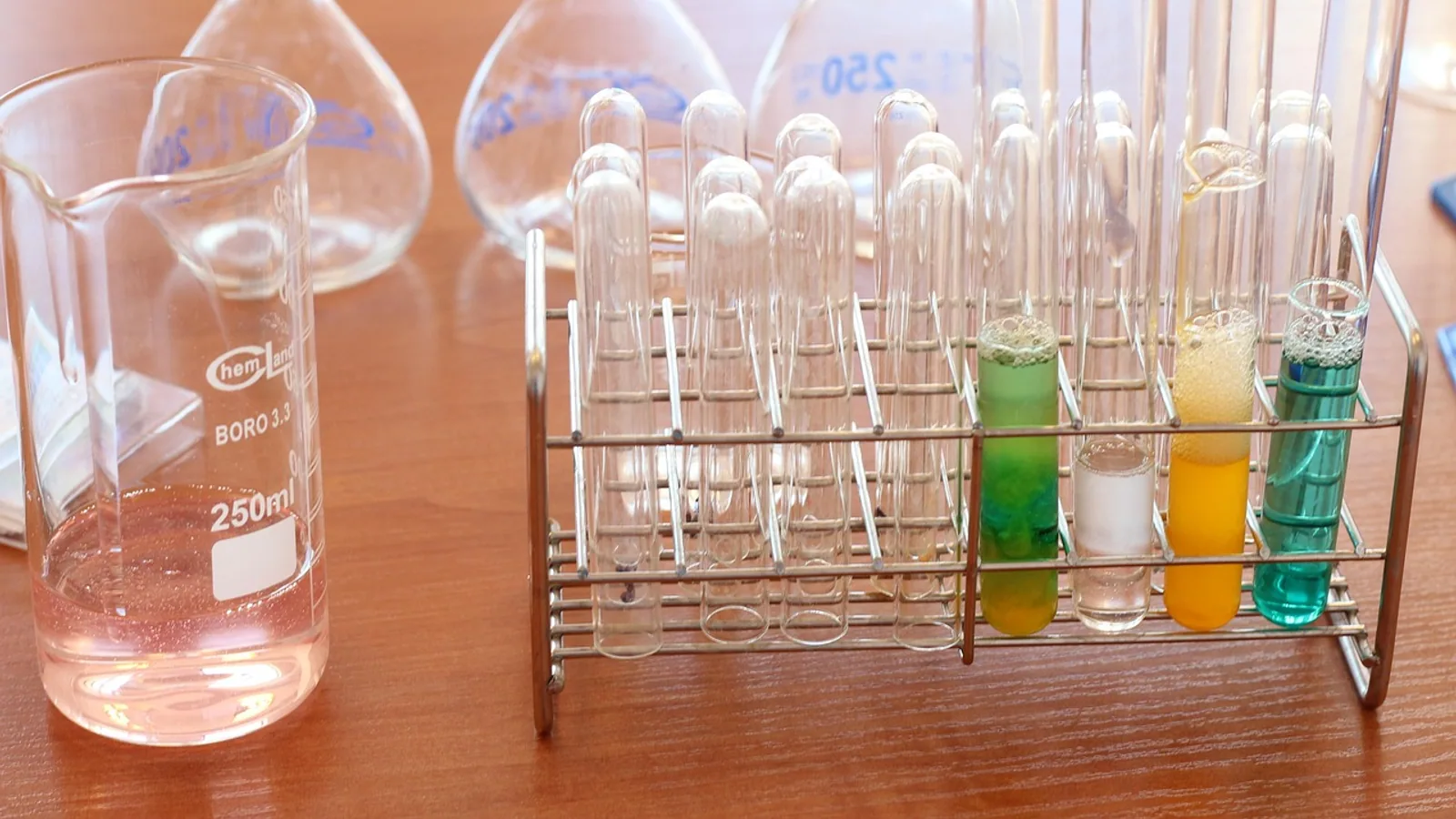
A redox reaction is a chemical reaction in which one substance loses electrons while another gains them. The word is a contraction of reduction and oxidation, the two complementary halves of a single electron-transfer process.
Redox reactions sit at the center of biology, chemistry, and materials science. They move electrons through the mitochondrial electron transport chain, regenerate the antioxidants that keep cells alive, and drive the catalytic cycles of thousands of enzymes. In the laboratory, redox chemistry underlies common assays, electrode measurements, and staining methods. Reading a redox reaction correctly means tracking electrons through their bookkeeping proxy, the oxidation state, and knowing which partner is oxidized and which is reduced.
What Counts as a Redox Reaction
Oxidation and reduction in terms of electrons
The modern definition is electronic. Oxidation is the loss of electrons by a species. Reduction is the gain of electrons by a species. The two must happen together, because an electron that leaves one atom must arrive somewhere. That is why no isolated half of a redox reaction can occur on its own, and why the phrase "reduction potential" is always defined for a specific pair.
The common memory aid is OIL RIG, for Oxidation Is Loss and Reduction Is Gain. A second device is LEO GER, for Lose Electrons Oxidation, Gain Electrons Reduction. Both describe the same fact.
Oxidation states: the accounting system
Because electrons are not directly visible, chemists track them through the oxidation state, also called the oxidation number. The oxidation state of an atom is the formal charge it would carry if every bond were treated as completely ionic, with the more electronegative atom taking the shared electrons.
Assigning oxidation states follows a short set of rules:
- A free element in its standard state has an oxidation state of 0. Examples are O2, Cl2, Na metal, and Fe metal.
- A monatomic ion carries an oxidation state equal to its charge. Na+ is +1, Fe2+ is +2, Fe3+ is +3, and Cl- is -1.
- Oxygen almost always has an oxidation state of -2. The main exception is peroxide, where it is -1.
- Hydrogen is +1 when bonded to nonmetals and -1 when bonded to metals.
- The sum of all oxidation states in a neutral molecule is 0. In a polyatomic ion, the sum equals the ion's charge.
A change in oxidation state signals electron movement. An increase in oxidation state means electrons were lost, so the atom was oxidized. A decrease means electrons were gained, so the atom was reduced.
The half-reaction view
Every redox reaction can be split into two half-reactions. One half lists the electron loss, and the other lists the electron gain. Writing them separately makes both the electron count and the direction of transfer explicit. In aqueous geochemistry and enzymology this same bookkeeping applies, and the language is identical whether the electron donor is a metal ion, a small organic cofactor, or a protein-bound coenzyme.
Oxidation, Reduction, Oxidizing Agents, and Reducing Agents
Students routinely swap the last two terms. The fix is to remember that the agent is named for what it does to the other partner, not for what happens to itself.
An oxidizing agent (oxidant) takes electrons from another substance. By accepting electrons, the oxidizing agent itself is reduced. A reducing agent (reductant) gives electrons to another substance. By donating electrons, the reducing agent itself is oxidized.
Put in one line: the oxidizing agent is reduced, and the reducing agent is oxidized.
The table below summarizes the four core terms and one example of each.
| Term | Definition | Effect on the substance itself | Example |
|---|---|---|---|
| Oxidation | Loss of electrons | Oxidation state increases | Fe2+ → Fe3+ + e- |
| Reduction | Gain of electrons | Oxidation state decreases | O2 + 4e- + 4H+ → 2H2O |
| Oxidizing agent (oxidant) | Accepts electrons from another species | Is itself reduced | O2, NAD+, FAD, cytochrome c (Fe3+) |
| Reducing agent (reductant) | Donates electrons to another species | Is itself oxidized | NADH, FADH2, glutathione, Fe2+ |
The names are historical. The oxidant was once defined as the substance that combined with oxygen, and the reductant as the substance that removed it. The electron-based definition is broader and covers reactions with no oxygen at all.
A Fully Worked Example
Consider iron(II) being oxidized to iron(III) by dissolved oxygen in acidic solution. This reaction is relevant to iron metabolism, to environmental chemistry, and to any experiment where Fe2+ solutions are exposed to air. The balanced reaction is:
4 Fe2+ + O2 + 4 H+ → 4 Fe3+ + 2 H2O
Here is the full accounting.
Step 1. Write the two half-reactions.
Oxidation half: Fe2+ → Fe3+ + e-
Reduction half: O2 + 4 H+ + 4 e- → 2 H2O
Step 2. Balance the electrons. The oxidation half releases one electron per iron, and the reduction half consumes four electrons per O2. Multiply the oxidation half by 4 so both sides carry four electrons.
4 Fe2+ → 4 Fe3+ + 4 e-
O2 + 4 H+ + 4 e- → 2 H2O
Step 3. Combine and cancel electrons. The four electrons released by iron are exactly the four consumed by oxygen, so they cancel.
4 Fe2+ + O2 + 4 H+ → 4 Fe3+ + 2 H2O
Step 4. Assign oxidation states and confirm the electron count.
- Iron starts at +2 and ends at +3. Each iron loses one electron, so four irons lose four electrons. Iron is oxidized.
- Oxygen starts at 0 in O2 and ends at -2 in water. Each oxygen atom gains two electrons, and four oxygen atoms are involved, so oxygen gains four electrons. Oxygen is reduced.
- The electron loss equals the electron gain, which is the check that the equation is balanced for charge.
Step 5. Name the agents.
- Fe2+ is the reducing agent because it donates electrons and is oxidized.
- O2 is the oxidizing agent because it accepts electrons and is reduced.
This same logic applies to every redox pair. In a metal-ion reaction studied with sorption experiments, for example, Ce(III) is oxidized to Ce(IV) by manganese oxides, and Gibbs free energy calculations show that electron transfer from Ce(III) to structural Mn(IV) or Mn(III) is thermodynamically favorable [1]. The electron accounting is what makes the reaction possible, and the measured potential is what tells you whether it will proceed.
Types of Redox Reactions
Redox reactions are grouped into a few recurring patterns. The pattern names come from reaction stoichiometry, not from the electron transfer itself.
Combination reactions
In a combination reaction, two or more species join to form one product, usually with a change in oxidation state. A classic example is iron reacting with oxygen to form iron oxide, where Fe goes from 0 to +2 or +3 and O goes from 0 to -2.
Decomposition reactions
In a decomposition reaction, one compound breaks into two or more products with electron rearrangement. Heating potassium chlorate to release oxygen is a standard teaching example, and the same pattern appears in biological systems where a molecule is split and its fragments move to different oxidation states.
Single-displacement reactions
In a single-displacement reaction, a more reactive element displaces a less reactive one from a compound. The textbook case is zinc metal in copper sulfate solution:
Zn(s) + Cu2+(aq) → Zn2+(aq) + Cu(s)
Zinc goes from 0 to +2 and is oxidized. Copper goes from +2 to 0 and is reduced. Zinc is the reducing agent, and Cu2+ is the oxidizing agent.
Disproportionation reactions
In disproportionation, a single species is simultaneously oxidized and reduced. Two molecules of the same substance react, and one ends up at a higher oxidation state while the other ends up lower. Hydrogen peroxide breaking down into water and oxygen is a common example.
Electron bifurcation
Electron bifurcation is a biological variant of redox chemistry in which a single electron donor reduces two different acceptors at once, sending one electron to a high-potential acceptor and the other to a low-potential acceptor. This mechanism lets cells drive unfavorable reductions using favorable ones. Recent structural work on formylmethanofuran dehydrogenase complexes in methanogens shows how the enzyme uses electron-bifurcating partners connected by polyferredoxin electron paths [2]. Electron bifurcation is a reminder that a redox chemical reaction can be far more complex than a single donor-acceptor pair.
Standard Reduction Potentials of Common Biological Redox Pairs
The driving force of an electron transfer is measured as a reduction potential, given in volts. A standard reduction potential (E°) is defined for a half-reaction under standard conditions, which include 1 M concentrations, 1 bar gas pressure, and a specified temperature. In biology, conditions differ, so the biochemically useful value is E°′, the standard reduction potential at pH 7.
The more positive the potential, the stronger the pull on electrons and the better the species acts as an oxidizing agent. The more negative the potential, the stronger the push and the better the species acts as a reducing agent. Electrons flow spontaneously from a pair with a more negative potential to a pair with a more positive potential, and the difference in potentials gives the free energy of the transfer.
The table below lists approximate standard reduction potentials at pH 7 for redox pairs used throughout cell biology and biochemistry. Values are rounded and vary with pH, temperature, concentration ratios, and the protein environment that hosts the cofactor.
| Redox pair | Approximate E°′ (V) | Role in cells |
|---|---|---|
| O2 / H2O | +0.82 | Terminal electron acceptor in aerobic respiration |
| Cytochrome c (Fe3+ / Fe2+) | +0.25 | Mobile electron carrier between complexes III and IV |
| Glutathione disulfide / 2 glutathione (GSSG / 2 GSH) | -0.24 | Main thiol redox buffer and antioxidant pool |
| FAD / FADH2 | -0.22 | Bound cofactor in dehydrogenases and oxidases |
| NAD+ / NADH | -0.32 | Central electron carrier in catabolism and biosynthesis |
Two cautions apply to this table. First, potentials are pH dependent, and every value shifts as the protonation state of the redox couple changes. Second, potentials are concentration dependent, so the actual midpoint potential in a cell depends on the ratio of oxidized to reduced species and on the local environment. Values in textbooks are reference points, not fixed constants for a living cell.
Iron is a useful cross-check on these numbers. The Fe3+/Fe2+ pair has a reduction potential near +0.77 V under standard conditions when not bound to a ligand, and chelation or protein binding pulls that value strongly negative. That is why redox-active iron inside a cell is dangerous when released from storage. Work on NCOA4-mediated ferritinophagy describes ferric reduction and ferrous export as steps that determine iron speciation and set the threshold for lipid peroxidation [3]. The potential of the iron couple, not just its concentration, determines whether it participates in damaging side reactions.
How Redox Reactions Are Observed in the Lab
Several standard methods make redox measurable without directly counting electrons.
Oxidation-reduction potential sensors
An oxidation-reduction potential (ORP) sensor measures the open-circuit potential of a solution and reports it as a millivolt value. In nanoparticle synthesis, ORP sensors have been used as a low-cost alternative to potentiostat-based open-circuit potential measurements, allowing chemists to benchmark the real-time chemistry of metal nanoparticle growth, including copper nanoparticle growth at elevated temperatures, and to troubleshoot the influence of surfactant impurities [4]. The same sensor type is used in water treatment, fermentation, and food monitoring.
X-ray photoelectron spectroscopy
X-ray photoelectron spectroscopy (XPS) reports the binding energy of core electrons and distinguishes oxidation states on surfaces. A recent study of nickel ferrite nanoparticles used XPS and energy dispersive X-ray spectroscopy to confirm the oxidation states of nickel, iron, and oxygen on the particle surface [5]. XPS is one of the few routine methods that reports oxidation state directly rather than inferring it.
Spectrophotometry of cofactors
NADH absorbs ultraviolet light near 340 nm, while NAD+ does not. This difference makes the NAD+ / NADH couple easy to follow on a spectrophotometer, and the assay underlies countless dehydrogenase assays in molecular biology labs. The same principle applies to FAD and to heme proteins, which change absorbance when their metal center is oxidized or reduced. Quantitative coupling experiments on cytochrome P450 enzymes, for instance, use NADH consumption alongside product formation to estimate how efficiently reducing equivalents are converted into product [6].
Cyclic voltammetry
Cyclic voltammetry (CV) sweeps an electrode potential and records the resulting current. Redox features appear as oxidation and reduction peaks, and their positions reveal the midpoint potential of the couple under study. A nickel-quinizarin coordination compound, for example, was characterized by CV and found to undergo oxidation at the nickel(II) center during the anodic sweep [7]. CV is the workhorse method for measuring redox potentials of new compounds.
Reaction-based probes and NMR
Most redox measurements report the state of a system rather than the flux through it. Newer probes address that gap. Deuterated multi-color probes use deuterium NMR chemical-shift changes to distinguish thiol conjugation from enzymatic reduction, and were used in living glioblastoma cells to map glutathione reactivity and NAD(P)H-driven reductive activity in a single acquisition [8]. That approach reports which redox pathway is active, not just what potential a solution sits at.
Redox in Cells and in Disease
Cells maintain redox homeostasis by balancing electron donors and acceptors across compartments. When that balance breaks, the consequences show up in signaling, metabolism, and disease.
Copper handling illustrates the point. In Mycobacterium tuberculosis, physiological copper exposure triggers a transcriptional response that includes the gene cysK2, and a cysK2-deficient strain shows reduced long-term persistence in mice and a shift toward a more oxidized redox potential [9]. The link between a metal-sensing system and redox potential shows how tightly the two are connected.
Immune cells also use redox programs as part of normal function. RNA sequencing of cardiac CD4+ T cells after myocardial infarction identified a tissue-injury-polarized transcriptional module that integrates reduction-oxidation datasets along with unfolded protein response data, describing a stress-adaptive architecture rather than a canonical cytokine-driven subset [10]. Redox state is part of how these cells coordinate repair.
Redox dysregulation is also a marker of neuronal injury. In Parkinsonian models, hydrogen sulfide-associated redox status was monitored using a fluorescence and mass spectrometry imaging combination, and treatment with polyphenolic compounds such as resveratrol and tea polyphenols reduced the fluorescence signal and improved oxidative stress indices [11]. This work relates an intracellular redox shift to a measurable pathological outcome.
Metabolism and redox are difficult to separate. Mitochondrial dysfunction raises the NADH / NAD+ ratio and produces reductive stress. A metabolic circuit involving pyruvate carboxylase, malate dehydrogenases, and malic enzyme 1 buffers excess NADH by converting it to NADPH, and disrupting the circuit removes the rescue effect of an NADPH-oxidizing agent under electron transport chain inhibition [12]. The study argues that the primary job of the circuit is NADH homeostasis rather than NADPH production.
Outside the cell, redox chemistry has practical consequences in food and materials. Lipid and protein oxidation in foods share mechanistic features and degrade flavor, color, texture, and nutritional value, and the products of that oxidation have been linked to inflammation, cellular dysfunction, and chronic disease [13]. On the materials side, redox properties can be tuned deliberately. Vanadium oxide catalysts restructure under reaction conditions, and the resulting electrophilic VOx centers activate C-H bonds and drive selective oxidation of ethane to acetic acid through the Mars-van Krevelen mechanism [14]. Copper nanoparticle synthesis can be followed in real time with ORP sensors [4]. Even centimeter-scale electron transport through bacterial filaments relies on redox-active nickel-organic structures whose charge transport exceeds the threshold for delocalization [15].
Common Mistakes and Limitations
Several errors appear again and again in student work and in early lab reports.
- Swapping oxidizing and reducing agents. The agent is named for what it does to its partner. The oxidizing agent is reduced. The reducing agent is oxidized.
- Treating oxidation as always involving oxygen. Oxygen is a common participant, but the definition is electron loss. Reactions between metals and nonmetal ions with no oxygen at all are still redox reactions.
- Assuming the more negative potential always loses. Electrons flow from the more negative potential to the more positive potential, so the direction depends on the difference, not on the sign alone.
- Treating tabulated potentials as fixed constants. Every value in the table above shifts with pH, temperature, and the ratio of oxidized to reduced species. Protein binding can move a cofactor's potential by hundreds of millivolts.
- Forgetting that half-reactions cannot occur in isolation. A half-reaction is a bookkeeping device. The electrons must go somewhere real.
- Assuming a favorable potential guarantees a fast reaction. Thermodynamics sets the direction, but kinetics sets the rate. Many redox reactions with favorable potentials are slow without a catalyst or enzyme.
- Reading a single redox measurement as a complete picture. A solution potential, an XPS binding energy, and an NMR probe signal report different things. Interpreting one as the other leads to wrong conclusions.
A further limitation is that redox chemistry in a living cell is compartmentalized. The cytosol, the mitochondrial matrix, and the endoplasmic reticulum each maintain a different redox environment, and a whole-cell average blurs those differences. Compartment-resolved methods such as reaction-based probes and imaging mass spectrometry are the practical response to this problem [8][11].
Quick Review
The following points are worth memorizing.
- Oxidation is the loss of electrons, and reduction is the gain of electrons.
- Oxidation states are the accounting system. An increase means oxidation, and a decrease means reduction.
- The oxidizing agent accepts electrons and is reduced. The reducing agent donates electrons and is oxidized.
- Electrons flow spontaneously from a more negative reduction potential to a more positive one.
- Standard reduction potentials at pH 7 place O2 / H2O near +0.82 V and NAD+ / NADH near -0.32 V.
- All tabulated potentials are pH and concentration dependent.
- Common redox types include combination, decomposition, single displacement, disproportionation, and biological electron bifurcation.
Frequently Asked Questions
What is a redox reaction in one sentence?
A redox reaction is a chemical reaction in which electrons are transferred from one species to another, so that one reactant is oxidized and another is reduced at the same time.
How do I tell oxidation from reduction in an equation?
Compare the oxidation state of each atom before and after the reaction. An atom whose oxidation state goes up has been oxidized, and one whose oxidation state goes down has been reduced.
What is the difference between an oxidizing agent and a reducing agent?
An oxidizing agent accepts electrons and is itself reduced. A reducing agent donates electrons and is itself oxidized. The name describes the effect on the other reactant, not on the agent itself.
Why are standard reduction potentials different at pH 7?
Many redox couples involve protons, so their potentials depend on hydrogen ion concentration. The value at pH 7, written E°′, is the biochemically useful reference because it matches the pH inside most cells and assay buffers.
Can a redox reaction happen without oxygen?
Yes. Oxygen is one common electron acceptor, but any species that gains electrons can serve as the oxidizing agent. Reactions between metal ions and halogens, and many enzyme-catalyzed transfers, involve no oxygen at all.
Why does redox matter in molecular biology?
Redox chemistry drives the electron transport chain, regenerates antioxidant pools such as glutathione and NADPH, controls the activity of many enzymes through cysteine oxidation, and shows up as a measurable signal in assays such as the NADH absorbance readout at 340 nm.
Related Articles
- Hypersensitivity Reactions: Types and Mechanisms
- Polymerase Chain Reaction: Steps, Types, and Uses
- Epigenetic Modification: Types, Mechanisms, and Examples
- Epigenetic Factors: Types, Mechanisms, and Examples
- What is a Stimulus in Biology? Definition, Types & Response Examples
- Competition in Biology: Definition, Types, and Examples
- Molecule Definition: Types and Examples
- Asexual Reproduction: Types and Examples
- Covalent Bonds: Definition, Types, and Examples
Sources
- Oxidation Mechanism of Ce(III) to Ce(IV) by δ-MnO2: Insights from EXAFS Spectroscopy and Density Functional Theory.
- Diversity of electron-bifurcating CO(2)-fixing supercomplexes in methanogens.
- Biophysical and molecular determinants of NCOA4-mediated ferritinophagy at the ferroptosis-inflammation interface: Compartmental iron transport, lipid oxidation, and causal constraints.
- Accessible Chemical Benchmarking of Nanoparticle Growth Using Oxidation-Reduction Potential Sensors.
- Solvent-free solid-state synthesis of NiFe(2)O(4) nanoparticles: calcination temperature-dependent structure-property correlations for high-performance supercapacitors.
- A second-sphere variant of cytochrome P450 PbdA improves turnover and apparent coupling in veratrate oxidation.
- Facile synthesis of a nickel-quinizarin metal coordination compound as a binder-free electrode for efficient alkaline oxygen evolution reaction.
- Deuterated Multi-Color Probes for Reaction-Resolved Mapping of Intracellular Redox Pathways With Magnetic Resonance.
- CysK2 couples copper sensing to redox adaptation in Mycobacterium tuberculosis.
- Injury polarized CD4(+) T cells orchestrate redox and unfolded protein responses to promote cardiac repair after myocardial infarction.
- Coupled NIR-II fluorescence and mass spectrometry imaging of H(2)S-associated redox dysregulation in Parkinsonian models.
- Metabolic circuitry of NADH buffering reveals a vulnerability in redox-adaptive cancer cells.
- Lipid and protein oxidation of foods and their implications on food quality, health, and diseases.
- Dislocation Engineering Steers Reaction-Induced Reconstruction of Vanadium Oxides for Selective Oxidation of Ethane.
- Model Structures and Electron Transfer Properties of Conductive Nickel-Organic Nanoribbons in Cable Bacteria.