Asexual Reproduction: Types and Examples
By Dr. Zubair Khalid, DVM, MS, PhD ·
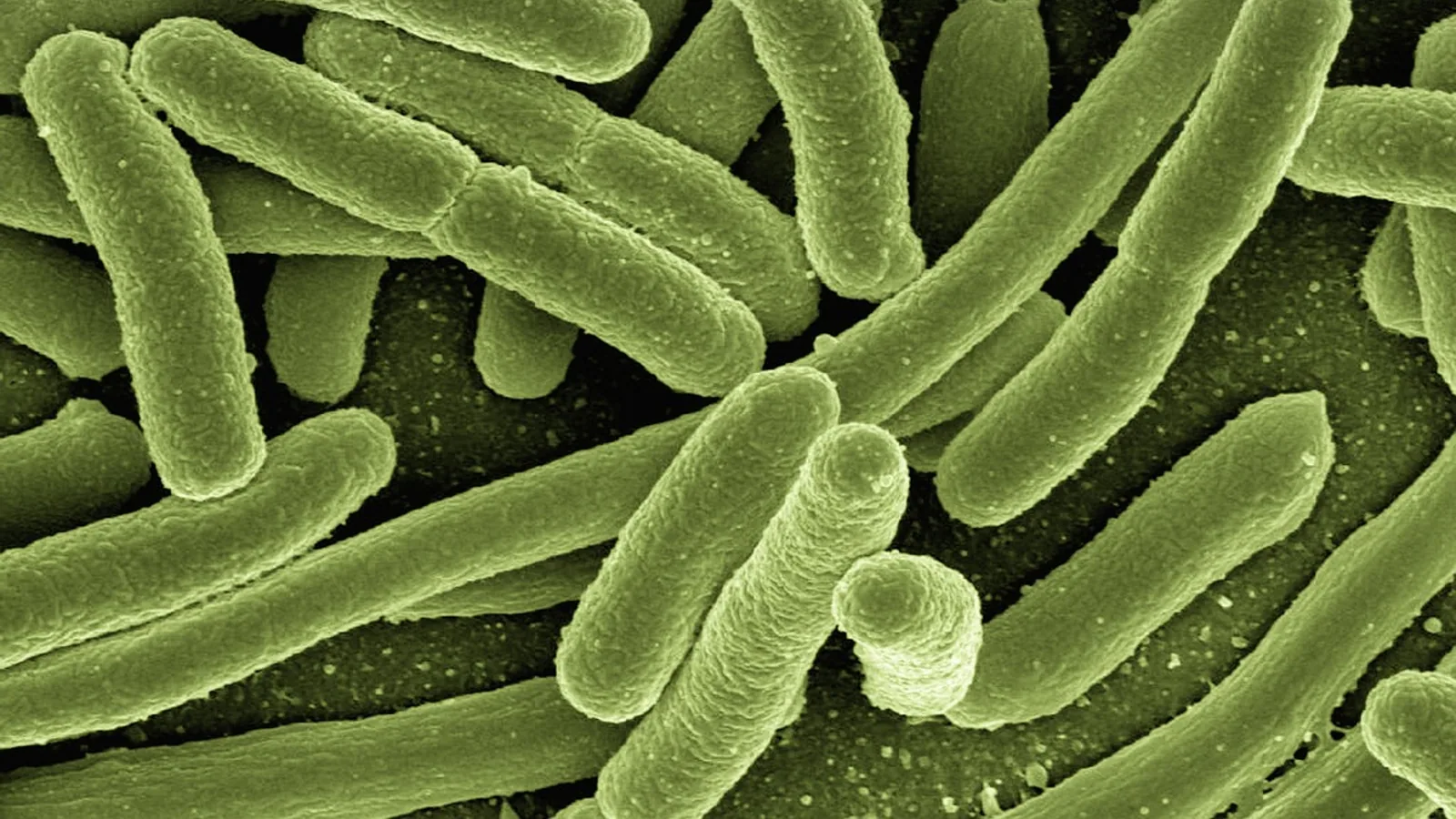
Asexual reproduction is a mode of reproduction in which a single parent produces offspring without the fusion of gametes, and the resulting offspring are genetically identical or nearly identical to that parent. In other words, asexual reproduction creates clones.
That single definition carries a lot of weight. Reproduction is the one biological process every lineage must get right, and the way an organism reproduces shapes its population growth, its genetic diversity, and its ability to survive environmental change. Sexual reproduction shuffles genes between two parents and produces offspring that differ from each other. Asexual reproduction does the opposite. It copies one genome, often quickly and in large numbers, and this trade-off between speed and variation is the central theme of the topic. Understanding the types of asexual reproduction, from bacterial binary fission to Komodo dragon parthenogenesis, explains why some organisms can colonize a new habitat in days while others depend on sex to stay ahead of disease and shifting conditions.
Asexual vs Sexual Reproduction: The Core Distinction
The dividing line between the two modes is gamete fusion. Sexual reproduction requires a sperm and an egg (or two compatible gametes) to combine, which mixes parental genomes and produces offspring with new combinations of genes. Asexual reproduction skips that step entirely. No fertilization occurs, no second parent contributes DNA, and the offspring inherit the parent's genome as a package.
This is why asexual offspring are described as clones. They are not always 100 percent identical at the sequence level, because mutations can accumulate, but they lack the deliberate reshuffling that defines sex. The evolutionary logic matters here. Sexual reproduction carries a "cost of males," since only half the population (females) produces offspring directly, yet sex dominates among animals. That paradox suggests the genetic and ecological benefits of sexual reproduction, such as acquiring advantageous mutations from different individuals and purging deleterious ones, usually outweigh the efficiency of cloning [1].
Asexual reproduction still wins in many contexts. A single organism can reproduce without finding a mate, and it can do so fast. The trade-off is low genetic diversity, which we return to later.
The Main Types of Asexual Reproduction


Biologists group asexual reproduction into a handful of recognizable mechanisms. Each one is defined by how the new individual forms and separates from the parent.
Binary Fission
Binary fission is the splitting of a single parent cell into two daughter cells of roughly equal size. It is the standard reproductive mode of bacteria and archaea, and it also occurs in some single-celled eukaryotes.
The process is straightforward. The cell replicates its DNA, the two copies move to opposite ends, and the cell divides down the middle. Each daughter receives a full copy of the genome. Under favorable conditions, bacteria such as Escherichia coli can complete a division cycle in about 20 minutes, which is why bacterial populations can explode from a few cells to millions in hours. The amoeba Amoeba proteus reproduces the same way, with the nucleus dividing first (mitosis) and the cytoplasm pinching in two.
Binary fission is sometimes confused with mitosis, but they are not the same thing. Mitosis is the nuclear division process used by eukaryotic cells. Binary fission is the whole-cell division event in prokaryotes, and it does not use a mitotic spindle.
Budding
Budding produces a new individual as a small outgrowth, or bud, on the parent's body. The bud grows, develops its own structures, and eventually detaches (or stays attached, forming a colony).
Yeast is the textbook example. Saccharomyces cerevisiae reproduces by budding, and the small round scars left on a mother cell after a bud departs are visible under a microscope. The freshwater cnidarian Hydra also buds. A new polyp grows from the parent's body wall, forms tentacles and a mouth, then breaks free as an independent animal.
Budding is not limited to microbes and simple animals. Some marine invertebrates, including certain jellyfish polyps, reproduce asexually by budding, and researchers studying the moon jellyfish Aurelia sp. measure asexual reproduction rates in polyps by counting exactly these new buds [2].
Fragmentation
Fragmentation occurs when a parent body breaks into two or more pieces, and each piece regenerates into a complete organism. This requires strong regenerative capacity.
Planarians (flatworms) are the classic laboratory example. Cut a planarian into pieces, and each fragment can regrow the missing parts, including a new head or tail, because the worm carries a population of stem cells called neoblasts. Sea stars (starfish) fragment in some species, and if a starfish loses an arm with part of the central disk attached, that arm can regenerate an entire animal. Some annelids (segmented worms) fragment as well, and the pieces regenerate.
Fragmentation has an unusual consequence that researchers are still working out. When a fragment becomes a new organism, it can carry parental cells, including tumor cells, directly into the offspring. Because the offspring develops from a fragment rather than from a zygote, it requires far fewer cell divisions, which changes the arithmetic of cancer risk across generations [3]. This is one of the few areas where a type of asexual reproduction intersects with disease biology.
Vegetative Propagation
Vegetative propagation is asexual reproduction in plants, where a new plant grows from a vegetative structure such as a runner, tuber, bulb, or rhizome. No seeds and no pollination are involved.
Strawberries send out horizontal stems called runners (stolons). A runner grows along the ground, roots at a node, and produces a new plantlet that is a clone of the parent. Potatoes reproduce through tubers, which are swollen underground stem structures. Each "eye" on a potato is a bud that can sprout into a new plant. Garlic and onions use bulbs, and ginger uses rhizomes.
Vegetative propagation is also a measurable trait in wild plants. In the amethyst meadow squill (Chouardia litardierei), researchers counted bulb number per genotype as a direct measure of asexual reproductive output, and genome-wide association analysis identified candidate genomic regions linked to these reproduction-related traits [4]. This shows that even in wild, non-model species, the capacity for asexual reproduction has a genetic basis that can be mapped.
Spore Formation
Spore formation is asexual reproduction through spores, which are single cells that can develop into a new individual without fusing with another cell. Many fungi, ferns, and some algae and protozoa use this route.
Fungi such as Aspergillus and Penicillium produce vast numbers of asexual spores (conidia) that disperse through the air. A single mold colony can release millions of spores, which is why mold spreads so quickly on food. Ferns produce spores in structures called sporangia on the underside of their fronds. The spores are released, disperse, and grow into a small gametophyte, which then produces gametes. This is a subtlety worth noting: ferns have both an asexual spore-dispersal phase and a sexual phase, so spore formation is not always the whole story of a plant's life cycle.
Spores are not the same as seeds. Seeds form after fertilization and contain an embryo with two parental genomes. Spores form without fertilization and carry one genome.
Parthenogenesis
Parthenogenesis is the development of an embryo from an unfertilized egg. The female produces offspring without any contribution from a male. It is the closest thing to asexual reproduction among animals that normally have separate sexes.
Aphids are the everyday example. Many aphid species reproduce by parthenogenesis for most of the growing season, with females producing live female offspring without mating, then switch to sexual reproduction when conditions change. The pineapple mealybug (Dysmicoccus brevipes) shows both modes in the same environment, and field censuses in Japan found that sexually reproducing individuals can coexist with and even outnumber asexual ones under habitat and resource competition [1].
Parthenogenesis also occurs in vertebrates, though rarely. Komodo dragons can produce offspring parthenogenetically when no male is available. Several shark species, including some hammerheads and blacktip sharks, have produced parthenogenetic young in captivity. Some parasitoid wasps reproduce this way too. The wasp Microctonus hyperodae, a biocontrol agent in New Zealand, reproduces asexually, and molecular work shows its parthenogenesis involves meiosis-related genes expressed in the ovaries, suggesting the machinery for sexual reproduction may still be present [5].
Parthenogenesis is not developmentally simple. An unfertilized egg lacks a paternal centrosome and a second set of chromosomes, and these two missing pieces create real constraints against the evolution of parthenogenesis. Breaking those constraints typically requires drastic changes in meiosis, often triggered by events such as hybridization or endosymbiont infection [6].
Summary Table: Types, Mechanism, and Examples
| Type | Mechanism | Example organisms |
|---|---|---|
| Binary fission | Parent cell divides into two equal daughter cells | Bacteria (E. coli), Amoeba proteus |
| Budding | New individual grows as an outgrowth and detaches | Yeast (Saccharomyces cerevisiae), Hydra, jellyfish polyps |
| Fragmentation | Body breaks into pieces, each regenerates | Planaria, sea stars, some annelids |
| Vegetative propagation | New plant grows from a runner, tuber, bulb, or rhizome | Strawberry (runners), potato (tubers), garlic (bulbs) |
| Spore formation | Single cells disperse and grow into new individuals | Fungi (Aspergillus), ferns |
| Parthenogenesis | Embryo develops from an unfertilized egg | Aphids, Komodo dragon, some sharks, parasitoid wasps |
How Asexual Reproduction Is Observed and Measured
Scientists do not just describe these types. They quantify them, and the methods differ by organism.
In microbes, binary fission is measured by growth curves. Researchers dilute a culture into fresh medium and track cell number over time, often by optical density or colony counts. A steep exponential phase reflects rapid fission.
In animals that bud or fragment, researchers count new individuals directly. The jellyfish polyp study is a good example: polyps of Aurelia sp. were exposed to different ultraviolet treatments, and the team measured asexual reproduction rates and how well polyps stayed attached to hard substrate. Isolated UVB allowed reproduction over short exposures of about 7 to 9 days, but long-term exposure limited both reproduction and attachment. Combined UVA and UVB was far worse, with polyps unable to feed or stay attached, no reproduction, and complete mortality within 20 days [2]. This kind of experiment links an environmental stressor to a specific reproductive output.
In plants, asexual output is often counted as the number of vegetative propagules per individual, such as bulbs per genotype, and then correlated with genetic markers to find associated loci [4].
In fungi, researchers use genetic markers to estimate how much of a population is clonal. A study of the pecan scab fungus Venturia effusa screened 335 isolates against 29 microsatellite markers and found 165 multilocus genotypes, a clonal fraction of 49.3 percent, meaning roughly half the sampled infections represented repeated clonal types [7]. That number tells you how much of the pathogen's spread depends on asexual copying versus sexual recombination.
In parthenogenetic animals, the work often moves to the genome. Sequencing the wasp M. hyperodae revealed that meiosis-specific genes are expressed in the ovaries, which is how researchers inferred that its parthenogenesis still involves a meiotic process [5].
Why the Trade-Off Matters
The central trade-off of asexual reproduction is speed versus variation.
Speed is real. Binary fission in bacteria, budding in yeast, and parthenogenesis in aphids can all produce large numbers of offspring quickly, and a single individual can start a new population without a mate. This is a major advantage for colonizing new habitats. When the mealybug D. brevipes invaded southwestern Japan in the 1930s on imported pineapple plants, both sexual and asexual lineages established, and the two modes coexisted under competition [1].
Variation is the cost. Because asexual offspring are clones, a population built by cloning has little genetic diversity. If the environment changes, or if a pathogen evolves to exploit a common genotype, a genetically uniform population can be wiped out. This is the standard explanation for why sexual reproduction persists despite its inefficiency: sex generates the variation that lets populations adapt [1]. Asexual lineages can dominate in stable or newly colonized environments, but they carry higher risk when conditions shift.
There is also a subtler cost. Asexual reproduction can transmit problems directly. In fragmentation, parental cells, including potentially cancerous ones, can pass into offspring, and the reduced number of cell divisions in fragment-based development changes cancer risk across generations in ways that researchers are still modeling [3].
Comparative and Applied Relevance
Asexual reproduction is not just a textbook category. It shows up in medicine, agriculture, and conservation.
In medicine, bacterial binary fission is the reason infections can escalate so fast and the reason antibiotic resistance spreads quickly through clonal expansion. In agriculture, vegetative propagation lets growers produce genetically uniform crops, which is efficient but risky if a single disease targets that genotype. The pecan scab study matters here because clonal fractions of a fungal pathogen tell growers how much of the disease pressure comes from asexual copying versus sexual recombination, which affects how resistance might emerge [7].
In conservation and symbiosis research, asexual transmission can carry more than genes. Anemones of the genus Exaiptasia can pass symbiotic algae (Symbiodinium) to their offspring through asexual reproduction by pedal laceration, a form of fragmentation. Researchers confirmed that bleached anemones could acquire a new algal type and then transmit it to the next generation asexually, and they verified stability across several generations using microscopy and genetic analysis [8]. This matters for understanding how coral reef symbioses are maintained.
In biocontrol, the reproductive mode of a released agent can determine whether a program succeeds or fails. The wasp M. hyperodae was part of one of the most successful classical biocontrol programs worldwide before it began to decline, and its asexual reproduction mode influenced that decline [5].
Common Mistakes and Limitations
A few errors show up again and again when students and readers work through this topic.
The first is treating "asexual" and "sexual" as a clean binary for every organism. Many species do both. Aphids switch between parthenogenesis and sex. Ferns alternate between spore-based asexual dispersal and a sexual gametophyte stage. Mealybugs can have sexual and asexual lineages living side by side [1].
The second is assuming asexual offspring are always perfectly identical. They are clones in the sense that they inherit one parent's genome without recombination, but mutations still occur, and some asexual processes involve meiosis-like events. The wasp M. hyperodae expresses meiosis-specific genes during parthenogenesis, so its "asexual" reproduction is not a simple copy [5].
The third is confusing spores with seeds, or binary fission with mitosis. Spores are produced without fertilization. Seeds require fertilization. Binary fission is a whole-cell division in prokaryotes. Mitosis is nuclear division in eukaryotes.
The fourth is overstating the advantages of asexual reproduction. It is fast and mate-independent, but it does not automatically win. In the mealybug system, sexual lineages coexisted with and sometimes dominated asexual ones under competition [1]. And parthenogenesis faces genuine developmental barriers, including the missing paternal centrosome and the missing second chromosome set, which is why it is rare and why its evolution usually requires unusual triggers [6].
Finally, individual organisms and specific cases vary. If a question involves a particular species, a particular crop, or a particular infection, the general principles here are a starting point, not a substitute for expert assessment.
Quick Review
- Asexual reproduction produces offspring without gamete fusion, and those offspring are clones of the parent.
- Binary fission splits one cell into two, and it is how bacteria and amoebas reproduce.
- Budding grows a new individual as an outgrowth, seen in yeast and Hydra.
- Fragmentation breaks a body into pieces that regenerate, seen in planaria and sea stars.
- Vegetative propagation grows new plants from runners, tubers, bulbs, or rhizomes, seen in strawberries and potatoes.
- Spore formation releases single cells that grow into new individuals, seen in fungi and ferns.
- Parthenogenesis develops an embryo from an unfertilized egg, seen in aphids, Komodo dragons, and some sharks.
- The core trade-off is rapid population growth against low genetic diversity.
Frequently Asked Questions
What is asexual reproduction in simple terms?
Asexual reproduction is reproduction by one parent without gamete fusion, producing offspring that are genetically identical or nearly identical to that parent. No sperm, egg, or fertilization is involved.
What are the main types of asexual reproduction?
The main types are binary fission, budding, fragmentation, vegetative propagation, spore formation, and parthenogenesis. Each is defined by how the new individual forms and separates from the parent.
Which organisms reproduce asexually?
Bacteria and amoebas use binary fission, yeast and Hydra use budding, planaria and sea stars use fragmentation, strawberries and potatoes use vegetative propagation, fungi and ferns use spores, and aphids, Komodo dragons, and some sharks use parthenogenesis.
Is parthenogenesis the same as asexual reproduction?
Parthenogenesis is a type of asexual reproduction in which an embryo develops from an unfertilized egg. It is one of several asexual mechanisms, not a separate category.
Why is asexual reproduction faster than sexual reproduction?
Asexual reproduction does not require finding a mate or fusing gametes, so a single organism can produce offspring immediately. This allows rapid population growth, as seen in bacterial binary fission and aphid parthenogenesis.
What is the main disadvantage of asexual reproduction?
The main disadvantage is low genetic diversity. Because offspring are clones, a population has little variation to draw on if the environment changes or a disease emerges.
Related Articles
- Epigenetic Modification: Types, Mechanisms, and Examples
- Epigenetic Factors: Types, Mechanisms, and Examples
- What is a Stimulus in Biology? Definition, Types & Response Examples
- Competition in Biology: Definition, Types, and Examples
- What Is Research Misconduct? Definitions, Examples, and How to Recognize It
- Designing Effective Qualitative Surveys: Question Types and Examples
- Molecule Definition: Types and Examples
- Covalent Bonds: Definition, Types, and Examples
- Limiting Factor: Definition, Types, and Examples
Sources
- Sexual versus Asexual Reproduction: Distinct Outcomes in Relative Abundance of Parthenogenetic Mealybugs following Recent Colonization.
- Hanging under the ledge: synergistic consequences of UVA and UVB radiation on scyphozoan polyp reproduction and health.
- Vertical Cancer Transmission via Asexual Fragmentation and Associated Cancer Prevalence.
- Genome-wide association study (GWAS) provides insights into the genomic basis of reproduction-related traits in Chouardia litardierei (Asparagaceae).
- The venom composition and parthenogenesis mechanism of the parasitoid wasp Microctonus hyperodae, a declining biocontrol agent.
- Parthenogenesis and developmental constraints.
- Fine-Scale Population Genetic Structure and Within-Tree Distribution of Mating Types of Venturia effusa, Cause of Pecan Scab in the United States.
- Transmission of a heterologous clade C Symbiodinium in a model anemone infection system via asexual reproduction.