Mycobacterium tuberculosis: Biology, Transmission and TB Disease
By Dr. Zubair Khalid, DVM, MS, PhD ·

Mycobacterium tuberculosis is a slow-growing, acid-fast bacterium that causes tuberculosis (TB) (Mycobacterium tuberculosis; About Tuberculosis). The bacteria usually attack the lungs but can attack any part of the body, including the kidneys, brain and spine (About Tuberculosis; Tuberculosis).
TB spreads through the air when a person with infectious TB disease coughs, sneezes or spits, and a nearby person breathes in the bacteria (Tuberculosis; Tuberculosis). The bacterium has an unusual waxy cell wall rich in mycolic acid, which keeps it from taking up Gram stain and helps it survive drying for weeks (Mycobacterium tuberculosis). It is highly aerobic, needs oxygen to grow, and divides only about once every 18 to 24 hours, far slower than most bacteria studied in the lab. About a quarter of the world's population is estimated to carry TB infection, and roughly 5-10% of those infected eventually develop TB disease (Tuberculosis).
Key Points
- Robert Koch discovered the organism in 1882, and it is still called Koch's bacillus; it belongs to the family Mycobacteriaceae (Mycobacterium tuberculosis; Tuberculosis).
- The mycolic acid in the cell wall blocks Gram staining, so acid-fast stains such as Ziehl-Neelsen, or fluorescent stains such as auramine, are used to see the bacteria under a microscope (Mycobacterium tuberculosis).
- Growth is remarkably slow: a doubling time of 18 to 24 hours, compared with roughly 20 minutes for Escherichia coli; laboratories use media such as Middlebrook 7H9 or egg-based solid media.
- The organism is nonmotile, strictly aerobic, and can survive in a dry state for weeks; the lipid-rich wall is a key virulence factor.
- In tissue, infection is marked by caseating granulomas containing Langhans giant cells with a horseshoe pattern of nuclei.
- People with TB infection usually do not feel sick and are not contagious; TB disease occurs when bacteria multiply and affect organs, and it can be fatal without antibiotic treatment (Tuberculosis).
At a Glance
| Feature | Key facts |
|---|---|
| Pathogen | Mycobacterium tuberculosis, an acid-fast, rod-shaped bacterium (Mycobacterium tuberculosis) |
| Spread | Airborne droplet nuclei from a person with active pulmonary TB (About Tuberculosis) |
| Outcomes | Latent TB infection or active TB disease (Tuberculosis (TB): Causes, Symptoms, Treatment & ...) |
| Symptoms | Persistent cough, fever, night sweats, weight loss, fatigue |
| Treatment | Antibiotics; TB disease can be fatal without treatment (Tuberculosis) |
| Prevention | Screening tests for infection, infection control, and BCG vaccine in some countries |
Mycobacterium tuberculosis infects roughly a quarter of the world's population, yet most infected people never feel sick and never pass the bacterium on (Tuberculosis). The small share who progress to TB disease carry the symptoms, the lung damage and the transmission risk (Tuberculosis (TB): Causes, Symptoms, Treatment & ...).
What Is Mycobacterium tuberculosis?
Mycobacterium tuberculosis is a rod-shaped, acid-fast bacterium and the causative agent of tuberculosis (Mycobacterium tuberculosis). Robert Koch first described it in 1882, which is why it is still called Koch's bacillus. The organism is strictly aerobic and needs high oxygen levels to multiply, so the lungs are its principal target, although infection can establish in almost any organ (Mycobacterium tuberculosis; About Tuberculosis).
The Organism in Brief
- Shape: a small, curved rod, often stuck together side by side in parallel bundles, an appearance called cording (Mycobacterium tuberculosis)
- Staining: acid-fast; the cell wall does not take up Gram stain in the usual way
- Motility: nonmotile
- Oxygen demand: highly aerobic, growth favored by high oxygen tension
- Division time: roughly 18 to 24 hours per generation
- Survival outside the host: withstands weak disinfectants and survives in a dry state for weeks
A Waxy Coat That Changes Everything
The cell surface is unusually rich in lipids, chiefly mycolic acid and the cord factor glycolipid (Mycobacterium tuberculosis). This waxy layer blocks ordinary stains, resists drying, and is considered a key virulence factor. It also explains a practical point for anyone working in a laboratory: Gram staining gives unreliable results with this organism, so acid-fast stains such as Ziehl-Neelsen, or fluorescent stains such as auramine, are used to see it under a microscope.
Slow Growth, Small Numbers
The bacterium divides once every 18 to 24 hours, while Escherichia coli divides roughly every 20 minutes (Mycobacterium tuberculosis). Over the same span, the tubercle bacillus produces a fraction of the cells a fast-growing organism would. This slow tempo shapes everything about TB: how cultures behave, how long treatment must run, and why the immune system can hold the infection in check for years.
What Infection Looks Like in Tissue
In tissue, M. tuberculosis is associated with caseating granulomas that contain Langhans giant cells, recognized by a horseshoe pattern of nuclei (Mycobacterium tuberculosis). Granulomas are organized clusters of immune cells that the host builds in response to persistent infection; the bacterium adapts to survive inside them and can cause TB to flare when host immunity weakens (Mycobacterium tuberculosis: An Adaptable Pathogen ...). That balance between containment and reactivation is the basis of latent TB infection, covered later in this article.
Taxonomy and Microbiology
Mycobacterium tuberculosis sits in the family Mycobacteriaceae, the genus Mycobacterium, and the species M. tuberculosis (Mycobacterium tuberculosis). Its closest relatives share the same waxy wall and slow growth, which is why they are handled in similar ways in the laboratory.
| Rank | Name |
|---|---|
| Family | Mycobacteriaceae (Mycobacterium tuberculosis) |
| Genus | Mycobacterium |
| Species | Mycobacterium tuberculosis |
| Common name | Koch's bacillus, abbreviated M. tb |
Acid-Fastness and the Cell Wall
The defining laboratory property is acid-fastness, which comes from mycolic acids in the cell wall (Mycobacterium tuberculosis). Because that lipid layer does not absorb Gram stain, cells can look weakly Gram-positive or fail to stain at all; acid-fast stains and fluorescent stains are used instead. The same lipids make the organism resistant to desiccation and give the cells their tendency to lie together in cords.
Oxygen, Growth Rate and Culture Media
The organism is an obligate aerobe, requiring oxygen to grow, and it is nonmotile (Mycobacterium tuberculosis). Growth is far slower than in routine bacteriology: one division per day or so, compared with minutes for common gut bacteria. Standard media include liquid Middlebrook 7H9 or 7H12 broths and egg-based solid media. Clinical laboratories also use solid egg-based slopes for primary isolation, but the underlying constraint is the same: colonies appear only after long incubation, so a culture result takes weeks, not hours.
Growth Math
| Organism | Doubling time | Doublings to reach about 1,000 cells | Time required |
|---|---|---|---|
| Escherichia coli | about 20 minutes (Mycobacterium tuberculosis) | 10 | about 3 hours |
| M. tuberculosis | 18 to 24 hours | 10 | 8 to 10 days |
The arithmetic is simple: each doubling adds one more cell, so ten doublings from a single bacterium give roughly one thousand cells. For M. tuberculosis at one doubling per day, that is more than a week of steady growth before a small population exists, and a visible colony on solid medium takes longer still.
Laboratory Handling
Culture work with M. tuberculosis is performed in reference laboratories under biosafety level 3 containment, with directional airflow controls, sealed centrifuges and trained staff, because culturing the organism means handling concentrated viable aerosols of an airborne pathogen (Mycobacterium tuberculosis). Acid-fast microscopy and molecular testing are used for faster answers, while culture remains the reference method for confirming growth and for drug susceptibility testing.
Transmission and Exposure Risk
Tuberculosis spreads through the air. When a person with active pulmonary TB coughs, sneezes or spits, the bacteria travel in small droplets that another person nearby can breathe in (Tuberculosis; About Tuberculosis). The lungs are the usual entry point, but the bacterium can later reach other organs, including the kidneys, brain, spine and skin (Tuberculosis; About Tuberculosis).

What Spreads TB, and What Does Not
| Route | Spreads TB? | Notes |
|---|---|---|
| Inhaling droplets from a coughing person | Yes | Main route of transmission (Tuberculosis) |
| Touching, kissing, sharing food or drinks, sharing surfaces | No | Casual contact of this kind does not transmit TB (About Tuberculosis) |
| Being near someone with latent TB infection | No | People with latent infection are not contagious (Tuberculosis (TB): Causes, Symptoms, Treatment & ...; Tuberculosis) |
| Living with someone who has active pulmonary TB | Yes, if exposure is close and sustained | Risk depends on duration and setting |
Why Duration and Setting Matter
Risk rises with close, prolonged exposure, especially indoors (About Tuberculosis). A brief encounter in a well-ventilated space carries far less risk than days of shared air in a crowded, poorly ventilated room. Crowding, poor ventilation and a weakened immune system all push exposure toward infection and infection toward disease (Tuberculosis). Babies and young children are at higher risk of developing disease once infected.
A simple way to picture it: two people in the same office for an hour share a small volume of room air; a household contact shares that air overnight, every night, for weeks. The dose of inhaled bacteria in the second setting is what matters, which is why contact tracing and household screening are standard practice.
Latent Infection and Transmission
Most people who inhale the bacterium are not immediately ill. Roughly a quarter of the world's population is estimated to be infected, and in general these people do not feel sick and cannot pass TB on (Tuberculosis). Only about 5 to 10 percent of infected people eventually develop TB disease. Transmission risk comes from the group with active, untreated lung disease, whose coughing releases bacteria over months, sometimes before anyone realizes the diagnosis.
Drug-Resistant TB Spreads the Same Way
Resistant forms circulate by the same airborne route (Tuberculosis). Someone with untreated multidrug-resistant pulmonary TB can infect others with a strain that will not respond to the usual first-line drugs, which is why prompt diagnosis of resistance is part of transmission control.
Pathogenesis and Immune Response
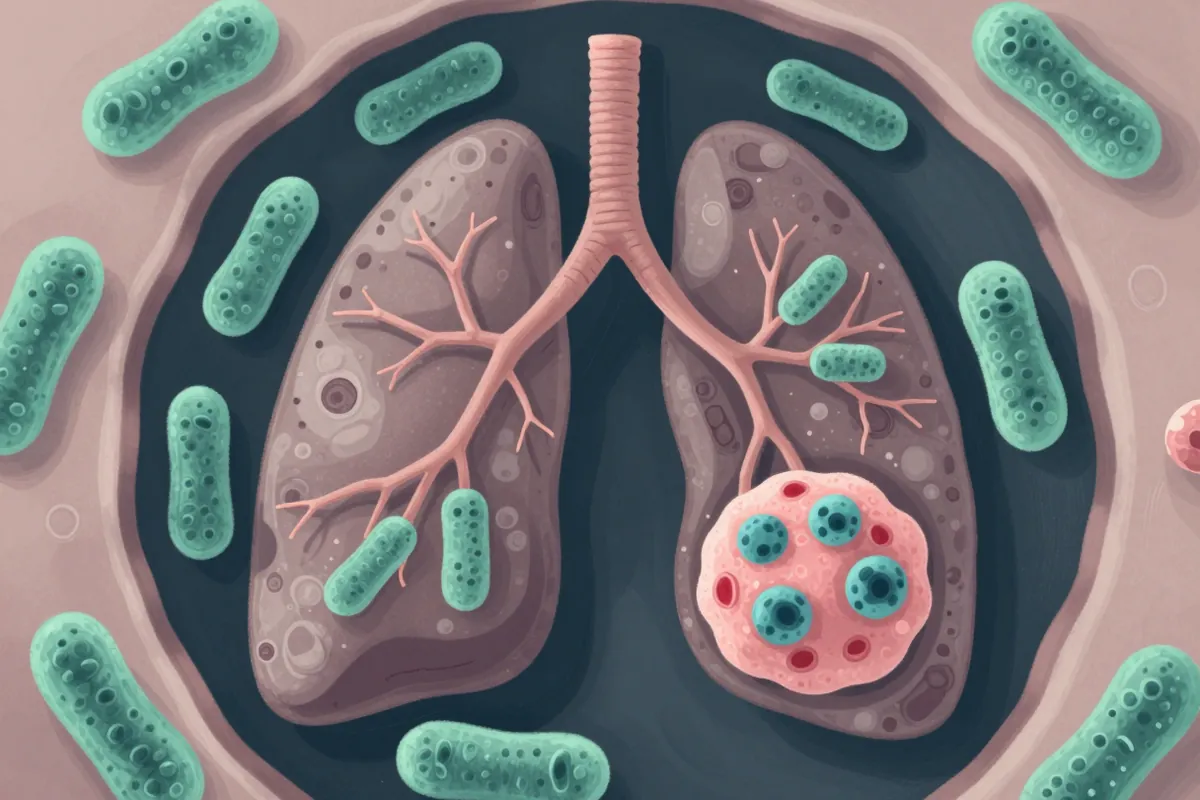
Tuberculosis develops in stages, from the deposition of inhaled bacilli in the alveoli to a contained granuloma that can later break down and release bacteria. Each stage reflects a balance between bacterial survival tactics and host immunity.
Entry Into the Alveoli
When a person with pulmonary TB coughs, sneezes or speaks, droplet nuclei a few micrometers across carry bacilli deep into the respiratory tract, past the mucociliary escalator, to the alveoli. There, alveolar macrophages engulf the bacteria (Mycobacterium tuberculosis: An Adaptable Pathogen ...). M. tuberculosis is a strictly aerobic organism that requires high oxygen levels, which helps explain why well-ventilated regions of the lung are favored sites for early infection, and why cavities support heavy bacterial growth later (Mycobacterium tuberculosis).
Survival Inside Macrophages
Macrophages normally kill bacteria by acidifying the phagosome, fusing it with lysosomes and generating reactive oxygen and nitrogen species. M. tuberculosis interferes with this process and can survive inside macrophages, evading killing (Mycobacterium tuberculosis: An Adaptable Pathogen ...). Its lipid-rich cell wall, with mycolic acid and cord factor, resists desiccation and is a key virulence factor (Mycobacterium tuberculosis). Growth is slow, with division roughly once every 18 to 24 hours, so infection unfolds over weeks and months.
Granuloma Formation
The inflammatory response recruits lymphocytes and other immune cells to the site, and these organize into granulomas (Mycobacterium Tuberculosis). A granuloma has a core of infected macrophages and Langhans giant cells with their horseshoe pattern of nuclei, surrounded by a cuff of lymphocytes (Mycobacterium tuberculosis). In tissue, the centers often show caseous necrosis. The structure walls off bacilli from the rest of the lung but does not eliminate them.
| Stage | Main events | Outcome |
|---|---|---|
| Inhalation | Droplet nuclei reach alveoli; macrophages engulf bacilli (Mycobacterium tuberculosis: An Adaptable Pathogen ...) | Infection established |
| Early inflammation | Bacilli survive in macrophages; lymphocytes recruited (Mycobacterium tuberculosis: An Adaptable Pathogen ...; Mycobacterium Tuberculosis) | Granuloma begins to form |
| Containment | Caseating granuloma with giant cells and lymphocyte cuff (Mycobacterium tuberculosis) | Bacteria restrained, not eradicated |
| Cavitation | Necrotic center erodes into an airway (Mycobacterium Tuberculosis) | High bacterial load, transmission possible |
| Reactivation | Immune control weakens (About Tuberculosis) | Active disease |
Containment and Collateral Damage
Granulomas contain infection but may also damage lung tissue (Mycobacterium tuberculosis: An Adaptable Pathogen ...). Caseation destroys parenchyma, and when a necrotic center connects with a bronchus, the resulting cavity is rich in oxygen and nutrients. Cavitation in the lungs can aid transmission and bacterial growth (Mycobacterium Tuberculosis): the cavity holds large numbers of bacilli that can be coughed out, and its oxygen supply suits the organism's aerobic physiology (Mycobacterium tuberculosis). This dual role explains why a host response that protects the body can also create the conditions for spread.
When Immune Control Fails
In immunocompetent hosts the infection is usually restrained, but bacteria within granulomas can cause recrudescence of TB when host immunity is compromised (Mycobacterium tuberculosis: An Adaptable Pathogen ...). Immunosuppression can allow latent bacteria to reactivate (About Tuberculosis). Because control depends on cell-mediated immunity, conditions that impair T cell function raise the risk that a contained infection becomes progressive disease.
Latent TB Infection and Active TB Disease
Infection with M. tuberculosis is not the same as TB disease. Most infected people never become ill, while a minority progress to symptomatic, transmissible disease, sometimes years after exposure.
Latent TB Infection
In latent TB, the immune system holds the bacteria in check. Infection is present without symptoms (About Tuberculosis). People with latent infection do not feel sick and are not contagious (Tuberculosis), and the bacteria are present in the body but not active (Tuberculosis (TB): Causes, Symptoms, Treatment & ...). Some people live their whole lives without knowing they carry it. WHO estimates that about a quarter of the global population has been infected with TB bacteria.
Active TB Disease
Active TB occurs when bacteria multiply in the body and affect different organs (Tuberculosis). It is symptomatic and often contagious (About Tuberculosis), and it can be fatal without treatment (Tuberculosis (TB): Causes, Symptoms, Treatment & ...). Untreated pulmonary disease is the form that spreads to others through the air when a person coughs, sneezes or spits.
| Feature | Latent TB infection | Active TB disease |
|---|---|---|
| Bacteria | Present, held in check (About Tuberculosis) | Multiplying, damaging tissue (Tuberculosis) |
| Symptoms | None (Tuberculosis (TB): Causes, Symptoms, Treatment & ...) | Cough, fever, weight loss, night sweats (About Tuberculosis; Tuberculosis (TB): Causes, Symptoms, Treatment & ...) |
| Contagious | No | Often yes until treated |
| Tuberculin skin test or IGRA | Positive | Positive |
| Sputum testing | Negative for bacilli | Usually positive in pulmonary disease |
| Management | Preventive treatment for selected groups | Multidrug treatment and follow-up |
Reactivation
Reactivation can occur years after the initial infection (Mycobacterium tuberculosis: An Adaptable Pathogen ...). The likelihood rises when immunity weakens (Tuberculosis (TB): Causes, Symptoms, Treatment & ...). WHO estimates that about 5 to 10 percent of infected people eventually develop TB disease, and that babies and children are at higher risk of disease if they are infected (Tuberculosis). This is why a positive skin test or IGRA in a young child or an immunocompromised adult carries more weight than the same result in a healthy adult.
Why the Distinction Matters
Screening and treatment of latent TB reduce progression to active disease (Tuberculosis). Tests such as the tuberculin skin test, interferon gamma release assay or newer antigen-based skin tests identify people with TB infection, and preventive treatment is then offered to those at highest risk. Active TB requires multidrug treatment and public health follow-up (About Tuberculosis), because untreated cases continue to transmit infection and because a long regimen must be completed to cure the patient and protect drug activity. Contact tracing and case finding aim to detect active cases before further spread occurs.
Symptoms and Clinical Forms
TB can present as a slowly progressive lung illness, as a systemic illness, or as disease in almost any organ. The pattern of symptoms depends on which part of the body is affected (Tuberculosis).
Pulmonary TB
Pulmonary disease is the most common form. Typical features are persistent cough, sputum production, chest pain and hemoptysis (About Tuberculosis). Cough may be dry at first and become productive as a cavity drains into an airway. Hemoptysis ranges from streaks in sputum to larger volumes.
Systemic Symptoms
Fever, night sweats, weight loss and fatigue are common (Tuberculosis (TB): Causes, Symptoms, Treatment & ...). These features reflect the inflammatory response rather than the site of infection, and they may dominate the picture in disseminated or extrapulmonary disease. Patients often describe weeks of declining energy and appetite before seeking care.
Extrapulmonary TB
Extrapulmonary TB can affect lymph nodes, bones, kidneys and meninges (Mycobacterium tuberculosis). The site determines the clinical picture:
| Site | Typical features |
|---|---|
| Lymph nodes | Painless, slowly enlarging nodes, often in the neck |
| Pleura | Chest pain, pleural effusion |
| Spine and bones | Back pain, vertebral collapse, local swelling |
| Kidneys and urinary tract | Dysuria, blood in urine, recurrent urinary symptoms |
| Meninges | Headache, neck stiffness, vomiting, confusion |
| Pericardium | Chest pain, effusion, constrictive disease later |
Mild and Delayed Symptoms
Symptoms may be mild and delayed in early disease (About Tuberculosis). WHO notes that TB symptoms can be mild for many months, so it is easy to spread TB to others without knowing it (Tuberculosis). A cough that lingers for weeks, unexplained weight loss, or night sweats in a person from a high-incidence country or with a known contact should prompt testing.
Risk of Severe Disease
HIV and other forms of immunosuppression increase the risk of severe disease (Tuberculosis). HIV-associated TB, pediatric TB and drug-resistant TB are all harder to diagnose, and WHO recommends specific sample types, tests and strategies to detect these forms early and accurately. Malnutrition, diabetes and silicosis are also recognized risk factors for progression, so clinicians assess them when a patient presents with compatible symptoms.
Diagnosis and Testing
No single test answers every question. Diagnosis combines direct detection of the organism, imaging, and evidence of immune sensitization, with drug susceptibility testing to guide treatment (Tuberculosis).
Sputum Smear Microscopy and Culture
Sputum smear microscopy and culture confirm pulmonary TB (About Tuberculosis). Because the cell wall holds mycolic acid and resists Gram staining, acid-fast stains such as Ziehl-Neelsen, or fluorescent stains such as auramine, are used to identify the bacilli (Mycobacterium tuberculosis). Culture grows the organism and allows full characterization, but it is slow: M. tuberculosis divides roughly once a day, so cultures may take weeks.
Nucleic Acid Amplification Tests
Nucleic acid amplification tests detect M. tuberculosis DNA rapidly (Tuberculosis). WHO recommends rapid diagnostic tests as the initial test in all people with signs and symptoms of TB, and these can provide results to guide treatment within 48 hours of sample collection. Molecular testing also detects some resistance mutations, which shortens the time to an effective regimen.
Chest Imaging
Chest X-ray shows cavities, infiltrates or pleural changes (Mycobacterium Tuberculosis). Imaging is fast and widely available, but the findings overlap with pneumonia, fungal disease and malignancy, so a radiograph supports rather than confirms the diagnosis.
Immune-Based Tests
The tuberculin skin test and interferon gamma release assays detect immune sensitization (About Tuberculosis). They identify people with TB infection (Tuberculosis), which makes them valuable for screening contacts and planning preventive treatment. They cannot separate latent infection from active disease on their own.
| Test | What it detects | Main strength | Main limitation |
|---|---|---|---|
| Sputum smear | Acid-fast bacilli (Mycobacterium tuberculosis) | Rapid and inexpensive | Low sensitivity, not species-specific |
| Culture | Viable M. tuberculosis (About Tuberculosis) | Confirms diagnosis, permits susceptibility testing | Weeks to grow |
| NAAT | Bacterial DNA (Tuberculosis) | Results within 48 hours | Depends on sample quality |
| Chest X-ray | Cavities, infiltrates, effusions (Mycobacterium Tuberculosis) | Fast, shows extent of disease | Not specific |
| TST or IGRA | Immune sensitization | Detects infection | Cannot distinguish latent from active |
Drug Susceptibility Testing
Drug susceptibility testing guides effective therapy (Tuberculosis). Results steer the choice of regimen, which matters most when resistance is suspected because of prior treatment, contact with a resistant case, or a slow response to standard drugs.
Sputum Collection Quality
Sputum collection quality affects diagnostic accuracy (Tuberculosis (TB): Causes, Symptoms, Treatment & ...). A specimen that is mostly saliva may test negative even in active disease, so adequate volume from a deep cough, and proper handling during transport, are part of the diagnostic pathway rather than an afterthought.
Treatment and Drug Resistance
TB treatment is long because Mycobacterium tuberculosis grows slowly and can persist in host tissue (Mycobacterium tuberculosis). Standard therapy uses a combination of antibiotics taken for many months (Tuberculosis). The regimen is designed to kill actively dividing bacteria and to reach populations that survive in granulomas and other sites. Treatment is not a single prescription that ends when symptoms improve; the full course must be completed (About Tuberculosis).
Core Principles
| Principle | Practical meaning |
|---|---|
| Multi-drug therapy | Several antibiotics are used together for months (Tuberculosis). |
| Full completion | The entire regimen is needed to lower relapse risk and prevent resistance (About Tuberculosis). |
| No single drug for active TB | One drug alone is not appropriate for active TB disease (Mycobacterium Tuberculosis). |
| Adherence support | Directly observed therapy can help patients complete treatment. |
| Safety monitoring | Side effects and drug interactions need review during treatment (Tuberculosis (TB): Causes, Symptoms, Treatment & ...). |
Why Multiple Drugs Matter
M. tuberculosis can develop resistance when treatment is incomplete or when one drug is used alone. For active TB, single-drug therapy is not used (Mycobacterium Tuberculosis). A combination regimen attacks the bacterial population from several angles and lowers the chance that resistant mutants survive (Tuberculosis). When patients stop treatment early, surviving bacteria can regrow; this raises the risk of relapse and resistance (About Tuberculosis). The same principle applies when doses are missed repeatedly or when drug supply is interrupted.
Directly observed therapy places a trained observer or health worker in contact with the patient at each dose, which can support adherence (About Tuberculosis). It does not replace patient education or clinical follow-up. Adherence support should be practical: transport help, reminder systems, food support, and stable drug supply can all matter.
Drug-Resistant TB
Drug-resistant TB needs specialized regimens that are longer and more complex than standard therapy (Tuberculosis). Resistance can involve first-line drugs, and multidrug-resistant TB is harder to treat. Diagnosis of drug-resistant forms can be complex, especially in people with HIV and in children. Treatment decisions should be based on susceptibility testing and specialist guidance. A patient with resistant TB may need second-line drugs, longer monitoring, and stronger adherence support. Because regimens are longer, the risk of cumulative side effects and drug interactions rises.
Monitoring and Safety
Anti-TB drugs can cause side effects and can interact with other medicines (Tuberculosis (TB): Causes, Symptoms, Treatment & ...). Monitoring includes clinical review, laboratory tests when indicated, and attention to new symptoms. Patients should report vision changes, nausea, rash, jaundice, or other new problems. Drug interactions matter for people taking HIV medicines, diabetes medicines, anticoagulants, and other chronic therapies. Pregnancy, liver disease, kidney disease, and alcohol use can change the risk profile. The exact monitoring schedule depends on the drugs used and the patient's health.
Key Rule
The key rule is simple: active TB is treated with a complete, multi-drug regimen, and single-drug therapy is not used (Mycobacterium Tuberculosis; Tuberculosis). Completion protects the patient and the community (About Tuberculosis). Drug-resistant TB requires a tailored plan and longer support (Tuberculosis).
Prevention and Vaccines
Prevention works at three levels: finding and treating infectious cases, reducing exposure, and protecting people at high risk. Early diagnosis and treatment reduce transmission because treated patients become less infectious (About Tuberculosis). TB spreads through the air when a person with active pulmonary TB coughs, sneezes, or spits (Tuberculosis). Control therefore focuses on air, distance, time, and source treatment.
Reduce Transmission at the Source
The first step is to identify active TB and start effective treatment (About Tuberculosis). Symptoms can be mild for months, so TB can spread before diagnosis (Tuberculosis). Sputum testing and rapid molecular tests help confirm active TB and detect resistance. Once treatment begins, patients should follow isolation advice until public health or clinical staff say they are no longer infectious.
Protect Contacts and Health Care Workers
Ventilation, masking, and isolation protect contacts (Tuberculosis). In homes, opening windows and using well-ventilated spaces lowers the concentration of infectious droplets. In health facilities, triage, separate waiting areas, and airborne infection isolation rooms reduce exposure. Health care workers need fit-tested respirators, training, and screening. In laboratories, infection control is essential because M. tuberculosis can survive in a dry state for weeks and can withstand weak disinfectants (Mycobacterium tuberculosis). Work with the organism should follow biosafety procedures, and staff should be trained in specimen handling and spill management.
Contact tracing and latent TB treatment prevent outbreaks (Tuberculosis). Public health teams identify people who shared air with an infectious patient, test them for TB infection, and offer treatment for latent TB when indicated. This step stops progression to active disease and reduces future transmission. Contact tracing is especially important for children, immunocompromised people, and crowded settings.
BCG Vaccine: What It Does and Does Not Do
BCG protects infants against severe TB (Tuberculosis). In countries where BCG is used, it is given to babies or small children to prevent TB. The vaccine prevents deaths from TB and protects children from serious forms of TB. BCG does not fully prevent adult pulmonary TB. It is not a substitute for diagnosis, treatment, ventilation, or contact tracing. Vaccinated people can still become infected and can still develop active TB. A history of BCG vaccination can also affect interpretation of tuberculin skin tests, so clinicians should record vaccination status.
Practical Prevention Checklist
| Measure | Main effect |
|---|---|
| Early diagnosis and treatment | Shortens infectious period (About Tuberculosis) |
| Ventilation, masking, isolation | Reduces exposure to infectious aerosols (Tuberculosis) |
| Contact tracing and latent TB treatment | Prevents progression and outbreaks |
| BCG for infants | Protects against severe childhood TB |
| Laboratory infection control | Prevents occupational exposure (Mycobacterium tuberculosis) |
No single measure is enough. A combined program of source treatment, airborne precautions, contact management, and vaccination gives the best protection.
Common Misconceptions About TB
TB has been known for centuries, and false beliefs about its cause and spread persist. Many are understandable: TB symptoms can look like other illnesses, and latent TB has no signs. Clear information helps people seek testing and complete treatment.
Misconception 1: TB spreads by handshakes, food, or surfaces
TB spreads through the air when a person with active pulmonary TB coughs, sneezes, or spits (Tuberculosis). It does not spread by handshakes, shared food, or touching surfaces (About Tuberculosis). This does not mean hand hygiene is useless; it means that hand hygiene is not the main TB control measure. Ventilation, masking, and source treatment matter more for airborne transmission.
Misconception 2: Latent TB is active disease and is contagious
Latent TB is not active disease and is not contagious (Tuberculosis (TB): Causes, Symptoms, Treatment & ...). People with latent TB have been infected but do not feel sick and cannot pass the bacteria to others (Tuberculosis). They may never develop active TB. About 5 to 10 percent of infected people eventually develop TB disease. Treatment of latent TB lowers that risk and is part of outbreak prevention.
Misconception 3: Everyone exposed to TB develops infection
Not everyone exposed to TB develops infection (About Tuberculosis). Transmission depends on the infectiousness of the source, the duration of exposure, the air space, and the immune status of the contact. Some people clear the bacteria; others develop latent infection; a smaller group develops active disease (Tuberculosis). Contact tracing identifies those at highest risk and offers testing.
Misconception 4: TB cannot be cured
TB is curable with a complete antibiotic course (Tuberculosis). Treatment takes months because M. tuberculosis grows slowly (Mycobacterium tuberculosis). Stopping early can lead to relapse and resistance (About Tuberculosis). Drug-resistant TB needs longer, specialized treatment. A cure requires diagnosis, the right regimen, adherence, and follow-up.
Misconception 5: TB only affects the lungs
TB is not limited to the lungs; extrapulmonary forms occur (Tuberculosis). M. tuberculosis is primarily a respiratory pathogen, so pulmonary disease is the most common form (Mycobacterium tuberculosis). The bacteria can also affect the kidneys, brain, spine, and skin. Extrapulmonary TB can be harder to diagnose because sputum tests may be negative. Clinical samples from the affected site and imaging may be needed.
Misconception 6: TB is caused by cold air or heredity
TB is caused by bacteria, not cold air or heredity (About Tuberculosis). The causative organism is Mycobacterium tuberculosis. Cold air, poor diet, and crowding can be associated with higher risk, but they are not the cause. TB is an infectious disease, and it can be prevented and treated.
Quick Correction Table
| Misconception | Correction |
|---|---|
| TB spreads by touch or food | It spreads by airborne droplets (Tuberculosis). |
| Latent TB is contagious | Latent TB is not active disease and is not contagious (Tuberculosis (TB): Causes, Symptoms, Treatment & ...). |
| Every exposure leads to infection | Not everyone exposed develops infection (About Tuberculosis). |
| TB cannot be cured | TB is curable with a complete course. |
| TB only affects lungs | Extrapulmonary TB occurs. |
| TB comes from cold air or heredity | It is caused by bacteria. |
Related Guides
- Mycobacterium marinum Infections in Aquatic Animals: Zoonotic Risk and Diagnostic Challenges: Mycobacterium marinum zoonotic risk page connects aquatic mycobacteriosis with human exposure concerns
- Mycobacterium bovis in Wildlife Reservoirs: Implications for Livestock and Public Health: M. bovis wildlife reservoir page explains livestock and public health implications
- Mycobacteriosis in Aquaculture: Diagnosis of Mycobacterium marinum and Fish Tuberculosis
- Fowl Cholera: Etiology, Epidemiology, Clinical Signs, Diagnosis, and Control in Poultry
Frequently Asked Questions
What is Mycobacterium tuberculosis?
Mycobacterium tuberculosis is a species of pathogenic bacterium in the family Mycobacteriaceae and the organism that causes tuberculosis (Mycobacterium tuberculosis; About Tuberculosis). Robert Koch first described it in 1882, which is why it is still called Koch's bacillus (Mycobacterium tuberculosis). Its cell wall carries a waxy lipid coat rich in mycolic acid, and that coat keeps Gram stain from entering, so acid-fast stains such as Ziehl-Neelsen are used to see the bacteria under a microscope. The organism is aerobic, nonmotile, and divides only about once every 18 to 24 hours, a very slow rate for a bacterium.
How is tuberculosis spread?
TB spreads through the air. A person with TB disease in the lungs releases bacteria when they cough, sneeze, or spit, and someone nearby breathes those bacteria in (Tuberculosis; Tuberculosis). The bacteria travel in airborne particles and reach the lungs of the next person. People with latent TB infection do not shed bacteria and are not contagious (Tuberculosis (TB): Causes, Symptoms, Treatment & ...; Tuberculosis). Because TB symptoms can remain mild for many months, an infected person may pass bacteria to others before anyone recognizes the illness as TB (Tuberculosis). Only a small proportion of infected people go on to develop TB disease.
What is the difference between latent TB and active TB?
Latent TB means the bacteria are present in the body but the immune system holds them in check; people do not feel sick and cannot pass TB to others (Tuberculosis (TB): Causes, Symptoms, Treatment & ...; Tuberculosis). The bacteria survive inside granulomas, organized clusters of immune cells, and can resume growth if host immunity falls (Mycobacterium tuberculosis: An Adaptable Pathogen ...). Active TB disease occurs when the bacteria multiply and destroy tissue, usually producing symptoms (Tuberculosis). About 5 to 10 percent of infected people eventually develop TB disease, and babies, children, and people with weakened immune systems are at higher risk (Tuberculosis; Tuberculosis (TB): Causes, Symptoms, Treatment & ...). Latent infection is far more common than active disease (Tuberculosis (TB): Causes, Symptoms, Treatment & ...).
Is tuberculosis contagious before symptoms appear?
Partly. People with latent TB infection are not contagious at any stage (Tuberculosis (TB): Causes, Symptoms, Treatment & ...; Tuberculosis). Spread comes from people who have active TB disease, mainly through coughing, sneezing, or spitting bacteria into the air (Tuberculosis). Because TB symptoms may be mild for many months, a person can pass the bacteria on without knowing the illness is TB. Transmission can therefore happen before symptoms are recognized as TB, even though someone with a silent latent infection spreads nothing (Tuberculosis (TB): Causes, Symptoms, Treatment & ...). Only a small proportion of infected people ever develop TB disease.
What are the first symptoms of tuberculosis?
The common early complaints are a persistent cough, fatigue, fever, weight loss, and night sweats (Tuberculosis (TB): Causes, Symptoms, Treatment & ...). Other descriptions include general weakness, prolonged coughing that sometimes brings up blood, and chest pain (Tuberculosis). Symptoms depend on which part of the body is affected, since TB usually attacks the lungs but can also involve the kidneys, brain, spine, and skin (Tuberculosis; Tuberculosis). Symptoms may stay mild for many months, which is one reason people delay seeking care (Tuberculosis). A cough lasting weeks, unexplained weight loss, or drenching night sweats warrants medical assessment.
How long does tuberculosis treatment last?
TB disease is treated with antibiotics, and it can be fatal without treatment (Tuberculosis). Treatment runs for a long stretch because the bacteria grow slowly and persist inside granulomas (Mycobacterium tuberculosis; Mycobacterium tuberculosis: An Adaptable Pathogen ...). Drug-resistant forms take longest: multidrug-resistant TB, which resists isoniazid and rifampin, requires up to two years of multidrug treatment with second-line antibiotics (Tuberculosis). When treatment is started promptly and correctly, TB can usually be cured. Every dose of the full course matters, and the emergence of resistant strains has made treatment more difficult.
References and Further Reading
- Mycobacterium tuberculosis, en.wikipedia.org
- About Tuberculosis, cdc.gov
- Tuberculosis, who.int
- Tuberculosis, bcm.edu
- Tuberculosis (TB): Causes, Symptoms, Treatment & ..., my.clevelandclinic.org
- Mycobacterium tuberculosis: An Adaptable Pathogen ..., pmc.ncbi.nlm.nih.gov
- Mycobacterium Tuberculosis, sciencedirect.com