Radial vs Bilateral Symmetry: Key Differences
By Dr. Zubair Khalid, DVM, MS, PhD ·
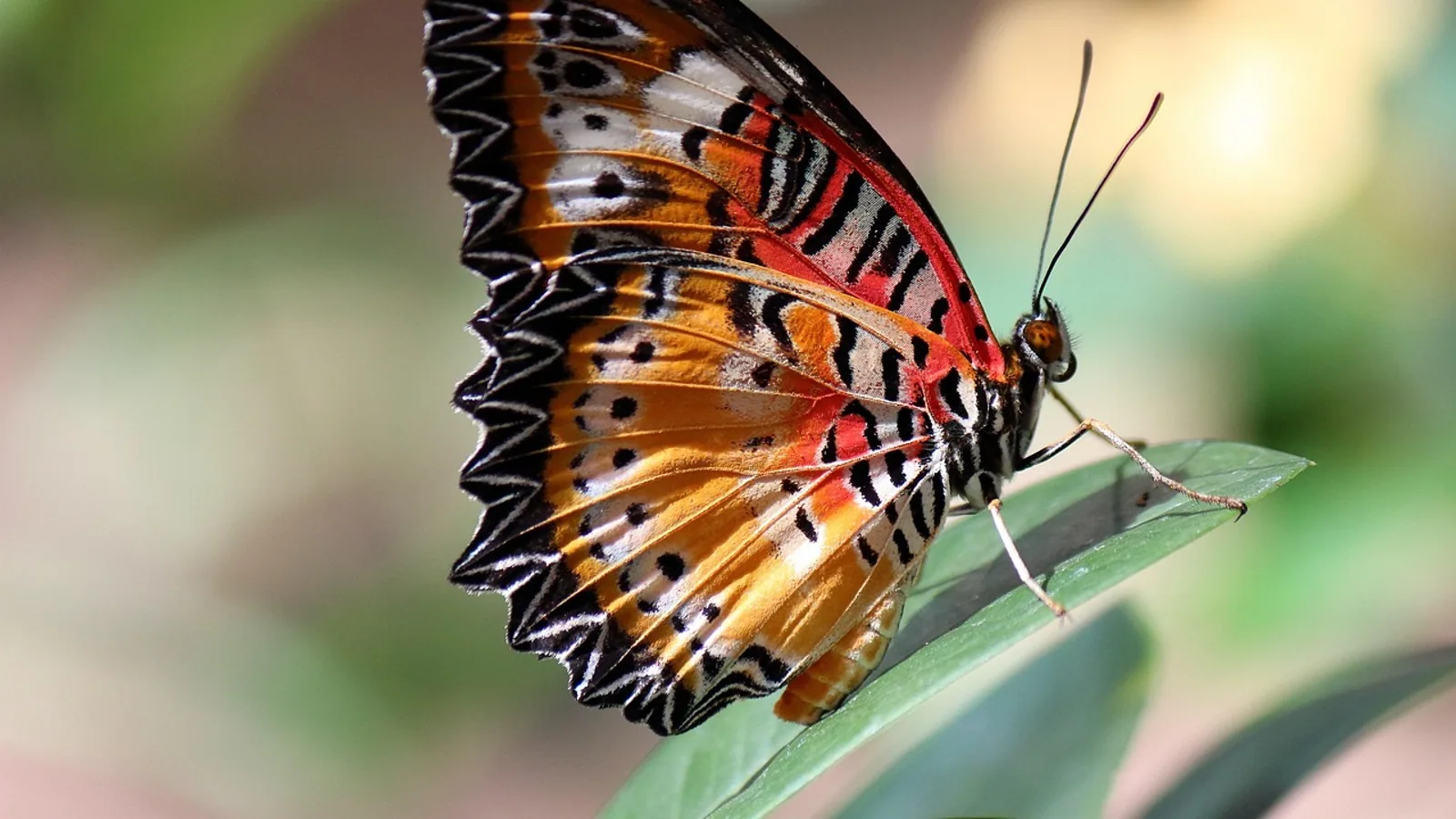
Radial symmetry means a body can be divided into matching halves by more than one plane passing through a central axis, while bilateral symmetry means only one plane, the sagittal plane, produces two mirror-image halves. The distinction matters because symmetry is the fastest way to read an animal's lifestyle: radial animals usually stay put or drift, and bilateral animals usually move with a front end leading.
Symmetry is one of the first things a biologist notices about an animal, and it is also one of the most useful. Body symmetry predicts where the sense organs sit, how the nervous system is organized, how the animal feeds, and how it moves through the world. It also maps onto phylogeny: most animal phyla belong to a single enormous group called Bilateria, while radial body plans appear in a smaller set of lineages, some of which were bilateral earlier in life or earlier in evolution. This guide defines radial symmetry, explains radial symmetry with concrete examples, compares bilateral symmetry vs radial symmetry across development and ecology, and flags the traps that trip up students on exams.
What Symmetry Means in a Living Body
Symmetry in biology describes how body parts repeat around an axis or a plane. A symmetry element is a geometric operation (a cut, a rotation, a reflection) that leaves the body looking essentially the same. In practice, zoologists classify animal body plans into a small number of types: asymmetrical, spherical, cylindrical, n-radial, and bilateral [1]. That five-type scheme comes from comparative anatomy, phylogeny, genomics, and evolutionary developmental biology, and it is more precise than the loose "radial or bilateral" binary many textbooks use.
Two terms do most of the work:
- Central axis. An imaginary line running through the body, such as the oral-aboral axis of a sea anemone (oral means mouth end, aboral means away from the mouth).
- Plane of symmetry. A flat cut through the body that divides it into two halves that mirror each other.
Radial symmetry allows many such planes. Bilateral symmetry allows exactly one.
Defining Radial Symmetry
The meaning of radial symmetry is straightforward: body parts are arranged around a central axis so that any plane containing that axis divides the animal into roughly mirrored halves. A simple way to explain radial symmetry is to picture slicing a pie. Cut it at any angle through the center and the two pieces look alike.
Cnidarians are the classic example. The planula larva of the hydrozoan Clytia hemisphaerica shows radial symmetry around a polarized oral-aboral body axis and consists of two epithelial layers, ectoderm and endoderm [2]. Adult jellyfish, sea anemones, and corals keep that radial arrangement as polyps or medusae, with tentacles and internal partitions repeating around the mouth.
Radial symmetry is not always perfect. Biologists recognize subcategories:
- n-radial (true radial). Four, six, or eight repeating sectors, common in cnidarians.
- Biradial. Two planes of symmetry rather than many, seen in comb jellies and in some anemones where the pharynx and mesenteries (endodermal folds dividing the gut) break the perfect circle.
- Pentaradial. Five repeating sectors, the adult pattern of echinoderms such as sea stars and sea urchins.
Anthozoan polyps illustrate how radial and bilateral features can mix. Polyps usually show bilateral symmetry with respect to the mouth opening, the pharynx, and especially the arrangement of mesenteries, which form in a bilateral sequence even though the overall polyp looks radial [3]. This is a good reminder that symmetry is a description of a whole body plan, not a guarantee that every organ obeys it.
Defining Bilateral Symmetry
Bilateral symmetry means one plane, the sagittal plane, divides the body into two mirror halves, conventionally called left and right. The sagittal plane runs from head to tail and from back to belly, so it separates the animal into two sides that match. There is no second plane that produces matching halves.
Bilateral symmetry is the dominant body plan in the animal kingdom. The group Bilateria contains most animal phyla, including annelids, arthropods, mollusks, flatworms, nematodes, and all vertebrates. Bilaterians share a set of body axes: antero-posterior (head to tail), dorso-ventral (back to belly), and left-right. The Hox-based patterning system operates along the antero-posterior axis of Bilateria, and it does not appear to predate the divergence of Bilateria from Cnidaria [1].
Bilateral symmetry is closely tied to cephalization, the concentration of sensory organs and nervous tissue at the front end. When an animal moves consistently in one direction, the leading end meets the environment first. Natural selection favors putting eyes, chemosensory structures, and a brain there. That logic connects symmetry to directed locomotion, though the evolutionary sequence is more complicated than the simple story suggests (see the misconceptions section below).
Radial vs Bilateral Symmetry: Comparison Table
| Feature | Radial symmetry | Bilateral symmetry |
|---|---|---|
| Planes of symmetry | Multiple planes through a central axis | One plane (sagittal) |
| Body axes | Oral-aboral axis dominates | Antero-posterior, dorso-ventral, left-right |
| Typical examples | Jellyfish, corals, sea anemones, adult sea stars and sea urchins | Insects, earthworms, clams, fish, birds, mammals |
| Phylogenetic group | Cnidaria, Ctenophora, adult Echinodermata | Bilateria (most animal phyla) |
| Nervous system | Nerve net, no centralized brain | Centralized brain and nerve cords in most groups |
| Locomotion | Drifting, sessile, or slow crawling | Directed locomotion with a leading front end |
| Sense organs | Distributed around the body | Concentrated at the anterior end |
| Development | Often radial from early embryogenesis | Radial early, then bilateral after symmetry breaking [4] |
Why Symmetry Matters for Function
Symmetry is not decoration. It reflects how an animal solves three problems: moving, sensing, and transporting fluids inside the body.
Locomotion and Maneuverability
Bilateral symmetry may be maintained in animal evolution because it maximizes maneuverability. A physical analysis of locomotion in three-dimensional space shows that the ability to change direction requires generating instantaneous pushing surfaces, and bilateral symmetry is the only symmetry type that maximizes the force available for that push [5]. An actively moving bilateral body can therefore turn more effectively than a radial one. This gives bilateral animals an obvious selective advantage in open, three-dimensional habitats.
Internal Transport
The standard textbook explanation for bilateral symmetry is that it evolved for directed locomotion. That explanation has a problem. Recent developmental and phylogenetic work suggests bilateral symmetry may have evolved in a sessile benthic animal before directed locomotion existed. An alternative explanation is that bilateral symmetry improved internal circulation by affecting gut compartmentalization and the placement of major ciliary tracts (ciliated bands that move fluid) [6]. Cnidarians support this idea because their symmetry varies from radial to tetraradial, biradial, and bilateral, and the bilaterally symmetrical cnidarians are typically sessile. When bilaterally symmetrical cnidarians do move, their secondary body axis does not keep a consistent orientation to the direction of travel the way it does in Bilateria [6].
A broader phylogenetic analysis reached a similar conclusion: bilateral symmetry evolved before the widespread appearance of directed locomotion and may instead have been an adaptation to aid internal transport [7]. That same study found no single answer for why different symmetry types evolved, and instead pointed to a complex interplay of environmental, ecological, and phylogenetic constraints [7].
Sensing and Feeding
Cnidarians show a correlation between symmetry and feeding strategy, which makes sense because tentacle arrangement and mouth position determine what prey an animal can capture and how [7]. In echinoderms and sponges, by contrast, symmetry is best explained by phylogeny alone, meaning evolutionary history predicts the pattern better than ecology does [7].
The Echinoderm Problem: Bilateral Larvae, Pentaradial Adults
Echinoderms are the classic pitfall in any discussion of radial symmetry vs bilateral symmetry. Sea stars, sea urchins, brittle stars, sea cucumbers, and feather stars are bilaterians by ancestry, yet adults show pentaradial symmetry with five repeating sectors. They develop pentameral adult symmetry from a bilaterally symmetric larva [8].
The genetics of this transition are unusual. In echinoderms, the most conserved developmental stages are not the body plan establishing phase, and genes normally involved in bilaterality appear to function in pentameric axis development [8]. In other words, the same molecular toolkit that builds bilateral bodies in other animals is repurposed to build a five-sided one.
The homology question has a partial answer. Using direct development in a sea urchin, researchers showed that the first radially arranged structures, the five primary podia (tube feet), form from a dorsal and a ventral hydrocoele at the oral end of the archenteron (the embryonic gut). A bilateral plane of symmetry runs through the podia, the mouth, the archenteron, and the blastopore. That adult bilateral plane is homologous with the bilateral plane of bilateral metazoans, which links the radial and bilateral body plans [9]. The conclusion is that echinoderms retain and use the bilateral patterning genes of the common deuterostome ancestor [9].
Work in brittle stars supports a related idea. The bilaterian antero-posterior axis maps onto the medio-lateral axis of each arm, perpendicular to the proximo-distal axis of each of the five rays. This medio-lateral deployment of the bilaterian AP patterning program likely predates the evolution of the asterozoans (sea stars and brittle stars) and possibly the echinoderm crown group [10].
Practical takeaway for students: never call an echinoderm "radial" without qualification. Say pentaradial adult, bilateral larva, bilaterian ancestry.
Sponges: Asymmetric or Variable
Sponges (phylum Porifera) do not fit either category cleanly. They are often described as asymmetrical, and many species have irregular, variable body forms with no consistent plane or axis of symmetry. Some sponges show radial or cylindrical organization around an osculum (the main excurrent opening), but this varies within and between species. In phylogenetic comparative analyses, sponge symmetry is best explained by phylogeny rather than ecology [7], which fits their position as an early-diverging animal lineage with a body plan unlike anything in Bilateria or Cnidaria.
The ancestral animal body plan may itself have been asymmetrical. A comprehensive morphological phylogenetic dataset covering extant and extinct animals, analyzed with Bayesian inference, estimated the ancestral animal symmetry state as asymmetrical, which contrasts with older interpretations based on parsimony optimization of symmetry states [7]. That finding undercuts the old textbook narrative of a tidy progression from asymmetry to radial to bilateral.
How Symmetry Is Studied in Practice
Researchers do not rely on eyeballing an animal. Several methods appear repeatedly in the literature.
Comparative anatomy and phylogenetics. Morphological datasets score symmetry states across many taxa and estimate ancestral states at key nodes using Bayesian or parsimony methods [7]. This is how claims about the ancestral animal body plan are tested.
Developmental transcriptomics and genomics. Sequencing genomes and developmental transcriptomes across echinoderm classes lets researchers track when and where patterning genes are expressed during the bilateral-to-pentaradial transition [8]. Proteomics adds protein-level confirmation.
Gene expression mapping. Comparing where Hox and other patterning genes are expressed across echinoderm rays tests hypotheses about axis homology between pentaradial adults and their bilateral relatives [10].
Cell and tissue imaging. Confocal microscopy, scanning electron microscopy, and transmission electron microscopy reveal the cell shape changes that build a body axis. In Clytia hemisphaerica, these methods traced the sequence from blastoderm epithelialization through epithelial-mesenchymal transition, cohesive migration, and endoderm formation [2]. Fluorescent labeling of f-actin with phalloidin-rhodamine combined with confocal laser-scanning microscopy maps muscle architecture, which can reveal radial or segmental organization in soft-bodied animals [11].
Signaling pathway analysis. Wnt/β-catenin signaling initiates regional gene expression along the oral-aboral axis in cnidarians, and Wnt3 also has a β-catenin-independent role in globally orienting planar cell polarity to direct morphogenesis along that axis [12]. This links a specific molecular signal to the physical establishment of a body axis.
Experimental manipulation. Knocking out pigmentation genes in sea urchins and raising the animals to adulthood showed that lineage commitment occurs before metamorphosis, during the bilateral-to-radial body plan transition [13]. This kind of experiment connects developmental timing to the symmetry switch.
Comparative Relevance: Plants Use the Same Vocabulary
Symmetry terminology crosses kingdoms. In plants, flowers can be radially symmetrical (actinomorphic) or bilaterally symmetrical (zygomorphic). Bilaterally symmetrical corollas have evolved multiple times independently from radially symmetrical ancestors and likely represent adaptations to attract specific pollinators [14]. Losses of bilateral corolla symmetry have also occurred repeatedly, and each loss can happen by a different developmental mechanism [14].
Pollinator-mediated stabilizing selection has been proposed as a driver of the shift from radial to bilateral flower symmetry. In an alpine meadow community in the Hengduan Mountains, bilateral species had less variance in flower size and were visited by fewer pollinator groups, and pollinator diversity accounted for up to 40 percent of the difference in variance in flower size between bilateral and radial species [15]. Floral orientation interacts with symmetry too: bilaterally symmetrical flowers are often oriented horizontally for optimal pollinator positioning, while radially symmetrical flowers have more variable orientation [16].
One open question applies to both plants and animals. A 2026 review notes a paradox: bilateral symmetry-breaking genes are known, such as genes directing left-right asymmetries in vertebrates, yet genes specifically dedicated to establishing bilateral symmetry remain unidentified [17]. Symmetry is easy to see and hard to pin to a single genetic switch.
Common Mistakes and Limitations
Calling adult echinoderms simply "radial." They are pentaradial as adults and bilateral as larvae, and they are bilaterians by descent [8][9]. The larva-to-adult switch is the point, not an exception to mention in passing.
Assuming symmetry is fixed for a species. Vertebrate embryos are largely radially symmetric before transitioning to bilateral symmetry, and bilateral tissues then emerge on both sides [4]. Symmetry is a developmental process, not a static label.
Treating the asymmetry-to-radial-to-bilateral sequence as established fact. The conventional scenario postulating a graded complexification from asymmetry to radial and finally bilateral symmetry is considered untenable, and cylindrical symmetry may be the ancestral type from which the others derived through multiple convergences [1]. A separate analysis estimates the ancestral animal body plan as asymmetrical [7]. The honest position is that the ancestral state is debated.
Assuming bilateral cnidarians are rare curiosities. Bilateral symmetry within Cnidaria is manifest most strongly in internal anatomy and the disposition of ciliary tracts, and bilaterally symmetrical cnidarians are typically sessile [6]. Internal symmetry and external symmetry can disagree.
Confusing symmetry with segmentation. Segments repeat along an axis. Symmetry describes how the whole body maps onto itself. An earthworm is both bilateral and segmented. A sea anemone is radial and unsegmented.
Forgetting that symmetry can be lost or modified. Myzostomids are annelids by phylogenomic analysis but show a highly specialized adult body plan lacking typical annelid features such as external annulation, coelomic cavities with metanephridia, and segmental ganglia, likely due to a parasitic lifestyle. Their musculature still includes an outer circular layer and an inner longitudinal layer matching the common annelid organization, but several muscle elements show radial rather than segmental arrangement [11]. Symmetry follows function and ecology, not just ancestry.
Overreading single-gene explanations. No gene dedicated specifically to establishing bilateral symmetry has been identified [17]. Claims that a single gene "controls" bilateral symmetry overstate the evidence.
Individual organisms can deviate from their species-typical symmetry, and interpreting any specific specimen is a job for a qualified biologist or veterinarian rather than a general guide.
Quick Review
- Radial symmetry: multiple planes through a central axis. Bilateral symmetry: exactly one plane, the sagittal plane.
- Bilateria contains most animal phyla and is associated with cephalization and directed locomotion.
- Cnidarians are the standard radial example, with oral-aboral polarity and a nerve net.
- Echinoderms are bilaterians with bilateral larvae and pentaradial adults. Their bilateral patterning genes were retained and repurposed [8][9].
- Sponges are asymmetric or variable and do not fit either category.
- Bilateral symmetry may have evolved before directed locomotion, possibly for internal transport [6][7].
- Vertebrate embryos start largely radial and become bilateral during early development [4].
Frequently Asked Questions
What is the main difference between radial and bilateral symmetry?
The number of symmetry planes. Radial symmetry has multiple planes through a central axis, while bilateral symmetry has exactly one plane that produces two mirror-image halves.
Is a starfish radially or bilaterally symmetrical?
Both, at different life stages. Sea stars and other echinoderms have bilaterally symmetric larvae and pentaradial adults, and they are bilaterians by evolutionary descent [8][9].
Do sponges have radial or bilateral symmetry?
Neither, in most cases. Sponges are typically described as asymmetric or variable, and their symmetry patterns are best explained by phylogeny rather than ecology [7].
Why did bilateral symmetry evolve?
The classic answer is directed locomotion, but current evidence suggests bilateral symmetry evolved before widespread directed locomotion and may have aided internal transport [6][7]. Maneuverability likely helped maintain it once active locomotion was common [5].
Are humans bilaterally symmetrical?
Yes. Vertebrates are bilaterally symmetrical externally, though internal organs such as the heart are positioned asymmetrically. Vertebrate embryos begin largely radially symmetric and transition to bilateral symmetry early in development [4].
Can an animal have both radial and bilateral features?
Yes. Anthozoan polyps look radial but show bilateral symmetry in the mouth, pharynx, and mesentery arrangement [3], and bilaterally symmetrical cnidarians often express that symmetry most strongly in internal anatomy [6].
Related Articles
- Epigenetics vs Epigenesis: Key Differences Explained
- Point Mutation vs Missense: Key Differences Explained
- Epigenetics vs Genetics: Key Differences and Interactions
- Operon Inducer vs Activator: Key Differences Explained
- Epigenetics vs Mutation: Key Differences and Mechanisms
- Small RNA vs microRNA: Key Differences Explained
- Methylene Group vs Methine: Key Differences
- Amoxicillin vs Amoxicillin-Clavulanate: Key Differences
Sources
- Early evolution of symmetry and polarity in metazoan body plans.
- Cell shape changes during larval body plan development in Clytia hemisphaerica.
- Generation of bilateral symmetry in Anthozoa: a model.
- Emergence of a left-right symmetric body plan in vertebrate embryos.
- The manoeuvrability hypothesis to explain the maintenance of bilateral symmetry in animal evolution.
- Did internal transport, rather than directed locomotion, favor the evolution of bilateral symmetry in animals?
- A morphological phylogenetic approach to the evolution of symmetry in animals.
- Genomic insights of body plan transitions from bilateral to pentameral symmetry in Echinoderms.
- Origins of radial symmetry identified in an echinoderm during adult development and the inferred axes of ancestral bilateral symmetry.
- Antero-posterior patterning in the brittle star Amphipholis squamata and the evolution of echinoderm body plans.
- Myoanatomy of Myzostoma cirriferum (Annelida, Myzostomida): implications for the evolution of the myzostomid body plan.
- Planar cell polarity coordination in a cnidarian embryo provides clues to animal body axis evolution.
- Genetic manipulation of the pigment pathway in a sea urchin reveals distinct lineage commitment prior to metamorphosis in the bilateral to radial body plan transition.
- Repeated and diverse losses of corolla bilateral symmetry in the Lamiaceae.
- Floral symmetry: pollinator-mediated stabilizing selection on flower size in bilateral species.
- Floral orientation affects outcross-pollen deposition in buzz-pollinated flowers with bilateral symmetry.
- Bilateral symmetry genes: If they exist, how would we know?