Job of Vacuole: Functions in Plant and Animal Cells
By Dr. Zubair Khalid, DVM, MS, PhD ·
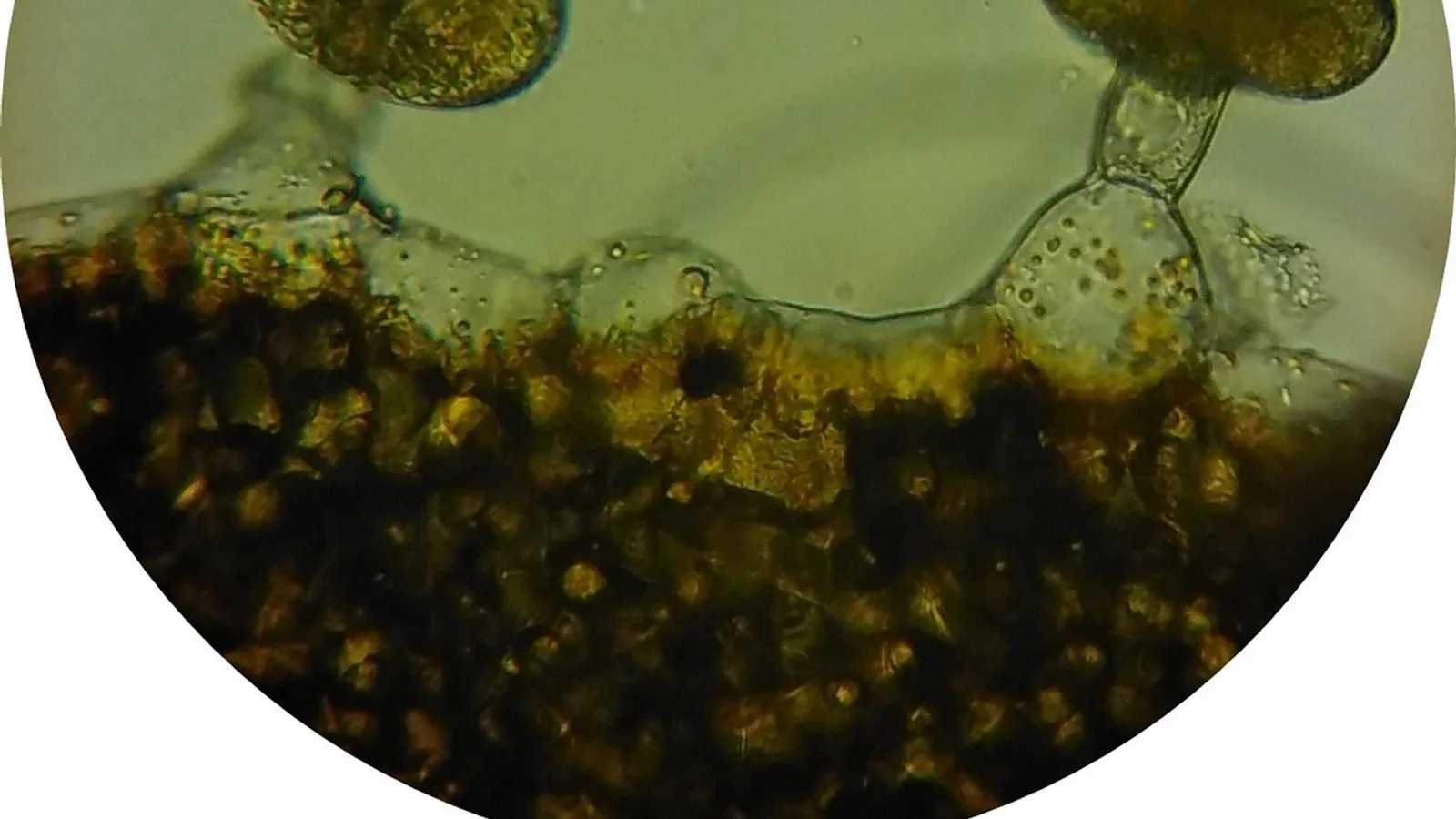
A vacuole is a membrane-bound organelle that stores water, ions, sugars, pigments, and waste, and in plant cells it also generates the internal pressure that keeps tissues firm. Its surrounding membrane, the tonoplast, controls what enters and leaves, which makes the vacuole a storage compartment, a waste facility, and a pressure vessel in one structure.
The vacuole is the reason a lettuce leaf snaps and a wilted one droops. It is also the compartment that lets a plant store a pigment for years without poisoning its own cytoplasm, and the structure that lets a freshwater protist survive in water that would otherwise flood it. Because the organelle looks so different across cell types, students often memorize one version and misapply it to another. This guide separates the plant vacuole from the animal vacuole, walks through each function, and shows how the same basic compartment does different jobs depending on the cell it sits in.
What a Vacuole Is and Why It Matters
A vacuole is a single-membrane organelle filled with vacuolar sap, an aqueous solution of ions, sugars, organic acids, pigments, and sometimes enzymes. The membrane around it is the tonoplast, and the tonoplast is where nearly all the interesting control happens. Proton pumps in that membrane establish an acidic interior and an electrochemical gradient, and that gradient powers the movement of other molecules in and out [1].
The vacuole matters because it solves three problems at once. It lets a cell store solutes cheaply, because filling one large compartment costs less membrane and less cytoplasm than filling thousands of small ones. It lets a cell isolate molecules that would be harmful in the cytosol, including sodium ions, heavy metals, and hydrolytic enzymes. And in plants it lets a cell build internal pressure without building more wall, which is how a seedling pushes through soil and how a leaf holds itself toward the sun [2].
A useful way to think about it: the cytosol is a busy workshop, and the vacuole is the warehouse, the hazardous waste locker, and the hydraulic jack, all sharing one membrane.
Plant Vacuoles: The Large Central Compartment


In a mature plant cell, the central vacuole typically occupies most of the cell interior. Reported figures put it at over 90 percent of cell volume in some cell types, and the commonly taught range for a mature central vacuole is roughly 80 to 90 percent [2]. When the vacuole is that large, the cytoplasm is squeezed into a thin layer against the plasma membrane, and the nucleus and other organelles sit in that thin layer or in strands that cross the vacuole.
Plant cells actually contain more than one kind of vacuole. Researchers distinguish lytic vacuoles, which carry out degradation, from storage vacuoles, which accumulate proteins, sugars, or pigments, and the size and mix of these depends on cell type and developmental stage [3]. A storage vacuole in a seed cell looks and behaves differently from a lytic vacuole in a leaf cell, even though both are bounded by a tonoplast.
Turgor Pressure and the Tonoplast
Turgor pressure is the outward push of the vacuole and cytosol against the cell wall, and it is the single most important mechanical output of the plant vacuole. Water enters the vacuole because solutes inside it draw water in osmotically, the vacuole swells, and the plasma membrane presses the cytoplasm against the rigid cell wall. The wall pushes back, and the cell becomes firm.
The tonoplast does not simply let water and ions drift. It carries a large set of transporters that adjust solute and water flux so the cell can change turgor in response to developmental and environmental signals [4]. Two tonoplast transporters in Arabidopsis, DTX33 and DTX35, function as chloride channels, and when each was expressed in tobacco mesophyll cells it produced a large voltage-dependent inward chloride current across the tonoplast [4]. Plants with both genes disrupted had shorter root hairs and smaller stomatal apertures, and the double mutant was more severely affected than either single mutant, which indicates the two channels work additively to move anions into the vacuole during cell expansion [4].
That result explains why turgor is not a static property. Root hairs and guard cells experience rapid turgor changes, root hairs during elongation and guard cells during stomatal opening and closing, and both depend on ion flux across the tonoplast to make those changes happen [4].
Turgor Drives Cell Expansion
Plant cells cannot migrate the way animal cells do, so growth means expansion, and expansion means water uptake into the vacuole. The large vacuole generates turgor pressure that acts as a driving force for cell growth, and that pressure is essential for plant development [2]. Without turgor, a cell has no internal force to stretch its wall, and the wall itself will not extend.
This is why the vacuole is tied to whole-plant architecture. Growth and proliferation in plant tissues depend on coordinated control of cell wall extension, cytoplasmic growth, and division, and auxin signaling feeds into turgor and vacuole function as part of that coordination [5]. The vacuole is not a passive balloon waiting for instructions. It is an active participant in the decision to grow.
Wilting: What Happens When Turgor Is Lost
Wilting is the visible consequence of turgor loss. When a plant loses water faster than it can replace it, water leaves the vacuole, the vacuole shrinks, the cytoplasm no longer presses outward against the wall, and the tissue goes limp. The cell is not dead. The wall is intact and the membrane is intact. The pressure is simply gone.
This is why a wilted plant can recover after watering. Water re-enters the vacuole, turgor returns, and the tissue firms up again. It is also why turgor loss has consequences beyond appearance. Guard cells rely on rapid turgor change to open and close stomata, and when those cells cannot adjust their internal pressure, gas exchange and water retention are both affected [4].
Storage: Water, Ions, Sugars, and Pigments
The plant vacuole is the cell's main storage compartment, and it holds several chemically different classes of material.
Water storage is the foundation of everything else, because water is what fills the vacuole and generates pressure. Ion storage includes potassium, chloride, nitrate, and other ions. Nitrate is a particularly well-studied case. CLCa is the major transporter involved in nitrate storage in Arabidopsis vacuoles, and NRT2.7 is another tonoplast nitrate transporter. When NRT2.7 was overexpressed in Arabidopsis, growth increased under limiting nitrogen, and electrophysiological measurements on isolated vacuoles demonstrated that NRT2.7 stimulates nitrate efflux from the vacuole [6]. In other words, the vacuole is a nitrogen bank: it stores nitrate when supply is high and releases it when supply is low.
Sugar storage is equally important. Tonoplast sugar transporters move sugar between the cytosol and the vacuole, and that partitioning is essential for plant development and stress adaptation [7]. In poplar, overexpression of the tonoplast sugar transporter PtTST1.1 significantly increased biomass, stem diameter, plant height, and wood formation, with elevated cellulose and lignin content, which shows how directly vacuolar sugar storage connects to physical growth [8].
Pigment storage gives the vacuole its most visible role. Anthocyanins and tannins accumulate in the vacuole, and in grapevine this accumulation determines wine color, aroma, and astringency. The tonoplast P3A-type ATPase VviAHA10 is sufficient to promote vacuolar flavonoid accumulation when expressed in tobacco, and it rescued anthocyanin and proanthocyanidin defects in an Arabidopsis mutant [9]. The same protein restored vacuolar pH homeostasis and root growth under phosphate starvation and salt stress, which links pigment storage to stress tolerance rather than treating color as decoration [9].
Waste Sequestration and Detoxification
Plants cannot move away from toxins, so they store them. The vacuole acts as a reservoir for sequestering waste products and apoptotic enzymes, which allows a plant to respond rapidly to a changing environment [2]. Sequestration is not the same as excretion. The material stays inside the cell, but it is separated from the metabolic machinery that it would otherwise disrupt.
Salt stress is the clearest example. Under saline conditions, plants can transport sodium ions out of cells and also sequester them into vacuoles for detoxification [10]. The SOS pathway, which includes the calcium sensors SOS3 and SOS3-LIKE CALCIUM BINDING PROTEIN 8, the kinase SOS2, and the plasma membrane Na+/H+ antiporter SOS1, governs salt excretion, and SOS1 partially internalizes to the tonoplast under salt stress, which is required for sodium compartmentalization in vacuoles [10]. The vacuole, the plasma membrane, and the peroxisome are all described as structural protectors that maintain cellular homeostasis under saline conditions, working alongside ion transporters such as SOS1, NHX1, and HKT1 and vacuolar proton pumps to keep sodium and potassium balanced and pH regulated [11].
Lytic Degradation
Some plant vacuoles are lytic, meaning they carry out controlled breakdown of cellular material, and they hold hydrolytic enzymes that would damage the cytosol if released. The vacuole serves as a reservoir for apoptotic enzymes as well as waste, which is part of how plants respond quickly to environmental shifts [2].
The tonoplast also repairs itself. When ionophores were applied to plant cells, ATG8 proteins were rapidly conjugated to the tonoplast through the ATG conjugation system, and this attachment enhanced tonoplast invagination and produced intraluminal vesicles inside the vacuole [12]. That remodeling helped restore vacuolar acidification by redirecting proton flow, which aided recovery of plant growth after the ionophore was removed, and a similar response occurred under alkaline stress [12]. The vacuole is not a fixed bag. It remodels its own membrane to stay functional.
Vacuole Dynamics and the Cytoskeleton
Plant vacuoles change shape constantly. They enlarge, fuse, fragment, invaginate, and constrict, producing a complex three-dimensional structure that differs by cell type, and these transformations are governed by the plant cytoskeleton, which consists of F-actin and microtubules [2]. The molecular details of how the cytoskeleton directs those changes are still not fully resolved, which is an active area of research [2].
Vacuole morphology also feeds back into development. Arabidopsis embryos lacking both types of tonoplast proton pumps, the H+-pyrophosphatase and the H+-ATPase, showed severe defects in embryo pattern formation from an early stage, along with dramatic differences in vacuole morphology and distribution and disturbed localization of the auxin transporter PIN1 [1]. The two pumps establish the proton gradient that powers molecular traffic across the tonoplast and supports turgor regulation and nutrient homeostasis, so when both are lost, the vacuole and the developmental program that depends on it both go wrong [1].
Animal Cell Vacuoles and Lysosomes
Animal cells do not have a single large central vacuole. They have small, numerous vacuoles, and many of the degradative and storage jobs that a plant vacuole performs are handled instead by lysosomes. This is the distinction that trips up the most students, so it is worth stating plainly: a plant central vacuole is large, usually one per cell, and does storage, turgor, and degradation. An animal cell typically has many small vacuoles and separate lysosomes, and it does not use vacuoles for turgor because it has no cell wall to push against.
Animal vacuoles still do real work. They participate in storage and transport, and they interact with the endosomal system. The endosome-to-vacuole transport pathway is a trafficking route, not a storage closet, and in fungal and animal systems it serves as a signaling platform as well as a delivery route. In the rice blast fungus Magnaporthe oryzae, the endosomal-vacuolar transport system acts as a docking platform for the Pmk1 MAP kinase signaling pathway, and damage to that transport system affects Pmk1 phosphorylation [13]. Signal-sensing proteins are ubiquitinated and sorted to late endosomes and vacuoles for degradation, which terminates the signal [13]. That is a vacuole functioning as a shutdown mechanism for a signaling cascade.
The distinction between vacuoles and vesicles matters here. Vesicles are small carriers that bud from one membrane and fuse with another, and they move cargo through the secretory and endocytic pathways. A vacuole is a destination compartment, not a shuttle. Confusing the two leads to the mistaken idea that the vacuole secretes material out of the cell, which is not its job.
Contractile Vacuoles in Protists
Freshwater protists face a constant osmotic problem. Their cytoplasm is saltier than the pond water around them, so water flows in continuously, and without a way to bail it out, the cell would swell and burst. The contractile vacuole solves this. It collects excess water and expels it from the cell in a repeating cycle, which is osmoregulation.
The contractile vacuole is a distinct organelle from the plant central vacuole, and it is worth keeping them separate in your notes. Both are membrane-bound and both handle water, but the contractile vacuole is a pump with a cycle, while the plant central vacuole is a long-term storage compartment that generates sustained pressure.
How Vacuoles Are Studied
Vacuole research relies on a mix of imaging, electrophysiology, and genetics.
Fluorescent probes are the standard tool for morphology and dynamics. Researchers can mark vacuoles quickly with commercially available chemical dyes or more slowly with genetically encoded markers directed either to the tonoplast or to the vacuole lumen, and each approach gives different information about vacuole morphology and physiology [3].
Patch-clamp recording on isolated vacuoles measures ion movement directly across the tonoplast. This is how the chloride channel activity of DTX33 and DTX35 was demonstrated, and how nitrate flux through NRT2.7 was confirmed [4][6]. Electrophysiology is what turns a proposed transport function into a measured one.
Genetics provides the other half. Knocking out a transporter and observing the phenotype, such as shorter root hairs or smaller stomatal apertures, shows what the protein does in a living plant [4]. Combining mutant analysis with expression in a heterologous system, such as expressing a grapevine ATPase in tobacco or Arabidopsis, tests whether a single protein is sufficient for a function [9].
Function-by-Function Comparison: Plant Versus Animal
| Function | Plant cell vacuole | Animal cell vacuole and lysosome |
|---|---|---|
| Size and number | Usually one large central vacuole, often 80 to 90 percent of cell volume, over 90 percent in some cell types [2] | Small and numerous, no single dominant vacuole |
| Turgor pressure | Central function. Generates the pressure that drives cell expansion and keeps tissue firm [2] | Not applicable. Animal cells lack a cell wall and do not use vacuolar turgor |
| Water storage | Major reservoir, drives turgor and cell volume | Limited. Water balance is handled by other mechanisms |
| Ion storage | Stores potassium, chloride, nitrate, and sodium. CLCa and NRT2.7 move nitrate across the tonoplast [6] | Stores ions in small compartments. Lysosomes maintain an acidic lumen |
| Sugar storage | Major. Tonoplast sugar transporters partition sugar between cytosol and vacuole [7]. PtTST1.1 overexpression increased poplar biomass and wood formation [8] | Minor compared with plant vacuoles |
| Pigment storage | Major. Anthocyanins and tannins accumulate in the vacuole. VviAHA10 promotes flavonoid accumulation [9] | Not a pigment storage site in the same sense |
| Waste sequestration | Major. Stores waste products and apoptotic enzymes [2]. Sequesters sodium under salt stress via SOS1 at the tonoplast [10] | Lysosomes handle degradation and disposal |
| Lytic degradation | Lytic vacuoles carry hydrolytic enzymes [3] | Lysosomes are the primary degradative compartment |
| Membrane remodeling | Tonoplast invaginates and forms intraluminal vesicles via ATG8ylation to restore acidification [12] | Endosomal and lysosomal membrane dynamics serve similar repair roles |
| Osmoregulation | Not a contractile pump | Contractile vacuoles in protists expel excess water |
| Acidification | Tonoplast proton pumps, V-ATPase and V-PPase, establish the proton gradient [1] | Lysosomal proton pumps acidify the lysosome lumen |
Common Mistakes and Limitations
The first mistake is treating the plant central vacuole and the animal vacuole as the same organelle with the same job. They share a membrane and a name, but the plant version is a pressure vessel and a long-term warehouse, and the animal version is small and paired with lysosomes for degradation.
The second mistake is confusing vacuoles with vesicles. Vesicles are transport carriers. Vacuoles are destination compartments. If you find yourself writing that the vacuole secretes a protein out of the cell, you have mixed up the two.
The third mistake is assuming the vacuole is inert. It remodels its membrane, changes shape, fuses, fragments, and responds to stress within minutes in some cases [2][12]. It is one of the more dynamic structures in the cell.
The fourth mistake is thinking turgor is only about water. Turgor depends on solute movement, and specifically on ion channels and transporters in the tonoplast that adjust solute concentrations [4]. Water follows solutes, so controlling ions is how the cell controls pressure.
The fifth mistake is assuming all plant vacuoles are identical. Lytic vacuoles and storage vacuoles differ in size, contents, and function depending on cell type and developmental stage [3].
A real limitation of the field is that the molecular mechanism linking the cytoskeleton to vacuole shape change remains largely unclear, and researchers have identified this as a barrier to progress [2]. Another is that the regulatory mechanisms controlling tonoplast sugar transporter activity are still largely unresolved [7]. These are open questions, not settled facts, and students should treat them as such.
Individual cells and individual plants vary, and anything involving a specific crop, treatment, or clinical decision needs a qualified professional rather than a general guide.
Quick Review
- A vacuole is a single-membrane organelle bounded by the tonoplast, and the tonoplast controls what moves in and out.
- The plant central vacuole is large, often 80 to 90 percent of cell volume, and generates turgor pressure that drives cell expansion [2].
- Turgor loss causes wilting, and turgor returns when water re-enters the vacuole.
- The plant vacuole stores water, ions, sugars, and pigments, and it sequesters waste and sodium [2][10][9].
- Tonoplast proton pumps, V-ATPase and V-PPase, create the gradient that powers transport across the tonoplast [1].
- Animal cells have small, numerous vacuoles and separate lysosomes, and they do not use vacuoles for turgor.
- Contractile vacuoles in freshwater protists expel excess water to prevent the cell from bursting.
Frequently Asked Questions
What is the main function of a vacuole?
The main function of a vacuole is storage combined with compartmentalization. It holds water, ions, sugars, and pigments, isolates waste and harmful molecules from the cytosol, and in plant cells it generates the turgor pressure that drives growth.
How is a plant vacuole different from an animal vacuole?
A plant cell usually has one large central vacuole that occupies most of the cell volume and drives turgor, while an animal cell has many small vacuoles and relies on lysosomes for degradation. Animal cells do not use vacuoles for turgor because they have no cell wall.
What happens to a plant when vacuole turgor is lost?
The plant wilts. Water leaves the vacuole, the vacuole shrinks, and the cytoplasm stops pressing outward against the cell wall, so the tissue goes limp. The cell is usually still alive and can recover when water returns.
Do animal cells have contractile vacuoles?
No. Contractile vacuoles are found in freshwater protists, where they collect and expel excess water to prevent the cell from bursting. Animal cells regulate water balance through other mechanisms.
Why do plants store pigments in vacuoles?
Pigments such as anthocyanins and tannins are stored in the vacuole to keep them separated from the rest of the cell's metabolism while still contributing color and chemical properties. In grapevine, this vacuolar accumulation determines wine color, aroma, and astringency [9].
Can the vacuole break down cellular material?
Yes. Lytic vacuoles in plants carry hydrolytic enzymes and degrade cellular material, and lysosomes perform the equivalent role in animal cells. The vacuole also remodels its own membrane to recover from damage [12].
Related Articles
- Cell Membrane Function Biology
- Endoplasmic Reticulum Cell Function
- Plant Cells Through a Microscope: Observing Chloroplasts and Cell Walls
- Animal science research management jobs
- Wildlife Friendly Garden Netting Protecting Plants Without Harming Animals
- Chromatin in a Cell: Structure, Function, and Dynamics
- Animal vs Plant Cell: Key Differences Compared
- 3 Parts of Cell Theory: Explained Simply
Sources
- Two tonoplast proton pumps function in Arabidopsis embryo development.
- At the Nexus between Cytoskeleton and Vacuole: How Plant Cytoskeletons Govern the Dynamics of Large Vacuoles.
- Plant Cell Vacuoles: Staining and Fluorescent Probes.
- Two tonoplast MATE proteins function as turgor-regulating chloride channels in Arabidopsis.
- Coordination of plant cell growth and division: collective control or mutual agreement?
- Overexpressing NRT2.7 induces nitrate export from the vacuole and increases growth of Arabidopsis.
- Unlocking sugar subcellular dynamics: the crucial function and regulation of tonoplast sugar transporters in plant response to climate change.
- Tonoplast sugar transporter PtTST1.1 promotes shoot growth and wood production through modulating sugar metabolism in Shanxin Yang (Populus davidiana × Populus bolleana).
- VviAHA10, a tonoplast P3A-type ATPase from Vitis vinifera, reveals a functional link between vacuolar flavonoid accumulation and abiotic stress responses.
- SOS2-FREE1 regulates SOS1 tonoplast sorting to promote Na(+) compartmentalization in vacuole during salt stress response.
- Role of primary protectors of plant cells in salinity tolerance: molecular mechanisms and adaptive strategies.
- ATG8ylation-mediated tonoplast invagination mitigates vacuole damage.
- The endosomal-vacuolar transport system acts as a docking platform for the Pmk1 MAP kinase signaling pathway in Magnaporthe oryzae.