3 Parts of Cell Theory: Explained Simply
By Dr. Zubair Khalid, DVM, MS, PhD ·
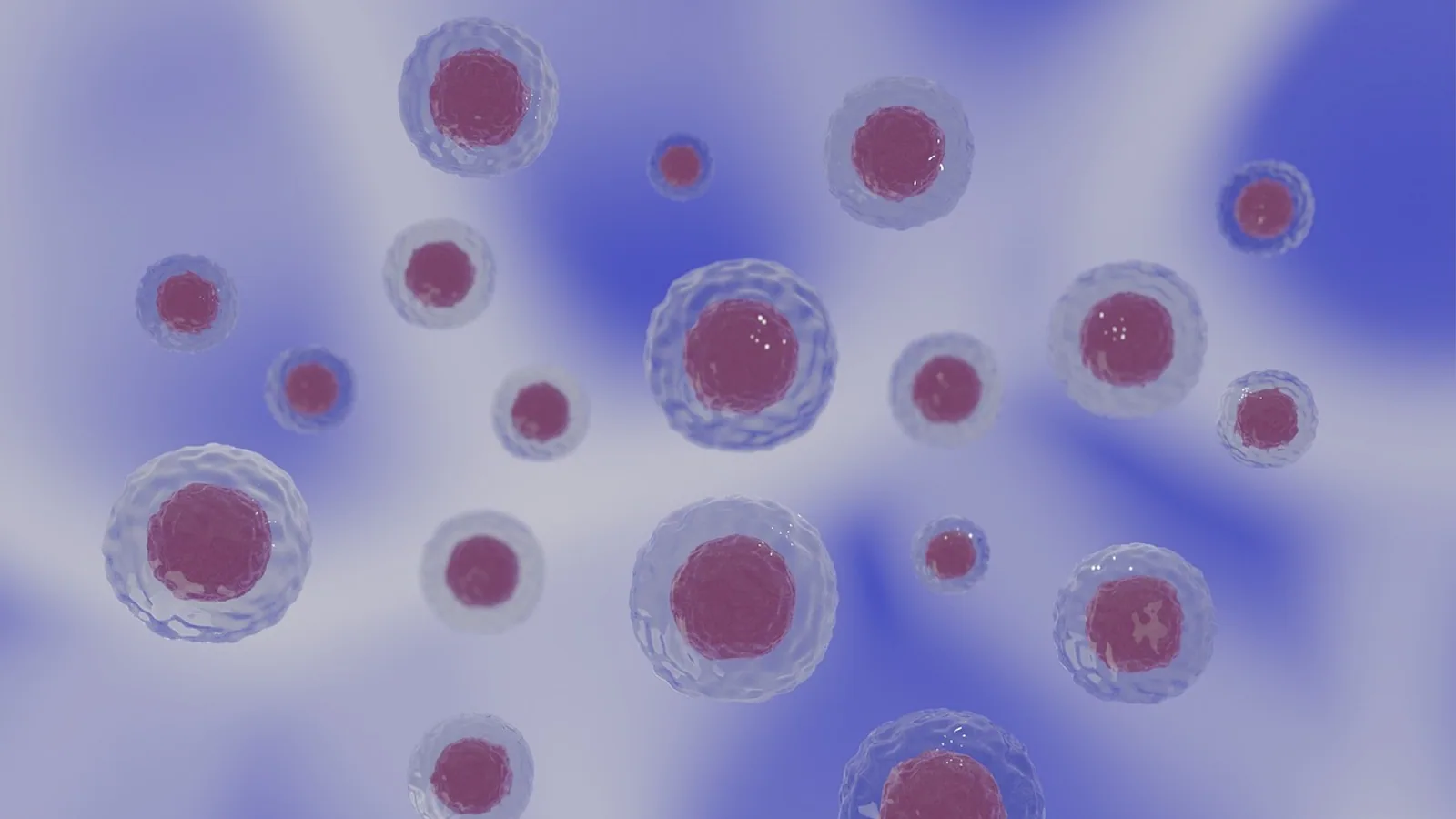
Cell theory states that all living organisms are composed of one or more cells, that the cell is the basic unit of structure and function in living things, and that all cells arise from pre-existing cells. Those are the 3 parts of cell theory, and together they form the foundation on which modern biology, medicine, and biotechnology are built.
The three parts of cell theory matter because they answer a question that puzzled scientists for centuries: what is life actually made of? Before cell theory, biologists described tissues as amorphous material, and many believed living matter could spontaneously generate from nonliving material. Cell theory replaced those ideas with a testable framework. Every time a pathologist reads a biopsy, a microbiologist cultures bacteria, or a plant scientist regenerates a crop from a single cell, that work rests on the principles Schleiden, Schwann, and Virchow assembled between 1838 and 1855 [1][2].
This guide states each tenet plainly, explains who proposed it and when, traces the microscope improvements that made the discovery possible, and covers the honest exceptions that textbooks often skip.
The Three Parts of Cell Theory, Stated Plainly
Here are the 3 parts of the cell theory in their standard form.
First tenet: All organisms are composed of one or more cells. Every plant, animal, fungus, and protist is built from cells. Some organisms are a single cell. Others, like humans, contain tens of trillions.
Second tenet: The cell is the basic unit of structure and function in living organisms. Cells are the smallest unit that can carry out all the activities of life, including metabolism, growth, response to stimuli, and reproduction. You can break a tissue down to cells, but you cannot break a cell down further and still have something alive.
Third tenet: All cells arise from pre-existing cells. A cell does not assemble itself from raw chemicals under ordinary conditions. It comes from a parent cell that divided. Rudolf Virchow compressed this into the Latin phrase Omnis cellula e cellula, meaning "every cell from a cell" [3][4].
The botanist Matthias Schleiden published the first two principles for plants in 1838. The zoologist Theodor Schwann extended them to animals in 1839 [2][5]. Virchow added the third in 1855 and used it to rebuild pathology around the cell as the site where disease begins [4][6].
Summary Table: Tenet, Scientist, Year, Evidence
| Tenet | Scientist | Year | Key Evidence |
|---|---|---|---|
| All organisms are composed of one or more cells | Matthias Schleiden (plants), Theodor Schwann (animals) | 1838 to 1839 | Microscopic examination of plant and animal tissues showed a common repeating unit with a nucleus [2][5] |
| The cell is the basic unit of structure and function | Schleiden and Schwann, refined by later histologists | 1838 to 1839 | Tissues from many species resolved into cells. Vital activities traced to cellular structures [7][5] |
| All cells arise from pre-existing cells | Rudolf Virchow | 1855 | Observations of cell division and the failure to find convincing evidence of spontaneous generation [8][4] |
Why Cell Theory Matters Beyond the Classroom
Cell theory is not a historical curiosity. It is the operating assumption behind most of the life sciences.
In medicine, Virchow's third tenet became the basis of cellular pathology. He argued that disease and pathological change begin in the cell and nowhere else, which overturned the older humoral theory that illness came from imbalanced body fluids [9]. That shift is why modern diagnosis depends on examining cells under a microscope, from blood smears to tumor biopsies.
In plant science, cell theory led directly to the concept of cellular totipotency, the idea that a single plant cell can regenerate a whole organism. Plant biotechnology traces its intellectual roots to Schleiden and Schwann for exactly this reason [1].
In research, the second tenet gives scientists a consistent unit of study. When you want to understand how an organ works, you study its cells. When you want to understand how an organism develops, you study how its cells divide, move, and specialize.
Cell theory also constrains what counts as a research question. If all cells come from pre-existing cells, then the origin of the first cell is a separate problem about the origin of life, not a problem cell theory itself solves. That distinction trips up many students, and it comes up again in the limitations section below.
How Improved Microscopy Made Cell Theory Possible
Cell theory could not have been written before the microscope. The instrument magnifies objects too small to be seen by the naked eye, and it was the precondition for discovering cells at all [2].
Robert Hooke first described cell walls in cork in 1665, nearly 200 years before the theory was formalized [10]. Anton van Leeuwenhoek built a more advanced microscope in 1673 and reported microscopic "animalcules" in water. He also studied red blood cells and sperm cells [2]. Those early observations proved that a hidden world of living structures existed, but nobody yet understood that cells were the universal building blocks of life.
The bottleneck was tissue preparation. Plant cells, rigidly encased in their cell walls, held their shape and were ideal to study in place. Animal tissues tended to fall apart or appear as indistinct material. Most early work therefore focused on plants [2].
Three technical advances changed that.
Better lenses and compound microscopes. Improved optics raised magnification and resolution, letting observers see the nucleus and other internal structures consistently.
Improved sectioning and staining. Histologists learned to cut thin tissue slices and apply dyes that made nuclei and membranes visible. As histological techniques improved through the 1800s, researchers could follow cellular processes that had previously been invisible, including cell death [11][12].
Consistent description of a shared unit. Once observers across Europe were looking at comparable structures, the pattern became undeniable. Schleiden and Schwann could then argue that the same unit appeared in both plants and animals [2][5].
Even after 1839, acceptance was not instant. The cellular nature of brain tissue was not confirmed until the end of the 20th century, which is one reason general acceptance of cell theory took so long to solidify [5]. Thomas Henry Huxley published a sharp critique of the Schleiden-Schwann model in 1853, arguing for an alternative interpretation of how tissues organize [13]. Ernst Brücke's 1861 essay pushed the concept of the cell away from the original "membranous vesicle with a nucleus" schema and toward the protoplasm theory centered on the cell's living contents [14][15]. These debates were productive. They forced the theory to become more precise.
What Each Tenet Actually Claims, and What It Does Not
Students often memorize the three parts of cell theory without understanding the boundaries of each claim. Here is what each one does and does not say.
Tenet 1: All Organisms Are Made of Cells
This claim is about composition. It says that if you examine any living organism, you will find cells. It does not say that every organism is made only of intact, separate cells. Some tissues contain multinucleate structures, and some organisms have life stages that complicate the picture. Those cases are covered below.
The claim also does not require that every cell in an organism be identical. Approximately 250 different cell types are currently recognized in humans and other animals [10]. Morphology adapts to function, and so does cytoplasmic content. A neuron and a red blood cell share the same basic plan but look and behave nothing alike.
Tenet 2: The Cell Is the Basic Unit of Structure and Function
This claim is about the level at which life operates. A cell can feed, grow, defend itself, and reproduce. A paramecium, a single-celled organism, demonstrates this completely: it performs the general fate of all living creatures within one cell [16].
The claim does not mean cells are interchangeable building blocks. Early cell theory is sometimes caricatured as treating cells like atoms or bricks, but the original authors explicitly rejected that analogy. Schleiden, Schwann, Franz Unger, Albert von Koelliker, and Virchow all spoke against reducing cells to independent, interchangeable units or organisms to mere cell aggregates [17]. Their actual views were more complex and more provisional than the caricature suggests.
Tenet 3: All Cells Arise From Pre-Existing Cells
This claim is about continuity. Cells come from cells, which come from cells, back through every generation of every lineage. Virchow established this principle and used it to argue that alterations in cell organization are the basis of disease [4].
The claim does not explain where the first cell came from. That is the origin-of-life problem, and it sits outside cell theory's scope. Cell theory describes how life propagates once cells exist. It is silent on the transition from nonliving chemistry to the first self-replicating cell.
How Cell Theory Is Tested and Observed in Practice
Cell theory is not tested as a single experiment. It is tested continuously through observation and through the predictions it makes.
Histology and pathology. Tissue sections stained and examined under a microscope reveal cells in every sample of living tissue. When Virchow applied this to disease, the result was cellular pathology: the finding that pathological changes start in cells [6][9]. Modern biopsy reading is a direct descendant of that program.
Cell culture. If cells come from pre-existing cells, then a sample of living cells placed in a suitable medium should grow by division rather than by spontaneous assembly. Cell culture works for this reason. Tissue culture techniques later provided detailed information about how specific cell types function [18].
Microscopy of division. Watching a cell divide into two daughter cells is the most direct demonstration of the third tenet. Improved microscopy made this observable and helped move the theory from hypothesis to accepted framework [2][6].
Comparative observation across species. Schleiden's plant work and Schwann's animal work converged on the same unit [2]. That convergence is itself evidence. Two researchers studying different kingdoms found the same structure.
Developmental observation. Following an embryo as it develops shows cells dividing, migrating, and specializing. Research on cell death in the 1800s, beginning with Carl Vogt's 1842 report in metamorphic toads, showed that cells also die on schedule as part of normal development [11][12]. That finding only makes sense if cells are the units that development operates on.
Common Mistakes and Limitations
Cell theory is one of the most reliable generalizations in biology. It is also incomplete at the edges, and students lose points by treating it as absolute.
Viruses are not cells. Viruses are acellular. They have no cytoplasm, no ribosomes, and no independent metabolism. They cannot reproduce without hijacking a host cell's machinery. This makes them a genuine edge case for the first tenet. A virus is not composed of cells and is not itself a cell, yet most biologists consider it biologically relevant and treat it as a subject of study. The cleanest way to state it is that cell theory applies to cellular life, and viruses fall outside that category.
Cell theory does not explain the origin of the first cell. The third tenet says cells come from pre-existing cells. It does not say, and does not attempt to say, how the first cell arose. Students frequently write that cell theory disproves abiogenesis. It does not. It describes the continuity of cellular life after it began.
Mature human red blood cells have no nucleus. A mature mammalian red blood cell ejects its nucleus during development. It is still a cell by most definitions, but it does not fit the original Schleiden-Schwann schema of a membranous vesicle containing a nucleus. This is one reason later theorists shifted emphasis toward the protoplasm, the living contents of the cell, rather than the nucleus alone [14][15].
Syncytia and coenocytes complicate the definition. A syncytium is a mass of cytoplasm containing multiple nuclei that formed when cells fused. A coenocyte is a multinucleate structure that formed when a cell divided repeatedly without splitting its cytoplasm. Both are found throughout the eukaryotic superkingdom, and both pose real problems for a strict reading of cell theory [5]. Skeletal muscle fibers in humans are a familiar example of a syncytium.
Higher plants are supracellular. The generalized cell theory developed for both animals and plants struggles to accommodate the way higher plants are organized. Plant cells are interconnected into a symplasm, a continuous network of cytoplasm linked through channels between cells, and this supracellular architecture does not map cleanly onto a model of independent cellular units [5].
Cell theory is sometimes misread as reductionist. The claim that cells are the basic unit of life is not the claim that organisms are nothing but piles of cells. The original theorists rejected that reading [17]. An organism's properties emerge from how its cells are organized and how they interact, not just from the cells themselves.
The "typical cell" concept misleads students. Textbooks often present a generic cell diagram that no real cell matches. Cell shape and internal content are adapted to function, and this fact gets lost when students memorize one idealized picture [10]. A better approach is to learn a few real cell types well and then generalize.
Quick Review: 7 Points Worth Memorizing
- All organisms are composed of one or more cells.
- The cell is the basic unit of structure and function in living things.
- All cells arise from pre-existing cells.
- Schleiden and Schwann proposed the first two tenets in 1838 and 1839. Virchow added the third in 1855.
- Improved microscopy was the precondition for the theory. Hooke saw cell walls in 1665, Leeuwenhoek saw living cells in 1673, and the theory followed in 1838 to 1839.
- Viruses are acellular and sit outside cell theory. The origin of the first cell is a separate problem.
- Mature red blood cells, syncytia, coenocytes, and the supracellular organization of higher plants are genuine edge cases.
Frequently Asked Questions
What are the 3 parts of cell theory?
The 3 parts of cell theory are: all organisms are composed of one or more cells, the cell is the basic unit of structure and function in living organisms, and all cells arise from pre-existing cells. Schleiden and Schwann proposed the first two between 1838 and 1839, and Virchow added the third in 1855.
Who proposed the three parts of cell theory?
Matthias Schleiden and Theodor Schwann proposed the first two parts in 1838 and 1839. Rudolf Virchow proposed the third part in 1855 with the phrase Omnis cellula e cellula, meaning every cell from a cell [2][4].
Why is the third part of cell theory important?
The third part rules out spontaneous generation of cells from nonliving material under ordinary conditions. It established that cellular life is continuous, and Virchow used it to found cellular pathology, the idea that disease begins at the level of the cell [4][9].
Do viruses violate cell theory?
Viruses are acellular, meaning they are not made of cells and are not cells themselves. They cannot reproduce without a host cell. Cell theory applies to cellular life, so viruses fall outside its scope rather than disproving it.
Does cell theory explain where the first cell came from?
No. The third tenet describes how cells arise from other cells. It does not address how the first cell formed from nonliving chemistry. That question belongs to origin-of-life research, not to cell theory.
Why did cell theory take so long to be accepted?
The microscope had to improve first, and animal tissues were much harder to study than plant tissues. Even after 1839, debate continued. The cellular nature of brain tissue was not confirmed until the end of the 20th century, and critics like Huxley challenged the original model for decades [5][13].
Related Articles
- Apoptosis A Level: Cell Death Explained Simply
- RNA Theory
- Genome Theory
- Codon Definition: The Genetic Code's Three-Letter Words
- Transcription Steps: From DNA to RNA Explained Simply
- Epigenetic Theory: Mechanisms, Evidence, and Misconceptions
- Cell Parts: Organelles and Their Functions
- Cell Image Guide: Labeled Diagrams of Cell Structures
Sources
- A history of plant biotechnology: from the Cell Theory of Schleiden and Schwann to biotech crops.
- An historical note on the cell theory.
- Rudolf Ludwig Karl Virchow (1821-1902) "Omnis Cellula E Cellula".
- Rudolf Virchow, the founder of cellular pathology.
- Eukaryotic cells and their cell bodies: Cell Theory revised.
- Rudolf Virchow (1821-1902) and Die Cellularpathologie (1858).
- [[Reception of the cell theory at Gaceta Médica de México in the 19th century].](https://pubmed.ncbi.nlm.nih.gov/30050229/)
- Tissue engineered grafts--160 years after R. Virchow's Omnis Cellula e Cellula.
- [[Rudolf Virchow 1821-1902. Physician, politician, historian and anthropologist].](https://pubmed.ncbi.nlm.nih.gov/11625680/)
- A reflection on the eukaryotic cell, its organization and the concept of a typical cell.
- Nineteenth century research on cell death.
- Nineteenth century research on naturally occurring cell death and related phenomena.
- T.H. Huxley's criticism of German cell theory: an epigenetic and physiological interpretation of cell structure.
- The Schema and Organization of the Cell: An Introduction to Ernst Brücke's Die Elementarorganismen (1861).
- The Cell and Protoplasm as Container, Object, and Substance, 1835-1861.
- [[A life of the cell: forms and space].](https://pubmed.ncbi.nlm.nih.gov/16193635/)
- Of atoms, bricks and cells: A historical critique of historical criticisms of classical cell theory.
- The cellular history of the glomerulus.