False Black Widow Spider: ID and Bite
By Dr. Zubair Khalid, DVM, MS, PhD ·
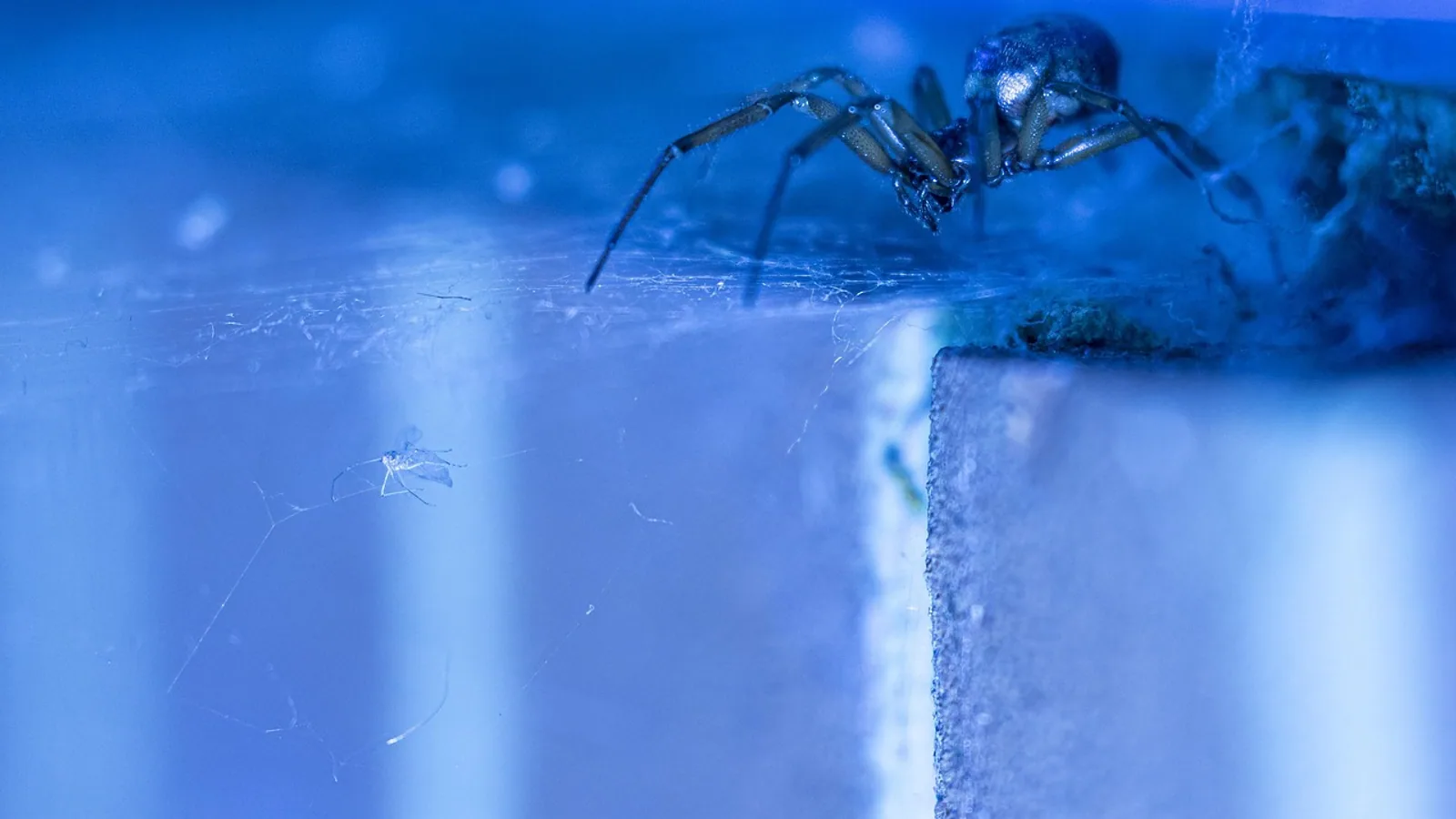
A false black widow spider is a cobweb spider in the genus Steatoda, not a true black widow in the genus Latrodectus. The two look similar at a glance, but a false widow lacks the red hourglass on the underside of the abdomen, usually has pale markings on a rounder body, and delivers a bite that is far less dangerous than a true black widow bite.
That single distinction, Steatoda versus Latrodectus, drives almost everything else in this guide: how you identify the spider, what its venom does, how a bite feels, and when a bite needs medical attention. The most studied false widow is the noble false widow, Steatoda nobilis, which has spread far beyond its native range and now lives close to people in many temperate regions [1][2].
What Is a False Black Widow Spider?
A false black widow is any spider in the genus Steatoda that people confuse with a true black widow. The name is a description, not a taxonomic category. Several Steatoda species carry it, and the noble false widow is the one that generates the most bite reports and the most research.
The confusion is understandable. Both groups are cobweb spiders in the family Theridiidae, both build irregular tangled webs in dark corners, and both have bulbous abdomens and comb-like bristles on their hind legs for wrapping silk around prey. They are close relatives. Steatoda nobilis is described in the scientific literature as a sister group to Latrodectus [1]. That shared ancestry is exactly why the venom comparison matters, and why a false widow bite is sometimes described as producing latrodectism-like symptoms.
The practical takeaway is simple. A black widow spider look alike can still bite, and its bite can hurt, but the venom is not the same and the risk profile is not the same.
How to Identify a False Black Widow
Identification comes down to four features: the underside of the abdomen, the markings on the top of the abdomen, the body shape, and the web.
The underside: no red hourglass
A true black widow has a red or orange hourglass shape on the ventral (underside) surface of its abdomen. This is the single most reliable field mark. A false black widow does not have that hourglass. If you can safely see the underside of a dark, round spider and there is no red hourglass, you are almost certainly not looking at a true black widow.
The top of the abdomen: pale markings
False widows typically show pale markings on the upper surface of the abdomen. These can appear as a crescent, a series of spots, or a faint pattern that varies with species, age, and how recently the spider molted. The noble false widow often has a pattern that fades as the spider matures, which is one reason older females look almost uniformly dark and get mistaken for black widows.
Body shape: rounder, not glossy black
False widows tend to have a rounder, more globular abdomen than true black widows, and their coloration runs brown to purplish-brown to near-black rather than the deep jet black of a mature female Latrodectus. The legs are typically banded or mottled rather than uniformly dark.
The web: tangled and messy
Both groups build cobwebs, so the web alone will not separate them. False widows favor the same kinds of places true widows do: garages, sheds, fence lines, window frames, garden furniture, and the corners of outbuildings. A survey of urban habitats in Ireland found that S. nobilis and the missing sector orb weaver together made up more than 80 percent of spider abundance across surveyed locations, which tells you how thoroughly this spider has moved into human-built spaces [2].
Side-by-side comparison
| Feature | False black widow (Steatoda) | True black widow (Latrodectus) |
|---|---|---|
| Ventral hourglass | Absent | Red or orange hourglass present |
| Top of abdomen | Pale crescent, spots, or faded pattern | Usually solid black, sometimes with red spots |
| Body shape | Rounder, globular, brown to near-black | Glossy jet black, bulbous abdomen |
| Legs | Often banded or mottled | Usually uniformly dark |
| Habitat | Garages, sheds, fences, garden furniture, synanthropic spaces | Similar dark, sheltered spaces, often lower to the ground |
| Venom | Contains latrotoxin-like proteins at lower potency | Contains highly potent alpha-latrotoxins |
| Typical bite | Local pain, redness, swelling | Intense pain, muscle cramping, systemic latrodectism |
| Systemic risk | Rare, generally mild to moderate | Well documented and potentially severe |
Venom: Why a False Widow Is Not a True Widow
The venom of the noble false widow has been characterized in detail, and the results explain both why it hurts and why it is usually not dangerous.
A venomics study of S. nobilis identified 240 annotated sequences in the venom, of which 118 were related to toxins. Among those toxins, the largest groups were alpha-latrotoxins (61 sequences), delta-latroinsectotoxins (44), and latrodectins (6) [1]. Alpha-latrotoxins are the neurotoxins that make true black widow venom so potent. They work by triggering massive release of neurotransmitters at nerve terminals, which is what produces the muscle cramping and pain of latrodectism.
So the noble false widow does carry latrotoxin-like proteins. That is a real finding and it explains why some bites produce symptoms that resemble a mild black widow envenomation [1][3]. But presence is not the same as potency. The clinical picture from documented bites is generally milder and shorter than true latrodectism.
A separate study compared the venom of S. nobilis against four spider species sharing its habitat and found that its venom was up to 230-fold more potent than those native spiders, with a median effective dose of 0.56 mg/kg [4]. That number describes how well the venom immobilizes other spiders, not how dangerous it is to humans. It is a measure of ecological competitiveness, and it explains why this spider displaces native species in shared habitats. It should not be read as a human toxicity threshold.
The practical point is this. False widow venom is a real venom with real neuroactive components. It is not the same weapon as true black widow venom, and the dose delivered in a defensive bite against a human is small.
What a False Widow Bite Feels Like
Documented case series give a consistent picture of what to expect.
In a series of five confirmed S. nobilis bites, all five people experienced a sharp and prolonged onset of pain immediately after the bite, along with mild to extensive erythema (redness) and localized to extensive swelling around the bite site. Additional symptoms included moderate to intense itching, dilation of capillaries around the bite, and in one case a possible minor necrotic wound. In all five cases, symptoms subsided within 48 to 72 hours with no further complications [5].
A larger case series added 16 new cases to the literature, bringing the total number of confirmed reported cases to 24. That series reported a wider range of outcomes, including necrosis, latrodectism-like symptoms such as debilitating pain, tremors, fatigue, nausea, and low blood pressure, and vectored bacterial infections including cellulitis and dermatitis. Symptoms ranged from mild to severe, and some cases required hospitalization [3].
Read those two findings together and you get the honest picture. Most bites are local and self-limiting. A minority produce systemic symptoms or secondary infection. Severe outcomes are documented but uncommon relative to the total number of bites, and the case literature is still small.
Typical timeline
- Immediate: sharp pain at the bite site
- First hours: redness, swelling, itching, sometimes capillary dilation around the bite
- First 24 to 72 hours: symptoms generally peak and then resolve in uncomplicated cases [5]
- Beyond 72 hours: persistent or worsening symptoms suggest secondary infection or a more significant envenomation and warrant medical evaluation
When to seek medical care
Seek medical attention if you experience spreading redness, increasing pain after the first day, nausea, sweating, muscle cramps, tremors, a feeling of general illness, or any breakdown of the skin at the bite site. These are the features that appeared in the systemic and infected cases [3]. A bite that develops into a wound with expanding redness or pus should be evaluated for bacterial infection.
Bacterial Infection: An Underrated Risk
One of the more useful findings about false widow bites is that infection is a genuine concern, separate from venom.
A study of synanthropic spiders found that S. nobilis carries opportunistic pathogenic bacteria on its body surfaces and chelicerae (the mouthparts). From 22 bacterial species isolated from S. nobilis, 12 were related to human pathogenicity, including Staphylococcus epidermidis, Kluyvera intermedia, Rothia mucilaginosa, and Pseudomonas putida, which are recognized as class 2 pathogens. The isolates varied in antibiotic susceptibility, and all bacteria recovered from S. nobilis were susceptible to ciprofloxacin [6].
A separate case series documented vectored bacterial infections including cellulitis and dermatitis following bites [3]. This means some post-bite infections may be directly introduced by the spider rather than picked up from the person's own skin.
For practical purposes, this changes how you should think about wound care. Clean the bite site, keep it clean, and watch for signs of infection. Do not assume that a red, swollen, painful bite is purely venom. If redness spreads or the wound starts to look infected, get it looked at.
False Black Widow Bites and Pets
Pets are rarely bitten by false widows. These spiders are not aggressive, and they bite defensively when they are disturbed or when their body is compressed against skin [7]. A dog or cat is most likely to be bitten on the nose or paw after investigating a spider hiding in a corner, under furniture, or in outdoor bedding.
There is no veterinary antivenom specific for Steatoda. This is worth stating plainly because owners sometimes ask whether a black widow antivenom would help. Latrodectus antivenom is produced against true black widow venom, and there is no product labeled for false widow envenomation in animals. Treatment for a pet bite is supportive: pain management, wound care, monitoring for swelling, and veterinary assessment if symptoms progress.
If you suspect your pet was bitten, watch for localized swelling, limping, excessive licking at one spot, reluctance to eat, vomiting, or unusual lethargy. Contact your veterinarian. According to standard veterinary triage practice, a bite with systemic signs in a small animal is a same-day concern, not a wait-and-see situation.
Habitat and Behavior: Why You Keep Finding Them
False widows are synanthropic, meaning they live in and around human structures. They build tangled cobwebs in sheltered, often dark locations: fence posts, shed corners, garage door frames, window recesses, garden furniture, and the gaps around outdoor fixtures.
The noble false widow has expanded well beyond its native Macaronesian range and now lives in synanthropic environments in temperate regions where it frequently encounters humans [1]. In Ireland, an 11-month survey of six urban centers found S. nobilis well established in habitats where it had not previously been recorded [2]. This is a spider that is good at living where people live.
They are not aggressive toward humans. Bites happen when the spider is trapped against skin, which is why bites cluster around gardening, reaching into dark corners, putting on shoes or gloves that have been stored outside, and handling firewood or outdoor furniture.
Reducing encounters around the home
- Wear gloves when reaching into stored outdoor items, woodpiles, or shed corners
- Shake out shoes, gloves, and gardening gear stored in garages or sheds
- Clear cobwebs from door frames, window recesses, and outdoor furniture
- Reduce clutter in garages and outbuildings where cobwebs accumulate
- Check outdoor pet bedding and kennels periodically
Common Mistakes and Limitations
Assuming any dark round spider is a black widow. The hourglass check settles it. Look at the underside. No red hourglass means it is not a true black widow.
Assuming a false widow is harmless. It is not dangerous in the way a true black widow is, but it has medically significant venom components and documented systemic cases [1][3]. Treat bites with respect.
Treating every bite as a venom problem. Infection is a real and separate risk with this spider [3][6]. A bite that gets worse after 72 hours is more likely an infection than worsening envenomation.
Applying unverified home remedies. There is no evidence base for most folk treatments for spider bites. Clean the wound, manage pain, and seek care if symptoms progress.
Expecting antivenom to be available. There is no Steatoda-specific antivenom for people or animals. Management is supportive.
Overreading the venom potency number. The 230-fold potency figure describes effects on other spiders in a laboratory comparison, not human danger [4]. Do not use it to estimate human risk.
Assuming a small case series defines the full risk range. The confirmed case literature for S. nobilis bites is limited. Severe outcomes are documented, but the true rate of severe outcomes across all bites is not well established [3][5].
Individual bites vary, and any bite with systemic symptoms, spreading infection, or a worsening wound needs evaluation by a physician or veterinarian.
Frequently Asked Questions
How do I tell a false black widow from a true black widow?
Look at the underside of the abdomen. A true black widow has a red or orange hourglass. A false black widow does not, and it usually has pale markings on top of a rounder, brownish body.
Is a false black widow spider dangerous?
It is far less dangerous than a true black widow. Most bites cause local pain, redness, and swelling that resolve within 48 to 72 hours, though systemic symptoms and infection are documented in a minority of cases.
What does a false black widow bite look like?
Typically a red, swollen, painful area at the bite site, sometimes with itching and visible capillary dilation around the bite. Symptoms usually peak and resolve within a few days.
Do false black widows have the red hourglass?
No. The red hourglass is a feature of true Latrodectus black widows. False widows in the genus Steatoda lack it.
Can a false black widow bite kill you?
There are no documented fatalities from Steatoda bites in the reviewed clinical literature. Severe cases exist, including hospitalization, but the venom is not comparable in potency to true black widow venom.
Should I go to the hospital for a false widow bite?
Go if you have spreading redness, nausea, sweating, muscle cramps, tremors, or a wound that worsens after the first day. Most uncomplicated bites can be managed at home with wound care and pain control.
Are pets at risk from false black widow bites?
Pets are rarely bitten. There is no veterinary antivenom specific for Steatoda, so treatment is supportive and focused on pain management and wound care.
How do I get rid of false black widows around my house?
Reduce clutter in garages and sheds, clear cobwebs from frames and furniture, wear gloves when handling stored outdoor items, and check shoes and gear before use. These spiders are not aggressive and bites usually follow direct contact.
Related Articles
- Are Spider Plants Toxic To Cats
- Black Cat
- SPIDER vs. PICo for Qualitative Biology Research
- Why Does My Bird Bite, and How to Stop It
- SPIDER framework ecology conservation research question
- False Positives and False Negatives in Veterinary Serology
- Black Widow Spider Bite in Pets: Signs and First Aid
- Black Flies: Bites, Risks and Pet Protection
Sources
- Venomics Approach Reveals a High Proportion of Lactrodectus-Like Toxins in the Venom of the Noble False Widow Spider Steatoda nobilis.
- Survey of Synanthropic Spiders in Ireland Reveals Expansion and Dominance of the Invasive Noble False Widow Steatoda nobilis in Urban Habitats (Araneae: Theridiidae).
- Bites by the noble false widow spider Steatoda nobilis can induce Latrodectus-like symptoms and vector-borne bacterial infections with implications for public health: a case series.
- Worldwide Web: High Venom Potency and Ability to Optimize Venom Usage Make the Globally Invasive Noble False Widow Spider Steatoda nobilis (Thorell, 1875) (Theridiidae) Highly Competitive against Native European Spiders Sharing the Same Habitats.
- Envenomation by the noble false widow spider Steatoda nobilis (Thorell, 1875) - five new cases of steatodism from Ireland and Great Britain.
- Synanthropic spiders, including the global invasive noble false widow Steatoda nobilis, are reservoirs for medically important and antibiotic resistant bacteria.
- What's Eating You? Noble False Widow Spider (Steatoda nobilis).