Black Flies: Bites, Risks and Pet Protection
By Dr. Zubair Khalid, DVM, MS, PhD ·
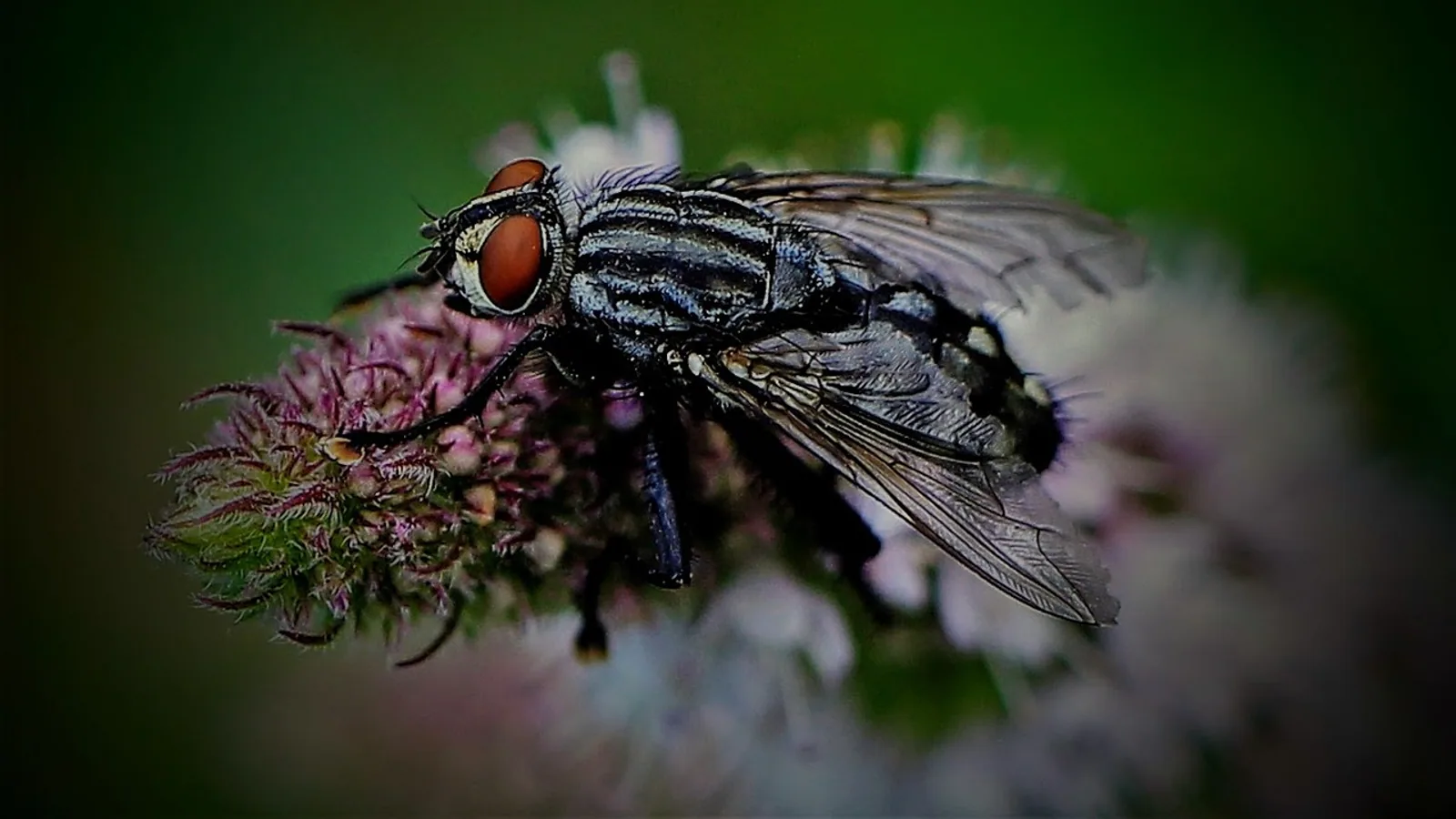
Black flies are small, humpbacked biting insects in the family Simuliidae whose adult females take blood meals from dogs, livestock and people. A black fly bite on a dog typically produces an itchy red wheal that becomes a crusted papule, most often on the muzzle, ear tips and lower belly, and repeated bites can build into hairless, darkened plaques.
This article covers what black flies are, why cases cluster near moving water, how to tell their bites apart from fleas and other skin problems, what diseases they can carry, and the practical steps that reduce exposure. It is written for dog owners in the United States who live near streams, rivers or irrigation channels, or who travel to those areas.
What Are Black Flies?


Black flies are true flies in the family Simuliidae. They are not "black flies" in the casual sense of any dark insect on the patio. They are a defined group with a defined body plan.
Adults are small, roughly 2 to 6 mm long, and stout. The most recognizable feature is the thorax, which is humped so the head appears to sit low and forward. This silhouette is why they are sometimes called buffalo gnats or turkey gnats. They have short legs, broad wings and a compact build that makes them look almost like a tiny, dark hump with wings attached.
Only the female bites. She needs a blood meal to develop her eggs. Males feed on nectar and plant sugars and do not bite. This matters for owners because the insects landing and crawling on a dog are almost always females in search of a host.
Identification to species level is difficult without a microscope and often requires molecular tools. A recent study from Thailand used COI barcoding and morphology together to describe a new species and redescribe a related one within the Simulium ceylonicum group, showing that morphologically similar black flies can be distinct species [1]. Work in Cameroon combined gill morphology with Cox1 and ITS2 sequencing to identify 19 Simulium species from 1,184 pupae collected at 13 sites, and reported two species not previously recorded there [2]. In other words, "a black fly" is a family-level label, and the exact species present depends on where you live.
The Life Cycle
Black flies pass through four stages: egg, larva, pupa and adult. The first three are aquatic. This single fact explains almost everything about where bites happen.
- Egg. A female lays eggs in flowing water, often on rocks, vegetation or submerged objects. Eggs hatch after a period that depends on temperature and species.
- Larva. The larva attaches to a hard surface in moving water and filters food from the current. Larvae have a characteristic fan-like structure at the head that they open into the flow to catch organic particles. They need well-oxygenated water, which is why they thrive in riffles, spillways and fast reaches rather than stagnant ponds.
- Pupa. The larva spins a cocoon and transforms into a pupa, still attached to the same submerged surface.
- Adult. The adult emerges at the water surface, often inside a bubble of air, then flies off. Females seek a blood meal. Adults can disperse away from the water source, but the strongest populations stay near it.
A study of black fly larvae in rural streams in northern Thailand collected 3,649 last-instar larvae representing 19 species across three subgenera, with Simulium nodosum, S. chiangmaiense, S. wangkwaiense, S. asakoae and S. fenestratum dominating [3]. Four human-biting species were identified, and three of those were found predominantly at village sites. The same study found that species composition was significantly associated with conductivity, stream width, water velocity and salinity [3]. The take-home point is that black fly communities track the physical and chemical character of the stream, not just its presence.
flowchart TD
    A[Female black fly seeks blood meal] --> B[Dog is bitten]
    B --> C[Saliva enters skin]
    C --> D[Wheal forms within minutes]
    D --> E[Wheal becomes itchy papule]
    E --> F[Dog scratches or rubs]
    F --> G[Crusted papule or scab]
    G --> H{Repeated bites}
    H --> I[Hair loss and darkening]
    H --> J[Secondary bacterial infection]
    I --> K[Veterinary assessment]
    J --> K
Why Black Fly Bites Cluster Near Streams and Rivers
Black flies breed in flowing, well-oxygenated water. This is the single most useful fact for a dog owner trying to predict risk.
If your dog's favorite walking route follows a creek, a river, a spillway below a dam, an irrigation canal or a spring-fed run, that route overlaps black fly habitat. If your dog's world is a suburban lawn, a fenced backyard far from moving water and a paved sidewalk, black fly exposure is usually low. Standing water, such as a birdbath or a stagnant pond, is not black fly habitat. It is mosquito habitat. Owners often conflate the two, and that leads to the wrong prevention plan.
The larval study from northern Thailand reinforces this. Human-biting species were associated with wider, warmer, fast-flowing water [3]. The insects are not evenly distributed along a watercourse. They concentrate where flow and chemistry suit them.
Dawn and Dusk Biting Peaks
Black flies bite during the day, but activity typically peaks around dawn and dusk. These are the hours when many owners walk dogs, which raises the odds of exposure. Biting pressure also rises on overcast, humid, still days, and it can spike dramatically after a period of suitable weather allows mass emergence. A clinical report on simuliosis described how suitable weather conditions can result in mass multiplication of a species, after which people and animals are seriously molested [4]. That is the pattern owners describe after a stretch of warm, wet spring weather: a sudden, overwhelming swarm.
Wind matters too. Black flies are weak fliers relative to their biting ambition, and a steady breeze reduces landings. Sheltered, humid, shaded spots near water are the worst combination.
What a Black Fly Bite Looks Like on a Dog
The reaction to a black fly bite is a two-stage skin event.
Immediately after the bite, a wheal appears. A wheal is a raised, pale or red, fluid-filled swelling, essentially a hive at the bite site. It forms within minutes and itches intensely. This is the acute reaction to the fly's saliva.
Over the next hours to days, the wheal resolves and is replaced by a papule, a small solid bump. The papule crusts. This crusted papule is the classic black fly lesion. If the dog keeps scratching, the crust is removed, bleeding and secondary infection can follow, and the lesion can persist.
With repeated bites over days or weeks, the skin changes. The area becomes hairless (alopecic) and darkens (hyperpigmented), and the lesions can coalesce into plaques. This is a chronic, thickened, discolored patch of skin. It is not a single bite. It is the accumulated result of many bites and a lot of self-trauma.
A clinical description of black fly bites in humans noted strong local reactions with redness, central hemorrhage, swelling, hemorrhagic erythema and edema, sometimes with effects on general health [4]. The dog version is usually less dramatic per bite but more cumulative, because dogs get bitten repeatedly on the same exposed areas.
Where the Lesions Appear
The distribution is a strong clue. Black flies land on exposed skin and on areas where hair is thin. On a dog, that means:
- The muzzle and bridge of the nose. Often the first place owners notice.
- The pinnae, especially the ear tips and the thin skin on the inside of the ear flap.
- The ventral abdomen, the sparsely haired lower belly.
- The groin and inner thighs in some dogs.
- Around the eyes in severe exposures.
A dog with crusted bumps on the nose and ear tips after a riverside walk is a classic presentation. A dog with crusted bumps only at the tail base is a classic flea presentation. The geography of the lesions is diagnostic information.
Table: Black Fly Bites Versus Common Differentials
| Feature | Black fly bites | Flea allergy dermatitis | Fly strike (myiasis) |
|---|---|---|---|
| Cause | Female Simuliidae taking a blood meal | Flea saliva allergy | Fly larvae infesting tissue |
| Typical location | Muzzle, pinnae, ventral abdomen | Tail base, lower back, rear legs, flank | Open wounds, soiled fur, skin folds, ears |
| Primary lesion | Wheal, then crusted papule | Intense itch, redness, self-trauma, hair loss | Wound with larvae, foul odor, tissue damage |
| Onset | Minutes after bite for wheal | Hours to days of itching | Hours to days as larvae develop |
| Itch level | Moderate to severe | Usually severe | Variable, often painful |
| Seasonality | Warm months, dawn and dusk peaks | Year-round indoors, peaks in warm months | Warm months, outdoor housing |
| Key clue | Recent exposure to moving water | Fleas or flea dirt found | Visible larvae or deep wound |
| Progression | Alopecic, hyperpigmented plaques with repeat bites | Thickened, darkened skin from chronic scratching | Expanding wound, systemic illness possible |
This table is a guide, not a diagnosis. Mixed infestations are common, and a dog can have fleas and black fly bites at the same time.
Risks: What Black Flies Transmit
Black flies are not just a nuisance. They are vectors, meaning they can carry pathogens from one host to another when they take a blood meal.
Onchocerca in Cattle and Other Livestock
Simulium species transmit Onchocerca parasites in cattle. This is a well-established veterinary role for the family, and it is one reason livestock producers near rivers pay attention to black fly populations. In Cameroon, S. vorax and S. dentulosum were confirmed as known vectors of onchocerciasis [2]. The same study noted that species not typically associated with human-biting behavior, such as S. cervicornutum, could potentially act as vectors under favorable conditions [2]. Vector status is not fixed. It depends on the fly species, the pathogen, the host and the environment.
Vesicular Stomatitis Epidemiology
Black flies are implicated in the epidemiology of vesicular stomatitis, a viral disease of livestock that also affects horses and can cause disease in people. The implication is epidemiological rather than a confirmed single-species vector relationship in every outbreak. For dog owners, the practical relevance is indirect: if you live in a livestock area with black fly pressure, the same flies that bother your dog are part of a larger transmission picture that veterinarians and producers monitor.
Pathogens Detected in Black Fly Surveys
Molecular screening studies give a sense of what black flies carry in a given region. In northern Thailand, screening of the S. asakoae species group found the highest infection rate for Leucocytozoon at 14% in individual specimens and 8.5% minimum infection rate in pools, followed by trypanosomatids at 10% in individuals and 4% in pools, and filarial nematodes at 5% in individuals and 2.5% in pools [5]. A multiplex PCR assay developed in that work differentiated S. asakoae from related species with 100% sensitivity and specificity [5].
A separate survey in South Moravia, Czech Republic, pooled 11,600 black flies across four Simulium species and screened for a long list of viruses, bacteria, protists and filariae [6]. Almost all pools were negative for known arthropod-borne pathogens. However, four new Bartonella variants were found that share similarity with other bartonellae reported from diverse arthropods and humans [6]. This is a useful reality check. Black flies carry pathogens, but the specific pathogen load varies enormously by region and species, and much of what they carry is not yet fully characterized.
What This Means for Your Dog
The direct evidence that black flies cause serious disease in dogs is thinner than the evidence for livestock and humans. The main documented harm to dogs is the bite reaction itself: the wheal, the crusted papule, the itch, the self-trauma and the chronic skin changes. Secondary bacterial infection of scratched lesions is a real risk. Owners should treat black fly bites as a skin problem first and a vector concern second, while recognizing that vector-borne disease is possible and region-dependent.
Preventing Black Fly Bites on Dogs
Prevention is about reducing exposure, because you cannot eliminate black flies from a river valley.
Timing and Route
Walk your dog away from moving water during dawn and dusk. If your only route follows a creek, shift the walk to mid-morning or early afternoon, when biting pressure is usually lower. Choose open, breezy paths over sheltered, humid ones. Wind is your ally.
Physical Barriers
A thin dog coat or vest reduces the exposed skin on the torso and belly. It will not stop flies from landing on the muzzle and ears, but it lowers the total number of bites. For dogs who tolerate them, lightweight ear covers can protect the pinnae. Check the fit so the dog does not overheat.
Screening and Shelter
If your dog spends time outdoors at home, screened kennels, fans and shaded, breezy resting areas reduce landings. Standing water in the yard is not the problem. Moving water nearby is. You cannot drain a river, but you can change where the dog rests.
Veterinary-Recommended Repellents
Ask your veterinarian which repellent products are appropriate for your dog, your region and your dog's health status. Product selection depends on the dog's age, weight, other medications and underlying conditions. Do not apply human insect repellents to dogs, and do not use products labeled for other species. This article does not provide insecticide doses, because dosing is a clinical decision.
Managing the Bite Reaction
If your dog comes home with fresh wheals, cool compresses can reduce swelling and itch. Prevent scratching with a cone or a light covering if the dog is targeting the lesions. Keep the crusted papules clean and dry. If lesions are spreading, oozing, malodorous or painful, or if the dog is lethargic or not eating, that is a veterinary visit, not a wait-and-see situation.
Common Myths and Questions
Myth: All small biting flies near water are black flies. Not true. Biting midges (Culicoides) and mosquitoes also breed or rest near water and bite dogs. A survey of dog and cat shelters in northern Spain collected 1,176 biting midges, 224 mosquitoes and exactly one black fly over a season [7]. Black flies can be a small fraction of the biting insect community even where they are present. The bite reaction and the habitat help distinguish them, but the insects are different.
Myth: Black flies breed in standing water. They do not. They need flowing, well-oxygenated water. Removing a stagnant pond will not reduce black flies. It may reduce mosquitoes.
Myth: Only dirty dogs get bitten. Black flies are not attracted to dirt. They are attracted to a host. Grooming does not prevent bites.
Myth: A single bite is harmless. A single bite is usually a self-limiting wheal and papule. The problem is repetition. Many bites over a season produce the chronic hairless, darkened plaques.
Question: Do black flies bite indoors? They can enter buildings, but the strongest biting activity is outdoors near breeding water, especially at dawn and dusk.
Question: Are black fly bites on dogs contagious to other pets? The bite reaction is not contagious. The flies themselves move between hosts, so if flies are active, multiple pets can be bitten.
Question: Can I use the same repellent on my dog that I use on myself? No. Species differences in drug metabolism make some human products unsafe for dogs. Ask your veterinarian.
Question: Do black flies transmit heartworm? Heartworm is transmitted by mosquitoes, not black flies. Do not change your heartworm prevention plan based on black fly activity.
Limitations and When to Contact a Veterinarian
This article is educational and is not a substitute for veterinary diagnosis or treatment. Individual dogs vary in how they react to bites, and the species of black fly and the pathogens they carry vary by region.
Contact a veterinarian if any of the following apply:
- Lesions are spreading, deepening or not improving after several days.
- The skin is oozing pus, is foul-smelling, or is hot and painful to touch.
- Your dog is scratching to the point of bleeding or is unable to settle.
- Your dog is lethargic, off food, or running a fever.
- You see swelling of the face, lips or throat, or any difficulty breathing.
- Your dog has a known skin condition, immune compromise or is on medication that affects healing.
- You are unsure whether the lesions are black fly bites, fleas, fly strike or something else.
A veterinarian can examine the skin, identify the lesion pattern, check for secondary infection and recommend a treatment plan. If vector-borne disease is a concern in your area, that is a conversation to have with your veterinarian, who knows the local disease picture.
Frequently Asked Questions
What do black fly bites look like on a dog?
They start as raised, itchy wheals and become crusted papules, most often on the muzzle, ear tips and lower belly. Repeated bites lead to hairless, darkened plaques.
Are black flies the same as mosquitoes?
No. Black flies are Simuliidae, small humpbacked flies that breed in flowing water. Mosquitoes are a different family and breed in standing water.
Why does my dog get bitten only near the river?
Black flies breed in flowing, well-oxygenated water, so populations concentrate near streams and rivers. Away from moving water, exposure drops sharply.
When are black flies most active?
Biting activity typically peaks around dawn and dusk and rises on warm, humid, still days. Mass emergence after suitable weather can cause sudden, intense swarms.
Do black fly bites need treatment?
Many bites resolve with home care, but crusted lesions that spread, ooze or cause severe itching need veterinary assessment. Secondary infection is a common complication.
Can black flies give my dog a disease?
Black flies transmit Onchocerca in cattle and are implicated in vesicular stomatitis epidemiology, and surveys have detected various pathogens in black fly populations. Direct serious disease in dogs is less well documented than the bite reaction itself.
How do I protect my dog from black flies?
Avoid riverside walks at dawn and dusk, choose breezy open routes, use a dog coat for torso coverage, and ask your veterinarian about safe repellent options.
Should I worry if my dog has one or two bites?
A few bites are usually minor and self-limiting. Watch for spreading lesions, pus, severe itching or systemic signs, and call your veterinarian if any appear.
Related Articles
- Black Cats: Myths, Facts, and Why They Make Wonderful Pets
- Pet Obesity Risk
- Black Cat
- Why Does My Bird Bite, and How to Stop It
- Pet Rat Zoonotic Diseases: Risks and Prevention
- Fly and Pest Control for Horses
- Black Widow Spider Bite in Pets: Signs and First Aid
- Raccoon as a Pet: Risks, Laws and Reality
- Dog and Flies: Fly Strike and Bite Relief
Sources
- Integrative Description and Redescription of Black Fly (Diptera: Simuliidae) Species in the Simulium (Gomphostilbia) ceylonicum Species-Group from Thailand.
- Morphological and Molecular Investigation of Non-Simulium damnosum Black Flies in Cameroon Using Nuclear ITS 2 and Mitochondrial Cox 1 Genes.
- Black fly larval diversity and community structure in rural streams of northern Thailand: associations with environmental factors.
- [[Simuliosis--dermatosis caused by black flies. A forgotten epizootic infection?].](https://pubmed.ncbi.nlm.nih.gov/2792491/)
- Multiplex PCR for the differentiation of Simulium asakoae and molecular detection of pathogens in the S. asakoae species group in Thailand.
- Molecular Screening of Black Flies (Diptera: Simuliidae) for Vector-Borne Zoonotic Pathogens, South Moravia, Czech Republic.
- Culicoides biting midges and mosquito fauna at three dog and cat shelters in rural and periurban areas in Northern Spain.