Black Widow Spider Bite in Pets: Signs and First Aid
By Dr. Zubair Khalid, DVM, MS, PhD ·
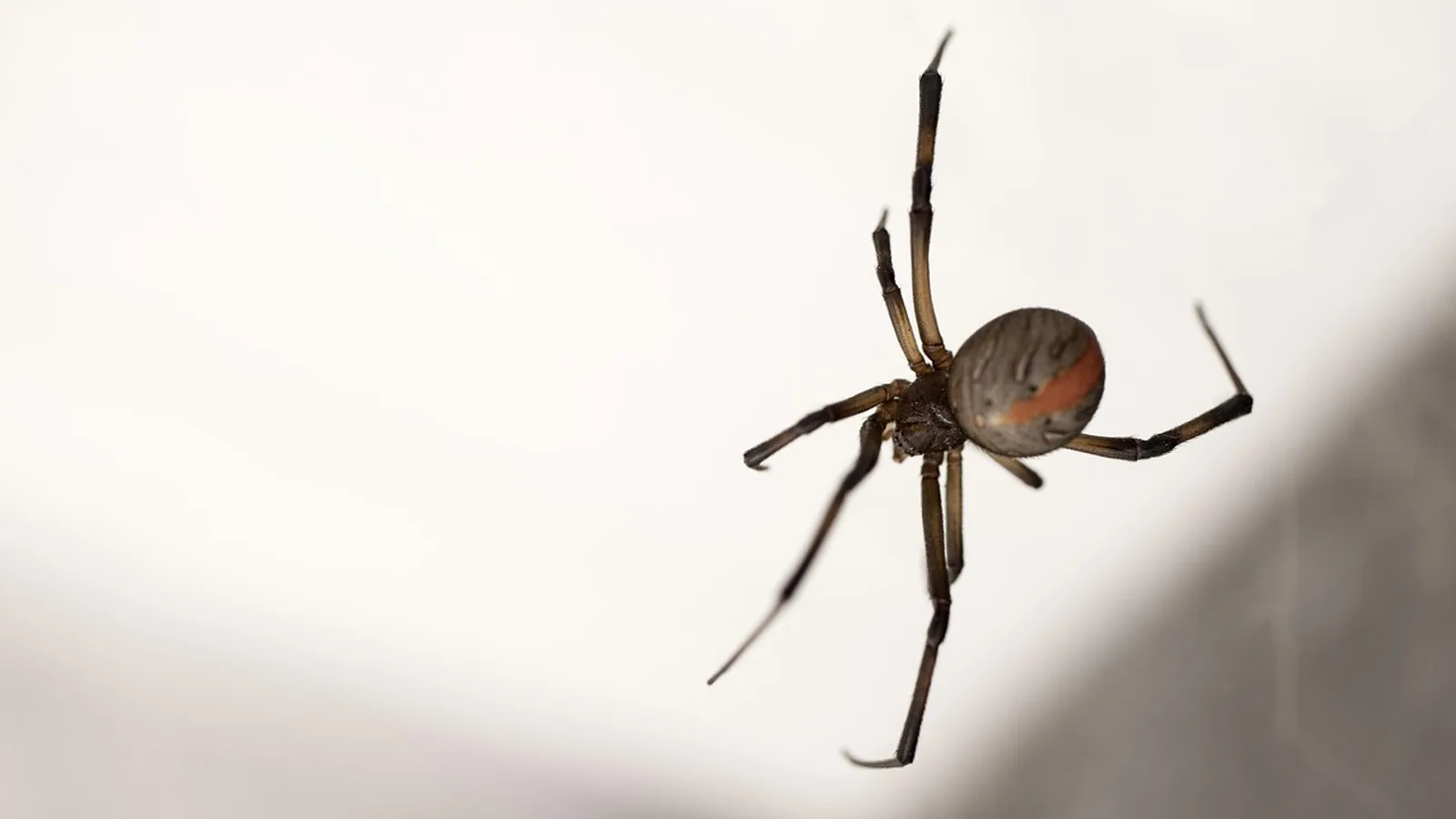
A black widow spider bite is a true small animal emergency, even though most pets survive it with prompt supportive care. The bite itself is often tiny and easy to miss. What follows is a neurotoxic syndrome called latrodectism, driven by a venom protein that forces nerve endings to dump their chemical messengers all at once. Signs usually appear within 30 minutes to a few hours and can escalate to muscle rigidity, vomiting, a racing heart, and dangerous blood pressure swings [1][2]. The hands-on first aid takes only a few minutes: keep the pet still, keep the bitten area below heart level if you can do so without a struggle, and drive to the nearest veterinary hospital. Total elapsed time from bite to treatment is what matters most, and that window is measured in hours, not days.
This guide explains what the venom does, how dogs and cats differ in their response, how to recognize the syndrome at each stage, and exactly what to do and what never to do at home. It also covers what a veterinarian will look for, how supportive care is delivered, and the practical reality that antivenom is often unavailable in veterinary settings.
This article is educational and is not a substitute for veterinary diagnosis or treatment.
What a Black Widow Spider Bite Does to a Pet
Black widow spiders belong to the genus Latrodectus, a group found worldwide with more than 40,000 spider species described globally and several Latrodectus species of medical importance [1]. The venom's principal neurotoxin is alpha-latrotoxin, the molecule responsible for the clinical syndrome known as latrodectism [1][3].
Alpha-latrotoxin works presynaptically. It inserts into the membrane of the nerve terminal and triggers massive release of neurotransmitter into the synapse, without any normal signal telling the nerve to fire. The result is a flood of excitatory signaling at neuromuscular junctions and throughout the autonomic nervous system. That single mechanism explains nearly every sign owners see: uncontrolled muscle activity, autonomic storm, and the cardiovascular consequences that follow [1][2].
The venom dose matters enormously. A large dog receiving a small envenomation may show only transient discomfort. A small pet, a young pet, or a pet receiving a full venom load can deteriorate quickly. Young children in the human literature show greater morbidity because of their small size relative to the amount of venom delivered, and the same principle applies to small animal patients [4].
Why the Bite Is Easy to Miss
The bite wound is frequently invisible. Black widow spiders have small fangs, and the puncture may leave nothing more than a faint red mark or no mark at all. Many owners never see the spider. Diagnosis is therefore clinical, built from the timeline of signs plus the possibility of exposure, not from finding a wound.
Spiders favor dark, sheltered spaces. Shoes, garages, woodpiles, crawl spaces, outdoor furniture, and garden debris are classic hiding places. One reported human case involved a bite delivered inside a shoe while the person was working in a garden [3]. Pets are exposed through the same route: a nose pushed into a woodpile, a paw under a shed, or a curious cat batting at something in a corner.
Species Differences: Dogs Versus Cats
Dogs and cats share the same underlying syndrome but often present differently, and the difference shapes how quickly an owner recognizes the problem.
Dogs
Dogs tend to show the classic latrodectism picture in a recognizable sequence. Muscle fasciculations and rigidity come first, often in the large muscle groups of the back and limbs. Vomiting is common. Autonomic signs follow: hypersalivation, restlessness, and a heart rate and blood pressure that climb. Abdominal rigidity can be pronounced enough to mimic an acute abdomen, a presentation documented in human case reports where patients were evaluated for a surgical abdomen before the true cause was identified [3][1].
Because dogs are often outdoors unsupervised, the exposure event may go unwitnessed. A dog that suddenly cannot settle, trembles, and vomits within a couple of hours of being outside is a dog that needs immediate evaluation.
Cats
Cats frequently show a more dramatic behavioral picture. Marked vocalization and restlessness are prominent, and a cat in latrodectism may pace, yowl, and resist handling in a way that is out of character. Muscle rigidity and hypersalivation appear alongside this agitation. Cats are also masters at hiding early discomfort, so by the time vocalization begins, the syndrome may already be established.
Cats are smaller than most dogs, which raises the relative venom dose per kilogram of body weight. That alone justifies treating any suspected feline envenomation as urgent. The same size principle that increases morbidity in young children applies to small patients generally [4].
What Both Species Share
In both dogs and cats, the cardiovascular effects are real and measurable. A systematic review of human envenomation found that among 25 patients, 17 (68 percent) had hypertension and 16 (64 percent) had tachycardia [2]. High troponin levels, a marker of cardiac muscle stress, were found in 16 (64 percent) of those patients, and electrocardiographic changes including ST-T segment abnormalities appeared in nine (36 percent) [2]. These are human figures and should not be read as canine or feline percentages, but they establish that the venom's cardiovascular reach is not a rare curiosity. It is a core feature of the syndrome, and it is why veterinary monitoring focuses on the heart as much as on the muscles.
The Timeline of Latrodectism in Pets
Signs emerge over a predictable arc. The table below maps the typical progression from minutes to 24 hours and flags the points at which a pet needs to be seen.
| Time After Bite | What You May See | Triage Trigger |
|---|---|---|
| 0 to 30 minutes | Bite may be unnoticed. Pet may be normal or show a small area of discomfort. | Note the time and location. Begin transport if you witnessed a bite. |
| 30 minutes to 2 hours | Muscle fasciculations, trembling, restlessness, early hypersalivation. Vomiting may begin. | Any new trembling or vomiting after possible exposure means go now. |
| 2 to 6 hours | Rigidity of limbs, back, or abdomen. Marked vocalization in cats. Tachycardia and rising blood pressure. | Emergency visit. Do not wait to see if it passes. |
| 6 to 12 hours | Peak rigidity, severe pain, profuse salivation, persistent vomiting, autonomic instability. | Hospital admission and continuous monitoring. |
| 12 to 24 hours | Signs may plateau or begin to ease with supportive care. Cardiac enzyme elevation may be detectable. | Continued monitoring for cardiac involvement. |
| Beyond 24 hours | Gradual improvement is expected with supportive care. Cardiac effects may lag behind clinical recovery. | Recheck cardiac status before discharge planning. |
The 30-minute to a few-hour onset window is the single most useful fact for an owner. If a pet was fine at 6 p.m. and is trembling, drooling, and vomiting by 8 p.m. after being in the yard, the timing fits envenomation and the pet needs care immediately [1].
Cardiac markers can rise even when the electrocardiogram looks unremarkable. In one reported case, a patient's troponin I climbed from 0.14 ng/mL to 3.01 ng/mL over follow-up while the ECG showed normal sinus rhythm [3]. The lesson for owners is that a normal-looking heart rhythm does not rule out cardiac involvement, and it does not justify delaying care.
Step-by-Step First Aid for a Suspected Black Widow Spider Bite
First aid for latrodectism is deliberately minimal. The goal is to slow venom movement, prevent injury during agitation, and get the pet to a veterinarian. Everything else is a distraction.
Materials You Need
| Item | Purpose | Notes |
|---|---|---|
| Leash or carrier | Immobilization and safe transport | A rigid carrier is ideal for cats |
| Clean gauze | Light coverage of the bite site if visible | Do not wrap tightly |
| Cool compress | Local comfort only | Optional, never in place of transport |
| Phone | Call the veterinary hospital en route | Confirm they are open and can take an emergency |
| Towel or blanket | Restraint and warmth | Prevents struggling and self-injury |
No working concentrations, dilutions, or home reagents are required. There is no home antidote for latrodectism. Any product marketed as a spider bite remedy for pets should be set aside in favor of transport.
The Procedure
- Move the pet away from the area where the bite happened. Reason: a second bite is possible if the spider is still present, and a second venom load worsens the syndrome.
- Keep the pet calm and still. Reason: muscle activity and agitation increase circulation, which can speed venom distribution. Carry small pets. Use a leash with no running or jumping for larger dogs.
- Position the bitten area at or below heart level if the pet tolerates it. Reason: this is a standard measure to limit upward venom spread. Do not fight a struggling pet to achieve this. A calm pet in a slightly wrong position is safer than an agitated pet in the ideal one.
- Cover the bite site loosely with clean gauze if you can see it. Reason: light coverage keeps the area clean. Do not apply a tight bandage and do not apply a tourniquet.
- Do not cut, squeeze, or suction the wound. Reason: incision and suction do not remove alpha-latrotoxin, add tissue damage, introduce infection, and delay transport. This is the most common harmful instinct and it must be resisted.
- Do not apply heat or ice packs for prolonged periods. Reason: extreme temperatures can injure tissue and provide no benefit against a neurotoxin. A brief cool compress for comfort is acceptable.
- Call the veterinary hospital while you are driving. Reason: advance notice lets the team prepare for a critical patient and confirm whether they can manage a suspected envenomation or need to redirect you.
- Bring the spider if it was killed safely and can be transported in a sealed container. Reason: species identification helps guide treatment. Never handle a live spider. Never delay transport to search for it.
- Note the time of the suspected bite and the time each sign appeared. Reason: the onset timeline is one of the most useful pieces of information for the veterinarian.
- Do not give any human medication. Reason: pain relievers and other drugs given without veterinary direction can mask signs, cause toxicity, or interact with treatments the veterinarian plans to use.
The Decision Path
The flowchart below shows the main decision path from suspected exposure to veterinary care.
flowchart TD
    A[Suspected bite] --> B{Bite witnessed}
    B -->|Yes| C[Immobilize and transport now]
    B -->|No| D{Pet showing signs}
    D -->|Yes| C
    D -->|No| E[Monitor closely for 6 hours]
    E --> F{Signs appear}
    F -->|Yes| C
    F -->|No| G[Call vet for advice]
    C --> H[Veterinary exam]
    H --> I{Severity assessed}
    I -->|Mild| J[Supportive care and monitoring]
    I -->|Severe| K[Hospital admission and intensive support]
    J --> L[Recheck and discharge planning]
    K --> L
What the Veterinarian Will Do
Veterinary management of latrodectism is built on supportive care, because antivenom availability in small animal practice is inconsistent and often limited to specific regions or referral centers.
Assessment
The veterinarian will take a history focused on exposure and timing, then perform a physical examination looking for muscle rigidity, fasciculations, hypersalivation, abdominal guarding, and cardiovascular instability. Baseline blood work typically includes cardiac markers, since troponin elevation has been documented after black widow envenomation [5][3]. An electrocardiogram and, in severe cases, imaging of the heart may be considered. The human literature notes that there are no pathognomonic features on imaging or ECG, which means the diagnosis rests on the clinical picture rather than any single test [2].
Supportive Care
Supportive care addresses each problem the venom creates. Pain control is central, because latrodectism is genuinely painful. Muscle relaxants have been studied in human medicine, with one older comparison examining calcium gluconate against methocarbamol for latrodectism [6]. Fluid therapy, anti-nausea medication, and control of autonomic instability round out the basic package. In severe cases with cardiac involvement, intensive monitoring and mechanical support may be required. One reported human case developed acute myocarditis with cardiogenic pulmonary edema requiring mechanical ventilation, and the patient improved progressively with supportive management [7].
The duration of care varies with severity. In a pediatric case series, children with severe envenomation required 1 to 3 days in intensive care and 2 to 5 days of total hospital stay [4]. Those figures come from human patients and describe a different species and a different patient population, but they illustrate the scale of time involved. Owners should plan for at least an overnight stay in moderate to severe cases.
Antivenom: Availability and Realistic Expectations
Latrodectus antivenom exists and is described as safe and effective in the human literature. In one pediatric series, every patient needed morphine for pain relief and all required intensive care admission, yet antivenom was unavailable and no patient received it [4]. In another review of 93 pediatric exposures, only 14 patients (41.1 percent) of the severe group received antivenom, and reasons for withholding it included a positive skin test, a strong history of asthma or allergies, physician preference, and non-availability [8]. When antivenom was given, it was associated with improvement of symptoms within minutes, and all treated patients were discharged within hours without an analgesic requirement or complications [8].
The practical takeaway for pet owners is that antivenom is not something to count on. In many regions it is simply not stocked for veterinary use, and supportive care is the only treatment option [1]. A case report from Iran described quadriplegia as a rare complication of envenomation in a setting where antivenom was unavailable and supportive care was the sole option [1]. This does not mean every pet will do poorly. It means the quality of supportive care and the speed of presentation carry most of the weight.
Recognizing Severe Envenomation Early
Most pets with latrodectism improve with supportive care. A minority develop complications that change the prognosis, and owners should know what those look like.
Cardiovascular Complications
The cardiovascular system is the most common site of serious involvement. In the systematic review of 25 human patients, hypertension appeared in 68 percent and tachycardia in 64 percent, with elevated troponin in 64 percent [2]. Wall motion abnormalities were present in 11 patients (44 percent), and reduced ejection fraction appeared in 10 (40 percent) [2]. Three patients experienced left ventricle global hypokinesis [2]. These findings are the reason a veterinarian may keep a bitten pet on a cardiac monitor even when the pet looks stable.
Cardiac involvement can be severe. Documented cases include reversible myocarditis after envenomation [7], myocarditis with elevated cardiac enzymes [9], and acute fatal toxic myocarditis [10]. A case report described a patient who developed acute myocarditis with cardiogenic pulmonary edema requiring mechanical ventilation, with progressive improvement in clinical, biochemical, and echocardiographic values afterward [7]. The existence of fatal outcomes means that any pet with chest-related signs, labored breathing, or collapse needs immediate intensive care.
Neurologic Complications
Neurologic effects usually predominate in severe cases. A pediatric case series found that neurologic effects were the leading feature, and all patients required morphine for pain relief [4]. Quadriplegia has been reported as a rare complication [1]. In pets, severe rigidity and inability to stand are the practical equivalents and warrant the same urgency.
Autonomic Signs
Pain, agitation, anxiety, tachycardia, diaphoresis, hypertension, muscle cramps, motor unrest, and abdominal pain that can mimic an acute abdomen are the main clinical manifestations of latrodectism [1]. A human case presented with nausea, vomiting, and severe abdominal rigidity that was initially evaluated as a possible acute abdomen, with severe sweating and diffuse abdominal guarding on examination [3]. In a pet, this translates to a rigid, painful abdomen, drooling, and a pet that cannot get comfortable.
Troubleshooting: Common Problems During a Suspected Envenomation
| Problem | Likely Cause | What to Do |
|---|---|---|
| Pet struggles during transport | Pain, agitation, autonomic storm | Use a carrier or towel wrap. Do not restrain forcefully. Drive safely. |
| You cannot find the spider | Small spider, hidden bite, unwitnessed event | Proceed on the clinical picture. Identification is helpful but not required for treatment. |
| Pet vomits repeatedly en route | Autonomic effects of venom | Keep the airway clear. Do not offer food or water. Continue to the hospital. |
| You are unsure whether it was a black widow | Many bites look alike | Treat any bite with rapid neurologic or autonomic signs as an emergency. |
| Nearest clinic is far away | Rural location | Call ahead. Ask whether they can manage a critical patient or should redirect you. |
| Pet seems to improve then worsens | Cardiac involvement can lag | Do not cancel the veterinary visit based on a temporary improvement. |
Variations in Presentation
Not every pet follows the textbook arc. Three variations are worth knowing.
The mild case. A small venom dose in a large dog may produce only transient trembling and mild discomfort. These pets still warrant a veterinary call, because the cardiovascular effects can be delayed and subtle.
The abdominal presentation. A pet with a rigid, painful abdomen and vomiting may be evaluated for a gastrointestinal obstruction or pancreatitis before envenomation is considered. Human cases have been referred for differential diagnosis of an acute abdomen after a black widow bite [3]. Mentioning any possible spider exposure to the veterinarian helps direct the workup.
The cardiac-dominant case. Rarely, the first obvious problem is cardiac. Elevated troponin, ECG changes, and wall motion abnormalities can appear with or without dramatic muscle signs [2][3][5]. A pet that collapses or breathes abnormally after possible exposure needs immediate cardiac assessment.
Storage and Stability Notes
There is no home kit to store for latrodectism and no reagent to keep on hand. The only items worth keeping ready are a rigid pet carrier, a leash, clean gauze, and a towel. Store them where you can grab them in seconds, because the value of first aid here is measured in minutes saved, not in materials prepared.
If you capture a spider for identification, place it in a sealed, hard container and keep it out of reach of children and other pets. Do not refrigerate it and do not handle it. Identification is a convenience, never a reason to delay care.
Prevention in the Home and Yard


Prevention is straightforward and does not require chemicals. Black widow spiders prefer undisturbed, dark, dry spaces. Reduce those spaces around your home.
- Shake out shoes, boots, and gardening gloves before putting them on.
- Clear woodpiles, leaf litter, and debris away from the foundation.
- Check outdoor furniture and children's toys before use.
- Seal gaps under doors and around utility penetrations.
- Keep pets from exploring crawl spaces, sheds, and stacked materials.
- Use a flashlight when reaching into dark corners of garages and basements.
These measures reduce the chance of an encounter. They do not eliminate it, which is why recognizing the syndrome matters as much as preventing it.
Limitations and When to Contact a Veterinarian
This article describes the general pattern of black widow envenomation and the first aid steps that apply before professional care. Individual cases vary in severity, speed of progression, and response to treatment, and only a veterinarian who examines your pet can determine what that pet needs.
Contact a veterinarian immediately, or go directly to an emergency hospital, if any of the following apply:
- You witnessed a bite by a spider you believe or know to be a black widow.
- Your pet developed trembling, muscle rigidity, or fasciculations within hours of possible exposure.
- Your pet is vomiting repeatedly or drooling heavily without an obvious cause.
- Your cat is vocalizing persistently, pacing, or behaving in a way that is clearly out of character.
- Your pet has a rigid, painful abdomen or is guarding the belly.
- Your pet is breathing rapidly, breathing with effort, or has collapsed.
- Your pet has a known heart condition, is very young, is very small, or is a senior.
- Signs are worsening rather than stable.
Do not wait for a wound to appear. Do not wait to see whether the signs resolve on their own. The window for the best outcome is short, and early supportive care is the intervention that matters most.
Frequently Asked Questions
How fast do black widow spider bite signs appear in pets?
Signs usually appear within 30 minutes to a few hours of the bite. Muscle fasciculations, rigidity, hypersalivation, vomiting, tachycardia, and hypertension are the core features, and cats may show marked vocalization and restlessness [1][2].
Should I cut or suction the bite site?
No. Incision and suction do not remove alpha-latrotoxin, add tissue damage, and delay transport. First aid is immobilization and immediate transport to a veterinary hospital.
Can my pet survive a black widow spider bite without antivenom?
Yes. Many pets recover with supportive care alone, and antivenom is often unavailable in veterinary settings, making supportive care the primary treatment option [1]. Severity depends on the venom dose, the pet's size, and how quickly care begins.
Is a black widow spider bite more dangerous for cats or dogs?
Cats often show more dramatic behavioral signs such as vocalization and restlessness, and their smaller size raises the relative venom dose per kilogram of body weight. Both species can develop serious cardiovascular effects, so both need urgent care.
What heart problems can a black widow spider bite cause?
Hypertension, tachycardia, elevated troponin, ST-T segment abnormalities, supraventricular tachyarrhythmias, wall motion abnormalities, and reduced ejection fraction have all been documented after envenomation [2]. Myocarditis and cardiogenic pulmonary edema are rare but reported [7].
How long will my pet need to stay at the hospital?
It depends on severity. In a severe human pediatric series, intensive care stays ranged from 1 to 3 days and total hospital stays from 2 to 5 days [4]. Pets with mild signs may be monitored for a shorter period.
Can I give my pet pain medication at home before the vet visit?
No. Do not give any human medication without veterinary direction. It can mask signs, cause toxicity, or interfere with the treatments the veterinarian plans to use.
What should I bring to the veterinary hospital?
Bring the time of the suspected bite, the time each sign appeared, and the spider in a sealed container if it was killed safely. Never handle a live spider and never delay transport to search for it.
Related Articles
- Dog Broken Leg: Signs, First Aid, and Transport
- Behavioral First Aid for Exotic Pets
- Pet First Aid Kit: What Should Owners Keep at Home?
- Dog Ate a Toad: Signs of Toad Poisoning and Emergency First Aid
- Cat Eye Injury: Signs, First Aid, and When to See the Vet
- How to Build a Pet First Aid Kit: The 20 Items Every Owner Needs
- False Black Widow Spider: ID and Bite
- Rattlesnake Bite in Dogs: Emergency First Aid
Sources
- Quadriplegia as a Rare Complication of Black Widow Spider Envenomation
- Black Widow Spider Envenomation and Cardiovascular Complications
- Black Widow Spider Envenomation with Elevated Troponin I Levels
- Black widow spider (Latrodectus renivulatus) envenomation in children in Saudi Arabia: a case series
- Troponin elevation after black widow spider envenomation.
- A comparison of calcium gluconate and methocarbamol (Robaxin) in the treatment of Latrodectism (black widow spider envenomation).
- Reversible Myocarditis after Black Widow Spider Envenomation
- Treatment of pediatric black widow spider envenomation: A national poison center's experience
- Myocarditis after black widow spider envenomation.
- Acute fatal toxic myocarditis after black widow spider envenomation.