Chordata Phylum: Key Characteristics and Classes
By Dr. Zubair Khalid, DVM, MS, PhD ·
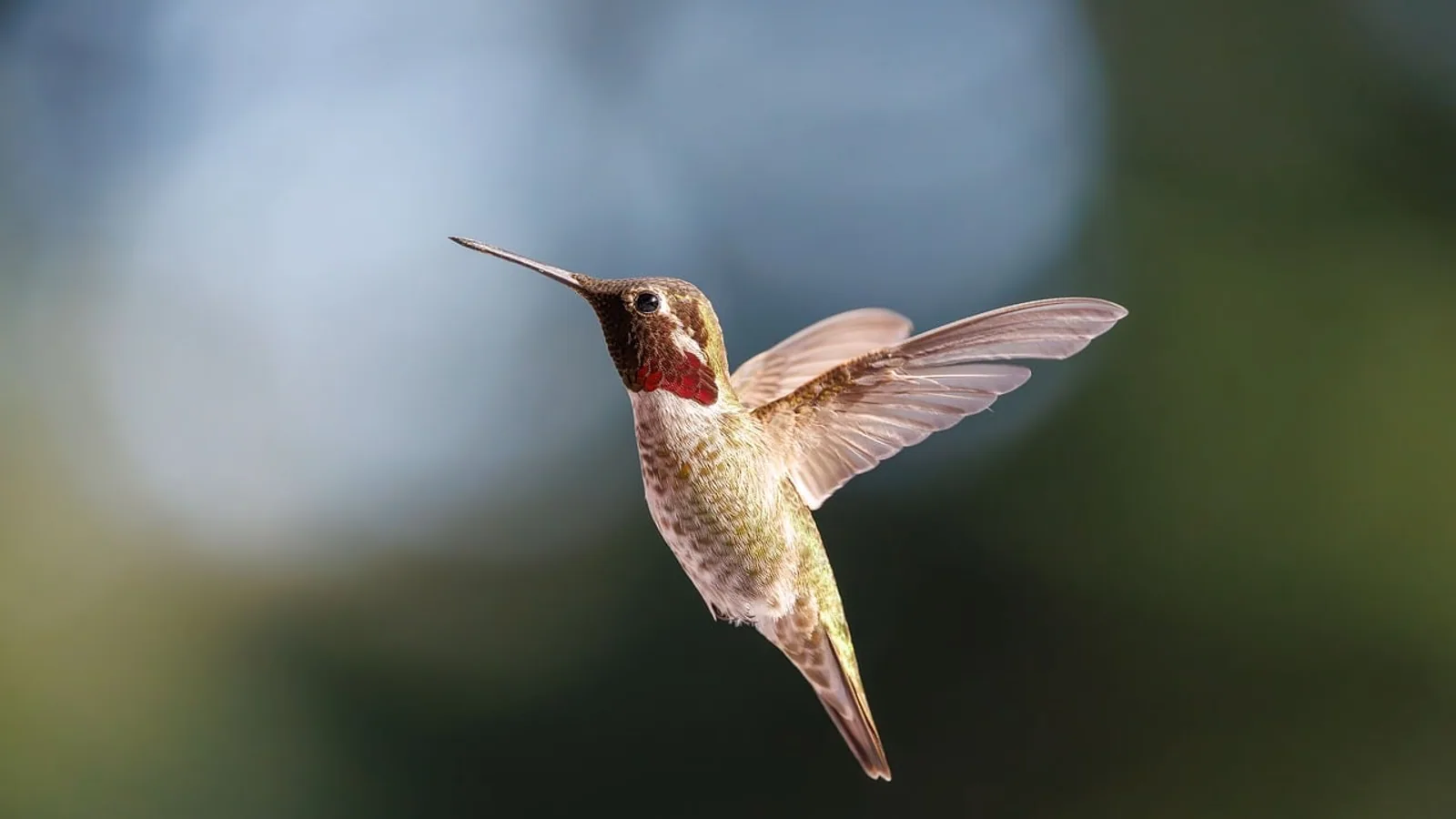
The phylum Chordata is a group of animals within kingdom Animalia defined by five features that appear at some point in the life cycle: a notochord, a dorsal hollow nerve cord, pharyngeal slits, a post-anal tail, and an endostyle or thyroid gland. A chordata animal can be a sea squirt that loses most of those features as an adult, a lancelet that keeps all five for life, or a mammal that shows them only as an embryo.
Chordates matter because they include every vertebrate on Earth, from lampreys to humans, and because the phylum is the clearest working example of how embryonic structures get repurposed over evolutionary time. The same tissue that forms gill slits in a fish embryo becomes the jaw, the middle ear bones, and the thyroid in later lineages [1]. Learning the chordate body plan is therefore a foundation for comparative anatomy, developmental biology, and any life science career that touches vertebrate physiology.
The Five Defining Chordate Features
Every member of the phylum Chordata shows these five structures at some stage of development. Some are permanent, some are transient, and some are transformed into completely different adult organs.
1. Notochord
The notochord is a flexible rod of stiff, fluid-filled cells running along the dorsal (back) side of the body, beneath the nerve cord. It provides skeletal support and a midline axis for muscle attachment. In lancelets and in the embryos of all vertebrates, the notochord is the primary axial support. In most adult vertebrates, it is replaced by the vertebral column, though remnants persist as the nuclei pulposi of the intervertebral discs. The notochord is a signaling center as well as a physical rod. Classic embryology experiments showed that embryos with a reduced or absent organizer fail to build a body axis and fail to form any of the four other chordate characters [2].
2. Dorsal Hollow Nerve Cord
The dorsal hollow nerve cord is a tube of nervous tissue that runs along the back, above the notochord, and develops from a rolled-up sheet of ectoderm (the outer embryonic germ layer). In vertebrates, its anterior end enlarges into the brain and the rest becomes the spinal cord. This is one of the cleanest ways to tell a chordate from an invertebrate with a nerve cord. Most invertebrates have a solid, ventral nerve cord. Chordates have a hollow, dorsal one.
3. Pharyngeal Slits
Pharyngeal slits are openings that connect the inside of the throat (pharynx) to the outside of the body. In invertebrate chordates and in fish, they function mainly in filter feeding and in gill-based gas exchange. The pharyngeal apparatus originated as gill bars separated by slits in chordate ancestors, and it later gave rise to the branchial basket of jawless vertebrates and then to the jaw, jaw support, and gills of jawed vertebrates [1]. In tetrapods (four-limbed vertebrates), the pharyngeal pouches of the embryo no longer open to the outside. They instead give rise to structures such as the middle ear cavity, the thymus, and the parathyroid glands. Fossil evidence from Cambrian vetulicolians shows anterior lateral perforations that are diagnostic of deuterostomes, the larger group that includes chordates and echinoderms [3].
4. Post-Anal Tail
The post-anal tail is a muscular extension of the body that continues past the anus. It contains notochord, nerve cord, and muscle, and it is used in swimming and balance. In humans, the tail is present during early embryonic development and then regresses into the coccyx. In fish and many reptiles, it is a permanent locomotory organ.
5. Endostyle or Thyroid Gland
The endostyle is a ciliated groove in the floor of the pharynx that secretes mucus for filter feeding and also concentrates iodine. In vertebrates, the endostyle is replaced by the thyroid gland, which uses iodine to make thyroid hormones that regulate metabolism. The two structures are homologous, meaning they share a common evolutionary origin. This is why the endostyle is often called the evolutionary precursor of the thyroid.
Why the Phylum Matters
Chordates are the animal group most studied in developmental biology, and for good reason. The phylum contains about 65,000 living species, and its members span an enormous range of body plans, from a few millimeters of transparent lancelet to a blue whale. Because the body plan is built on a shared set of embryonic structures, findings in one chordate often apply to others. The organizer region that patterns the chordate body axis was first described in amphibians and has since been studied across the phylum [2]. Cartilage, a tissue long thought to be a vertebrate invention, has been found in gill-like structures of diverse marine invertebrates, suggesting it first arose in early bilaterians [4]. Even the sea cucumber, an echinoderm and not a chordate, carries marker genes associated with notochord and gill slits, hinting that these chordate features were present in ancestral echinoderms before the lineages split [5].
The Three Chordate Subphyla
Chordates are traditionally divided into three subphyla. The distinction is not just about anatomy. It is about which features are kept and which are lost as the animal matures.
Cephalochordata (Lancelets)
Cephalochordates, commonly called lancelets or amphioxus, are small, fish-like marine animals that live partly buried in sand. They are the textbook chordate because they retain all five defining features throughout life. The notochord runs the entire length of the body, all the way into the head, which is where the name "cephalo" (head) "chordata" (cord) comes from. The dorsal hollow nerve cord sits above it, pharyngeal slits are used for filter feeding, a post-anal tail is present, and the endostyle lines the pharynx. Lancelets have no true brain, no skull, and no vertebral column. They are often described as the closest living approximation of the ancestral chordate body plan.
Urochordata (Tunicates)
Urochordates, also called tunicates or sea squirts, are the group that most often trips up students. The adult tunicate is a sac-like filter feeder attached to a rock or dock, with a tough outer covering called a tunic, an incurrent siphon, an excurrent siphon, and a basket-like pharynx. It has no notochord, no dorsal hollow nerve cord, no post-anal tail, and no obvious segmentation. The five chordate features are present only in the free-swimming larva, which looks like a tiny tadpole and uses its notochord and tail to swim before settling down and undergoing metamorphosis. During that metamorphosis, the tail, notochord, and much of the nerve cord are resorbed. The pharyngeal slits and endostyle remain and are used for filter feeding. This is the key point about tunicates: they are chordates because of their larval stage, not their adult form.
Vertebrata (Vertebrates)
Vertebrates are chordates with a vertebral column (backbone) that replaces or surrounds the notochord. They also have a skull that encloses a well-developed brain, a closed circulatory system with a chambered heart, and paired appendages in most groups. The notochord persists in the embryo and in the center of the intervertebral discs. Vertebrates include the seven classes covered in the next section. The evolution of the jaw, from the un-jointed pharynx of jawless vertebrates to the hinged jaw of jawed vertebrates, is one of the major transitions in vertebrate history, and it depended on the pharyngeal arches and on neural crest cells that build the branchial skeleton [1].
The Seven Vertebrate Classes
Vertebrates are commonly grouped into seven classes. This is a practical teaching framework rather than a strict cladistic scheme, and modern phylogenetics rearranges some of these groupings. The table below summarizes the key features and representative examples of each class.
| Class | Key Features | Representative Examples |
|---|---|---|
| Agnatha (jawless fishes) | No jaw, no paired fins, cartilaginous skeleton, round mouth, persistent notochord | Lampreys, hagfishes |
| Chondrichthyes (cartilaginous fishes) | Cartilaginous skeleton, jaws, paired fins, placoid scales, no swim bladder | Sharks, rays, skates, chimaeras |
| Osteichthyes (bony fishes) | Bony skeleton, jaws, paired fins, swim bladder or lung, operculum covering gills | Salmon, tuna, goldfish, seahorses, lungfish |
| Amphibia (amphibians) | Moist permeable skin, external fertilization in most species, aquatic larvae with gills, metamorphosis to lung-breathing adults | Frogs, toads, salamanders, newts, caecilians |
| Reptilia (reptiles) | Dry scaly skin, lungs, internal fertilization, amniotic eggs in most species, ectothermic | Snakes, lizards, turtles, crocodilians, tuatara |
| Aves (birds) | Feathers, wings, beak, hollow bones, four-chambered heart, endothermic, hard-shelled eggs | Robins, eagles, penguins, ostriches, hummingbirds |
| Mammalia (mammals) | Hair or fur, mammary glands, three middle ear bones, diaphragm, endothermic, most give live birth | Humans, dogs, whales, bats, elephants, kangaroos |
Agnatha: The Jawless Fishes
Agnathans are the oldest living vertebrate lineage. They have a round, sucker-like mouth with horny teeth but no jaw. Their skeleton is cartilaginous, and the notochord persists into adulthood. Lampreys are parasitic as adults, attaching to fish and feeding on blood and tissue. Hagfishes are scavengers that produce copious slime as a defense. The pharyngeal apparatus in agnathans forms a branchial basket rather than a true jaw, which is the ancestral condition from which jawed vertebrates evolved [1].
Chondrichthyes: The Cartilaginous Fishes
Chondrichthyans have jaws and paired fins, but their skeleton is made of cartilage rather than bone. Their skin is covered in placoid scales, which are structurally similar to teeth. They have no swim bladder, so sharks must keep swimming or rest on the bottom to avoid sinking. Fertilization is internal, and many species give birth to live young. Rays and skates are flattened chondrichthyans adapted to life on the seafloor.
Osteichthyes: The Bony Fishes
Osteichthyes is the largest vertebrate class by species count. Bony fishes have a skeleton reinforced with calcium phosphate, a swim bladder that controls buoyancy, and an operculum (a bony flap) covering the gills. Most bony fishes fertilize externally and lay eggs, though some, like guppies, give live birth. Lungfish are bony fishes that have lungs as well as gills and can survive periods of drought by burrowing into mud.
Amphibia: The Amphibians
Amphibians are the bridge between water and land. Most species lay eggs in water, and the larvae hatch as aquatic tadpoles with gills and a tail. Through metamorphosis, they develop lungs and limbs and move onto land as adults. Their skin is moist and permeable, which makes them vulnerable to dehydration and to pollutants. The repurposing of gill developmental programs during the water-to-land transition is a major theme in vertebrate evolution, and gill-related genes have been co-opted for new structures in terrestrial animals [4].
Reptilia: The Reptiles
Reptiles solved the problem of reproducing on dry land by evolving the amniotic egg, which has a protective shell and membranes that keep the embryo from drying out. Their skin is covered in scales and is relatively impermeable. Most reptiles are ectothermic, meaning they rely on external heat sources to regulate body temperature. Reptiles include snakes, lizards, turtles, crocodilians, and the tuatara of New Zealand. Crocodilians are more closely related to birds than to other reptiles, a fact that has reshaped how biologists draw the reptile family tree.
Aves: The Birds
Birds are reptiles in the cladistic sense, but they are traditionally treated as a separate class because of their distinctive features. Feathers, wings, a beak, hollow bones, and a four-chambered heart set them apart. Birds are endothermic, meaning they generate their own body heat, and they lay hard-shelled eggs. Their high metabolic rate supports powered flight. The transformation of the articular and quadrate bones of the reptilian jaw joint into the malleus and incus of the mammalian middle ear is one of the best-documented transitions in vertebrate paleontology, and it separates the mammalian lineage from the reptilian one [1].
Mammalia: The Mammals
Mammals are defined by mammary glands that produce milk for offspring, hair or fur, and three middle ear bones (the malleus, incus, and stapes). Most mammals give live birth, though monotremes like the platypus lay eggs. Mammals are endothermic and have a diaphragm that separates the chest cavity from the abdomen. They range from the bumblebee bat, one of the smallest mammals, to the blue whale, the largest animal that has ever lived.
How Chordates Are Studied
Chordate features are studied through comparative embryology, anatomy, and molecular biology. In the laboratory, developmental biologists use model organisms from each subphylum. The lancelet is used to study the ancestral chordate body plan. The tunicate is used to study metamorphosis and the loss of larval structures. Zebrafish, frogs, chickens, and mice are used to study vertebrate development, and the organizer region that patterns the body axis was first identified in amphibians [2].
Anatomical study of chordates relies on dissection, histology, and imaging. Pharyngeal slits and gill filaments are examined in cross section to see how the epithelial outgrowths form and how they connect to the vasculature. In vertebrates, the mesenchymal support of the gills comes from cranial neural crest cells, a population of migratory embryonic cells unique to vertebrates [4]. Molecular methods, including genome sequencing and gene expression analysis, have shown that marker genes for notochord and gill slits are present even in echinoderms, which are not chordates [5]. This kind of comparative genomics is how biologists reconstruct which features are ancestral and which are derived.
Common Mistakes and Limitations
Students and researchers make several predictable errors when working with chordates.
Treating "chordate" and "vertebrate" as synonyms. Vertebrates are a subphylum within Chordata. Lancelets and tunicates are chordates but not vertebrates.
Assuming all chordates keep all five features as adults. Tunicates lose the notochord, nerve cord, and tail during metamorphosis. Humans lose the tail and most of the notochord. The features are defining at some life stage, not at every life stage.
Confusing pharyngeal slits with gills. Slits are the openings. Gills are the respiratory structures associated with them. In tetrapods, the pharyngeal pouches no longer open to the outside and form entirely different organs.
Assuming the seven-class system is the final word. Modern phylogenetics groups birds within reptiles and rearranges jawless fishes, and some biologists treat Osteichthyes as paraphyletic unless it includes tetrapods. The seven-class framework is a teaching tool, not a claim about the true tree.
Forgetting that the endostyle and thyroid are the same evolutionary structure under different names. The iodine-concentrating function is the shared trait.
Individual specimens can show variation in how completely a structure forms or regresses. For anything involving a specific animal's health or anatomy, consult a veterinarian or a qualified biologist rather than relying on general rules.
Quick Review
- The five chordate features are the notochord, dorsal hollow nerve cord, pharyngeal slits, post-anal tail, and endostyle or thyroid.
- The features must be present at some life stage, not necessarily in the adult.
- Cephalochordates (lancelets) keep all five features for life.
- Urochordates (tunicates) show the features only as larvae and lose most of them as adults.
- Vertebrates have a backbone, a skull, and a well-developed brain.
- The seven vertebrate classes are Agnatha, Chondrichthyes, Osteichthyes, Amphibia, Reptilia, Aves, and Mammalia.
- The pharyngeal apparatus gave rise to jaws, gills, and several tetrapod organs.
Frequently Asked Questions
What are the five defining characteristics of the Chordata phylum?
The five defining features are a notochord, a dorsal hollow nerve cord, pharyngeal slits, a post-anal tail, and an endostyle or thyroid gland. Each must be present at some point in the animal's life cycle, though not necessarily in the adult form.
Is a tunicate a chordate if it loses its tail as an adult?
Yes. A tunicate is a chordate because its free-swimming larva has a notochord, dorsal hollow nerve cord, and post-anal tail. Those structures are resorbed during metamorphosis, but the pharyngeal slits and endostyle remain, and the larval stage is what places the animal in Chordata.
What is the difference between a chordate and a vertebrate?
Every vertebrate is a chordate, but not every chordate is a vertebrate. Vertebrates are a subphylum defined by a vertebral column and a skull. Lancelets and tunicates are chordates that lack both.
Which vertebrate class has the most species?
Osteichthyes, the bony fishes, is the largest vertebrate class by species count. It includes salmon, tuna, goldfish, seahorses, and lungfish.
Do all chordates have a backbone?
No. Only vertebrates have a backbone. Lancelets and tunicates are chordates without a vertebral column, and they rely on the notochord for support.
Why is the endostyle important in chordate evolution?
The endostyle is homologous to the vertebrate thyroid gland. Both concentrate iodine, and the endostyle is considered the evolutionary precursor of the thyroid, which regulates metabolism in all vertebrates.
Related Articles
- Dog Potty Training Classes
- Dog Crate Training Classes
- Z-DNA Characteristics: Structure, Biology, and Detection
- Veterinary Pharmacology Drug Classes: A NAVLE Review
- Nubian Goats: Breed Characteristics and Care Essentials
- Boer Goat Breed Profile: Characteristics and Management
- Annelid Phylum: Characteristics and Examples
- Animal vs Plant Cell: Key Differences Compared
- Prokinetic Agents: Drug Classes and GI Uses
Further Reading
Sources
- Evolution and development of the fish jaw skeleton
- Evolution of the organizer and the chordate body plan.
- Evidence for gill slits and a pharynx in Cambrian vetulicolians: implications for the early evolution of deuterostomes
- Evolution of Gills Across the Animal Kingdom.
- The sea cucumber genome provides insights into morphological evolution and visceral regeneration