Chitin: Structure, Function and Where It Is Found
By Dr. Zubair Khalid, DVM, MS, PhD ·
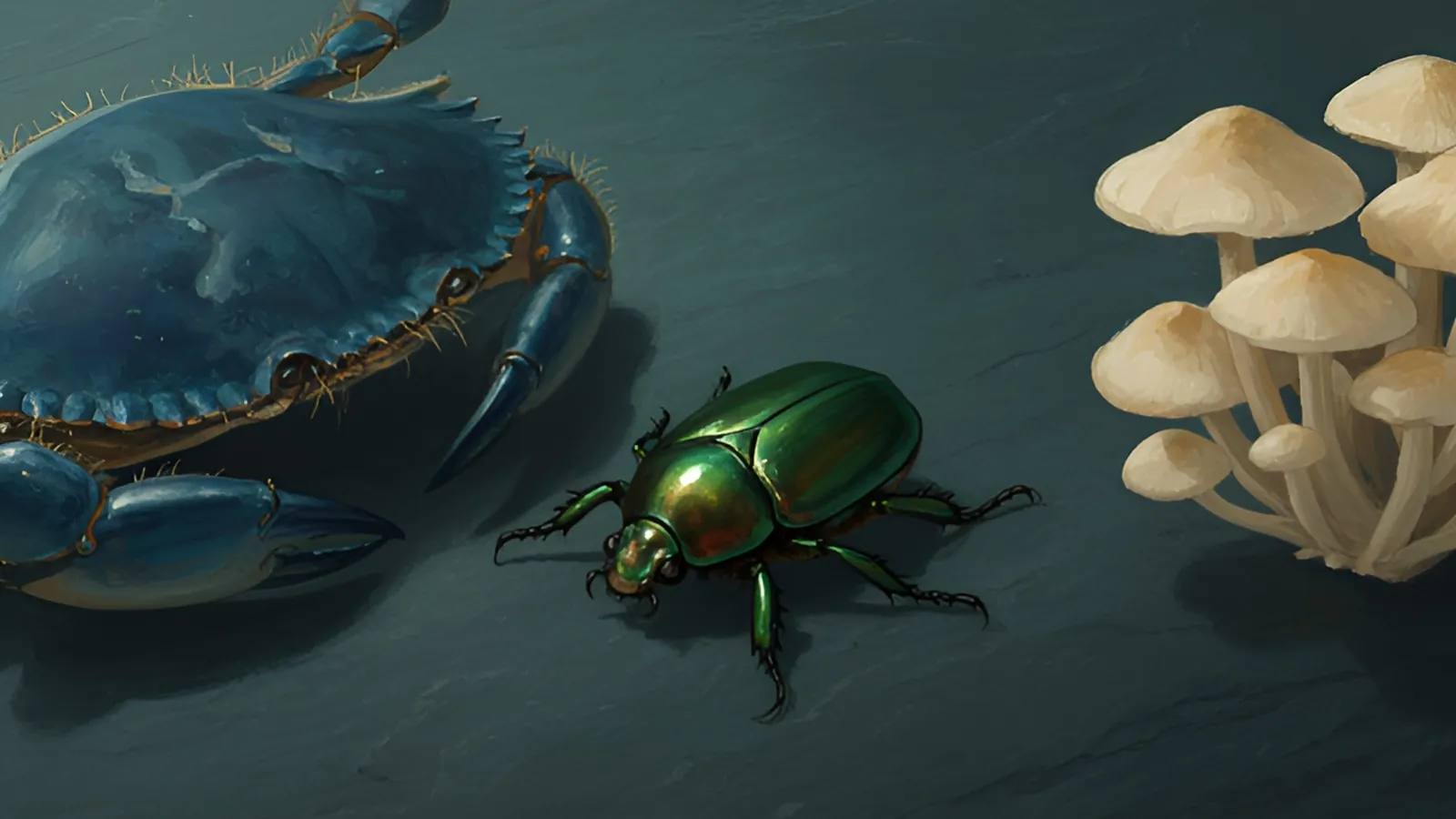
Chitin is a long-chain polymer of N-acetylglucosamine and the second most abundant polysaccharide in nature after cellulose (Chitin). It is a primary component of fungal cell walls, arthropod exoskeletons, mollusk radulae and cephalopod beaks, and it occurs in some nematodes, diatoms, fish, and lissamphibians.
The polymer is built from N-acetyl-D-glucosamine units joined by beta-1,4 linkages, making chitin a nitrogen-bearing structural polysaccharide comparable to cellulose (Chitin). Pure chitin is translucent, pliable, resilient, and tough; in arthropods it often occurs in composites such as sclerotin or calcium carbonate composites, and commercial supplies are extracted from seafood shells.
Key Points
- Chitin has the formula $(C_8H_{13}O_5N)_n$ and is made from N-acetyl-D-glucosamine, an amide derivative of glucose (Chitin).
- Its monomers are joined by beta-1,4 linkages; an acetyl amine group on each monomer replaces one hydroxyl group and allows more hydrogen bonding between adjacent polymers.
- Pure chitin is translucent, pliable, resilient, and tough, and it forms crystalline nanofibrils or whiskers.
- In insects, chitin occurs largely in sclerotin, a tanned proteinaceous matrix; in crustacean and mollusk shells it combines with calcium carbonate to form a stronger composite.
- Estimated biosphere production is about 1 billion tons per year, placing chitin second in abundance to cellulose (Chitin; Chitin - Definition, Function, Structure and Examples).
- Commercial chitin is extracted from crab, shrimp, shellfish, and lobster shells, which are major by-products of the seafood industry.
At a Glance
| Property | Detail |
|---|---|
| What it is | Long-chain polysaccharide of N-acetylglucosamine |
| Formula | $(C_8H_{13}NO_5)_n$ |
| Family | Beta-(1,4)-linked glucan, closely related to cellulose |
| Main sources | Crustacean shells, insect cuticles, fungal cell walls |
| Main properties | Strong, lightweight, insoluble in water, biodegradable |
| Main derivative | Chitosan, produced by deacetylation |
| Common uses | Wound care, food processing, agriculture, water treatment |
Chitin is the structural material that gives strength to arthropod exoskeletons, mollusk hard parts and fungal cell walls (Chitin and Chitosan: Production and Application of ...). It is the second most abundant polysaccharide in nature, behind cellulose, with roughly 1 billion tons produced each year in the biosphere (Chitin).
What Is Chitin?
Chitin is a structural polysaccharide, a long-chain polymer built from N-acetylglucosamine, an amide derivative of glucose (Chitin). It is one of the most abundant natural polymers on the planet. Among polysaccharides only cellulose exceeds it in quantity, and an estimated 1 billion tons are produced each year in the biosphere. Surveys of global synthesis put the annual figure above 1 billion tons (Chitin - Definition, Function, Structure and Examples). In nature, chitin rarely occurs in pure form (Chitin).
A Material with Two Faces
Pure chitin is translucent, pliable, resilient and quite tough (Chitin). Older descriptions call it a white, horny substance found in the outer skeleton of insects, crabs and lobsters (Chitin). In most arthropods the polymer is modified and appears as one ingredient of a composite material, such as sclerotin, a tanned proteinaceous matrix that forms much of the insect exoskeleton. Combined with calcium carbonate, as in the shells of crustaceans and mollusks, chitin produces a composite that is harder and stiffer than pure chitin and tougher and less brittle than pure calcium carbonate.
The Name and the First Description
The English word chitin comes from the French chitine, derived in 1821 from the Greek word khiton, meaning covering or tunic (Chitin; Chitin). Chitin was first described in 1811 from mushroom tissue (Chitin). Its structure was determined in 1929 by Albert Hofmann, who hydrolyzed the polymer with a crude preparation of the enzyme chitinase obtained from the snail Helix pomatia.
A Nitrogen-Containing Structural Polymer
What separates chitin from cellulose is nitrogen. Each monomer carries an acetamido group where cellulose carries a hydroxyl group, and this substitution allows increased hydrogen bonding between adjacent chains, giving the polymer matrix greater strength (Chitin). The same substitution helps explain why the polymer does not dissolve in water or in dilute acid, and why it resists many solvents that dissolve other polysaccharides.
The Job It Does
Chitin fills in invertebrates and fungi the structural role that cellulose fills in plants (Chitin - Definition, Function, Structure and Examples). Cellulose is restricted to plants, keratin to animals, and chitin to arthropods, mollusks and fungi. Both chitin and cellulose appeared early in the history of life, while keratin arose in certain animals long after plants and fungi had branched off. Functionally, chitin is comparable to the protein keratin; structurally, it is comparable to cellulose (Chitin).
The polymer is widespread:
- Exoskeletons of arthropods, including crustaceans and insects (Chitin)
- Cell walls of fungi, especially filamentous and mushroom-forming species
- Radulae, cephalopod beaks and gladii of mollusks
- Some nematodes and diatoms
- Tissues of at least some fish and lissamphibians
Commercially, chitin is extracted from the shells of crabs, shrimps, shellfish and lobsters, which are major by-products of the seafood industry (Chitin).
Chemical Structure of Chitin
The Repeat Unit
Chitin is a linear chain of beta-(1,4)-linked N-acetylglucosamine residues, written as $(C_8H_{13}NO_5)_n$ (Chitin; Chitin and Chitosan: Production and Application of ...). Each residue is a glucose molecule in which the hydroxyl group at carbon 2 has been replaced by an acetamido group, so the monomer is properly named 2-(acetylamino)-2-deoxy-D-glucose (Chitin). Residues are joined by covalent beta-(1 to 4) glycosidic linkages, the same type of bond that connects glucose units in cellulose.
Reading the formula is straightforward. Each residue contributes 8 carbon, 13 hydrogen, 1 nitrogen and 5 oxygen atoms, and n counts the residues in the chain. As acetyl groups are removed, the composition shifts toward that of glucosamine, $(C_6H_{11}NO_4)_n$, the repeating unit of fully deacetylated chitosan.
A short stretch of chain can be written as:
GlcNAc -(beta-1,4)- GlcNAc -(beta-1,4)- GlcNAc -(beta-1,4)- ...
where GlcNAc stands for one N-acetylglucosamine residue.
Hydrogen Bonding and Crystalline Fibrils
The acetamido group permits increased hydrogen bonding between adjacent polymers, and this gives the chitin matrix increased strength (Chitin). Chains pack into crystalline nanofibrils or whiskers, the structural units that reinforce shells, cuticles and cell walls. Cellulose forms comparable crystalline nanofibrils, which is one reason the two polymers are so often compared.
Three Crystalline Forms
Chitin occurs in three forms, alpha, beta and gamma, which differ in the way the chains are packed (Chitin). Alpha chitin is the most common form and is the one typical of crustacean shells. Because packing controls how tightly chains sit against one another, the form influences water uptake, enzyme access and the behavior of the polymer during extraction and processing.
Chain Length and Purity
Chain length and purity vary with the species of origin and with the processing method used (Chitin and Chitosan: Production and Application of ...). Commercial extraction starts from a biological composite, and the steps that remove calcium carbonate and protein also affect the length and purity of the recovered chains. Two samples that pass the same identity test can therefore differ in molecular weight and in residual protein, which is why specification sheets report those values alongside the source material.
| Structural feature | Description |
|---|---|
| Monomer | N-acetylglucosamine (2-acetamido-2-deoxy-D-glucose) |
| Linkage | Beta-(1,4) glycosidic bonds (Chitin) |
| Formula | $(C_8H_{13}NO_5)_n$ |
| Group at carbon 2 | Acetamido (-NHCOCH3) |
| Chain shape | Linear and unbranched |
| Solid state | Crystalline nanofibrils or whiskers |
| Crystalline forms | Alpha, beta and gamma |
Chitin, Chitosan and Cellulose Compared
All three polymers share a beta-linked sugar backbone, and the differences between them come down to one substituent and how it is treated after extraction.
| Feature | Chitin | Chitosan | Cellulose |
|---|---|---|---|
| Backbone | Beta-(1,4)-N-acetylglucosamine | Beta-(1,4)-glucosamine, mostly deacetylated | Beta-(1,4)-glucose |
| Group at carbon 2 | Acetamido | Amino | Hydroxyl |
| Nitrogen | Present | Present | Absent |
| Solubility in water | Insoluble | Insoluble | Insoluble |
| Solubility in dilute acid | Insoluble | Soluble (Chitin and Chitosan: Production and Application of ...) | Insoluble |
| Charge behavior | Largely neutral | Altered by deacetylation | Neutral |
| Typical source | Crustacean shells, insects, fungi (Chitin) | Made from chitin by deacetylation | Plant cell walls (Chitin - Definition, Function, Structure and Examples) |
What Deacetylation Changes
Chitosan is chitin with most of its acetyl groups chemically removed (Chitin and Chitosan: Production and Application of ...). Removing an acetyl group converts an acetamido group into a free amino group, and that change alters charge, solubility and film-forming behavior. The most visible consequence is solubility: chitosan dissolves in dilute acid, while chitin stays insoluble. A laboratory that needs a polymer it can cast into a film from an acidic bath, or adsorb onto a charged surface, reaches for chitosan. A laboratory that needs an inert, hard reinforcing particle reaches for chitin.
Degree of Deacetylation
Commercial chitosan is graded by its degree of deacetylation (Chitin and Chitosan: Production and Application of ...). The grade states what fraction of the acetyl groups has been removed, so it predicts how many free amino groups a sample carries. Two samples that share a name and a viscosity range can behave differently in solution if their degrees of deacetylation differ, which is why the grade is reported alongside the other specifications.
A Shared Skeleton with Cellulose
Chitin may be described as cellulose with one hydroxyl group on each monomer replaced by an acetyl amine group (Chitin). Both are beta-linked glucans that build stiff structural fibers (Chitin - Definition, Function, Structure and Examples). The backbone is identical; the substituent at carbon 2 is not. Cellulose carries a hydroxyl group at that position, chitin an acetamido group, chitosan an amino group. Because the backbone and the beta linkage are conserved, the three polymers share stiffness, insolubility in water and resistance to mild solvents.
The comparison with keratin is different in kind. Keratin is a fibrous protein, so it matches chitin in function, not in chemistry (Chitin). Chitin belongs with cellulose and the other structural polysaccharides; keratin belongs with the structural proteins.
Where Chitin Is Found in Nature
Chitin is a structural polysaccharide built from N-acetylglucosamine units. It is the second most abundant polysaccharide in nature after cellulose, and an estimated 1 billion tons are produced each year in the biosphere (Chitin). Its distribution crosses three very different parts of the living world: animals, fungi, and a scattering of protists and algae.
The main groups that contain chitin
| Group | Where chitin occurs | Notes |
|---|---|---|
| Crustaceans (crabs, shrimp, lobsters, krill) | Shells and exoskeleton | Main commercial source (Chitin) |
| Insects (beetles, locusts, butterflies) | Body wall, gut lining, tracheae, wings | Forms the cuticle |
| Fungi (molds, yeasts, mushrooms) | Cell walls | Especially filamentous and mushroom-forming fungi (Chitin; Chitin) |
| Mollusks | Radulae, beaks, gladii | Hard, wear-resistant feeding structures |
| Nematodes | Eggs and other hardened structures | Reported in several species (Chitin - Definition, Function, Structure and Examples) |
| Diatoms | Cell walls | Some species |
The crustacean and insect records are the most familiar. Every crab shell, shrimp tail, and beetle elytron contains chitin fibers. Fungi use the same polymer for a different job: it reinforces the wall around the hypha, keeping the growing tip from bursting under internal pressure. Mollusks use it in the rasping radula and in the hard beaks of cephalopods (Chitin).
Where chitin is absent
Higher plants do not make chitin. Their cell walls are built from cellulose, which has a similar backbone but different chemistry (Chitin). Vertebrates do not build skeletons or skin from chitin either, and no vertebrate can digest it without help from symbiotic microbes (Chitin - Definition, Function, Structure and Examples). That said, the boundary is not absolute: chitin synthesis has been reported in at least some fish and lissamphibians. The amounts and locations are limited, and chitin remains a minor material in those animals compared with its role in arthropods and fungi.
Seafood waste as the commercial reservoir
Almost all commercial chitin comes from shellfish processing. Crab, shrimp, and lobster shells are a major by-product of the seafood industry, and they accumulate in large quantities near processing plants (Chitin). Extraction usually involves three steps: grinding the shells, dissolving the calcium carbonate with dilute acid (demineralization), and removing proteins with alkali (deproteinization). The result is a crude chitin that can be further treated to remove acetyl groups and produce chitosan (Chitin and Chitosan: Production and Application of ...).
This waste stream is why chitin chemistry and seafood economics are linked. A shrimp plant that discards tons of shell per day is discarding a raw material that can be converted into fibers, films, flocculants, and soil amendments.
A note on scale
Because chitin is produced by so many organisms, it turns over constantly. Fungi and insects are short-lived, and their chitin returns to the soil through microbial breakdown. Crustacean shells shed during molting add to the same pool. The yearly production figure of about 1 billion tons gives a sense of how large that natural flow is (Chitin).
Chitin in Arthropods and Other Animals
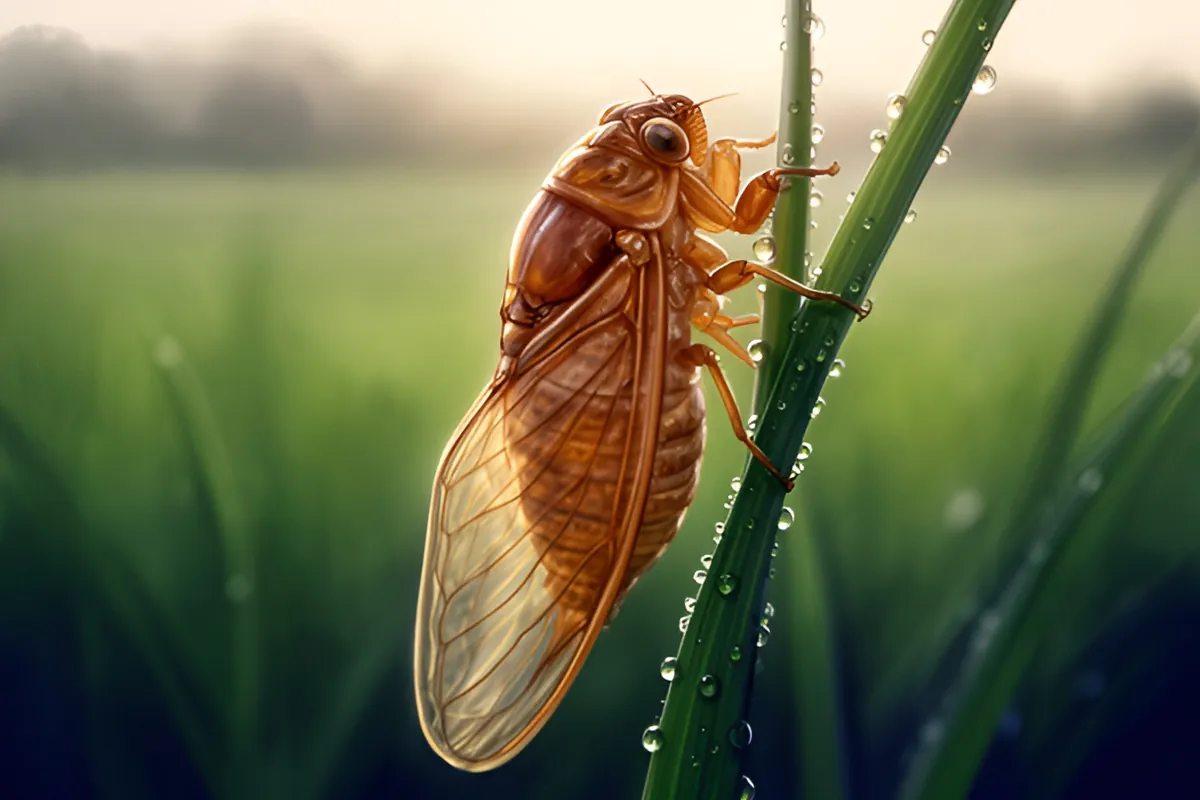
An arthropod cuticle is a composite material. Chitin nanofibers are embedded in a protein matrix, and the two components together give the exoskeleton its unusual combination of lightness, flexibility, and tear resistance. Pure, unmodified chitin is translucent, pliable, resilient, and quite tough (Chitin). In most arthropods it is modified further, and the final material differs sharply between groups.
Three versions of the same building block
| Material | Main composition | Mechanical result |
|---|---|---|
| Pure chitin | Chitin nanofibers | Translucent, flexible, tough (Chitin) |
| Insect cuticle (sclerotin) | Chitin in a tanned protein matrix | Stiff, hard, often dark |
| Crustacean shell | Chitin plus calcium carbonate | Harder and stiffer than pure chitin, tougher and less brittle than pure calcium carbonate |
Sclerotin forms much of the exoskeleton of insects (Chitin). The tanning reactions cross-link proteins around the chitin fibers, and the resulting material can be thin yet rigid enough to serve as a jaw, a wing case, or a leg segment. Crustacean shells take a different route. Deposited calcium carbonate fills the chitin-protein framework and produces a composite that is much stronger than either component alone (Chitin; Chitin).
Chitin inside the body
The exoskeleton is the visible part, but chitin also lines internal surfaces. In insects it appears in the gut lining, where it forms part of the peritrophic matrix that separates food from the gut epithelium. It reinforces the tracheae, the branching tubes that carry air through the body. It stiffens the wings, where a thin chitin membrane stretched over veins gives a surface light enough for flight.
Growth means shedding the skeleton
A rigid outer skeleton cannot expand, so arthropods grow by molting. A new, soft cuticle forms underneath the old one, the old cuticle splits and is shed, and the animal expands before the new layer hardens. During that window the animal is soft and vulnerable. Hardening follows within hours to days, through protein tanning in insects and mineral deposition in crustaceans.
The molt cycle explains why soft-shell crabs are a commercial product and why freshly molted insects are easy prey. It also explains why chitin is a renewable material: a growing crab or shrimp deposits a new shell each time it molts, and the old one enters the waste stream or the sediment.
Other animal groups
Mollusks use chitin in the radula, the toothed ribbon used for scraping food, and in the hard beaks and internal rods of cephalopods (Chitin). Nematodes use it in eggshells and other hardened structures (Chitin - Definition, Function, Structure and Examples). These uses are more localized than the full-body armor of an arthropod, but the chemistry is the same: chitin fibers stiffen a protein framework where wear resistance or protection is needed.
Chitin in Fungi
In fungi, chitin is a load-bearing polymer in the cell wall (Chitin). The wall is a layered composite, and chitin microfibrils are one part of it. Glucans, mannoproteins, and in some species dark pigments fill out the rest. The mixture gives the wall tensile strength while still allowing the hypha to extend at its tip.

What the wall is made of
| Component | Contribution to the wall |
|---|---|
| Chitin | Tensile strength, shape, reinforcement of septa and scars |
| Beta-glucans | Bulk and cross-linking network |
| Mannoproteins | Surface layer, adhesion, and signaling |
| Pigments (in some species) | Protection against radiation and enzymes |
The proportions are not fixed. Chitin content differs between species, between growth stages, and between hyphal types. A yeast cell and a filamentous hypha of the same organism can have quite different walls, and the wall of a spore is different again. These differences matter when the wall is being attacked by enzymes or drugs.
How the polymer is laid down
Chitin is synthesized by membrane-bound enzymes called chitin synthases, which extrude the polymer through the plasma membrane into the wall space. New polymer is deposited at growing hyphal tips, where the wall must be strong enough to contain turgor pressure yet extensible enough to allow extension (Chitin and Chitosan: Production and Application of ...). Behind the tip, the wall is reinforced and cross-linked to glucans and proteins, and the hypha becomes rigid.
The result is a wall that grows at one end and stiffens behind the growth zone. Septa, the cross-walls that divide hyphae into compartments, also contain chitin, and so do the bud scars left on yeast cells after a daughter cell separates.
Why fungal chitin matters outside the fungus
Chitin is absent from human cells and from plant cell walls. That difference makes the fungal chitin pathway a target for control strategies in agriculture and medicine (Chitin and Chitosan: Production and Application of ...). Chitin synthase inhibitors and chitin-degrading enzymes have been studied as antifungal tools, and fungal cell wall components are recognized by plant immune systems, which respond to chitin fragments released during infection.
Fungal chitin also has industrial value. The cell walls of mushrooms and molds are a source of chitin and chitosan, and fungal biomass from fermentation is being explored as an alternative to shellfish waste. For now, shellfish remains the dominant commercial source, but the fungal route avoids the seasonal and regional limits of seafood processing.
What Chitin Does: Biological Functions
Chitin is a scaffold. Its job in every organism that makes it is to provide shape and mechanical support where soft tissue alone would collapse, tear, or lose water. The specific functions depend on what the polymer is combined with.
Structure and protection
In soft-bodied invertebrates, chitin gives shape, stiffness, and protection. It forms a barrier against predators, against microbial attack, and against drying out. An insect cuticle limits water loss so effectively that insects dominate many dry habitats. A fungal wall holds turgor pressure that would otherwise burst the hypha. A nematode eggshell protects the embryo until conditions improve.
The composite nature of the material matters. Chitin fibers alone are tough and pliable, but they become stiff and hard when cross-linked to tanned proteins in insect cuticle or mineralized with calcium carbonate in crustacean shells (Chitin). The same polymer, with different partners, yields a flexible larva skin or a claw capable of crushing.
A scaffold for minerals
Chitin acts as a scaffold for mineral deposition in shells and cuticles (Chitin). In crustaceans, calcium carbonate is laid down within the chitin-protein framework, producing a composite that is harder and stiffer than pure chitin and tougher and less brittle than pure calcium carbonate (Chitin). The organic fibers control where the mineral forms and how it is oriented, which is why the resulting shell resists cracking.
Support for muscles and joints
Inside an arthropod exoskeleton, chitin provides attachment points for muscles. Tendons and apodemes, the internal ridges that muscles pull against, are chitin-rich extensions of the cuticle. Without a stiff outer skeleton there would be nothing for a leg muscle to work against. The joint membranes between plates stay thin and flexible so that limbs can move.
Signaling and immunity
Chitin fragments act as signals. When fungal walls are partly broken down during infection, the released oligomers can trigger plant immune responses. Animals with chitin-based structures also use fragments as cues during molting and repair. The polymer is a structural material first, but its breakdown products carry information.
Breakdown and turnover
Chitin breaks down cleanly in soil through microbial chitinases (Chitin - Definition, Function, Structure and Examples). Because it is biodegradable, it does not persist the way some synthetic polymers do. Chitin and chitosan films, threads, and gels degrade over time in the environment and in tissue, which is the basis for many of their applications. The same property means that a shed shell does not accumulate: it is recycled by microbes and becomes part of the soil carbon and nitrogen pool.
The cycle is short. A fungus or insect builds chitin, uses it, dies or molts, and the polymer is hydrolyzed by chitinases produced by bacteria and fungi. Chitin is therefore both a structural material and a significant flow of nitrogen through ecosystems.
How Chitin Is Made and Broken Down
Biosynthesis in living cells
Chitin is assembled inside living organisms by chitin synthase enzymes (Chitin and Chitosan: Production and Application of ...). These enzymes link units of N-acetylglucosamine through beta-1,4 glycosidic bonds, producing long polymer chains (Chitin). The chains associate into crystalline nanofibrils or whiskers, and those fibrils give strength to fungal cell walls and arthropod exoskeletons. In fungi, newly made chains are deposited into the cell wall. In arthropods, chitin is secreted by epidermal cells and organized with proteins and minerals into composite materials.
The polymer is translucent, pliable and tough in pure form (Chitin). Its strength increases when it is combined with other materials, as in sclerotin in insect exoskeletons or calcium carbonate in crustacean shells.
Breakdown during molting and remodeling
Chitinases are enzymes that cut chitin chains. They hydrolyze the beta-1,4 bonds and release shorter oligomers or N-acetylglucosamine units. These enzymes act during molting, when an arthropod separates from its old exoskeleton and remodels the new one. They also act in fungal cell walls during growth, branching and cell separation. Vertebrates do not produce their own chitinases for digestion, so animals that eat chitin-rich diets rely on symbiotic bacteria and protozoa to break the fiber down (Chitin - Definition, Function, Structure and Examples).
Industrial extraction from shellfish waste
Commercial chitin comes mainly from crab, shrimp, shellfish and lobster shells, which are by-products of the seafood industry (Chitin). The raw shells contain chitin, protein, calcium carbonate, pigments and water. Extraction aims to remove the non-chitin material without destroying the polymer. A typical sequence has three steps (Chitin and Chitosan: Production and Application of ...):
| Step | Purpose | Typical reagent or treatment |
|---|---|---|
| Deproteinization | Remove bound proteins | Dilute alkali |
| Demineralization | Remove calcium carbonate | Dilute acid |
| Decolorization | Remove pigments | Oxidizing or solvent wash |
After those steps, the solid is washed and dried to give crude chitin. Hot alkaline treatment can partly deacetylate chitin into chitosan (Chitin and Chitosan: Production and Application of ...). The yield and quality of the product depend on the species, the season of harvest and the exact extraction conditions. Those variables affect molecular weight, degree of acetylation and ash content, so different lots can behave differently in later applications.
Uses of Chitin and Chitosan
Medical and pharmaceutical uses
Chitin and chitosan are used in wound dressings, sutures and scaffolds for tissue repair (Chitin and Chitosan: Production and Application of ...). In these products, the polymer provides a physical matrix that can hold moisture, cover a wound surface or support cell attachment. Chitosan is more soluble in dilute acid than chitin because it has fewer acetyl groups, so many medical and pharmaceutical formulations use chitosan or modified chitin. Research also examines chitosan in drug delivery systems, where the polymer can form particles, gels or films. Contact lens materials and other ophthalmic products have used chitin-derived materials. These uses depend on purity, molecular weight and degree of deacetylation, and those properties vary with the source and processing method.
Food and agriculture
In food, chitin and chitosan serve as additives, clarifying agents and edible coatings (Chitin and Chitosan: Production and Application of ...). Chitosan can be used to clarify liquids by binding suspended particles. Edible coatings can limit moisture loss and gas exchange on fresh produce. In agriculture, chitin and chitosan are used in seed coatings and as plant biostimulants. Seed coatings can carry the polymer as a binder or carrier. Biostimulant products are formulated for plant growth or stress responses, and performance depends on crop, formulation and field conditions. Chitin also enters soil through fungal biomass and arthropod remains, where it becomes part of the organic matter that soil organisms break down.
Water treatment and environmental uses
Chitosan is used in water treatment to bind metals, dyes and suspended solids (Chitin and Chitosan: Production and Application of ...). Its amino groups can interact with charged pollutants, and the polymer can help flocculate particles so they settle or filter out. These applications use chitosan as a coagulant aid, adsorbent or flocculant. Performance depends on pH, because the charge on chitosan changes with acidity. Chitin itself is less soluble and has fewer free amino groups, so many water treatment products use chitosan or chemically modified chitin. The same binding properties support uses in industrial wastewater polishing and in recovery of some dissolved materials.
Consumer products and supplements
Chitin and chitosan appear in cosmetics, contact lens materials and drug delivery research (Chitin and Chitosan: Production and Application of ...). In cosmetics, they can act as thickeners, film-forming agents or moisture-binding agents. Chitosan is sold as a dietary fiber supplement in some markets. Such products are marketed for fiber intake, and their use varies by country and regulation. Chitin is also used in biodegradable films, agricultural mulches and packaging research. The common thread is the polymer's ability to form films, gels and fibers and to bind other molecules. Commercial products are not pure chitin; they are formulated with plasticizers, preservatives or other polymers to meet a specific function.
Common Misconceptions About Chitin
Myth: chitin is a protein like keratin or collagen
Chitin is a polysaccharide, a polymer of N-acetylglucosamine (Chitin). Keratin and collagen are proteins made from amino acids. Chitin is functionally comparable to keratin because both are structural materials, but their chemistry differs. A protein-digesting enzyme will not break chitin, and a chitinase will not break keratin. This distinction matters in nutrition, material science and allergy research.
Myth: chitin and chitosan are the same material
Chitin is the acetylated parent polymer. Chitosan is the partly deacetylated form, made when hot alkali removes some acetyl groups (Chitin and Chitosan: Production and Application of ...). The two materials differ in solubility, charge and film-forming behavior. Chitosan dissolves in dilute acid, while chitin is much less soluble. The degree of deacetylation is a key specification for chitosan, and it affects how the material performs in wound care, water treatment and food applications.
Myth: chitin comes only from insects
Insects are a major source, but fungi and crustaceans supply much of the chitin in nature and most of the commercial supply (Chitin). Chitin forms cell walls in filamentous and mushroom-forming fungi, the exoskeletons of crustaceans and insects, the radulae and beaks of molluscs, and structures in some nematodes and diatoms. Some fish and lissamphibians also synthesize chitin. Commercial extraction relies on crab, shrimp, shellfish and lobster shells from the seafood industry.
Myth: chitin alone hardens a crab shell
Pure chitin is tough, pliable and translucent (Chitin). A crab shell is a composite. Chitin fibers are embedded with calcium carbonate and proteins, and the mineral phase adds hardness and stiffness. The result is stronger and stiffer than pure chitin and tougher than pure calcium carbonate. Removing the mineral with acid leaves a softer chitin-rich residue. The same principle applies to insect exoskeletons, where sclerotin, a tanned protein matrix, combines with chitin.
Myth: chitin is always unwanted waste
Shell waste is a disposal problem for seafood processors, but it is also a feedstock for chitin and chitosan production (Chitin and Chitosan: Production and Application of ...). Those materials have uses in wound dressings, food processing, agriculture, water treatment, cosmetics and drug delivery research. The economic value depends on clean collection, consistent processing and quality control. Waste that is left to rot creates odors and attracts pests, while shell waste that is dried and processed becomes a raw material.
Myth: people never eat chitin
People eat chitin when they eat shellfish and mushrooms. Mushroom cell walls contain chitin, and shellfish dishes can include small shell fragments during preparation (Chitin). Human digestive enzymes do not break chitin, so it passes through the upper gut as dietary fiber (Chitin - Definition, Function, Structure and Examples). Gut bacteria may ferment some chitin-derived material, and chitosan is sold as a fiber supplement in some markets (Chitin and Chitosan: Production and Application of ...). The amounts in a normal mixed diet are small, and food processing removes most hard shell fragments.
Related Guides
- The Four Macromolecules: Carbohydrates, Lipids, Proteins and Nucleic Acids
- Glycosidic Bond: Definition, Types, and Formation
- Yeast Under a Microscope: Morphology, Staining, and Identification
- Carabid Beetles: Ground Beetle Biology and ID
- Can Cats Eat Shrimp Tails or Shells? Choking Risk
- Can Dogs Eat Shrimp? Shell Choking & Shellfish Safety
- Protists: Characteristics, Types and Examples
- Eukaryotic Cells: Structure, Organelles and Examples
Frequently Asked Questions
What is chitin made of?
Chitin is a long-chain polymer of N-acetylglucosamine, an amide derivative of glucose (Chitin). Its monomers are joined by beta-(1,4) glycosidic bonds, the same type of linkage found in cellulose. Each unit carries an acetyl amine group in place of one hydroxyl group, which increases hydrogen bonding between chains and gives the polymer matrix its strength. The formula is written as (C8H13O5N)n. Chitin is synthesized from modified glucose units and contains nitrogen, setting it apart from cellulose (Chitin; Chitin - Definition, Function, Structure and Examples). In pure form it is translucent, pliable, and tough.
Is chitin the same as chitosan?
No. Chitin and chitosan are related, but they are different materials. Chitin is the structural aminopolysaccharide found in arthropod exoskeletons and fungal cell walls (Chitin; Chitin and Chitosan: Production and Application of ...). Chitosan is produced from chitin by deacetylation, a treatment that removes acetyl groups from the polymer. That change makes chitosan more soluble in dilute acid and gives it different functional properties. Commercial chitin is extracted from crab, shrimp, and lobster shells, and chitosan is made from that chitin (Chitin). The two names are often paired in research, but they should not be used interchangeably.
Can humans digest chitin?
Humans cannot digest chitin on their own. No vertebrate produces the full set of enzymes needed to break its beta-(1,4) bonds, so the polymer passes through the gut largely intact (Chitin - Definition, Function, Structure and Examples). Animals that eat insects often rely on symbiotic bacteria and protozoa to break chitin down into glucose units. In people, chitin behaves mainly as insoluble dietary fiber. It adds bulk but contributes little usable energy. Chitin is biodegradable and dissolves over time
References and Further Reading
- Chitin, en.wikipedia.org
- Chitin - Definition, Function, Structure and Examples, biologydictionary.net
- Chitin and Chitosan: Production and Application of ..., pmc.ncbi.nlm.nih.gov
- Chitin, sciencedirect.com
- Chitin, britannica.com