What Is Anthrax Disease? Causes and Symptoms
By Dr. Zubair Khalid, DVM, MS, PhD ·
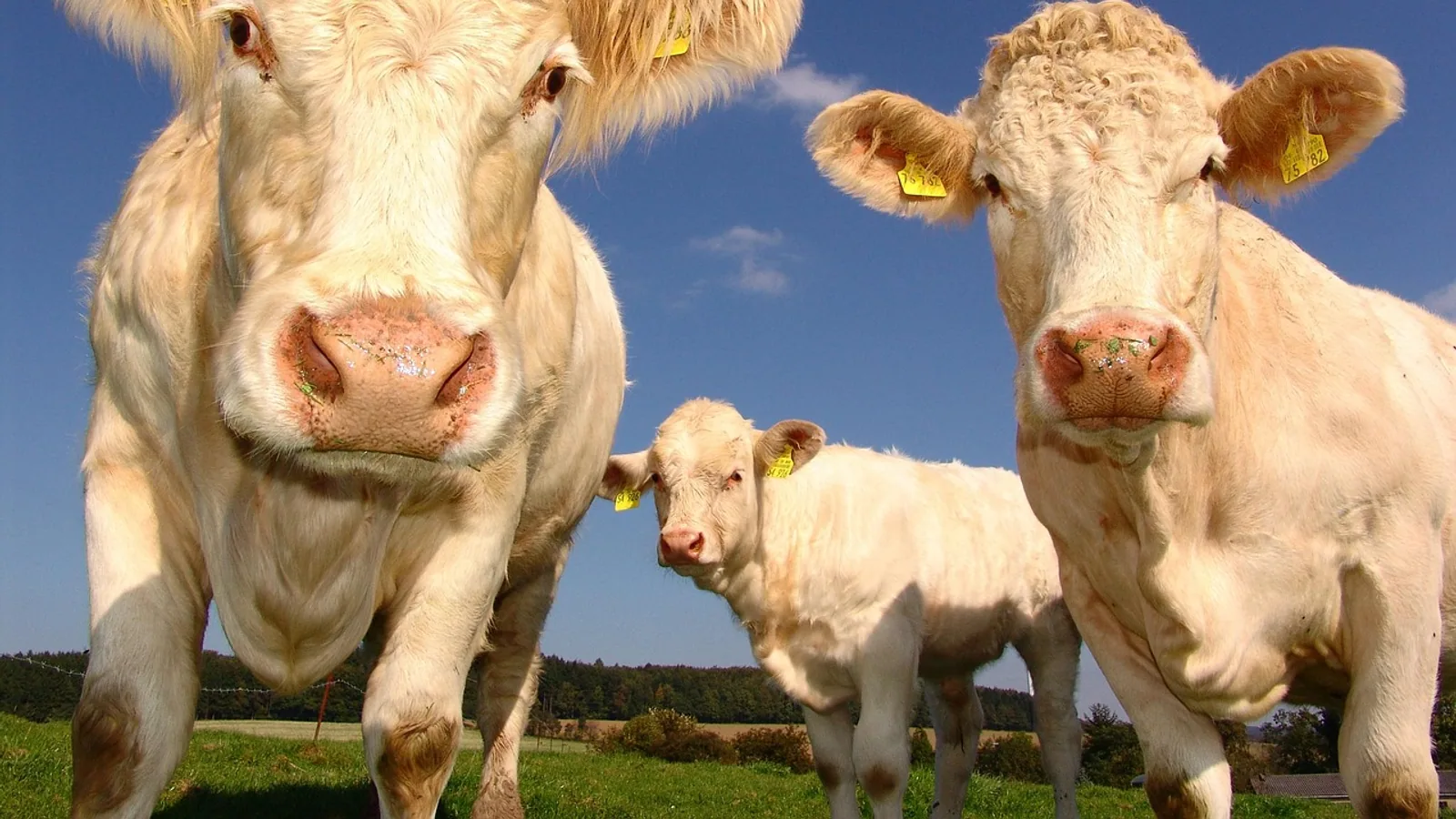
Anthrax disease is a serious zoonotic infection caused by Bacillus anthracis, a Gram-positive, spore-forming bacterium that can survive in soil for decades [1]. The disease affects livestock, wildlife, and humans, and in ruminants it often appears as sudden death with dark, unclotted blood oozing from body openings [2].
Anthrax is not a relic of the pre-antibiotic era. It remains endemic in defined geographic zones across Central Asia, Africa, and Southern Asia, and it still causes outbreaks in livestock and people wherever those zones overlap with grazing land [3]. For veterinarians, farmers, butchers, and pet owners in or near endemic areas, understanding the anthrax bacillus, its transmission routes, and its clinical signs is a core biosecurity skill.
This article is educational and is not a substitute for veterinary diagnosis or treatment.
The Causative Agent: Bacillus anthracis
Bacillus anthracis is a rod-shaped, Gram-positive bacterium. Its defining biological feature is the ability to form endospores, a dormant life stage built to survive heat, desiccation, ultraviolet light, and nutrient starvation. Spores can remain viable in soil for decades, which is why anthrax is described as a disease of the environment as much as a disease of animals [1].
The bacterium's virulence rests on two plasmids, small circular DNA molecules that carry the genes for its two major weapons:
- pXO1 encodes the tripartite anthrax toxin complex (protective antigen, edema factor, and lethal factor).
- pXO2 encodes the poly-γ-D-glutamic acid capsule, which shields the vegetative bacterium from phagocytosis by host immune cells.
Whole-genome sequencing of field isolates consistently recovers both plasmids. A 2021 fatal case in a zoo pony in Ternopil, Ukraine, yielded a B. anthracis strain carrying pXO1 and pXO2, confirming the canonical plasmid profile in a clinical isolate [4]. Genomic surveillance also shows that B. anthracis is genetically monomorphic, meaning strains worldwide are closely related. Comparative analysis of 57 genomes from animal outbreaks clustered them into three major groups, with the A.Br.003 canonical single nucleotide polymorphism lineage being the most prevalent among animal isolates in one multi-state survey [5].
The Bacillus cereus Group Problem
B. anthracis belongs to the Bacillus cereus group, whose members share extensive chromosomal similarity. This genetic overlap complicates laboratory identification, because routine biochemical tests can confuse B. anthracis with B. cereus or B. thuringiensis [6]. Pan-genome analysis has identified chromosome-encoded genes present only in B. anthracis, and multiplex PCR assays built on those markers improve diagnostic specificity [6].
A related concern is the emergence of anthrax-like disease caused by other members of the group. Atypical B. cereus strains, now classified as Bacillus tropicus, have acquired plasmids homologous to pXO1 and pXO2 and can produce anthrax-like septicemia. An outbreak in three red kangaroos (Macropus rufus) at a wildlife preserve caused sudden death with severe splenomegaly and fibrinonecrotizing splenitis, and whole-genome sequencing of the isolate revealed the pBCXO1 and pBC210 virulence plasmids [7]. Bacillus cereus biovar anthracis (Bcbva) causes similar disease in non-human primates and great apes in West and Central Africa and carries pBCXO1 and pBCXO2 [8]. These findings matter for diagnosticians. A Gram-positive, encapsulated bacillus from a sudden-death ruminant is not automatically B. anthracis, and molecular confirmation is required.
How Anthrax Spreads
Anthrax transmission follows a soil-to-animal-to-human pathway, with the environment acting as the reservoir rather than a passive backdrop [1].
Environmental Persistence and Endemic Zones
Spores contaminate soil and water, particularly in alkaline, calcium-rich soils where they persist best [2]. When grazing animals ingest spores from contaminated pasture, the spores germinate inside the host, and the vegetative bacteria multiply, produce toxin and capsule, and cause rapidly fatal disease. Animals that die of anthrax shed bacteria into the environment, and when those bacteria sporulate on exposure to air, the pasture becomes a long-term hazard. This cycle explains why anthrax recurs in the same pastures year after year and why certain districts are classified as endemic.
Global surveillance from 2005 to 2024 found a general decline in reported anthrax incidents but persistent endemicity in Central Asia, Africa, and Southern Asia, with cattle and sheep as the primary hosts [3]. A 13-year analysis in Ethiopia recorded 36,104 cattle cases, accounting for 57 percent of all livestock cases, with significant clustering by zone and year [9]. In Kazakhstan, 93.4 percent of 33 registered outbreaks between 2015 and 2024 occurred in cattle, with pronounced summer and early-autumn seasonality and concentration in historically endemic regions [10]. Outbreaks persisted in some regions even where reported vaccination coverage exceeded 97 percent, pointing to environmental spore loads, variability in vaccine delivery, or incomplete animal coverage [10].
Risk Factors in Livestock
Field investigations identify specific management practices that raise risk. A matched case-control study in Bangladesh found that communal grazing increased the odds of livestock anthrax roughly 2.7-fold, and feeding freshly harvested cultivated fodder within three days of illness onset increased odds about 6-fold [11]. Failure to vaccinate was also associated with disease [11]. These are modifiable factors, which is why biosecurity and vaccination programs are central to control.
Human Exposure Routes
People acquire anthrax through contact with infected animals, contaminated animal products, or spore-laden soil and dust. Occupational groups at highest risk include butchers, abattoir workers, farmers, veterinarians, and workers handling hides, wool, or bone meal. A cross-sectional study of 380 butchers in Ile-Ife, Nigeria, found that 78.9 percent were unaware of anthrax, even though butchers are frontline actors in the meat value chain and face high occupational exposure [2].
Human outbreaks often trace to a single event. In Kanungu District, Uganda, in 2024, an outbreak of 90 cases was linked to consuming meat from livestock that had died suddenly, and 80 percent of cases were cutaneous, 11 percent gastrointestinal, and 9 percent had both forms [12]. A 2023 cutaneous anthrax case in Inner Mongolia followed the slaughter and skinning of a moribund sheep, and all four recovered isolates from the patient, mutton, sheepskin, and a transport vehicle were genetically nearly identical, supporting a single-source event [13].
Forms of Anthrax Disease and Their Symptoms
Anthrax presents in three classic forms depending on the route of entry. The form determines the symptoms, the speed of progression, and the prognosis.
Cutaneous Anthrax
Cutaneous anthrax is the most common form in humans and follows direct contact between broken skin and spores or contaminated material [1]. The hallmark is a painless papule that enlarges, vesicles, and then ulcerates to form a depressed black eschar, often with marked surrounding edema and regional lymphadenopathy. In the Uganda outbreak, 80 percent of the 90 cases were cutaneous [12]. Cutaneous anthrax is the least lethal form when treated, but it can progress to systemic disease if ignored.
Gastrointestinal Anthrax
Gastrointestinal anthrax results from eating undercooked meat from an infected animal. Symptoms include abdominal pain, vomiting, diarrhea, fever, and loss of appetite, and the disease can progress to bloody diarrhea, ascites, and sepsis [12]. In the Uganda outbreak, 11 percent of cases were gastrointestinal and 9 percent had both cutaneous and gastrointestinal involvement [12]. Gastrointestinal anthrax carries higher mortality than the cutaneous form.
Inhalational Anthrax
Inhalational anthrax is the rarest form but the most lethal. It occurs when a person inhales spores in dust or aerosols, typically while handling diseased animals or contaminated animal products [14]. Mortality from acute inhalational anthrax can approach 100 percent if treatment is not started early and aggressively [15]. Early symptoms resemble a flu-like illness with fever, malaise, and cough, followed by rapid deterioration with severe respiratory distress. A 2026 case in Kaifeng City, China, was the first reported inhalational anthrax case caused by inhaling wind-blown dust containing B. anthracis spores, and targeted next-generation sequencing was key to diagnosis in a patient without a clear occupational exposure history [14]. That case illustrates how environmental exposure can produce inhalational disease even without direct animal contact.
Comparative Summary
| Feature | Cutaneous | Gastrointestinal | Inhalational |
|---|---|---|---|
| Route of entry | Broken skin contact | Ingestion of contaminated meat | Inhalation of spores in dust or aerosol |
| Typical source | Handling hides, carcasses, wool | Undercooked meat from infected animal | Contaminated dust, hides, animal products |
| Key early signs | Painless papule, vesicle, black eschar, edema | Abdominal pain, vomiting, diarrhea, fever | Flu-like illness, fever, malaise, cough |
| Relative frequency in humans | Most common | Less common | Rarest |
| Relative severity | Least lethal with treatment | Moderate to high | Most lethal, near 100 percent untreated |
| Documented example | 80 percent of Uganda 2024 cases [12] | 11 percent of Uganda 2024 cases [12] | Kaifeng City, China, 2026 [14] |
Anthrax in Animals
Domestic and wild ruminants are highly susceptible to B. anthracis, and the disease usually presents as peracute to acute illness [1]. Cattle, sheep, and goats are the species most often affected in reported outbreaks [3].
Sudden Death and the Classic Presentation
The most consistent sign of anthrax in ruminants is sudden death, often with no premonitory clinical signs. In the Uganda outbreak investigation, 87.5 percent of butchers who were aware of anthrax reported a relationship between the disease and sudden death of animals, and 62.5 percent described animals dying suddenly without illness and having dark, unclotted blood flow from body orifices [2]. This presentation is not subtle to an experienced stockperson, but it is easily mistaken for other causes of sudden death such as bloat, lightning strike, or clostridial disease.
The pathology behind the presentation is a septicemia. Vegetative bacteria multiply rapidly in the bloodstream, the capsule blocks phagocytosis, and the toxin complex causes vascular leakage and tissue damage. In the kangaroo outbreak caused by B. tropicus, the peracute disease produced severe splenomegaly with fibrinonecrotizing splenitis, segmental suppurative enteritis, and cutaneous excoriations with necrotizing cellulitis and lymphadenitis [7]. Similar gross lesions are expected in B. anthracis septicemia.
Species Variation
Cattle and sheep dominate outbreak reports, but other species are susceptible. The Ethiopia analysis recorded cases in cattle, sheep, goats, camels, and equines, with cattle contributing the majority [9]. A fatal case in a zoo pony in Ukraine confirms that equids can develop anthrax [4]. The red kangaroo outbreak shows that species outside the usual livestock list can be affected when they graze contaminated ground [7].
Why Opening a Suspect Carcass Is Dangerous
When a ruminant dies of anthrax, the vegetative bacteria in its blood and tissues are exposed to oxygen during a necropsy. That exposure triggers sporulation, and the resulting spores contaminate the carcass, the soil, the instruments, and the clothing of anyone present. Spores resist disinfection and can persist in that spot for decades. This is why opening a suspect carcass is dangerous and why it is prohibited in veterinary practice. The correct action is to leave the carcass undisturbed, restrict access, and notify veterinary authorities.
Diagnosis
Diagnosis of anthrax relies on laboratory confirmation, and the choice of sample matters. Blood from a peripheral vessel is the preferred antemortem and postmortem sample in suspect ruminants, because it can be collected without opening the body cavity.
Blood Smears
A stained blood smear from a peripheral vessel can reveal the characteristic large, Gram-positive, encapsulated rods, sometimes described as boxcar-shaped and occurring in short chains. The capsule is best demonstrated with a polychrome stain such as M'Fadyean. Smear examination is rapid and useful in endemic settings, but it is not specific enough to stand alone, because other Bacillus species can look similar.
Culture
Culture on blood agar yields non-hemolytic, gray-white colonies with a ground-glass appearance. The organism grows well at 37 degrees Celsius under aerobic conditions. Culture allows further characterization, including capsule production under appropriate conditions and susceptibility testing. The ciprofloxacin-resistant Ames strain BACr4-2, used in a mouse model of inhalational anthrax, illustrates why susceptibility testing matters for treatment planning [15].
PCR and Molecular Confirmation
Polymerase chain reaction (PCR) detection of B. anthracis DNA is the confirmatory method of choice in outbreak investigations. In the Uganda outbreak, confirmation required PCR detection of B. anthracis [12]. In the Inner Mongolia case, real-time PCR detected the organism in 4 of 18 samples, and culture recovered four isolates that were then typed by canonical single nucleotide polymorphism analysis and core-genome multilocus sequence typing [13]. Pan-genome analysis has identified chromosome-encoded genes exclusive to B. anthracis, enabling multiplex PCR assays that distinguish it from B. cereus and B. thuringiensis [6]. For cases where rapid diagnosis is difficult, targeted next-generation sequencing can provide preliminary identification, as it did in the Kaifeng inhalational case [14].
Prevention and Control
Anthrax control is a One Health problem. Human, animal, and environmental health professionals must work together because the disease moves between all three domains [1]. The table below summarizes the main prevention measures.
| Measure | Target | Key actions |
|---|---|---|
| Livestock vaccination | Cattle, sheep, goats in endemic zones | Annual vaccination before grazing season, maintain coverage, address waning immunity |
| Carcass disposal | Animals that die suddenly | Do not open the carcass, incinerate or deep-burial with lime under veterinary direction |
| Human post-exposure prophylaxis | People with confirmed exposure | Antibiotic prophylaxis under medical supervision, monitor for symptoms |
| Biosecurity | Farms and abattoirs | Restrict communal grazing, avoid feeding freshly harvested fodder during outbreaks, disinfect equipment |
| Occupational protection | Butchers, farmers, veterinarians | Use gloves and protective clothing, avoid handling suspect carcasses, report sudden deaths |
Livestock Vaccination
Vaccination is the foundation of livestock anthrax control. Mathematical modeling of anthrax dynamics in a biosecured livestock farm shows that appropriate vaccination combined with comprehensive biosecurity protocols reduces transmission and disease-induced deaths [16]. The same model found that waning of both recovery-derived and vaccination-derived immunity can trigger backward bifurcation, meaning the disease can reemerge even when the basic reproduction number is below one [16]. This is a strong argument for maintaining vaccination coverage rather than stopping once outbreaks subside. Increased immunological memory shortens the time needed to eradicate transmission [16].
In practice, vaccination programs face obstacles. In Albania, risk-based livestock immunization, animal movement restrictions, and carcass disposal measures were in place, yet efficacy was limited by insufficient disinfection, absence of grazing bans on contaminated pastures, and lack of designated burial sites [17]. In Kazakhstan, outbreaks persisted despite reported coverage above 97 percent in several regions [10]. Coverage numbers alone do not guarantee protection.
Carcass Disposal
Proper carcass disposal is critical because an opened carcass is a spore-generating event. Incineration is the preferred method. Where incineration is not feasible, deep burial with quicklime at a designated site, under veterinary supervision, limits environmental contamination. The Albania analysis identified the absence of designated burial sites as a specific weakness in national control [17]. On farms, the practical rule is simple: any ruminant that dies suddenly and unexpectedly should be treated as a potential anthrax case until proven otherwise, and the carcass should not be moved or opened.
Human Post-Exposure Prophylaxis
People with confirmed exposure to B. anthracis spores may receive antibiotic post-exposure prophylaxis (PEP) under medical supervision. The FDA-approved options for PEP and treatment of anthrax are limited, and research continues into alternatives. Omadacycline has demonstrated in vitro activity against 53 B. anthracis isolates with a minimum inhibitory concentration range of 0.008 to 0.25 micrograms per milliliter and an MIC50/MIC90 of 0.015/0.03 micrograms per milliliter, and it showed in vivo efficacy in a mouse model of inhalational anthrax caused by a ciprofloxacin-resistant isolate when treatment began 24 hours after aerosol challenge and continued for 14 days [15]. These findings are relevant to public health planning, but they do not change the clinical rule that PEP decisions belong to physicians, not to self-treatment.
Biosecurity on the Farm
The Bangladesh case-control data give concrete targets. Communal grazing and feeding freshly harvested cultivated fodder within three days of illness onset were both associated with increased risk, and failure to vaccinate was a risk factor [11]. Farms in endemic areas can reduce risk by avoiding communal pastures during outbreak periods, delaying the feeding of freshly cut fodder, vaccinating all eligible animals, and reporting sudden deaths immediately.
Clinical Relevance, Limitations and Common Mistakes
Anthrax matters in veterinary practice for three reasons. It kills livestock quickly, it is a zoonosis that threatens the people who handle those animals, and it leaves behind environmental contamination that can cause outbreaks years later.
The most dangerous mistake is opening a suspect carcass. The second most dangerous mistake is assuming that sudden death in a ruminant must be something else. Bloat, clostridial disease, and lightning strike are all common, but anthrax must stay on the differential list in endemic areas, and the cost of a false negative is far higher than the cost of a false positive. The third mistake is relying on vaccination coverage statistics without verifying that animals actually received viable vaccine at the right interval, since outbreaks have occurred in regions reporting high coverage [10].
Diagnostic limitations are real. Smear examination is fast but not specific. Culture takes time. PCR is specific and sensitive but requires a laboratory. In field conditions, the combination of a compatible history (sudden death, endemic area, unclotted blood from orifices) plus a peripheral blood smear plus PCR confirmation is the practical standard.
Treatment limitations also matter. Inhalational anthrax can approach 100 percent mortality if not treated early and aggressively [15]. By the time a ruminant shows clinical signs, treatment is rarely feasible, which is why prevention through vaccination and biosecurity carries most of the weight.
Individual cases require a veterinarian's assessment. The information here supports understanding and prevention planning, not self-diagnosis or self-treatment.
How the Disease Progresses
The flowchart below traces the main pathway from spore exposure to clinical outcome in a grazing ruminant.
flowchart TD
    A[Spores in soil] --> B[Grazing animal ingests spores]
    B --> C[Spores germinate in host]
    C --> D[Vegetative bacteria multiply]
    D --> E[Toxin and capsule produced]
    E --> F[Septicemia develops]
    F --> G[Sudden death]
    G --> H[Carcass not opened]
    H --> I[Incinerate or deep bury]
    I --> J[Vaccinate remaining herd]
    J --> K[Restrict pasture access]
Frequently Asked Questions
What is anthrax disease?
Anthrax is a zoonotic infection caused by Bacillus anthracis, a Gram-positive, spore-forming bacterium that persists in soil for decades and causes peracute to acute disease in ruminants and three clinical forms in humans [1].
Can my dog or cat get anthrax?
Dogs and cats are far less susceptible than ruminants, but they can be infected if they eat contaminated meat or carcass material. Keep pets away from suspect carcasses and from pastures under anthrax restriction.
How do I know if a dead animal had anthrax?
You cannot know without laboratory testing. In endemic areas, sudden death with dark, unclotted blood from body orifices is the classic presentation [2]. Do not open the carcass. Contact veterinary authorities and let them collect a peripheral blood sample for smear, culture, or PCR.
Is anthrax contagious from person to person?
Person-to-person transmission is not a significant route. People acquire anthrax from animals, animal products, or contaminated soil and dust [1].
What should I do if I handled a suspect carcass?
Wash exposed skin thoroughly, remove and bag contaminated clothing, and contact a physician about post-exposure prophylaxis. Do not wait for symptoms.
Which animals are most at risk?
Cattle, sheep, and goats are the most susceptible domestic species, and cattle and sheep are the primary hosts in global outbreak reports [3]. Equids and some wildlife species can also be affected [7][4].
Is there a vaccine for livestock?
Yes. Livestock vaccination is the foundation of anthrax control, and modeling shows that vaccination combined with biosecurity reduces transmission and deaths [16]. Coverage must be maintained because immunity can wane [16].
Why is opening a carcass prohibited?
Opening a carcass exposes vegetative bacteria to oxygen, which triggers sporulation. The resulting spores contaminate the site, the equipment, and the people present, and they can persist for decades [1].
Related Articles
- Koi Fish Gill Disease: Causes, Symptoms, and Treatment
- Anthrax in Wildlife: Epidemiology, Diagnosis, and Outbreak Response
- Liver Disease Symptoms In Dogs
- Lyme Disease Symptoms In Dogs
- Symptoms Of Kidney Disease In My Cat
- Symptoms Of Pancreatitis Disease In Dogs
- Dog Digestive Issues: Causes, Symptoms, and When to Worry
- Dog Pink Eye: Causes, Symptoms, and Treatment
- Tularemia (Rabbit Fever): Symptoms and Transmission
Sources
- Anthrax in Humans, Animals, and the Environment and the One Health Strategies for Anthrax Control.
- Awareness of anthrax disease and the knowledge of its transmission and symtoms identification: A cross sectional study among butchers in ile-ife.
- Global surveillance of anthrax outbreaks in domestic animals and humans: A retrospective secondary analysis of reported cases over two decades (2005-2024).
- Complete genome of Bacillus anthracis strain ter21 from an infected zoo pony in Ternopil, Ukraine, 2021.
- Comparative genome analysis of virulent strains of Bacillus anthracis causing anthrax outbreaks in animals.
- Pan-genome analysis reveals novel chromosomal markers for multiplex PCR-based specific detection of Bacillus anthracis.
- Pathologic and genomic characterization of an outbreak of anthrax-like disease caused by Bacillus tropicus (formerly atypical Bacillus cereus) in red kangaroos (Macropus rufus).
- Toxin and capsule production by Bacillus cereus biovar anthracis influence pathogenicity in macrophages and animal models.
- Spatio-temporal analysis of anthrax in livestock at zonal level in Ethiopia, 2008-2020.
- Spatiotemporal epidemiology of livestock anthrax in Kazakhstan and analysis of potential contributing factors from 2015 to 2024.
- Risk factors for anthrax in livestock: findings from one health outbreak investigations in Bangladesh.
- Anthrax outbreak associated with the consumption and handling of carcasses of livestock that suddenly died, Kanungu District, Uganda, June-November 2024.
- Pathogenic characterization and genome-wide evolutionary analysis of Bacillus anthracis from a cutaneous anthrax case in Inner Mongolia, China.
- Investigation and Response to the First Case of Inhalational Anthrax Caused by Inhaling Wind-Blown Dust Containing Bacillus anthracis Spores - Kaifeng City, Henan Province, China, 2026.
- Omadacycline is active in vitro and in vivo against ciprofloxacin-resistant Bacillus anthracis.
- Impact of biosecurity and immunological memory in curtailing ratio-dependent transmission of anthrax in livestock.
- Anthrax in Albania: A Comprehensive Analysis of Epidemiology, Laboratory Diagnosis, and National Control Strategies in Animals.