Susceptible Definition: Meaning in Medicine and Biology
By Dr. Zubair Khalid, DVM, MS, PhD ·
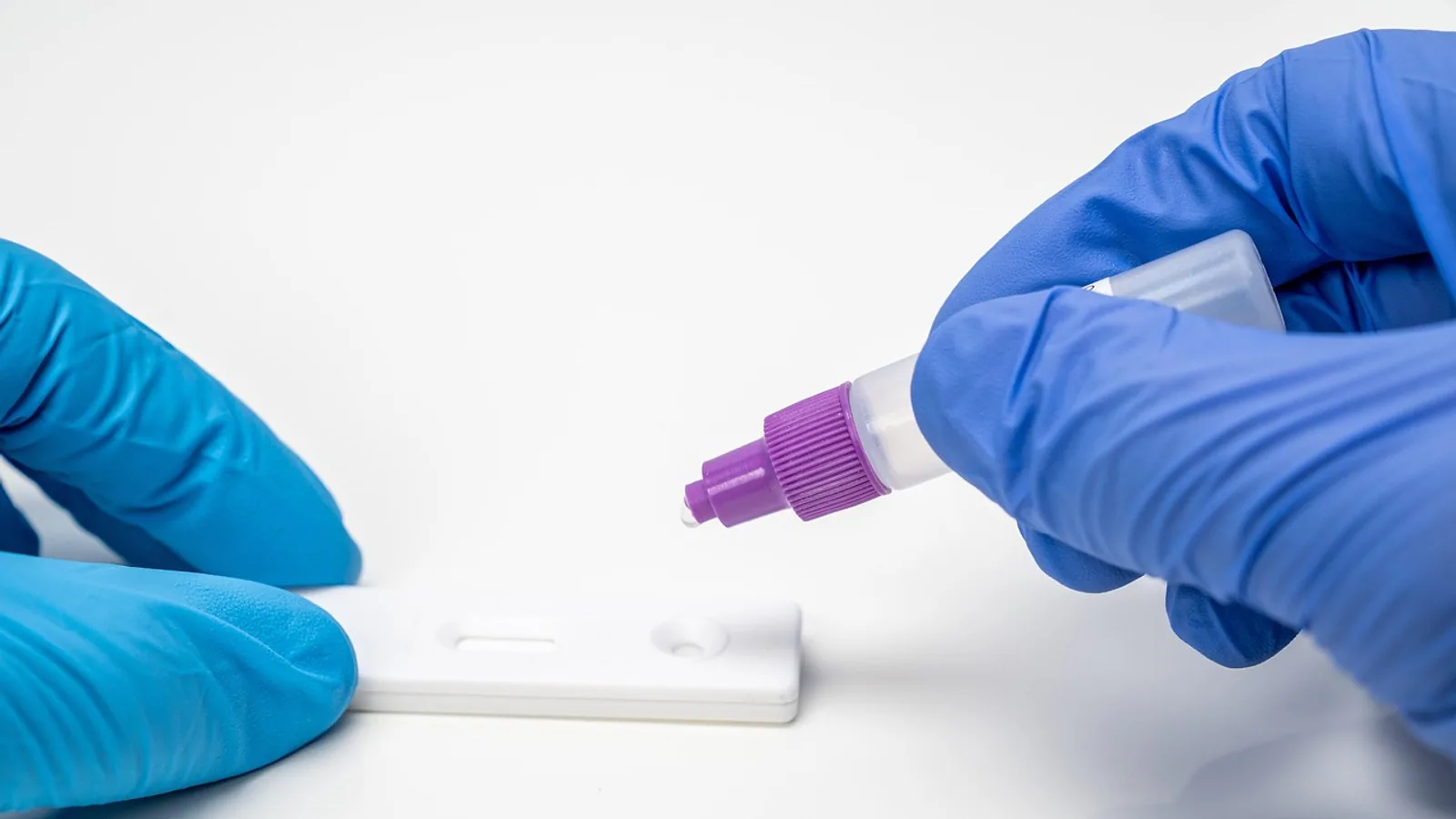
Susceptible describes a host, a pathogen, or a population that lacks protection and can therefore be affected by an infectious agent or a drug. In medicine the word carries three distinct technical meanings: an immunologically naive host with no prior exposure or vaccination, a microbial isolate that a drug inhibits at the published clinical breakpoint, and the uninfected fraction of a population that keeps an outbreak growing.
Those three meanings rarely appear together in one textbook chapter, which is why students lose points on exams and clinicians misread laboratory reports. A dog can be susceptible to parvovirus and its fecal isolate can be susceptible to ampicillin in the same sentence, and the two statements have nothing to do with each other. This article separates the usages, gives a veterinary example for each, and shows where the word is most often misapplied.
This article is educational and is not a substitute for veterinary diagnosis or treatment.
The Core Definition and Why Precision Matters
The plain-language meaning is "able to be affected." Medicine narrows that to a measurable state. A host is susceptible when it lacks adaptive immunity to a specific pathogen. A microbe is susceptible when a specific antimicrobial inhibits its growth at a concentration that predicts clinical success. A population is susceptible when enough individuals remain uninfected that transmission continues.
Precision matters because the consequences of each usage differ. Calling a vaccinated puppy susceptible when it has protective antibody titers leads to unnecessary revaccination. Calling a resistant isolate susceptible leads to treatment failure and drives resistance. Calling a population immune when a large susceptible fraction remains leads to outbreaks that public health planning failed to predict.
The word also sits inside a chain of epidemiological states that students routinely collapse into one. Susceptible, exposed, infected, and infectious are four separate boxes, and an animal moves through them in order or drops out at any stage.
Susceptible Is Not the Same as Exposed, Infected, or Infectious
A susceptible animal has no protective immunity and has not yet met the pathogen. An exposed animal has met it, but the outcome is not yet determined. An infected animal has replicating organisms in its tissues, with or without signs. An infectious animal is shedding organisms and can transmit them to others.
The distinctions have practical weight. A susceptible animal can be vaccinated and protected before exposure. An exposed animal in the incubation period can still shed and infect others even though it looks healthy. An infected animal may be infectious or may not, depending on the pathogen, the site of replication, and the route of shedding. A susceptible animal is never infectious, because it has no organism to shed.
Canine parvovirus illustrates the sequence. A susceptible puppy with no maternal antibody and no vaccination meets virus in a contaminated environment. It becomes exposed, then infected after an incubation period of roughly three to seven days, then infectious as it sheds virus in feces. A puppy with adequate maternal antibody at the moment of exposure may never move past the first box.
Usage 1: The Immunologically Naive Host
An immunologically naive host has no protective adaptive immunity against a specific pathogen. Naivety can result from never having been infected, never having been vaccinated, or having lost protection over time. This is the oldest and most intuitive meaning of susceptible.
What Makes a Host Susceptible
Protective immunity against most pathogens rests on antibody titers and memory T cells. A host is susceptible when those defenses are absent or fall below the threshold that prevents infection or disease. Several factors create that state.
Age is the strongest single factor. Very young animals have not completed vaccination series and may carry maternal antibody at levels that block vaccine take but not field infection. Very old animals may have waned responses. Pregnancy, immunosuppressive therapy, and chronic disease all lower the threshold. Malnutrition and stress are well-recognized contributors to susceptibility across species.
The concept applies to noninfectious disease as well. Drug-induced liver injury is a susceptibility phenomenon in which host factors, including age and physiological changes, alter the risk of injury from a given drug exposure [1]. Genetic background, concurrent medications, and underlying liver disease all shift an individual animal's position on the susceptibility spectrum.
Herd Immunity and the Susceptible Fraction
At the population level, the susceptible fraction is the proportion of individuals without protective immunity. Herd immunity exists when that fraction falls below the threshold needed to sustain transmission. The threshold depends on the pathogen's basic reproduction number, which is the average number of new cases one case generates in a fully susceptible population.
Varicella provides a clean worked example. A national serosurvey in Canada found that 93.6% of specimens carried antibody above the protective threshold, but protection was lowest in children aged 3 to 5 years at 54.3% [2]. Individuals born outside Canada had more than twice the odds of varicella susceptibility compared with those born in Canada [2]. Those two findings identify exactly where the susceptible fraction concentrates and where an outbreak would begin.
Measles and mumps behave the same way. Among homeless individuals in Germany, measles seroprevalence fell below the 95% threshold in people born after 1980, and mumps seroprevalence fell below the 92% threshold in people born after 1975, meaning herd immunity was not achieved for either pathogen in that cohort [3]. Rubella and varicella did reach sufficient coverage in the same group [3].
Vaccine-derived and infection-derived immunity both shrink the susceptible fraction. Modeling of the 2022 mpox outbreak in Berlin found that infection-induced immunity among high-contact individuals, combined with transient behavior change, pushed the susceptible fraction below the epidemic threshold, while the vaccination campaign contributed a smaller share of the decline [4]. The same model projected that demographic change and waning immunity could erode that protection over time [4].
Maternal Antibody and the Susceptibility Window
Maternal antibody is a special case that confuses students. A newborn animal with high maternal antibody is protected, not susceptible, at birth. As antibody decays, the animal passes through a window in which antibody is too low to prevent field infection but still high enough to neutralize vaccine. That window is a period of genuine susceptibility.
A study of broiler chicks in Nigeria that received day-old Hitchner B1 Newcastle disease vaccine found that population-level antibody titers stayed above a moderately protective threshold for only about four days of life, opening a window of Newcastle disease susceptibility in maternal-antibody-positive birds under that routine [5]. The practical implication is that timing of vaccination relative to antibody decay determines whether the bird is protected or susceptible at any given moment.
Usage 2: The Drug-Susceptible Isolate
In microbiology, susceptible describes a pathogen isolate whose growth is inhibited by an antimicrobial at a concentration that predicts clinical success. This is a laboratory category, not a property of the animal. The isolate is susceptible. The patient is treated.
How Susceptibility Testing Works
Antimicrobial susceptibility testing exposes a standardized inoculum of the isolate to a defined concentration of drug. The reference method is broth microdilution, which produces a minimum inhibitory concentration, or MIC, the lowest drug concentration that visibly inhibits growth. Disk diffusion is an alternative that measures a zone of inhibition around a drug-impregnated disk.
Commercial automated systems and disk diffusion are compared against broth microdilution as the reference standard. A benchmarking study of 372 gram-negative isolates found that agreement between commercial systems and reference broth microdilution varies by drug and organism [6]. Very major errors, meaning an isolate called susceptible when the reference method called it resistant, reached 29.0% for cefepime on one automated system, and essential agreement below 90% occurred for several drug and system combinations [6]. The lesson for practice is that the method behind a susceptibility report matters, and no single platform is interchangeable with the reference standard for every drug.
Breakpoints, Categories, and Why They Change
The MIC alone does not tell you whether an isolate is susceptible. You need a breakpoint, a published MIC value that separates susceptible from resistant for a specific drug, organism, and species. Breakpoints are set by standards bodies, principally the Clinical and Laboratory Standards Institute in the United States and the European Committee on Antimicrobial Susceptibility Testing in Europe.
The three interpretive categories are susceptible, intermediate, and resistant. Susceptible means the isolate is inhibited at a drug concentration achievable with standard dosing. Intermediate means the drug may work at a higher dose or at a site where it concentrates. Resistant means the isolate is not inhibited at achievable concentrations.
Breakpoints are species-specific and drug-specific and are revised periodically as resistance mechanisms emerge and pharmacokinetic data accumulate. A study of 390 Escherichia coli isolates from Indonesian broiler chickens compared interpretation under the CLSI M100 35th edition and EUCAST version 15.0, both from 2025, and found almost perfect agreement for ampicillin, cefotaxime, ceftazidime, gentamicin, and trimethoprim, but negligible agreement for colistin [7]. The same MIC value can therefore produce different category labels depending on which standard the laboratory applies. Always cite the current standard rather than a fixed MIC number.
Veterinary Examples of Isolate Susceptibility
A study of conjunctivitis in cats and dogs in Türkiye identified 16 bacterial species by MALDI-TOF mass spectrometry, with Staphylococcus epidermidis, Corynebacterium mucifaciens, Psychrobacter species, and Streptococcus lutetiensis the most frequent isolates [8]. Each isolate required its own susceptibility panel, and the report would describe each one separately as susceptible, intermediate, or resistant to each drug tested [8].
In rescued western European hedgehogs with gastrointestinal disease, a Salmonella enterica subsp. arizonae isolate was susceptible to all antimicrobials for which a valid result was obtained, while Proteus isolates were susceptible to cefotaxime, ciprofloxacin, gentamicin, and several other agents but resistant to amoxicillin-clavulanic acid, ampicillin, ertapenem, meropenem, and trimethoprim-sulfamethoxazole, with colistin and nitrofurantoin resistance in all Proteus isolates [9]. Interpretation followed EUCAST guidelines [9]. One animal, multiple isolates, different susceptibility profiles.
Inducible Resistance: Susceptibility That Changes Under Pressure
Some isolates test susceptible in the laboratory but carry a resistance mechanism that activates during treatment. Inducible clindamycin resistance in Staphylococcus aureus is the classic example. A study of 212 S. aureus isolates found inducible macrolide-lincosamide-streptogramin B resistance in 22.64%, with a significant association between methicillin resistance and inducible resistance [10]. The D-zone test detects this phenotype, and routine testing is necessary because a standard disk diffusion result alone would misclassify the isolate [10]. This is a case where "susceptible" on a preliminary report is not the final answer.
Genotype and Phenotype Do Not Always Agree
Molecular methods detect resistance genes directly and can return results faster than culture-based testing. Genotypic findings require antibiotic-specific interpretation because genotype and phenotype do not always concord. A review of Helicobacter pylori diagnostics notes that culture provides phenotypic susceptibility results but is technically demanding, while PCR and sequencing provide faster genotypic information that must be interpreted per antibiotic [11]. A resistance gene present in the genome does not always produce a resistant phenotype, and a susceptible genotype does not guarantee clinical response.
Usage 3: The Susceptible Fraction in Populations
Population-level susceptibility is a number, not a state. It is the proportion of a defined population that lacks protective immunity to a specific pathogen at a specific time. Epidemiologists write it as S in compartmental models.
Compartmental Models and the S Box
The standard framework divides a population into susceptible, exposed, infectious, recovered, and vaccinated compartments, abbreviated SEIRV. The susceptible compartment shrinks as individuals become exposed and grows as new susceptible individuals are born or as immunity wanes. A hepatitis A modeling study for the Russian Federation used an age-structured SEIRV model calibrated to seroprevalence and vaccination data to estimate the pediatric vaccination coverage needed to hold incidence below one case per 100,000 [12]. The model projected rising incidence between 2028 and 2032 if coverage stayed at 2022 levels [12].
Why the Susceptible Fraction Drives Outbreaks
An outbreak grows when each case generates more than one new case. That happens when the susceptible fraction exceeds a threshold set by the pathogen's transmissibility. Reducing the susceptible fraction below the threshold through vaccination or through infection-derived immunity ends the outbreak.
The Berlin mpox analysis showed this mechanism directly. Infection-induced immunity among high-contact individuals reduced the susceptible fraction below the epidemic threshold, and the outbreak declined [4]. Vaccination contributed a marginal effect on that particular decline but, combined with infection-derived immunity, may support herd immunity against future clade I outbreaks [4]. The authors cautioned that demographic change and immune waning could degrade that protection over time [4].
Serosurveys as the Measurement Tool
The susceptible fraction is estimated by serosurveys, which measure antibody prevalence in representative samples. The Canadian varicella study used nationally representative specimens from a health measures survey biobank plus residual Ontario specimens collected between 2009 and 2014 [2]. The German homeless study measured seroprevalence for measles, mumps, rubella, and varicella in 611 individuals and used regression to identify predictors of lacking immune protection [3]. Serosurvey design determines what the susceptible fraction estimate means, and comparing a biobank sample to residual clinical specimens can produce different estimates for the same age group [2].
Comparison Table: Three Usages of Susceptible
| Context | What is susceptible | How it is determined | Veterinary example | What it does not mean |
|---|---|---|---|---|
| Immunology and host defense | A host lacking protective adaptive immunity | History of exposure or vaccination, antibody titer, serology | A puppy with no maternal antibody and no parvovirus vaccination | Does not mean the animal is infected or infectious |
| Antimicrobial susceptibility testing | A microbial isolate inhibited at the clinical breakpoint | Broth microdilution MIC or disk diffusion zone, interpreted against CLSI or EUCAST breakpoints | A Proteus mirabilis isolate from a hedgehog reported susceptible to ciprofloxacin [9] | Does not guarantee clinical cure in the patient |
| Population epidemiology | The fraction of a population without protective immunity | Serosurvey antibody prevalence, compartmental modeling | Varicella protection at 54.3% in Canadian children aged 3 to 5 years [2] | Does not describe any individual animal's status |
How Susceptibility Is Tested or Observed in Practice
Host Susceptibility
History and serology are the primary tools. Vaccination records, prior infection history, and antibody titers establish whether an individual has protective immunity. For pathogens where a correlate of protection is well defined, a titer above the threshold classifies the animal as protected. For pathogens where it is not, the classification is probabilistic.
Isolate Susceptibility
The laboratory receives a pure culture, prepares a standardized inoculum, and applies the chosen method. Broth microdilution generates an MIC. Disk diffusion generates a zone diameter. Either result is interpreted against the current breakpoint table for that organism, drug, and species. The report lists each drug with a category.
The PRECISE framework describes a seven-step approach to reading an antibiogram at the bedside, with steps for pathogen assessment, resistance phenotype interpretation, MIC evaluation, spectrum curtailment, pharmacokinetic and pharmacodynamic individualization, route switching, and endpoint optimization [13]. The framework exists because susceptibility reports are frequently read superficially, and de-escalation based on culture results is associated with substantially lower mortality than empiric prescribing that ignores them [13].
Population Susceptibility
Serosurveys sample a defined population and measure antibody prevalence against a threshold of protection. Modeling then projects how the susceptible fraction will change under different vaccination or contact scenarios. Both tools require assumptions, and both are revised as new data arrive.
Clinical Relevance and Comparative Notes
The three usages interact in clinical practice, and the interaction is where errors occur. A clinician treating a dog with pyoderma reads a susceptibility report showing a susceptible Staphylococcus isolate and prescribes the indicated drug. The dog's own immune status determines whether the infection resolves. An immunosuppressed dog with a susceptible isolate may still fail treatment because host defenses contribute to cure. In vitro susceptibility predicts drug activity against the organism, not the outcome in the patient.
Species differences matter at every level. Breakpoints are established for specific organisms and, in veterinary medicine, for specific animal species. An isolate from a hedgehog interpreted under EUCAST guidelines [9] and an E. coli isolate from a broiler chicken interpreted under CLSI or EUCAST [7] are both "susceptible" or "resistant" against standards that may not be identical. The category label is only meaningful when paired with the standard that produced it.
Population susceptibility varies by species, geography, and management system. Canine parvovirus circulates in domestic dogs and also infects wild carnivores, which makes wildlife populations part of the susceptible pool and complicates control [14]. A pathogen that maintains a susceptible reservoir in wildlife cannot be eliminated by vaccinating domestic animals alone.
Clinical Relevance, Limitations and Common Mistakes
The most common mistake is treating the three usages as interchangeable. A susceptible isolate does not mean a susceptible patient, and a susceptible patient does not mean a susceptible population. Each requires its own assessment.
The second mistake is reading a susceptibility report without checking which breakpoint standard was applied. CLSI and EUCAST can disagree substantially for specific drug and organism combinations, as the colistin comparison in broiler E. coli isolates demonstrated [7]. A category label without the standard behind it is incomplete information.
The third mistake is assuming that in vitro susceptibility guarantees clinical response. Pharmacokinetics determine whether the drug reaches the infection site at an adequate concentration. Biofilm formation, intracellular location, and poor perfusion all reduce drug exposure below what the MIC predicts. Stenotrophomonas maltophilia is a useful reminder, because biofilm formation and intrinsic resistance mechanisms complicate treatment even when a drug tests active [15].
The fourth mistake is confusing susceptibility with exposure or infection. An animal can be susceptible and never exposed, exposed and never infected, or infected and never infectious. Public health and biosecurity decisions depend on which box the animal occupies.
The fifth mistake is treating the susceptible fraction as static. It changes with births, deaths, vaccination, waning immunity, and migration. The Berlin mpox model projected that the protection achieved in 2022 could deteriorate over time [4].
Individual animals require individual assessment. A veterinarian who knows the patient's history, the isolate's susceptibility profile, and the population context makes better decisions than one who reads any single result in isolation.
Quick Review
- Susceptible has three technical meanings: naive host, drug-inhibited isolate, and uninfected population fraction.
- Susceptible, exposed, infected, and infectious are four distinct states in sequence.
- Host susceptibility is determined by the absence of protective adaptive immunity, whether from no exposure, no vaccination, or waning titers.
- Isolate susceptibility is a laboratory category defined against a published breakpoint, not a fixed MIC.
- Breakpoints are species-specific, drug-specific, and revised periodically, so the current standard must be cited.
- Population susceptibility is the fraction without protective immunity and determines whether outbreaks grow or fade.
- In vitro susceptibility does not guarantee clinical response, because host defenses and drug pharmacokinetics both matter.
Frequently Asked Questions
What does susceptible mean in medicine?
Susceptible means lacking protection against a specific threat. In infectious disease it describes a host without adaptive immunity, a microbial isolate inhibited by a drug at the clinical breakpoint, or the uninfected fraction of a population.
What is the difference between susceptible and exposed?
A susceptible animal has no protective immunity and has not met the pathogen. An exposed animal has met it but the outcome is not yet determined. Susceptibility is a starting state, and exposure is an event.
Can an animal be susceptible and infected at the same time?
No. Once an animal is infected, it is no longer in the susceptible compartment for that pathogen. Susceptibility describes the state before infection, and infection moves the animal into a different category.
What does a susceptible result on a culture report mean?
It means the isolate was inhibited by that drug at the published breakpoint for that organism, drug, and species. It predicts drug activity against the organism in the laboratory, not guaranteed cure in the patient.
Why do susceptibility breakpoints change?
Breakpoints are revised as new resistance mechanisms emerge, as pharmacokinetic and pharmacodynamic data accumulate, and as clinical outcome studies are published. A value that separated susceptible from resistant five years ago may not do so today.
How is the susceptible fraction of a population measured?
It is estimated by serosurveys that measure antibody prevalence against a threshold of protection, and by compartmental models that project how the fraction changes with vaccination, infection, and waning immunity.
Related Articles
- biology def
- Transcription Biology Def
- cell biology def
- Fitness Biology Def
- translation biology def
- Transcription Def Biology
Sources
- Epidemiology and Risk Determinants of Drug-Induced Liver Injury: Current Knowledge and Future Research Needs.
- Population immunity to varicella in Canada: A Canadian Immunization Research Network (CIRN) study.
- Immunity against measles, mumps, rubella, and varicella among homeless individuals in Germany - A nationwide multi-center cross-sectional study.
- Behavior change and infection induced immunity led to the decline of the 2022 Mpox outbreak in Berlin.
- Characterizing population-level short-term waning of newcastle disease humoral immunity of MDA-positive broiler chicks with day-old HB1 vaccination in Nigeria.
- Benchmarking four commercial antimicrobial susceptibility testing systems and disk diffusion to reference broth microdilution in the assessment of gram-negative bacterial isolates.
- Prevalence and patterns of antimicrobial resistance in Escherichia coli from Indonesian broiler chickens: Comparison of CLSI and EUCAST 2025 standards.
- Microbiological investigation of conjunctivitis in cats and dogs from Kars, Türkiye (2024-2025): culture- and MALDI-TOF MS-based identification and antimicrobial susceptibility testing of bacterial isolates.
- Detection and antimicrobial susceptibility patterns of Salmonella enterica subsp. arizonae and Proteus spp. associated with gastrointestinal disease in rescued hedgehogs (Erinaceus europaeus).
- Antimicrobial Susceptibility Pattern of Staphylococcus aureus with Special Reference to Inducible Clindamycin-resistant Isolates from Various Clinical Samples at a Tertiary Care Teaching Hospital.
- Current Helicobacter pylori Diagnostics: Established Methods, Resistance Testing, and Emerging Approaches.
- Modeling hepatitis A epidemiological profiles and estimating the pediatric vaccination threshold in the Russian Federation.
- The PRECISE framework: a structured approach to antibiogram interpretation for antimicrobial optimization at the bedside.
- Molecular epidemiology of canine parvovirus in Namibia: Introduction pathways and local persistence.
- Stenotrophomonas maltophilia in the Antimicrobial Resistance Era: Species-Complex Taxonomy, Pathogenesis, Evolving Therapeutic Priorities, and Genomic Surveillance.