Is ZZ Plant Toxic to Cats? Raven, Black and Other Varieties
By Dr. Zubair Khalid, DVM, MS, PhD ·
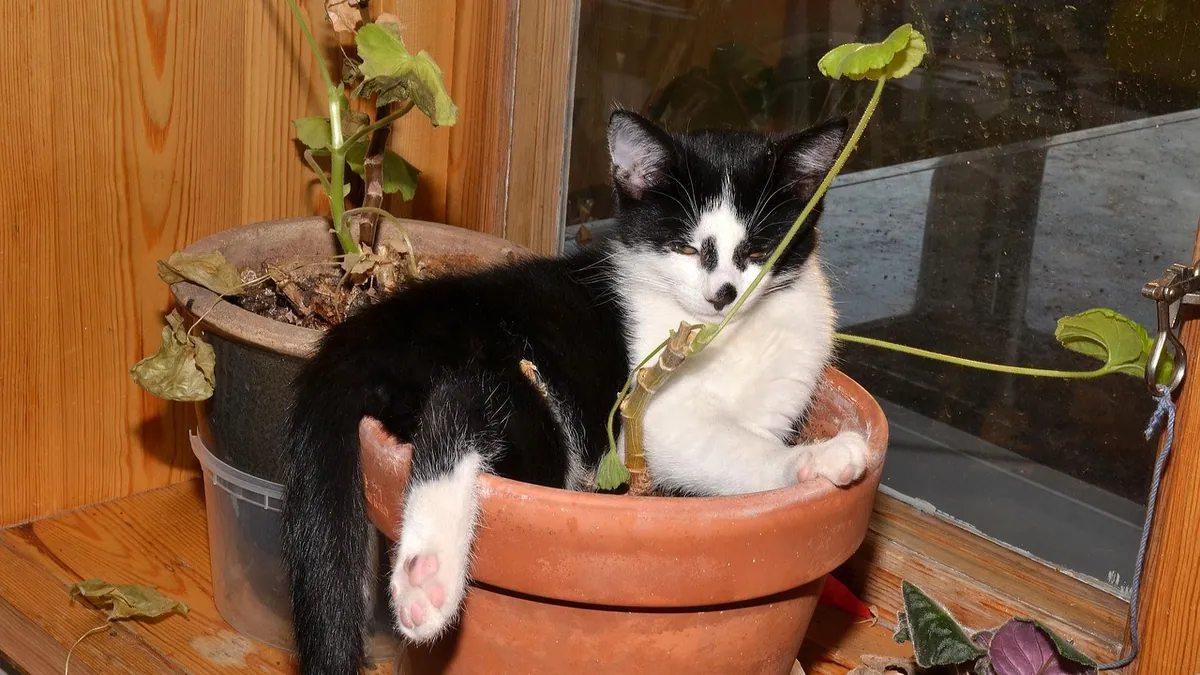
Are ZZ plants toxic to cats? Yes. Every ZZ plant, including the raven, black, and chameleon varieties, contains insoluble calcium oxalate crystals that cause intense mouth and stomach irritation when a cat chews on it. There is no ZZ cultivar that is safe for cats, and the plant is not considered non-toxic.
This article is educational and is not a substitute for veterinary diagnosis or treatment.
Quick Answer
- Every ZZ plant variety (Zamioculcas zamiifolia), including raven, black, and chameleon, is toxic to cats because all parts contain calcium oxalate crystals.
- The crystals are not a poison that spreads through the body. They cause pain and swelling where the plant touches the mouth, tongue, and stomach lining.
- Signs usually start within minutes to a few hours of chewing and include drooling, pawing at the mouth, vomiting, and trouble swallowing.
- Call your veterinarian, the ASPCA Animal Poison Control Center at (888) 426-4435, or Pet Poison Helpline at (855) 764-7661 right away.
- Do not make your cat vomit unless a veterinarian tells you to.
Are ZZ Plants Toxic to Cats? The Short Answer
Yes. ZZ plants are toxic to cats. The toxic principle is calcium oxalate, a mineral compound that forms needle-shaped crystals inside the plant's tissues. These crystals are called raphides, and they are present in the leaves, stems, and underground tubers.
When a cat bites or chews a leaf, the crystals are released and lodge in the soft tissues of the mouth and throat. This causes immediate burning and swelling. It is a mechanical injury, not a poisoning that travels through the bloodstream the way antifreeze does.
That distinction matters for treatment. Calcium oxalate plant irritation is managed by removing plant material, controlling pain, and supporting the cat through the worst of the swelling. It is different from a systemic toxin that damages organs from the inside.
If you want a broader picture of which houseplants and garden plants put cats at risk, see Plants Toxic To Cats.
Is ZZ Plant Harmful to Cats? Which Parts and Products Matter
Every part of the plant is a problem. The glossy leaves, the thick stems, and the potato-like rhizomes under the soil all contain calcium oxalate crystals. A cat does not have to eat a whole leaf to feel it. A few chews are enough to cause drooling and pawing at the mouth.
Leaves and Stems
Leaves and stems are the parts most cats reach. A cat batting at a low-hanging frond may bite down out of curiosity, then drop it fast. The irritation starts where the teeth and tongue touched the plant.
Rhizomes and Soil
The rhizomes sit at or just below the soil surface. A cat who digs in the pot can expose them, and a cat who nibbles on them gets a stronger dose of crystals than from a leaf tip. Keep pots out of reach and cover the soil surface if your cat likes to dig.
Cut Leaves, Cuttings, and Water
A single fallen leaf or a stem you trimmed off is still toxic. So is the water in a vase holding ZZ cuttings, because crystals and plant sap can leach into it. Clean up dropped leaves the same day and do not let your cat drink from propagation jars.
Which Varieties Are Affected
Raven ZZ, black ZZ, chameleon ZZ, Zenzi, and the standard green ZZ plant are all the same species. The dark purple-black foliage of raven and black varieties and the shifting green-to-gold tones of chameleon are cosmetic differences. The calcium oxalate content is the same risk across all of them.
The Toxic Principle: What Calcium Oxalate Does in the Body
Calcium oxalate crystals act like tiny needles. When plant cells are crushed by chewing, the crystals shoot out and embed in the mucous membranes of the mouth, lips, tongue, and throat. The body responds with swelling, redness, and pain.
Most of the harm stays local. A cat who swallows plant material can also irritate the esophagus and stomach lining, which leads to vomiting. Severe swelling in the throat is the main worry because it can interfere with breathing.
Calcium oxalate also appears in cats in a completely different context. When cats form calcium oxalate bladder stones, the mineral is the same compound but the cause is internal, tied to urine chemistry. Research in senior cats shows that increasing dietary potassium raises urine production and lowers the relative supersaturation of calcium oxalate, which reduces the risk of stone formation [1]. Other work has looked at how urine relative supersaturation for calcium oxalate monohydrate and dihydrate can be measured and modified in healthy cats [2]. Urolithiasis studies in cats also track the rising incidence of calcium oxalate stones compared with magnesium ammonium phosphate stones [3].
None of that changes how a ZZ plant injury works. Eating a houseplant does not cause bladder stones. The point is simply that calcium oxalate is a mineral with more than one role in feline medicine, and the plant version causes contact irritation, not urinary disease.
For comparison, some toxins do cause organ failure and death. Ethylene glycol, the sweet-tasting ingredient in some antifreezes, is a potent animal poison with a very high fatality rate in cats, and cats are often brought in late after signs begin [4]. A forensic case in a free-roaming cat confirmed ethylene glycol exposure through toxicology testing and showed calcium oxalate crystals deposited in the kidneys at necropsy [5]. That is a different mechanism entirely from chewing a ZZ leaf, and it is one reason veterinarians ask careful questions about what your cat may have swallowed.
Signs of ZZ Plant Poisoning in Cats and the Typical Timeline
Signs usually appear within minutes to a couple of hours after chewing. The faster your cat reacts, the more likely the plant is the cause.
Watch for:
- Drooling or foaming at the mouth
- Pawing at the face or rubbing the muzzle on the floor
- Swelling, redness, or blistering of the lips, tongue, or gums
- Whining, head shaking, or refusing to eat
- Vomiting, sometimes with visible plant pieces
- Difficulty swallowing or gulping
- Breathing that sounds noisy or labored
Mild cases often peak within a few hours and improve over one to two days with supportive care. Cases with heavy ingestion or significant throat swelling can take longer and need hospital monitoring. If your cat stops eating, keeps vomiting, or breathes differently, that is not a mild case.
What to Do Right Now
Act the same day, even if your cat seems only mildly uncomfortable.
- Move your cat away from the plant and take the plant or a photo of it with you if you go to a clinic.
- Wipe the mouth gently with a damp cloth to remove plant residue. Do not scrub.
- Offer water. Do not force it.
- Call your veterinarian, the ASPCA Animal Poison Control Center at (888) 426-4435, or Pet Poison Helpline at (855) 764-7661.
- Do not induce vomiting unless a veterinarian tells you to. Vomiting a caustic plant back up the esophagus can cause a second round of irritation.
If your cat is drooling heavily, breathing with effort, or collapsing, skip the phone call and go straight to the nearest emergency hospital.
How Veterinarians Treat ZZ Plant Exposure
Treatment depends on how much plant your cat chewed and how severe the swelling is. Your veterinarian will examine the mouth and throat, check breathing, and ask what part of the plant was eaten and when.
Common steps include:
- Flushing the mouth with water or saline to remove remaining crystals
- Pain medication and anti-inflammatory drugs
- Medications to coat and protect the stomach lining
- Anti-nausea drugs and fluids if vomiting is ongoing
- Oxygen and airway support if throat swelling is significant
- A bland, soft diet once your cat will eat again
Any drug dose is calculated by your veterinarian from your cat's weight and health status. There is no home dose you can safely guess at, and human pain relievers like acetaminophen and ibuprofen are dangerous to cats.
Outlook After a ZZ Plant Injury
Most cats recover fully. The crystals do not stay in the body or cause lasting organ damage, so once the mouth and stomach heal, the episode is over. Mild cases often settle within a day or two.
The cats who do poorly are usually the ones with heavy ingestion or delayed care. Severe swelling in the throat can restrict breathing, and that is a true emergency. Cats who vomit repeatedly can become dehydrated and need fluids.
If your cat has a history of bladder stones or urinary issues, mention it to your veterinarian. It does not change the plant treatment, but it is useful context for your cat's overall care. You can read more about plant risks in general at What Plants Can Be Toxic To Cats.
Prevention and Safer Alternatives
The simplest fix is to keep ZZ plants out of your cat's reach. Put them on a high shelf, in a closed room, or in a hanging planter your cat cannot jump to. Remember that a determined cat can climb, so height alone is not always enough.
Other practical steps:
- Pick up fallen leaves and trimmed stems the same day
- Do not leave propagation jars or vases of ZZ cuttings where a cat can drink
- Cover exposed rhizomes with soil or a decorative top layer
- Give your cat a safe plant to chew instead, such as cat grass or catnip
- Redirect chewing with toys and puzzle feeders
If you want a cat-safe houseplant, spider plants and snake plants are common choices, though some cats react to them with mild stomach upset. You can read more at Are Spider Plants Toxic To Cats and Are Snake Plants Toxic To Cats. A wider list of risky flowers and plants is available at What Plants And Flowers Are Toxic To Cats.
Limitations and When to Contact a Veterinarian
This article covers the general pattern of ZZ plant exposure in cats. Your cat's case depends on how much was eaten, which part, and how your cat responds. Individual cases need a veterinarian who can examine your cat in person.
Contact a veterinarian the same day if your cat chewed a ZZ plant, even if signs seem mild at first.
Go to an emergency hospital now if you see:
- Labored or noisy breathing
- Swelling that seems to be closing the throat
- Repeated vomiting that will not stop
- Collapse, weakness, or unresponsiveness
- Drooling so heavy your cat cannot swallow
Schedule a routine visit if signs have passed but your cat is still not eating normally after a day or two, or if you are unsure whether the plant was actually chewed.
Frequently Asked Questions
Is the raven ZZ plant toxic to cats?
Yes. Raven ZZ is the same species as the standard green ZZ plant, just with dark foliage, and it contains the same calcium oxalate crystals. The color of the leaves does not change the risk.
Is the black ZZ plant toxic to cats?
Yes. Black ZZ varieties are cultivars of the same plant, so all parts carry calcium oxalate crystals. Treat them exactly like any other ZZ plant in your home.
Is the chameleon ZZ plant toxic to cats?
Yes. Chameleon ZZ has leaves that shift color as they age, but the toxic principle is unchanged. It is not a safer variety.
Are ZZ plants non-toxic to cats?
No. You may see ZZ plants listed as non-toxic in some places, but that is incorrect for cats. Chewing any part can cause mouth pain, drooling, and vomiting.
Can a cat die from eating a ZZ plant?
Death is rare and usually linked to severe throat swelling or a delay in care. Most cats recover with same-day veterinary treatment, so call for guidance as soon as you notice chewing.
Related Articles
- Plants Toxic To Cats
- What Plants Can Be Toxic To Cats
- What Plants And Flowers Are Toxic To Cats
- Are Snake Plants Toxic To Cats
- Are Spider Plants Toxic To Cats
- House Plants Toxic To Cat
- Are ZZ Plants Toxic to Cats? Signs and Safety
- Are Hoya Plants Toxic to Cats? Varieties Compared
- Is Citronella Plant Toxic to Cats? Geranium Risk
References
- Increasing Dietary Potassium Enhances Urine Production and Reduces Risk of Calcium Oxalate Stone Formation in Senior Cats. Animals : an open access journal from MDPI, 2026.
- A placebo-controlled study of an herbal compound used for management of lower urinary tract disease in healthy cats. Frontiers in veterinary science, 2026.
- Association between uropathogens and the occurrence of magnesium ammonium phosphate and calcium oxalate in cats with urolithiasis: a retrospective study (2016-2021). Journal of feline medicine and surgery, 2025.
- A retrospective case series of companion animals hospitalized for ethylene glycol poisoning at a Canadian veterinary teaching hospital. The Canadian veterinary journal = La revue veterinaire canadienne, 2026.
- Ethylene glycol poisoning in a free-roaming cat associated with suspected animal cruelty: a forensic veterinary case report in South Korea. Frontiers in veterinary science, 2026.