Are Poinsettias Poisonous to Dogs? What to Expect
By Dr. Zubair Khalid, DVM, MS, PhD ·
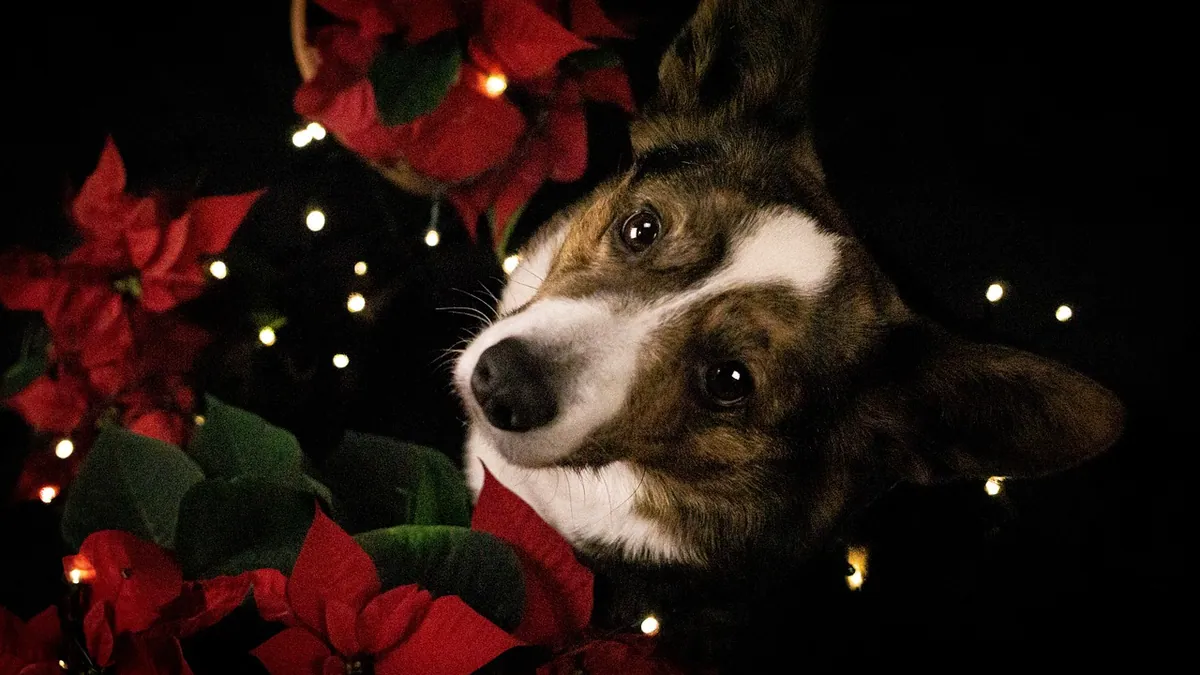
Are poinsettias poisonous to dogs? Yes, but far less than most people think. The poinsettia (Euphorbia pulcherrima) is only mildly toxic to dogs, and serious poisoning is rare [1][2]. Most dogs that chew on a leaf end up with a sore mouth or an upset stomach, not a life-threatening emergency.
This article is educational and is not a substitute for veterinary diagnosis or treatment.
Quick Answer
- Poinsettias are mildly toxic to dogs, not deadly. The ASPCA lists them as toxic to dogs, cats, and horses, but calls them "generally over-rated in toxicity" [2].
- The milky white sap is the problem. It contains irritant chemicals that bother the mouth, skin, and stomach [1][2].
- Typical signs are drooling, pawing at the mouth, red or swollen lips, and sometimes vomiting [2].
- Most exposures cause only mild to moderate signs, and treatment is rarely needed unless signs are severe [1][3].
- If your dog eats a lot of the plant or looks unwell, call your veterinarian, the ASPCA Animal Poison Control Center at (888) 426-4435, or Pet Poison Helpline at (855) 764-7661. Do not make your dog vomit unless a veterinarian tells you to.
Are Poinsettias Poisonous to Dogs? The Real Risk
The poinsettia has a reputation it does not deserve. Pet Poison Helpline notes that while poinsettias are commonly "hyped" as poisonous plants, poisoning is greatly exaggerated and the plant is only mildly toxic to dogs and cats [1]. The ASPCA plant record agrees, listing the poinsettia as toxic to dogs but adding that it is generally over-rated in toxicity [2].
That does not mean you should let your dog eat the plant. It means the likely outcome is discomfort, not death.
Which Parts of the Plant Matter
The milky white sap is found throughout the plant. It is present in the leaves, stems, and colored bracts (the red, pink, or white "flowers" people buy them for). Any part your dog chews can release sap, so there is no safe part to leave within reach.
What About Poinsettia Leaves Specifically?
Are poinsettia leaves toxic to dogs? Yes, the leaves contain the same irritant sap as the rest of the plant [1][2]. A single chewed leaf usually causes mouth irritation and drooling. Eating several leaves, or a whole small plant, can lead to vomiting and stomach upset. The dose matters, and a large meal of plant material is more likely to cause signs than a quick nibble.
Other Poinsettia Products
Poinsettia sap can also irritate skin and eyes on contact. If your dog brushes against a broken stem and then licks the area, you may see redness or mild swelling. Wash the sap off with lukewarm water and mild soap if your dog will let you.
The Toxic Principle and What It Does in the Body
The sap contains chemicals called diterpenoid euphorbol esters and saponin-like detergents [1]. These are irritants, not systemic poisons. They do not attack the heart, liver, or brain the way some houseplants do.
When your dog chews a poinsettia, the sap contacts the moist lining of the mouth and throat. That triggers burning, tingling, and excessive salivation. If sap is swallowed, it can irritate the stomach lining and cause vomiting. The diterpenoid compounds in Euphorbia species are well documented as irritants in pets, and poinsettia appears in European surveys of plant exposures in dogs [3][4].
Because the toxic principle is an irritant instead of a poison that builds up in organs, there is no antidote for poinsettia poisoning [1]. The body clears the irritant on its own in most cases, and care focuses on relieving signs.
Signs of Poinsettia Poisoning in Dogs
Signs usually involve the mouth and stomach. The ASPCA lists irritation to the mouth and stomach, sometimes with vomiting, as the expected clinical signs [2].
Common signs include:
- Drooling or foaming at the mouth
- Pawing at the face or rubbing the muzzle
- Red, swollen, or painful lips, tongue, or gums
- Lip smacking or repeated swallowing
- Vomiting, sometimes with plant material visible
- Reduced appetite or reluctance to eat
- Mild skin irritation where sap touched the coat
Severe signs are uncommon with poinsettia alone. If your dog is lethargic, has repeated vomiting, seems to have trouble breathing, or has swelling that affects the airway, treat it as an emergency. Those signs are more typical of other holiday plants, including lilies, oleander, rhododendron, and cycad species, which are far more dangerous than poinsettia [5][6][3][4].
How Soon Do Signs Appear?
Mouth irritation and drooling often start within minutes of chewing. Vomiting tends to begin within a few hours. Signs from an irritant exposure are usually at their worst in the first few hours and improve as the sap is diluted and cleared. If your dog has no signs within several hours of a small nibble, serious poisoning is unlikely.
What to Do Right Now
- Move the plant out of reach and take a photo of it. Identification helps the veterinarian or poison control team.
- Wipe out your dog's mouth with a soft, damp cloth and offer fresh water. Do not scrub the mouth or force water.
- Estimate how much was eaten and when. A rough guess is fine.
- Call for advice. Contact your veterinarian, the ASPCA Animal Poison Control Center at (888) 426-4435, or Pet Poison Helpline at (855) 764-7661. Both are staffed around the clock and may charge a consultation fee.
- Do not induce vomiting unless a veterinarian tells you to. Poinsettia sap is irritating, and making your dog vomit can cause more mouth and throat pain and, in some cases, aspiration problems.
- Watch for worsening signs. If drooling will not stop, vomiting repeats, or your dog seems painful or depressed, go to a veterinary clinic.
If you are unsure whether the plant your dog chewed is a poinsettia or something more dangerous, review Plants Poisonous To Dogs and Common Houseplants Toxic to Cats and Dogs. Bring the plant or a clear photo with you.
Veterinary Treatment for Poinsettia Exposure
Most dogs need only supportive care. Your veterinarian will ask what was eaten, how much, and when. They will examine the mouth for redness, swelling, or sap residue and check your dog's overall condition.
Treatment may include:
- Rinsing the mouth and offering water or a bland meal
- Medications to settle nausea or vomiting, chosen based on your dog's weight and health
- Fluids under the skin or into a vein if your dog is dehydrated from vomiting
- Skin or eye flushing if sap contacted those areas
- Activated charcoal only in selected cases, at the veterinarian's discretion
There is no antidote for poinsettia poisoning [1]. Because toxicity is low, medical treatment is rarely necessary unless signs are severe [1]. Any drug dose is calculated by your veterinarian from your dog's weight, age, and health status.
Outlook After a Poinsettia Exposure
The outlook is good in most cases. In a large Italian survey of plant exposures in dogs and cats, most exposures (73.8 percent) caused only mild to moderate signs [3]. A later survey from the same poison center found that fatal outcomes were uncommon, with 3 deaths out of 49 episodes where an outcome was reported, and those cases involved a range of plants, not poinsettia alone [4]. Poinsettia is listed among the plants involved in those calls, but it is not the plant most associated with severe outcomes [3][4].
Dogs that develop only drooling and mild mouth irritation typically recover within hours to a day. Dogs with vomiting may feel off for a day or two. If signs last longer or get worse, your dog needs to be seen again.
Prevention and Safer Alternatives
Prevention is simple. Keep poinsettias on a high shelf, in a closed room, or behind a barrier your dog cannot cross. Pick up fallen leaves and bracts daily, since those are easy to swallow. If you have a chewer, consider skipping the poinsettia altogether.
Safer holiday options include:
- Artificial poinsettias, which have no sap
- A small rosemary plant shaped like a topiary
- A Christmas cactus, which is not on the ASPCA toxic plant list
- Cut flowers in a tall vase your dog cannot reach
If your dog eats plants regularly, keep a list of what is in your home and check it against a reliable plant guide. For food-related questions, see What Vegetables Are Not Safe For Dogs To Eat. For non-plant swallowing risks, My Dog Ate a Pen: Is It Toxic or Just a Blockage Risk? explains how veterinarians sort out irritation from obstruction.
Limitations and When to Contact a Veterinarian
This article covers typical poinsettia exposures in healthy adult dogs. Puppies, senior dogs, and dogs with heart, kidney, or stomach disease can react differently. Individual cases need a veterinarian who can examine your dog and decide on care.
Contact your veterinarian the same day if:
- Your dog vomited more than once
- Drooling or mouth pain has lasted more than a few hours
- Your dog will not eat or drink
- You do not know how much plant was eaten
- Your dog has a pre-existing illness or takes medication
Go to an emergency clinic now if:
- Your dog is having trouble breathing, or the face or throat looks swollen
- Vomiting will not stop
- Your dog is weak, wobbly, or unresponsive
- You suspect a different, more dangerous plant was eaten
Call a routine visit if your dog had a small nibble, has no signs, and you want reassurance. Bring the plant name and a photo.
Frequently Asked Questions
Are poinsettias poisonous to dogs according to the ASPCA?
Yes. The ASPCA lists the poinsettia as toxic to dogs, cats, and horses, with irritant sap as the toxic principle [2]. The same record notes the plant is generally over-rated in toxicity, meaning serious poisoning is uncommon [2].
Can a dog die from eating a poinsettia?
Death from poinsettia alone is very unlikely. The plant is only mildly toxic, and medical treatment is rarely needed unless signs are severe [1]. If your dog is severely ill after chewing a plant, other plants in the home may be the cause.
Is poinsettia harmful to dogs if they only lick it?
Licking can cause drooling, lip smacking, and mild mouth irritation because the sap is an irritant [1][2]. Wipe the mouth with a damp cloth, offer water, and watch for vomiting. Call your veterinarian if signs do not settle quickly.
Should I make my dog throw up after eating a poinsettia?
No, not on your own. Inducing vomiting is not recommended unless a veterinarian tells you to do it, since the sap irritates the mouth and throat and vomiting can make things worse. Call your veterinarian or a poison control line first.
Which holiday plants are more dangerous than poinsettia?
Lilies, oleander, rhododendron, and cycad plants such as sago palm are far more concerning than poinsettia [5][6][3][4]. These can cause serious heart, nerve, or organ damage. If your dog chewed one of these, treat it as an emergency.
Related Articles
- Plants Poisonous To Dogs
- Common Houseplants Toxic to Cats and Dogs
- Are Tarantulas Poisonous to Dogs? Understanding the Risks
- My Dog Ate a Pen: Is It Toxic or Just a Blockage Risk?
- What Vegetables Are Not Safe For Dogs To Eat
- Can You Give Your Dog Ibuprofen? Why It's Toxic
- Are Azaleas Poisonous to Dogs? Leaves, Flowers, and Signs
- Are Easter Lilies Poisonous to Dogs?
- Are Succulents Toxic to Dogs? Which Ones to Avoid
References
- Poinsettias Poisonous To Pets. Pet Poison Helpline.
- Toxic and Non-toxic Plants: Poinsettia. ASPCA Animal Poison Control Center.
- Plant poisoning in domestic animals: epidemiological data from an Italian survey (2000-2011). The Veterinary record, 2013.
- Plants and zootoxins: Toxico-epidemiological investigation in domestic animals. Toxicon : official journal of the International Society on Toxinology, 2021.
- Potential plant poisonings in dogs and cats in southern Africa. Journal of the South African Veterinary Association, 2009.
- Grayanotoxin poisoning in animals following the ingestion of Ericaceae plants. Veterinary journal (London, England : 1997), 2026.