Is Peppermint Oil Toxic to Cats? Diffuser and Smell Risks
By Dr. Zubair Khalid, DVM, MS, PhD ·
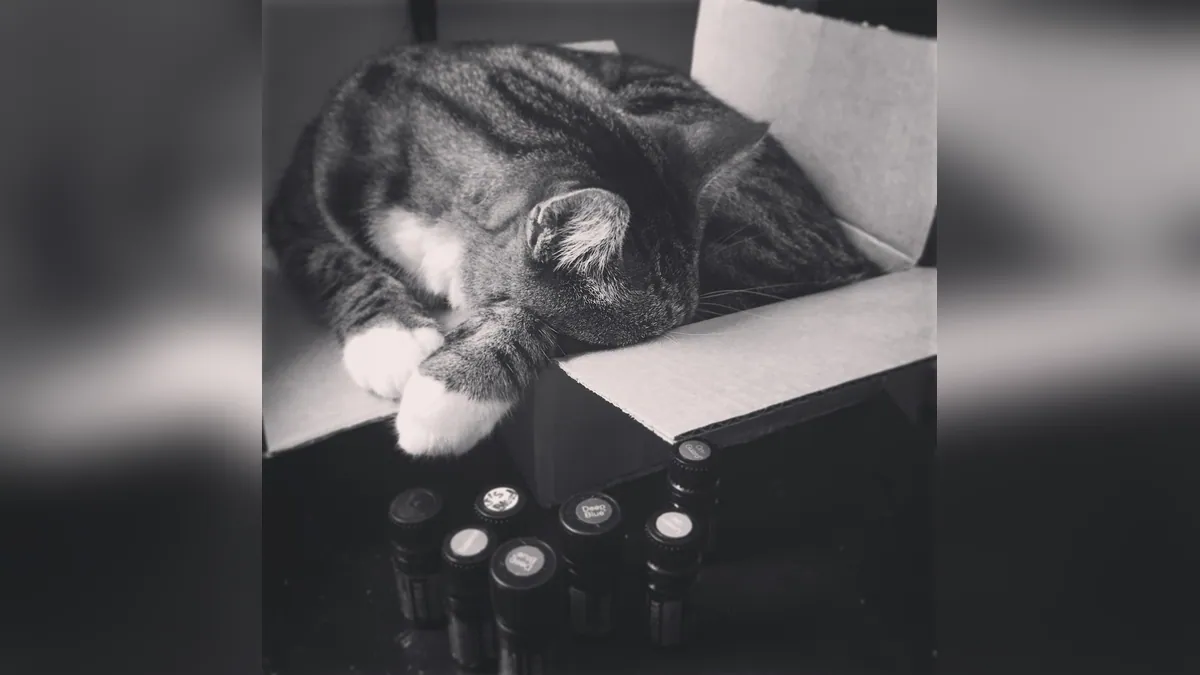
Is peppermint oil toxic to cats? Yes. Peppermint oil is on the list of essential oils known to cause poisoning in cats, and cats can be harmed by smelling it, licking it, or absorbing it through their skin [1]. Cats clear these compounds poorly, so even a small exposure can cause real problems.
This article is educational and is not a substitute for veterinary diagnosis or treatment.
Quick Answer
- Peppermint oil is toxic to cats by ingestion, skin contact, and inhalation, and cats are especially sensitive to it because their livers cannot process essential oils well [1].
- A diffuser can absolutely harm your cat. Inhaled oils can cause drooling, vomiting, wobbliness, breathing trouble, a slow heart rate, and low body temperature [1].
- Never apply peppermint oil, mint oil, or peppermint sprays to your cat or anywhere your cat can lick or rub against.
- If you suspect exposure, call your veterinarian, the ASPCA Animal Poison Control Center at (888) 426-4435, or Pet Poison Helpline at (855) 764-7661 right away. Do not induce vomiting unless a veterinarian tells you to.
- The safest choice is to keep peppermint oil and all essential oils out of your home, or at least out of any room your cat can enter.
Is Peppermint Oil Toxic to Cats to Smell?
Yes. Smelling peppermint oil is a real exposure route for cats, not a harmless one. Cats have a large nasal surface area and breathe in airborne oil droplets, and those compounds get absorbed into the body [1]. The stronger the scent and the smaller the room, the greater the risk.
This is why "is peppermint oil toxic to cats to smell" is such a common question. Owners often assume that if the cat never touches the bottle, there is no danger. That is not true. A cat resting near a running diffuser is inhaling a concentrated oil, and cats lack an essential liver enzyme needed to metabolize and eliminate certain toxins like essential oils [1].
Is Peppermint Oil Toxic to Cats in a Diffuser?
Yes, and diffusers are one of the most common ways cats get exposed. A diffuser puts oil directly into the air your cat breathes, often in a closed bedroom or living room where the cat cannot escape the cloud of scent. Because cats are very sensitive to phenols and phenolic compounds found in some essential oils, and because concentration matters, a 100% peppermint oil in a diffuser is a high-risk setup [1].
Signs can show up within minutes to hours of a diffuser running. If your cat starts drooling, vomiting, acting wobbly, or breathing oddly while a diffuser is on, turn it off, move your cat to fresh air, and call for advice.
Is Mint Oil Toxic to Cats?
Yes. Mint oil falls into the same family of concern as peppermint oil. Peppermint oil itself is derived from Mentha × piperita, a mint species, and it is named among the essential oils known to cause poisoning in cats [1]. Spearmint and other mint oils carry similar aromatic compounds, so treat any mint oil as unsafe around cats.
Is Peppermint Oil Spray Toxic to Cats?
Yes. Sprays are risky for two reasons. First, the mist puts oil into the air, so your cat inhales it. Second, the spray lands on floors, furniture, bedding, and your cat's coat, where it can be licked off during grooming. Peppermint oil is rapidly absorbed both orally and across the skin [1], so a spray that settles on your cat's fur becomes an internal exposure.
Many peppermint sprays are marketed as pest repellents or room fresheners. A 1% peppermint oil preparation was the most deterrent treatment against Argentine ants in one laboratory trial [2], which is exactly why these products are sold. Deterring ants is not the same as being safe for a cat living in the same house.
What Makes Peppermint Oil Dangerous for Cats
The toxic principle is the essential oil itself, a concentrated mix of plant chemicals including menthol and other monoterpenes. Essential oils are rapidly absorbed both orally and across the skin, then metabolized in the liver [1]. Cats lack an essential enzyme in their liver, so they have difficulty metabolizing and eliminating certain toxins like essential oils [1]. The oil stays in the body longer and at higher levels than it would in a dog or a person.
Cats are also very sensitive to phenols and phenolic compounds, which can be found in some essential oils [1]. On top of that, concentration drives risk. The higher the concentration of the essential oil, meaning 100%, the greater the risk to the cat [1]. A diluted spray is less concentrated than a bottle of pure oil, but "less concentrated" does not mean safe.
One more point that surprises owners: peppermint oil is not automatically dangerous in every context. In animal feed, peppermint oil was judged safe for all animal species at a maximum use level of 12 mg/kg complete feed, and use in drinking water was considered safe as long as total daily intake does not exceed the amount considered safe through feed [3]. That is a carefully measured oral intake in a formulated diet. It is nothing like a cat breathing diffuser mist or licking a sprayed surface, and it does not make home use safe.
Signs of Peppermint Oil Poisoning in Cats
Symptoms depend on the type of oil involved and the route of exposure [1]. With peppermint oil, watch for:
- Drooling
- Vomiting
- Tremors
- Ataxia, which means wobbliness or unsteady walking
- Respiratory distress, such as fast, noisy, or labored breathing
- Low heart rate
- Low body temperature
- Liver failure in serious or repeated cases
These signs are drawn from the recognized list of essential oil poisoning symptoms in cats [1]. Some cats also paw at their mouth, shake their head, or hide after an exposure.
How Fast Do Signs Appear?
Timing varies with the route and the amount. Inhaled exposure from a diffuser or spray can produce signs within minutes to a few hours. Skin contact and grooming can take longer because absorption through the skin and ingestion during grooming happen over time. Because essential oils are absorbed quickly and cleared slowly in cats [1], signs can also build up with repeated low-level exposure, such as a diffuser that runs every evening.
If you are unsure whether your cat's signs are related to an oil, treat it as urgent and call for guidance. You can also read more about general oil safety in Are Essential Oils Safe for Cats and Dogs?.
What to Do Right Now
Act quickly and do not wait for signs to get worse.
- Stop the exposure. Turn off the diffuser, put the spray or bottle away, and move your cat to a well-ventilated room with fresh air.
- Do not apply anything else to your cat. No bathing with harsh products, no rubbing alcohol, no home remedies.
- Call for help. Contact your veterinarian, the ASPCA Animal Poison Control Center at (888) 426-4435, or Pet Poison Helpline at (855) 764-7661.
- Do not induce vomiting unless a veterinarian tells you to. Inducing vomiting can cause aspiration and make things worse.
- Have the product label ready. Tell the veterinarian the product name, the concentration, how your cat was exposed, and when it happened.
- If oil is on your cat's coat or paws, ask the veterinarian whether a lukewarm bath with a mild pet-safe cleanser is appropriate, and follow their instructions.
If your cat is having trouble breathing, is collapsing, has tremors, or is unresponsive, this is an emergency. Go to the nearest veterinary emergency hospital now.
How Veterinarians Treat Peppermint Oil Poisoning
Treatment is supportive and tailored to your cat's signs. Your veterinarian will assess breathing, heart rate, body temperature, and neurologic status, since these are the systems affected by essential oil poisoning [1]. If the exposure was recent and oral, the veterinarian may discuss decontamination, but only when it is safe to do so. Never induce vomiting on your own.
Care may include oxygen support for respiratory distress, intravenous fluids, medications to control vomiting or tremors, and warming for low body temperature. Blood work can check liver values, because liver failure is a possible outcome of essential oil poisoning in cats [1]. The dose and choice of any medication is calculated by the veterinarian from your cat's weight and health, so no home dosing is ever appropriate.
Outlook After Exposure
The outlook depends on how much oil your cat absorbed, the route, how concentrated the product was, and how quickly care started. Cats with mild inhaled exposure often improve once they are moved to fresh air and monitored. Cats with significant ingestion, skin absorption, or repeated exposure face a more serious course, and liver failure is a possible outcome [1].
Because cats clear these compounds slowly, some cats need monitoring for more than a day. Your veterinarian will tell you what to watch for at home and when to return.
Prevention and Safer Alternatives
Prevention is straightforward. Keep peppermint oil, mint oil, and all essential oils out of your home, or store them where your cat cannot reach them and never use them in shared air space. Skip diffusers, plug-ins, room sprays, and pest repellents that contain peppermint or mint. If you must use an oil product, do it outside, away from your cat, and wash your hands and any surfaces afterward.
For pest control, talk to your veterinarian about cat-safe flea and tick products instead of botanical repellents. Research on plant oils against fleas and mosquitoes is ongoing, and repellent activity has been linked to monoterpene content in some plant oils [4], but that research does not establish safe home use around cats. Similarly, some essential oils are used in clinical veterinary settings as primary or adjunctive therapy, and with adherence to safe use guidelines they may be used in companion animals with a low risk of adverse events [5]. That is a decision for a veterinarian who knows your cat, not a label on a bottle.
For scent in your home, choose unscented or pet-safe cleaning products, open windows when weather allows, and use mechanical air filtration instead of fragrance. If you enjoy plants, check which ones are safe. Many common flowers and houseplants are toxic to cats, and you can review examples in Flowers Toxic To Cats and What Flowers Are Toxic To Cats.
If you are considering any oil product for your cat, including CBD products, review the safety information in CBD Oil for Cats: Feline Safety Profile and THC Toxicity and ask your veterinarian first.
Limitations and When to Contact a Veterinarian
This article covers general principles. Your cat's individual case needs a veterinarian who can examine your cat, ask about the exact product and exposure, and decide on treatment.
Contact a veterinarian the same day if your cat had brief contact with a peppermint product, seems slightly off, or you are not sure how much exposure occurred. Call poison control or your veterinarian right away if you know your cat licked or drank peppermint oil, if oil got on the skin or coat, or if a diffuser ran in a closed room with your cat for hours.
Go to an emergency hospital now if your cat is drooling heavily, vomiting repeatedly, trembling, walking wobbly, breathing fast or with effort, feels cool to the touch, or is weak or unresponsive. These signs match the recognized symptoms of essential oil poisoning in cats, which can include drooling, vomiting, tremors, ataxia, respiratory distress, low heart rate, low body temperature, and liver failure [1].
Schedule a routine visit if your cat had a possible low-level exposure days ago and now seems tired, is eating less, or is vomiting off and on. Liver problems can develop quietly after essential oil exposure [1], and a physical exam with blood work can sort that out.
Frequently Asked Questions
Can my cat get sick from a diffuser in another room?
Yes, if the scent reaches the room your cat is in. Airborne oil is inhaled and absorbed, and cats clear these compounds poorly [1]. Keep diffusers out of the house entirely, or at minimum out of any space your cat can access.
How long does peppermint oil stay in a cat's body?
There is no fixed number of hours that applies to every cat. Cats lack an essential liver enzyme needed to metabolize and eliminate certain toxins like essential oils, so clearance is slow and unpredictable [1]. Your veterinarian can advise on monitoring based on your cat's signs.
Will a small amount of peppermint oil on my hands hurt my cat?
It can, because essential oils absorb across the skin and through grooming after your cat rubs or licks your hands [1]. Wash your hands thoroughly after any contact with peppermint oil, and keep your cat away from treated skin until it is clean.
Are all mint oils dangerous to cats, or only peppermint?
Treat all mint oils as unsafe. Peppermint oil, which comes from a mint species, is named among the essential oils known to cause poisoning in cats [1]. Spearmint and other mint oils contain similar aromatic compounds, so the same precautions apply.
Can I use peppermint oil to keep ants or pests away if my cat stays indoors?
No. Peppermint oil at 1% was the most deterrent treatment against Argentine ants in a laboratory trial [2], but that says nothing about cat safety. Ask your veterinarian about cat-safe pest control instead, and keep peppermint products out of your home.
Related Articles
- Are Essential Oils Safe for Cats and Dogs?
- CBD Oil for Cats: Feline Safety Profile and THC Toxicity
- Flowers Toxic To Cats
- Flowers That Are Toxic To Cats
- What Flowers Are Toxic To Cats
- What Plants And Flowers Are Toxic To Cats
- Can Cats Eat Peppermint? Leaves, Candy and Oils
- Is Tea Tree Oil Toxic to Cats? Diffusers, Fumes and Drops
- Is Orange Essential Oil Toxic to Cats? Diffuser and Skin Risks
References
- Essential Oils and Cats. Pet Poison Helpline.
- Common Home Remedies Do Not Deter Argentine Ants, Linepithema humile (Hymenoptera: Formicidae), from a Preferred Harborage. Insects, 2024.
- Safety and efficacy of a feed additive consisting of an essential oil derived from the aerial parts of Mentha × piperita L. (peppermint oil) for use in all animal species (FEFANA asbl). EFSA journal. European Food Safety Authority, 2025.
- Repellent activity against Aedes aegypti and metabolomic profiling of Myrica gale L. essential oils from Irish boglands. Scientific reports, 2026.
- Introduction to Veterinary Medical Aromatherapy. The Veterinary clinics of North America. Small animal practice, 2025.