Is Moonstone Succulent Toxic to Cats? Safety Check
By Dr. Zubair Khalid, DVM, MS, PhD ·
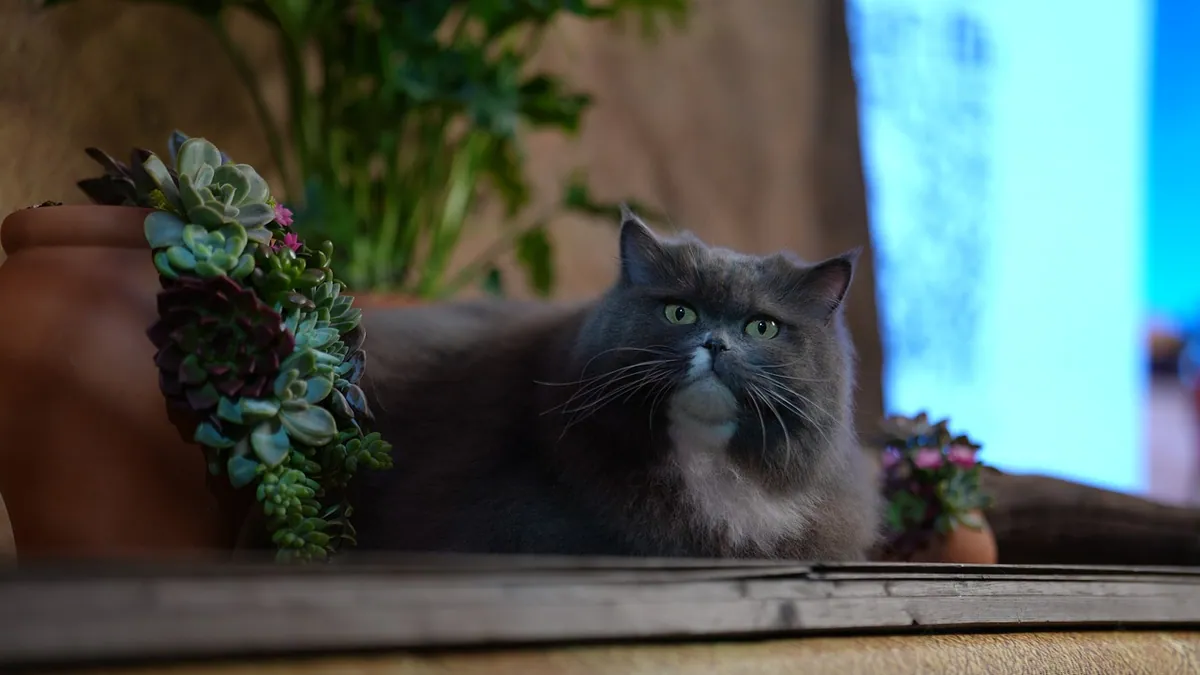
Is moonstone succulent toxic to cats? In most cases, no. The plants sold as moonstone succulents (usually Pachyphytum species and their hybrids) are not known to be toxic to cats, and they do not appear on standard veterinary poison lists. The real risk comes from lookalikes, especially Kalanchoe, which are toxic and are sometimes sold right next to moonstone plants in the same store display.
This article is educational and is not a substitute for veterinary diagnosis or treatment.
Quick Answer
- True moonstone succulents (Pachyphytum oviferum, Pachyphytum bracteosum, and Pachyveria hybrids) are considered non-toxic to cats.
- The main danger is misidentification. Kalanchoe blossfeldiana (flaming Katy, florist kalanchoe) has thick fleshy leaves and is genuinely toxic to cats.
- Eating any houseplant can still cause mild stomach upset, drooling, or vomiting from the plant material itself, even when the plant is not poisonous.
- If your cat chews a succulent and you are not sure which species it is, treat it as a possible poisoning until you confirm the plant's identity.
- Call your veterinarian, the ASPCA Animal Poison Control Center at (888) 426-4435, or Pet Poison Helpline at (855) 764-7661 if your cat shows vomiting, drooling, lethargy, or a change in behavior.
Is Moonstone Succulent Toxic to Cats? What the Evidence Says
Moonstone succulents belong to the genus Pachyphytum, a group of small rosette-forming succulents native to Mexico. They are grown for their plump, pale, rounded leaves that look like smooth pebbles or moonstones. Pachyphytum oviferum is the classic "moonstone" plant, and many plants sold under that name are actually Pachyveria hybrids (crosses between Pachyphytum and Echeveria).
Neither Pachyphytum nor Echeveria appears on the major veterinary toxic plant lists. These succulents are widely grown as indoor plants and are generally regarded as cat-safe. That does not mean a cat can eat a whole plant with no consequences. Any bulky plant material can irritate the stomach and cause a cat to vomit or have loose stool, but that is a mechanical upset, not poisoning.
Plant poisoning in cats is a real concern in veterinary practice, and it is often linked to ornamental house and garden plants that owners keep indoors [1][2]. Indoor cats spend most of their time in the same space as these plants, which raises the chance of exposure [2]. So the question is not whether plants can poison cats in general. The question is whether this specific plant can.
For moonstone succulents, the answer is that no toxic principle has been identified in Pachyphytum or Echeveria. That is different from saying the plant has been tested and proven safe in controlled cat feeding trials. It has not. The classification rests on the absence of reported poisonings and the absence of known toxins in the genus.
Which Parts and Products Matter
The leaves, stems, and roots of a moonstone succulent are all considered non-toxic. There is no known toxic sap, no toxic latex, and no toxic bulb or seed.
Two practical points matter more than the plant itself:
- Pesticides and fertilizers. A non-toxic plant can still make a cat sick if it was recently treated with an insecticide or systemic fertilizer. Wash new plants and keep treated plants out of reach until the label's re-entry period has passed.
- Potting media and decorations. Cats sometimes dig in pots. Cocoa mulch, if used, contains theobromine and is toxic to pets. Most succulent mixes do not contain cocoa, but check the bag.
If you want a broader reference for which houseplants are dangerous, see Plants Toxic To Cats. It covers the plants that show up most often in real poison cases.
The Lookalike Problem: Pachyphytum vs Kalanchoe
This is where most confusion starts. Several unrelated succulents have thick, fleshy, rounded leaves, and a tired shopper or a phone photo can make them hard to tell apart.
How to Tell Them Apart
- Moonstone (Pachyphytum). Leaves are very rounded, almost egg-shaped, and covered in a powdery white or silver-blue coating. The plant forms a tight rosette. Leaves snap off easily and leave a clean scar.
- Kalanchoe blossfeldiana. Leaves are fleshy but flatter, with scalloped or wavy edges, and usually a deeper green. It produces clusters of small four-petaled flowers in red, pink, yellow, or white. It is sold everywhere as a flowering gift plant.
- Echeveria. Also non-toxic. Leaves are pointed at the tip and arranged in a rose-like rosette, often with pink or red edges.
If your plant has scalloped leaf edges and clusters of tiny four-petaled flowers, it is likely Kalanchoe, not moonstone. That distinction changes everything.
Why Kalanchoe Is the Real Concern
Kalanchoe species contain cardiac glycosides, the same broad class of compounds found in oleander and foxglove. Cardiac glycosides disrupt the sodium-potassium pump in heart muscle cells, which can trigger abnormal heart rhythms and gastrointestinal signs. Oleander poisoning from cardiac glycosides has caused fatal outcomes in animals, and it is one of the best-documented plant poisonings in veterinary toxicology [3]. Cardiac glycoside-containing plants are also among the plant groups responsible for companion animal poisonings in large case surveys [4].
Kalanchoe is not oleander, and most household exposures cause mild to moderate signs. Still, it belongs in the toxic category, and it is one of the plants that owners most often mistake for a harmless succulent.
Other succulents that are not safe include Euphorbia species (the milky-sap plants, including poinsettia and pencil cactus). Euphorbias are listed among the plants that have caused poisoning in dogs and cats, and their irritating sap can burn the mouth and eyes [1]. If your "succulent" leaks white milky sap when a leaf breaks, stop and identify it before letting your cat near it.
What Happens If a Cat Eats a Toxic Succulent
The toxic principle depends on the plant. For Kalanchoe and other cardiac glycoside plants, the toxin interferes with the heart's electrical signaling and with the gut. For Euphorbia, the sap contains diterpene esters that cause direct chemical irritation and inflammation of the mouth, throat, and stomach lining.
Grayanotoxin-containing plants such as Rhododendron and Pieris cause a different pattern. In a systematic review of grayanotoxin poisoning in animals, retching, regurgitation, and vomiting were common signs and were considered suggestive of plant poisoning [5]. That review covered mostly livestock, with a smaller number of companion animals including cats, so the cat-specific data are limited [5]. It is still a useful reminder that plant poisonings often announce themselves through the gut first.
Signs to Watch For
- Drooling, lip smacking, pawing at the mouth
- Vomiting, retching, or regurgitation [5]
- Diarrhea or abdominal discomfort
- Lethargy, weakness, or hiding
- Loss of appetite
- Fast, slow, or irregular heartbeat (cardiac glycoside plants)
- Tremors, wobbliness, or collapse in severe cases
- Redness, swelling, or ulcers in the mouth (irritant sap plants)
Typical Timeline
Signs from irritant plants usually start within minutes to a couple of hours of chewing. Signs from cardiac glycoside plants can begin within a few hours and may worsen over the first 12 to 24 hours. If your cat ate a plant and is still completely normal after 12 hours, the risk of a serious poisoning is lower, but do not skip the call to your veterinarian if you are unsure what the plant was.
What to Do Right Now
- Move the cat away from the plant. Put the plant out of reach or in a closed room.
- Identify the plant. Take a clear photo of the whole plant, a single leaf, and any flowers. Save the plant tag if you have it. Identification drives every decision that follows.
- Check the mouth. Look for redness, swelling, or sap residue. If sap is on the skin or paws, rinse with lukewarm water.
- Call for advice. Contact your veterinarian, the ASPCA Animal Poison Control Center at (888) 426-4435, or Pet Poison Helpline at (855) 764-7661. Both services are staffed around the clock and may charge a consultation fee.
- Do not induce vomiting unless a veterinarian tells you to. Making a cat vomit at home can cause aspiration pneumonia, and it is the wrong move for some toxins.
- Do not give milk, oil, activated charcoal, or home remedies. These can interfere with treatment.
- Note the time of exposure and the amount eaten. Even an estimate helps your veterinarian plan.
If your cat is having trouble breathing, has collapsed, has a very fast or very slow heartbeat, or is having seizures, go to the nearest emergency veterinary hospital now. Do not wait for a callback.
How Veterinarians Treat Plant Poisoning in Cats
Treatment depends on the plant and the signs. Your veterinarian will start with a physical exam, a heart rate and rhythm check, and questions about what was eaten and when.
Common steps include:
- Decontamination. If the exposure was recent and the plant is dangerous, your veterinarian may induce vomiting safely or give activated charcoal. This is a clinical decision based on the toxin, the timing, and your cat's condition.
- Gastrointestinal support. Anti-nausea medication, fluids under the skin or into a vein, and a bland diet help cats with vomiting and diarrhea.
- Heart monitoring. For cardiac glycoside plants, an ECG and repeated heart rate checks are standard. Electrolyte abnormalities may need correction.
- Symptom-directed care. Tremors, pain, and mouth ulcers are treated as they appear.
- Hospitalization. Moderate to severe cases often need intravenous fluids and overnight monitoring.
Any medication dose is calculated by your veterinarian from your cat's weight, current health, and the specific toxin involved. There is no home dose you should use.
Outlook
For moonstone succulents, the outlook is excellent. A cat that chews a Pachyphytum leaf may have a mild upset stomach or no signs at all, and most do not need treatment.
For Kalanchoe and other cardiac glycoside plants, the outlook depends on how much was eaten and how quickly care starts. In a 12-year Italian survey of plant poisonings in domestic animals, most exposures (73.8 percent) caused mild to moderate signs, and among cases with a known outcome, 10.6 percent were fatal [4]. That number covers all plants and both dogs and cats, so it is a general picture, not a prediction for your cat. Early treatment improves the odds.
For Euphorbia sap exposures, mouth and eye irritation usually resolves with supportive care, but eye contact needs prompt flushing and a veterinary exam.
Prevention and Safer Alternatives
The simplest prevention is placement. Put all houseplants on high shelves, in hanging baskets, or in rooms your cat cannot enter. Cats can jump higher than most owners expect, so "out of reach" needs to be genuinely out of reach.
Other steps:
- Identify every plant you own. Keep a photo and the botanical name for each one. Common names vary by region and cause mix-ups.
- Buy from labeled stock. A plant sold as "assorted succulent" tells you nothing. Ask for the genus.
- Skip the risky lookalikes. If you love flowering succulents, choose non-toxic options and avoid Kalanchoe and Euphorbia.
- Offer cat-safe greenery. Cat grass (wheat or oat grass) gives your cat something legal to chew and can reduce plant sampling.
- Watch for new behavior. A cat that suddenly chews plants may be bored, stressed, or have an upset stomach. Mention it at your next visit.
If you keep other flowers at home, check Flowers That Are Toxic To Cats and Are Lilies Toxic to Cats?. Lilies deserve special attention because even small exposures can cause kidney failure in cats, and lily-like plants are among the most common causes of pet plant poisoning worldwide [1].
Limitations and When to Contact a Veterinarian
No article can identify your plant or examine your cat. Individual cases need a veterinarian who can see the patient, check the heart, and run tests if needed.
Contact a veterinarian the same day if:
- Your cat vomited more than once or has ongoing diarrhea
- Your cat is drooling heavily or pawing at the mouth
- Your cat ate a plant you cannot identify
- Your cat ate Kalanchoe, Euphorbia, or any plant with milky sap
- Your cat seems tired or is not eating
Go to an emergency hospital now if:
- Your cat is having trouble breathing
- Your cat has collapsed or cannot stand
- You feel a very fast, very slow, or irregular heartbeat
- Your cat is having seizures or tremors
- Your cat's gums are pale, blue, or white
Bring up at a routine visit if:
- Your cat chews plants often
- You want help choosing cat-safe houseplants
- Your cat has repeated mild stomach upset with no clear cause
Frequently Asked Questions
Is Pachyphytum safe for cats?
Yes, Pachyphytum species are considered non-toxic to cats. They contain no known toxic principle, and there are no reported poisonings linked to this genus. A cat that eats a leaf may still vomit from the plant material itself, but that is not poisoning.
Can my cat get sick from eating a moonstone plant?
Mild stomach upset is possible because any fibrous plant material can irritate the stomach. Serious illness from a true moonstone succulent is not expected. If your cat vomits repeatedly, acts painful, or seems dull, call your veterinarian.
How do I know if my succulent is Kalanchoe?
Look at the leaves and flowers. Kalanchoe leaves are fleshy with scalloped or wavy edges, and the plant grows clusters of small four-petaled flowers. Moonstone leaves are rounded, powdery, and smooth-edged, with no scalloping.
What if I do not know which succulent my cat ate?
Treat it as a possible poisoning until you know. Take photos of the plant, call your veterinarian or a pet poison hotline, and watch your cat closely for drooling, vomiting, or lethargy. Do not wait for signs to appear before making the call.
Are all succulents safe for cats?
No. Many are safe, including most Echeveria, Pachyphytum, Haworthia, and Sedum. Others are toxic, including Kalanchoe and Euphorbia species. Identification is the only reliable way to know which group your plant belongs to.
Related Articles
- Are Lilies Toxic to Cats?
- Plants Toxic To Cats
- Flowers That Are Toxic To Cats
- What Flowers Are Toxic To Cats
- Flowers Toxic To Cats
- House Plants Toxic To Kittens
- Is Echeveria Succulent Toxic to Cats? Safety Facts
- Is Haworthia Succulent Toxic to Cats? Safety Facts
- Are Succulents Harmful to Cats? Gasteria and Crassula
References
- Potential plant poisonings in dogs and cats in southern Africa. Journal of the South African Veterinary Association, 2009.
- Indoor Companion Animal Poisoning by Plants in Europe. Frontiers in veterinary science, 2020.
- A Probable Fatal Case of Oleander (Nerium oleander) Poisoning on a Cattle Farm: A New Method of Detection and Quantification of the Oleandrin Toxin in Rumen. Toxins, 2019.
- Plant poisoning in domestic animals: epidemiological data from an Italian survey (2000-2011). The Veterinary record, 2013.
- Grayanotoxin poisoning in animals following the ingestion of Ericaceae plants. Veterinary journal (London, England : 1997), 2026.