Is Grass Safe for Cats to Eat? Cat Grass and Seeds
By Dr. Zubair Khalid, DVM, MS, PhD ·
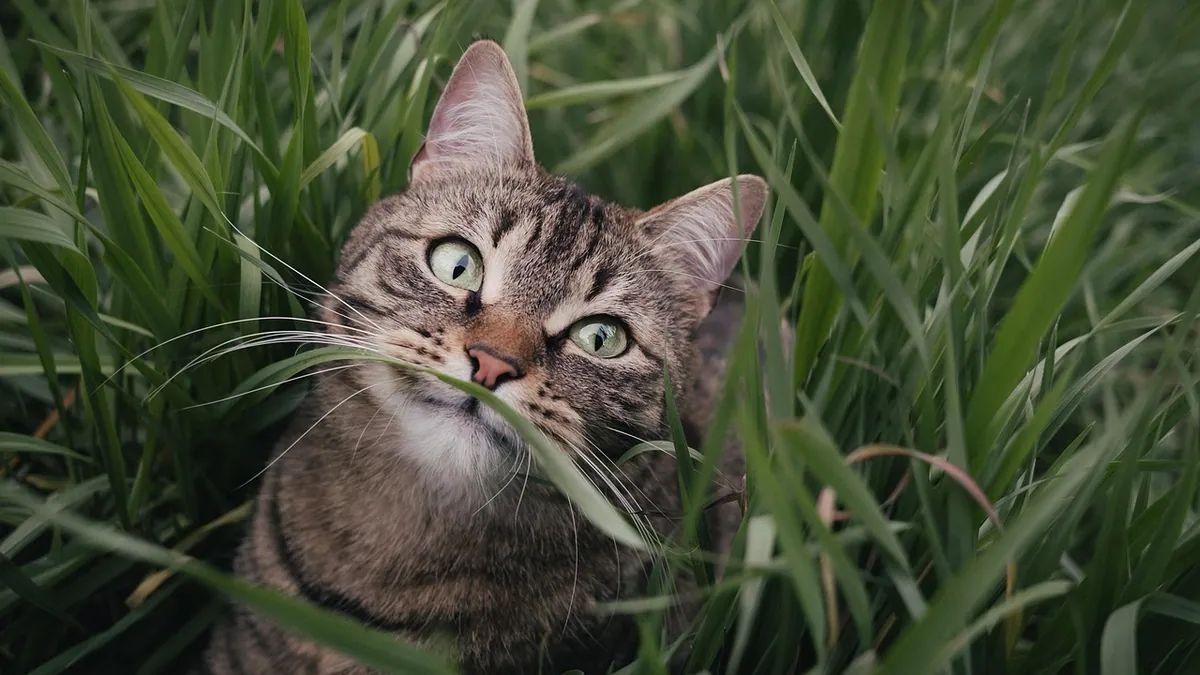
Is cat grass safe for cats? Yes, in most cases. Cat grass grown indoors from clean seed is safe for cats to nibble, and many cats enjoy it. The real dangers come from outdoor grass that has been treated with chemicals, and from grass seeds or awns that can lodge in the nose, throat, or lungs.
This article is educational and is not a substitute for veterinary diagnosis or treatment.
Quick Answer
- Indoor cat grass (usually wheat, oat, barley, or rye) is safe for most cats to eat in small amounts.
- Outdoor lawn grass may carry pesticides, fertilizers, herbicides, or toxic plants, so treat it as unsafe.
- Grass seeds and dried awns are a foreign-body risk. They can migrate into the nose, airways, or chest and require surgery to remove [1][2].
- Eating grass now and then is normal cat behavior. Eating grass daily, or eating it and vomiting often, deserves a vet visit.
- Cat grass is not a nutritional need. A complete and balanced cat food already meets your cat's requirements [3].
Is Cat Grass Safe for Cats? The Short Answer
For most cats, a small amount of clean, indoor-grown cat grass is safe. Cat grass is not a medicine and not a required food. It is a chewable plant that some cats like. The key word is "clean." Grass grown in a pot on your windowsill from a known seed mix is very different from grass in a park, a ditch, or a lawn that a service treats.
Cat grass is generally sold as wheat, oat, barley, or rye. These cereal grasses are not toxic to cats. If your cat nibbles a few blades and walks away, that is normal.
The picture changes with outdoor grass. You cannot know what has been sprayed on it, what has been spread on it, or what else is growing in it. Fertilizer, weed killer, and insecticide residues can make a cat sick. So can toxic plants mixed into the lawn. If you are unsure what plants are dangerous, see What Plants And Flowers Are Toxic To Cats.
Is Grass Toxic to Cats?
Plain grass itself is not toxic to cats. The plant most owners call "grass" is not on the list of common cat poisons. The problem is everything attached to it.
Lawn treatments are the biggest concern. Fertilizers, herbicides, and pesticides can cause drooling, vomiting, diarrhea, and in serious cases neurologic or organ problems. Grass growing near roads or driveways can also pick up antifreeze, oil, and road salt.
Some plants that look like grass are not grass at all. Sedge, some ornamental grasses, and certain weeds can irritate the mouth and stomach. If your cat eats an unknown plant and then drools, vomits, or acts strangely, call your veterinarian or a pet poison hotline right away.
There is one more risk that owners rarely think about. Grass awns are the dry, bristly seed heads on some grasses. They are shaped so they move forward and do not come back out. In cats, inhaled awns have caused lung infections, and in one reported case an awn migrated through the diaphragm and caused a liver abscess [1]. Another report described an awn trapped in the chest that required surgery to remove [2]. These cases are rare, but they show why dried grass and seed heads are not a safe chew toy.
Is Cat Grass Good for Cats?
Cat grass is not a nutritional supplement. Cats are obligate carnivores, and their nutrient needs come from animal-based food, not plants. A complete and balanced commercial diet already provides what your cat needs, and extra supplements are usually unnecessary and can even be harmful without your veterinarian's approval [3].
So what does cat grass actually do? For many cats, it is enrichment. It gives them something to sniff, chew, and bat around. Some cats seem to eat grass when their stomach is upset, and then vomit. That vomit may bring up a hairball or a bit of undigested food.
Fiber is used in veterinary medicine to help with certain gut problems, including hairball vomiting and constipation [4]. Cat grass is not the same as a measured fiber supplement, and it is not a treatment. If your cat vomits hairballs often or strains to pass stool, ask your veterinarian about diet and fiber instead of relying on grass.
If your cat vomits after eating grass, that pattern is worth understanding. Why Is My Cat vomiting after eating grass? Normal Behavior vs GI Disease walks through when it is harmless and when it points to disease.
Why Does My Cat Eat Grass?
Veterinarians do not have one clear answer. Several theories exist, and none is proven for every cat.
Some cats may eat grass because it feels good to chew. Others may eat it out of boredom or curiosity. Some cats eat grass when they feel nauseated, and vomiting follows. In those cats, grass eating may be a sign of an upset stomach instead of the cause of it.
Kittens and young cats often mouth plants as part of exploring their world. Indoor cats with limited stimulation may chew plants more often. If your cat suddenly starts eating grass or houseplants when it never did before, look for other changes. Vomiting, weight loss, poor appetite, or hiding can point to a medical problem.
If your cat eats grass and also eats unusual non-food items like plastic, string, or fabric, that is called pica. Pica can be behavioral or medical. It deserves a veterinary exam.
Is Grass Seed Poisonous to Cats?
Grass seed is not poisonous in the chemical sense. It is dangerous in a mechanical sense. Seeds and awns can be inhaled, swallowed, or stuck in the mouth, nose, or ear.
Once inside, a grass awn can travel. The reported cases involved awns in the lung and chest, and one awn that reached the liver [1]. Signs in those cats included cough, weight loss, poor appetite, and fluid around the lungs. Treatment required imaging and surgery.
This is why you should never let your cat play with dried grass, seed heads, or a bag of lawn seed. If you grow cat grass at home, use a clean seed mix meant for sprouting, and keep the pot where your cat can chew the blades but not dig out and swallow the seeds.
Risks of Eating Grass
Choking and foreign bodies
A cat can choke on a long blade or a clump of grass. Grass awns are the bigger concern because they can migrate into the airway or chest [1][2]. Signs include coughing, gagging, noisy breathing, and repeated swallowing.
Stomach upset
Eating a lot of grass can cause vomiting or diarrhea. A single episode of vomiting after a few blades is common. Repeated vomiting, blood in the vomit, or vomiting with lethargy is not normal.
Toxins and additives
Outdoor grass can carry pesticides, fertilizers, and other chemicals. Some products also contain additives that are dangerous. Xylitol is a well-known dog poison that causes low blood sugar and liver failure in dogs. A controlled study in cats did not find the same effects, so xylitol is not considered highly toxic to cats. Even so, sugar-free products do not belong in your cat's diet, and a cat that eats a large amount should still be checked.
Other additives to watch for in grass or plant products include salt, garlic, and onion. Garlic and onion damage red blood cells in cats. Salt can cause vomiting, tremors, and worse in large amounts.
Intestinal blockage
If your cat swallows a large wad of grass or a seed head, it can block the intestine. Signs include vomiting, no appetite, no stool, and belly pain. This is an emergency.
How to Offer Cat Grass Safely
| Form | Safe? | Notes |
|---|---|---|
| Indoor cat grass in a pot | Yes | Grown from clean seed, no chemicals |
| Outdoor lawn grass | No | Unknown pesticides, fertilizers, toxic plants |
| Dried grass or seed heads | No | Awn foreign-body risk [1][2] |
| Grass seed straight from the bag | No | Choking and blockage risk |
| Grass treated with weed killer | No | Chemical poisoning risk |
| Grass with added garlic, onion, or salt | No | Toxic to cats |
A few simple rules keep cat grass safe.
- Grow it indoors from a seed mix labeled for cats or for sprouting.
- Use potting soil with no fertilizer pellets.
- Place the pot where your cat can reach the blades but not the soil or seeds.
- Offer a few blades at a time. Do not let your cat graze freely all day.
- Replace the pot if it gets moldy or the soil smells sour.
- Wash your hands after handling soil, and keep the area clean.
Some cats ignore cat grass completely. That is fine. It is optional.
What If Your Cat Ate Too Much Grass or a Dangerous Form?
If your cat ate a small amount of clean indoor grass and seems fine, watch it for a few hours. Offer fresh water. Most cats pass a small amount without trouble.
If your cat ate outdoor grass that may have been treated, call your veterinarian or a pet poison hotline. Have the product name ready if you know it. Do not wait for signs to appear.
If your cat ate grass seed or a dried awn, treat it as a possible foreign body. Call your veterinarian even if your cat seems normal at first. Signs can take days or weeks to show up [1].
If your cat is choking, struggling to breathe, or has a swollen face, go to an emergency clinic now.
Safer Alternatives to Grass
If your cat likes to chew plants, cat grass is one of the safer options. Other choices include catnip, which many cats enjoy and which is not toxic. See Can Cats Eat Catnip? Nepetalactone and Safe Use Guide for safe use.
For cats that chew out of boredom, add play sessions, puzzle feeders, and window perches. A tired, busy cat chews less.
If you are thinking about changing your cat's diet for any reason, talk to your veterinarian first. Raw diets carry their own risks, which are covered in Is Raw Food Safe for Dogs and Cats?. And if you are offering watery treats for hydration, Can Cats Eat Watermelon? Hydration & Seed Hazards explains the limits.
Always keep clean, fresh water available [3]. Store any cat food properly, and check expiration dates before feeding [3].
Limitations and When to Contact a Veterinarian
No article can tell you what is happening inside your cat. Individual cases need a veterinarian who can examine your cat and run tests.
Call your veterinarian the same day if your cat:
- Vomited more than once after eating grass
- Has diarrhea that lasts more than a day
- Is drooling, pawing at the mouth, or gagging
- Ate grass you think was treated with chemicals
- Ate grass seed or a dried awn
Go to an emergency clinic now if your cat:
- Is struggling to breathe or breathing with an open mouth
- Has a swollen face, hives, or collapse
- Vomits repeatedly and cannot keep water down
- Has a hard, painful belly or has not passed stool
- Is coughing up blood
Schedule a routine visit if your cat:
- Eats grass or plants every day
- Vomits hairballs often
- Has lost weight or has a poor appetite
- Chews non-food items like plastic or fabric
Your veterinarian will decide on any treatment, including dose and duration, based on your cat's weight and health.
Frequently Asked Questions
Can cats eat grass every day?
A few blades of clean indoor cat grass most days is usually fine for a healthy cat. Daily grass eating that comes with vomiting, weight loss, or poor appetite is not normal and should be checked. If your cat seems obsessed with grass, that is a reason to book an exam.
Is wheatgrass the same as cat grass?
Often, yes. Many cat grass products are wheatgrass, and it is not toxic to cats. Oat, barley, and rye grasses are also sold as cat grass. The safety comes from how it is grown, not from the exact grain.
Can my cat get worms from eating grass?
It is possible but not common. Outdoor grass can carry parasite eggs or larvae from contaminated soil or feces. Indoor cat grass grown in clean potting soil is much lower risk. Keep your cat on a veterinarian-recommended parasite prevention plan.
Does cat grass help with hairballs?
It may help some cats vomit up a hairball, but it is not a proven treatment. Fiber is used in veterinary medicine to manage hairball vomiting in cats [4]. If hairballs are frequent, ask your veterinarian about diet changes instead of relying on grass.
What should I do if my cat eats grass seed?
Call your veterinarian right away. Grass seed and awns can lodge in the nose, airway, or chest and may need imaging and surgery to remove [1][2]. Do not wait for symptoms, because they can take days to appear.
Related Articles
- Can Cats Eat Watermelon? Hydration & Seed Hazards
- Is Raw Food Safe for Dogs and Cats?
- Can Cats Eat Catnip? Nepetalactone and Safe Use Guide
- Why Is My Cat vomiting after eating grass? Normal Behavior vs GI Disease
- What Plants And Flowers Are Toxic To Cats
- Can Cats Eat Dog Food
- Why Is My Cat Eating Grass and Plants?
- Is Cat Grass Safe for Dogs? Benefits and Risks
- Can Cats Eat Tomatoes? Seeds, Leaves and Safe Amounts
References
- Hepatic abscess caused by an inhaled migrating grass awn in a cat: first description and minimally invasive surgical approach. JFMS open reports, 2026.
- Ultrasound-guided minimally invasive thoracotomy for removal of migrating grass Awn in a Cat. Veterinary research communications, 2026.
- Feeding Your Cat. Cornell University College of Veterinary Medicine.
- Therapeutic Applications of Dietary Fiber: Managing Fiber-responsive Gastrointestinal Conditions in Dogs and Cats. The Veterinary clinics of North America. Small animal practice, 2026.