Is Cinnamon Bad for Dogs? Safe Amounts
By Dr. Zubair Khalid, DVM, MS, PhD ·
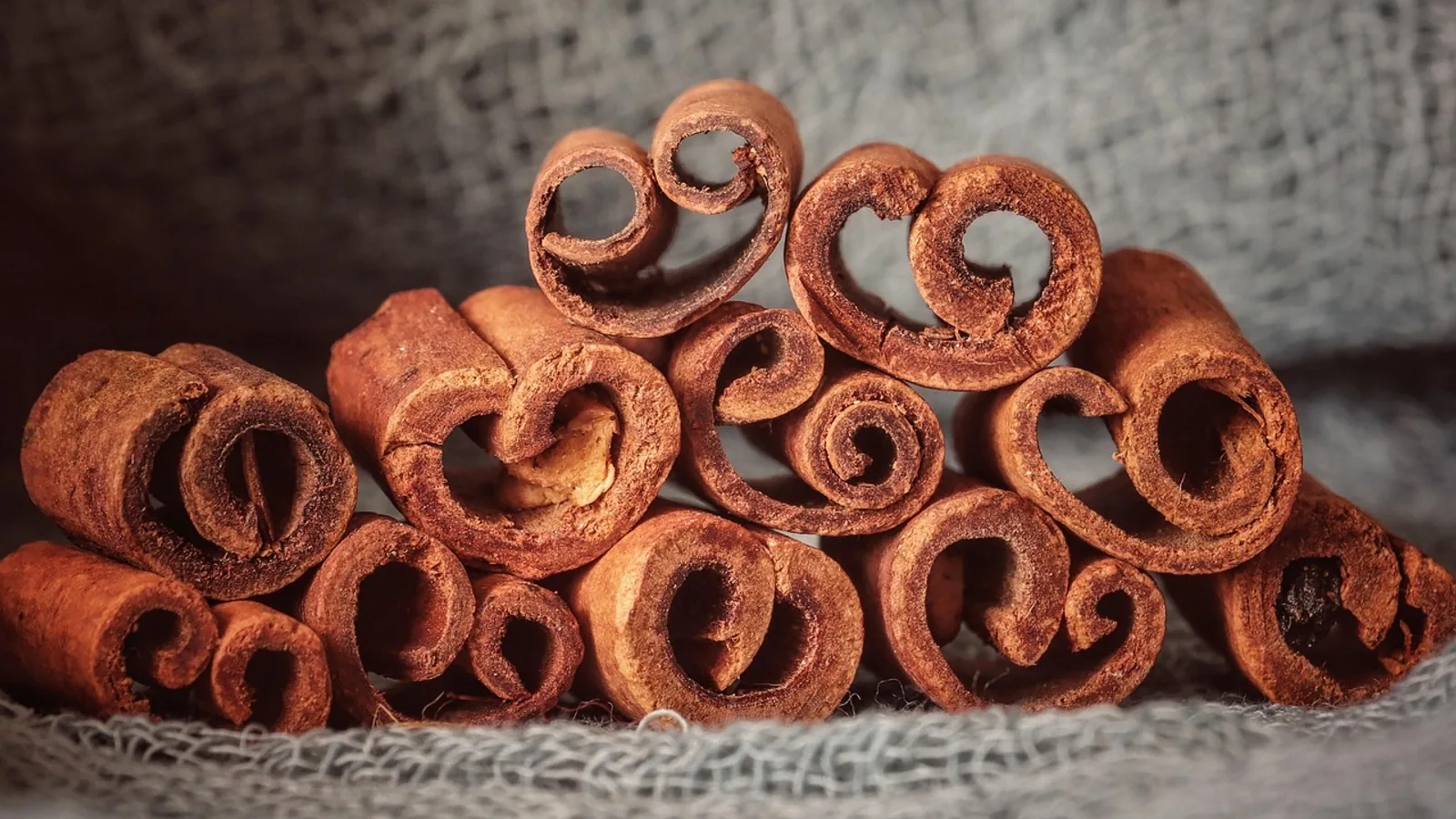
Cinnamon is not a poisonous spice for dogs. The powdered spice sold in grocery stores does not contain a toxin that will send a dog into acute organ failure after a lick of a cinnamon roll. The real question is narrower and more useful: which cinnamon, how much, and in what form. The concern with cinnamon is coumarin, a naturally occurring compound found in high concentrations in cassia cinnamon and in almost undetectable amounts in Ceylon cinnamon, also called true cinnamon [1][2][3]. Coumarin is the hepatotoxic and anticoagulant concern, not cinnamon itself. A small pinch of Ceylon cinnamon on a dog's food is a very different event from a dog eating a whole cinnamon stick or lapping up a bottle of cinnamon essential oil.
This article explains the difference between Ceylon and cassia, why coumarin matters, how to set a safe serving limit by body weight, and which cinnamon products should never reach a dog's mouth. It also covers what to do if your dog eats too much and when to call a veterinarian.
This article is educational and is not a substitute for veterinary diagnosis or treatment.
At a Glance: Cinnamon and Dogs
| Question | Short answer |
|---|---|
| Is cinnamon toxic to dogs? | No. Powdered cinnamon is not a listed poison. The risk is coumarin, mainly in cassia. |
| Can dogs eat cinnamon? | Yes, in small amounts of plain powdered Ceylon cinnamon. |
| Which type is safer? | Ceylon (true) cinnamon, which is nearly coumarin-free [1][3]. |
| Which type is riskier? | Cassia, Saigon, and Indonesian cinnamon, which carry far more coumarin [4][5]. |
| Safe serving size, medium dog | A small pinch up to about 1/4 teaspoon of Ceylon powder, mixed into food. |
| Cinnamon sticks | Higher risk. A chewed or swallowed stick can obstruct the airway or gut. |
| Cinnamon essential oil | High risk. Concentrated, irritating, and never appropriate for a dog. |
| When to call a vet | Any essential oil exposure, any swallowed stick, large powder ingestion, vomiting, lethargy, or bleeding. |
Why Cinnamon Is Not Simply "Toxic" or "Safe"
Owners search "is cinnamon bad for dogs" because the internet gives two opposite answers. One camp says cinnamon is a kitchen spice and harmless. The other says cinnamon is toxic and should be kept away. Both claims are incomplete.
Cinnamon is the dried inner bark of trees in the genus Cinnamomum. The genus contains roughly 250 species, and the four that dominate world trade are Cinnamomum verum (Ceylon, or true cinnamon), C. cassia, C. burmannii (Indonesian cinnamon), and C. loureiroi (Vietnamese or Saigon cinnamon) [4]. These species look similar as powder but differ chemically in ways that matter for a dog's liver and blood clotting.
The compound of concern is coumarin. Coumarin is a natural plant constituent, not an added chemical. It has been shown to cause liver and kidney damage in rats and mice, and it is treated as a probable human hazard at high chronic intake [2]. In dogs, the same principle applies: a tiny amount of coumarin is processed and cleared, while a large or repeated dose burdens the liver. Coumarin is also structurally related to anticoagulant drugs, which is why excessive intake raises concern about bleeding.
The second important compound is cinnamaldehyde, the molecule that gives cinnamon its smell and taste. Cinnamaldehyde is not the main safety problem in small food amounts, but it is highly concentrated in essential oils and can irritate a dog's mouth, stomach, and skin at those strengths.
So the accurate framing is this: cinnamon powder is a low-risk flavoring in small amounts, and the risk scales with the coumarin content of the specific cinnamon, the amount eaten, and the form (powder, stick, or oil).
Ceylon vs Cassia: The Distinction That Actually Matters


Most cinnamon sold in the United States as inexpensive ground cinnamon is cassia, not Ceylon. This is a labeling and trade reality, not a conspiracy. Cassia is cheaper to grow and harvest, and it has a stronger, sweeter flavor that food manufacturers prefer.
The coumarin gap between the two is enormous. A study of ground cinnamon from the Czech retail market found mean coumarin levels of 2,650 to 7,017 mg per kg in commercial samples, while a sample of Cinnamomum verum imported directly from a Sri Lankan plantation was coumarin-free [1]. A Polish retail survey found coumarin in cinnamon samples ranging from about 1,028 to 4,012 mg per kg, and concluded that most of the cinnamon on that market was cassia [6]. An Italian market study found that about 51% of cinnamon samples were cassia, 10% were probably blends, and only 39% were actually Ceylon [2].
A 2025 European study of 104 cinnamon samples found that 66.3% either failed international quality criteria, did not comply with European food safety legislation, were suspicious for fraud, or could be toxic for children because of high coumarin content [7]. That last point is the one owners should carry forward. The cinnamon in an unlabeled jar is often cassia, and cassia is the type with the coumarin load.
Coumarin Content: Ceylon vs Cassia and Related Species
| Cinnamon type | Botanical name | Typical coumarin content | Notes |
|---|---|---|---|
| Ceylon (true cinnamon) | Cinnamomum verum | Very low to undetectable [1][3] | The safest choice for a small food topper |
| Cassia | Cinnamomum cassia | High, often thousands of mg/kg [1][6] | Most common in cheap ground cinnamon |
| Indonesian | Cinnamomum burmannii | High [4][5] | Often sold as "korintje" cassia |
| Saigon / Vietnamese | Cinnamomum loureiroi | High [4][5] | Strong flavor, high coumarin |
| Taiwan indigenous cinnamon leaf | Cinnamomum osmophloeum | Much lower than cassia [8] | Research interest as a low-coumarin substitute, not a retail product |
A comparative study of the four major commercial cinnamon types found that Ceylon had the lowest coumarin concentration, while cassia and Indonesian cinnamon had the highest polyphenol and antioxidant levels but also the highest coumarin [5]. That trade-off is the whole story. The cinnamon with the most intense flavor and the most antioxidants is usually the one with the most coumarin.
How to Tell Them Apart
Visual identification of ground cinnamon is unreliable. Powdered Ceylon and powdered cassia look nearly identical, which is exactly why fraud and mislabeling are common [7][9]. Whole cinnamon sticks are easier. Ceylon quills are thin, brittle, and roll into many layers that you can flake apart with a fingernail. Cassia sticks are thick, hard, and roll into a single tight curl with a hollow center.
For ground cinnamon, the label is your main tool. Look for the words "Ceylon cinnamon," "Cinnamomum verum," or "true cinnamon." A jar that says only "cinnamon" is most likely cassia. Some products now print a coumarin statement, but many do not.
How Much Cinnamon Is Safe for a Dog?
There is no government- or veterinary-issued official daily allowance for cinnamon in dogs. What follows is a practical, conservative guide built from the general principle that coumarin exposure should stay as low as reasonably possible and that Ceylon cinnamon is the low-coumarin choice [1][3].
Use Ceylon cinnamon only, use it as a flavoring rather than a supplement, and keep the amount small. A reasonable working range is a small pinch for a toy breed up to about 1/4 teaspoon for a medium dog, mixed thoroughly into food.
Practical Serving Guide by Body Weight
| Dog size | Approximate body weight | Ceylon cinnamon powder per serving | Frequency |
|---|---|---|---|
| Toy | Under 10 lb | A tiny pinch, less than 1/16 teaspoon | Occasional, not daily |
| Small | 10 to 25 lb | About 1/16 teaspoon | Occasional |
| Medium | 25 to 60 lb | Up to about 1/8 to 1/4 teaspoon | Occasional |
| Large | 60 to 100 lb | Up to about 1/4 teaspoon | Occasional |
| Giant | Over 100 lb | Up to about 1/4 to 1/2 teaspoon | Occasional |
These are flavoring amounts, not therapeutic doses. Do not scale cinnamon up because a dog is bigger. The goal is a hint of aroma in food, not a medicinal serving.
Two rules sit above the table. First, if you do not know whether your cinnamon is Ceylon or cassia, treat it as cassia and use less or skip it. Second, if your dog has any liver disease, bleeding disorder, or is on medication, ask your veterinarian before adding cinnamon to food at all.
Why "Occasional" Matters More Than the Single Dose
Coumarin risk is a chronic exposure problem as much as an acute one. A single small pinch of cassia is unlikely to harm a healthy dog. The same pinch given twice a day for months is a different calculation, because coumarin accumulates exposure over time and the liver does the clearing. This is why the serving guide says occasional rather than daily, and why Ceylon matters so much: switching from cassia to Ceylon can reduce coumarin intake by orders of magnitude [1][3].
Cinnamon Sticks and Essential Oils: The Higher-Risk Forms
Powdered cinnamon is the low-risk form. Sticks and oils are not.
Cinnamon Sticks
A cinnamon stick is a hard, rigid piece of rolled bark. The toxicology is not the main issue here. The mechanical risk is. A dog that chews and swallows pieces of a cinnamon stick can develop a foreign body obstruction in the esophagus, stomach, or intestine. Sharp fragments can also injure the mouth or throat. A stick lodged in the airway is an emergency.
If your dog swallowed a cinnamon stick or a large piece of one, call your veterinarian or a pet poison hotline right away, even if the dog seems fine. Foreign body signs can take hours or days to appear.
Cinnamon Essential Oil
Cinnamon essential oil is a concentrated extract. The same compounds that make the spice pleasant are present at far higher strength, including cinnamaldehyde and, depending on the source plant, coumarin [8][10][11]. Essential oils are not diluted by the bulk of plant material the way powder is.
Cinnamon oil can cause mouth and stomach irritation, vomiting, and skin irritation if it contacts the coat or paws. Because it is concentrated, a small volume can deliver a large dose of active compounds. Cinnamon essential oil should never be given to a dog by mouth, applied to the skin, or diffused in a closed space with a dog present. If your dog licks or ingests cinnamon oil, treat it as an urgent call to your veterinarian or a pet poison hotline.
Other Cinnamon Products to Avoid
Cinnamon baked goods are a frequent source of exposure. The problem is usually not the cinnamon but the raisins, chocolate, xylitol, macadamia nuts, or heavy fat and sugar in the same product. Cinnamon-flavored gum, candy, and toothpaste may contain xylitol, which is highly toxic to dogs. Cinnamon dietary supplements and capsules are formulated for humans and should not be given to dogs.
What Happens If a Dog Eats Too Much Cinnamon
The signs of a cinnamon problem depend on the amount, the form, and the dog.
Acute Signs After a Large Powder Ingestion
A dog that eats a large quantity of cinnamon powder may develop vomiting, diarrhea, drooling, abdominal discomfort, or a burning sensation in the mouth. Cinnamaldehyde is irritating to mucous membranes at high concentrations. A dog may also cough or sneeze from inhaling the powder. Inhaled cinnamon powder can irritate the airways and, in a large enough cloud, cause breathing difficulty.
Signs Related to Coumarin
Coumarin is the compound tied to liver and kidney damage in animal studies [2]. Chronic high intake is the setting where this matters. Signs of liver trouble in dogs are vague and include lethargy, reduced appetite, vomiting, and sometimes yellowing of the gums or eyes. Because these signs are nonspecific, a dog with a history of heavy cinnamon exposure and any of these signs should be examined.
Coumarin's relationship to anticoagulant drugs also raises a bleeding concern at high intake. Watch for unexplained bruising, nosebleeds, blood in the stool, or bleeding that does not stop.
Signs That Require Immediate Veterinary Care
Call a veterinarian or pet poison hotline immediately if your dog:
- Ate cinnamon essential oil in any amount.
- Swallowed a cinnamon stick or a large piece of one.
- Ate a large amount of cinnamon powder, especially cassia.
- Is vomiting repeatedly, retching, or has a distended abdomen.
- Is coughing, gagging, or having trouble breathing.
- Is lethargic, weak, or unsteady.
- Has pale gums, bruising, or bleeding that will not stop.
- Ate cinnamon in a product that also contained chocolate, raisins, xylitol, or macadamia nuts.
Do not induce vomiting unless a veterinarian tells you to. Cinnamon powder is irritating, and vomiting it back up can cause more discomfort.
Step-by-Step: How to Offer Cinnamon Safely
If you want to let your dog try cinnamon, use a controlled process.
- Confirm the type. Check the label for "Ceylon," "Cinnamomum verum," or "true cinnamon." If the label does not say, assume cassia.
- Start smaller than the table suggests. Begin with a few grains of powder for a small dog and a small pinch for a large dog.
- Mix it into food. Never offer a dry spoonful of powder. Mixing into wet food or a small amount of the regular diet reduces inhalation and mouth irritation.
- Watch for 24 hours. Look for vomiting, diarrhea, drooling, scratching, or changes in behavior.
- Keep it occasional. Do not make cinnamon a daily habit.
- Store it away from dogs. Keep the jar, sticks, and any essential oil bottle in a closed cabinet.
- Record what you used. If a problem develops, knowing the type and amount helps your veterinarian.
Common Mistakes Owners Make
Several errors come up repeatedly with cinnamon.
Assuming all cinnamon is the same. The Ceylon versus cassia difference is the single most important fact in this topic. Most inexpensive ground cinnamon is cassia, which carries far more coumarin [1][2][6].
Using cinnamon as a supplement. Cinnamon is marketed to people for many purposes, and those marketing claims get transferred to dogs. There is no established veterinary dose of cinnamon for any condition in dogs, and giving a therapeutic dose is not appropriate. Use cinnamon as a flavoring or not at all.
Giving cinnamon oil. Owners sometimes add a drop of essential oil to food or water. This is a concentrated product and should not be given to dogs.
Leaving cinnamon sticks where a dog can reach them. Sticks look like chew toys to some dogs. The obstruction risk is real.
Forgetting the rest of the recipe. A dog that ate a cinnamon roll also ate butter, sugar, and possibly raisins. The cinnamon is often the least of the concerns.
Ignoring a small dog's size. A pinch that is trivial for a Great Dane is a much larger relative dose for a Chihuahua.
Welfare and Safety Points
A few broader points keep this in perspective.
Cinnamon is not a required nutrient for dogs. A complete and balanced commercial diet already meets a dog's needs. Adding cinnamon does not improve the diet, and it introduces a coumarin exposure that a dog would otherwise not have. If you enjoy sharing a tiny taste with your dog, that is a reasonable choice in small amounts of Ceylon cinnamon. It is not a health intervention.
Food safety also matters. Cinnamon powder can be contaminated or adulterated, and a 2025 study found that a majority of tested retail cinnamon samples had some quality, safety, fraud, or coumarin concern [7]. Buying from a reputable source and choosing Ceylon reduces but does not eliminate that uncertainty.
Finally, some dogs are simply sensitive. A dog with a history of stomach upset, liver disease, or bleeding problems should not be given cinnamon without veterinary guidance.
Limitations and When to Contact a Veterinarian
Individual dogs vary. Body weight, liver function, other medications, and the exact cinnamon product all change the risk. A serving that is fine for one dog may not be fine for another. Your veterinarian can assess your specific dog.
Contact a veterinarian or a pet poison hotline right away if any of the following occur:
- Your dog ate cinnamon essential oil in any amount.
- Your dog swallowed a cinnamon stick or a large fragment.
- Your dog ate a large quantity of cinnamon powder, particularly cassia.
- Your dog is vomiting, retching, drooling heavily, or has abdominal pain.
- Your dog is coughing, gagging, or breathing with effort.
- Your dog is lethargic, weak, or unsteady.
- Your dog has pale gums, bruising, nosebleeds, or bleeding that will not stop.
- Your dog ate cinnamon in a product that also contained chocolate, raisins, xylitol, macadamia nuts, or alcohol.
- Your dog has known liver disease or a bleeding disorder and ate cinnamon.
Bring the cinnamon container or a photo of the label with you. Knowing whether the product is Ceylon or cassia, and the approximate amount eaten, helps your veterinarian decide on monitoring and treatment.
Frequently Asked Questions
Is cinnamon bad for dogs?
Cinnamon is not toxic to dogs in small food amounts, but cassia cinnamon contains coumarin, which is a liver and blood-clotting concern at high or repeated intake. Ceylon cinnamon is nearly coumarin-free and is the safer choice [1][3].
Can dogs eat cinnamon?
Yes, dogs can eat a small amount of plain powdered Ceylon cinnamon mixed into food. Keep it occasional and keep the amount to a pinch for small dogs and no more than about 1/4 teaspoon for a medium dog.
Is cinnamon safe for dogs in baked goods?
Usually the cinnamon is not the problem in baked goods. The bigger risks are raisins, chocolate, xylitol, macadamia nuts, and high fat or sugar. Check the full ingredient list before letting a dog eat any baked good.
What is the difference between Ceylon and cassia cinnamon?
Ceylon cinnamon is Cinnamomum verum, also called true cinnamon, and it contains very little coumarin. Cassia is a different species with a much higher coumarin content and is the type most often sold as inexpensive ground cinnamon [1][2][6].
How much cinnamon can I give my dog?
A small pinch for a toy breed up to about 1/4 teaspoon of Ceylon powder for a medium dog, mixed into food and given occasionally. There is no official veterinary dose, so keep amounts minimal.
Are cinnamon sticks safe for dogs?
No. Cinnamon sticks are hard and rigid, and a swallowed piece can cause an obstruction or injure the mouth and throat. Call your veterinarian if your dog swallows a stick.
Is cinnamon essential oil safe for dogs?
No. Cinnamon essential oil is concentrated and can irritate the mouth, stomach, and skin. It should never be given to a dog by mouth or applied to the skin. Ingestion is an urgent call to a veterinarian or pet poison hotline.
What should I do if my dog ate too much cinnamon?
Call your veterinarian or a pet poison hotline. Bring the cinnamon container or a photo of the label so the type and amount can be assessed. Do not induce vomiting unless a veterinarian instructs you to.
Related Articles
- Can Dogs Have Cinnamon
- Safe Veggies For Dogs To Eat
- Can Dogs Eat Mulberries? Safe Portions Guide
- Safe Human Foods For Dogs To Eat
- What Kind Of Vegetables Are Safe For Dogs To Eat
- What Vegetables Are Not Safe For Dogs To Eat
- Can Chickens Eat Strawberries? Safe Feeding Guide
- Can Dogs Eat Fish? Safe Types, Benefits, and Risks
Sources
- Assessment of coumarin levels in ground cinnamon available in the Czech retail market.
- Coumarin and cinnamaldehyde in cinnamon marketed in Italy: a natural chemical hazard?
- Quantification of free coumarin and its liberation from glucosylated precursors by stable isotope dilution assays based on liquid chromatography-tandem mass spectrometric detection.
- Are cinnamon derivatives effective and safe for diabetes?
- Cinnamon Shows Antidiabetic Properties that Are Species-Specific: Effects on Enzyme Activity Inhibition and Starch Digestion.
- Health Benefits and Risks of Consuming Spices on the Example of Black Pepper and Cinnamon.
- High rate of safety and fraud issues in commercially available cinnamon.
- A potential low-coumarin cinnamon substitute: Cinnamomum osmophloeum leaves.
- Evaluation of on-site testing methods with a novel 3-in-1 miniaturized spectroscopic device for cinnamon screening.
- Optimization of subcritical extraction process for cinnamon (Cinnamomum Cassia Blume) using response surface methodology.
- Insights into the antifungal activity and mechanisms of cinnamon components against Aspergillus flavus and Penicillium citrinum.