Can Horses Drink Beer? Risks and Safe Advice
By Dr. Zubair Khalid, DVM, MS, PhD ·
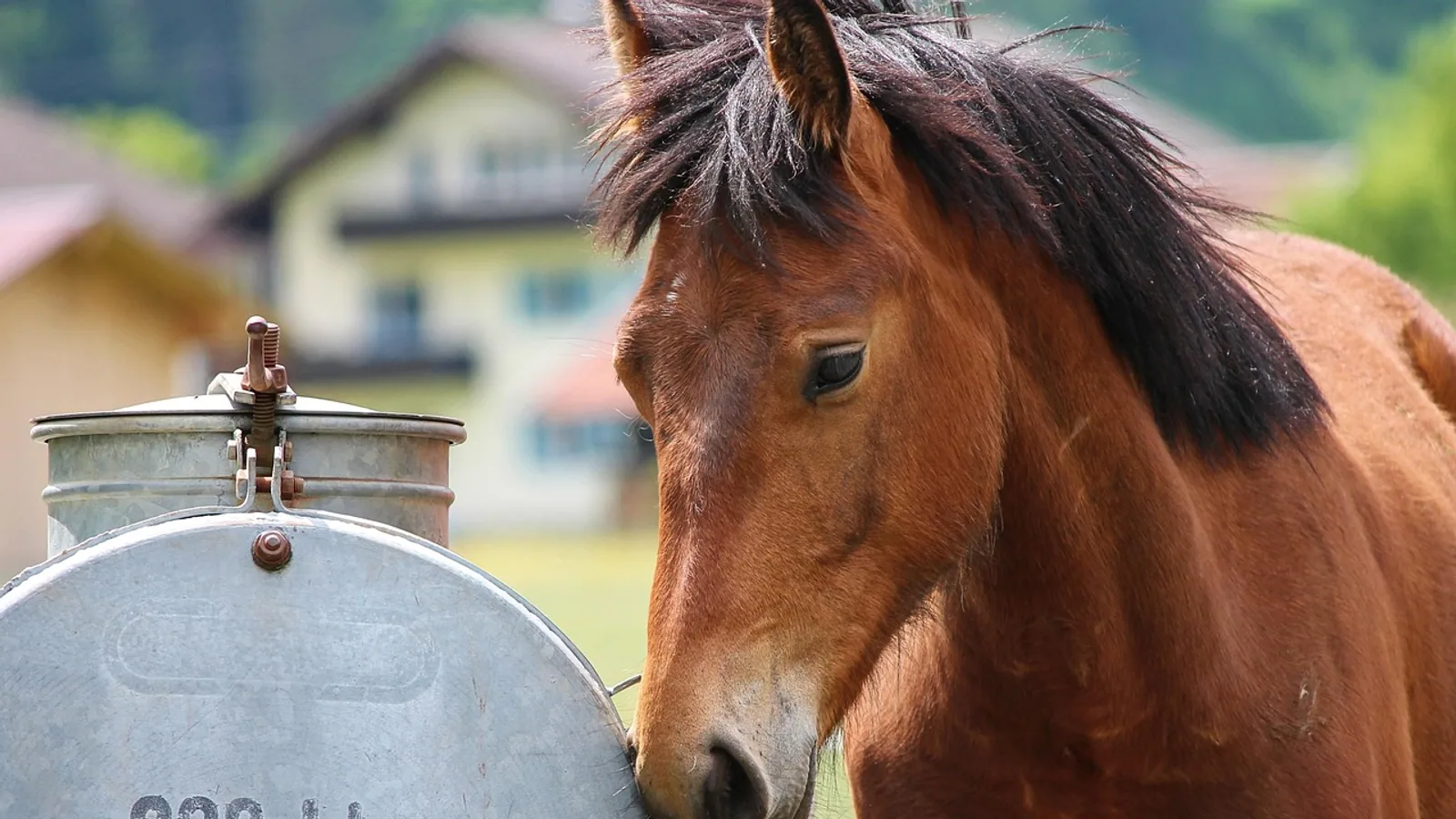
No, horses should not drink beer. Beer delivers ethanol, a central nervous system depressant that horses metabolize through liver alcohol dehydrogenase enzymes, and there is no established safe dose of beer for a horse [1][2].
This article is educational and is not a substitute for veterinary diagnosis or treatment.
The Direct Answer
Beer is a fermented beverage made from cereal grains, water, hops, and yeast. Typical commercial beer contains roughly 4 to 6 percent ethanol by volume. A horse that drinks beer is drinking alcohol, and alcohol is a drug with dose-dependent effects on the brain, liver, and kidneys. There is no nutritional requirement for beer in a horse's diet, and there is no veterinary reason to offer it.
People sometimes ask whether horses can have beer because they have seen videos of horses drinking from bottles or have heard folklore about beer improving coat shine, appetite, or hydration. Those claims are not supported by veterinary toxicology. What is supported is that ethanol is absorbed from the gastrointestinal tract, distributed to tissues, and metabolized primarily by alcohol dehydrogenase enzymes in the liver, and that the horse has been used as a model species in alcohol dehydrogenase research for decades [3][1][2].
The practical answer for owners is simple. Do not offer beer to a horse. If a horse accidentally consumes beer, treat it as a potential poisoning and contact a veterinarian.
What Is Actually in Beer?
Beer is not just water with flavor. Each component matters when you evaluate whether beer is good for horses.
Ethanol
Ethanol is the psychoactive alcohol in beer. Standard beer ranges from about 4 to 6 percent ethanol by volume, though some styles are stronger. Ethanol is a small, water-soluble molecule that crosses cell membranes easily and reaches the brain within minutes of ingestion. In horses, as in other mammals, ethanol is oxidized by alcohol dehydrogenase enzymes, and the horse liver enzyme has been characterized in detail in the toxicology literature [3][1].
Hops
Hops (Humulus lupulus) give beer its bitterness and aroma. Hops are well known to be toxic to dogs, and the toxic principle is not the same as ethanol. In horses, the toxicity of hops is not well documented. This uncertainty is itself a reason for caution. When a plant's toxic dose in a species is unknown, the responsible approach is to avoid exposure rather than to test it.
Carbon Dioxide
Beer is carbonated. Carbon dioxide in the stomach can cause bloating and discomfort. A horse's digestive tract is a fermentation chamber already, and adding a large volume of gas-producing liquid can contribute to abdominal discomfort.
Cereal Sugars and Calories
Beer contains residual sugars and alcohol-derived calories. For a horse, these are empty calories that compete with a carefully balanced ration. Obesity and metabolic conditions such as equine metabolic syndrome are managed with strict calorie control, and adding beer works against that plan.
How Ethanol Affects a Horse
Ethanol is a central nervous system depressant. At low doses it can produce relaxation or mild incoordination. At higher doses it produces ataxia, sedation, recumbency, and progressive central nervous system depression. Severe poisoning can progress to coma and death from respiratory depression.
The horse's size is often used as an argument that beer is harmless. This reasoning is flawed. Body weight determines the dose per kilogram, and a large animal can still reach a toxic dose if enough ethanol is consumed. A 500 kg horse that drinks several liters of beer is consuming a meaningful ethanol load, not a trivial one.
The Toxic Dose in Horses
The toxic dose of ethanol in horses is poorly documented. Extrapolating from other species, a dose of roughly 5 to 8 grams of ethanol per kilogram of body weight is used as a toxic threshold. For a 500 kg horse, that corresponds to approximately 2,500 to 4,000 grams of pure ethanol, which is about 500 mL of pure ethanol per 100 kg of body weight.
That number sounds large, and it is. It is also the reason the risk from a single bottle of beer is low in a healthy adult horse. The problem is that owners rarely stop at one bottle, and the margin between "a sip" and "a problem" is not something an owner can judge reliably. There is no established safe dose, and no veterinary body publishes a beer allowance for horses.
The table below converts ethanol concentration into the volume needed to reach 1 gram per kilogram in a 500 kg horse. This is a reference point for understanding dose, not a dosing guide.
| Drink | Ethanol concentration (% v/v) | Approximate volume to reach 1 g/kg in a 500 kg horse | Clinical risk |
|---|---|---|---|
| Light beer | 4% | About 12.5 L | CNS depression, ataxia at higher cumulative doses |
| Standard beer | 5% | About 10 L | CNS depression, ataxia, sedation |
| Strong beer | 6% | About 8.3 L | CNS depression, recumbency risk with larger volumes |
| Wine | 12% | About 4.2 L | High risk, rapid intoxication |
| Spirits | 40% | About 1.25 L | Severe toxicity, life-threatening |
The volumes in this table are large, which is why a single can is unlikely to cause severe poisoning in a 500 kg horse. The table also shows how quickly the volume shrinks as ethanol concentration rises. A horse that gets into a keg, a growler, or a mixed drink is facing a much smaller volume for the same dose.
Why the Horse Liver Matters
The horse has been a standard source of liver alcohol dehydrogenase in biochemical research for decades. Studies have characterized how horse liver alcohol dehydrogenase oxidizes substrates and how inhibitors block ethanol metabolism [1][2][3]. This research exists because the horse enzyme is well suited to laboratory study, not because horses are adapted to drinking alcohol.
What this tells us is that horses do metabolize ethanol, but metabolism is not the same as tolerance. The rate of metabolism is finite. When intake exceeds the rate at which the liver can clear ethanol, blood alcohol rises and clinical signs appear.
Beer, Hops, and the Dog Comparison
Hops toxicity is a well-recognized emergency in dogs. The same plant is present in beer, and the dose that harms a horse is not known. This gap in knowledge is a legitimate reason to keep beer away from horses.
The uncertainty cuts both ways. It means we cannot say a small amount of hops will definitely harm a horse, and it also means we cannot say it is safe. When a toxic dose is unknown, the precautionary principle applies. Avoid the exposure.
Why People Think Beer Is Good for Horses
Several myths circulate. Each has a kernel of observation that has been stretched into a recommendation.
Myth: Beer improves coat condition
There is no evidence that beer improves coat quality. Coat condition reflects nutrition, parasite control, and general health. A balanced diet and appropriate deworming do more for a coat than any beverage.
Myth: Beer stimulates appetite
Alcohol can irritate the stomach lining and does not reliably stimulate appetite in horses. A horse with poor appetite needs a veterinary evaluation, not a beer.
Myth: Beer hydrates
Ethanol is a diuretic. It increases urine output, which works against hydration rather than supporting it. A horse that needs hydration needs water or a veterinarian-guided electrolyte plan.
Myth: Beer is a traditional tonic
Traditional use is not evidence of safety. Many traditional remedies have been abandoned once their toxicology was understood.
The Diuretic and Calorie Problems
Two effects of beer deserve separate attention because they are easy to overlook.
Diuresis
Ethanol reduces the release of antidiuretic hormone, which increases urine production. In a horse, this means more water leaves the body than the beer replaces. A horse that is already dehydrated from exercise, heat, or illness can be made worse by a diuretic.
Empty Calories
Beer calories come from alcohol and residual sugars. These calories do not supply the amino acids, minerals, and vitamins a horse needs. Adding them to the ration can unbalance a diet that was carefully formulated. For horses with insulin dysregulation or obesity, extra sugar and calories are a direct health concern.
What to Do If a Horse Drinks Beer
If a horse consumes beer, the response depends on the amount and the horse's condition.
- Remove access to the beer immediately.
- Estimate how much was consumed and note the ethanol concentration on the label.
- Note the time of consumption.
- Watch for ataxia, sedation, recumbency, or unusual behavior.
- Call a veterinarian or a pet poison control service for guidance.
Do not induce vomiting. Do not give the horse coffee, stimulants, or any home remedy. Do not wait for signs to become severe before calling. Early advice is easier to act on than an emergency.
If the horse is recumbent, cannot stand, is breathing abnormally, or is unresponsive, this is an emergency. Contact a veterinarian immediately.
Clinical Signs of Ethanol Toxicity in Horses
The signs of ethanol toxicity follow a predictable progression as blood alcohol rises.
- Mild: relaxation, reduced responsiveness, mild incoordination
- Moderate: obvious ataxia, stumbling, sedation, head lowering
- Severe: recumbency, inability to rise, profound central nervous system depression
- Critical: coma, respiratory depression, death
The progression is dose-dependent. A horse that shows moderate signs has already absorbed a significant ethanol load and needs veterinary assessment.
Diagnosis and Treatment
Diagnosis is based on history and clinical signs. A veterinarian will ask about access to beer or other alcohol, estimate the dose, and assess the horse's neurologic status. Blood work may be used to evaluate organ function and electrolyte balance.
Treatment is supportive and is directed by a veterinarian. There is no antidote that reverses ethanol toxicity. Care focuses on maintaining a safe airway, supporting circulation, correcting dehydration and electrolyte imbalances, and monitoring for complications. Activated charcoal is not reliably useful for ethanol because ethanol is absorbed rapidly.
The duration of care depends on the dose and the horse's response. Mild cases may recover with monitoring. Severe cases may require hospitalization and intensive support.
Safer Hydration Options for Horses
A horse that needs hydration has better options than beer.
- Fresh, clean water available at all times
- Electrolyte solutions formulated for horses, used under veterinary guidance
- Soaked hay or mash for horses that need extra water intake
- Veterinary assessment for horses that will not drink
Water is the default. If a horse is not drinking enough, the cause matters. Dental pain, gastric ulcers, fever, and stress can all reduce water intake, and each has its own treatment. Offering beer does not address any of these.
Legal and Regulatory Status in the United States
Beer is a regulated alcoholic beverage. Giving alcohol to an animal is not a recognized veterinary practice, and there is no approved veterinary product containing ethanol for horses. Owners who offer beer to horses are acting outside any approved use.
What Is Still Uncertain
The toxic dose of ethanol in horses is not well established. The 5 to 8 g/kg figure is an extrapolation, not a measured threshold from controlled horse studies. Individual variation in absorption, liver metabolism, body condition, and concurrent medication can shift the effective dose.
The toxicity of hops in horses is also poorly documented. Hops are toxic to dogs, and the mechanism is not identical to ethanol toxicity. Whether horses are similarly sensitive is unknown.
These uncertainties are a reason for caution, not a reason for experimentation. When the safe dose is unknown, the safe choice is zero.
Limitations and When to Contact a Veterinarian
This article provides general information. Individual horses vary, and a veterinarian who examines the horse can give advice specific to that animal.
Contact a veterinarian promptly if:
- A horse has consumed beer or any alcoholic beverage
- The amount consumed is unknown or large
- The horse is ataxic, sedated, or having trouble standing
- The horse is recumbent or cannot rise
- Breathing is abnormal or labored
- The horse is unresponsive or difficult to rouse
- The horse is pregnant, very young, very old, or has liver or kidney disease
- The horse is already ill or dehydrated
Do not wait for signs to worsen. Early contact gives the veterinarian more options.
Frequently Asked Questions
Can horses drink beer?
No. Beer contains ethanol, a central nervous system depressant, and there is no established safe dose for horses.
Do horses drink beer on their own?
Horses may sample beer if it is left within reach because of the sweet, grain-based flavor, but voluntary consumption does not make it safe.
Is beer good for horses?
No. Beer provides empty calories, acts as a diuretic, and contains hops, whose toxicity in horses is not well documented.
Can horses have beer in small amounts?
There is no established safe amount. The toxic dose of ethanol in horses is poorly documented, and the responsible choice is to avoid it entirely.
What happens if a horse drinks beer?
Effects range from mild incoordination and sedation to ataxia, recumbency, and central nervous system depression, depending on the dose.
How much beer is toxic to a horse?
The toxic dose is extrapolated at roughly 5 to 8 grams of ethanol per kilogram of body weight, which is about 500 mL of pure ethanol per 100 kg of body weight. This is an estimate, not a measured threshold.
Are hops toxic to horses?
Hops are toxic to dogs. Their toxicity in horses is not well documented, which is a reason to avoid exposure.
What should I give a horse instead of beer?
Fresh, clean water. If a horse is not drinking enough, contact a veterinarian to find the underlying cause.
Related Articles
- Can Cats Drink Milk?
- Can Dogs Drink Alcohol?
- Dog Training Advice And Support
- Can Dogs Drink Cat Milk
- Feline Medical Advice For Senior Cats
- Can Dogs Eat Broccoli? Isothiocyanate Risks & Safe Cooking
- Meloxicam for Cats: Safe Dosing and Risks
- Kicked by a Horse: Injury Risks and First Aid
- Can Dogs Eat Fish? Safe Types, Benefits, and Risks
Further Reading
- Oxidation of thiodiglycol (2,2'-thiobis-ethanol) by alcohol dehydrogenase: comparison of human isoenzymes.
- The in vitro inhibitory potential of trade herbal products on human CYP2D6-mediated metabolism and the influence of ethanol.
- Inhibitory Effects on Staphylococcus aureus Sortase A by Aesculus sp. Extracts and Their Toxicity Evaluation.
Sources
- Inhibition of liver alcohol dehydrogenase and ethanol metabolism by 3-substituted thiolane 1-oxides.
- Inactivation of liver alcohol dehydrogenases and inhibition of ethanol metabolism by ambivalent active-site-directed reagents.
- In vitro oxidation of the hydrolysis product of sulfur mustard, 2,2'-thiobis-ethanol, by mammalian alcohol dehydrogenase.