Can Cats Eat Timothy Hay? Risks and Why They Might
By Dr. Zubair Khalid, DVM, MS, PhD ·
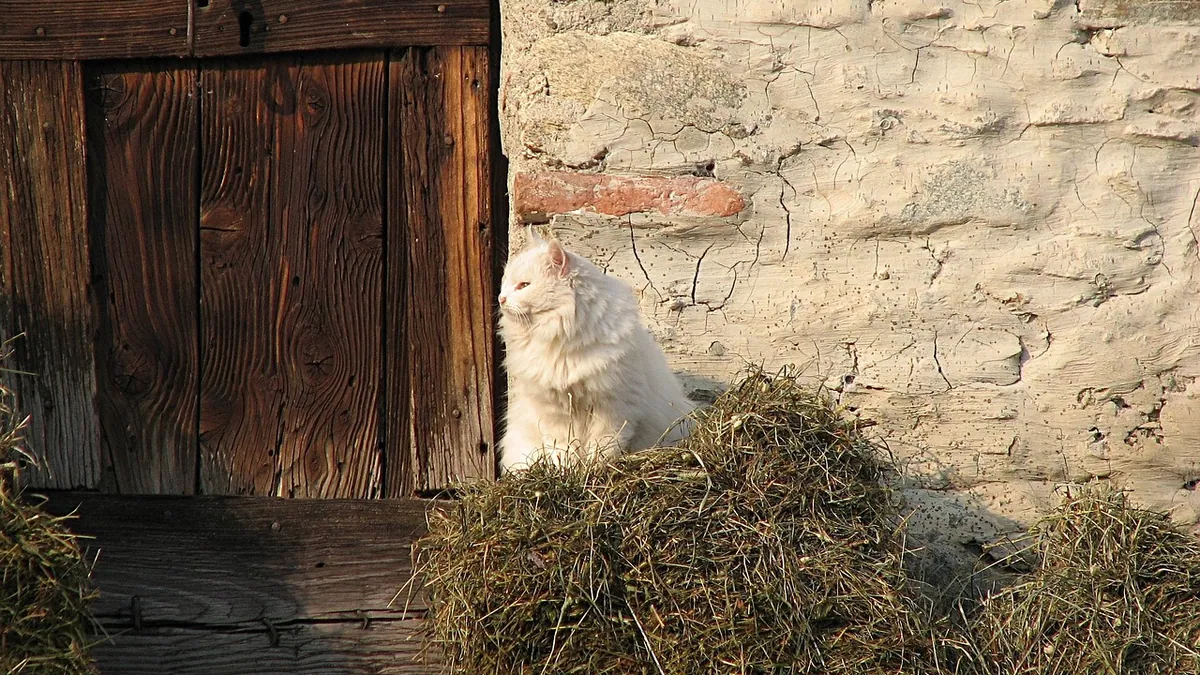
Can cats eat timothy hay? Yes, a nibble is not toxic, but hay is not food for a cat and it can cause choking or a blockage. Cats are obligate carnivores, meaning they need nutrients from animal tissue, so timothy hay offers them nothing they can use. Most cats ignore hay completely, and the ones who chew it usually do so for reasons that have nothing to do with hunger.
This article is educational and is not a substitute for veterinary diagnosis or treatment.
Quick Answer
- Timothy hay is not poisonous to cats, but it is not a food source and provides no usable nutrition for them.
- The main dangers are choking on long strands and intestinal blockage if a cat swallows a large amount.
- Plain hay is safer than hay pellets or flavored treats, which may contain binders, salts, or other additives.
- A single small nibble is usually harmless, but repeated chewing is a reason to remove access and call your vet.
- If your cat eats a large amount, vomits, drools, gags, or stops eating, treat it as urgent.
Can Cats Eat Timothy Hay? The Direct Verdict
Timothy hay is not toxic to cats. That is the good news, and it is also where most of the good news ends. Hay is dried grass grown as forage for horses, rabbits, guinea pigs, and other herbivores. A cat's digestive tract is built for meat, and it cannot break down the cellulose in grass to extract energy or nutrients.
So the honest answer is this. A cat can physically eat a small amount of timothy hay without being poisoned, but there is no health reason to give it to them. The risk of choking or a blockage is real, and the benefit is zero. If your cat is chewing on hay, the hay is not the problem you need to solve. The chewing is.
Do Cats Eat Timothy Hay on Their Own?
Some cats do. Owners often notice it when hay is stored for a rabbit or guinea pig in the same home. A cat may bat at a pile, chew a strand, or roll in loose hay. In one study that used DNA analysis of cat scat to look at what owned cats actually consumed, wild prey turned up far less often than owners expected, which shows that cats eat things their owners never see them eat [1]. Chewing a strand of hay can easily go unnoticed.
Cats also chew non-food items for reasons that have nothing to do with diet. Boredom, stress, dental discomfort, and a condition called pica (eating non-food material) all cause it. If your cat has suddenly started chewing hay, cardboard, plastic, or houseplants, that change in behavior deserves a veterinary visit.
Can Cats Eat Timothy Grass?
Timothy grass is the living plant. Timothy hay is that same plant, cut and dried. The name comes from Phleum pratense, the grass species itself. From a safety standpoint, fresh timothy grass and dried timothy hay carry the same basic concerns for a cat, which are choking and blockage, not poisoning.
There is one extra wrinkle with the growing plant. Pollen from timothy grass is a common allergen in people, and research on people with rhinitis found that cat sensitization was significantly more frequent in those who were allergic to timothy grass pollen compared with those who were not [2]. That finding is about human allergy, not feline toxicity, so it does not make the plant dangerous for your cat. It does mean that if someone in your home has grass pollen allergies, keeping a pot of timothy grass indoors may make their symptoms worse.
Nutritional Content and Any Real Benefit
There is no nutritional benefit for a cat here. Timothy hay is mostly fiber, specifically cellulose and other structural carbohydrates. Cats lack the digestive enzymes to break those down. A cat's natural diet is animal tissue, and their bodies are designed to pull protein and fat from meat, not energy from grass.
Some owners reach for hay because they have heard fiber helps hairballs or digestion. That logic comes from herbivores and from human nutrition, and it does not transfer to cats. When veterinarians want to support a cat's digestion, they use diets formulated for cats, not forage. Research on cat food designed to support intestinal health in healthy adult cats has focused on feline-specific diets and their effects on digestion, nutrient absorption, and gut bacteria, not on grass [3].
If you are looking for a safe, cat-appropriate treat, a small piece of cooked egg or a bite of plain cooked meat is a far better choice than hay. You can read more about suitable options in our guide to Can Cats Eat Eggs.
Risks of Timothy Hay for Cats
Choking and Airway Obstruction
Long, dry strands of hay are the biggest immediate hazard. Hay does not soften quickly in saliva the way a piece of meat does. A strand can catch across the back of the throat or be inhaled, and a cat in distress will paw at its mouth, gag, drool, or cough. This can happen in seconds and is an emergency.
Intestinal Blockage
If a cat swallows hay, the material does not digest. A small amount may pass through, but a wad of hay can lodge in the stomach or intestine. Signs of a blockage include repeated vomiting, loss of appetite, lethargy, a painful or bloated abdomen, and no bowel movements. A blockage is life threatening and usually needs surgery. Plant ingestion in cats is taken seriously for exactly this reason. In a review of 25 cats evaluated after eating lily plant material, veterinarians tracked kidney injury and survival outcomes after decontamination and fluid treatment, which shows how aggressively plant ingestion in cats is managed [4]. Hay is not a lily, but the principle holds. When a cat eats plant material it cannot digest, the situation can escalate.
Mouth and Dental Injury
Dry hay has sharp cut ends. Chewing it can scrape the gums, tongue, or the inside of the cheeks. A cat with a mouth injury may drool, eat on one side, or refuse food.
Mold, Dust, and Pesticides
Hay is an agricultural product. Poorly stored bales can grow mold, and dusty hay can trigger sneezing or respiratory irritation. Hay grown for livestock is not held to food-safety standards for pets, and it may carry pesticide residue. None of this is intended for a cat to eat.
Pellets and Flavored Hay Treats
Timothy hay pellets are compressed hay, so they carry the same blockage risk in a more concentrated form. The bigger problem is what gets added. Read the label and watch for:
- Xylitol, a sweetener that is dangerous to pets
- Salt, which is unnecessary for cats
- Garlic or onion powder, which can damage a cat's red blood cells
- Binders, molasses, or flavorings meant to make the product palatable
Any treat marketed for rabbits, guinea pigs, or horses is formulated for those species, not for cats. Do not assume it is safe because it is sold in a pet store.
Form | Safe? | Notes
| Form | Safe? | Notes |
|---|---|---|
| Loose timothy hay | Not recommended | Choking and blockage risk, no nutritional value |
| Timothy hay pellets | Not recommended | Concentrated hay plus possible additives |
| Flavored hay treats | No | May contain xylitol, salt, garlic, or onion |
| Fresh timothy grass | Not recommended | Same risks as hay, plus pollen for allergic people |
| Hay stored for a rabbit or guinea pig | Keep out of reach | Store in a closed container your cat cannot access |
How to Offer It Safely, and What to Avoid
The safest approach is not to offer timothy hay to your cat at all. There is no nutritional reason to do it, and the risks are one-sided.
If your cat has already been nibbling hay that belongs to another pet in the house, take these steps:
- Move all hay into a sealed bin with a lid your cat cannot open.
- Feed hay to your rabbit or guinea pig in a room your cat cannot enter, or supervise closely and clean up loose strands.
- Check your cat's mouth for strands caught between the teeth or under the tongue.
- Watch for vomiting, drooling, gagging, or changes in appetite over the next 24 to 48 hours.
- Offer fresh water and your cat's normal food. Do not try to make your cat vomit.
Parts and preparations to avoid completely include hay pellets, hay-based dental chews, flavored hay cubes, and any hay product with an ingredient list. If a product has an ingredient list, it was not made for a cat.
What to Do If Your Cat Ate Too Much Hay
If your cat swallowed a large amount of hay, or a pellet or treat that contains xylitol, garlic, or onion, call your veterinarian or a pet poison control hotline right away. Do not wait for symptoms. With blockages and with some additives, early treatment makes a large difference in outcome.
Do not induce vomiting unless a veterinarian tells you to. Cats can aspirate vomit into their lungs, and some swallowed materials cause more damage coming back up.
Bring the packaging with you if you have it. Your veterinarian will calculate any treatment dose based on your cat's weight and health, and they will decide whether imaging, bloodwork, or fluid therapy is needed. If your cat is gagging, struggling to breathe, or has a swollen abdomen, go to an emergency clinic now.
Safer Alternatives
If your cat is chewing hay because it wants to chew something, redirect that behavior to something safe and cat-appropriate.
- Cat grass grown from oat, wheat, or barley seed is the standard alternative. It is sold specifically for cats, and most cats nibble it without problems. It still is not nutrition, so keep portions small.
- Dental chews and toys made for cats give a cat something to bite without the risk of long plant fibers.
- Cooked, plain meat or a small piece of cooked egg makes a better treat than any forage product. Our article on Can Cats Eat Oatmeal? Sensitive Stomach Digestibility covers how cats handle another plant-based food.
- If your cat chews fabric, plastic, or cords, talk to your veterinarian. Pica often has an underlying medical or behavioral cause.
For treats in general, plain and unseasoned wins. Our guide to Can Cats Eat Uncooked Hot Dogs? Risks and Safer Options explains why processed and seasoned foods cause problems for cats.
Limitations and When to Contact a Veterinarian
No article can tell you what is happening inside your individual cat. A veterinarian who examines your cat and knows its history is the only one who can do that.
Contact your veterinarian the same day if your cat:
- Ate hay and is now drooling, gagging, or pawing at its mouth
- Vomited once or twice after eating hay
- Refused its normal meal
- Seems quieter than usual
Go to an emergency clinic immediately if your cat:
- Is struggling to breathe or making unusual breathing sounds
- Is retching repeatedly with nothing coming up
- Has a swollen, painful, or hard abdomen
- Collapses or seems weak
- Ate a hay product containing xylitol, garlic, or onion
Schedule a routine visit if your cat has started chewing hay, houseplants, fabric, or other non-food items on a regular basis. That pattern often points to a medical or behavioral issue that is worth diagnosing early.
Frequently Asked Questions
Is timothy hay poisonous to cats?
No, timothy hay is not toxic to cats. The danger is mechanical, not chemical. Long strands can cause choking, and swallowed hay can cause an intestinal blockage.
Can cats eat timothy hay pellets?
They should not. Pellets are compressed hay, so they carry the same blockage risk, and many products add salt, molasses, or flavorings. Some sweetened products may contain xylitol, which is dangerous for pets.
Why does my cat chew on hay?
Cats chew non-food items out of boredom, stress, dental pain, or a condition called pica. Some cats simply enjoy the texture. Any sudden change in chewing behavior is worth a veterinary visit.
Will hay help my cat pass a hairball?
No. Cats cannot digest grass fiber, so hay does not move hairballs along. Ask your veterinarian about cat-specific hairball diets or products instead.
What should I do if my cat ate hay and seems fine?
Remove the hay from reach and watch your cat closely for the next day or two. Call your veterinarian if you see vomiting, drooling, gagging, loss of appetite, or lethargy.
Related Articles
- Can Cats Eat Strawberries? Nutritional Benefits and Risks
- Can Cats Eat Uncooked Hot Dogs? Risks and Safer Options
- Can Cats Eat Oatmeal? Sensitive Stomach Digestibility
- Can Cats Eat Eggs
- Can Cats Safely Eat Tuna
- Can Cats Eat Bananas
- Can Cats Eat Hay? Why It Is Not a Cat Food
- Can Cats Eat Alfalfa? Safety and Risks
- Can Cats Eat Pellets? Litter and Feed Risks
References
- Using DNA Metabarcoding and Citizen Science to Assess the Diet of Owned Domestic Cats. Ecology and evolution, 2026.
- The association of timothy grass allergy and cat ownership on cat sensitization. Allergy and asthma proceedings, 2022.
- The effects of Sijunzi decoction-supplemented cat food on physiological parameters and gut microbiota in healthy adult cats. Frontiers in veterinary science, 2025.
- Outcome following gastrointestinal tract decontamination and intravenous fluid diuresis in cats with known lily ingestion: 25 cases (2001-2010). Journal of the American Veterinary Medical Association, 2013.