Can Cats Eat Hay? Why It Is Not a Cat Food
By Dr. Zubair Khalid, DVM, MS, PhD ·
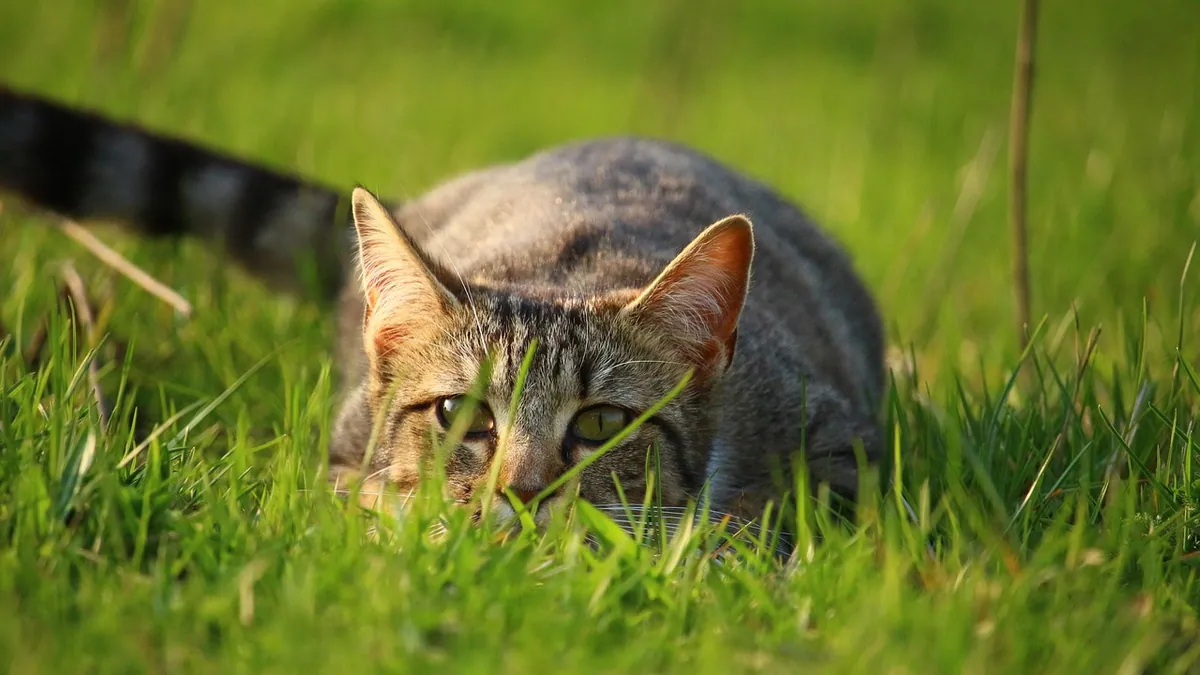
Can cats eat hay? No. Hay is not toxic to cats, but it is a forage food built for grazing animals, and a cat's digestive tract cannot break it down. A nibble of clean hay is unlikely to be an emergency, but swallowed hay can choke a cat or block the intestines, so hay should not be offered as food or as a treat.
This article is educational and is not a substitute for veterinary diagnosis or treatment.
Quick Answer
- Hay is not poisonous to cats, but it is not food for them either. Cats are obligate carnivores and need nutrients from animal tissue, not dried grass.
- The main dangers are choking and gastrointestinal obstruction from swallowed stems, plus mouth or throat injuries from sharp cut ends.
- Hay that has been stored in a barn or shed can carry mold, dust, and pesticides, which add another layer of risk.
- If your cat ate a small amount of clean hay and is acting normal, watch it closely for vomiting, gagging, or straining to poop.
- If your cat is choking, drooling heavily, retching without producing anything, or has not pooped in a day or more, call your veterinarian or an emergency clinic right away.
The Verdict: Can Cats Eat Hay?
Hay is not a cat food. It is dried grass or legume forage cut and cured for grazing animals like horses, cattle, rabbits, and guinea pigs. A cat's body is designed to extract nutrients from meat, and it lacks the digestive machinery to ferment and break down fibrous plant material the way a rabbit does.
That does not mean a single mouthful is a poisoning emergency. Hay is not on the list of toxic plants for cats. The problem is mechanical and nutritional. Hay does not nourish your cat, and the physical form of hay (long, tough, sharp-ended strands) is exactly the kind of thing that can get stuck.
Some owners notice their cat chewing on hay because a rabbit, guinea pig, or horse lives in the same home. Others keep hay for bedding or gardening. Either way, hay is not something to feed, and it is not a safe chew toy.
Can Cats Eat Rabbit Hay?
No. Rabbit hay, including timothy hay, is formulated for rabbits, not cats. In rabbit production research, oat hay supplementation was tested as a way to reduce concentrate feed costs, and it had a negative impact on average daily weight gain compared with a concentrate-only diet [1]. That finding is about rabbits, which are herbivores built to eat forage. It tells you nothing good about feeding hay to a cat, and it underlines the basic point that hay is a livestock and small-herbivore feed.
If you keep a rabbit, store the hay where your cat cannot get into it. A lidded bin or a closed closet works better than an open bag on the floor.
Can Cats Eat Orchard Hay?
No. Orchard hay is simply another type of grass hay, and the same rules apply. There is no nutritional reason to give it to a cat, and the choking and obstruction risks are the same as with any long-stem hay.
If your cat is obsessed with the smell of orchard hay, that interest is probably curiosity or play, not hunger. Redirect it with a cat-safe toy or a small amount of a food your cat is actually designed to eat.
Can Kittens Eat Hay?
No, and kittens are at higher risk than adults. A kitten's esophagus and intestines are smaller, so even a short strand of hay has a better chance of getting stuck. Kittens also explore the world with their mouths, which means they are more likely to swallow something they should not.
If a kitten has eaten hay, treat it as a potential emergency instead of a wait-and-see situation. Call your veterinarian and describe how much was eaten and when.
Should Cats Eat Hay?
No. There is no stage of a cat's life when hay belongs in the diet. Adult cats have specific energy, protein, fat, and water needs, and even those requirements are largely extrapolated from adult maintenance standards because feline-specific research is limited in some areas, including senior nutrition [2]. Hay contributes none of what a cat needs and adds fiber your cat cannot use.
Why Does My Cat Nibble Grass and Hay?
Plant eating in cats is common and not fully explained. A camera-trap study in Kyrgyzstan recorded a wild snow leopard eating a shrub called Myricaria sp. on 14 of 15 videos, usually after sniffing the plant and often followed by head-rubbing [3]. That is a wild felid, not a house cat, but it shows that cats and their relatives do interact with plants in ways that are not about nutrition.
Common explanations owners hear include settling an upset stomach, adding fiber, teething in kittens, or simple boredom and texture interest. None of these make hay a good choice. If your cat wants to chew plants, the safer route is cat grass grown specifically for cats, offered in small amounts, or a veterinary-approved dental chew.
What Is Actually in Hay?
Hay is dried plant material. Grass hays like timothy and orchard grass are mostly cellulose, hemicellulose, and lignin, which are structural fibers. Legume hays like alfalfa are higher in protein and calcium. For a grazing animal, that fiber is fuel. For a cat, it is bulk that passes through undigested at best.
There is no meaningful nutritional benefit for a cat. Hay provides no taurine, no complete amino acid profile, no usable fat, and no vitamin D or other fat-soluble vitamins in a form your cat can absorb. Feeding hay displaces food your cat actually needs, and in a cat that fills up on hay, that can lead to skipped meals.
Risks of Hay for Cats
Choking and Airway Obstruction
Long, dry hay strands can lodge in the mouth, throat, or windpipe. A cat that is gagging, pawing at its mouth, breathing noisily, or turning blue needs emergency care immediately. Do not try to pull a strand out of the throat yourself if you cannot see it clearly, because you can push it deeper.
Gastrointestinal Obstruction
If hay is swallowed, it can form a mass or a linear foreign body in the stomach or intestines. Linear foreign bodies are especially dangerous because they can saw through the intestinal wall as the gut contracts. Signs include vomiting, loss of appetite, abdominal pain, and no bowel movement. Surgery is often needed, and delays make the outcome worse.
Mouth and Throat Injuries
Cut hay has stiff, sharp ends. Those ends can scrape the gums, tongue, soft palate, and esophagus. A cat with an oral injury may drool, eat reluctantly, or refuse food.
Mold, Dust, and Contaminants
Hay is stored in barns and sheds, where it can grow mold and collect dust. Moldy hay can cause respiratory irritation, and some molds produce mycotoxins. Hay can also carry pesticides, fertilizers, or rodenticide residue from storage areas. None of that belongs near your cat.
Additives and Flavorings
Plain hay has no additives, but hay-based products marketed for pets sometimes do. Watch for xylitol, salt, garlic, onion, and other flavorings. Xylitol causes dangerous hypoglycemia in dogs and is not something to expose cats to. Garlic and onion damage red blood cells in cats. If a hay product lists any of these, keep it away from your cat entirely.
The Rabbit Food Problem
Hay is often kept next to rabbit pellets, which may contain added vitamins and minerals balanced for rabbits. Those products are not balanced for cats. If your cat is eating from the rabbit's bowl, that is a separate problem worth correcting. For more on why species-specific food matters, see Can Cats Eat Dog Food.
Form | Safe? | Notes
| Form | Safe? | Notes |
|---|---|---|
| Loose grass hay (timothy, orchard) | No | Choking and obstruction risk, no nutritional value |
| Legume hay (alfalfa) | No | Same risks, higher calcium and protein that a cat cannot use |
| Hay cubes or pellets for rabbits | No | Formulated for herbivores, may contain additives |
| Hay-based cat toys stuffed with hay | No | Chewing and ingestion risk if the toy opens |
| Cat grass grown for cats | Yes, in small amounts | Grown from cat-safe seed, still a treat, not a meal |
| Commercial cat food | Yes | Complete and balanced for your cat's life stage |
How to Offer Hay Safely (Spoiler: You Do Not)
There is no safe way to offer hay as food. If hay is in your home for another animal, the goal is separation, not sharing.
- Store hay in a sealed container your cat cannot open.
- Feed rabbits and guinea pigs in a room or enclosure your cat cannot enter.
- Sweep up loose hay promptly, including bits that fall out of cages.
- Do not use hay as cat bedding, and do not stuff it into cat toys.
- If you want your cat to have a plant to chew, grow cat grass in clean potting soil and offer a small pinch at a time.
If you are looking for safe plant-based extras, carrots are a better-studied option for occasional small pieces. See Can Cats Eat Carrots? Vitamin A & Digestibility.
What to Do If Your Cat Ate Hay
Stay calm and gather facts. Note how much hay was eaten, what kind it was, and when it happened. Then match your response to what you see.
- Small amount, cat is normal: remove the rest of the hay, offer water, and watch for vomiting, gagging, drooling, or changes in appetite and litter box habits for the next 24 to 48 hours.
- Choking, gasping, or blue gums: this is an emergency. Go to the nearest emergency veterinary hospital now.
- Repeated vomiting, retching, belly pain, or no poop: call your veterinarian the same day. These can be signs of obstruction.
- Known moldy hay or hay with pesticide residue: call your veterinarian or a pet poison control hotline right away, even if your cat seems fine.
- Kitten who ate hay: call your veterinarian the same day regardless of how the kitten looks.
Do not induce vomiting unless a veterinarian tells you to. Do not give human medications, and do not try to pull hay out of your cat's mouth with your fingers if you cannot see the end of it.
Safer Alternatives to Hay
Your cat does not need hay, grass, or any plant material to be healthy. A complete and balanced commercial cat diet meets its needs. If you want to add variety, these are safer choices:
- Cat grass grown from cat-safe seed, offered in small amounts.
- Plain cooked egg in a small piece, which is a protein source instead of a plant filler. See Can Cats Eat Eggs.
- A small piece of strawberry as an occasional treat. See Can Cats Eat Strawberries? Nutritional Benefits and Risks.
- A veterinary dental chew or food puzzle toy to satisfy chewing and foraging behavior.
Treats of any kind should stay a small part of daily calories. Feeding instructions on commercial cat food labels are not always a perfect match for an individual cat's energy needs, and many labels recommend intake within a general range instead of a precise target [4]. Your veterinarian can help you set portions based on your cat's weight, body condition, and activity.
Limitations and When to Contact a Veterinarian
This article covers general information about hay and cats. It cannot tell you what is happening inside your specific cat. Individual cases need a veterinarian who can examine your cat, ask questions, and run tests if needed.
Contact your veterinarian the same day if your cat:
- Vomited more than once or is retching without bringing anything up
- Is drooling, pawing at the mouth, or refusing food
- Has a painful or bloated belly
- Has not had a bowel movement in 24 hours or more
- Ate hay along with mold, pesticides, or a hay-based product with additives
Go to an emergency clinic now if your cat:
- Is choking, gasping, or breathing with obvious effort
- Has pale or blue gums
- Collapses or seems unable to stand
- Has severe, nonstop vomiting or a distended, hard abdomen
For a routine visit, bring the hay or the product label with you if you can. Knowing the type of hay and any additives helps your veterinarian decide what testing or treatment is needed.
Frequently Asked Questions
Is hay toxic to cats?
Hay is not toxic to cats in the usual sense, but that does not make it safe. The danger comes from choking, throat injuries, and intestinal blockage instead of from poison. Mold, pesticides, and added flavorings like xylitol, garlic, or onion can add real toxicity risk.
Will a little bit of hay hurt my cat?
A single small nibble may pass without a problem, but there is no guaranteed safe amount. Sharp hay ends can injure the mouth or throat, and swallowed strands can lodge in the gut. Watch closely for vomiting, drooling, gagging, or changes in appetite and litter box habits.
My cat eats the rabbit's hay every day. Is that a problem?
Yes, it is a problem worth fixing. Daily hay eating means ongoing exposure to choking and obstruction risk, and it can crowd out the balanced cat food your cat needs. Move the hay behind a barrier your cat cannot reach and feed the rabbit in a separate space.
Can hay help my cat's hairballs or digestion?
No. There is no evidence that hay helps cats with hairballs or digestion, and its fiber is not the kind a cat can ferment and use. If your cat has frequent hairballs, vomiting, or stool changes, that is a medical question for your veterinarian, not a reason to add hay.
What plants can I safely let my cat chew?
Cat grass grown from cat-safe seed is the usual choice, offered in small amounts and washed before serving. Keep all other houseplants out of reach unless you have confirmed they are nontoxic to cats. If your cat chews plants constantly, mention it at your next veterinary visit, because it can sometimes point to an underlying issue.
Related Articles
- Can Cats Eat Eggs
- Can Cats Eat Strawberries? Nutritional Benefits and Risks
- Can Cats Eat Dog Food
- Can Dogs Eat Cat Food
- Can Cats Eat Carrots? Vitamin A & Digestibility
- Can Cats Eat Lactose-Free Milk? Digestibility Guide
- Can Cats Eat Timothy Hay? Risks and Why They Might
- Can Cats Eat Alfalfa? Safety and Risks
- Can Cats Eat Pellets? Litter and Feed Risks
References
- Effect of Diet Supplementation with Oat Hay and Whole Carrot on Rabbit Growth and Productive Efficiency. Animals : an open access journal from MDPI, 2023.
- EXPRESS: What Goes in the Bowl? Evidence-Based Nutrition for Ageing Domestic Cats. Journal of feline medicine and surgery, 2026.
- Camera-Trap Evidence of Myricaria sp. Consumption and Head-Rubbing by a Wild Snow Leopard (Panthera uncia) in an Alpine Ecosystem. Ecology and evolution, 2026.
- An investigation of feeding instructions on cat food labels in Belgium and comparison with European industry energy intake recommendations. The Veterinary record, 2026.