Uveitis in Dogs: Symptoms, Causes, and Diagnosis
By Dr. Zubair Khalid, DVM, MS, PhD ·
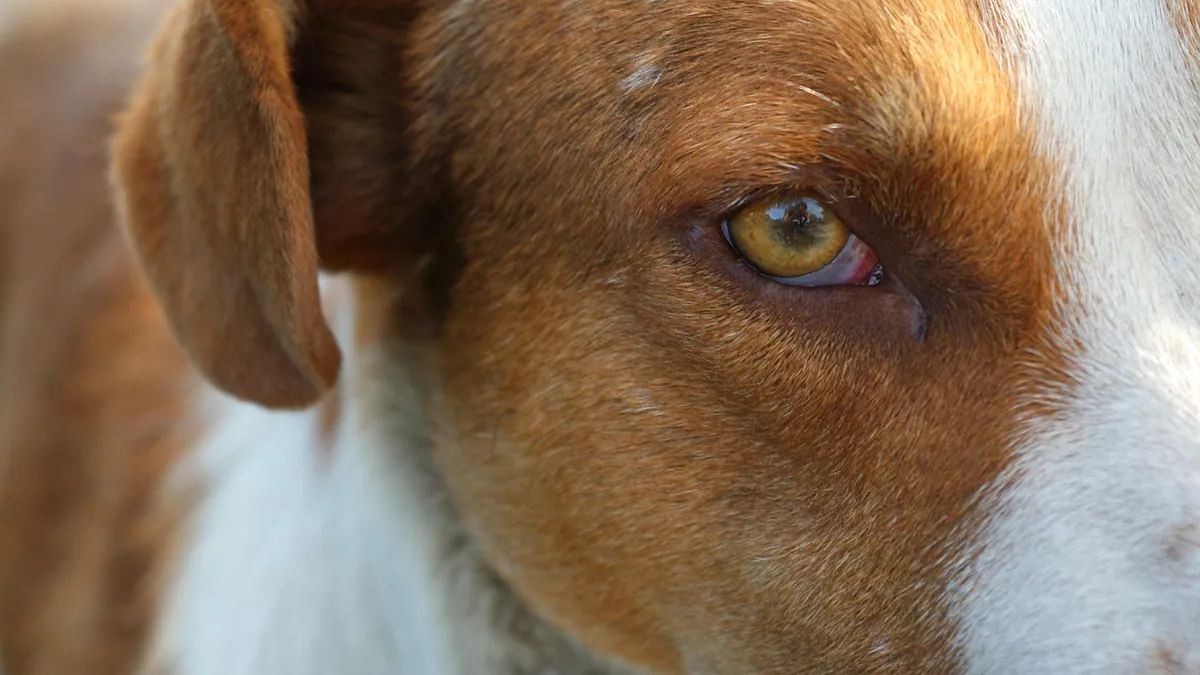
Uveitis in dogs symptoms usually point to pain inside the eye, not just surface irritation. A dog with uveitis often squints, avoids bright light, and holds the eye closed, while the white of the eye looks red or bloodshot. This is an emergency, because untreated uveitis can damage the eye and cause blindness within days.
This article is educational and is not a substitute for veterinary diagnosis or treatment.
Quick Answer
- Uveitis is inflammation inside the eye, in the iris and ciliary body, not on the surface like conjunctivitis [1][2].
- The most common signs are squinting, light sensitivity, a red eye, a cloudy or hazy eye, and a pupil that stays small [2].
- Uveitis is painful. A dog that is squinting and avoiding light needs to be seen the same day.
- Many cases are linked to a problem elsewhere in the body, especially when both eyes are affected [2].
- Never use leftover antibiotic or steroid eye drops from a previous prescription. Some drops can make certain eye conditions much worse.
What Uveitis in Dogs Symptoms Actually Look Like
The uvea is the colored lining inside the eye. It has three parts: the iris (the colored ring around the pupil), the ciliary body (the muscle that helps the lens focus and makes the clear fluid inside the eye), and the choroid (the layer of blood vessels that feeds the retina) [1]. When the front part of this lining, the iris and ciliary body, becomes inflamed, veterinarians call it anterior uveitis or iridocyclitis [2].
Because the inflamed tissue sits inside the eye, the signs look different from a surface problem. Owners often notice:
- Squinting or holding one eye partly or fully closed
- Pawing at the eye or rubbing the face
- Avoiding bright light or turning the head away from windows
- A red or bloodshot white of the eye
- A cloudy, hazy, or bluish look to the eye
- A pupil that looks smaller than the other one
- A change in eye color or a dull appearance
- Tearing or discharge
Some of these overlap with conjunctivitis, which is inflammation of the pink tissue around the eye. Conjunctivitis in dogs symptoms are usually surface signs: redness, discharge, and rubbing, but the eye itself often stays clear and the dog is usually less light sensitive. Uveitis tends to be more painful and can change how the inside of the eye looks. If you are unsure which one you are seeing, treat it as urgent and let a veterinarian look.
What Is Normal
A healthy dog's eye is clear, the pupil responds to light by getting smaller, and the two eyes usually match in size and color. A small amount of clear tearing can be normal, especially in certain breeds. What is not normal is squinting, light sensitivity, a cloudy eye, or a pupil that does not match the other side.
Uveitis in Dogs Causes
Uveitis is often a sign of something else going on, not a disease by itself. When only one eye is affected, a local eye problem is more likely. When both eyes are involved, a body-wide (systemic) disease should be suspected [2].
| Cause | Typical clues | How urgent |
|---|---|---|
| Eye trauma (blunt or penetrating injury) | Recent injury, one eye affected, possible blood in the eye | Emergency now |
| Corneal ulcer | Squinting, tearing, surface defect seen on stain | Same day |
| Lens instability or cataract | Cloudy lens, older dog, one or both eyes | Same day |
| Intraocular tumor | One eye, often older dog, may have glaucoma signs | Same day to urgent |
| Infection (bacterial, viral, fungal, tick-borne) | Fever, lethargy, other body signs, often both eyes | Same day |
| Immune-mediated disease | Both eyes, may come and go, often no other cause found | Same day |
| Systemic inflammatory response syndrome (SIRS) | Very sick dog, hospitalized, whole-body inflammation | Emergency now |
| Pyometra (infected uterus) | Unspayed female, recent heat cycle, vomiting, drinking more | Emergency now |
| Medication reaction | New drug started recently, both eyes, other joints or skin involved | Same day, call the vet |
Some causes are worth knowing about because they show how uveitis links to the rest of the body. In one study of dogs hospitalized with pyometra, 34% developed anterior uveitis, compared with 4% in a control group of hospitalized dogs without pyometra [3]. In another study, 38% of patients with systemic inflammatory response syndrome developed anterior uveitis, compared with 7.7% of those without it [4]. These numbers show why a veterinarian often looks beyond the eye.
Medications can also trigger uveitis in rare cases. One report described a dog that developed immune-mediated polyarthritis and anterior uveitis after starting zonisamide for epilepsy, and both conditions resolved within weeks of stopping the drug [5]. If your dog started a new medication and then developed eye signs, tell your veterinarian.
Some dogs have immune-related conditions that affect both the eye and the skin. A case report described a Bernese Mountain Dog with bilateral uveitis that later developed iris depigmentation and skin and hair color loss, consistent with vitiligo [6]. Another report described a dog with chronic uveodermatologic syndrome, a condition that can cause panuveitis and retinal detachment [7]. These are uncommon, but they explain why your veterinarian may ask about skin and coat changes.
Red Flags That Make This an Emergency
Go to a veterinarian right away, or to an emergency clinic, if you see any of these:
- Sudden squinting or holding the eye closed
- A cloudy or hazy eye that appeared quickly
- A pupil that is much smaller or larger than the other one
- Blood or a milky layer visible inside the front of the eye
- The eye looks swollen or the eyeball seems to bulge
- The dog is crying, pacing, or rubbing the eye constantly
- Vision loss, bumping into things, or not reacting to movement
- Both eyes affected at once
- Any eye sign in a dog that is also vomiting, lethargic, or not eating
Uveitis can lead to serious complications. Chronic inflammation can cause the iris to stick to nearby structures, change the shape of the pupil, form cataracts, or lead to secondary glaucoma [2]. These changes can be permanent. Fast treatment gives the eye the best chance.
Safe Things You Can Do at Home While You Wait
You cannot treat uveitis at home, but you can keep your dog comfortable and avoid making things worse.
- Do not put any human eye drops or leftover pet eye drops in the eye unless your veterinarian tells you to.
- Keep your dog out of bright sunlight. Close curtains or blinds and avoid long walks in direct sun.
- Use a cone (Elizabethan collar) if your dog is pawing at the eye. Rubbing can scratch the cornea.
- Do not try to open the eye to look inside. This causes pain and can worsen an injury.
- Keep the appointment. If your dog is very painful or the eye looks worse, call back and ask to be seen sooner.
If your dog has other ongoing conditions, such as joint pain or lameness, mention them. Some body-wide diseases can affect both the eyes and the joints. You can read more about Arthritis In Dogs Symptoms And Diagnosis and Signs Of Arthritis In Dogs Age to see how those signs can overlap with other illnesses.
Uveitis in Dogs Diagnosis: What Your Veterinarian Will Check
The exam starts with a full look at both eyes, even if only one seems affected. Your veterinarian will check the pupils, the inside of the eye, and how the eye responds to light.
Key tests include:
- Schirmer tear test to measure tear production
- Fluorescein stain to check for a corneal ulcer, which changes treatment
- Tonometry to measure intraocular pressure. Pressure is typically low in acute anterior uveitis, but it can be normal or high if drainage is blocked by inflammation [2].
- Slit-lamp biomicroscopy to look for cells and flare (protein) in the clear fluid inside the eye
- Fundic exam to check the back of the eye
Newer imaging can help. A study found that spectral-domain optical coherence tomography (SD-OCT) correlated well with clinical grading of flare and cells in dogs with anterior uveitis, and it could also detect keratic precipitates [8]. This kind of imaging is not available everywhere, but it shows how veterinarians can measure inflammation more precisely.
Because uveitis is often linked to a body-wide cause, your veterinarian may also recommend:
- Blood work and urinalysis
- Infectious disease testing
- Chest X-rays
- Abdominal ultrasound
If your dog has a history of tick exposure, your veterinarian may test for tick-borne diseases. Lyme Disease Symptoms In Dogs can help you recognize other signs that might connect to eye problems.
Treatment usually includes anti-inflammatory medication, and the exact drug and dose are chosen by your veterinarian based on your dog's weight, eye pressure, and whether a corneal ulcer is present [2]. Never guess at a dose.
How Long Does Uveitis in Dogs Last?
There is no single answer. How long uveitis lasts depends on the cause, how quickly treatment starts, and whether the underlying disease can be controlled. Some cases improve within days of starting treatment, while others need weeks or months of monitoring. Some dogs need lifelong management if the cause is immune-mediated or chronic.
The important point is that the clock starts when signs appear. Waiting a few days to "see if it gets better" can allow permanent damage. If your dog has a condition that can cause uveitis, such as an immune disease or a recent infection, ask your veterinarian how often the eyes should be rechecked.
Prevention and Monitoring
You cannot prevent every case of uveitis, but you can lower the risk and catch problems early.
- Keep up with routine wellness exams, including eye checks.
- Treat underlying conditions promptly, especially infections and inflammatory diseases.
- Spay your female dog if she is not intended for breeding. Pyometra is a serious condition linked to uveitis [3].
- Watch for skin or coat color changes, which can accompany some immune-related eye diseases [6][7].
- If your dog starts a new medication and develops eye signs, call your veterinarian right away [5].
- Know your dog's normal eyes. Check them weekly for redness, cloudiness, or a pupil that looks different.
If your dog has allergies that affect the eyes, it helps to know the difference between surface irritation and deeper inflammation. Allergic Conjunctivitis In Dogs: Comprehensive Veterinary Reference Guide explains the surface type, which is usually less painful and does not cause the internal changes seen with uveitis.
Limitations and When to Contact a Veterinarian
This article cannot tell you what is wrong with your dog's eye. Only an exam can do that. Individual cases need a veterinarian, and the timing matters.
Contact a veterinarian the same day if:
- Your dog is squinting, holding the eye closed, or avoiding light
- The eye looks red, cloudy, or different from the other eye
- The pupil size does not match between eyes
- Your dog is rubbing the eye or pawing at the face
Go to an emergency clinic now if:
- The eye looks swollen, bulging, or has visible blood inside
- Your dog seems to have lost vision
- Both eyes are affected suddenly
- Your dog is also vomiting, very tired, or not eating
- Your dog is a recently whelped or unspayed female with eye signs and seems ill
Schedule a routine visit if:
- You notice a mild change that is not painful, such as a slight color change
- Your dog has a known condition that can affect the eyes and is due for a recheck
Frequently Asked Questions
Can uveitis in dogs go away on its own?
No, uveitis rarely resolves without treatment, and waiting allows inflammation to damage the eye. Even mild cases need a veterinarian to find the cause and start the right medication. Some underlying causes clear up on their own, but the eye still needs treatment in the meantime.
Is uveitis in dogs contagious to other pets?
Uveitis itself is not contagious. It is inflammation inside the eye, and it can be caused by infections that may spread between animals, but the eye condition is not passed directly from dog to dog. Your veterinarian will tell you if the underlying cause needs any isolation precautions.
Can I use my other dog's eye drops for this?
No. Eye drops are prescribed for a specific diagnosis, and using the wrong one can cause harm. For example, a steroid drop used on an eye with a corneal ulcer can make the ulcer much worse. Call your veterinarian instead of borrowing medication.
Does uveitis always mean my dog has a serious disease?
Not always, but it often points to something else going on. Trauma and local eye problems can cause it, and those may be limited to the eye. When both eyes are affected, a body-wide disease is more likely and needs testing [2].
Will my dog go blind from uveitis?
Many dogs keep their vision if treatment starts early. Blindness can happen when inflammation is severe, lasts a long time, or causes complications like cataracts or glaucoma [2]. Fast care and follow-up rechecks give your dog the best chance of keeping sight.
Related Articles
- Arthritis In Dogs Symptoms And Diagnosis
- Lyme Disease Symptoms In Dogs
- Allergic Conjunctivitis In Dogs: Comprehensive Veterinary Reference Guide
- Dog Ear Infection Symptoms
- Signs Of Arthritis In Dogs Age
- Inner Ear Infection Symptoms In Dogs
- Uveitis in Dogs: Treatment and What to Expect
- Dog Eye Infection: Symptoms, Treatment, and When to Worry
- Vision Loss in Dogs: Signs, Causes, and What to Do
References
- Disorders of the Anterior Uvea in Dogs - Dog Owners. Merck Veterinary Manual.
- Anterior Uveitis in Small Animals - Emergency Medicine and Critical Care. Merck Veterinary Manual.
- Prevalence of anterior uveitis in dogs diagnosed with pyometra. The Journal of small animal practice, 2026.
- Prevalence of anterior uveitis in cases of systemic inflammatory response syndrome in dogs and cats. Veterinary ophthalmology, 2025.
- Immune-mediated polyarthritis and anterior uveitis secondary to zonisamide administration in a dog with refractory epilepsy. Veterinary medicine and science, 2024.
- Anterior Uveitis and Uveal Depigmentation in a Dog With Vitiligo. Case reports in veterinary medicine, 2025.
- Features of Optical Coherence Tomography (OCT) in a Case of Chronic Uveodermatologic Syndrome. Veterinary ophthalmology, 2026.
- The feasibility of clinical evaluation for anterior uveitis through spectral-domain optical coherence tomography in dogs. Veterinary ophthalmology, 2022.