Happy Tail Syndrome in Cats: Causes and Care
By Dr. Zubair Khalid, DVM, MS, PhD ·
This article is educational and is not a substitute for veterinary diagnosis or treatment.
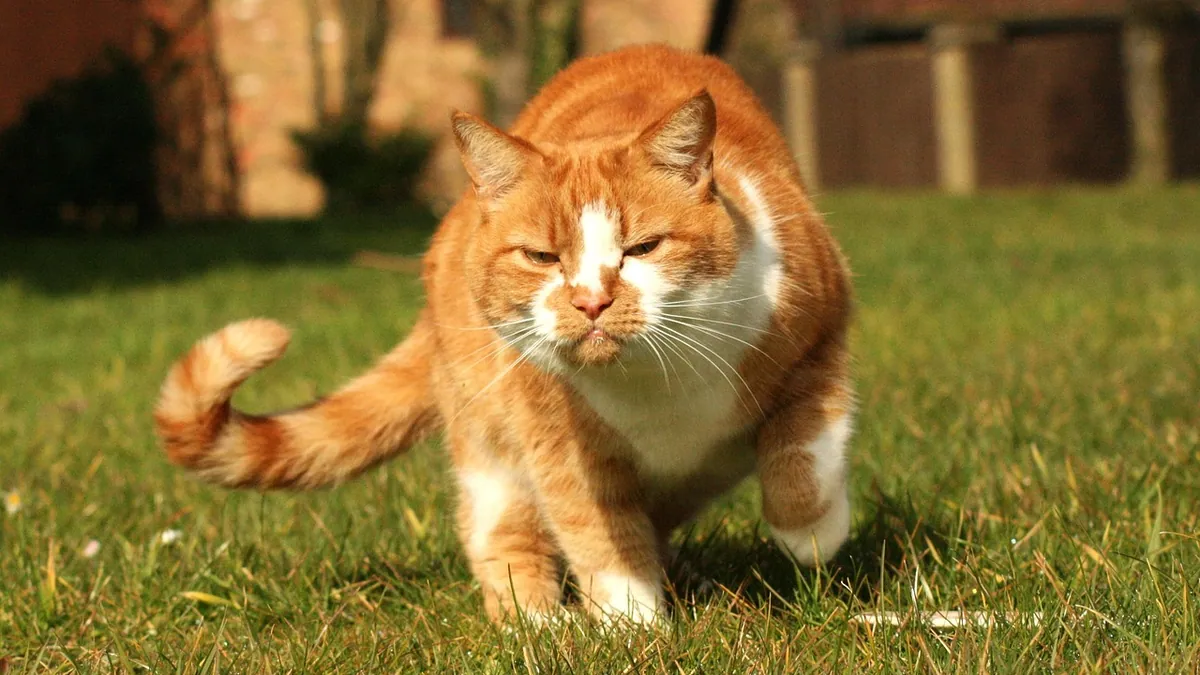
Happy tail syndrome in cats happens when a cat wags or thumps its tail against a hard surface hard enough to split or scrape the tail tip. It is most common in cats who wag their tails enthusiastically indoors, often against walls, doors, or furniture. The injury can be minor at first, but it tends to keep reopening because the tail keeps hitting the same spot.
Quick Answer
- Happy tail syndrome is a wound at the tip of the tail caused by repeated impact against hard surfaces.
- The most common sign is a small bleed or raw spot on the tail tip, often with blood spots on walls or floors.
- Cats with this injury often seem perfectly happy and keep wagging, which keeps the wound open.
- Treatment usually involves cleaning the wound, protecting the tail tip, and sometimes bandaging or a tail wrap.
- If the wound does not heal after a few weeks of home care, your veterinarian may recommend more involved treatment.
What Is Happy Tail Syndrome in Cats?
Happy tail syndrome is a traumatic injury to the tip of the tail. It happens when a cat wags or swings its tail with enough force that the tip strikes a hard surface, such as a wall, door frame, cabinet, or crate. The skin at the tail tip is thin and sits close to the bone, so repeated impact can cause a split, scrape, or open wound.
The name comes from the fact that the injury often happens during happy or excited tail wagging. Cats wag their tails for many reasons, including excitement, irritation, and focus. When a cat is in a small space or near hard walls, that wagging can turn into repeated trauma.
This condition is different from other tail problems. It is not caused by allergies, parasites, or nerve pain. It is a physical wound from impact. That said, some cats with skin disease or nerve discomfort may chew or bite their tail, which can look similar. If you are not sure what is causing your cat's tail problem, see Cat Hair Loss on Tail: Causes and Solutions for a broader look at tail skin issues.
Signs Owners Notice
The signs of happy tail syndrome are usually easy to spot once you know what to look for.
Common signs
- A raw, red, or scabbed spot at the very tip of the tail
- Small drops of blood on walls, floors, or furniture at tail height
- Blood on the cat's tail tip or on bedding
- The cat licking or chewing at the tail tip
- A tail tip that looks swollen, crusty, or hairless
- Flicking or twitching of the tail tip
Some cats show no signs of pain at all. They eat, play, and wag as usual. That is part of what makes this condition tricky. The wound keeps getting reinjured because the cat does not stop wagging.
Signs that suggest something else
If your cat is biting or attacking its tail, or if the skin along the tail is rippling, the problem may be nerve-related. Feline Hyperesthesia Syndrome: Rippling Skin, Tail Attacks, and What Helps explains that pattern. Hair loss on the back near the tail can also point to allergies or overgrooming. See Cat Hair Loss on Back Near Tail: What It Means for more on that.
Causes and Risk Factors
Happy tail syndrome in cats causes come down to one main issue: repeated impact of the tail tip against a hard surface.
Why it happens
Cats wag their tails to communicate. A cat may wag when excited, when waiting for food, or when watching birds out a window. In a home with hard walls and narrow spaces, a wagging tail can hit the same spot over and over. The skin at the tail tip is thin, and the bone is right underneath. That leaves little cushioning.
Risk factors
- Living in a home with hard surfaces near tail height
- Being in a small room, crate, or carrier where the tail hits the sides
- Having a long, thin tail that swings wide
- Being a highly excitable or active cat
- Having a wound that has not healed, which makes the skin weaker
Some cats develop this problem after a single injury, then keep reopening it. Others have a tail tip that stays raw for weeks. The wound can also become infected, which slows healing and makes the area more painful.
How It Is Diagnosed
Most cases are diagnosed by physical exam. Your veterinarian will look at the tail tip, check for swelling, discharge, or dead tissue, and feel along the tail for fractures or tenderness. They will also ask about your cat's behavior and home setup.
What your vet may check
- The size and depth of the wound
- Whether the skin is infected or dying
- Whether the tail bone is broken or exposed
- Whether the cat has nerve pain or another skin condition
- Whether the cat can feel and move the tail normally
If the wound looks infected, your vet may take a sample for testing. In some cases, they may use advanced wound care. A study of 17 cats with surgical or traumatic wounds found that fluorescent light energy treatment improved wound healing scores across all measured parameters over two weeks [1]. That does not mean every cat needs this treatment, but it shows that wound care options beyond basic cleaning exist.
If your cat has a mass or firm lump on the tail or limb, that is a different problem. Rare bone and skin tumors can occur in cats, and some can change over time [2][3]. Your vet will check for those if the history does not fit a simple impact injury.
Treatment Options
Treatment for happy tail syndrome in cats depends on how deep the wound is and how long it has been there. The goal is to stop the trauma, control infection, and let the skin heal.
Home care for mild cases
For a small, fresh wound, your veterinarian may recommend:
- Cleaning the tail tip gently with a pet-safe wound cleaner
- Applying a thin layer of antibiotic ointment made for cats
- Wrapping the tail tip with a light bandage or tail wrap
- Keeping the cat in a space with soft surfaces and no hard walls
- Stopping the cat from licking the area, often with a cone or soft collar
Do not use human antibiotic creams unless your vet says it is safe. Some ingredients are toxic to cats if they lick them off.
When home care is not enough
If the wound keeps reopening, your vet may need to:
- Prescribe oral antibiotics for infection
- Prescribe pain medication
- Place a more secure bandage or splint
- Use a wound care treatment such as fluorescent light energy [1]
- Remove dead tissue so healthy skin can grow
In severe or long-standing cases, the tail tip may not heal. If the blood supply is damaged or the bone is exposed, your vet may recommend amputating part of the tail. This sounds drastic, but cats do well after partial tail amputation. The tail still works for balance and communication.
What about medication doses?
Your veterinarian will calculate any medication dose based on your cat's weight and health. Do not give human pain relievers to your cat. Many common human drugs are toxic to cats.
Recovery, Outlook, and Long-Term Management
Most mild cases heal within one to three weeks if you can stop the tail from hitting hard surfaces. The key is breaking the cycle of injury.
What recovery looks like
- The wound should stop bleeding within a day or two.
- The raw area should form a scab and then shrink.
- Hair may not grow back right away, and the tip may stay bald.
- If the wound gets bigger, smells bad, or drains pus, call your vet.
Long-term management
- Pad hard surfaces near your cat's favorite wagging spots.
- Use soft-sided carriers and beds.
- Keep the tail tip wrapped if your cat keeps reinjuring it.
- Check the tail tip weekly for new scabs or redness.
- Treat any underlying skin or nerve problem.
Some cats need a longer course of care. If your cat has repeated tail injuries, your vet may want to check for other conditions. A cat with a tail wound that will not heal may need a biopsy to rule out rare tumors [2][3]. Cats with high-rise syndrome or other major trauma need a full trauma assessment, and scoring systems like the Animal Trauma Triage Score can help predict survival [4]. That is a different situation from happy tail syndrome, but it shows why a full exam matters when a cat has a serious injury.
A quick comparison table
| Feature | Mild Happy Tail | Severe or Chronic Happy Tail |
|---|---|---|
| Wound size | Small scrape or split | Deep wound, exposed bone, or dead tissue |
| Bleeding | Drops, stops quickly | Repeated bleeding, hard to stop |
| Pain | Little to none | Licking, flinching, or crying |
| Healing time | 1 to 3 weeks | Weeks to months, may need surgery |
| Home care | Cleaning, wrapping, cone | Vet visits, antibiotics, possible amputation |
| Outlook | Good with management | Good after surgery, but tail length changes |
Prevention
Prevention is mostly about changing your cat's environment and habits.
- Cover hard walls or doors where your cat wags its tail.
- Give your cat soft resting spots away from tight corners.
- Use a larger carrier or crate so the tail has room.
- Trim the tail tip hair if it traps moisture, but never cut the skin.
- Watch for early signs and treat them before they get worse.
- If your cat is a heavy tail wagger, check the tip every few days.
If your cat has a skin condition that makes the tail tip fragile, treating that condition helps prevent future wounds. Good preventive care for cats includes regular vet visits and attention to small changes. Cute Cats: Understanding the Health Behind the Adorableness covers how everyday cat behavior can signal health issues.
Limitations and When to Contact a Veterinarian
This article gives general information. Your cat's individual case needs a veterinarian who can examine the wound and decide on treatment.
Contact your veterinarian the same day if:
- The tail tip is bleeding and will not stop
- The wound looks deep or you can see bone
- The tail is swollen, hot, or smells bad
- Your cat is licking or chewing the tail constantly
- Your cat seems painful or will not let you touch the tail
Go to an emergency clinic now if:
- There is heavy bleeding that soaks through bandages
- The tail is bent at a strange angle or looks broken
- Your cat is dragging the tail or cannot move it
- Your cat is weak, vomiting, or not responding normally
Schedule a routine visit if:
- The wound has not healed after two weeks of home care
- The tail tip keeps scabbing and reopening
- You see hair loss or skin changes along the tail
- Your cat has had more than one tail injury in a few months
Frequently Asked Questions
What does happy tail syndrome look like on a cat?
It looks like a raw, red, or scabbed spot at the very tip of the tail. You may also see small blood spots on walls or floors. The cat often acts normal and keeps wagging.
Can happy tail syndrome heal on its own?
A mild case can heal on its own if the tail stops hitting hard surfaces. Most mild wounds heal in one to three weeks with cleaning and protection. If the wound keeps reopening, it needs veterinary care.
Should I bandage my cat's tail tip?
A light bandage or tail wrap can protect the tip and help it heal. Change it as your vet directs and keep it dry. Do not wrap it so tight that it cuts off circulation.
Is happy tail syndrome painful for cats?
Many cats show little sign of pain, which is why the injury keeps happening. Some cats lick the tail or flinch when it is touched. If your cat seems painful, call your vet.
Can I prevent happy tail syndrome?
You can lower the risk by padding hard surfaces and giving your cat more room to wag. Soft bedding and larger carriers help. Check the tail tip often if your cat is an enthusiastic wagger.
Related Articles
- Cat Hair Loss on Tail: Causes and Solutions
- Feline Hyperesthesia Syndrome: Rippling Skin, Tail Attacks, and What Helps
- Cute Cats: Understanding the Health Behind the Adorableness
- Feline Fading Kitten Syndrome: Diagnosis and Management
- Cat Hair Loss on Back Near Tail: What It Means
- Dog Hot Spot on Tail: Causes and Treatment
- Bumps at the Base of a Cat's Tail: Causes and Care
- Stud Tail in Cats: Causes, Symptoms, and What It Means
- Cat Not Lifting Its Tail: Causes and When to Worry
References
- Fluorescent Light Energy in Feline Surgical and Traumatic Wounds: A Prospective Single-Arm Pilot Study of Healing Progression and Bacterial Findings. Veterinary medicine and science, 2026.
- Malignant transformation of a solitary osteochondroma to chondrosarcoma in a cat. Australian veterinary journal, 2026.
- Dermal chondrosarcoma in a cat with prolonged survival after limb amputation. Australian veterinary journal, 2026.
- The Animal Trauma Triage Score outperforms the VetCOT score in cats with high-rise syndrome. The Journal of small animal practice, 2026.