FeLV Symptoms in Cats: Stages and Warning Signs
By Dr. Zubair Khalid, DVM, MS, PhD ·
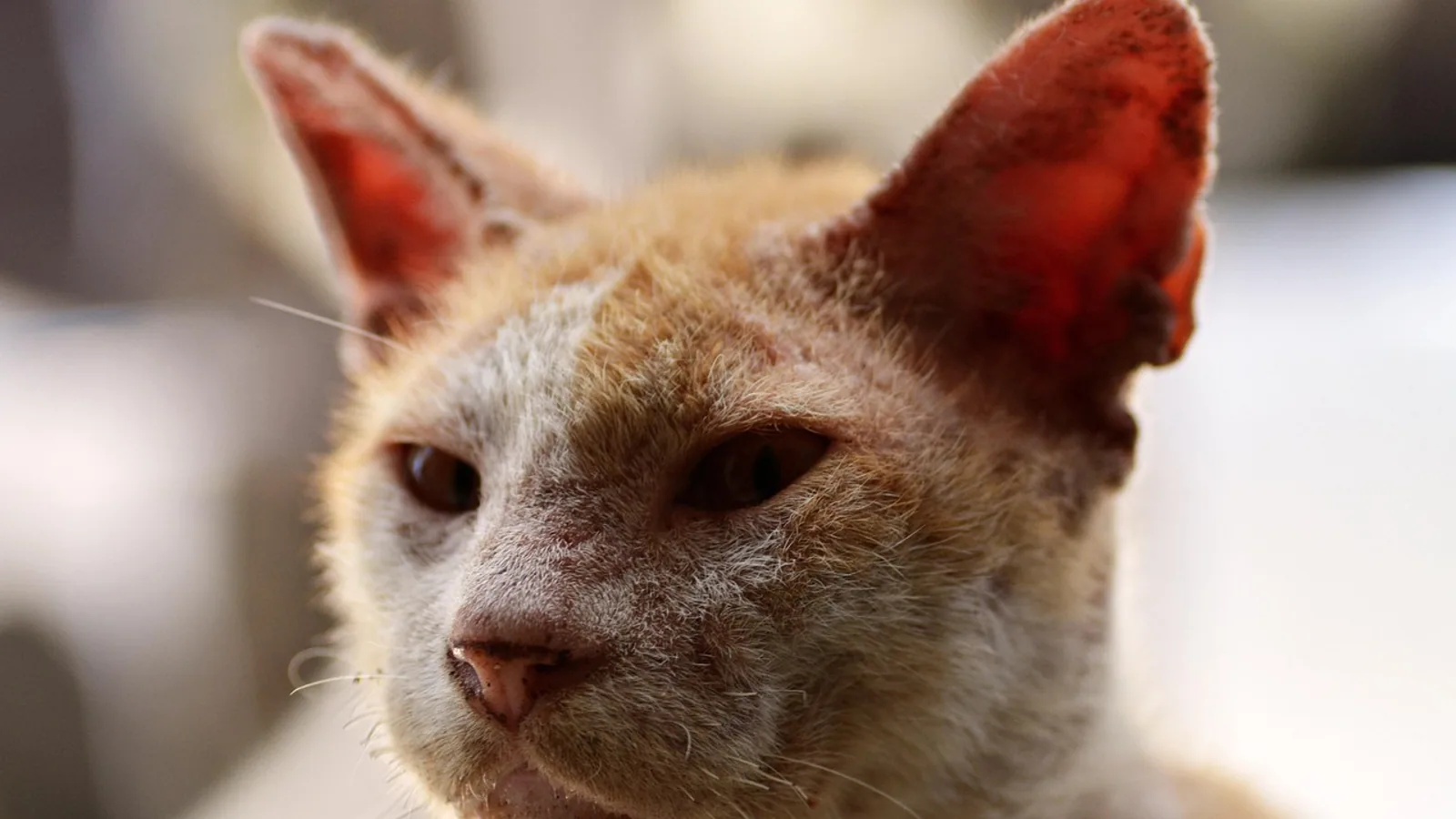
Feline leukemia virus (FeLV) is a gammaretrovirus that spreads mainly through saliva and can produce a wide range of symptoms that shift over time. Early signs are often vague: fever, lethargy, and swollen lymph nodes. As the infection advances, weight loss, anemia, recurring infections, and mouth inflammation become more common. In the late stage, lymphoma, leukemia, and neurologic signs dominate. The single most important thing to understand is that FeLV is not one disease with one timeline. It is a family of outcomes, and the symptoms a cat shows depend on which outcome that cat has.
This guide walks through the biology, the stage-by-stage symptoms, the testing that separates one outcome from another, and the management decisions that follow. It is written for cat owners who have a positive test result, a sick cat, or a new cat of unknown status.
This article is educational and is not a substitute for veterinary diagnosis or treatment.
At a Glance: FeLV Infection Outcomes and What They Mean
| Outcome | What happens in the body | Antigen test (p27 ELISA) | Proviral PCR | Typical symptom picture |
|---|---|---|---|---|
| Abortive | Immune system clears virus before it establishes | Negative | Negative | Usually none. Antibodies may be present |
| Regressive | Virus is contained by immunity after transient viremia. Provirus persists in bone marrow and tissues | Negative (or transiently positive) | Positive | Often none. Some cats later develop lymphoma or marrow disease |
| Progressive | Persistent antigenemia with bone marrow involvement | Positive | Positive | The full symptom spectrum, from early vague illness to terminal cancer |
| Focal / discordant | Virus confined to certain tissues, or test results disagree | Variable | Variable | Variable, often mild |
The distinction between regressive and progressive infection is the backbone of everything that follows. A regressively infected cat has contained the virus with its immune system after a period of transient viremia. Proviral DNA remains detectable in tissues, sometimes for years, but the cat is not persistently antigenemic [1][2]. A progressively infected cat never clears the antigen from its blood. The virus reaches the bone marrow, and that is where the serious disease comes from [3][4].
What FeLV Is and How It Spreads
FeLV is a gammaretrovirus, a retrovirus that carries its genetic information as RNA and writes a DNA copy into the host cell genome. Domestic cats are the primary reservoir. The virus also spills over into wild felids, including pumas, where outbreaks have caused deaths [5].
Transmission is mainly through saliva. Sharing food bowls, grooming, biting, and close contact in multi-cat households all move the virus from one cat to another. This is why testing every cat before introduction into a household matters more than almost any other single step.
Once a cat is exposed, one of several outcomes follows. Many cats mount an effective immune response and abort the infection entirely. Some contain it after a brief period of viremia (regressive). Others fail to contain it and become persistently infected (progressive). The outcome is not random, but it is also not fully predictable from the moment of exposure.
The Biology Behind the Symptoms
Understanding why FeLV causes such varied symptoms requires following the virus through the body.
After exposure through the mouth or nose, the virus replicates in local lymphoid tissue. This is the stage that produces the earliest and vaguest signs: fever, lethargy, and enlarged lymph nodes. From there, the virus spreads through the bloodstream. In cats that will become progressively infected, it reaches the bone marrow and establishes a permanent foothold in hematopoietic (blood-forming) stem cells.
This bone marrow involvement is the key event. Once the marrow is infected, the virus disrupts the production of every blood cell line. Red cell production falls, which produces anemia. White cell production becomes disordered, which produces immune dysfunction and recurrent infections. Platelet production can be affected, which produces bleeding tendencies. And the infected marrow cells can transform into malignant clones, which produces leukemia and lymphoma.
Studies correlating viral and proviral loads with clinical findings confirm this pattern. Cats with high viral and proviral loads in blood and bone marrow were significantly more likely to show laboratory abnormalities and to develop hematopoietic disorders. Disease severity tracked with higher viral blood loads and higher proviral bone marrow loads [4].
The immune suppression caused by progressive FeLV is not a side effect. It is a central mechanism. Cats with progressive infection develop acquired immunodeficiency, which is why they suffer recurrent infections, poor wound healing, and chronic inflammatory conditions like stomatitis [6].
Risk Factors for Infection
Certain cats face higher risk. A large Brazilian study of 366 cats found that cats without FeLV vaccination were nearly ten times more likely to be infected than vaccinated cats. Clinically ill cats were about three times more likely, cats with outdoor access about 2.7 times more likely, and cats showing apathetic behavior about three times more likely. Infected cats in that study were far more likely to have anemia and lymphoma [7].
Sex appears to matter as well. In a separate Brazilian cohort, male cats were three times more likely to fall into the progressive infection group. Cats coinfected with feline immunodeficiency virus (FIV) were nearly five times more likely to belong to the regressive group [8].
Outdoor access, intact status, group housing, and lack of vaccination all cluster together as practical risk factors. The pattern is consistent across studies: the more a cat's lifestyle involves contact with unknown cats, the higher the risk.
Early Stage Symptoms
The early stage of FeLV infection corresponds to the period when the virus is replicating in lymphoid tissue and beginning to spread. Symptoms at this point are nonspecific and easy to miss.
Fever
A transient fever is common in the earliest phase. Owners may notice a warm cat that is quieter than usual, sleeping more, and eating less. Fever at this stage reflects the immune response to active viral replication.
Lethargy and Reduced Activity
Lethargy is one of the most consistent early findings. A cat that was playful becomes withdrawn. Apathetic behavior was identified as a significant risk factor for infection in epidemiological work, which reflects both that sick cats behave differently and that lethargy is a genuine early symptom [7].
Lymphadenopathy
Enlarged lymph nodes, particularly under the jaw, behind the knees, and in the groin, are a hallmark of early infection. The lymph nodes swell because they are the sites of active viral replication and immune activation. In many cats this is subtle. In some it is pronounced enough to be felt easily through the skin.
What Early Stage Usually Looks Like
Most owners at this stage describe a cat that "just isn't right." There is no dramatic single sign. There is a collection of small changes: less appetite, more sleeping, less grooming, occasional vomiting, and a low-grade fever that comes and goes. This is the stage where a vet visit is most likely to be triggered by something else entirely, and where FeLV is often found incidentally on routine testing.
Progressive Stage Symptoms
Progressive infection is where the symptom burden becomes serious. This is the stage defined by persistent antigenemia and bone marrow involvement, and it is the stage most owners are asking about when they search for symptoms of FeLV in cats.
Weight Loss and Poor Body Condition
Progressive weight loss is one of the most reliable indicators that infection is advancing. Cats lose muscle mass and body condition even when they are eating. This reflects the combined effect of chronic immune activation, poor nutrient absorption, and the metabolic cost of fighting off recurrent infections.
Anemia
Anemia is a defining feature of progressive FeLV. In a study of 176 cats, anemia was among the primary causes of death in both the progressive and regressive groups, and it was one of the leading causes of death overall [3]. Anemia in FeLV is often non-regenerative because the bone marrow itself is compromised. The cat's gums and mucous membranes may look pale. The cat may be weak, breathe faster than normal, and tire quickly.
Anemia in FeLV can also have an immune-mediated component. A recent study described cats with immune-mediated anemia that tested positive on point-of-care FeLV ELISA but negative on confirmatory testing. These cats had severe anemia with hematocrits as low as 7 to 16 percent, and most had macrocytosis (enlarged red cells). All were vaccinated against FeLV. The lesson is that a positive screening test in an anemic cat does not always mean progressive FeLV [9].
Recurrent Infections
Progressive FeLV causes acquired immunodeficiency. Cats develop repeated infections of the skin, urinary tract, respiratory tract, and mouth. Infections that should respond to standard treatment often recur or respond poorly. This pattern of recurrent or persistent infection in a cat with a positive FeLV test is highly suggestive of progressive disease [6].
Stomatitis and Oral Inflammation
Severe oral inflammation is common in progressively infected cats. The gums become red, swollen, and painful. Eating becomes difficult. Weight loss follows. Stomatitis in an FeLV-positive cat is often refractory to simple treatment and may require more aggressive management.
Chronic Diarrhea and Gastrointestinal Signs
Persistent diarrhea, sometimes with weight loss and poor appetite, is another feature of progressive infection. The gastrointestinal tract is both a target of the virus and a site of secondary infections and inflammation.
Bone Marrow Suppression
When the bone marrow is involved, the blood count changes. Anemia, low white cell counts, and low platelet counts can all appear. Cats with progressive infection and high viral loads were more likely to develop hematopoietic disorders than cats in other groups [4]. This is the stage where the disease stops being about symptoms and starts being about measurable laboratory abnormalities.
Terminal Stage Symptoms
The terminal stage of progressive FeLV is dominated by malignant transformation and severe organ dysfunction. The primary causes of death in progressively infected cats are lymphoma, leukemia, anemia, and other related diseases [3].
Lymphoma
Lymphoma is the most common malignancy associated with FeLV. It can appear in several anatomic forms. Historically these have been classified as thymic (in the chest), alimentary (in the gut), multicentric (widespread lymph nodes), and true leukemia (in the blood and bone marrow) [10]. Symptoms depend on location. Thymic lymphoma causes difficulty breathing and a mass effect in the chest. Alimentary lymphoma causes vomiting, diarrhea, and weight loss. Multicentric lymphoma causes widespread lymph node enlargement.
Leukemia
Leukemia means malignant cells are present in the blood and bone marrow. FeLV-associated leukemias include lymphoid and myeloid forms. Erythroleukemia, a rare form involving red cell precursors, has been documented in FeLV-infected cats, including two cats in the same household [11]. Leukemia produces severe anemia, bleeding, and a general decline that does not respond to supportive care alone.
Neurologic Signs
FeLV can affect the nervous system. Neurologic signs may include weakness, incoordination, behavior changes, and seizures. These signs reflect either direct viral effects on neural tissue or secondary problems such as lymphoma involving the nervous system or bleeding from low platelet counts.
Severe Anemia and Bleeding
End-stage FeLV often produces profound anemia that requires transfusion support. Platelet abnormalities can cause bleeding from the nose, gums, or into the gastrointestinal tract. At this point the cat is usually hospitalized or in intensive home care.
Symptom-by-Stage Summary Table
| Stage | Timing | Key symptoms | What is happening biologically |
|---|---|---|---|
| Early | Days to weeks after exposure | Fever, lethargy, enlarged lymph nodes, reduced appetite | Viral replication in lymphoid tissue |
| Progressive | Weeks to years | Weight loss, anemia, recurrent infections, stomatitis, diarrhea | Persistent antigenemia, bone marrow involvement |
| Terminal | Months to years after progressive onset | Lymphoma, leukemia, neurologic signs, severe anemia, bleeding | Malignant transformation, organ failure |
The timeline is variable. Some progressively infected cats remain reasonably healthy for years. Others decline within months. The median survival time after diagnosis in one study was 30 days for progressively infected cats, but that study enrolled cats that were already sick at the time of inclusion, so it does not describe the full range of outcomes [3]. The widely cited figure of roughly 2 to 3 years applies to progressively infected cats as a group, with wide individual variation.
How FeLV Is Diagnosed
Diagnosis is not a single test. It is a sequence, and the sequence matters because the tests answer different questions.
Screening: p27 Antigen ELISA
The first-line test is an enzyme-linked immunosorbent assay (ELISA) that detects the p27 antigen, a viral core protein. This test is available as a point-of-care kit that can be run in the clinic on whole blood, serum, or plasma. It detects progressive infection, which is the outcome that matters most for clinical decision-making [6].
The p27 antigen test is sensitive but not perfect. It can produce false positives, particularly when the disease prevalence in the tested population is low. This is a statistical property of any screening test, not a flaw in the kit. When most cats tested do not have the disease, a higher proportion of positive results will be false positives [6].
Confirmation: IFA or PCR
Any positive point-of-care antigen test should be confirmed. Two confirmatory approaches are used.
Immunofluorescence antibody (IFA) testing detects antigen within cells and historically has been used to confirm progressive infection. Polymerase chain reaction (PCR) detects proviral DNA and is the modern confirmatory standard. Proviral PCR identifies both progressive and regressive infections, which is why it is essential for categorizing infection outcome [8][6].
A positive p27 antigen test plus a positive proviral PCR is consistent with progressive infection. A negative antigen test plus a positive proviral PCR is consistent with regressive infection. A negative antigen test plus a negative PCR in a cat with antibodies is consistent with abortive infection [12][2].
The Testing Algorithm
The flowchart below shows the standard decision path from exposure to management.
flowchart TD
    A[Cat exposed to FeLV or at risk] --> B[p27 antigen ELISA screening]
    B --> C{Antigen positive}
    C -->|No| D[Proviral PCR to detect regressive infection]
    C -->|Yes| E[Confirm with proviral PCR or IFA]
    D --> F{PCR positive}
    F -->|No| G[Not infected or abortive]
    F -->|Yes| H[Regressive infection]
    E --> I{PCR positive}
    I -->|Yes| J[Progressive infection]
    I -->|No| K[False positive or immune mediated anemia]
    J --> L[Stage symptoms and begin management]
    H --> M[Monitor for lymphoma and marrow disease]
Testing Pitfalls
Several pitfalls cause misdiagnosis.
False positives occur in low-prevalence populations. This is why confirmation is mandatory before a cat is labeled as progressively infected [6].
Immune-mediated anemia can mimic FeLV. Cats with severe immune-mediated anemia may test positive on point-of-care ELISA but negative on confirmatory testing. In one case series, all nine cats meeting these criteria were vaccinated against FeLV, and most had outdoor access. Their anemia was severe, with hematocrits from 7 to 16 percent, and most had macrocytosis [9]. These cats do not have progressive FeLV, and treating them as if they do can lead to inappropriate decisions.
Vaccination status complicates interpretation. FeLV vaccines reduce the prevalence of progressive infection but do not provide sterilizing immunity and do not prevent regressive infection. A vaccinated cat can still become infected and can still develop a viral reservoir [13].
Discordant results occur. A cat may test positive on one assay and negative on another. These cases require repeat testing and clinical correlation rather than a snap judgment [8].
What the Blood Work Shows
Complete blood count and chemistry panels are essential in any cat with suspected FeLV. The typical abnormalities include anemia, which may be non-regenerative or immune-mediated, low white cell counts, low platelet counts, and evidence of organ dysfunction depending on which systems are involved [4][9].
Bone marrow evaluation is reserved for cases where the blood count abnormalities are severe or where leukemia or marrow failure is suspected. Bone marrow findings in progressively infected cats include suppressed production of normal cell lines and, in some cases, malignant cell populations [4][11].
Management of the FeLV-Positive Cat
There is no definitive antiviral treatment that eliminates FeLV. Management is supportive, aimed at controlling symptoms, preventing secondary infections, and maintaining quality of life for as long as possible [13].
Supportive Care
Supportive care includes nutritional support for cats losing weight, treatment of secondary infections with appropriate antibiotics, management of anemia with transfusions when needed, and treatment of oral inflammation. Cats with severe stomatitis may require dental extraction or immunosuppressive therapy.
Monitoring
Progressively infected cats need regular veterinary monitoring. Blood counts should be checked periodically to detect anemia and other cytopenias early. Lymph node enlargement, new masses, and neurologic signs should be investigated promptly because they may signal lymphoma.
Regressively infected cats need monitoring too. Regressive infection has been associated with the later development of lymphoma, and some regressively infected cats reactivate their infection. Reactivated cats show intermediate to high viral RNA and provirus tissue loads [1][6].
What Not to Do
Do not euthanize a cat solely because of a positive FeLV test. Progressively infected cats can remain healthy for years, and regressively infected cats may never develop disease. The Australian and New Zealand guidelines explicitly state that progressively infected cats should not be euthanized because of a positive diagnosis alone [6].
Do not use unproven home remedies, immune boosters, or antiviral supplements. None of these have evidence supporting their use in FeLV, and some can cause harm.
Do not skip confirmation testing. A single positive point-of-care test is not a diagnosis.
Prevention
Prevention rests on three pillars: testing, vaccination, and management of exposure.
Testing every cat before it enters a household prevents introduction of infection. Vaccination reduces the risk of progressive infection, though it does not eliminate risk entirely [13]. Keeping cats indoors and preventing contact with unknown cats removes the main route of transmission.
The prevalence of FeLV has fallen in many regions as vaccination and testing have become standard. In southern Germany, a survey of 495 cats found progressive infection in 1.8 percent and regressive infection in 1.2 percent [2]. In Portugal, by contrast, prevalence has remained higher, with one hospital-based study reporting 11.3 percent overall and a peak of 14.1 percent in 2020 [14]. A study of stray cats in the Lisbon area found 8.5 percent positive for both p27 antigen and proviral DNA, with most classified as likely progressive based on proviral load [15]. These regional differences reflect differences in vaccination rates, stray cat populations, and testing practices.
Emergency Red Flags
Some signs require immediate veterinary attention.
- Difficulty breathing or open-mouth breathing, which may indicate thymic lymphoma or pleural effusion
- Collapse or extreme weakness, which may indicate severe anemia
- Bleeding from the nose, gums, or rectum, which may indicate platelet problems
- Seizures or sudden behavior change, which may indicate neurologic involvement
- Inability to eat or drink for more than 24 hours
- Persistent vomiting or diarrhea with weight loss
- A rapidly growing mass or sudden lymph node enlargement
Limitations and When to Contact a Veterinarian
This article describes general patterns. Individual cats vary, and no article can replace an examination, blood work, and a conversation with a veterinarian who knows your cat.
Contact a veterinarian promptly if your cat has a positive FeLV test and any of the following: weight loss, pale gums, recurrent infections, difficulty eating, breathing changes, neurologic signs, or a new mass. Contact a veterinarian urgently if your cat collapses, has trouble breathing, or bleeds from any site.
If your cat has a positive point-of-care test and has not had confirmatory testing, ask your veterinarian about proviral PCR. Confirmation changes the diagnosis, the prognosis, and the management plan.
If your cat is FeLV-negative but lives with an FeLV-positive cat, discuss testing intervals, vaccination, and household management with your veterinarian.
Frequently Asked Questions
What are the first symptoms of FeLV in cats?
The earliest symptoms are usually fever, lethargy, reduced appetite, and enlarged lymph nodes. These signs appear days to weeks after exposure and are often subtle enough to be missed.
How long does it take for FeLV symptoms to appear?
Early symptoms can appear within days to weeks of exposure. Progressive disease may take months to years to produce serious symptoms, and some progressively infected cats remain reasonably healthy for a long period before declining.
Can a cat have FeLV and show no symptoms?
Yes. Regressively infected cats often show no symptoms at all, and some progressively infected cats remain asymptomatic for months or years before clinical signs appear.
What is the difference between progressive and regressive FeLV?
Progressive infection means the virus persists in the blood and reaches the bone marrow, producing ongoing antigenemia and serious disease. Regressive infection means the immune system contained the virus after transient viremia, leaving proviral DNA in tissues but no persistent antigen in the blood.
Is a positive FeLV test always accurate?
No. Point-of-care antigen tests can produce false positives, especially in populations where the disease is uncommon. Confirmatory testing with PCR or IFA is required before a cat is considered progressively infected.
Can FeLV be cured?
There is no definitive treatment that eliminates the virus. Management focuses on supportive care, controlling secondary infections, and monitoring for complications such as anemia and lymphoma.
How long can a cat with FeLV live?
Survival varies widely. Progressively infected cats as a group have a shortened life expectancy, while regressively infected cats may have a normal lifespan. Some progressively infected cats live for years with good supportive care.
Should I euthanize my cat if it tests positive for FeLV?
No. A positive test alone is not a reason for euthanasia. Many FeLV-positive cats live for years with good quality of life, and confirmation testing should always be done before making major decisions.
Related Articles
- Heatstroke in Dogs: Warning Signs and Prevention
- Why Is My Bird Tail Bobbing? Breathing Warning Signs
- Dog Dental Disease: Signs, Stages, and What You Can Do
- Dog Aggression Ladder: Understanding Warning Signs Before a Bite
- What Are The Signs And Symptoms Of A Dog With Worms
- Goat Kidding Signs and Stages: A Visual and Behavioral Checklist
- Dog Gestation: Timeline, Signs, and Care
- Overactive Thyroid in Cats: Signs and Management
Sources
- Long-term follow up of feline leukemia virus infection and characterization of viral RNA loads using molecular methods in tissues of cats with different infection outcomes.
- Survey of the feline leukemia virus infection status of cats in Southern Germany.
- Survival analysis and clinical abnormalities in cats with progressive or regressive feline leukemia virus (FeLV) infection in Brazil.
- Laboratory and clinical findings and their association with viral and proviral loads in cats naturally infected with feline leukemia virus.
- Feline Leukemia Virus Frequently Spills Over from Domestic Cats to North American Pumas.
- Feline leukaemia virus (FeLV) infection in domestic pet cats in Australia and New Zealand: Guidelines for diagnosis, prevention and management.
- Epidemiological Insights into Feline Leukemia Virus Infections in an Urban Cat (Felis catus) Population from Brazil.
- Progressive and regressive infection with feline leukemia virus (FeLV) in cats in southern Brazil: Prevalence, risk factors associated, clinical and hematologic alterations.
- Laboratory Changes Supporting a Diagnosis of Immune-Mediated Anemia in Cats With Initial Suspicion of Progressive Feline Leukemia Virus.
- [[Clinical aspects of infection with feline leukemia virus in cats].](https://pubmed.ncbi.nlm.nih.gov/6098972/)
- Erythroleukemia in two cats naturally infected with feline leukemia virus in the same household.
- Field Performance of a Rapid Test to Detect Progressive, Regressive, and Abortive Feline Leukemia Virus Infections in Domestic Cats in Australia and Germany.
- BET Inhibitor JQ1 Attenuates Feline Leukemia Virus DNA, Provirus, and Antigen Production in Domestic Cat Cell Lines.
- Prevalence of feline leukemia virus infection and associated diseases in a Portuguese domestic cat population: A 4.5-year cross-sectional study.
- Prevalence and genetic characterization of feline leukemia virus in portuguese stray cats.