Why Is My Dog Panting? Cancer, Heart Failure, and Surgery
By Dr. Zubair Khalid, DVM, MS, PhD ·
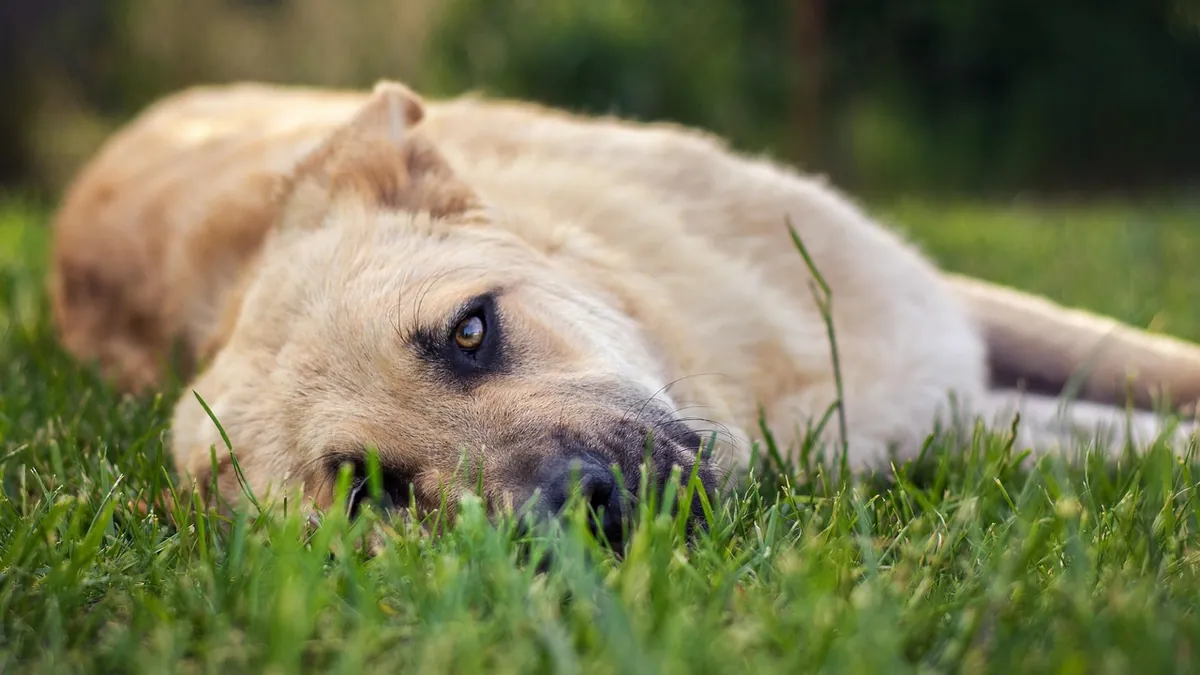
Panting in dogs with cancer, heart failure, or after surgery is often a sign that your dog's body is working harder to get oxygen or manage pain, and it is not the same as the happy panting you see after a game of fetch. Some panting is normal, but panting that comes with a wide stance, a stretched neck, or gums that look blue or gray means your dog needs a veterinarian right away. This article is educational and is not a substitute for veterinary diagnosis or treatment.
Quick Answer
- Normal panting is rhythmic, settles within minutes of rest or cooling, and your dog can lie down comfortably.
- Labored breathing in dogs with cancer often comes from a tumor blocking the airway, fluid around the lungs, or pain, and it usually gets worse over days to weeks [1].
- Panting in dogs with heart failure often means fluid is backing up into the lungs, which is a medical emergency that needs same-day care [2][3].
- Panting in dogs after surgery can be normal recovery behavior, but it can also mean pain, anxiety, or a complication, so check with the surgical team if it does not settle.
- Any dog who cannot lie down, whose gums are blue or gray, or who is breathing with the belly and chest together needs emergency care now.
What Normal Panting Looks Like and What Changes
Dogs pant to cool down because they have few sweat glands. A normal pant is open-mouthed and rhythmic, with a steady rate that slows as your dog rests. Your dog can still lie down, drink, and respond to you.
Trouble looks different. You may see a wide stance with elbows out, a neck stretched forward, and nostrils flaring. The belly may move in and out with each breath. Your dog may refuse to lie down, pace at night, or seem to be "sucking in" air. These are signs of respiratory distress, not simple cooling.
Fear and stress can also cause panting. Fearful dogs may tremble, hide, flinch at noises, or hold their ears back [4]. That kind of panting usually improves once the trigger is gone. If it does not, the cause may be medical. Our guide on why your dog is pacing and panting walks through that difference.
Main Causes of Panting in Dogs With Cancer, Heart Failure, and After Surgery
Panting in Dogs With Cancer
Cancer can cause panting in several ways. A tumor in the larynx or trachea can narrow the airway. One dog with laryngeal squamous cell carcinoma had a one-month history of progressive upper airway obstruction with dyspnea, tachypnea, and trouble swallowing [1]. Another dog had a tracheal mass blocking about 90 percent of the airway and needed emergency care for severe breathing distress [5].
Cancer can also cause panting through pain, fever, anemia, or fluid around the lungs. Labored breathing in dogs with cancer is often worse when your dog is lying flat, because the chest cannot expand as easily. If your dog has a known tumor and starts panting more, that change matters even if the panting looks mild.
Panting in Dogs With Heart Failure
Heart failure is a syndrome, not one disease. It happens when severe heart dysfunction prevents the cardiovascular system from keeping up normal blood pressure, blood flow, and pressure in the veins and capillaries [2]. The most common signs come from fluid buildup, called congestive or backward heart failure [2].
In dogs, that fluid often collects in the lungs. A dog with congestive heart failure may pant, breathe fast, cough, or struggle to rest. Some dogs with heart disease have an enlarged or thickened heart but no signs at all, because the body compensates [3]. That is why a new cough or a faster breathing rate at rest deserves a call, even if your dog seemed fine last week.
Panting at night can be an early clue. If your dog used to sleep soundly and now pants or paces after midnight, read our article on why your dog is panting at night.
Panting in Dogs After Surgery
Panting in dogs after surgery has several possible causes. Pain, anxiety, anesthesia recovery, and bandages or incisions that restrict the chest can all play a role. Some panting in the first hours after anesthesia is expected.
Call the clinic if the panting is severe, if your dog will not settle, if the gums look pale or blue, or if breathing gets faster over time. Pain is often underrecognized. A dog in pain may pant, pace, tremble, or refuse to lie down. Our article on whether panting means pain or anxiety can help you sort out what you are seeing.
Other Causes Worth Knowing
Not every panting dog has cancer, heart failure, or recent surgery. Other causes include heat, exercise, fear, pain, fever, and respiratory disease. One case report described a dog with acute respiratory distress and low oxygen saturation from a pheochromocytoma, a tumor of the adrenal gland [6]. Another dog had repeated nighttime breathing crises with coughing up blood [7]. These are uncommon, but they show why a veterinarian needs to examine your dog instead of guessing from the pant alone.
| Cause | Typical clues | How urgent |
|---|---|---|
| Cancer in the airway or chest | Slow onset, noisy breathing, trouble swallowing, worse when flat, weight loss [1] | Same day to urgent, emergency if severe |
| Heart failure | Fast resting breathing, cough, night restlessness, fluid in lungs [2][3] | Emergency if breathing is labored |
| After surgery | Starts within hours of anesthesia, may improve with pain control | Call the clinic same day if not settling |
| Pain or anxiety | Pacing, trembling, hiding, panting that stops when calm [4] | Routine visit if mild, same day if severe |
| Heat or exercise | Starts with activity or warm weather, settles with rest and water | Home care unless it does not settle |
Red Flags That Mean Emergency
Go to an emergency clinic now if you see any of these:
- Gums that are blue, gray, or white
- Breathing with the belly and chest, with elbows out and neck stretched
- A resting breathing rate that stays high while your dog is asleep or calm
- Unable to lie down or lying with the head propped up to breathe
- Collapse, weakness, or confusion
- Coughing up blood or pink foam
- Panting that started suddenly and is getting worse by the minute
A dog with heart failure can develop fluid in the lungs quickly [2]. A dog with an airway tumor can go from noisy breathing to a crisis in hours [5]. Do not wait to see if it passes.
Safe Things You Can Do at Home While You Wait
Keep your dog calm and cool. Move to a quiet room with good airflow. Offer small sips of water. Do not force your dog to lie down if that makes breathing worse.
Count the breaths. Watch the chest rise and fall for 15 seconds while your dog is resting or asleep, then multiply by four. Write the number down. A resting rate that is rising over hours is useful information for your veterinarian.
Do not give human pain medications, sedatives, or leftover pet medications. Some common human pain drugs are toxic to dogs. Your veterinarian calculates any dose from your dog's weight and health, and the timing matters after surgery.
If your dog is anxious, a calm, dim, quiet space can help. Do not wrap the chest tightly, because that can make breathing harder. If your dog has a known heart condition, keep the appointment schedule your veterinarian set, and call if the breathing rate at home changes.
What Your Veterinarian Will Check and Test
Your veterinarian will start with the basics. They will watch your dog breathe from across the room, listen to the heart and lungs, check gum color, and feel the pulse. They may check oxygen saturation with a pulse oximeter, as was done in a dog with acute respiratory distress [6].
Next come imaging and lab work. Chest X-rays can show fluid in or around the lungs, an enlarged heart, or a mass. Blood tests check organ function, red blood cells, and other clues. If a mass is suspected in the airway, the veterinarian may recommend bronchoscopy, which uses a camera to look inside the windpipe [5]. An ultrasound of the heart, called an echocardiogram, shows how well the heart is pumping and whether valves are leaking.
For dogs with cancer, staging tests help show whether the tumor has spread. For dogs after surgery, the team may check the incision, review pain control, and look for fluid or infection. Treatment depends on the cause. Heart failure care focuses on removing fluid and helping the heart work better [2]. Airway tumors may need surgery or other treatment [1][5]. Pain after surgery is managed with prescription medication chosen for your dog.
Prevention and Monitoring
You cannot prevent every cause of panting, but you can catch problems earlier.
- Learn your dog's normal resting breathing rate and check it weekly.
- Keep heart and cancer recheck appointments, even when your dog seems well.
- Watch for new coughing, night restlessness, or a slower walk.
- Keep your dog at a healthy weight and avoid heavy exercise in heat.
- After surgery, follow the discharge instructions exactly and call with any change in breathing.
If you are unsure whether the panting is serious, our guide on when to worry about excessive panting can help you decide. For a broader look at the symptom, see why your dog is panting so much.
Limitations and When to Contact a Veterinarian
This article cannot tell you what is causing your dog's panting. Only a veterinarian who examines your dog can do that. Individual cases need a veterinarian, and the timing of your call matters.
Call an emergency clinic now for blue or gray gums, collapse, breathing that worsens by the minute, or a dog who cannot lie down. Call your veterinarian the same day for a new cough, a rising resting breathing rate, panting that does not settle after surgery, or panting that wakes your dog at night. Schedule a routine visit for mild panting that comes and goes with stress or heat, especially if it is new for your dog.
Frequently Asked Questions
Is panting a common sign of cancer in dogs?
Panting can happen with cancer, especially tumors in the airway or chest, but it is not a specific cancer sign. Many other problems cause panting too. A tumor in the larynx or trachea can block airflow and cause labored breathing [1][5]. If your dog has a known tumor and starts panting more, call your veterinarian.
Can heart failure make a dog pant without coughing?
Yes. Some dogs with heart failure pant or breathe fast before a cough appears. Fluid buildup in the lungs is the usual reason [2]. A dog with heart disease may also have no signs at all for a long time because the body compensates [3]. A rising resting breathing rate is worth reporting even without a cough.
How long is panting normal after surgery?
Mild panting in the first hours after anesthesia can be expected, but it should ease as your dog wakes up and settles. Panting that continues, gets worse, or comes with pale gums, pacing, or trouble lying down needs a call to the clinic. Pain and anxiety are common reasons, and both can be treated.
Should I count my dog's breaths at home?
Yes, counting resting breaths is one of the most useful things you can do. Watch the chest while your dog is asleep or calm, count for 15 seconds, and multiply by four. Write down the number and the time. Bring the log to your veterinarian, because trends over hours and days matter more than one reading.
What if my dog pants at night but seems fine during the day?
Night panting can be an early sign of heart or lung problems, or it can be pain or anxiety. Dogs with heart failure often breathe faster when lying flat [2]. Keep a log of nighttime breathing rates and call your veterinarian. Do not wait for daytime symptoms to appear.
Related Articles
- Why Is My Dog Panting So Much?
- Why Is My Dog Pacing and Panting? Anxiety or Medical Issue?
- Is My Dog's Panting a Sign of Pain or Just Anxiety?
- Dog Panting Excessively: When to Worry
- Why Is My Dog Panting at night? Pain, Anxiety & Heart Disease Signs
- Dog Shaking and Panting: Is It Anxiety or a Medical Emergency?
- Senior Dog Panting a Lot: Normal Aging or a Warning Sign?
- Heart Attack and Heart Failure Treatment in Dogs
- Cancer in Dogs: Symptoms, Types, and When to See a Vet
References
- Invasive Squamous Cell Carcinoma of the Larynx in a Dog. Case reports in veterinary medicine, 2026.
- Heart Failure in Dogs and Cats - Circulatory System. Merck Veterinary Manual.
- Heart Failure in Dogs - Dog Owners. Merck Veterinary Manual.
- Targeted lipidomics showed altered serum phosphatidylcholine levels in fearful dogs. PloS one, 2026.
- Primary Tracheal Leiomyoma in a Dog: A Case Report. Animals : an open access journal from MDPI, 2026.
- Acute respiratory distress syndrome associated with a pheochromocytoma in an adult dog. The Canadian veterinary journal = La revue veterinaire canadienne, 2024.
- Successful Management of Recurrent Hemoptysis, Polycythemia and Respiratory Distress in a Dog. Animals : an open access journal from MDPI, 2026.