Do Puppies Outgrow Car Sickness? What Owners Should Know
By Dr. Zubair Khalid, DVM, MS, PhD ·
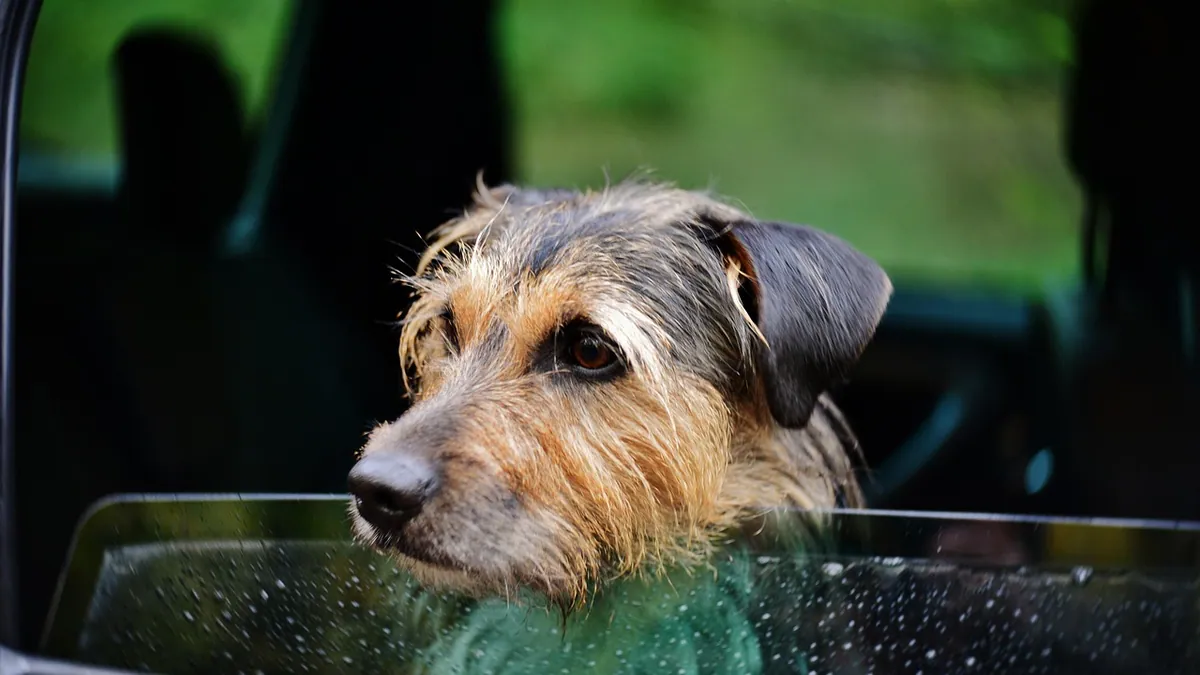
Most puppies do outgrow car sickness, often by the time they are a year old, as their inner ear and balance systems mature and as they get used to riding in a vehicle. Some puppies keep getting car sick into adulthood, and a smaller group develops a fear of the car that looks a lot like motion sickness. The good news is that there are safe, practical steps you can take now, and your veterinarian has effective treatments if home measures are not enough.
This article is educational and is not a substitute for veterinary diagnosis or treatment.
Quick Answer
- Puppies commonly get car sick because their balance system is still developing and because the car is a new, scary place. Signs usually stop when the vehicle stops moving [1].
- Many puppies grow out of it with age and gentle, repeated, positive car experiences, a process called conditioning [2].
- Signs include drooling, lip licking, yawning, whining, restlessness, vomiting, and sometimes diarrhea [2].
- Do not feed a big meal right before a ride, and do not give human motion sickness drugs unless your veterinarian approves them for your puppy.
- If your puppy vomits on every ride, seems panicked, or gets sick even in a parked car, talk to your veterinarian. Medication can prevent nausea, reduce drooling, and provide mild sedation [2].
What Car Sickness Looks Like in Puppies
Motion sickness in dogs causes nausea, excessive drooling, and vomiting, and it can also cause a poor appetite for several hours afterward [2]. Owners often notice smaller clues first. Your puppy may yawn, whine, act uneasy or apprehensive, or have diarrhea [2].
Some puppies drool heavily before they ever vomit. Others go quiet and still, or the opposite, and pace and pant. These early signs matter because they tell you nausea has already started. Once nausea is underway, it is hard to stop it mid-ride.
Here is the part that surprises many owners. Signs usually disappear when the motion of the vehicle stops [1][2]. If your puppy is fine the moment you park, motion is likely the trigger. If your puppy acts scared in a parked car with the engine off, fear may be playing a role too. Fear of the vehicle can be a contributing factor, and signs may occur even in a vehicle that is not moving, especially if your dog has learned to expect illness during car travel [2].
Is it normal for puppies to get car sick? Yes, it is common and expected in young dogs. It is not a sign that you did something wrong, and it is not usually a sign of a serious underlying disease in an otherwise healthy puppy.
Do Puppies Grow Out of Car Sickness?
Many do. Puppies often improve as they mature and as they gain neutral or positive experience with car rides. In some cases, motion sickness can be overcome by conditioning the animal to travel [2]. That means short, calm, low-stakes trips that end somewhere good, repeated over weeks.
Two things are happening at once in a car-sick puppy. First, the inner ear and the brain's balance pathways are still maturing. Second, the puppy is learning what cars mean. A puppy who only ever rides to the vet clinic learns that the car predicts something unpleasant, and that learning can outlast the motion sensitivity itself.
Motion sickness happens when the brain receives conflicting input from three main sensory systems that track balance and movement: the vestibular system of the inner ear, the eyes, and the muscles and joints [1]. That conflict triggers a stress response in the brain, which produces nausea, vomiting, salivation, and agitation [1]. A young dog's system handles that conflict less smoothly than a mature one.
Not every puppy outgrows it. Some adult dogs stay sensitive. Individual anatomy may play a role in susceptibility. In a study of Beagle dogs, researchers measured the fluid spaces of the inner ear and found no significant difference in total inner ear fluid volume between dogs that were sensitive to motion sickness and those that were not [3]. In other words, there is no simple structural marker that predicts which puppies will stay car sick.
If your puppy is still vomiting on rides at 12 to 18 months of age, assume this is a lasting pattern and build a plan with your veterinarian instead of waiting longer.
Main Causes of Car Sickness in Puppies
| Cause | Typical clues | How urgent |
|---|---|---|
| Inner ear motion sensitivity | Drooling, vomiting, and nausea that start once the car moves and stop when it stops [1][2] | Not an emergency, but treatable |
| Fear or anxiety about the car | Whining, trembling, panting, refusing to get in, signs even in a parked car [2] | Not an emergency, but worsens without help |
| Conditioned illness expectation | Your dog got sick on past rides and now acts sick before the car moves [2] | Not an emergency, needs a retraining plan |
| Stomach upset from a pre-ride meal | Vomiting early in the ride, especially after a full meal | Not an emergency, easy to adjust |
| A separate medical problem | Vomiting without any car ride, lethargy, diarrhea, not eating | Contact your veterinarian |
The principal cause of motion sickness is stimulation of the sensory organ in the inner ear, which has connections to the vomiting center in the brain stem [2]. That direct wiring is why nausea and vomiting show up so fast in a moving car.
Fear is the second layer. A puppy who is anxious in the car may drool and vomit even on a short, smooth drive, and may start showing signs as soon as you pick up the keys. If you are not sure which problem you are dealing with, this guide on Dog Fear of Car Rides: Anxiety or Motion Sickness? How to Tell walks through the differences.
Red Flags That Need Veterinary Attention
Most car sickness is unpleasant but not dangerous. Call your veterinarian promptly if you see any of these.
- Vomiting that continues after the car stops and does not settle within a few hours
- Vomiting with blood, or vomit that looks like coffee grounds
- Refusing all food and water for more than 12 hours
- Marked lethargy, weakness, or collapse
- Vomiting that happens at home with no car ride involved
- Diarrhea that is bloody, black, or ongoing
- Signs of pain, such as a stiff neck, a painful belly, or crying when picked up
- A puppy who cannot keep water down
These signs point away from simple motion sickness and toward something that needs a diagnosis.
What You Can Do at Home While You Wait
Start with the ride itself.
- Skip the big meal. Feed a light meal a few hours before travel, not right before you leave.
- Keep the car cool and crack a window for fresh air.
- Secure your puppy in a crate or with a crash-tested harness so they are not sliding around. Less sliding means less conflicting balance input.
- Face your puppy forward if you can do it safely. Looking out a side window at fast-moving scenery tends to make nausea worse.
- Keep early trips very short. Two to five minutes, ending somewhere pleasant, is enough at first.
- Do not scold. Punishment adds fear to an already stressful event.
- Bring towels and a spare leash. Clean up calmly and keep going.
For the conditioning plan, practice sitting in the parked car with the engine off, then with the engine running, then a trip around the block. Reward calm behavior at every stage. This is the same idea behind kennel conditioning protocols used before transport in other species, where animals are acclimated to the travel enclosure ahead of time to reduce stress [4]. Your version is slower and gentler, and it works best when you stop before your puppy shows nausea.
If your puppy is anxious instead of motion sick, the strategies in How to Calm a Dog in the Car: Preventing Motion Sickness and Anxiety go deeper into counterconditioning and setup.
Do not reach for human medications on your own. Dosing for dogs is not the same as for people, and some products are unsafe for puppies. If you are wondering about over-the-counter options, read Can You Give Your Dog Dramamine for Car Sickness? before you give anything, then confirm with your veterinarian.
What Your Veterinarian Will Check
Your veterinarian will start with a full history. They will want to know when the signs start, whether they happen only in a moving car, whether your puppy is fine at home, and what your puppy eats before travel.
Then they will do a physical examination, including a neurologic exam, to look for problems with the inner ear or balance system. They will check for ear infections, which can cause head tilt, circling, or balance loss that owners sometimes mistake for car sickness.
If the history and exam point clearly to motion sickness, testing may be minimal. If the story is unclear, or if your puppy is vomiting outside the car, your veterinarian may recommend blood work, a fecal test, or imaging to rule out other causes of vomiting.
Treatment depends on what they find. Medications for motion sickness can help prevent it, provide sedation, and decrease drooling, and they are available from your veterinarian [2]. These include tranquilizers, sedatives, and products that decrease nausea or vomiting [2]. Your veterinarian will calculate the dose from your puppy's weight and health, and will tell you how far ahead of travel to give it.
Some anti-nausea and anti-vomiting drugs are used in veterinary practice for a range of conditions, and veterinarians choose among them based on the specific problem and the patient [5]. That is a decision for your veterinarian, not a guess from a label.
Prevention and Long-Term Monitoring
Think of car sickness as two problems to solve at once: the motion and the meaning.
For the motion, use medication when your veterinarian recommends it, especially for longer trips or when your puppy must travel soon. Preventing nausea on a few rides can break the cycle, because a puppy who does not get sick stops expecting to get sick.
For the meaning, keep building positive associations. Short rides to fun places. Treats in the parked car. Calm praise for relaxed body language. If your puppy has already learned to dread the car, you may need to rebuild from the ground up, and this article on Why Is My Dog Suddenly Scared of the Car? covers that reset.
Track your puppy's pattern. Note the trip length, whether they had eaten, the time of day, and the first sign you saw. Over a few weeks, you will see whether things are improving. If your puppy is getting worse, or if new signs appear at home, that is your signal to call your veterinarian.
One more thing worth knowing. Fear and anxiety are common in dogs generally, and owners often underestimate how much distress their dogs show in specific situations [6]. If your puppy's car behavior looks more like panic than nausea, take it seriously and ask for help early. Behavior problems that start young tend to get more entrenched, not less.
Limitations and When to Contact a Veterinarian
This article cannot tell you whether your individual puppy's vomiting is motion sickness, a stomach problem, or something else. That requires an examination and, in some cases, testing. Individual cases need a veterinarian.
Contact your veterinarian the same day if your puppy vomits repeatedly after the ride ends, refuses food and water, seems painful, or is unusually quiet and weak.
Go to an emergency clinic now if your puppy collapses, has a seizure, vomits blood, has a swollen or rigid abdomen, or cannot stand.
Schedule a routine visit if your puppy vomits on most car rides, shows distress even in a parked car, or is still car sick past 12 to 18 months of age. A planned appointment is the right place to discuss medication, a conditioning plan, and whether any testing is needed.
Frequently Asked Questions
Do puppies grow out of car sickness on their own?
Many puppies improve as they mature and as car rides become familiar, and conditioning to travel can overcome motion sickness in some cases [2]. Others need medication or a structured training plan. If your puppy is still sick on every ride after a year, ask your veterinarian for a plan instead of waiting.
Is it normal for puppies to get car sick?
Yes. Puppies commonly get car sick because their balance system is still developing and because the car is a new experience. Motion sickness is usually seen during travel by land, sea, or air, and signs usually disappear when the motion stops [2].
Can I just wait it out, or should I treat it?
Waiting is reasonable for a puppy with mild, occasional drooling on short rides. If your puppy vomits, panics, or dreads the car, treating it early is better. Repeated nausea can teach your puppy to fear the car even when the motion is no longer the main problem [2].
What if my puppy gets sick even when the car is parked?
That pattern points toward fear or a learned expectation of illness. Fear of the vehicle can be a contributing factor, and signs may occur even in a vehicle that is not moving [2]. This is a behavior problem as much as a motion problem, and it responds to a gradual retraining plan.
Are some puppies more likely to stay car sick?
Some dogs remain sensitive into adulthood, and there is no simple physical measurement that predicts which ones. A study of Beagle dogs found no significant difference in total inner ear fluid volume between dogs that were sensitive to motion sickness and those that were not [3]. Your puppy's pattern over time is a better guide than breed or size.
Related Articles
- Dog Fear of Car Rides: Anxiety or Motion Sickness? How to Tell
- How to Calm a Dog in the Car: Preventing Motion Sickness and Anxiety
- Why Is My Dog Suddenly Scared of the Car?
- Can You Give Your Dog Dramamine for Car Sickness?
- Dog Sneezing: Normal or a Sign of Illness?
- Dog Separation Anxiety In Car
- How to Help a Puppy With Car Sickness
- Why Does My Puppy Vomit in the Car? Motion Sickness Help
- Cat Car Sickness Symptoms: How to Tell and What to Do
References
- Motion Sickness in Animals - Nervous System. Merck Veterinary Manual.
- Motion Sickness in Dogs - Dog Owners. Merck Veterinary Manual.
- Association of Lymphatic Fluid Volume in the Inner Ear of Beagle Dogs with the Susceptibility to Motion Sickness. The journal of international advanced otology, 2022.
- Effects of a kennel conditioning protocol on transport-induced stress in minipigs: insights from heart rate variability and salivary cortisol. Veterinary research communications, 2026.
- Inducing emesis in Australian dogs and cats: agents, adverse effects and antiemetic administration. Australian veterinary journal, 2025.
- Owner-reported prevalence and severity of fear and anxiety in dogs. Veterinary research communications, 2026.