Why Is My Cat Twitching in His Sleep? Normal vs. Concerning
By Dr. Zubair Khalid, DVM, MS, PhD ·
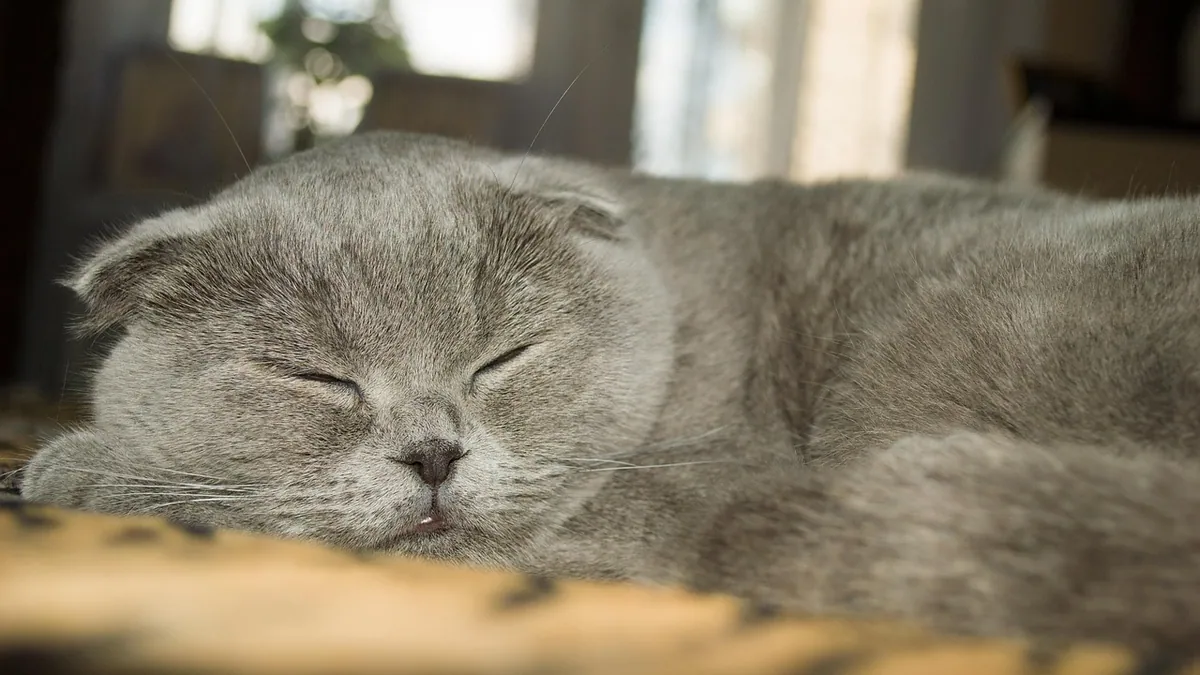
Most sleep twitching in cats is normal. During rapid eye movement (REM) sleep, the brain is active while the body's muscles are mostly relaxed, and small twitches of the face, paws, whiskers, and tail often break through. So if you are asking why is my cat twitching in his sleep, the short answer is that it is usually a harmless part of dreaming.
This article is educational and is not a substitute for veterinary diagnosis or treatment.
Quick Answer
- Twitching during sleep is common and usually normal, especially in kittens, whose developing nervous systems produce a large amount of sleep-related movement [1].
- Normal twitching is brief, happens only during sleep, and stops when your cat wakes up.
- Twitching that happens while your cat is awake, or that continues after he is fully alert, needs a veterinary visit.
- Record short videos of the episodes, note the time of day, how long they last, and whether your cat responds to you.
- Seek emergency care if twitching comes with difficulty breathing, loss of consciousness, or a seizure that lasts more than a few minutes.
What Sleep Twitching Looks Like and What Is Normal
When a cat sleeps, he cycles between deep sleep and REM sleep. REM sleep is the stage tied to dreaming. In most mammals, the brain sends signals that quiet the skeletal muscles during REM so the sleeper does not act out dreams. Small movements still slip through, and that is what you see as twitching.
Normal sleep twitching usually looks like this:
- Small jerks of the paws, toes, whiskers, ears, or tail
- Lip smacking, chewing motions, or tiny facial twitches
- Occasional whole-body shivers that last a second or two
- Episodes that come and go in clusters during sleep
- A cat who wakes easily and acts completely normal afterward
Kittens twitch a lot. A study of preterm infants found that twitching is one of the earliest observable behaviors and a hallmark of active (REM) sleep, and that young animals produce an immense quantity of twitching across the body [1]. The same principle applies to kittens. Their nervous systems are still maturing, so sleep movements are more frequent and more obvious than in adult cats. That is why owners often search for why does my kitten twitch so much in his sleep. In most cases, it is simply a young brain doing its normal developmental work.
Twitching is also more noticeable in some adult cats than others. A cat who is a deep sleeper, or who is very relaxed and comfortable, may show more movement than a cat who wakes at the slightest sound.
Why Is My Cat Twitching in His Sleep? Main Causes
There are several reasons a cat twitches. Most are harmless. A few are not.
Normal REM sleep behavior
This is by far the most common cause. The twitching is brief, tied to sleep, and your cat is normal when awake. Nothing needs to be done.
Dreaming and active sleep
Cats dream, and dreams can trigger paddling, chewing, or running motions. One report described a dog with excessive paddling and chewing during sleep that was confirmed by brain monitoring to occur only during REM sleep, not during wakefulness or other sleep stages [2]. Cats can show the same pattern. If your cat looks like he is chasing something in his sleep, he probably is.
Twitching while awake
If your cat twitches when he is awake, that is a different situation. Twitching during wakefulness is not normal REM behavior. It can point to a movement disorder, a medication effect, or a neurological problem. This is one of the clearest reasons to see a veterinarian.
Medication effects
Some medications can cause muscle jerks. A case report described two cats with presumed gabapentin-induced myoclonus, which are short jerks of the head. Both cats had chronic kidney disease and a history of seizures, and they received gabapentin at doses in the range of 11.8 to 16.4 mg/kg before veterinary visits [3]. The jerks were different from the cats' usual seizure activity. If your cat started a new medication and then began twitching, tell your veterinarian.
REM sleep behavior disorder
In REM sleep behavior disorder (RBD), the normal muscle relaxation of REM sleep is lost. The cat acts out dreams with larger, more forceful movements. RBD has been reported in cats, dogs, and people, and it can be idiopathic or linked to a neurodegenerative disease. In one group of young adult Russian Blue cats from two related families, RBD episodes got progressively worse and were often associated with urinary loss, and some cats also had urinary retention with overflow incontinence between episodes [4]. This is a serious condition, and it tends to look different from ordinary twitching.
Seizures
Some seizures happen during sleep or just after waking. A seizure is not the same as a twitch. It usually involves stiffening, paddling that does not stop when you call your cat, loss of consciousness, drooling, or urination. Brain monitoring is sometimes needed to tell a seizure apart from a sleep-related movement disorder, because the two can look similar from the outside [2].
Other causes
Pain, low blood sugar, low blood calcium, toxin exposure, and some infections can cause muscle twitching. Your veterinarian will sort through these possibilities with an exam and testing.
| Cause | Typical clues | How urgent |
|---|---|---|
| Normal REM twitching | Brief, only in sleep, cat normal on waking | Not urgent |
| Dreaming | Paddling or chewing motions, easy to wake | Not urgent |
| Twitching while awake | Happens when alert, may be constant | See vet soon |
| Medication effect | Started after a new drug, head jerks | Call vet |
| REM sleep behavior disorder | Large movements, acting out dreams, sometimes urination | See vet soon |
| Seizure | Stiffening, loss of consciousness, does not stop when called | Emergency if prolonged |
| Metabolic or toxic cause | Weakness, vomiting, known exposure | Emergency |
Red Flags That Make It an Emergency
Call an emergency veterinary hospital right away if you see any of these:
- A seizure that lasts more than a few minutes, or repeated seizures without recovery in between
- Twitching with trouble breathing, blue gums, or collapse
- Twitching after possible exposure to a toxin, such as a medication, plant, or household chemical
- Twitching with a fever, severe weakness, or inability to stand
- Twitching that starts suddenly and does not stop
- Twitching with vomiting, diarrhea, or a swollen abdomen
If your cat is twitching and also breathing fast while asleep, that combination deserves a closer look. You can read more about that here: Cat Breathing Fast While Sleeping: When to Worry.
If the twitching involves the head and ears along with head shaking, see Cats Ears Twitching And Shaking Head.
Safe Things You Can Do at Home While You Wait
You cannot stop normal sleep twitching, and you should not try. What you can do is gather good information.
Record video
Use your phone to film the episodes. Video is the single most useful thing you can bring to a veterinary visit. It lets your veterinarian see the exact movement pattern, which is hard to describe in words.
Keep a simple log
Write down:
- The date and time of each episode
- How long it lasted
- What body parts were involved
- Whether your cat was asleep or awake
- Whether he responded when you called his name or touched him
- What happened right before and right after
Do not wake your cat during a seizure
If your cat is having a seizure, do not put your hands near his mouth or try to hold him still. Move furniture or objects away so he does not hurt himself, dim the lights, and time the episode. Call your veterinarian or an emergency clinic.
Keep the environment calm
Stress can make some movement disorders worse. Keep your cat's routine steady, provide quiet sleeping spots, and avoid sudden changes while you wait for your appointment.
Do not give any medication
Never give your cat a human medication or a leftover pet medication for twitching. Some common drugs are toxic to cats. Your veterinarian will calculate any dose from your cat's weight and health.
If your cat is also crying at night, that can be a separate issue worth mentioning to your vet. See Why Is My Cat Crying at Night?.
What Your Veterinarian Will Check and Test
Your veterinarian will start with a full physical and neurological examination. This includes checking your cat's reflexes, balance, pupil responses, and muscle tone.
Depending on what they find, they may recommend:
- Blood work to check blood sugar, calcium, kidney values, and electrolytes
- A seizure medication level if your cat is already on one
- A review of all medications, including gabapentin, since muscle jerks have been reported in cats receiving it [3]
- Brain imaging, such as MRI, if a structural problem is suspected
- A referral to a neurologist for advanced testing
In some cases, your veterinarian may recommend electroencephalography (EEG) with video monitoring. This test records brain activity while your cat sleeps and can tell the difference between a sleep-related movement disorder and a seizure. In one reported case, EEG with time-locked video over 31 hours showed that abnormal paddling and chewing movements occurred within 20 to 180 seconds of the onset of REM sleep, with no epileptiform activity, which confirmed a sleep behavior disorder instead of a seizure [2].
If your cat has episodes that include urination or urinary retention, tell your veterinarian. Those signs have been reported with REM sleep behavior disorder in cats [4], and they change how urgently your cat needs to be seen. Urinary problems in cats can also be a sign of pain or blockage, which you can read about here: Why Is My Cat sleeping in litter box? FLUTD Pain and Anxiety Response.
Prevention and Monitoring
You cannot prevent normal sleep twitching, and you do not need to. What you can do is monitor your cat over time.
- Keep a running log of episodes, even after the first vet visit.
- Note any change in frequency, duration, or body parts involved.
- Watch for new signs, such as urination during episodes, weakness, or changes in behavior.
- Tell your veterinarian about every medication and supplement your cat takes.
- Keep regular checkups, especially if your cat has chronic kidney disease or a seizure history, since those were risk factors in reported cases of medication-related muscle jerks [3].
If your cat's twitching is mild, sleep-related, and he is completely normal when awake, monitoring is usually all that is needed. If anything changes, call your veterinarian.
Limitations and When to Contact a Veterinarian
This article cannot tell you what is causing your cat's twitching. Only a veterinarian who examines your cat can do that. Individual cases need a veterinarian.
Contact an emergency clinic right now if your cat has a seizure lasting more than a few minutes, repeated seizures, trouble breathing, collapse, or twitching after a possible toxin exposure.
Contact your veterinarian the same day if your cat is twitching while awake, if twitching started after a new medication, if episodes are getting longer or more forceful, or if your cat urinates during episodes.
Schedule a routine visit if the twitching is mild and only happens during sleep, but you want reassurance or you have noticed a slow change over weeks.
Frequently Asked Questions
Is it normal for a cat to twitch in his sleep?
Yes, mild twitching during sleep is normal for most cats. It happens because small muscle movements break through the normal muscle relaxation of REM sleep. If your cat wakes up easily and acts normal, there is usually nothing to worry about.
Why does my kitten twitch so much in his sleep?
Kittens twitch more than adult cats because their nervous systems are still developing. Young animals produce a large amount of sleep-related twitching as part of normal motor development [1]. This usually becomes less noticeable as your kitten grows.
Why is my cat twitching while awake?
Twitching while awake is not normal REM behavior and should be checked by a veterinarian. It can be caused by a medication effect, a movement disorder, or a neurological problem. Bring a video of the episodes to your appointment.
Can twitching in sleep be a seizure?
It can be, but most sleep twitching is not a seizure. Seizures usually involve stiffening, loss of consciousness, or movements that do not stop when you call your cat. Brain monitoring may be needed to tell the two apart [2].
When should I worry about my cat twitching in his sleep?
Worry if the twitching becomes forceful, involves urination, happens while your cat is awake, or comes with breathing trouble or collapse. Also worry if episodes are getting longer or more frequent over time. In those cases, contact your veterinarian promptly.
Related Articles
- Cat Breathing Fast While Sleeping: When to Worry
- Why Is My Cat Crying at Night?
- Cats Ears Twitching And Shaking Head
- Cat Shaking or Trembling: Is It an Emergency?
- Why Is My Cat sleeping in litter box? FLUTD Pain and Anxiety Response
- Cat Vomiting at Night: Causes and When to Worry
- Why Do Cats Twitch in Their Sleep? Normal or Seizure?
- Why Is My Cat Zoning Out? Normal vs. Concerning
- Cat Skin and Ear Twitching: Causes and When to Worry
References
- Twitching in sleeping premature infants provides a sensitive behavioral assay of early motor control. iScience, 2026.
- Electroencephalography of rapid eye movement sleep behavior disorder in a dog with generalized tetanus. Journal of veterinary internal medicine, 2023.
- Presumed gabapentin-induced myoclonus in two cats. JFMS open reports, 2024.
- A FAM8A1 frameshift variant is associated with REM sleep behavior disorder, urinary retention, and mydriasis in Russian Blue cats. Animal genetics, 2025.