Why Is My Cat Panting in the Car? Causes and Calming
By Dr. Zubair Khalid, DVM, MS, PhD ·
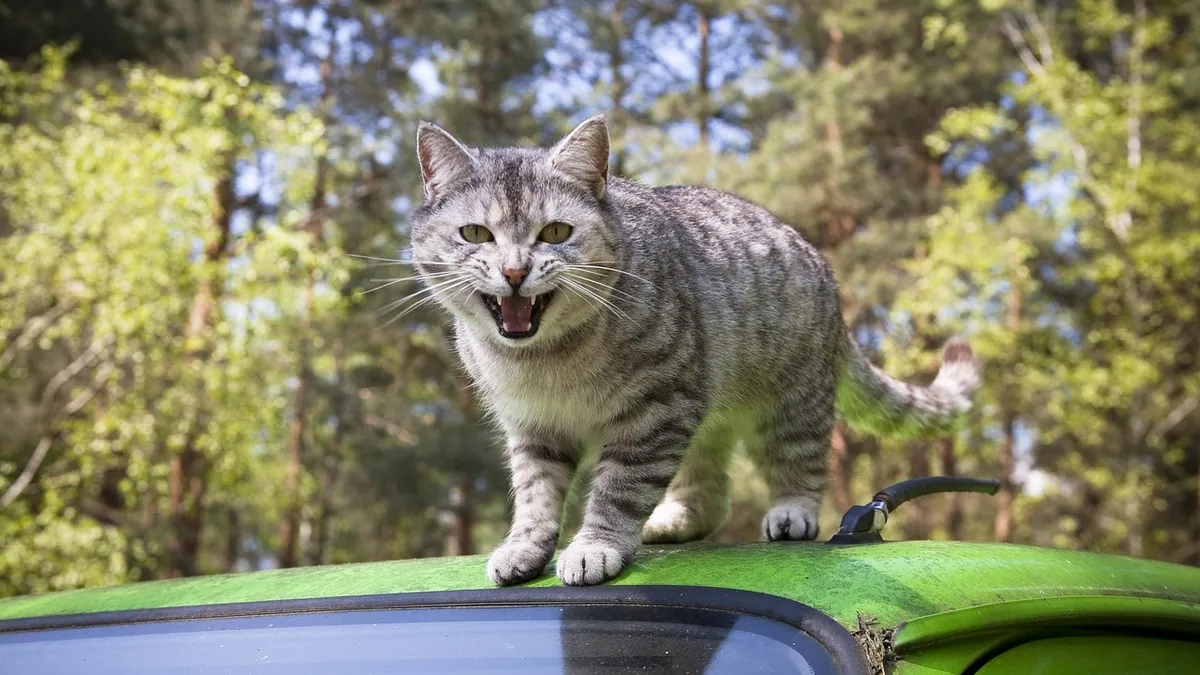
Panting in cats in car rides is most often a stress response, motion sickness, or overheating, not a sign your cat is happy about the trip. Cats are not built for car travel the way dogs often are, and many find the whole experience frightening. In some cases, though, panting in the car points to a heart or breathing problem that needs urgent care.
This article is educational and is not a substitute for veterinary diagnosis or treatment.
Quick Answer
- Open-mouth breathing in a cat is not normal at rest. It usually means fear, anxiety, heat, pain, or a problem with the heart or lungs [1].
- Stress and motion sickness are the most common reasons a cat pants during a car ride, and both can improve with planning.
- A cat that pants while resting quietly at home, or that pants with blue gums, collapse, or heavy effort, needs emergency care right away [2].
- Never give your cat a human sedative or antihistamine. Your veterinarian calculates any dose from your cat's weight and health.
- A short, calm, well-ventilated trip with a secure carrier prevents most car panting.
What Car Panting Looks Like and What Is Normal
A normal cat breathes quietly through the nose, usually 15 to 30 breaths per minute at rest. You may see a slight belly movement, but the mouth stays closed. Panting, open-mouth breathing, or breathing that looks like work is different. It is a warning sign in cats.
During a car ride, a stressed cat may pant, drool, vocalize, lick its lips, flatten its ears, tuck its tail, or try to hide. Some cats also vomit or have diarrhea. These signs overlap with motion sickness and with fear, which makes it hard for owners to tell them apart at home.
A cat that pants only in the car and recovers within a few minutes of arriving home is usually showing a stress or motion response. A cat that keeps panting after the car stops, or that pants while resting, needs a closer look.
Why Is My Cat Panting in the Car? Main Causes
Stress and anxiety
Cats are sensitive to new places, sounds, and smells. The car combines all three. Fear, anxiety, and stress are among the most common behavioral problems in cats, and the car is a classic trigger [1]. A cat that only rides to the vet may learn quickly that the carrier means something unpleasant.
Stress hormones rise with forced or unwanted handling. In one study of owner-cat interactions, passive contact raised oxytocin and lowered cortisol, while forced interactions did the opposite [3]. That pattern helps explain why a cat that is grabbed and stuffed into a carrier often pants before the engine even starts.
Motion sickness
Motion sickness is common in cats and often shows up as drooling, lip licking, vomiting, and panting. The inner ear signals conflict with what the eyes see, and the cat feels nauseated. Kittens and cats that rarely ride are often affected. Panting from nausea can look identical to panting from fear.
Heat and poor ventilation
Cars heat up fast. A cat in a carrier on a warm day, with little airflow, can overheat. Brachycephalic cats (flat-faced breeds) and cats with thick coats are at higher risk. Panting is one of the first signs of heat stress.
Pain or a medical problem
Panting can be the first sign of heart disease, lung disease, fluid around the lungs, or airway disease. In a large study of 258 cats with severe breathing difficulty, respiratory causes made up 33% of cases, cardiac causes 25%, and traumatic and neoplastic causes 21% each [2]. Pleural effusion (fluid around the lungs) was present in 39% of those cats [2]. Male cats were overrepresented in the cardiac and respiratory groups [2]. This matters because a cat that pants in the car may already have a heart or lung problem that the stress of travel makes worse.
Some medications can also trigger breathing problems. A case report described cats that developed loss of appetite and then difficulty breathing 24 to 48 hours after anesthesia with a combination of an alpha 2-adrenergic agonist and a dissociative anesthetic, and two of the three cats died [4]. That is a specific drug scenario, not something you would give at home, but it shows that panting after a procedure deserves a call to your vet.
The main causes at a glance
| Cause | Typical clues | How urgent |
|---|---|---|
| Stress or anxiety | Pants only in the car, hides, vocalizes, recovers at home | Not urgent, manage with training and carrier comfort [1] |
| Motion sickness | Drooling, lip licking, vomiting, panting during movement | Not urgent, ask your vet about travel options |
| Heat or poor airflow | Warm day, closed windows, thick coat, flat face | Urgent if the cat does not cool down quickly |
| Heart or lung disease | Pants at rest too, cough, fast breathing, weakness | Emergency, see a vet now [2] |
| Pain | Reluctance to move, crying, guarding a body part | Same day to emergency, depending on severity |
Red Flags That Make It an Emergency
Call an emergency clinic right away if your cat:
- Pants or breathes with an open mouth while resting at home
- Has blue, gray, or pale gums or tongue
- Collapses, staggers, or cannot stand
- Breathes with the belly, with nostrils flaring, or with the elbows out
- Makes a harsh or whistling sound when breathing
- Cannot settle and seems to be suffocating
- Has a known heart condition and starts panting
Breathing difficulty in cats is a true emergency. Cats with severe dyspnea often cannot tolerate extra tests when they arrive, so veterinarians focus on stabilizing them first [2]. Do not wait to see if it passes. Keep the cat calm, keep the carrier level, and drive to the nearest open emergency hospital.
If you are unsure whether the panting is breathing trouble or something else, this guide on cat panting or breathing fast can help you sort out the signs.
Safe Things You Can Do at Home While You Wait
If your cat is panting but seems stable, these steps can lower stress and keep the trip safer.
- Stop the car in a safe place and check your cat. Look at the gums, breathing effort, and whether the cat settles.
- Improve airflow. Crack the windows or turn the air conditioning to a comfortable temperature. Never leave a cat alone in a parked car.
- Keep the carrier covered with a light towel. A dark, quiet space lowers arousal for many cats.
- Do not pull the cat out of the carrier. Handling a frightened cat raises stress hormones and can lead to scratches or bites [3].
- Offer a small amount of water at a rest stop if the cat will drink, but do not force it.
- Skip food for a few hours before travel if your cat gets carsick. Ask your vet for specific timing.
- Use a familiar blanket or towel that smells like home.
If your cat also gags or retches in the car, that can be a separate problem. See cat dry heaving in car for more on that sign.
Do not give any over-the-counter medication, including antihistamines or human anti-nausea drugs. Doses for cats are not the same as for people, and some common drugs are toxic to cats. Your veterinarian will calculate any dose from your cat's weight and health.
What Your Veterinarian Will Check and Test
Your vet will start with a full physical exam. They will listen to the heart and lungs, check the gums and hydration, take the temperature, and watch how your cat breathes at rest. They will ask about the timing of the panting: only in the car, or at home too.
Depending on what they find, they may recommend:
- Blood work to check organ function and look for anemia or infection
- Chest X-rays to look at the heart size, lung pattern, and fluid
- Ultrasound of the chest or heart
- Blood pressure measurement
- A heartworm test, since heartworm disease can affect the lungs and heart
If your cat has a heart or lung condition, the plan may include medication, oxygen support, or a referral to a specialist. If the problem is purely behavioral, your vet may discuss anti-anxiety medication or a referral to a veterinary behaviorist. Fear, anxiety, and stress in cats are common enough that veterinary guidelines now include specific handling and drug options to reduce them [1].
If your cat has other symptoms along with the panting, such as sneezing or scooting, those may point to a different issue. This article on why is my cat sneezing covers upper airway signs, and cat scooting covers anal gland and parasite problems.
Prevention and Monitoring for Calmer Car Rides
Most car panting can be prevented with planning.
Carrier training
Leave the carrier out at home with the door open and a soft blanket inside. Feed meals near it and toss treats inside. Over days to weeks, most cats learn that the carrier is not a trap. This is the single most effective step for car stress.
Short practice trips
Start with drives around the block, then build up. End each trip with something pleasant, like a treat or a meal at home. Do not only drive to the vet.
Motion sickness prevention
Feed a light meal several hours before travel, or skip food if your vet advises it. Keep the carrier level and secure so it does not slide. Some cats do better facing forward. Ask your veterinarian about prescription options for motion sickness, since doses are set for your cat.
Temperature and airflow
Travel in the cooler parts of the day when you can. Use air conditioning or open windows enough to keep air moving. Never leave your cat in a parked car, even for a few minutes.
Calming support
Pheromone sprays or wipes on the carrier, a favorite blanket, and quiet music can help some cats. Results vary, and these are not a substitute for treating a medical problem. For cats with severe anxiety, your vet may prescribe medication. A study of owner-cat interactions found that secure cats had more positive hormonal responses to human contact, while insecure cats showed higher cortisol or limited hormonal benefit [3]. That suggests your cat's attachment style affects how it handles handling and travel, so go at your cat's pace.
Monitoring at home
Keep a simple log of when panting happens, how long it lasts, and what else you see. Note the breathing rate at rest once a day. If the resting rate climbs or the cat starts panting at home, call your vet. If your cat is a flat-faced breed, or has a known heart murmur, be extra watchful.
Limitations and When to Contact a Veterinarian
This article cannot tell you what is causing your cat's panting. Only a veterinarian who examines your cat can do that. Individual cases need a veterinarian.
Call an emergency clinic now if your cat pants at rest, has blue or pale gums, collapses, breathes with obvious effort, or cannot settle.
Call your veterinarian the same day if your cat pants in the car every trip, vomits or drools heavily during travel, or seems unwell after a ride.
Schedule a routine visit if the panting is mild, only happens in the car, and your cat is otherwise eating, drinking, and acting normally. Bring a video of the panting, since cats often breathe normally once they are in the exam room.
Frequently Asked Questions
Is panting in the car always a sign of stress?
No. Stress is the most common cause, but motion sickness, heat, pain, and heart or lung disease can all cause it. A cat that pants only during car rides and recovers quickly is likely stressed or nauseated. A cat that pants at rest or has other signs needs a veterinary exam.
Can I give my cat a sedative before a car ride?
Only if your veterinarian prescribes it. Human sedatives and antihistamines can be dangerous for cats, and the correct dose depends on your cat's weight and health. Your vet can also discuss non-drug options like carrier training and pheromones.
How do I know if my cat's panting is an emergency?
Emergency signs include panting at rest, blue or pale gums, collapse, heavy belly breathing, and a cat that cannot get comfortable. Breathing difficulty in cats is serious, and many cats with severe dyspnea are too fragile for extra tests when they first arrive [2]. Go to an emergency clinic right away if you see these signs.
Does motion sickness cause panting in cats?
Yes. Motion sickness often causes drooling, lip licking, vomiting, and panting during movement. It usually stops once the car stops and the cat settles. If your cat gets sick on every trip, ask your vet about prevention options.
Will my cat outgrow car panting?
Some kittens improve as they get used to travel, but many cats do not outgrow it without help. Carrier training, short practice trips, and a calm routine make the biggest difference. If anxiety is severe, your veterinarian can discuss medication or a behavior referral.
Related Articles
- Cat Dry Heaving In Car
- Why Is My Cat Sneezing?
- Cat Panting or Breathing Fast: What It Means
- Cat Scooting: Causes and When to Worry
- Why Is My Dog Panting So Much?
- Why Is My Cat So Itchy?
- Why Is My Cat Panting? Causes and When to Worry
- Why Is My Cat Panting Like a Dog? Causes and When to Worry
- Anxiety in Cats: Causes, Signs, and When to Get Help
References
- Tools for the Approach of Fear, Anxiety, and Stress in the Domestic Feline: An Update. Veterinary medicine international, 2025.
- Emergency Dyspnea in 258 Cats: Insights from the French RAPID CAT Study. Veterinary sciences, 2025.
- EXPRESS: The hormonal effects of owner-cat interactions on pet cats of different potential attachment styles. Journal of feline medicine and surgery, 2026.
- Dyspnea Induced by Alpha 2-Adrenergic Agonists and Dissociative Anesthetics Combination in Dogs and Cats. Animals : an open access journal from MDPI, 2026.