Cat Eye Colors Explained: What Yellow, Blue, and Green Mean
By Dr. Zubair Khalid, DVM, MS, PhD ·
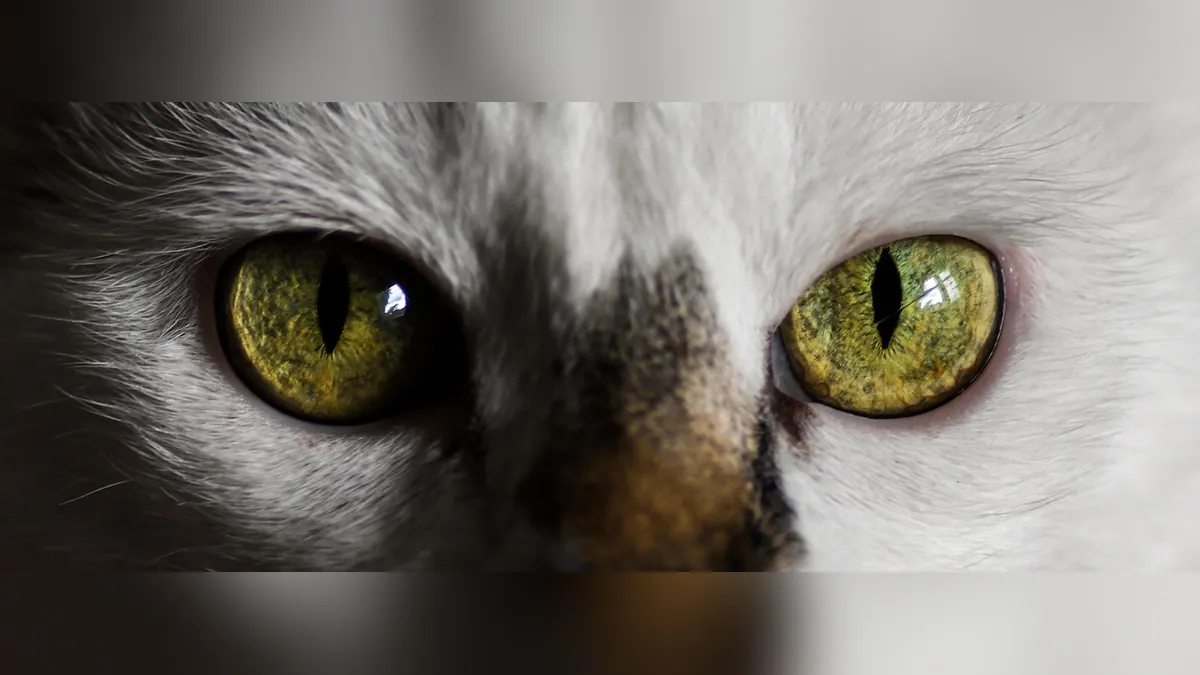
Most cat eye colors fall into a few normal ranges: yellow, gold, amber, green, blue, and copper. The color comes from pigment in the iris, and it can shift as kittens grow or as light changes. Some color changes, though, mean something is wrong inside the eye or elsewhere in the body.
This article is educational and is not a substitute for veterinary diagnosis or treatment.
Quick Answer
- A kitten's eye color is not final until roughly 3 to 4 months of age, and blue baby eyes often turn gold, green, or copper.
- Yellow, gold, amber, green, blue, and copper are all normal adult cat eye colors, and the exact shade varies by breed and individual.
- A yellow tint that appears in the white of the eye or the gums is not an eye color change at all, it is jaundice and needs same-day veterinary care.
- Cloudiness, a growing dark spot on the iris, or one eye changing color while the other stays the same all need a veterinary exam.
- Never give human eye drops or any medication to a cat without veterinary direction, since some products are toxic to cats.
What Normal Cat Eye Colors Look Like
The colored part of the eye is the iris. The iris surrounds the pupil, the black opening that widens and narrows with light. Iris color is set by melanin, the same pigment that colors a cat's coat and skin.
A large analysis of cat and wild cat photographs identified five main iris colors across the cat family: brown, green, yellow, gray, and blue [1]. Domestic cats show all of these, plus amber and copper shades that sit between brown and yellow.
The Common Colors You Will See
Yellow and gold eyes are extremely common in cats. Yellow eyes are also tied to the evolution of round pupils in cats, which is why so many domestic cats have that bright golden stare [1].
Green eyes range from pale sage to deep emerald. Blue eyes show up most often in cats with white coats or colorpoint patterns, where pigment is restricted to the cooler parts of the body.
Copper and amber eyes are warm orange-brown shades. They are typical of some breeds and of many orange tabbies.
Why the Color Can Look Different From Day to Day
Iris color is not fixed in appearance. Pupil size changes how much of the iris you see. Bright sunlight, indoor lighting, and the angle you are viewing from all change how the color reads.
A cat with gold eyes can look almost green in certain light. This is normal and is not a true color change.
Cat Eye Color Change: What Is Normal and What Is Not
Owners often search for a cat eye color chart to figure out whether a change matters. The honest answer is that the chart matters less than the pattern of the change.
Normal Changes
The biggest normal change happens in kittens. A kitten's eye color is not stable at birth. The blue-gray haze of early kittenhood gradually gives way to the adult color over the first few months of life.
Lighting and pupil size cause small, temporary shifts in how the color looks. These shifts reverse when conditions change.
Changes That Need a Vet
A true change in the iris itself, meaning the actual tissue changes color or texture and stays that way, is different. So is a yellow tint in the white part of the eye.
If one eye changes and the other does not, that asymmetry is a reason to call your veterinarian.
Main Causes of Eye Color Changes
| Cause | Typical clues | How urgent |
|---|---|---|
| Normal kitten color development | Kitten under about 4 months, both eyes changing together, no pain or discharge | Routine, mention at next visit |
| Jaundice (yellow tint in the white of the eye) | Yellow color in the sclera or gums, lethargy, poor appetite, dark urine | Same day, emergency if the cat is weak or not eating |
| Iris hyperpigmentation or melanoma | A dark spot or freckle on the iris that grows or spreads over months | Schedule a veterinary exam, do not wait months |
| Uveitis (inflammation inside the eye) | Cloudy eye, squinting, redness, sensitivity to light, a change in iris color | Same day |
| Corneal or lens problem | A gray or white haze over the eye surface or deep in the pupil | Same day |
| Glaucoma or high eye pressure | A bulging or enlarged eye, pain, a hazy cornea | Emergency now |
Jaundice and the Yellow Eye
This is the change that worries owners most, and rightly so. When the white of the eye turns yellow, that is jaundice, also called icterus. It means bilirubin is building up in the body, usually because of a liver problem, a bile duct problem, or the breakdown of red blood cells.
Jaundice is not an eye disease. It is a sign that something systemic is wrong. A cat with yellow eyes and yellow gums needs to be seen the same day. If your cat is also vomiting, read Cat Vomiting Yellow Liquid: What It Means and Yellow Vomit From Cat for related guidance.
Dark Spots and Iris Hyperpigmentation
Many cats develop brown or black freckles on the iris as they age. Some of these are harmless. Others progress to feline diffuse iris melanoma, a cancer of the pigmented cells in the iris.
A review of 92 cats with iris hyperpigmentation found that 20 of them, about 22 percent, had an eye removed, and all 20 were confirmed on histopathology as feline diffuse iris melanoma [2]. Among the 36 cats with follow-up data, 22 had an eye removed by the time of the survey [2].
That does not mean every freckle becomes cancer. It does mean a growing dark spot deserves a veterinary ophthalmology exam instead of a wait-and-see approach.
Cloudiness and Color Changes From Eye Disease
A cloudy eye is not a color change in the iris. It usually means the cornea or the lens has lost clarity. Common causes include inflammation, infection, injury, and increased pressure inside the eye.
Cats with certain eye colors may have slightly different baseline measurements. A study of 307 healthy Van Cats found that cats with one blue eye and one amber eye had slightly higher intraocular pressure and thicker corneas than cats with two blue eyes [3]. That is a breed-specific finding, not a rule for all cats, but it shows why your veterinarian measures instead of guesses.
Third Eyelid Changes
Sometimes what looks like an eye color change is actually the third eyelid, a pale membrane that slides across the eye. When it stays visible, it can make the eye look dull or differently colored. See Cat Third Eyelid Showing Why and Cat Third Eyelid Showing Sometimes for more on that sign.
Red Flags That Make This an Emergency
Call an emergency veterinary hospital right away if you see any of these:
- A sudden yellow tint in the whites of the eyes or the gums
- An eye that is bulging, enlarged, or clearly painful to touch
- Heavy squinting, pawing at the eye, or keeping the eye closed
- A cloudy or white eye that appeared suddenly
- A pupil that is fixed, unequal in size, or does not respond to light
- Sudden blindness, bumping into furniture, or reluctance to move in dim light
- Blood or a visible wound on the eye
Eye pain in cats is easy to miss. Cats hide discomfort well. Squinting and a reluctance to be touched near the head are often the only clues.
What You Can Safely Do at Home While You Wait
You cannot treat an eye color change at home, but you can keep your cat safe and give your veterinarian better information.
- Take photos of both eyes in daylight and in indoor light. Photograph the same angle each time so changes are easier to compare.
- Note when you first saw the change and whether it has grown or spread.
- Check the gums and the whites of the eyes in good light. A yellow tint there is a reason to call now.
- Keep your cat indoors and away from other pets if the eye is painful or the cat seems unwell.
- Do not use any human eye drops, saline, or leftover pet medication unless your veterinarian tells you to. Some over-the-counter products are not safe for cats.
- Do not try to pry the eye open to look at it. That can cause injury and makes the exam harder.
- Offer food and water as usual and note whether your cat is eating, drinking, and using the litter box normally.
If your cat stops eating, becomes lethargic, or starts vomiting, that combination with a yellow eye is a same-day emergency.
What Your Veterinarian Will Check and Test
Your veterinarian will start with a full physical exam, not just the eyes. Jaundice shows up in the gums, the skin, and the whites of the eyes, so a whole-body check matters.
Eye-Specific Tests
- A Schirmer tear test to measure tear production
- Fluorescein staining to check for scratches and ulcers on the cornea
- Tonometry to measure pressure inside the eye
- A close slit-lamp or magnified exam of the iris, lens, and the inside of the eye
- A retinal exam to look at the back of the eye
Normal eye pressure in healthy cats varies by breed and by the equipment used. In one breed study, the average intraocular pressure was about 24.8 mmHg and average corneal thickness was about 649 micrometers [3]. Your veterinarian interprets your cat's numbers against the reference range for the equipment and breed in front of them, so do not compare your cat's reading to a number you found online.
Blood and Imaging Tests
If jaundice is present, expect blood work that includes liver values, bile acids, and a complete blood count. Your veterinarian may also recommend an abdominal ultrasound to look at the liver and gallbladder.
If a dark iris spot is the concern, your veterinarian may refer you to a veterinary ophthalmologist. In some cases, removing the affected eye is recommended, and a study of cats with iris hyperpigmentation found no difference in survival rate between cats who had an eye removed and those who did not [2].
Treatment depends entirely on the diagnosis. Doses of any medication are calculated by your veterinarian based on your cat's weight and health, so never use a dose from a website or a previous prescription for a different problem.
Prevention and Monitoring
You cannot prevent most eye color changes, but you can catch the ones that matter early.
- Look at your cat's eyes once a week in good light. Get familiar with the normal color, the normal pupil shape, and how the eyes look when your cat is relaxed.
- Photograph the eyes at the same time each month if your cat has a known iris freckle.
- Keep up with routine wellness visits. Your veterinarian can track iris changes over years, which is far more useful than a single snapshot.
- Ask about a veterinary ophthalmology referral if a spot on the iris is growing, changing shape, or spreading toward the pupil.
- Keep your cat indoors to reduce the risk of eye trauma from other animals and from foreign objects.
- Watch for the subtle signs of eye pain, including squinting, head shyness, and a change in how much your cat plays.
Coat color and eye color are linked in interesting ways. The gene responsible for orange fur in cats was recently identified as a deletion near the X-linked ARHGAP36 gene, which shifts pigment production in the skin [4][5]. That same pigment system shapes iris color, which is part of why orange cats so often have copper or amber eyes.
Limitations and When to Contact a Veterinarian
This article covers general patterns. Your cat's eyes need to be examined in person to know what is happening. No article can tell you whether a specific spot on your cat's iris is benign or malignant.
Contact a veterinarian the same day if you see a yellow tint in the whites of the eyes or gums, a cloudy eye, squinting, redness, or a sudden change in one eye only.
Go to an emergency hospital now if the eye is bulging, if your cat is in obvious pain, if there is bleeding, or if your cat suddenly cannot see.
Schedule a routine visit soon if you notice a new dark spot on the iris, a slow change in iris color, or a freckle that seems to be getting bigger. Bring your photos with you. They help your veterinarian judge how fast things are changing.
Frequently Asked Questions
Do all kittens have blue eyes?
Most kittens start with blue-gray eyes that gradually shift to the adult color over the first few months of life. The final color is usually clear by around 3 to 4 months of age. If a kitten's eyes stay cloudy or look different from each other, ask your veterinarian to take a look.
Can a cat's eye color change as an adult?
Small shifts in how the color looks can happen with lighting and pupil size, and those are normal. A true change in the iris tissue itself, especially in only one eye, is not normal and should be examined. A growing dark spot on the iris is the change that most often needs veterinary attention.
Is yellow in a cat's eye always jaundice?
No. Many healthy cats simply have yellow or gold irises, and that is their normal color. Jaundice refers to yellow color in the white part of the eye and the gums, not the iris. If the whites of the eyes or the gums look yellow, that is a same-day veterinary concern.
Can I use human eye drops on my cat?
No. Do not put
Related Articles
- Cat Vomiting Yellow Liquid: What It Means
- Cat Third Eyelid Showing Why
- Yellow Vomit From Cat
- Cat Third Eyelid Showing Sometimes
- Cat Third Eyelid Showing Reddit
- Why Is My Cat having yellow tinge to gums? Feline Cholangitis and Hepatic Lipidosis
- Do Kittens Have Blue Eyes? When Eye Color Changes
- When Do Kittens' Eyes Change Color? A Timeline for Owners
- Can Cats Have Blue Eyes? Breeds, Genetics, and Blindness
References
- Evolutionary insights into Felidae iris color through ancestral state reconstruction. iScience, 2024.
- Iris Hyperpigmentation in Cats: Progression, Globe Retention and Long-Term Survival. Veterinary ophthalmology, 2026.
- Reference Ranges of Intraocular Pressure, Central Corneal Thickness, and Ocular Surface Temperature in Van Cats. Veterinary ophthalmology, 2026.
- A deletion at the X-linked ARHGAP36 gene locus is associated with the orange coloration of tortoiseshell and calico cats. Current biology : CB, 2025.
- Melanocyte biology: Tortoiseshell cat pattern explained. Current biology : CB, 2025.