Do Kittens Have Blue Eyes? When Eye Color Changes
By Dr. Zubair Khalid, DVM, MS, PhD ·
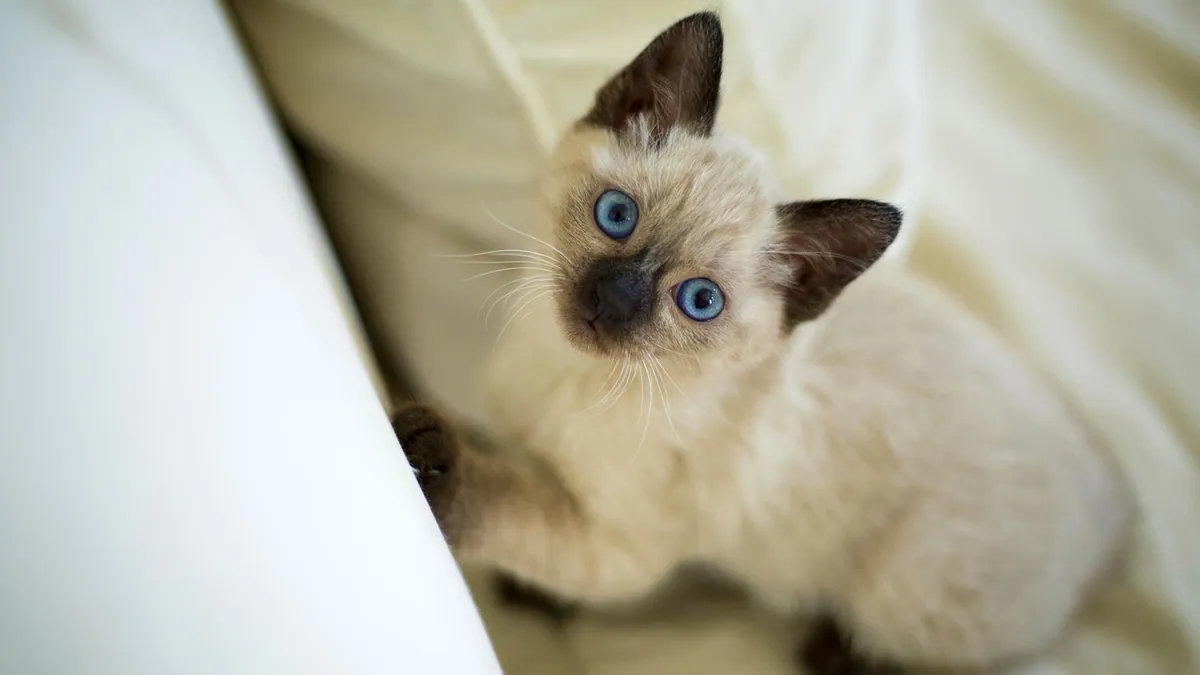
Yes, most kittens have blue eyes when they are born. The blue comes from a lack of pigment in the iris, not from blue pigment itself. Over the first few months of life, pigment gradually fills in and the eyes settle into their adult color.
This article is educational and is not a substitute for veterinary diagnosis or treatment.
Quick Answer
- Almost every kitten starts life with blue eyes, and the color usually shifts between 4 and 8 weeks of age.
- The final adult eye color is typically set by about 3 to 4 months, though some cats take a little longer.
- Blue eyes in adult cats are uncommon and are tied to specific coat patterns, such as colorpoint cats.
- A change in eye color in an adult cat is not normal and should be checked by a veterinarian.
- One eye changing color while the other stays the same is always a reason to call your vet.
Why Do Kittens Have Blue Eyes?
The colored part of the eye is the iris. It controls how much light enters the eye by making the pupil larger or smaller [1]. In a newborn kitten, the iris has little to no melanin, the pigment that gives eyes, skin, and hair their color. Without melanin, light scatters inside the iris and reflects back out as blue. This is the same reason the sky looks blue.
So the blue is really an absence of color, not a color that gets painted on. As the kitten grows, cells in the iris begin producing melanin. The more melanin that builds up, the darker and more golden, green, or copper the eyes become.
This pattern is common across many mammals. Eye color tends to be fixed within a wild species, while humans and domestic animals show a wide range of eye colors [2]. Cats sit in that domestic group, which is why two littermates can end up with completely different adult eye colors.
Do Kittens Always Have Blue Eyes?
No, but the great majority do. The blue newborn eye is the default state before pigment develops. A kitten born with a different eye color would be unusual, and it usually points to a health issue instead of a normal variation.
It is fair to say that kittens all have blue eyes at the start in most cases. The exceptions are rare and worth a veterinary look.
When Do Kittens' Eyes Change Color?
The shift usually begins around 4 weeks of age and is mostly finished by 8 weeks. By 3 to 4 months, the adult color is usually locked in. Some cats keep shifting slightly until about 6 months.
Here is a simple timeline you can use at home.
| Age | What You Will Likely See |
|---|---|
| Birth to 2 weeks | Eyes open around 7 to 14 days. Color looks cloudy blue or gray-blue. |
| 3 to 4 weeks | Blue starts to look less uniform. You may notice hints of green or gold. |
| 4 to 8 weeks | The main color change happens. Eyes may look muddy or mixed. |
| 8 weeks to 3 months | Color deepens and evens out. |
| 3 to 6 months | Adult color is usually set. |
A muddy or in-between look during the change is normal. Do not worry if the eyes look uneven for a week or two during this window.
Do Kittens Keep Their Blue Eyes?
Most do not. The blue fades as melanin builds up, and the cat ends up with gold, yellow, green, copper, or orange eyes. Adult cats with truly blue eyes are the exception.
Blue eyes in adult cats are strongly linked to certain coat patterns. Colorpoint cats, such as Siamese, have a temperature-sensitive pigment gene that leaves the eyes blue. The same gene family affects pigment in the coat and eyes, and it has been studied in Siamese breeding lines [3]. White cats can also have blue eyes, and some of those cats are deaf on the side of a blue eye.
If your adult cat has always had blue eyes, that is normal for that cat. If your adult cat's eyes were gold last year and look blue or cloudy today, that is a different situation and needs a vet visit.
How to Track Eye Color Changes at Home
You do not need special equipment to watch this process. A few simple habits will help you spot anything that looks off.
- Pick one time of day, such as after breakfast, and check the eyes in natural light.
- Look at both eyes side by side. Compare color, size, and clarity.
- Note the color in a phone note or calendar once a week for the first 4 months.
- Watch the pupils. They should get smaller in bright light and larger in dim light [1].
- Take a photo each week with the same lighting so you can compare over time.
- Check for discharge, squinting, redness, or cloudiness at the same time.
A weekly photo log is the easiest way to answer the question "did that change, or am I imagining it?"
What Normal Adult Eye Colors Look Like
Adult cat eye colors fall into a handful of groups. A large analysis of cat family photos identified five main iris colors across wild cats: brown, green, yellow, gray, and blue [4]. Domestic cats show a similar range, often with more variety.
Common adult colors include:
- Gold or yellow
- Green
- Copper or orange
- Amber
- Blue (mostly in colorpoint and some white cats)
- Odd eyes, meaning one blue eye and one gold or green eye
Odd eyes, also called heterochromia, can be a normal trait in some cats. It can also follow injury or illness, so a sudden change in one eye deserves a check [5].
Signs That Something Is Wrong
Eye color changes in kittens are expected. Eye changes in adult cats are not. Here is what to watch for.
Same-day vet visit
- One eye changes color while the other stays the same
- A new dark spot or patch on the iris that grows over weeks
- The eye looks cloudy, hazy, or white
- The pupil stays large in bright light or stays small in dim light
- The eye looks bigger than the other one
Dark patches spreading across the iris can be a sign of iris melanosis, and in some cats this progresses to a serious cancer called feline diffuse iris melanoma. In one review of cats with iris hyperpigmentation, 22 percent of the eyes were removed and all of those were confirmed as diffuse iris melanoma [6]. That is why any new pigment on an adult cat's iris should be examined.
Emergency now
- Sudden cloudiness with pain, squinting, or a red eye
- A pupil that will not respond to light
- Bleeding inside the eye
- The eye bulges or looks like it may rupture
These signs can point to glaucoma, uveitis, or trauma, and they can cost your cat its sight if you wait. Our guide on bloodshot eyes, uveitis, and glaucoma walks through what these look like.
Routine visit
- Mild discharge that keeps coming back
- A third eyelid that stays visible for more than a day
- Slight color dullness in an older cat
The third eyelid guide explains when a visible third eyelid is normal and when it is not.
Common Mistakes Owners Make
- Assuming all kittens keep blue eyes. Most do not, and waiting for a color that never comes is normal.
- Panicking during the muddy phase. Mixed color between 4 and 8 weeks is expected.
- Missing a one-eye change. Always compare both eyes.
- Treating eye discharge at home with human drops. Never put human eye medicine in a cat's eye unless your vet prescribes it.
- Skipping the vet because the cat seems fine. Cats hide eye pain well.
- Confusing a cloudy cornea with iris color. Cloudiness sits over the colored part, not in it.
If you are unsure whether discharge is normal, our article on cat eye discharge breaks down the difference between normal tearing and infection.
Supplies and Setup That Help
You do not need much to monitor kitten eyes well.
- A phone camera for weekly photos
- A small flashlight for checking pupil response (never shine it directly into the eye for long)
- A soft, damp cloth for wiping normal tear staining
- A notebook or app for tracking color by date
- A cat carrier that is easy to load, so vet visits are less stressful
Keep the room lighting consistent when you take photos. Bright overhead light and dim evening light will make the same eye look like two different colors.
How Vision Develops Alongside Eye Color
Kitten eyes open at about 7 to 14 days, but vision is blurry at first. Sight improves over the next several weeks as the eyes and brain mature. Kittens rely heavily on smell and touch early on.
Cats also see well in dim light, better than people do. If you are curious about how that works, our guide on whether cats can see in the dark explains the tapetum and pupil function. For a broader look at feline eye health, see cat eyes: vision, problems, and care.
Limitations and When to Contact a Veterinarian
This article covers normal kitten eye color development. It cannot tell you what is happening in your specific cat's eye. Only a veterinarian who examines your cat can do that.
Call your veterinarian the same day if you notice:
- A new dark spot on the iris of an adult cat
- One eye changing color or size
- Cloudiness, redness, or squinting
- A pupil that does not react to light
- Discharge that is thick, yellow, or green
Go to an emergency clinic now if:
- The eye is bulging or bleeding
- Your cat is pawing at the eye and crying
- The eye looks ruptured
- Your cat suddenly cannot see
Schedule a routine visit if:
- Eye color in a kitten seems stuck or very uneven past 6 months
- You see mild, ongoing discharge
- You are unsure whether a change is normal
Your veterinarian will examine the eye, check the pupil response, and measure pressure inside the eye if needed. Treatment and any medication dose are set by your vet based on your cat's weight and health.
Frequently Asked Questions
Do kittens always have blue eyes?
Almost all kittens are born with blue or gray-blue eyes because the iris has not yet developed pigment. A kitten born with a different eye color is unusual and should be checked by a vet. The blue fades as melanin builds up over the first few months.
Do kittens with blue eyes change color?
Yes, most do. The change usually starts around 4 weeks and is mostly done by 8 weeks, with the final color set by 3 to 4 months. Some cats keep shifting slightly until about 6 months. A muddy or mixed look during this window is normal.
Do kittens keep their blue eyes?
Most kittens do not keep blue eyes. They usually shift to gold, green, copper, or amber as pigment develops. Adult cats with true blue eyes are uncommon and are usually colorpoint cats or some white cats. If your adult cat's eyes were gold and now look blue or cloudy, see your vet.
Why do kittens have blue eyes?
Kitten eyes look blue because the iris has little melanin at birth. Without pigment, light scatters inside the iris and reflects back as blue. As pigment cells mature, the eye takes on its adult color. This is a normal part of development, not a sign of illness.
Can a kitten have two different eye colors?
Yes, odd eyes can be normal in some cats, especially white cats and certain colorpoint cats. It can also follow injury or illness, so a sudden change in one eye needs a vet visit. If the difference has been there since kittenhood and the eyes look healthy, it is usually not a concern.
Related Articles
- Why Is My Cat having bloodshot eyes? Uveitis Glaucoma and Trauma Guide
- Can Cats See in the Dark? Feline Vision Explained
- Cat Third Eyelid Showing Sometimes
- Cat Eyes: Understanding Feline Vision, Common Eye Problems & Care Tips
- Cat Eye Discharge: Normal or Infection?
- Why Is My Cat having eye discharge? Herpesvirus Chlamydia and Conjunctivitis
- When Do Kittens' Eyes Change Color? A Timeline for Owners
- How Long Do Kittens Keep Their Blue Eyes?
- Can Cats Have Blue Eyes? Breeds, Genetics, and Blindness
References
- Eye Structure and Function in Cats - Cat Owners. Merck Veterinary Manual.
- Intraspecific eye color variability in birds and mammals: a recent evolutionary event exclusive to humans and domestic animals. Frontiers in zoology, 2017.
- Removal of potentially confounding phenotypes from a Siamese-derived feline glaucoma breeding colony. Comparative medicine, 2011.
- Evolutionary insights into Felidae iris color through ancestral state reconstruction. iScience, 2024.
- Don't it make my blue eyes brown: heterochromia and other abnormalities of the iris. Eye (London, England), 2012.
- Iris Hyperpigmentation in Cats: Progression, Globe Retention and Long-Term Survival. Veterinary ophthalmology, 2026.