Guinea Pig Not Eating and Hiding: What It Means
By Dr. Zubair Khalid, DVM, MS, PhD ·
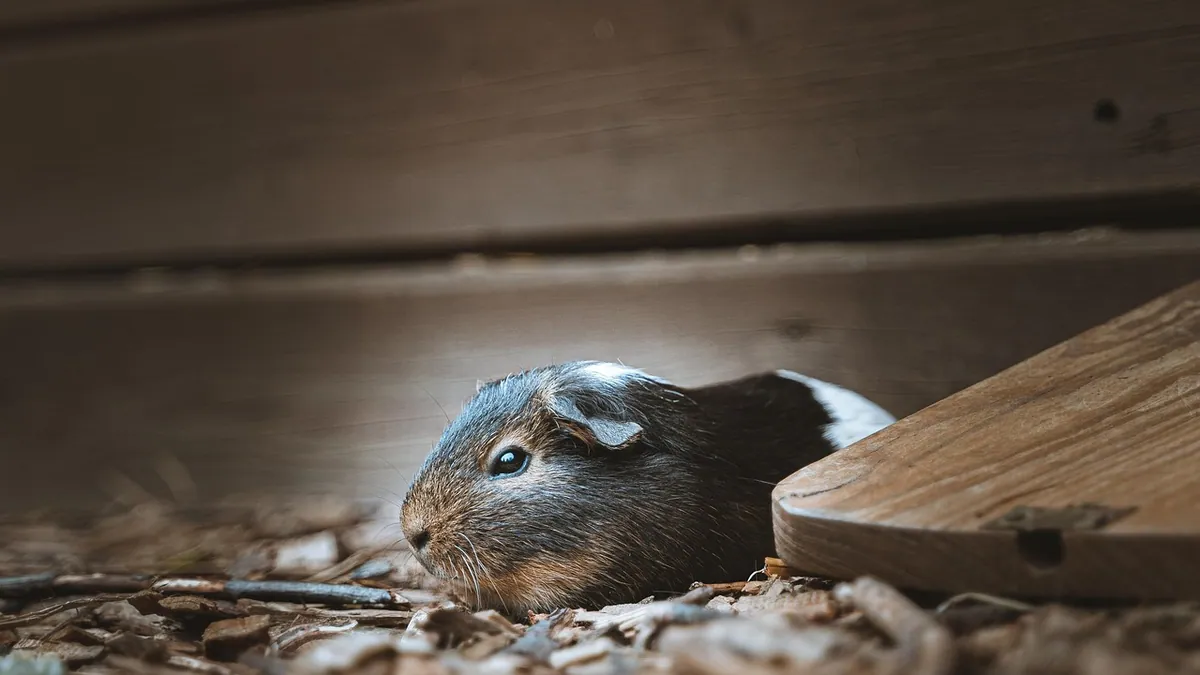
A guinea pig that stops eating and hides is usually telling you something is wrong. Guinea pigs are prey animals, so hiding is their first response to pain, illness, or stress. When hiding comes with a lost appetite, you should treat it as a medical concern until proven otherwise.
This article is educational and is not a substitute for veterinary diagnosis or treatment.
Quick Answer
- A guinea pig that hides and refuses food is often in pain or unwell, not just shy.
- Stop eating for 12 to 24 hours is an emergency in guinea pigs because their gut can slow down and their body can go into a dangerous state quickly.
- Weigh your guinea pig daily. Weight loss is one of the earliest signs of dental disease, ovarian cysts, and other problems [1][2].
- Check for drooling, eye or nose discharge, a hunched posture, and changes in poop or pee.
- Call an exotic-animal veterinarian the same day if your guinea pig is not eating, and go to an emergency clinic if it is also weak, cold, or struggling to breathe.
What Hiding and Not Eating Looks Like
Normal hiding behavior
Guinea pigs hide as part of their nature. A healthy guinea pig may dart into a hide when you walk in the room, then come out for food within a few minutes. It will still eat, drink, poop, and move around when it feels safe.
A guinea pig that is just shy will usually:
- Come out for vegetables, hay, or pellets
- Keep a normal body weight
- Have normal, well-formed droppings
- Move around when the room is quiet
Hiding that signals a problem
A sick guinea pig hides and stays hidden. It may sit hunched in a corner, grind its teeth, or squeak when you touch its belly. It may stop coming out for food entirely. Some guinea pigs go quiet and fluffed up, with their fur puffed outward.
A guinea pig that is not hiding can also be a concern. A guinea pig that is not hiding but is also not eating may be too weak to move to a safe spot. Both hiding and a lack of hiding can be abnormal.
Why Is My Guinea Pig Hiding and Not Eating?
Many conditions cause this combination. The table below covers the most common ones.
| Cause | Typical clues | How urgent |
|---|---|---|
| Dental disease (malocclusion) | Drooling, dropping food, weight loss, bleeding from the mouth, discharge from the nose or eyes [2] | Same-day vet visit |
| Vitamin C deficiency | Poor coat, reluctance to move, joint swelling, slow wound healing, weight loss [1] | Same-day vet visit |
| Cystic ovarian disease | Decreased appetite, lethargy, hunched posture, weight gain, a palpable mass in the midabdomen, a swollen belly, hair loss on the flanks [3] | Vet visit within 24 to 48 hours |
| Hyperthyroidism | Weight loss with a normal or increased appetite, drinking and peeing more, nervousness, soft feces or diarrhea, a mass on the neck [1] | Vet visit within a few days |
| Cystitis (bladder inflammation) | Blood in the urine, straining to pee, crying when peeing, abdominal discomfort, not eating [4] | Same-day vet visit |
| Abscess or lymph node infection | A swollen area, often on one side of the neck, that may fill with pus [5] | Same-day vet visit |
| Cancer, including lymphosarcoma | Enlarged lymph nodes, weight loss, poor appetite, a swollen belly [5] | Vet visit within 24 to 48 hours |
| Pain from the belly (torsion, stones, seminal vesiculitis) | Sudden severe pain, not moving, not eating, a hunched posture [6][7] | Emergency now |
Dental problems are especially common because guinea pig teeth grow continuously. Malocclusion causes overgrowth, sharp edges, and pain while chewing. Often the back molars are the problem even when the front teeth look fine [2].
Red Flags That Mean Emergency
Some signs mean you should not wait. Go to an emergency clinic or call your vet right away if your guinea pig:
- Has not eaten for 12 to 24 hours
- Is limp, cold, or unresponsive
- Is breathing fast or with an open mouth
- Is straining to pee or has not peed
- Has a bloated, tight, or painful belly
- Is having seizures or is tilted to one side
- Has sudden weakness in the back legs
A guinea pig that stops eating can develop serious gut and metabolic problems within a day. Time matters.
Safe Things You Can Do at Home
While you wait for your appointment, you can take a few safe steps. Do not give any medication unless your veterinarian tells you to.
Keep offering food and water
Offer fresh hay, pellets, and small amounts of vegetables. A guinea pig that is not eating may still nibble on a favorite green. Remove uneaten fresh food after a few hours so it does not spoil.
If your guinea pig is not eating at all, your vet may recommend syringe feeding with a liquid formula. Do not start syringe feeding on your own without guidance, because it is easy to give too much or cause choking. Your vet will calculate the amount based on your pet's weight and health.
Keep the cage clean
Remove uneaten food and sanitize the cage to lower the risk of infection [2]. Clean water bottles and food bowls daily.
Reduce stress
Keep the room quiet. Handle your guinea pig gently and only when needed. A sick guinea pig needs rest.
Track weight and output
Weigh your guinea pig at the same time each day on a kitchen scale. Write down the number. Also note how many droppings you see and whether your guinea pig is peeing. This information helps your vet.
Support vitamin C
Guinea pigs cannot make their own vitamin C, so they need it from food. Offer fresh bell pepper or a guinea pig pellet made for this species. For a full list of safe foods, see What Guinea Pigs Can and Cannot Eat and Guinea Pig Diet Food.
Do not guess at doses
Never give human pain relievers or antibiotics. Some are toxic to guinea pigs. Your veterinarian will choose a drug and calculate the dose from your pet's weight and health.
What Your Veterinarian Will Check
Your vet will start with a full physical exam. This includes checking the teeth, eyes, ears, nose, belly, and lymph nodes. Your vet will also weigh your guinea pig and compare it to past weights.
Tests your vet may run
- Skull x-rays to look at the back molars and tooth roots [2]
- Abdominal x-rays or ultrasound to check the bladder, ovaries, and other organs [3][4]
- Blood work to check organ function and look for infection or cancer [5]
- A urine test or culture if bladder problems are suspected [4]
- Tissue sampling if cancer is a concern [5]
Treatment depends on the cause
Dental disease may need trimming or filing, and chronic cases can need repeated trims every month [2]. Cystic ovarian disease is usually treated with surgery to remove the ovaries or the ovaries and uterus [3]. Bladder problems may need antibiotics, pain relief, or surgery for stones. If your guinea pig is dehydrated, your vet may give fluids by injection and start syringe feeding [2].
Prevention and Daily Monitoring
You cannot prevent every illness, but you can catch problems early.
- Weigh your guinea pig weekly and write it down. Daily weighing during any illness.
- Feed unlimited grass hay to keep the teeth worn down [2].
- Give a fresh source of vitamin C every day [1].
- Offer a variety of safe vegetables. See What Guinea Pigs Can and Cannot Eat.
- Clean the cage often and remove spoiled food [2].
- Watch for changes in droppings, urine, and appetite.
- Know your guinea pig's normal behavior so you notice when it changes.
If your guinea pig hides more than usual but still eats and acts normal, keep watching. A guinea pig that hides and stops eating needs a vet.
Limitations and When to Contact a Veterinarian
This article cannot tell you what is wrong with your specific guinea pig. Only a veterinarian who examines your pet can do that.
Call your veterinarian the same day if your guinea pig:
- Has not eaten for 12 hours
- Is drooling or dropping food [2]
- Has blood in the urine or strains to pee [4]
- Has a swollen belly or a lump you can feel [3]
- Is losing weight
Go to an emergency clinic now if your guinea pig:
- Is limp, cold, or barely responsive
- Is struggling to breathe
- Has a bloated, hard belly
- Has not eaten for 24 hours
- Is having seizures or sudden weakness
Schedule a routine visit if your guinea pig is eating but hiding more than usual, or if you notice small changes in weight or droppings over a week or two.
Frequently Asked Questions
Is it normal for a guinea pig to hide all day?
Hiding all day is not normal for a healthy guinea pig. Guinea pigs hide when they feel unsafe, but they should come out to eat and explore. If your guinea pig stays hidden and skips meals, it likely needs a vet visit.
Can a guinea pig survive not eating for a day?
A guinea pig should not go a full day without eating. Their digestive system needs constant food movement, and a lack of food can lead to serious problems fast. Call your vet the same day if your guinea pig has stopped eating.
How do I get my guinea pig to eat when it is sick?
Offer fresh hay, pellets, and a favorite vegetable, and keep the area quiet. Do not force food or give medicine on your own. Your vet can show you how to syringe feed safely if it is needed.
What does a hunched guinea pig mean?
A hunched posture often means pain or discomfort. It can point to dental problems, bladder issues, or problems in the belly. A hunched guinea pig that is also not eating should see a vet right away.
Can stress make a guinea pig stop eating?
Stress can lower appetite for a short time, such as after a move or a new cage mate. If your guinea pig is still not eating after a few hours, or if it is hiding and hunched, treat it as a medical problem and call your vet.
Related Articles
- What Guinea Pigs Can and Cannot Eat
- Guinea Pig Diet Food
- Guinea Pig Not Eating or Drinking: What to Do
- Why Is My Guinea Pig Not Eating Hay? Causes and Fixes
References
- Noninfectious Diseases of Guinea Pigs - Exotic and Laboratory Animals. Merck Veterinary Manual.
- Common Health Problems of Guinea Pigs - All Other Pets. Merck Veterinary Manual.
- Updates on Cystic Ovarian Disease in Guinea Pigs. The veterinary clinics of North America. Exotic animal practice, 2025.
- Radiographic Appearance of the Urinary Bladder and Application of a Vertebral Bladder Score for Evaluating Bladder Size in Healthy Guinea Pigs (Cavia porcellus) and Guinea Pigs with Clinical Signs of Cystitis. Animals : an open access journal from MDPI, 2026.
- General Medical Conditions of Guinea Pigs - All Other Pets. Merck Veterinary Manual.
- Radiographic and ultrasonographic findings of seminal vesiculitis with nonmineral stones in a guinea pig: Case report. Veterinary radiology & ultrasound : the official journal of the American College of Veterinary Radiology and the International Veterinary Radiology Association, 2025.
- Radiographic and Ultrasonographic Findings of a Segmental Mesenteric and Jejunal Torsion in a Guinea Pig. Veterinary radiology & ultrasound : the official journal of the American College of Veterinary Radiology and the International Veterinary Radiology Association, 2025.