Kitten Allergies or Asthma: How to Tell the Difference
By Dr. Zubair Khalid, DVM, MS, PhD ·
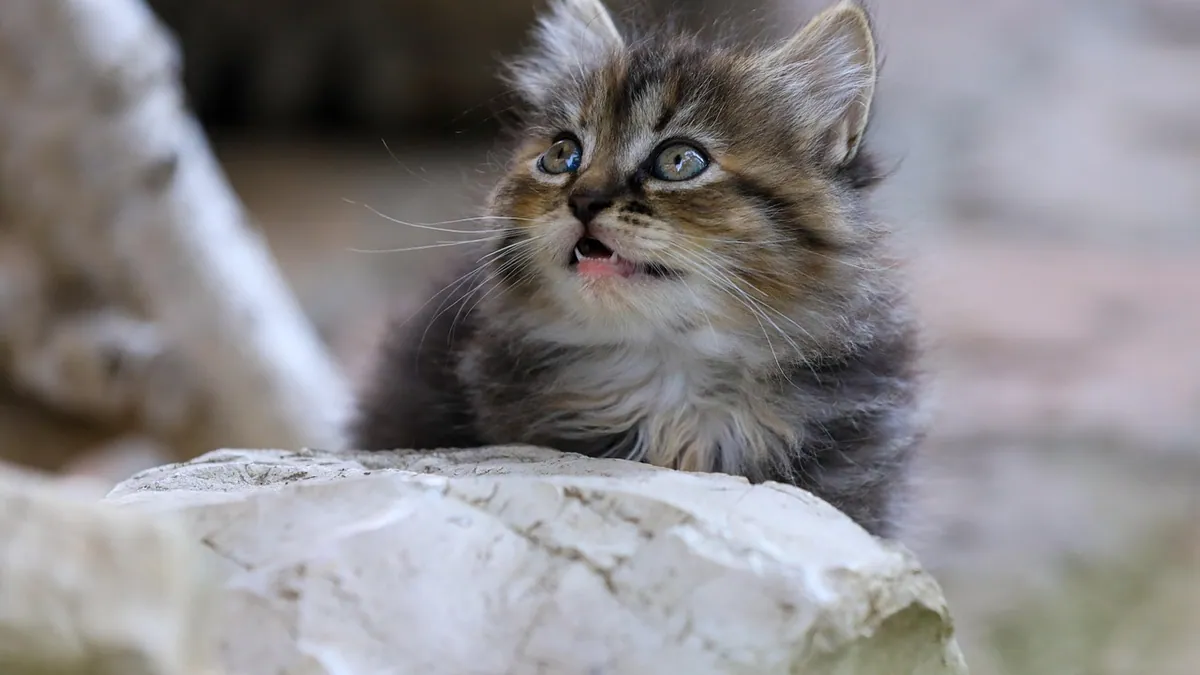
Kittens with allergies usually have sneezing, itchy skin, and watery eyes that flare with exposure to a trigger, while kitten asthma tends to cause coughing, wheezing, and breathing effort that comes and goes. The two conditions can overlap, and only a veterinarian can sort out which one your kitten has. If you are asking how to tell if my kitten has allergies, the pattern of signs over time is your best first clue.
This article is educational and is not a substitute for veterinary diagnosis or treatment.
Quick Answer
- Allergies in kittens often show up as sneezing, clear nasal discharge, itchy skin, and watery eyes, especially after contact with dust, pollen, litter dust, or smoke.
- Asthma in kittens usually causes coughing, wheezing, a hunched posture with the neck extended, and faster or harder breathing [1].
- Asthma is uncommon in very young cats. The average age at diagnosis is about 4 to 5 years, and sudden asthma in an older cat is rare [1][2].
- A single office visit rarely gives a final answer. Veterinarians combine history, physical exam, imaging, and airway cell samples to reach a diagnosis [1].
- Any kitten who is open-mouth breathing, has blue gums, or is struggling to breathe needs emergency care right away [1][2].
What Are Allergies and Asthma in a Kitten?
Allergies happen when a kitten's immune system overreacts to something harmless in the environment, such as dust, pollen, mold spores, perfume, or cigarette smoke. The reaction can show up in the nose, eyes, skin, or airways. In the airways, that same allergic response can trigger inflammation and narrowing.
Feline asthma, also called allergic bronchitis, is a syndrome that looks a lot like asthma in people [3]. It involves airway hyperresponsiveness, airflow obstruction, airway remodeling, and eosinophilic airway inflammation [3]. In plain words, the small airways in the lungs become inflamed, twitchy, and narrowed, which makes breathing harder.
Cats are the only domestic species that develop a syndrome similar to human asthma, which is why the condition gets so much attention in veterinary medicine [4]. The underlying process involves a type I hypersensitivity response and activation of eosinophils, a type of white blood cell tied to allergic inflammation [5].
So allergies and asthma are related. Allergies are the immune reaction. Asthma is one possible result of that reaction landing in the lower airways.
Kitten Allergy Symptoms and Cat Asthma Signs: What Owners Notice
The signs can look similar at first glance, but the pattern often differs.
Signs that point more toward allergies
- Sneezing, sometimes in bursts
- Clear, watery nasal discharge
- Watery or itchy eyes
- Scratching, chewing, or over-grooming the skin
- Signs that come and go with seasons, dust, or a new product in the home
If sneezing is your kitten's main problem, our guide to Cat Sneezing a Lot: Allergies, Infection, or Something Else? walks through the common causes.
Signs that point more toward asthma
Cats with asthma may show difficulty breathing, wheezing, rapid breathing, coughing or hacking, open-mouthed breathing, or vomiting [1]. These signs can range from a sudden respiratory crisis to a low-grade chronic cough, a higher breathing rate, or more effort with each breath [1].
Many cats during an asthma attack hunch close to the ground and stretch the neck forward in a characteristic posture [1]. That posture is a strong clue. A coughing kitten may also look like it is trying to bring up a hairball, which is why owners sometimes miss the problem for weeks.
If shortness of breath is severe, the mucous membranes (gums) can look bluish, which signals a lack of oxygen in the blood [2]. That is an emergency.
A quick comparison
| Feature | Kitten allergies | Kitten asthma |
|---|---|---|
| Main signs | Sneezing, runny nose, itchy eyes, skin itching | Coughing, wheezing, fast or labored breathing |
| Typical trigger | Dust, pollen, mold, smoke, perfume, litter dust | Inhaled allergens, sometimes the same triggers |
| Pattern | Often flares with exposure, improves when trigger is removed | Comes and goes, can worsen over time |
| Body posture | Normal | May hunch low with neck extended during an attack [1] |
| Age at diagnosis | Can start young | Average age about 4 to 5 years [1] |
| Emergency risk | Low, unless severe | High during a severe attack [1][2] |
If your kitten's problem is mostly skin, see Cat Skin Allergy or Flea Allergy? How to Tell the Difference.
Causes and Risk Factors
Allergies in kittens are driven by an immune response to inhaled or contact allergens. Common household triggers include cigarette smoke, perfumes, pollens, molds, and dust [3]. Cat allergens themselves are widespread in the environment, and exposure is nearly impossible to avoid completely, even in homes without cats [6].
Asthma has an unclear, multifactorial origin. It involves inhaled aeroallergens triggering a type 1 hypersensitivity response and eosinophil activation [5]. Foreign bodies in the airway and developmental abnormalities such as laryngeal deformities may predispose a cat to bronchitis [3].
Age and breed matter. Young cats and Siamese and Himalayan breeds are most often affected by bronchial asthma [3][2]. The average age of cats diagnosed with asthma is between 4 and 5 years, and no clear sex predilection has been shown [1]. Some studies suggest Siamese cats may be predisposed, but this has not been definitively proven [1].
Tracheobronchitis, which is inflammation of the trachea and bronchial airways, can also be caused by immune dysfunction, parasites, diseases of the mouth and pharynx, chronic coughing related to heart or lung disease, smoke inhalation, and chemical fumes [2]. That is a long list, which is exactly why a veterinarian needs to evaluate your kitten instead of guessing from symptoms alone.
How Veterinarians Tell the Difference
There is no single test that definitively diagnoses feline asthma [1]. Instead, your veterinarian gathers information and runs tests to rule out other causes.
History and physical exam
Your vet will ask about the timing of signs, what makes them better or worse, whether other pets or people in the home have symptoms, and any changes in litter, cleaning products, or smoking in the home. During the exam, signs may appear on their own or may be triggered by pressing lightly on the throat area [1].
Imaging
Chest x-rays are a common step. Options if initial treatment does not work include chest x-rays, bronchoscopy, and collection of biopsy and swab samples for laboratory analysis [3]. Computed tomography and bronchoalveolar lavage may also be used in some cases [5].
Airway sampling
Microscopic evaluation of cells in the airway secretions (cytology) helps identify the type of inflammation present [1]. This is often the step that separates allergic airway disease from infection or other problems.
Blood and allergy testing
Blood work and allergy testing may be part of the workup in some cases [1]. Allergy testing is also listed among the diagnostic tools for feline asthma [5]. Keep in mind that a negative allergy test does not always rule out a cat-related respiratory problem. In people, some patients with symptoms triggered by cat exposure test negative for systemic cat-specific IgE, which is why local provocation testing is sometimes used in human medicine [7].
Ruling out other causes
Diagnosis is made from the history, physical examination, and clinical signs, and by ruling out other causes of coughing [3]. A chronic cough in an older cat is often due to pneumonia, which is one reason age matters so much [2]. In a kitten, your vet will also consider infections, parasites, and foreign bodies.
For a deeper look at the testing process, see Feline Asthma: Diagnosis and Management.
Treatment Options
Treatment depends on which condition your kitten has and how severe the signs are.
Managing allergies
The first step is reducing exposure. Avoidance of environmental aeroallergens such as cigarette smoke, perfumes, pollens, molds, and dust must be considered in management [3]. Practical steps include switching to a low-dust litter, running a HEPA filter, washing bedding often, and keeping the kitten out of smoky rooms.
If medication is needed, your veterinarian will choose the drug and calculate the dose from your kitten's weight and health. Never give a kitten a human allergy medication without veterinary guidance. For what to watch for if your kitten is prescribed medication, read Cat Allergy Medication Side Effects: What to Watch For.
Treating asthma
Oral corticosteroids such as prednisolone or dexamethasone, or inhaled corticosteroids such as fluticasone or budesonide, are indicated for feline asthma [3]. Bronchodilators such as albuterol or terbutaline may be used as adjunctive therapy in combination with glucocorticoids, but not as the only treatment for feline asthma [3].
Feline aerosol chambers and inhaler therapy are available for delivering aerosol drugs to cats with asthma [3]. Many kittens learn to accept the mask with patient training and treats.
Inhaled corticosteroids are a mainstay, often combined with bronchodilators [5]. Other options such as cyclosporine, inhaled lidocaine, masitinib, and allergen-specific immunotherapy are available, but they are mostly supported by limited studies [5]. A case report described a 7-year-old cat with severe asthma that improved after three intramuscular injections of mesenchymal stromal cells given 30 days apart, and the cat's corticosteroids and bronchodilators were discontinued with no asthma attacks during two years of follow-up [4]. That is a single case, so it is not a standard treatment plan.
Your veterinarian sets the dose, the delivery method, and the monitoring schedule for your individual kitten.
Recovery, Outlook, and Long-Term Management
Asthma in cats is a chronic condition. Most cats do well with ongoing management, but the disease does not go away. The goal is fewer attacks, easier breathing, and less airway damage over time.
Long-term care usually includes:
- Regular rechecks so your vet can adjust treatment
- A written action plan for flare-ups
- Keeping rescue medication on hand if your vet prescribes it
- Tracking breathing rate at home when your kitten is calm and asleep
- Reducing dust, smoke, and strong scents in the home [3]
Long-term corticosteroid use has adverse effects, which is one reason researchers continue to look for new strategies [4]. If your kitten needs frequent steroid courses, ask your vet about inhaled therapy, which targets the lungs more directly.
For a full picture of what long-term asthma care looks like, see Cat Asthma: Signs, Diagnosis, and Long-Term Veterinary Management.
Prevention
You cannot prevent every case of allergies or asthma, but you can lower the load of triggers in your home.
- Do not smoke indoors or in a car with your kitten [3]
- Skip scented candles, plug-ins, and heavy air fresheners [3]
- Choose low-dust, unscented litter
- Vacuum and change furnace filters regularly to reduce dust and mold spores [3]
- Wash bedding and soft toys often
- Keep windows closed during high pollen days if your kitten reacts seasonally
- Use a HEPA air cleaner in the room where your kitten sleeps
If your kitten has known allergies, early trigger control may reduce how often airway signs appear. If your kitten has asthma, trigger control is part of treatment, not an optional extra [3].
Limitations and When to Contact a Veterinarian
No article can tell you what is happening in your kitten's lungs. Individual cases need a veterinarian who can examine your kitten, review the history, and run the right tests.
Contact your veterinarian the same day if your kitten:
- Coughs several times a day for more than a day or two
- Has a breathing rate that seems higher than normal while resting
- Has nasal discharge that turns yellow or green
- Stops eating or seems tired
- Has signs that keep coming back after treatment
Go to an emergency clinic now if your kitten:
- Breathes with an open mouth
- Has blue or gray gums or tongue [2]
- Hunches low with the neck stretched forward and will not move [1]
- Collapses or seems to be gasping
- Has a severe coughing fit that does not stop
Schedule a routine visit if your kitten:
- Sneezes often but seems otherwise well
- Has mild itching or watery eyes that come and go
- Has signs you can link to a specific trigger, such as a new litter
Frequently Asked Questions
Can a kitten have both allergies and asthma?
Yes. Allergies and asthma are related conditions, and the same inhaled allergens that trigger sneezing and itching can also trigger airway inflammation [3][5]. A kitten with skin or nasal allergies may later develop coughing or wheezing. That is one reason vets ask about the whole pattern of signs, not just one symptom.
How common is asthma in kittens?
Asthma is more common in young adult and middle-aged cats than in very young kittens. The average age at diagnosis is between 4 and 5 years, and sudden asthma in an older cat is extremely uncommon [1][2]. If a kitten is coughing or wheezing, other causes such as infection, parasites, or a foreign body need to be considered first.
Does sneezing mean my kitten has allergies?
Not always. Sneezing can come from allergies, a respiratory infection, irritants like dust or smoke, or a foreign body in the nose. Clear discharge and itching point more toward allergies, while colored discharge, fever, or poor appetite point more toward infection. Your vet can help sort this out with an exam and, if needed, testing.
Can I give my kitten human allergy medicine?
No. Do not give a kitten any human medication without veterinary guidance. Your veterinarian will pick the right drug and calculate the dose from your kitten's weight and health. Some human allergy drugs are unsafe or dosed very differently in cats, and giving the wrong amount can cause serious harm.
Will my kitten outgrow asthma?
Asthma is a chronic condition, so it does not usually go away on its own. With good management, many cats live comfortable lives with fewer and milder attacks. Treatment plans can sometimes be adjusted over time, but they are rarely stopped completely without veterinary guidance.
Related Articles
- Cat Asthma: Signs, Diagnosis, and Long-Term Veterinary Management
- Cat Skin Allergy or Flea Allergy? How to Tell the Difference
- Cat Sneezing a Lot: Allergies, Infection, or Something Else?
- Feline Asthma: Diagnosis and Management
- Cat Allergy Medication Side Effects: What to Watch For
- Why Is My Cat Breathing open-mouthed? Feline Asthma & Respiratory Crisis
- Cat Asthma vs Hairball: How to Tell the Difference
- Why Is My Kitten Wheezing? Causes and When to Worry
- How to Treat Cat Asthma: Inhalers, Meds, and Attacks
References
- Feline Asthma: What You Need To Know. Cornell University College of Veterinary Medicine.
- Tracheobronchitis (Bronchitis, Bronchial Asthma) in Cats - Cat Owners. Merck Veterinary Manual.
- Feline Bronchial Asthma - Respiratory System. Merck Veterinary Manual.
- Intramuscular administration of mesenchymal stromal cells in a cat with asthma: case report. Journal of veterinary internal medicine, 2026.
- Feline Asthma-Update on Diagnosis and Treatment Recommendations. The Veterinary clinics of North America. Small animal practice, 2026.
- Allergy to Cats: Current Perspectives and Therapeutic Options. Clinical and translational allergy, 2026.
- Local allergic asthma to cat allergens. The journal of allergy and clinical immunology. Global, 2026.