Why Do Dog Nails Split or Fall Off? Causes Explained
By Dr. Zubair Khalid, DVM, MS, PhD ·
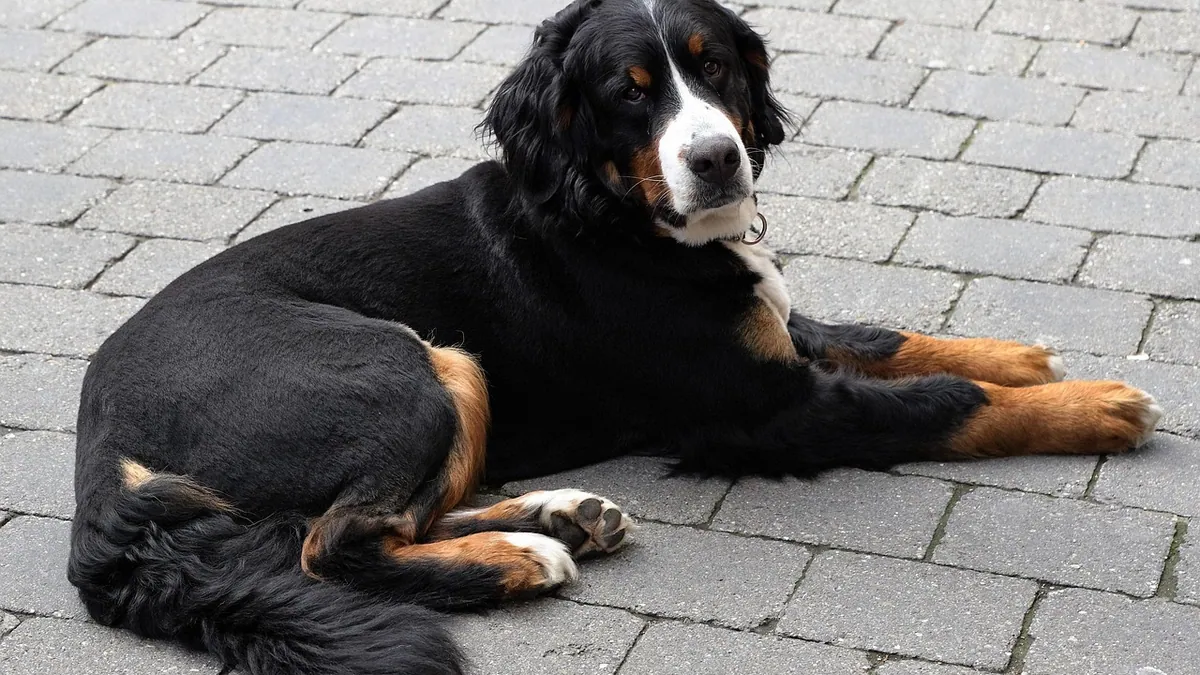
A dog's nail can split or fall off for several reasons, and the pattern matters. A single damaged nail usually points to trauma, while multiple nails loosening or shedding in a healthy dog often points to infection or an immune condition. Knowing what causes dog nails to split helps you describe the problem clearly and ask your veterinarian the right questions.
This article is educational and is not a substitute for veterinary diagnosis or treatment.
Quick Answer
- One cracked or torn nail is usually injury from a hard surface, a catch in fabric, or a bad trim.
- Several nails loosening or dropping off, especially on more than one paw, suggests a disease process instead of simple trauma.
- A bacterial infection was found in about half of dogs whose only problem was claw disease in one study [1].
- Symmetrical onychomadesis is an immune-related claw disease that has been linked to a specific region on chromosome 12 in Gordon and English Setters [2][3].
- Any nail that is bleeding heavily, hanging loose, or painful enough to make your dog limp needs veterinary care.
What Is Happening When a Dog's Nail Splits or Falls Off?
The claw is a hard shell that grows from a sensitive tissue bed called the claw matrix. When the matrix is healthy, new nail grows smoothly and the old tip wears down. When the matrix is inflamed or damaged, the new nail comes out weak, ridged, or poorly attached.
Onychomadesis is the medical term for the loss of a claw. When it affects many claws in a symmetrical pattern, veterinarians call it symmetrical onychomadesis or symmetrical lupoid onychodystrophy [4][3]. In these cases the nail often starts to lift at the base, then falls off, and the regrown nail may be deformed or fall off again.
This is different from a nail that splits at the tip from dryness or wear. Tip splitting is a surface problem. Shedding at the base is a problem in the tissue that makes the nail.
Signs Owners Notice First
Owners usually spot one of these patterns:
- A cracked or jagged nail tip that catches on carpet or bedding
- A nail that is loose and wobbly at the base
- A nail that has fallen off, sometimes with a small amount of blood
- Licking or chewing at one or more paws
- Limping or reluctance to walk on hard floors
- Several nails missing at once, often matching on both sides
- Deformed, ridged, or discolored nails growing back
Pain and lameness were recognized in about half of the dogs in one report of symmetrical claw disease [4]. So a dog can have serious nail disease and still seem mostly comfortable, or can be visibly sore.
What Causes Dog Nails to Split or Fall Off?
There are four broad categories. Your veterinarian's job is to figure out which one fits your dog.
Trauma and Mechanical Damage
This is the most common and most straightforward cause. Nails catch in crate bars, deck boards, car doors, or thick carpet. Long nails lever against hard ground and tear. A nail trimmed too short can crack or expose the quick.
Trauma usually affects one nail, or a few nails on one paw. If your dog has a bleeding broken nail right now, see Dog Broken Nail: How to Stop Bleeding and When to Call the Vet for first aid steps.
Infection
Bacteria and yeast can infect the nail bed and the skin around the claw. In one prospective study of 24 dogs whose only complaint was claw disease, a bacterial infection was present in about half of them [1]. Infection can be the primary problem or a secondary invader on top of an injured or immune-diseased nail.
Infected nails may look swollen, red, greasy, or have discharge at the base. For a closer look at this pattern, see Dog Nail Infection: Signs, Causes, and Treatment.
Nutrition and Mineral Balance
Nails need protein, minerals, and fatty acids to grow well. A poorly balanced diet, a homemade diet without proper formulation, or a dog with intestinal disease that limits nutrient absorption can produce brittle nails.
One study compared the mineral content of nails from 32 normal dogs with nails shed from 21 dogs with idiopathic onychomadesis [5]. The affected nails had significantly higher levels of calcium, potassium, sodium, and phosphorus than normal nails [5]. That finding does not prove a mineral deficiency or excess causes the disease. It shows the nail composition changes when the disease is present, and the underlying cause is still not settled [5].
Immune-Mediated Disease
This is the category owners most often miss. In symmetrical lupoid onychodystrophy, the body's immune system attacks the claw matrix. The result is sudden shedding of multiple claws, followed by chronic abnormal nail growth [4]. Dogs are otherwise healthy, and pain or lameness appears in about half of cases [4].
The condition has a strong breed and family pattern. A genome-wide association study in 225 Gordon Setters found a region on chromosome 12 strongly associated with symmetrical onychomadesis, and a meta-analysis including English Setters suggested the same region predisposes that breed too [2]. The associated region spans most of the major histocompatibility complex, which is a cluster of immune genes [2]. In a separate report of Norwegian Gordon and English Setters, six of the affected dogs had siblings with the disease, and the average age of onset was 3.9 years, ranging from 2 to 7 years [3]. Onset was not correlated with vaccination timing [3].
German Shepherd Dogs were significantly overrepresented among dogs with idiopathic onychomadesis in one study compared with the general hospital population, and their nail mineral composition differed from affected dogs of other breeds [5]. That difference suggests more than one underlying cause may exist under the same label [5].
Other Contributing Factors
- Endocrine disease, such as thyroid or adrenal problems, can affect nail quality, though thyroid levels were normal in the dogs tested in one claw-disease study [1].
- Adverse food reactions were suspected in four of 24 dogs with claw disease in that same study [1].
- Autoimmune skin disease elsewhere on the body can accompany nail changes.
- Age and activity level affect wear and tear.
How Veterinarians Tell These Causes Apart
Your veterinarian starts with history and a full physical exam, including all four paws. Useful details from you include when the problem started, how many nails are involved, whether it is symmetrical, whether nails regrow abnormally, and whether your dog is licking, limping, or eating normally.
Tests Your Vet May Recommend
| Test | What it looks for |
|---|---|
| Cytology of claw exudate | Bacteria and yeast at the nail base [1] |
| Bacterial culture and sensitivity | Which antibiotic will work [1] |
| Complete blood count and biochemistry | General health, organ function [1] |
| Urinalysis | Metabolic clues [1] |
| Total T4 | Thyroid function [1] |
| Antinuclear antibody titre | Immune system activity [1] |
| Fungal culture | Fungal nail infection [1] |
| Claw biopsy and histopathology | Interface onychitis, the reaction pattern seen in most claw disease [1] |
| Elimination diet trial | Possible food reaction [1] |
In one study of 24 dogs with claw disease as their only problem, blood work, urinalysis, and thyroid testing were mostly normal or showed only minor nonspecific changes, and fungal cultures and antinuclear antibody titres were negative in all dogs [1]. That is why a claw biopsy is often the most informative test. Interface onychitis, an inflammatory pattern at the claw matrix, was found in all but one of those dogs, and it can have several different underlying causes [1].
A biopsy also helps your vet separate immune-mediated disease from infection. In the Norwegian setter report, histopathology typically showed interface dermatitis with subepidermal cleft formation, pigment incontinence, basal cell changes, and lymphocytic inflammation, and two dogs had signs of superficial infection on top of that [3].
Treatment Options
Treatment depends on the cause. There is no single answer.
For Trauma
Your vet trims or smooths the damaged nail, controls bleeding, and may bandage the paw. Antibiotics are used only if infection is present. Most simple injuries heal as the nail regrows.
For Infection
Bacterial infection is treated with an antibiotic chosen from culture results, and treatment often runs for weeks because nails grow slowly. One dog in the claw-disease study responded completely to antibiotic therapy alone [1]. Yeast infections need antifungal treatment. Keeping the paw dry and clean supports healing.
For Immune-Mediated Claw Disease
Symmetrical lupoid onychodystrophy is often managed with immune-suppressing medication, and many dogs improve. In one retrospective report, nine dogs treated with a commercial fatty-acid supplement had good to excellent responses [4]. Your veterinarian will decide which approach fits your dog and will calculate any drug dose from your dog's weight and health status.
Some dogs with severe disease do not recover. In the Norwegian setter report, three dogs were euthanized because of the disease, and two had regrowth of normal nails [3]. That range shows why early diagnosis and consistent follow-up matter.
For Nutrition or Food Reaction
If a food reaction is suspected, your vet may recommend a structured elimination diet trial [1]. If diet quality is the issue, a complete and balanced commercial or properly formulated home diet can help. Do not add random supplements without veterinary guidance, since mineral balance in nails is not well understood and one study found higher, not lower, mineral levels in shed nails [5].
Recovery, Outlook, and Long-Term Management
Nail regrowth is slow. Expect weeks to months before you know whether a treatment is working. During that time:
- Keep nails short enough that they do not catch, but not so short that you cut the quick. See How To Cut Dog Nails for technique.
- Check all four paws weekly and note which nails are affected.
- Photograph the nails so you can track changes over time.
- Keep follow-up appointments, because dose adjustments are common with immune disease.
- Protect paws on hot pavement, ice, and rough terrain.
Some dogs need lifelong management. Others recover fully after one episode. Relapses are possible, especially with immune-mediated disease, so keep watching even after things look normal.
Prevention
You cannot prevent every cause, but you can lower the risk.
- Trim nails on a regular schedule so they do not catch or lever. How To Clip Dog Nails covers safe trimming.
- Feed a complete and balanced diet appropriate for your dog's life stage.
- Dry paws after wet walks and check between the toes.
- Treat paw infections promptly so they do not spread to the nail bed.
- Tell your vet about breed and family history of nail problems, since genetics play a role in symmetrical onychomadesis in Gordon and English Setters [2][3].
- If your dog has had one episode of multiple nails shedding, ask your vet what monitoring plan makes sense.
Limitations and When to Contact a Veterinarian
Nail disease can look mild while the underlying problem is serious. Contact your veterinarian promptly if you notice any of the following.
Same day:
- A nail is hanging loose and your dog is limping
- Bleeding that restarts after it seemed to stop
- Swelling, redness, or discharge at the nail base
- Your dog is licking one paw constantly
Emergency now:
- Bleeding that will not stop after several minutes of pressure
- A nail torn back into the paw pad
- Sudden severe lameness where your dog will not put the paw down at all
- Signs of shock such as pale gums, weakness, or collapse
Routine visit:
- More than one nail has split or fallen off over weeks
- Nails regrow deformed, ridged, or discolored
- The problem keeps coming back after treatment
- You notice nail changes along with skin, ear, or coat problems
Individual cases need a veterinarian who can examine your dog, review the history, and choose tests. This article cannot replace that visit.
Frequently Asked Questions
Why do my dog's nails keep splitting no matter what I do?
Repeated splitting in the same nails usually means the claw matrix is not healthy, not that you are trimming wrong. Ask your vet to evaluate for infection, immune-mediated claw disease, and diet problems. A claw biopsy is often the test that gives a clear answer.
Can a dog's nail fall off and grow back normally?
Yes, many nails regrow after trauma or infection once the underlying problem is treated. Regrowth is slow and may take months. If the new nail comes in deformed or falls off again, that points to ongoing disease in the matrix.
Is nail loss in dogs contagious to other pets or to people?
Most causes of nail loss in dogs are not contagious. Bacterial infections at the nail bed can sometimes spread between pets through shared bedding or close contact, so keep the area clean. Your veterinarian can tell you if any specific infection in your dog needs extra precautions.
Should I pull off a loose dog nail myself?
No. Pulling a loose nail can cause heavy bleeding and pain, and it can damage the matrix further. Cover the paw, prevent licking, and let a veterinarian remove or trim it safely. If it is bleeding, apply pressure and seek care.
Do supplements help dog nails grow stronger?
Some dogs with immune-mediated claw disease improved on a commercial fatty-acid supplement in one report, but that is not proof it works for every cause. Diet quality matters, and mineral levels in affected nails were actually higher than normal in one study, so extra minerals are not a simple fix. Ask your vet before starting any supplement.
Related Articles
- Dog Nail Infection: Signs, Causes, and Treatment
- Dog Broken Nail: How to Stop Bleeding and When to Call the Vet
- How To Cut Dog Nails
- Dog Broken Nail: What Should You Do?
- How To Clip Dog Nails
- Why Is My Dog Losing Hair?
- Dog Limping From a Broken or Split Nail: What to Do
- Split Nail in Dogs: What to Do and How to Treat It
- Split Paw Pads in Dogs: Causes and Treatment
References
- Diagnosis of canine claw disease - a prospective study of 24 dogs. Veterinary dermatology, 2000.
- A genome-wide association study identifies a region strongly associated with symmetrical onychomadesis on chromosome 12 in dogs. Animal genetics, 2016.
- Symmetrical onychomadesis in Norwegian Gordon and English setters. Veterinary dermatology, 2008.
- Symmetrical lupoid onychodystrophy in dogs: a retrospective analysis of 18 cases (1989-1993). Journal of the American Animal Hospital Association, 1995.
- The mineral composition of nails in normal dogs and comparison with shed nails in canine idiopathic onychomadesis. Veterinary dermatology, 1996.