Dog Cyst on the Ear or Neck: Causes and When to Worry
By Dr. Zubair Khalid, DVM, MS, PhD ·
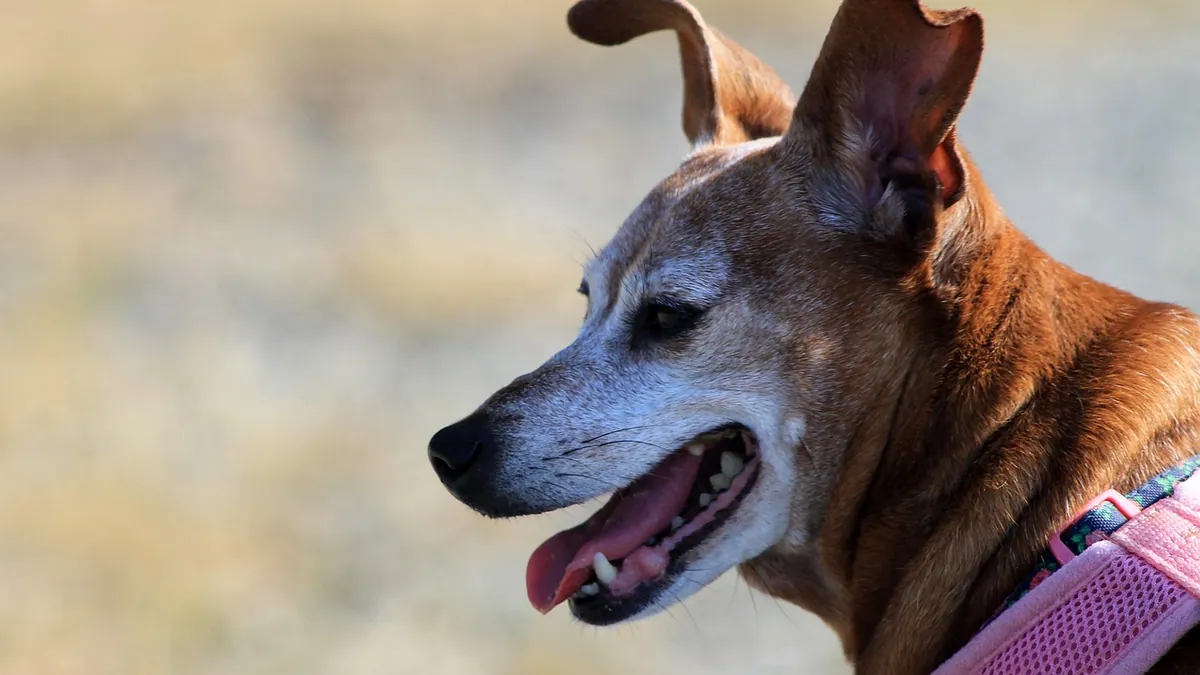
A dog cyst on the ear or neck is usually a benign, fluid-filled sac under the skin, and many are harmless. Some lumps in these areas are abscesses, tumors, or congenital cysts that need veterinary care. The only way to know which one you are dealing with is an exam, and sometimes a sample of the fluid or tissue.
This article is educational and is not a substitute for veterinary diagnosis or treatment.
Quick Answer
- Most cysts are soft, movable, and slow growing. A lump that is hot, painful, or growing fast is more likely an abscess or tumor.
- Congenital cysts of the head and neck are very rare in dogs and often show up as nonpainful, fluid-filled masses in the neck area [1].
- Chronic ear inflammation can lead to tumors in the ear canal, so a lump near the ear that comes with discharge or odor needs a closer look [2].
- Never squeeze, lance, or drain a lump at home. You can cause infection or spread disease.
- Any lump that changes size, bleeds, or bothers your dog should be checked by a veterinarian.
What a Cyst on a Dog's Ear or Neck Looks Like
A cyst is a pocket of tissue that holds fluid, air, or semi-solid material. On the outside, it usually looks like a smooth, rounded bump under the skin. It may feel soft or slightly firm, and it often moves a little when you touch it.
Cysts can sit on the ear flap (pinna), right at the base of the ear, or along the neck. Some are pea-sized. Others grow to the size of a golf ball or larger over weeks or months.
What is normal for a lump
A benign cyst is often:
- Nonpainful when you gently touch it
- Slow growing, or stable in size
- Not warm to the touch
- Covered by normal skin or a small hairless spot
Your dog may not notice it at all. You might find it while petting or brushing.
What is not normal
A lump is more concerning when it:
- Grows quickly over days
- Feels hot, firm, or fixed in place
- Drains pus, blood, or a bad-smelling fluid
- Causes pain when touched
- Comes with head shaking, scratching, or ear odor
Those signs point away from a simple cyst and toward an abscess, infection, or tumor.
Main Causes of Lumps on the Ear and Neck
Many different problems can look like a cyst. The table below covers the most common ones.
| Cause | Typical clues | How urgent |
|---|---|---|
| Sebaceous or follicular cyst | Soft, round, slow growing, nonpainful, often on the ear flap or neck skin | Routine visit |
| Abscess | Hot, painful, swollen, may drain pus, often follows a scratch, bite, or ear infection | Same day |
| Ear canal tumor | Discharge from one ear, foul odor, head shaking, scratching, swelling or draining pockets near the ear [2] | Prompt visit |
| Congenital neck cyst | Nonpainful, fluid-filled mass in the neck, may cause breathing or swallowing trouble if large [1] | Prompt visit |
| Dermoid cyst | Cyst present from a young age, can sit near the ear or throat, may press on nearby structures [3] | Prompt visit |
| Aneurysmal bone cyst | Rare, benign but locally aggressive bone lesion, usually on limbs, not the ear or neck [4][5] | Prompt visit |
| Colloid cyst | Rare, benign, fluid-filled lesion inside the skull, causes balance or gait problems [6] | Emergency if neurologic signs |
Sebaceous and follicular cysts
These are the most common cysts pet owners notice. They form when a hair follicle or oil gland gets blocked. The material inside is usually a thick, cheesy, grayish substance. They are benign and often stay small for years.
Abscesses
An abscess is a pocket of pus, not a true cyst. It often forms after a bite, a scratch, or a foreign body like a grass awn pokes the skin. Abscesses are painful and warm. They can rupture and drain on their own, which looks messy but often relieves pressure.
An abscess near the ear can also follow a deep ear infection. If your dog has been shaking its head or scratching, read Dog Itchy Ears Why to see how ear disease starts.
Ear canal tumors
Tumors can grow from the skin, glands, bone, or connective tissue of the ear canal [2]. Most ear canal tumors are benign, but dogs older than 11 are at higher risk of malignant ones [2]. Cocker Spaniels appear more likely to develop them [2].
Signs include discharge from one ear, foul odor, head shaking, scratching, and swelling or draining pockets of pus near the ear [2]. If the middle or inner ear is involved, you may see balance problems, hearing loss, or a head tilt [2]. Any chronic inflammation in one ear that does not respond to treatment should raise suspicion of a tumor [2].
Congenital cysts of the neck
These are very rare in dogs [1]. They come from leftover tissue from the embryo's throat and neck development [1]. They usually show up as nonpainful, fluid-filled masses in the neck [1].
Because of where they sit, a large one can press on the airway or esophagus. Signs can include trouble breathing, noisy breathing, trouble swallowing, and coughing [1]. Some dogs are older when the cyst is found, and it is not known why a cyst may suddenly enlarge [1].
Dermoid cysts
A dermoid cyst is a pocket of skin tissue trapped under the surface. One report described a 6-month-old Boxer with a cyst near the right ear that caused severe breathing trouble, nasal congestion, noisy breathing, and fainting [3]. This is an extreme example, but it shows that location matters as much as the type of cyst.
Bone cysts
Aneurysmal bone cysts are benign but locally aggressive bone lesions that are rarely reported in dogs [4]. They usually affect limb bones, not the ear or neck [4][5]. Treatment can include surgery or, in some cases, injection of a sclerosant into the cyst [5]. These are not the lumps you feel under the skin.
Cysts inside the skull
Colloid cysts are benign, fluid-filled lesions that form inside the brain [6]. They are uncommon and can block the flow of cerebrospinal fluid [6]. One dog with a colloid cyst near the brainstem showed wobbliness and drooling [6]. These are diagnosed with advanced imaging, not by feel.
How to Tell a Cyst From an Abscess or Tumor
You cannot tell for sure by looking. But some patterns help you decide how fast to act.
Signs that point to a cyst
- Round, smooth, and movable
- Not painful
- Same size for weeks
- No drainage, no odor
Signs that point to an abscess
- Warm and painful
- Rapid swelling over one to three days
- Pus or bloody fluid draining
- Your dog seems uncomfortable or has a fever
Signs that point to a tumor
- Firm, fixed, and irregular
- Growing steadily
- Located in or right next to the ear canal
- Comes with one-sided ear discharge, odor, or head tilt [2]
If your dog has ear pain along with a lump, see Dog Ear Infection with Pain: How to Tell and What to Do.
Red Flags That Make It an Emergency
Go to an emergency clinic now if your dog has:
- Trouble breathing, noisy breathing, or blue gums
- A neck swelling that is growing fast
- Collapse, fainting, or severe weakness
- A head tilt with vomiting or inability to stand
- A lump that ruptured and will not stop bleeding
Balance loss with an ear problem can be an emergency. Learn the signs in Dog Ear Infection with Loss of Balance: When to Worry.
Call your veterinarian the same day if your dog has:
- A hot, painful, rapidly growing lump
- Pus or blood draining from a lump
- One-sided ear discharge with a bad smell
- Trouble swallowing or a change in bark
Safe Things You Can Do at Home While You Wait
You cannot treat a cyst at home, but you can keep your dog comfortable and avoid making things worse.
Do
- Take a photo with a ruler or coin next to the lump so you can track size
- Note the date you first saw it
- Keep the area clean and dry
- Use a soft Elizabethan collar if your dog keeps scratching
- Keep your regular ear cleaning routine if your vet approved one
Do not
- Do not squeeze, poke, or try to pop the lump
- Do not apply human acne creams, hydrogen peroxide, or alcohol
- Do not give human pain medications. Many are toxic to dogs, and your veterinarian will calculate the right dose from your dog's weight and health.
- Do not wrap the neck tightly. This can press on the airway.
If your dog is scratching at the ear and panting, that combination can signal pain or anxiety. See Dog Scratching Ear And Panting for context.
What Your Veterinarian Will Check and Test
Your vet will start with a full physical exam. They will feel the lump, check its size, texture, and how deep it goes. They will also look inside both ears with an otoscope.
Common tests
- Fine needle aspirate: a thin needle pulls cells or fluid from the lump. This is quick and often done in the exam room.
- Cytology: the sample is examined under a microscope. For middle ear disease, this method can confirm a specific type of cyst-like mass called a tympanokeratoma with high specificity [7].
- Imaging: X-rays, ultrasound, or CT may be used to see how deep a neck mass goes and whether it connects to the throat [1]. CT can show exactly how a cyst presses on nearby structures [3].
- Biopsy: a piece of tissue is sent to a lab when cytology is not enough.
- Ear culture: if infection is present, a sample helps pick the right medication.
Treatment options
Treatment depends on what the lump is.
- A simple cyst that is not bothering your dog may only need monitoring.
- An abscess needs drainage and often antibiotics. Your vet will choose the drug and dose.
- A tumor in the ear canal may need surgery. The type of surgery depends on how deep it goes and whether the middle ear is involved [2].
- A congenital neck cyst may need imaging first to map its connections, then surgical removal [1].
- Some bone cysts can be treated by injecting a sclerosant into the cavity, which avoids a bigger surgery in certain cases [5].
Your veterinarian will explain the risks and benefits for your dog's specific case.
Prevention and Monitoring
You cannot prevent most cysts. You can lower the risk of some problems that look like cysts.
- Treat ear infections early and fully. Chronic inflammation in one ear that does not respond to treatment should raise suspicion of a tumor [2].
- Check your dog's ears and neck during weekly petting sessions. Early detection makes small problems easier to manage.
- Keep up with routine wellness visits. Middle-aged dogs are more likely to have benign ear tumors, and dogs older than 11 are at higher risk of malignant ones [2].
- If your dog has a breed predisposition, such as Cocker Spaniels with ear canal tumors, ask your vet how often the ears should be checked [2].
If you notice itchy or painful ears along with a lump, see Dog Itchy Painful Ear.
Limitations and When to Contact a Veterinarian
This article cannot tell you what your dog's lump is. Only a veterinarian can do that after an exam and testing. Individual cases need a veterinarian's judgment.
Contact your veterinarian:
- Same day: a hot, painful, fast-growing lump, pus or blood draining, one-sided ear discharge with odor, or trouble swallowing.
- Emergency now: trouble breathing, collapse, severe balance loss, a neck swelling that is blocking the airway, or a lump that will not stop bleeding.
- Routine visit: a soft, nonpainful lump that has been stable for weeks, or any new lump you want checked.
When in doubt, call. A quick exam is far easier than treating a problem that has been growing for months.
Frequently Asked Questions
Can a cyst on my dog's ear go away on its own?
Some small cysts stay the same size for years and never cause trouble. Others may shrink or drain on their own, but this does not mean the problem is gone. A veterinarian should look at any lump that changes, drains, or bothers your dog.
Is a lump on my dog's neck always serious?
No. Many neck lumps are benign cysts, lipomas, or swollen lymph nodes from a minor issue. However, a neck mass can press on the airway or esophagus, so a fast-growing or breathing-related swelling needs prompt care [1].
How does a veterinarian tell a cyst from a tumor?
They use a fine needle aspirate or biopsy to look at the cells. Imaging such as ultrasound or CT helps show how deep the mass goes and whether it involves nearby structures [1][3]. Ear canal tumors often need a scope exam and sometimes surgery to confirm the type [2].
Should I drain a cyst at home?
No. Never squeeze, lance, or drain a lump yourself. You can introduce infection, cause bleeding, or spread a tumor along the tract. Drainage and removal should be done by a veterinarian with sterile tools and proper pain control.
When should I worry about a cyst on my dog's ear?
Worry when the lump grows quickly, hurts, feels hot, drains fluid, or comes with ear discharge, odor, head shaking, or a head tilt [2]. Those signs suggest an abscess or tumor, not a simple cyst. Call your veterinarian for an exam.
Related Articles
- Dog Ear Infection with Loss of Balance: When to Worry
- Dog Itchy Ears Why
- Dog Ear Infection with Pain: How to Tell and What to Do
- Dog Itchy Painful Ear
- Dog Scratching Ear And Panting
- Dog Scratching Ear And Making Noise
- Lump on Your Dog's Ear Flap or Behind the Ear
- Fast-Growing Lump on Your Dog's Neck: When to Worry
- Dog Ear Growth: Causes of Lumps Inside the Ear Canal
References
- Congenital Cysts of the Head and Neck in Animals - Digestive System. Merck Veterinary Manual.
- Tumors of the Ear Canal in Dogs - Dog Owners. Merck Veterinary Manual.
- Computed Tomographic Characteristics Associated With Novel Case of Ossified Pharyngeal Dermoid Cyst in Juvenile Canine. Veterinary radiology & ultrasound : the official journal of the American College of Veterinary Radiology and the International Veterinary Radiology Association, 2025.
- Non-Oncological Progression of an Aneurysmal Bone Cyst (ABC) in a Puppy Following Surgical Treatment. Animals : an open access journal from MDPI, 2026.
- Sclerotherapy for Aneurysmal Bone Cyst in Canine. Veterinary medicine and science, 2026.
- Intracranial colloid cyst in the cerebellopontine angle of a dog: A novel case report and surgical outcome. Open veterinary journal, 2026.
- Middle Ear Aspiration Cytology via Otoendoscope-Guided Myringotomy Reliably Confirms Tympanokeratoma in Dogs. Journal of the American Animal Hospital Association, 2026.