Why Is My Cat Shedding So Much and How to Manage It
By Dr. Zubair Khalid, DVM, MS, PhD ·
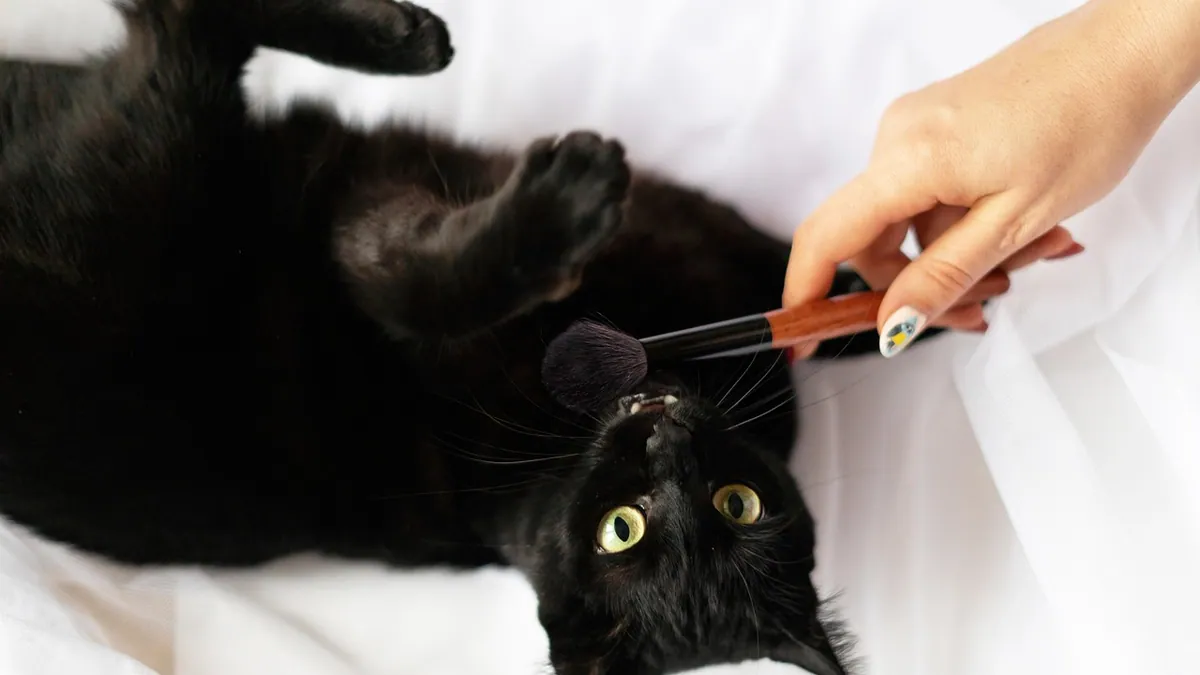
Cats shed to replace old hair with new growth, and most heavy shedding is normal and tied to season, light, and breed. Some cats, though, lose far more hair than usual because of parasites, allergies, stress, or an underlying disease. This article is educational and is not a substitute for veterinary diagnosis or treatment.
Quick Answer
- Shedding is a normal cycle. Indoor cats often shed all year because artificial light and steady temperatures blur the seasons [1].
- Long-haired cats need brushing every few days to remove dead hair and prevent tangles [1].
- Sudden bald patches, crusty skin, or scratching that never stops point to a medical cause, not routine shedding [1].
- Skin problems are one of the most common reasons pet owners bring cats to the veterinarian [1].
- Never give your cat a supplement or medication for hair loss without a veterinarian's guidance, because the dose depends on your cat's weight and health.
What Normal Cat Shedding Looks Like
Every cat sheds. Hair grows, rests, then falls out to make room for new hair. The amount varies a lot from cat to cat.
Outdoor cats usually shed heavily in spring and fall as their coat adjusts to the weather. Indoor cats live with artificial light and stable temperatures, so many of them shed steadily all year instead of in two big bursts [1]. Long-haired cats who live indoors also shed throughout the year and need grooming every few days to remove dead hair and prevent tangles [1].
Normal shedding looks like this:
- Loose hair on furniture, clothes, and floors, roughly steady from week to week
- A full coat with no bare spots
- Healthy skin, no redness, scabs, or greasy patches
- No constant scratching, chewing, or licking at one area
Cats are fastidious groomers. Grooming is a maintenance behavior that takes up about 4% of a cat's daily activity, done in many short sessions [2]. A cat who suddenly grooms much more, or much less, may be telling you something is wrong.
If the grooming has ramped up along with the shedding, see Why Is My Cat Grooming So Much?.
Why Is My Cat Shedding So Much? The Main Causes
Heavy shedding has many possible causes, and they often overlap. The condition of your cat's skin is a clue to overall health. When a skin problem starts, a cat may respond with excessive scratching, chewing, or licking, and the causes range from external parasites and allergies to seasonal changes and stress [1].
Hair loss in cats is multifactorial. It can involve hormonal, immune-mediated, genetic, infectious, allergic, parasitic, and behavioral mechanisms [3]. In veterinary patients, alopecia more often reflects an underlying endocrine, hereditary, infectious, allergic, parasitic, or self-induced disorder than a simple cosmetic issue [3].
Cause Table
| Cause | Typical clues | How urgent |
|---|---|---|
| Seasonal or year-round shedding | Even hair loss, no bald spots, healthy skin, worse in spring and fall | Not urgent |
| External parasites (fleas, mites) | Scratching, scabs, tiny dark specks, hair loss near the tail base or ears | See a vet soon |
| Allergies (food, environment, fleas) | Itchy skin, licking paws, red belly, recurring ear issues | See a vet soon |
| Stress or compulsive grooming | Over-grooming in a pattern, bald patches on belly or flanks, life changes | See a vet soon |
| Skin infection (bacterial or fungal) | Round bald patches, crusts, scaling, odor | See a vet soon |
| Endocrine disease | Symmetrical hair loss, dull coat, weight or appetite changes | See a vet soon |
| Poor coat nutrition | Dull, dry coat, dander, slow hair regrowth | Routine visit |
Parasites and allergies are among the most common culprits. A cat with fleas may groom and chew so much that hair thins along the back and tail. Food and environmental allergies can cause itching that leads to hair loss. If itching is the main problem, read Why Is My Cat So Itchy?.
Stress matters too. Cats with psychogenic alopecia, a grooming disorder tied to stress, groom fewer body parts than healthy cats during each session, which can concentrate damage in certain areas [2]. That pattern often shows up as bare patches on the belly, inner thighs, or flanks.
Nutrition plays a role in coat quality. Trace minerals like zinc, manganese, copper, and iron support skin health and haircoat. In one study, cats fed organic trace minerals tended to shed less hair and had better dander scores than cats fed standard inorganic minerals [4]. That does not mean every heavy shedder needs a supplement. It means diet quality can influence the coat.
If the hair loss is patchy or the coat looks thin overall, see Why Is My Cat Losing Hair?.
Red Flags That Make It an Emergency
Most shedding is not an emergency. Some signs mean you should act right away.
Go to an emergency clinic now if your cat has:
- Trouble breathing, open-mouth breathing, or blue gums
- Collapse, weakness, or inability to stand
- A large raw or bleeding area of skin
- Severe swelling of the face or throat
- Vomiting, diarrhea, and lethargy together with rapid hair loss
Call your veterinarian the same day if you see:
- Bald patches that appeared quickly
- Intense scratching, chewing, or biting at the skin
- Sores, crusts, pus, or a bad smell from the coat
- Hair loss with weight loss, increased appetite, or increased thirst
- Hair loss plus a change in behavior, appetite, or litter box habits
Increased thirst alongside coat changes deserves attention. It can point to an endocrine or kidney problem. See Why Is My Cat Drinking So Much Water?.
What You Can Do at Home While You Wait
You cannot diagnose the cause at home, but you can make your cat more comfortable and reduce the hair around your house.
Brush Regularly
Give your cat a good brushing to remove loose hair and mats before a bath or vet visit [1]. For long-haired cats, start with the abdomen and legs, combing the fur upward toward the head. Comb the neck fur upward toward the chin. Make a part down the middle of the tail and gently brush out the fur on either side [1].
If you find knots, sprinkle talcum powder over them and gently tease them apart with your fingers. If they will not come out by hand, a mat-splitter can help [1]. Never cut mats out with scissors. Cat skin is thin and easy to slice.
Short-haired cats benefit from a rubber curry brush or fine comb once or twice a week. Long-haired cats need sessions every few days [1].
Keep the Environment Calm
Stress fuels over-grooming. Keep routines steady, provide hiding spots, and give your cat vertical space. If a new pet, a move, or a schedule change came before the shedding started, that timing matters. Tell your veterinarian.
Support a Healthy Coat
Feed a complete and balanced diet made for your cat's life stage. Ask your veterinarian before adding any supplement. The dose and the right product depend on your cat's weight, health, and current diet. Do not guess.
Skip These Ideas
- Do not give human hair, skin, or allergy medications to your cat.
- Do not use dog flea products on cats.
- Do not bathe a cat with irritated or broken skin unless your veterinarian says to.
- Do not assume a supplement will fix hair loss without a diagnosis.
What Your Veterinarian Will Check and Test
Your veterinarian will start with the history. When did the shedding start? Is it seasonal? Any new food, litter, or pet? Any scratching, coughing, or sneezing? Then comes a full physical exam, including the skin and coat.
Expect some of these steps:
- Skin exam with a flea comb and a look at the ears
- Skin scraping or tape prep to check for mites
- Fungal culture if ringworm is suspected
- Fecal testing if diarrhea or weight loss is present
- Blood work to check thyroid, kidney, and overall health
- Food trial or allergy workup if allergies are likely
Diarrhea and coat problems can appear together. In one study of breeding catteries, cats shedding feline panleukopenia virus DNA were much more likely to have diarrheic feces [5]. That is a specific situation, but it shows why your veterinarian may ask about stool quality when the coat looks poor.
Treatment depends on the cause. Veterinary management of hair loss mainly depends on finding and correcting the underlying disorder [3]. That is why a diagnosis comes before any product or pill.
How to Stop My Cat From Shedding So Much: Prevention and Monitoring
You cannot stop normal shedding, but you can keep it manageable and catch problems early.
- Brush on a schedule. Every few days for long-haired cats, once or twice a week for short-haired cats [1].
- Watch the skin, not just the hair. Redness, dander, scabs, and odor are early warnings [1].
- Track the pattern. Note whether shedding is steady or comes in bursts, and whether bald spots are growing.
- Control parasites year-round with a product your veterinarian recommends.
- Keep up with wellness visits so weight, thirst, and coat changes get checked before they worsen.
- Manage stress with routine, play, and safe spaces.
- Feed a complete diet, and discuss trace mineral sources with your veterinarian if the coat stays dull [4].
Take a photo of the coat each month. Photos make slow changes obvious. If the coat thins over weeks, you have a record to show your veterinarian.
Limitations and When to Contact a Veterinarian
This article cannot tell you why your individual cat is shedding. Only a veterinarian who examines your cat can do that. Individual cases need a veterinarian.
Use this timing guide:
- Emergency now: breathing trouble, collapse, bleeding skin, facial swelling, or severe lethargy.
- Same day: fast-spreading bald patches, intense itching, open sores, or hair loss with weight loss or increased thirst.
- Routine visit: gradual coat thinning, dander, dull coat, or shedding that bothers you even without other signs.
When in doubt, call your veterinarian. Early visits are usually simpler and less costly than waiting for a skin problem to spread.
Frequently Asked Questions
Is it normal for my cat to shed all year?
Yes, many indoor cats shed all year. Artificial light and stable indoor temperatures blur the seasonal signals that drive spring and fall shedding, so the coat turns over continuously [1]. Steady shedding with healthy skin and a full coat is usually nothing to worry about.
Can stress make my cat shed more?
Yes, stress can drive over-grooming that leads to hair loss. Cats with psychogenic alopecia groom differently than healthy cats, and their grooming sessions cover fewer body parts [2]. If a move, a new pet, or a schedule change came first, mention it to your veterinarian.
Should I give my cat a supplement for shedding?
Only with veterinary guidance. Trace minerals support skin and coat health, and cats fed organic trace minerals tended to shed less hair and had better dander scores in one study [4]. Still, the right product and amount depend on your cat's weight, diet, and health, so ask your veterinarian first.
Does brushing really reduce shedding around the house?
Yes, brushing removes loose hair before it lands on your furniture. Long-haired indoor cats need grooming every few days to remove dead hair and prevent tangles [1]. Short-haired cats do well with a weekly session using a rubber brush or fine comb.
When should I worry about cat hair loss instead of shedding?
Worry when you see bald patches, crusty or red skin, constant scratching, or hair loss with weight or appetite changes. Skin problems are one of the most common reasons pet owners seek veterinary care, and causes range from parasites and allergies to stress and seasonal changes [1]. Hair loss in cats often reflects an underlying disorder that needs a diagnosis [3].
Related Articles
- Why Is My Cat Grooming So Much?
- Why Is My Cat Losing Hair?
- Why Is My Cat So Itchy?
- Why Is My Cat Drinking So Much Water?
- Why Is My Cat Sneezing So Much And Has A Runny Nose
- Why Is My Cat Sneezing So Much And Coughing
- How Much Should a Cat Shed? Normal vs Excessive
- When Do Cats Shed the Most? Seasonal Shedding
- Cat Hair Loss and Shedding: Causes and What to Give
References
- Cat Grooming Tips. ASPCA Animal Poison Control Center.
- Exploring Normal to Abnormal Variations of Grooming Behaviours in Cats. Veterinary dermatology, 2026.
- Alopecia management from a comparative perspective: pharmacological and pharmaceutical insights in humans, dogs, and cats. Frontiers in veterinary science, 2026.
- Effect of Supplemental Trace Mineral Source on Haircoat and Hair Loss in Adult Cats. Animals : an open access journal from MDPI, 2025.
- Shedding of feline panleukopenia virus DNA in cats in breeding catteries. Tierarztliche Praxis. Ausgabe K, Kleintiere/Heimtiere, 2025.